
Timespinner- Nintendo Switch
 Amazon.com
  Bestbuy.com
  Flexoffers.com
  Walmart.com
  Hrkgame.com
  Shein.com
$19.99
Timespinner- Nintendo Switch Price comparison

![Timespinner - Nintendo Switch [Digital Code]](https://m.media-amazon.com/images/I/71PiOfykC-L._AC_UF350,350_QL50_.jpg)

![Timespinner - Nintendo Switch [Digital]](https://pisces.bbystatic.com/prescaled/500/500/image2/BestBuy_US/images/products/6356/6356929_sd.jpg)

![Timespinner - Nintendo Switch [Digital]](https://pisces.bbystatic.com/image2/BestBuy_US/images/products/6356/6356929_sd.jpg)

![Timespinner - Nintendo Switch [Digital]](https://i5.walmartimages.com/asr/71d9a2c6-234e-4145-973a-2ce2e68764fc.5b8d69f5318914f9b6c3175531f8f6af.jpeg?odnHeight=450&odnWidth=450&odnBg=ffffff)





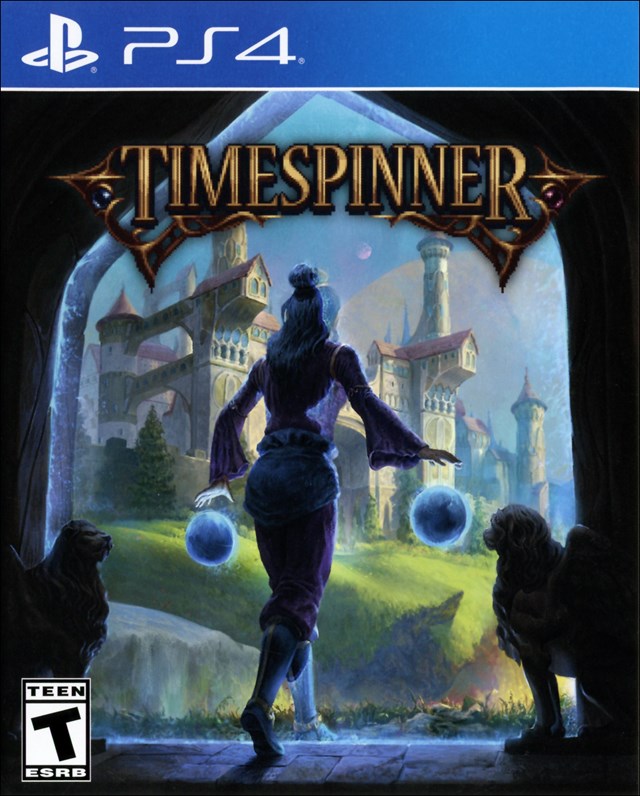



- All prices mentioned above are in United States dollar.
- This product is available at Amazon.com, Bestbuy, Flexoffers, Walmart.com, HRKGame Int, SHEIN, GameFly - Online Video Game Rentals.
- At amazon.com you can purchase Timespinner - Nintendo Switch [Digital Code] for only $19.99 , which is 89% less than the cost in SHEIN ($179.00).
- The lowest price of Switch Lite ,Silent Hill,Switch Joycons,Nintendo Decorations,Nintendo Switch Games,Nintendo Switch Joycons,Nintendo,Switch,Nintendo Switch Joycons,Nin was obtained on September 21, 2025 05:04.
Timespinner- Nintendo Switch Price History
Timespinner- Nintendo Switch Description
Discover Timespinner for Nintendo Switch
Get ready to embark on an unforgettable adventure with Timespinner – Nintendo Switch. Released on June 4, 2019, this exciting indie title by Chucklefish Limited combines nostalgic gameplay with innovative mechanics. Experience time manipulation in a beautifully crafted pixel art world, and find out why gamers are raving about this game in their reviews.
Key Features of Timespinner – Nintendo Switch
- Unique Time Manipulation Mechanics: Control time to solve puzzles and navigate through challenging levels. The ability to pause, rewind, and fast-forward time adds a fresh twist to traditional gameplay.
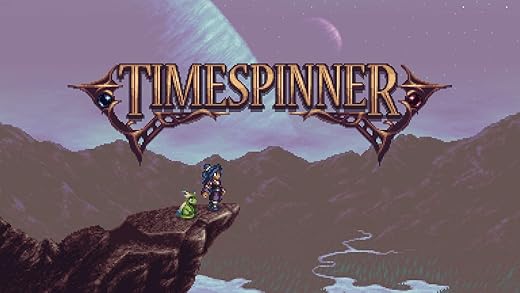
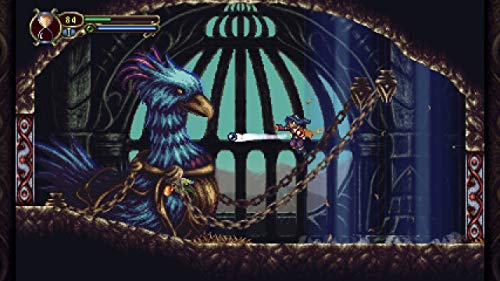
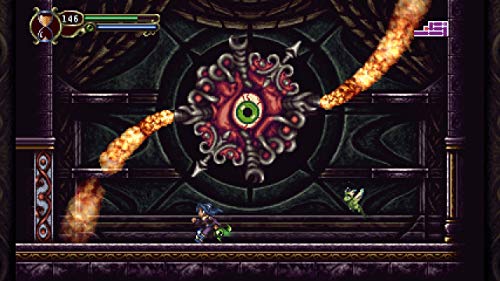
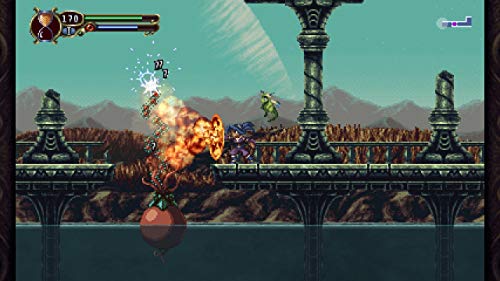
- Stunning Pixel Art Graphics: Immerse yourself in a visually captivating world that pays homage to classic Metroidvania games. The detailed pixel art and animation bring the story to life.
- Engaging Storyline: Follow the tale of Lunais, a girl from a distant future seeking revenge against a dark empire. Each twist and turn keeps players hooked until the very end.
- Diverse Enemy Encounters: Face off against a wide variety of enemies and bosses, each with unique abilities. Learn their patterns and hone your skills to conquer them.
- Unlockable Abilities: Gain new powers as you progress through the game. This encourages exploration and rewards players for their curiosity.
- Multiple Endings: Your choices matter in Timespinner. Experience several different endings based on your decisions throughout the game.
Price Comparison Across Suppliers
Timespinner for Nintendo Switch is widely available, and prices can vary significantly across various platforms. As of now, you can find it for:
- Amazon: $19.99
- Nintendo eShop: $19.99
- Walmart: $22.99
- Best Buy: $24.99
Take a look at these prices and compare to find the best deal for your gaming needs.
6-Month Price History Trends
Our detailed 6-month price history chart reveals some interesting trends. Since its initial release, Timespinner has seen a stable price range, mostly staying below the $25 mark. The game occasionally dips during sales and promotional events, making it a great time to snag deals. Watch for holidays or special events when prices may drop further.
Customer Reviews Summary
Players have shared numerous experiences with Timespinner. The majority of reviews highlight the following positives:
- Creative Gameplay: Many users have praised the time manipulation mechanic as both innovative and entertaining.
- Artistic Design: Reviewers often mention the gorgeous pixel art and how it enhances the immersive experience.
- Story Depth: Gamers appreciate the engaging narrative and character development throughout the game.
However, some players noted drawbacks, such as:
- Difficulty: A few users mentioned that some levels can be frustratingly challenging, which may deter casual gamers.
- Short Game Length: While many enjoyed the experience, some players felt that the game could be completed too quickly.
Watch Unboxing and Review Videos
Want to see what the gameplay looks like before purchasing? Check out some related unboxing or review videos on YouTube. These videos showcase the game in action, highlighting its aesthetics and gameplay mechanics. They can significantly aid in your decision-making process on whether Timespinner is the right choice for you.
In conclusion, Timespinner for Nintendo Switch delivers an engaging blend of nostalgia, innovation, and captivating storytelling. With its unique time manipulation features, stunning visuals, and immersive narrative, this game has quickly become a fan favorite. Whether you are a seasoned gamer or a newcomer, Timespinner promises a rewarding gameplay experience.
Don’t miss out on the chance to join the adventure. Compare prices now!
Timespinner- Nintendo Switch Specification
Specification: Timespinner- Nintendo Switch
|
Timespinner- Nintendo Switch Videos


Timespinner- Nintendo Switch Reviews (2)
2 reviews for Timespinner- Nintendo Switch
Only logged in customers who have purchased this product may leave a review.

Jack Shaftoe –
I enjoyed my first playthrough the past several days. I think it took me about 12-15 hours of gameplay to finish the game on Normal difficulty.
The game animation and mechanics of platforming are great.
The game’s story was “meh”. For me, i also started skip, skip, skipping dialogues when the many romances started cropping up in Greenwood Forest. I’ll leave it at that.
The length of the game is a little shorter than I expected.
For the current price point as of writing this review ($20) there are better options for this type of game. Ori & The Blind Forest, Hollow Knight, Dead Cells, Axiom Verge. I feel this game belongs in the $10 bracket unless they add more levels and bosses. This game is about the same length as Blaster Master Zero, for example – which I feel is a better game too.
3 Stars.
John. N –
My initial exposure to Timespinner may sound a little odd to those reading, but to me it was just another day/case of typical media exploration. I originally heard of this game due to its soundtrack release. I love music from Metroidvania titles (even though I’ve kind of grown a little tired of Konami’s work over the years due to relistening to the same block of music as we haven’t been getting new games) and Jeff Ball’s work seemed up my alley, much like Gavin Allen’s work on The Mummy Demastered. Anyway, I went on a message board dedicated to video game music to talk about the score and got a rather surprising response back. Well, I say “surprising” but it ultimately wasn’t. I was on an internet forum trying to talk about a video game to other gamers where there was a veil of anonymity. You can probably guess what happened.
The response I got back wasn’t very long, but appeared to be full of venom towards Jeff Ball’s “unoriginal” work and the game which was (I’m paraphrasing here) the poster child for plagiarism. Near the end of the message, the sender did back off their criticism of the soundtrack a little, saying Bell “did what was asked of him well enough” but there was still an obvious layer of contempt there. This reply seemed rather snippy to me and I wanted to respond to it right away and say I wasn’t exactly blown away by the game’s music, but I decided to research these claims before I wrote anything back. So I ordered a copy of the game (don’t ask me why I bought a physical copy of the game when it was a limited pressing when the download would have been cheaper; I mean this question is moot because I liked and want to keep the game, but yeah, I get I rolled the dice when I really didn’t need to) and chipped away at the start of the game and I began to see where the main claim of plagiarism was coming into play.
If you’re playing Timespinner and have played many of the Castlevania games since Symphony of the Night in 1997, some things will look awfully familiar to you. I’m not talking about the basic trappings/look of the genre the game is borrowing, but rather locations and map design. Oh, I see that staircase is reminiscent of the one in Symphony’s Royal Chapel. Ah, that cluster of rooms reminds me of the Long Library in that game too. That drawbridge and underground path look like the abandoned path to the Underground Garden in SotN as well. Okay, you’re not even trying to hide it with the relic screen, are you? That’s blatant as hell. This is where (and why) we need to sit down and have a talk about homages and how they work – or rather how they’re supposed to work.
A great example of a homage can be found in Castlevania: Harmony of Dissonance. In one of the game’s various areas, there is a skull with multiple eye sockets that is on the ground and is used as a ramp to a higher plane. At first that skull may seem unimportant, at least in the vast scheme of things, but if you think about its structure for a second, it may seem familiar – like it’s mimicking something from a very popular SNES game. For the sake of brevity, I’ll just point out that it looks similar to the skull of Crocomire, a mini-boss in Super Metroid whose flesh is melted off by corrosive acid in lower Norfair. (It’s a classic scene by this point, btw.) Now, can I say for certain that a developer made/put that skull there as a homage? No. But the fact that its presence puts the idea in my head that someone was trying to be sly is enough to make it clever and at least make it a make-shift homage. This also appears to be the only time Harmony is trying to nod towards another game. See the difference? Harmony makes you question the connection because there’s plausible deniability; Timespinner, on the other hand, just plops the damn reference(s) right in front of you – constantly – like hitting the Staples easy button over and over saying “Aren’t we clever? You remember this game, right?” while usually being anything but.
By the middle of the game, the developer kind of stops candy coating what they’re trying to emulate when you get to the castle/royal chapel areas. There’s not much of an effort to differentiate Timespinner from its inspiration here (I’m actually quite surprised there are no bells to jump onto and ring in the royal chapel section; a rare moment of restraint perhaps?) and oddly enough this is where Jeff Ball’s music comes into play once again. Up until this point, the soundtrack has done a decent job of reproducing the feel and style that Michiru Yamane and her various co-composers have crafted over the years without really stepping on Konami’s toes, but the themes in these two areas, there’s just something about some of those notes that feels a little too familiar. This is when I asked the question: how closely was the developer and composer using the various Castlevania games as a reference? There’s emulating something and then there’s emulating something so closely that if the game were a sentient being there’d be some obvious privacy concerns due to voyeurism. And this is the point I want to make here and will reiterate later: Timespinner did not need to do this or go so far with this. Had the developer not borrowed so heavily (did I mention that there are also Mega Man X and Alien homages as well?) I still think this would be a good game. In fact, it might have been an even better game.
The above situation is a real shame because Timespinner does do some things well when it isn’t trying to carbon copy another product. Some may laugh at this (and I half expect it at this point being a Mega Man X fan) but narratively, I was fine/happy with the story presented here. Yeah, yeah, I get that time travel stories are beyond passe at this point (thank you Hollywood for driving the Terminator franchise into the ground by the way – please stop it already….) but ever since IGA barfed out that dreadful slice of narrative slice of pie in Ritual of the Night a few years ago (If you didn’t guess who the villain was the second you met them in the game, can I come over to your house and repeatedly hit you on the head with a tack hammer? Because your brain needs to be reset. The reveal is so unsurprising that it’s beyond insulting.) I’ve actually started to become a little more appreciative of writing and world building, even when it’s minimal. Lunais is a decent protagonist and the supporting cast isn’t as disposable as they initially seem. I actually started to care about them a bit, which is saying something since I’ve never been too attached to any of the characters in the Castlevania games. I don’t hate Soma Cruz from Aria and Dawn of Sorrow, but I’ve never been very invested in him and Alucard and Richter (Richter being my favorite Belmomt aside from Trevor’s portrayal in Curse of Darkness) from Symphony are probably only getting a pass because their voice acting is so wretchedly memorable.
I also found it refreshing that the protagonist and two thirds of the game’s cast were non-white. Of course, now that I’ve made this review “politically charged” I’m sure I’ve just triggered somebody’s anti-snowflake/woke detector and pegged myself as a SJW, but I don’t care. I prefer the idea of making new characters/heroes for minority audiences rather than adapting established ones. I don’t believe this in some dumb effort to protect a character’s original portrayal (which I feel is kind of a silly thing to fight over) but to promote the notion of creativity over alteration. Also, I liked the inclusion of a LGBTQ+ NPC (don’t worry, they don’t use any of the current vocabulary and make that person break character with the time period) but those included in that group may find that character to be a little too token for their own good. I haven’t played a massive amount of games with trans characters (the only other one I can personally recall is Technobabylon for the PC) so I’m obviously not a good judge at what people in that group would expect from them. Still, I’m more than happy to welcome the addition as long as the reveal feels natural. While I can see some saying this revelation feels a little too opportunistic, I think the fact that helps show that humanity within Lunais makes it heartfelt enough to avoid such labels.
Another positive is the enemy design. Now, this doesn’t apply to every enemy in the game, but there’s some interesting experimentation/elaboration on staple adversaries that have been in these kinds of games forever. Every so often you’ll come across an enemy and think you know what attack pattern you’re going to encounter as you approach it, only to have it flipped on its side a bit and still have the result make complete sense. It’s ultimately a very small thing all things considered, but it’s probably necessary in a game that is already a little too invested in borrowing concepts. I will say that if Konami ever gets off their butt and makes a new Castlevania (come on, get on it already!) they should take a look at some of the enemy designs here and draw some inspiration from it – I mean that’s only fair given the situation I’ve explained thus far.
The final thing to take away from this is the controls. The good news here is if you have played any of the Castlevania games following and including Symphony of the Night, you shouldn’t have many problems; everything has been replicated pretty well. The only thing you need to be aware of is that attacking does leave you open a little longer than you may expect, which the player will quickly come to realize when using Lunais’ initial weapon against the first boss. Additionally, there’s another boss fight later that throws a little bit of a curve ball when it comes to the game’s physics. Unlike some games when a platform moves underneath you it causes you to fall in that spot after it retracts, here you move with the platform. This is notable, again, because that small delay when attacking can bite you a little. Don’t let that scare you off however, it’s generally pretty easy to learn/work around with a little effort.
So, this, of course, brings us back to that somewhat angry forum post I received. Is that person right? Is Timespinner (and its creator) guilty of plagiarism? Well, first of all, I’m no lawyer (obviously), so I’m the wrong person to ask. I don’t know the intricacies of intellectual property law, but I will say it’s pretty clear that the game isn’t using direct assets from the games it’s mimicking. I’d say it’s a mix of yes and no – but it’s definitely in a gray area. Again, the game adhering to the major principles of what constitutes a Metroidvania style title these days in the eyes of many is fine – no faults – and one is free to make that kind of game if they choose to, especially if Konami doesn’t want to do it, but once you start closely recreating things map design and structures from other games, you might want to check yourself. And this is ultimately the worst thing about Timespinner: this was completely unnecessary. These constant nods don’t make it a stronger product in my eyes – it makes it a weaker, cheaper feeling one in a genre where originally is already in question. (This is why it loses one star out of five.) Seriously, those who don’t have the knowledge to acknowledge these references are probably better off for it.
But in the end who should play Timespinner? Perhaps the better question is who should not play Timespinner. If you’re the type that gets easily upset every time a game “borrows” something (again, blatantly in this case; maybe playing potential litigation chicken with Konami was a bad idea) I would suggest avoiding this one. Clearly, one or two nods to its inspiration would have been enough. On the other hand, I still loved the game, but I – and there’s the catch. I wish I didn’t have to add that “but” to my recommendation, but in all honesty I have to because not mentioning what I mentioned above would simply be dishonest. Regardless, I’d love to see a Timespinner 2 (not a direct sequel obviously) if the creator could pump the breaks on the borrowing. Maybe it could be more original and gain a little more modicum of respect as a result? I don’t think it would ever reach the heights of Thomas Happs’ Axiom Verge series, but few things ever do. Here’s to hoping Timespinner’s next leap ends up being (even?) better – and less gray area free.
Oh, and while I did eventually message the poster back on that internet forum with my opinions up above, I never did hear back. Shame.