
Lawn: History Of American Obsession
 Betterworldbooks.com
  Barnesandnoble.com
  Kobo.com
  Knetbooks.com
  Amazon.com
  Ecampus.com
$19.93
Lawn: History Of American Obsession Price comparison











![Suburban Lawns [LP] - VINYL](https://pisces.bbystatic.com/prescaled/500/500/image2/BestBuy_US/images/products/7cdc9f4b-45a9-4eb9-850a-7b2d94fb67e6.jpg)




- All prices mentioned above are in United States dollar.
- This product is available at BetterWorld.com - New, Used, Rare Books & Textbooks, Barnes & Noble, Rakuten Kobo US, Knetbooks.com, Amazon.com.
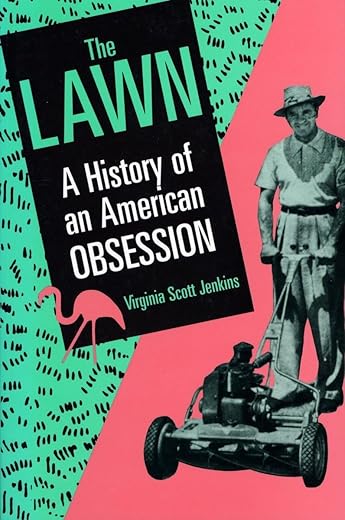
- At betterworldbooks.com you can purchase The Lawn: A History of an American Obsession by Virginia Jenkins (Paperback) for only $8.04 , which is 60% less than the cost in Amazon.com ($19.93).
- The lowest price of The Lawn: A History of an American Obsession was obtained on October 12, 2026 07:42.
Lawn: History Of American Obsession Price History
Lawn: History Of American Obsession Description
Discover the Fascinating World of Lawn Care with “Lawn: History of American Obsession”
Are you curious about the cultural significance and evolution of one of America’s most beloved outdoor features? “Lawn: History of American Obsession” dives deep into the lush green landscapes that we’ve come to identify with suburban living. This captivating book from Smithsonian Books offers a unique blend of history, culture, and ecology, making it an essential read for anyone interested in gardening, landscape design, or American culture. Explore not just the art of lawn care but also its surprising history that intertwines with our national identity.
Key Features of “Lawn: History of American Obsession”
– **Publisher**: Smithsonian Books (April 17, 1994)
– **Language**: English
– **Paperback Format**: 272 pages
– **ISBN-10/ISBN-13**: 1560984066 / 978-1560984061
– **Dimensions**: 5.99 x 0.58 x 8.92 inches
– **Item Weight**: 15.2 ounces
This comprehensive format provides readers with ample content to explore the themes of lawn care, its historical context, and its social implications.
Understand the Evolution of Lawn Care
“Lawn: History of American Obsession” illustrates how the concept of a well-manicured lawn has evolved over the decades. The book chronicles the shift from functional garden spaces used for food production to the aesthetic lawns we’re familiar with today. The author delves into various lawn care practices and their connection to societal trends, making it a richly informative read.
Main Benefits of This Book
– **Historical Perspective**: Gain insights into how the American lawn first emerged as a status symbol and how it reflects our values and culture.
– **Ecological Awareness**: Explore the environmental implications of lawn care and learn how to maintain a beautiful lawn in an eco-friendly way.
– **Practical Advice**: While the focus is largely historical, the book also offers practical suggestions for improving your lawn care techniques.
Price Comparison Across Suppliers
When looking for “Lawn: History of American Obsession,” you’ll find a range of prices across different retailers. On average, the book is priced between $15 and $25, depending on the supplier and any ongoing promotions. Our platform provides up-to-date price comparisons, ensuring that you have access to the best deals available online. Explore the variety of offers and choose the one that fits your budget and preferences.
Trends from the 6-Month Price History
Recent data indicates a slight trend towards more competitive pricing for “Lawn: History of American Obsession.” Over the last six months, prices have fluctuated, but there has been a noticeable drop in price across major retailers, making it a perfect time to purchase. This could be attributed to seasonal sales or influx in inventory, as demand for gardening books typically surges in spring.
Customer Reviews: What Readers Are Saying
Feedback from customers highlights both the educational value and engaging storytelling of the book. Many readers appreciate the depth of research and the accessible writing style. Positive reviews often cite the following points:
– **Engaging Narrative**: Readers found the book informative yet entertaining, making it an enjoyable read.
– **Richly Illustrated**: The visuals accompany the text beautifully, enhancing understanding and appreciation of the subject matter.
However, some reviewers have noted that the book could include more modern lawn care practices, as it primarily focuses on historical perspectives. While these drawbacks exist, the overall reception is overwhelmingly positive, encouraging new readers to engage with the material.
Explore Related Content with Unboxing and Review Videos
To further enrich your understanding, we suggest checking out unboxing and review videos available on platforms like YouTube. These visual guides can provide a glimpse of the book’s layout, content, and design, helping you decide if “Lawn: History of American Obsession” is the right choice for your library. Many reviewers offer their insights, adding valuable context to the reading experience.
Conclusion
“Lawn: History of American Obsession” offers not just a look into the history of lawn culture but serves as a guide for those wanting to enhance their gardening knowledge. With its engaging narrative, practical advice, and historical context, this book will inspire both seasoned gardeners and newcomers alike.
Ready to dive into the rich history of the American lawn? Compare prices now and find the best deals on “Lawn: History of American Obsession.”
Lawn: History Of American Obsession Specification
Specification: Lawn: History Of American Obsession
|
Lawn: History Of American Obsession Reviews (7)
7 reviews for Lawn: History Of American Obsession
Only logged in customers who have purchased this product may leave a review.


Amazon Customer –
Thoroughly researched with excellent sources.
Amazon Customer –
This book describes the history of how lawns were first introduced to American, became popular, and then became a necessity. Jenkins traces the early history of lawns as importations of the English country garden concept, as found in Jefferson’s gardens in Monticello. She also explains the influences that garden clubs, the golf industry, and the USDA had on the popularization of lawns. The book is not just about lawns, however. It also provides a very interesting analysis of how advertising was used to create demand for completely unnecessary products, and how those products, such as lawn mowers and weed whackers, later came to be thought of as indispensable. This book will be of interest to historians of landscape architecture as well as to researchers of material culture.
Clint Cullen –
I enjoyed learning about the history of lawns in America. It was interesting to see how lawns, lawn equipment, herbicides, and pesticides were invented, and introduced to modern suburban homeowners. The author’s research on the history of the lawn from the early 19th century to the beginning of the 21st century was well-researched, well-written, and fascinating. I would recommend this book to anyone who has an interest in lawn care and would like to know how the obsession with lawns was started and marketed over the years. I also found the information on the history of herbicides and pesticides to be quite informative. An overall interesting read on a different subject matter than I would normally read, or be interested in.
Amy E. Menzer –
Anyone interested in how lawns came to be the “norm” and a standard signifier of upward mobility in America will find this book fascinating. For those who would like to encourage a different urban form (less lawns, houses closer to the street, new urbanism or smart growth) the book offers some hope by its demonstration of how something so “natural” was constructed over the last 80-100 years. The roles of technology, science, and gender politics, as well as class issues and environmental concerns are covered in a way that makes the story more entertaining and underscores the numerous fronts through which the lawn aesthetic was reinforced. I found this to be a great contribution to our understanding of how one element of the bigger picture contributes to larger trends affecting human settlement patterns, the ways we interact with each other and experience community, and even our public health. Now I need to read the history “air conditioning in america” to understand the role of that element….most cultural and social histories certainly cite issues like lawns and air conditioning as part of the dynamics, but don’t have the time or space to examine the issue in depth– its great that Jenkins does this, even if it was a dissertation (and heck, that’s one of the things dissertations are actually useful for…).
Barbara C. Fertig –
Reading this history of lawns sent me back to Currier and Ives, where I found that, indeed, there was little grass and lots of chickens around the family homestead. This is a likeable rediscovery of how our need to conform to standardized appearances has shaped our markets and our vision of democracy.
Christine M. –
I bought this for my Dad who enjoys history. He is reading and enjoying.
Fred –
It’s an okay history, but the author doesn’t like lawns and the bias shows. That’s a shame.