
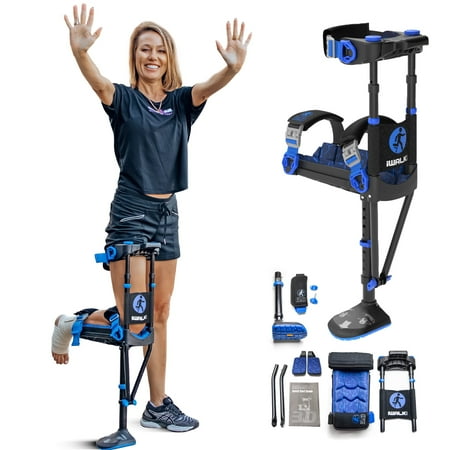
iWALKFree Hands Free Knee Crutch Alternative
 Poshmark.com
  Rehabmart.com
  Walmart.com
  Avacaremedical.com
$179.00
iWALKFree Hands Free Knee Crutch Alternative Price comparison







- All prices mentioned above are in United States dollar.
- This product is available at Walmart.com, Poshmark, RehabMart, Amazon.com.
- At walmart.com you can purchase COSYWILL Steerable Knee Scooter,Economy Knee Walker,All Terrain Foldable Medical Scooter for Foot Injuries Crutches Alternative,Black for only $84.98 , which is 84% less than the cost in RehabMart ($515.35).
- The lowest price of RollerFoot Hands Free Knee Walker RFM0BLK Knee Scooters was obtained on October 21, 2026 12:26.
iWALKFree Hands Free Knee Crutch Alternative Price History
iWALKFree Hands Free Knee Crutch Alternative Description
iWALKFree Hands Free Knee Crutch Alternative – A Revolutionary Mobility Solution
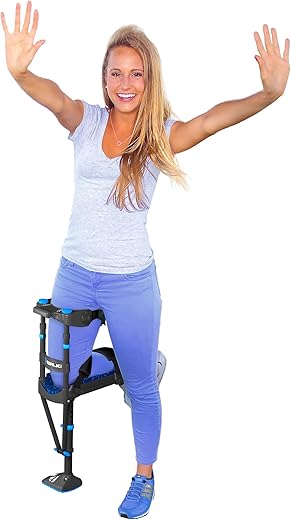
The iWALKFree Hands Free Knee Crutch Alternative is an innovative mobility aid designed for those recovering from leg or foot injuries. Unlike traditional crutches that restrict movement and can be cumbersome, this hands-free alternative allows you to regain your independence while promoting faster healing. If you’re looking for an efficient way to move around post-injury, you’ve found the right product. Let’s dive deeper into its features, benefits, and pricing overview.
Main Features of the iWALKFree Hands Free Knee Crutch Alternative
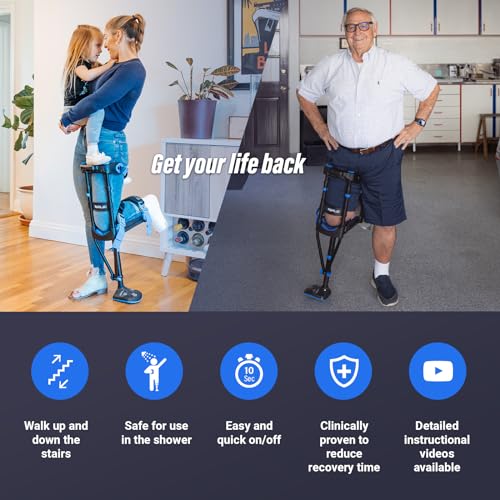
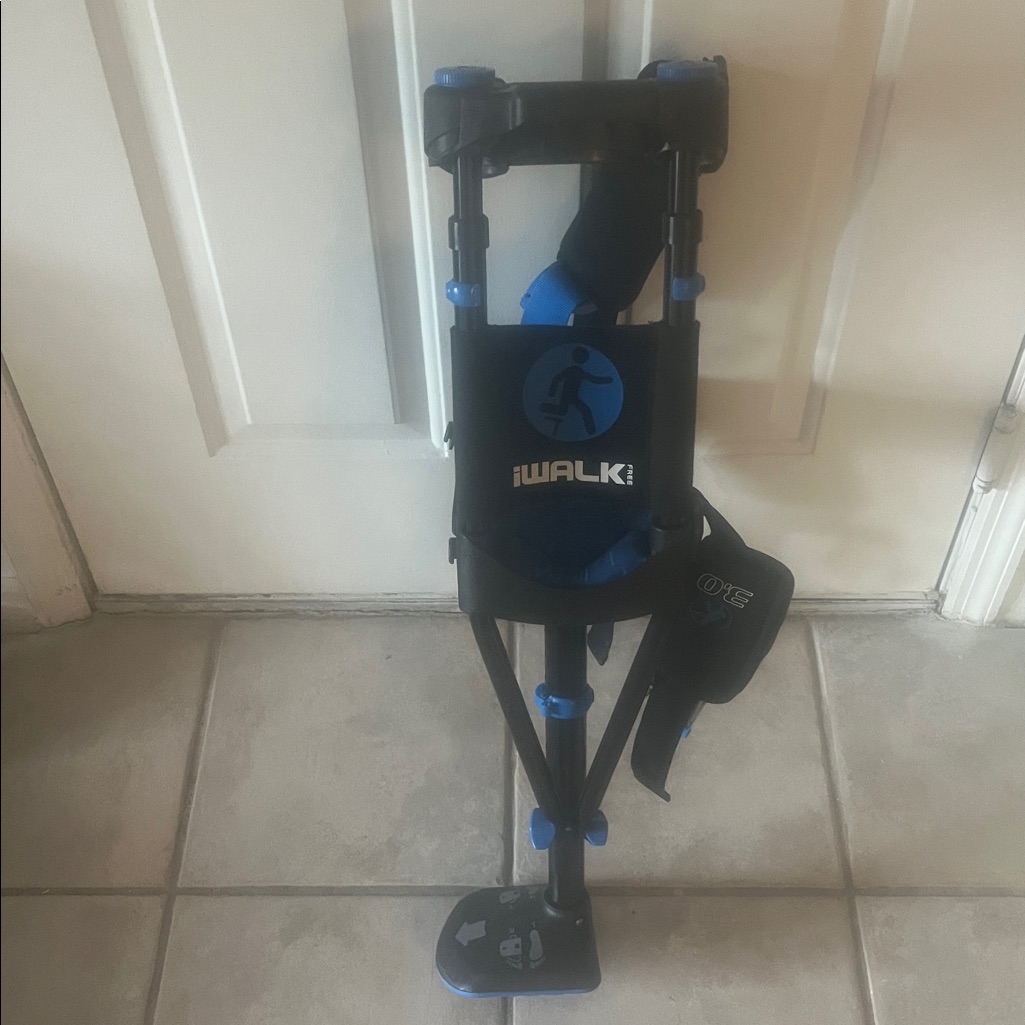
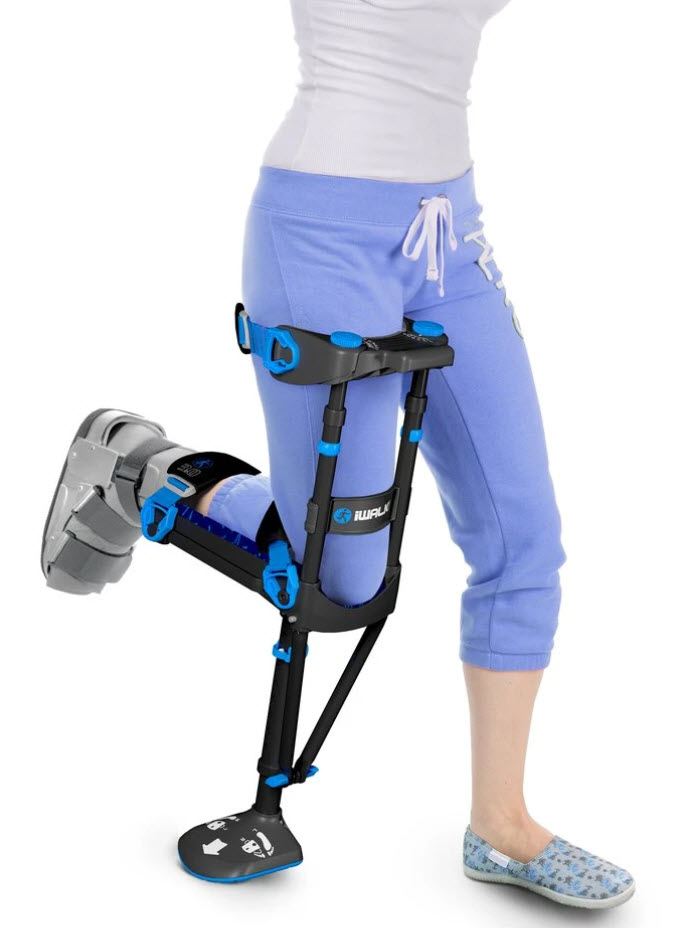
- Hands-Free Mobility: Experience the freedom to use your hands for everyday tasks while comfortably supporting your injured leg.
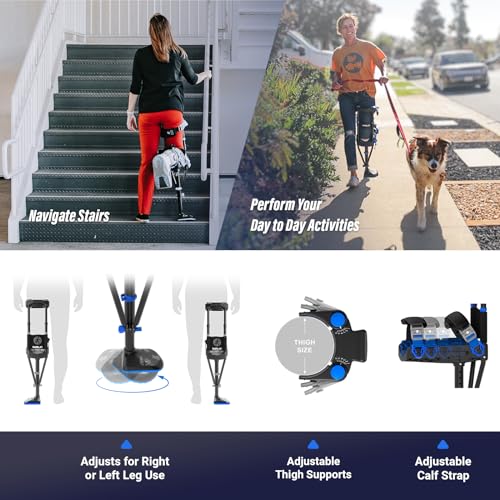
- Adjustable Design: Customizable height settings ensure a perfect fit for users of various sizes, promoting comfort and stability.
- Lightweight Construction: Weighing just 5.2 pounds, this crutch alternative minimizes fatigue during use and enhances mobility.
- Durable Materials: Built to last, the robust construction withstands regular use while providing reliable support and safety.
- Compact Dimensions: Measuring 16.3 x 5.5 x 8 inches, it’s easy to store and transport, making it ideal for travel and daily use.
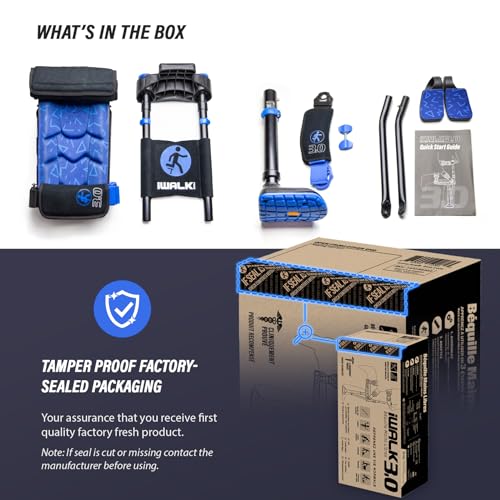
- User-Friendly Instructions: Comes with clear assembly and usage instructions, allowing for quick setup and easy understanding for all users.
Benefits of Choosing iWALKFree
The iWALKFree Hands Free Knee Crutch enhances your mobility while catering to your needs in a simple yet effective manner. Here are some key benefits:
- Regains Independence: Free movement encourages confidence and independence during recovery, enabling you to tackle daily activities without assistance.
- Promotes Faster Recovery: Engaging in physical activities while healing can lead to a quicker recovery time compared to standard crutches, reducing muscle atrophy.
- Comfort and Stability: Designed for comfort, it allows you to move with ease, preventing any strain on your body or the injury site.
Price Comparison Across Different Suppliers
The iWALKFree Hands Free Knee Crutch Alternative offers excellent value for its features. Prices may vary across suppliers:
- Amazon: Competitive pricing with frequent deals and reliable shipping options.
- Local Medical Supply Stores: Prices may be slightly higher but provide the option to try before you buy.
- Specialty Online Health Stores: Often include additional discounts or bundled offers for first-time purchasers.
6-Month Price History Trends
Examining the 6-month price history of the iWALKFree reveals some notable trends. Over the past few months, the price has generally remained stable with occasional dips during seasonal sales. On average, customers have benefited from price reductions that have made this product even more accessible.
Customer Reviews Overview
Customers rave about the iWALKFree Hands Free Knee Crutch Alternative, highlighting several positive aspects and a few considerations:
- Positive Reviews: Users frequently commend its comfort, ease of use, and ability to provide a more natural walking experience compared to traditional crutches. Many have shared stories of how it changed their healing process for the better.
- Noted Drawbacks: Some users mentioned a learning curve in using the device effectively. A handful of reviews pointed out that it might not support heavier weights comfortably, suggesting that individuals over a certain weight should consider this before purchasing.
Explore Unboxing and Reviews
Interested in seeing the iWALKFree in action? Check out various unboxing and review videos available on YouTube. Many users have documented their first experiences, providing real-life insights on how to use this innovative knee crutch alternative effectively. Watching these videos can help potential buyers visualize its benefits and functionality.
Conclusion: Your Next Steps
If you’re recovering from an injury and want to regain your mobility with confidence, the iWALKFree Hands Free Knee Crutch Alternative is a smart choice. With its innovative features, user-friendly design, and strong customer feedback, it stands out as an excellent option. Don’t let an injury slow you down. Compare prices now! Find the best deal from various suppliers to start your journey to recovery today.
iWALKFree Hands Free Knee Crutch Alternative Specification
Specification: iWALKFree Hands Free Knee Crutch Alternative
|
iWALKFree Hands Free Knee Crutch Alternative Reviews (8)
8 reviews for iWALKFree Hands Free Knee Crutch Alternative
Only logged in customers who have purchased this product may leave a review.

Lula Gagi –
Un buen producto
ggrace –
I bought the iWalk for recovery from ankle surgery. I was non-weight bearing for 3 months. I used both a knee scooter and the iWalk. Once I got used to the iWalk, the scooter was dumped into a corner because it was a strain on the neck, arms and back and required “wide open spaces” to navigate. And I found the scooter to be unstable: any little crack in the sidewalk or a rock will stop the wheels and you risk flying over the handlebars!
I found the iWalk to be very useful mostly around the house where the hallways and spaces are narrower (and cluttered ). For example, I was able to strip a bed, take the bedding to the laundry room, do the laundry, and remake the bed all while wearing the iWalk. You need to adjust your stance to compensate for balance and your leg sticking out but it’s doable. Here are some of the observations and experiences I had with the iWalk.
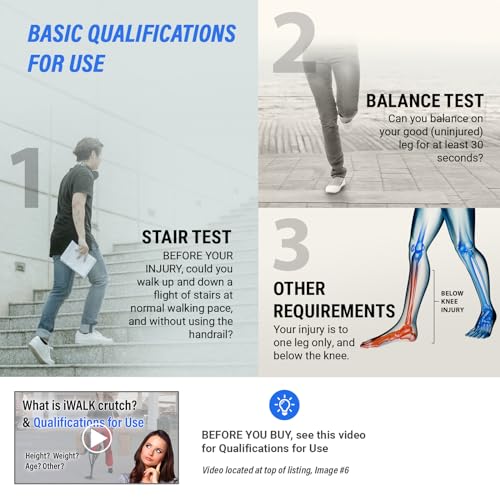
1. You really do need to have decent balance to begin with – and this will tax your strength and stamina at first. I really felt the strain in my good leg – not bad, just like a good workout muscle sore.
2. My back was relatively happy – I didn’t feel any back strain. You are mostly walking upright in an almost normal posture.
3. I am tall with a long inseam (38″). I had to use the iWalk on the tallest setting – I had no more adjustability. The bottom of my knee cap is 19.5″. If you are taller than that you may not be able to get a comfortable fit. Your good leg/knee would have to be bent to walk. Walking in a squat is not fun! Ouch!
4. Throw rugs are not friendly. Take extra care when walking around rugs or any uneven surface (even slightly uneven). Just beware that you might stumble so lift and place your iWalk foot purposefully. You might want to hang on to the thigh handle just to make sure you are steady until you get into more friendly territory.
5. Walk close to a wall until you are comfortable with the balance. If you get off balance it’s nice to have something solid to steady yourself. It took me about 2 weeks to really feel comfortable with the balance. The device makes you feel like you are leaning (falling) forward but that is that way it is supposed to work. Once you get used to that feeling, you will master the iWalk 2.0 quickly.
6. I was in a Cam Boot while using the iWalk. The heaviness of the boot may have caused some balance problems with the iWalk. It seemed like the leg wanted to swing out to the side and that caused the iWalk to wobble a bit. I found that holding on to the thigh handle stabilized the leg until I got used to the feel of the peg foot. After that it was a piece of cake.
7. Watch the iWalk videos. Notice that the instructions tell you to lean forward to walk. That helps you “fall” into a walking stride. Remember this when you feel a little unbalanced – lean forward a bit. Don’t wear a heavy purse or backpack – that puts you even more off balance to the rear and will cause you to fall. Leaning forward is the counterbalance to your leg sticking out behind you.
8. Make sure the straps are tight. The tighter the straps the more steady you will be. If the iWalk straps are loose, the device can shift and throw you off balance.
9. Wear a decent shoe on your good foot. These pictures of the iWalk models wearing flip flops and sandals is insane. You need a nice solid walking shoe (like a good lace up running shoe or one with a solid non-slip sole) so you can maintain your balance and not twist your good foot/ankle! Just remember, no matter what, you are still a little off balance with the iWalk. You have your foot hanging out behind you and that is an odd, off-balance weight that you are not used to.
10. And remember that your foot IS hanging out behind you by a foot or two (no pun intended) so when you walk backwards or take a corner…remember you have a sore appendage hanging out there. Smacking it into the wall could make you fall. Wear a brightly colored sock or cast cover – seriously. People pushing shopping carts may not see your black CamBoot (or cast) and run into you. And it can give you a reminder that you have an overhanging oversized load behind you! CastCoverz has really cute covers with lots of patterns. My Recovers has a higher end cast cover that is very well made with a heavy duty zipper that keeps the cover in place. But they are more expensive and not as much variety. I would recommend either. If you are handy with a sewing needle, the pattern is easy.
11. I have successfully negotiated narrow spaces (a long pantry/laundry room) with backing up. Just take small steps and make sure the iWalk leg is firmly on the ground. It may help to hold on to the handle when you are backing – beeping is optional.
12. Don’t twist or lean around to grab something off a shelf. That puts your whole body off balance and it is easy to stumble and wrench your back – or fall.
13. When you make a turn, stop and turn your whole body. If you have to do that in a couple small steps, so much the better. Leaning backwards or twisting sideways will only set you up for a fall.
14. Don’t take huge or fast steps at first. Slow down and put your feet down solidly and carefully. That said, I walked 10 miles over a weekend at a racetrack, zipped in and out of the heavy crowds, and climbed up and down the stadium stairs with no problem. One reviewer said to go backwards when you go down steps – I totally agree, it is much easier!
15. Remember that you cannot easily sit with the iWalk still strapped on so you have to practice taking it off and putting it back on. It’s pretty easy to do – it just requires something to hold on to or lean on to maintain your balance while you strap in or out. If you have a high stool that allows you to leave the iWalk strapped on, you still really have to be careful when you try to get back up. Make sure the iWalk leg is firmly under you and you hold on to something until you can push yourself upright. It really is safer to just take it off.
16. Clothing: Skirts or kilts will not work with the iWalk. A skirt can get tangled around your iWalk leg and/or your good leg which could cause you to stumble. The iWalk handle sits high on your thigh at crotch level. If you need to grab the handle while wearing a skirt you won’t get a good grip and you could stumble again. So wear pants or shorts.
17. My recommendation is to wear pants. The iWalk straps can pinch and irritate the bare skin on your knee/leg. And bare skin can sweat on the foam leg shelf which can cause your knee/leg to slip. To avoid irritation, wear pants.
18. And now that brings you to what kind of pants or shorts can you wear? If you are in a cast or CamBoot with “DO NOT REMOVE” instructions, you have to make sure your leg openings can go over the cast/boot. And if you are going back to work during your recovery, your wardrobe might be a bit limited. Just another thing to consider.
19. It is so nice to have one or two hands free to carry things. Recommendation: if you are going to carry something hot or breakable, carry it in your “good” hand (the opposite side of your injured leg).
That way if you slip or get off balance, you have a hand free to grab the iWalk thigh handle and steady yourself.
I stumbled a couple times as I was learning the feel of the device but I was able to catch myself with my good leg and not fall. However if you step down hard on the iWalk leg (as in a stumble), that could jar your sore foot/ankle. Just be careful.
20. Be prepared for people to stop you and ask questions. I work with engineers, several of whom actually got down on the floor to inspect the construction of the device. Ha! I spoke to so many nice people who wanted to know how it works, where to buy one, wished they had one after their surgery, etc. One reviewer mentioned that people look at you like a freak. I didn’t have that experience. Sure, I got lots of looks but it is a unique device and people are curious. I even was stopped by a Police Officer who wanted to give me a ride to the bus stop but when he understood how the device worked, he laughed and said “You get around better than me!”
All in all, the iWalk is very useful and worthwhile IF you are in decent shape (other than the injured leg/foot) and have good balance. If you find that the iWalk 2.0 is catching or stubbing on carpet, shorten the leg a bit until the lift and swing motion becomes natural.
UPDATE: i have been on the iWalk for over a month. It took a couple weeks to get comfortable with it. It’s just like learning how to use crutches – there is a learning curve to figure out how to balance. But once you practice and learn to relax and let yourself lean forward into the step, it’s great!
The iWalk doesn’t cause that constant knee pressure that a scooter can cause so it is so much more comfortable to use. And your hands are free!
After a couple weeks I was zipping around on the iWalk and had co-workers so nervous they were “yelling” at me to slow down! I even had someone chasing me down to get more information about the device. All I heard was “HEY! Peg leg lady! Slow down!! ” Ahahahahahaha
UPDATE 2: I got off the iWalk 2.0 1 month early because I was healing quickly. I went from the iWalk 2.0 to weight bearing in the Cam boot & brace. Oh my gosh – I wanted to go back to the iWalk! Walking in the boot was so slow! And I could carry heavy boxes and pull heavy loads of luggage with the iWalk easier than just in the boot! But healing is a good thing…
I highly recommend this device but you have to give yourself time to learn the balance and feel of walking. Once you master it – it took me 2 weeks – then it becomes second nature to use.
JESUS N. –
Ich Habe mir die Achillessehne gerissen, das hieß an Krücken laufen. Nach dem ersten Tag hatte ich fürchterlichen Muskelkater, nach dem dritten Tag taten mir meine Hände weh. Ich war nicht selbstständig, konnte mir nicht mal meinen Kaffee zum Tisch tragen. Daraufhin suchte ich nach einer Kniekrücke und was soll ich sagen – ich bin begeistert. Ich komme Treppen hoch ohne mit einem Bein zu springen und oben total erschöpft anzukommen, ich kann mir allein einen Kaffee holen und bin einfach nur selbstständig trotz gerissener und operierter Achillessehne. Ich bin wirklich begeistert und kann diese Kniekrücke nur empfehlen – ein Top Produkt
thomasdave –
Siguiendo las instrucciones es fácil de ensamblar. Los vídeos te ayudan y una vez que estás listo para usarla es imprescindible que veas el de USO. Sin embargo con mis 70 años no pude usarla; debes tener agilidad, músculos fuertes, buen equilibrio … en fin: a los 35/40 debe ser de gran ayuda
Yo lo intente y no pude! (Y no existe posibilidad de devolución)
Prime customer –
My husband purchased this recently after breaking his foot. He’s been using it for a couple of weeks and here are his thoughts thus far:
Pros:
– Frees up your hands so you can essentially live a relatively normal life.
– After practice it’s pretty easy to use. The movement becomes mostly natural, but you have to use it and practice with it to get to that point.
– Easy to adjust on the fly. Takes just a few seconds to break down to smallest size for transportation.
Cons:
– Can be tiring to use, but I think that’s to be expected. I wouldn’t recommend it for periods of extended use, but around the house and for short trips to the store or similar it’s fine.
– Using it without the straps (video instruction provided for this) could be easier, but front “handle” is very uncomfortable. I would highly recommend in the next version of the product that the handle be extended and rounded and made into a distinct grip for easier use rather than simply being a small extension of upper molded plastic piece. As is it’s painful on the hand and useful only for VERY short trips, like from the couch to the kitchen and back. Even then it’s very uncomfortable.
Overall I really like this solution. It allows you to get around while keeping your hands free as if you’re walking normally. For short periods of use it’s much more comfortable than crutches, and much more compact and transportable than a knee scooter. For a foot or ankle injury I can definitely recommend this product.
Anja Hartmann –
J’ai beaucoup de mal à béquiller et ce produit m’aide beaucoup. Ce n’est pas magique (douleurs dans le bas du dos et dans le genou) mais ça me permet de me déplacer plus facilement dans mon appartement.
thomasdave –
I had a broken ankle and could not put weight through the cast. This meant using 2 crutches for everything, including standing still. I’m fit and capable of holding myself up with traditional crutches, but this still leaves me unable to complete even basic tasks like make a coffer or sandwich, and stairs are potentially lethal.
So I bought this. My family were ALL sceptical, said I was wasting my money and it wouldn’t be safe, until they saw it, and agreed its brilliant.
With this I-walk knee crutch, I can move freely around and can even negotiate stairs safely ( I went down backwards ie facing up, and as my hands are free I can use handrails)
It is secure, strong and sturdy. The “foot” plate is about 125 x125mm and has a VIBRAM rubber sole plate: far more stable than the bottom of a crutch.
It takes a bit of setting up and adjusting to fit the individual: Height of the front bar , lower leg length and fixing straps are all adjustable and you may occasionally need to re-adjust the straps. Note that the rear strap can be moved forward or back to avoid pressing on the wrong part of your leg. I found that the edge of my cast bit into my shin so used a simple foam kneepad at the front to eliminate discomfort (see pic)
I also advise starting with the leg a bit short, so its easier to swing when you are standing on your good leg, then lengthen it later if you need. If you are standing flat and its the exact length of your other leg you have to go right onto tiptoes to clear any sort of uneven floor.
You can take it on and off in seconds once you have adjusted it correctly.
It takes a bit of getting used to: as it’s an extension of your upper leg there’s no bending at the knee, so careful placement when walking is essential so that the foot sits flat on its base and not on an edge as that could cause you to slip (its slightly curved to help this) . That said its solid and confidence inspiring.
Overall this is enabling, whereas crutches or a wheelchair are disabling.
On holiday in Canada when this happened, and I was able to get home to UK , getting around airports, access the plane aisles and get on transfer busses. For what it gives you, I’d rate 6 stars if I could.
Bryan Gibb –
I’ve been using tthis for almost a month after fracturing a bone in my foot— a no weight bearing injury. Using crutches for a couple of days was physically exhausting and mentally depressing because I did not have the mobility or independence to easily carry out many daily activities. My sister recommended this product and most of the reviews were glowing. Without rereading them all, I’m going to reiterate the sentiment— the iWalk is fantastic and I highly recommend it.
For context, I’m close to the maximum height and weight limits of the device and its held up just fine. I was using the device to get around the house within an hour of setting it up, and became comfortable using it regularly within a day or two. Let me try to capture a few quirks and features and for me as well as my use and limitations.
quirks and features:
– Adding additional padding for significantly improved comfort for my knee. I tried memory foam that others suggested, but ended up with purple brand pillow insert. Its basically 3/4 of inch thick soft padding that is about the size of a pillow. I have it folded over two times to fit the device. I say this not to recommend that you purchase the same pillow insert, but I had it sitting around already and for me it worked better than the memory foam that I tried. (iWalk: if you read these reviews, consider making and selling some pad accessories)
– Getting the straps on tight is essential for best function. When the straps are snug, this feels like a solid extension of your leg and improvese balance and confidence when using. Its something that needs to be checked and corrected every time I put the iWalk on. If one or more straps are even a little bit loose, then it allows for some play relative to the leg/knee, which makes it easier to have a mis-step or trouble maintaining balance.
– I’m able to get around almost everywhere I want with the iWalk and since it’s hand free, this gives me most function. I’m able to do things around the house (cooking, cleaning, yard work), shopping, attend my son’s sports games, go out to restaurants. I’m able to get up and down stairs, though doing so requires extra concentration and I follow the iWalk recommendation of going backwards downs stairs unless its a single step.
– It took me about an hour to setup the iWalk. It has to be assembled, but their video instructions made doing this easy. Fine tuning the adjustment, especially with the straps took another day or two, but once then it becomes easy to identify and correct issues. For example, I went from a walking boot (before surgery) to a splint (following surgey) to a hard cast. Each of those changed the way that the straps fit, and required adjustment. Its not hard to do, and important to do it to ensure a good fit.
– Some (most or all) boots come with an air bladder and push pump integrated on the boot. Mine has the pump on the front, which isn’t ideal. In my case walking around with the iWalk in the boot would gradually inflate the bladder, so I would periodically need to release the pressue. This was a minor annoyance. If you have a choice, I recommend getting a boot with the pump off to the side.
– This works best on flat solid surfaces. When the ground is uneven, i.e. grass sports fields or not solid, i.e. thick carpet or sand, the device is harder to use and its essential to have the iWalk on with a great fit (tight straps).
– I also have a knee scooter and aluminum crutches. I use the iWalk most of the time and especially around the house. The crutches are mostly used for showering. I’ve used the knee scooter mostly for sports tournaments because it is easier for traversing longer distances and can be used as seat*.
-Over the course of the month I’ve been using it, there have been days that I’ve worn the iWalk for many hours. While the device itself remains comfortable (with my added pad), there is fatigue and sometime pain in the knee, which is similar to a bursitis. This pain goes away and seems to reset by resting my knee, but now I try to limit how long I’ll be wearing it for an individual use and total throughout the day to avoid this becoming a bigger issue.
– Its possible to use this without the straps where you hold the grab handle. It works, but I only do this when going short distances in the house, like going to the bathroom or doing something else where I’ll be back sitting quickly. Using the iWalk this way is a totally different experience and always demands concentration and care to avoid falling.
– I showed this to my orthopaedic surgeon and said that they don’t typically recommend because it may not work well for older individuals who have arthritis in their knees or balance issues, but were fine with younger people using it.
Overall: I use this every day and having my hands free enables me to get around almost anywhere I need to go and do many of the day-to-day tasks that just can’t be done easily or at all with crutches. Everywhere I go, I get comments from people asking me about this. Its really an innovative device and I’m very happy that I purchased it. If you have doubts, ask your physician about it first.