
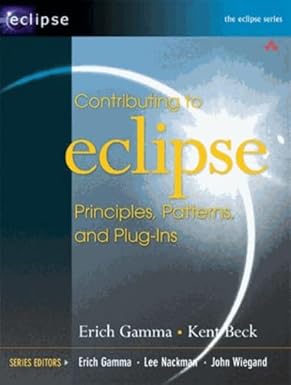
Contributing To Eclipse: Principles, Patterns, And Plug-Ins
 Kobo.com
  Betterworldbooks.com
  Walmart.com
  Knetbooks.com
  Fye.com
$17.45
Contributing To Eclipse: Principles, Patterns, And Plug-Ins Price comparison















- All prices mentioned above are in United States dollar.
- This product is available at Rakuten Kobo US, BetterWorld.com - New, Used, Rare Books & Textbooks, Walmart.com, Amazon.com, Knetbooks.com.
- At kobo.com you can purchase HR Information Systems Integration Patterns for only $0.26 , which is 99% less than the cost in Knetbooks.com ($35.88).
- The lowest price of Plug-Ins was obtained on October 29, 2025 13:21.
Contributing To Eclipse: Principles, Patterns, And Plug-Ins Price History
Contributing To Eclipse: Principles, Patterns, And Plug-Ins Description
Contributing To Eclipse: Principles, Patterns, And Plug-Ins – Your Guide to Eclipse Development
If you’re looking to enhance your skills in Eclipse development, Contributing To Eclipse: Principles, Patterns, And Plug-Ins is a must-read. Published by Addison-Wesley Professional, this comprehensive guide explores the fundamental principles and design patterns that can help streamline your development processes and improve productivity.
Key Features of Contributing To Eclipse
- In-Depth Insights: This book offers deep insights into Eclipse’s architecture, helping you understand how to efficiently utilize its vast capabilities.
- Practical Examples: The text includes numerous examples and case studies that illustrate best practices for plug-in development and integration.
- Comprehensive Coverage: With 395 pages filled with expert advice and strategies, this book is perfect for both novice and experienced developers.
- ISBN Details: ISBN-10: 0321205758, ISBN-13: 978-0321205759 – ensuring you get the correct edition.
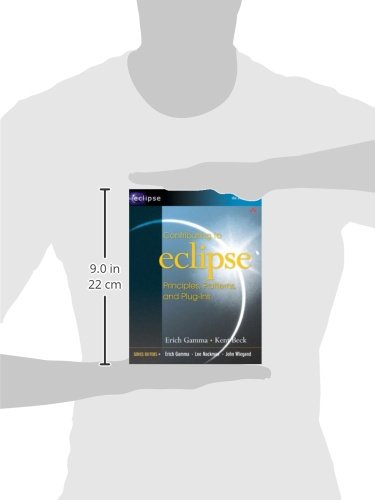
- Physical Specifications: The paperback edition weighs 1.41 pounds and measures 7 x 1 x 9.25 inches, making it easy to handle and read.
Price Comparison Across Various Suppliers
The pricing for Contributing To Eclipse varies among different retailers, providing you opportunities to find the best deals. By utilizing our price comparison feature, you can easily spot competitive pricing from various suppliers. Over the past six months, prices have fluctuated, reflecting consumer demand and availability. Our 6-month price history chart shows these trends clearly, enabling informed purchasing decisions.
Trends from the 6-Month Price History
- The lowest price recorded was approximately $29.99, while the highest reached $49.99, showing a diverse range for buyers.
- Prices tend to drop during seasonal sales, making certain times ideal for purchase.
Customer Reviews Summary
The reviews on Contributing To Eclipse highlight its practical approach and thoroughness. Here’s a breakdown of what readers are saying:
- Positive Aspects: Many reviewers appreciate the clear explanations and practical examples, noting that the book is invaluable for those wishing to master Eclipse.
- Drawbacks: Some users mentioned that the book could benefit from more visual illustrations to complement the textual explanations.
Explore YouTube Reviews and Unboxing Videos
To dive deeper, check out various YouTube reviews and unboxing videos that showcase the book’s content and structure. These resources provide a clear view of what to expect, enhancing your understanding before making a purchase. Engaging with these videos can also offer real-world applications of the principles discussed in the book.
Why Choose Contributing To Eclipse?
This book stands out and is highly recommended in the developer community. It not only explains the how-to of Eclipse but also delves into the ‘why’ behind various development practices. Whether you’re a seasoned developer or just starting out, this guide will expand your toolkit and streamline your Eclipse experience.
Final Thoughts
Contributing To Eclipse is essential for anyone looking to enhance their Eclipse skills through detailed principles and patterns. Given its comprehensive content and competitive pricing, it’s an advantageous addition to your professional library.
Ready to take your Eclipse development to the next level? Compare prices now!
Contributing To Eclipse: Principles, Patterns, And Plug-Ins Specification
Specification: Contributing To Eclipse: Principles, Patterns, And Plug-Ins
|
Contributing To Eclipse: Principles, Patterns, And Plug-Ins Reviews (5)
5 reviews for Contributing To Eclipse: Principles, Patterns, And Plug-Ins
Only logged in customers who have purchased this product may leave a review.

Karsten Becker –
Yes, this book is definitly worth it’s price. I’m used to have it lying beside my keyboard while coding plugins. Even after a long time of coding in Eclipse you’ll see your self spending some time and learning about some special concepts from Eclipse. There are not so much codesections that could be copy&pasted, but they will show you how to gather your information yourself, without long and ugly examples.
The TestDrivenDevelopment was very new to me and so I had my problems extracting some details from the code. There are some Graphs created with their own tool called Spider which I found also not to be that useful.
Manuel A. Ricart –
I don’t like this book as a book on writing plugins for eclipse for the following reasons:
1) This book’s ‘exploratory’ approach tries to show you how to search (the hack approach) through the installed plugins for excerpts that you can copy/paste/edit. It would have been more useful if the authors used a ‘tutorial’ approach that constrains the example to documented basics (many different examples that then integrate/or not).
2) As expected (and tiring if you have other book from these authors), JUnit integration is the example developed throughout the book. This may satisfy the need for some types of plugins (code oriented plugins), but leaves much to be desired if you want to develop other kinds of tools.
3) The samples are outdated in 3.0, and the main example won’t work/run in 3.0 (even if you download their project source). If you try to follow along, you will quickly be disapointed once you run into that snag. I am sure that under 2.x it works great.
4) This book is useful as a way of seeing a small example built up. However, because of #3, this all becomes useless once the plugin doesn’t ‘work’.
As with most books that cook a long example as a way of teaching, rather than as a way to support other knowledge, much of the time is spent on explaining how to cook things for the example. For me this doesn’t work, as I want something focused that instructs me, rather than a evolving code-walkthrough of a particular example. To me this is boring, and has no use after the initial read.
This book would be great if it was 1/2 as long, and focused on the patterns for the plugins instead, not presume to be an intro to plugin development.
R. Williams –
Guess the only negative review on here established that you probably shouldn’t buy this book if you consider yourself an expert on the subject. I’m usually sympathetic to criticism of books that claim that the examples are too simple (very common, showstopping problem with MANY books), but in this case, I think the balance that is struck is just about perfect. You can follow what is being done in the code while reading along, and the code actually does stuff that is useful.
The real reason this book deserves 5 stars is, the secret is that this book is actually 4 or 5 books in one, and it’s also perhaps one of the best practical guides to the future of programming. Consider:
1. Just the unit testing aspects of this book are better than in many books that are just about unit testing.
2. Framework programming is a really dimly lit subject. The only frameworks most people have any experience with are UI frameworks. Eclipse is a great example of a comprehensive framework, given the fact that all things are done as extensions. Just that aspect of this book is a hugely important lesson to be gleaned. The literal expert will say they already knew how to do each step; the structuralists in the crowd know that a big part of successful pedagogy is having people experience the making of something (in the same way that cookbooks are a fusion of things to learn about technique, not just a collection of specific recipes).
3. The pattern discussion is good and benefits from its situation in the broader framework context. (Checkout the Junit Cook’s Tour article by the same authors; it is one of the best short works on patterns around.)
The only knock on this book is that it’s about Eclipse 2.x. At Eclipsecon a couple weeks ago, almost the whole room raised their hands during a straw poll about how many were using 3.x. Because of the above, this book is still worth it. Would have been nice if someone updated the code to compile with 3.x though.
ws__ –
This book takes you through a tour on plugin development. The main disadvantage of this book is that it is for Version 2 and not Version 3 of Eclipse. Yes you can somehow manage to translate and find your way around. Anyhow this is quite annoying not always successful and maybe one wants to learn more about the special advertised feature of Eclipse 3: rich client platforms. A topic inherently connected to plugin development. Please give us a new version of this book.
W Boudville –
Two widely know and experienced software authors came together to produce this book. Their writing skill shows clearly in the clarity of the step-by-step pedagogy that they use. They define a “Contribution Circle” of different types of Eclipse usage, from User to Configurer to Extender to Publisher to Enabler and back to User. They suggest how each role can get code from its predecessor, add to it or extract ideas for a new code base, and then offer these new changes to its successor. In doing so, we see the emergence of a virtuous positive feedback loop, and the rise of an Eclipse community.
Granted, this may sound nice but vague. So Gamma and Beck proceed in the book to describe 4 such circles, in gradually increasing detail, that illustrate the concept. As is obligatory in a software text, they start with the demotic “Hello World”. The coding is trivial. But even here, they show the various needed files and a look at the Eclipse framework. Plus, and this is good teaching style, most readers will gain some understanding immediately from this first example. Encourages you to delve further. (As opposed to a text that is totally over most readers’ heads from the first chapter.)
The book gives the big picture of Eclipse, in explaining the various roles of users. As such, it is a good complement to other Eclipse texts, which tend to focus on specific Eclipse features or applications.