The best running watches do more than record distance and pace. They help you see whether your training is actually moving in the right direction by combining reliable GPS, heart-rate data, workload trends, recovery information, race predictions, and enough battery life to capture the sessions that matter.
For most serious runners, the Garmin Forerunner 970 is our best overall choice because it combines Garmin’s deep training ecosystem with multi-band GPS, mapping, training readiness, training status, recovery information, and advanced performance metrics. The COROS PACE 4 is the stronger value choice: it costs far less, weighs very little, and provides excellent battery life plus the core running and recovery tools most athletes need.
The right choice still depends on how you train. Newer runners may get better value from the Garmin Forerunner 170, iPhone users may prefer the smartwatch capabilities of Apple Watch Ultra 3, while ultrarunners can justify the extreme endurance of Garmin Enduro 3. We compared seven current running GPS watches based on how useful their data is for measuring progress over time rather than simply counting features.
Quick Answer: Best Running Watches for Tracking Progress
Best Overall: Garmin Forerunner 970 — the most complete option here for runners who want deep training, recovery, mapping, and performance insights.
Best Value: COROS PACE 4 — a lightweight $249 running watch with up to 41 hours of GPS use and a strong set of running, recovery, and race tools.
Best for Newer Runners: Garmin Forerunner 170 — an approachable way into Garmin’s training ecosystem without paying premium-watch prices.
Best for iPhone: Apple Watch Ultra 3 — the best fit for runners who want serious workout features and a full Apple smartwatch experience in one device.
Best for Ultramarathons: Garmin Enduro 3 — the specialist choice when GPS battery life and long-event endurance matter more than compact size.
How We Chose the Best Running Watches
We prioritized the information that helps runners make better training decisions: GPS and pace consistency, heart-rate usefulness, training load, readiness and recovery metrics, race and performance tools, battery endurance, comfort, navigation, ecosystem quality, price, and current U.S. availability.
Specifications and manufacturer claims were checked against official product information, while independent running-watch coverage was used to identify practical strengths and drawbacks. Discompare did not conduct hands-on laboratory testing for this guide, so we do not present manufacturer estimates or third-party findings as our own measurements.
Price alone does not determine ranking. A cheaper watch can be a better value, but the editorial order reflects how effectively each product helps a particular type of runner track progress.
Best Running Watches at a Glance
| Running Watch | Best For | Regular Price / MSRP | Battery Claim | Key Progress Tools | Main Trade-Off |
|---|---|---|---|---|---|
| Garmin Forerunner 970 | Best overall | $749.99 | Up to 15 days smartwatch; up to 26 hours GPS | Training readiness, training status, recovery, VO₂ max, load, mapping | Expensive and feature-heavy |
| COROS PACE 4 | Best value | $249 | Up to 19 days daily use; 41 hours GPS | Running fitness, recovery, race prediction, training tools | No full offline mapping experience |
| Garmin Forerunner 170 | Newer runners | $299.99 | Up to 10 days smartwatch; up to 20 hours GPS-only | Training readiness, training status, Garmin coaching ecosystem | PACE 4 offers more battery for less money |
| Polar Vantage M3 | Recovery and training load | $499.99 | Up to 7 days smartwatch; 30 hours performance training | Training Load Pro, recovery, Running Index, running power | Less extensive smartwatch ecosystem |
| Apple Watch Ultra 3 | iPhone runners | From $799 | Up to 42 hours normal use; 72 hours Low Power Mode | Training load, heart-rate zones, running power, pacing metrics | Shorter endurance than running-first rivals |
| Suunto Run | Lightweight simplicity | $249 regular price | Up to 12 days daily use; 20 hours high-accuracy training | Training load, recovery, intervals, Ghost Runner | Less GPS endurance than PACE 4 |
| Garmin Enduro 3 | Ultramarathons | $899.99 | Up to 120 hours GPS-only; 36 days smartwatch | Training status, readiness, navigation, endurance metrics | Large, expensive, excessive for typical road running |
Current Prices for Our Top Running Watch Picks
Retail prices change frequently, so use the live offers below to compare current availability rather than relying on a temporary sale price quoted in the article.


1. Garmin Forerunner 970 — Best Overall for Tracking Progress
Best for: runners who want the most complete combination of training analysis, recovery guidance, navigation, and performance tracking.
The Garmin Forerunner 970 is our best overall running watch because it turns a large amount of workout data into information that can be followed over time. Garmin’s Training Status uses longer-term changes in factors including VO₂ max, acute load, and HRV status, while Training Readiness and recovery information help put today’s workout into the context of recent stress and recovery.
That matters for runners who have moved beyond simply asking, “How far did I run?” A watch becomes more useful when it can help you see whether workload is productive, whether recovery is keeping up, and whether a change in pace is occurring alongside an improving fitness trend rather than one unusually fast session.
The Forerunner 970 also includes multi-band GPS and built-in mapping, making it more capable than most running watches for unfamiliar routes, long training days, or runners who mix road, trail, and travel. Garmin lists a $749.99 price, up to 15 days of smartwatch battery life, and up to 26 hours in GPS mode.
The downside is straightforward: most runners do not need everything it can do. If your routine consists mainly of several road runs each week and you want dependable pace, heart rate, recovery, and workout structure, the COROS PACE 4 or Forerunner 170 can cover the essentials at a much lower price.
Pros
✅ Deep training and recovery analysis
✅ Multi-band GPS and built-in mapping
✅ Strong tools for structured training and race preparation
✅ Long enough battery for most road, marathon, and endurance training
Cons
❌ $749.99 price is difficult to justify for casual runners
❌ Large feature set can be more complicated than beginners need
❌ Some advanced metrics work best with additional compatible sensors
Who should skip it: runners mainly interested in basic GPS, pace, heart rate, and simple workout guidance.
Alternative: choose the COROS PACE 4 if value and battery life matter more than maps and Garmin’s broader ecosystem.
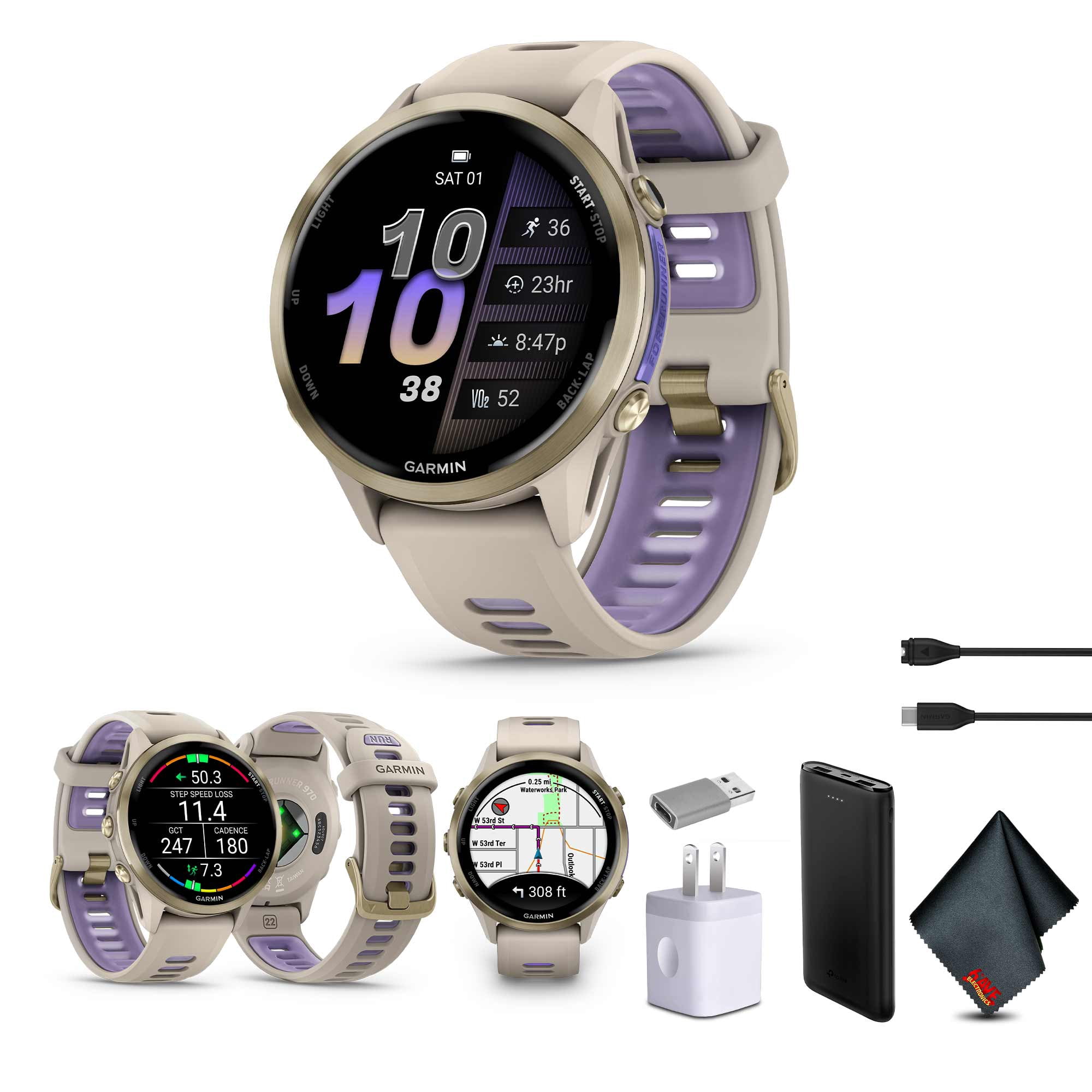
- High-performance GPS fitness smartwatch designed for runners, triathletes, and endurance athletes.
- Features Garmin’s brightest AMOLED display for clear visibility.
- Built with a lightweight titanium bezel and a scratch‑resistant sapphire lens.
- Engineered to withstand intense training and demanding conditions.
2. COROS PACE 4 — Best Value
Best for: runners who want serious training features and excellent GPS battery life without paying premium-watch prices.
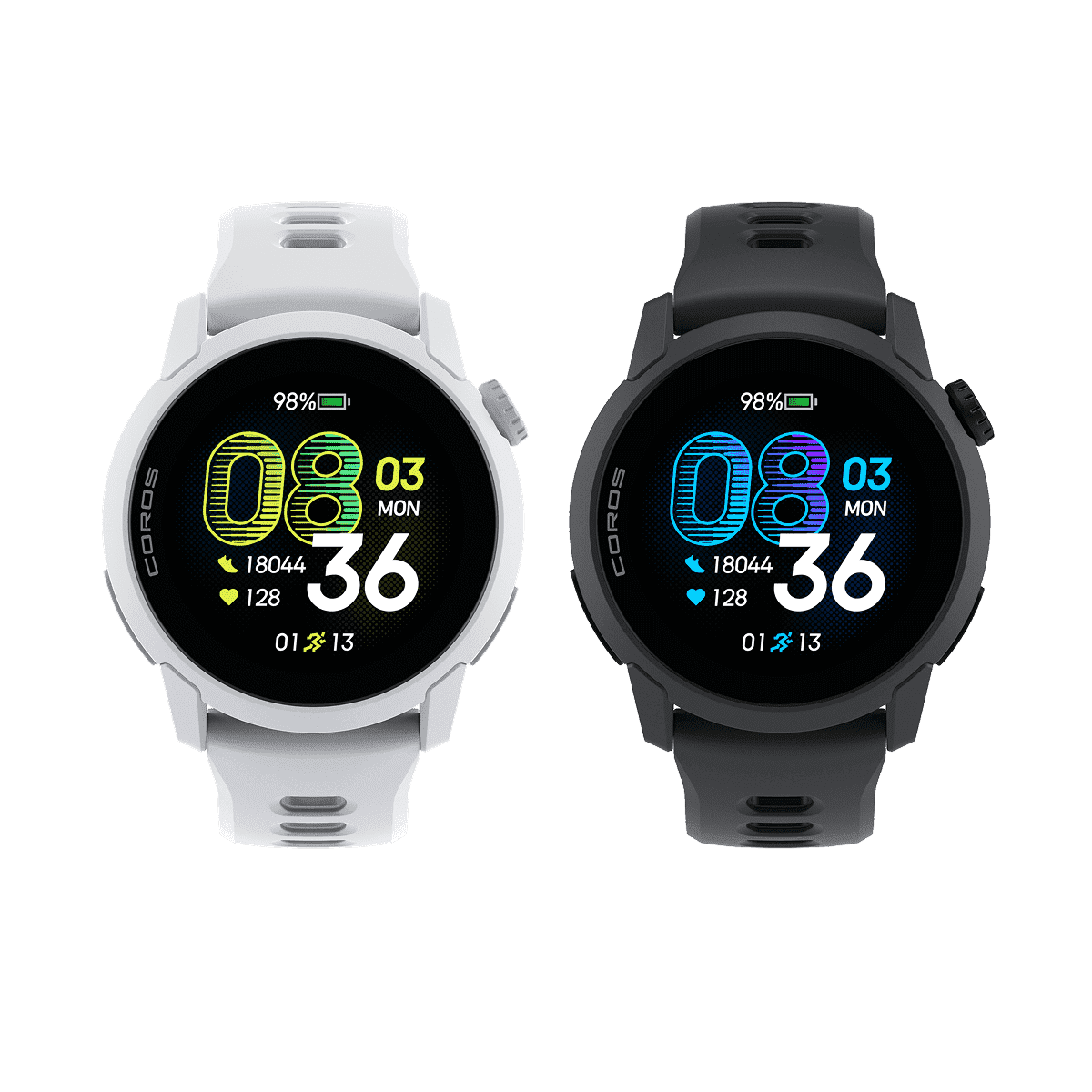
COROS PACE 4 is the value benchmark in this group. Its $249 price is unusually low for a current running watch with dual-frequency GPS, a lightweight design, an AMOLED display, structured training tools, race prediction, recovery information, and enough battery for long training blocks.
COROS rates the PACE 4 for up to 41 hours in its high all-systems GPS mode and up to 19 days of daily use. That changes the experience of tracking progress because the watch can stay on your wrist consistently for workouts, sleep, and recovery monitoring without requiring frequent charging.
PACE 4 also keeps the focus on running rather than trying to behave like a miniature smartphone. COROS provides Running Fitness, workout creation, recovery information, race-prediction tools, and personalized training options. For athletes who already use platforms such as Strava or TrainingPeaks, the ecosystem can provide the core information needed to follow improvement without a premium Garmin price.
The main compromise is navigation and smartwatch depth. If you frequently run unfamiliar trails and want detailed onboard maps, the Forerunner 970 is more complete. Apple Watch Ultra 3 also offers much richer everyday smart features. But if running performance per dollar is the priority, PACE 4 is difficult to beat.
Pros
✅ Excellent $249 value
✅ Up to 41 hours of GPS use
✅ Extremely lightweight design
✅ Strong running, race, recovery, and training tools
Cons
❌ No full offline mapping experience comparable with premium Garmin models
❌ Fewer smartwatch conveniences than Apple Watch
❌ Runners already deeply invested in Garmin Connect may prefer to remain in that ecosystem
Who should skip it: runners who consider detailed onboard maps, payments, apps, or smartwatch functions essential.
Alternative: Garmin Forerunner 170 is a good step into Garmin’s ecosystem if training readiness and Garmin Connect matter more than maximum battery per dollar.
Short summary
An ultralight AMOLED GPS watch designed to help you train smarter and run faster, with a built‑in microphone for recording training logs and quick notes while running.
Key features
- Ultralight design for all‑day comfort
- Built‑in mic to record training logs/notes or save quick notes mid‑run
- Weights: 32 g with the nylon band, 40 g with the silicone band
- Mentions a vivid "1.2..." (source description is truncated here)
Note: the provided product description was incomplete and ends with "A vivid 1.2...", so display/specification details after that point were not available.
3. Garmin Forerunner 170 — Best for Newer Runners
Best for: newer or improving runners who want Garmin’s training ecosystem without starting with a high-end Forerunner.
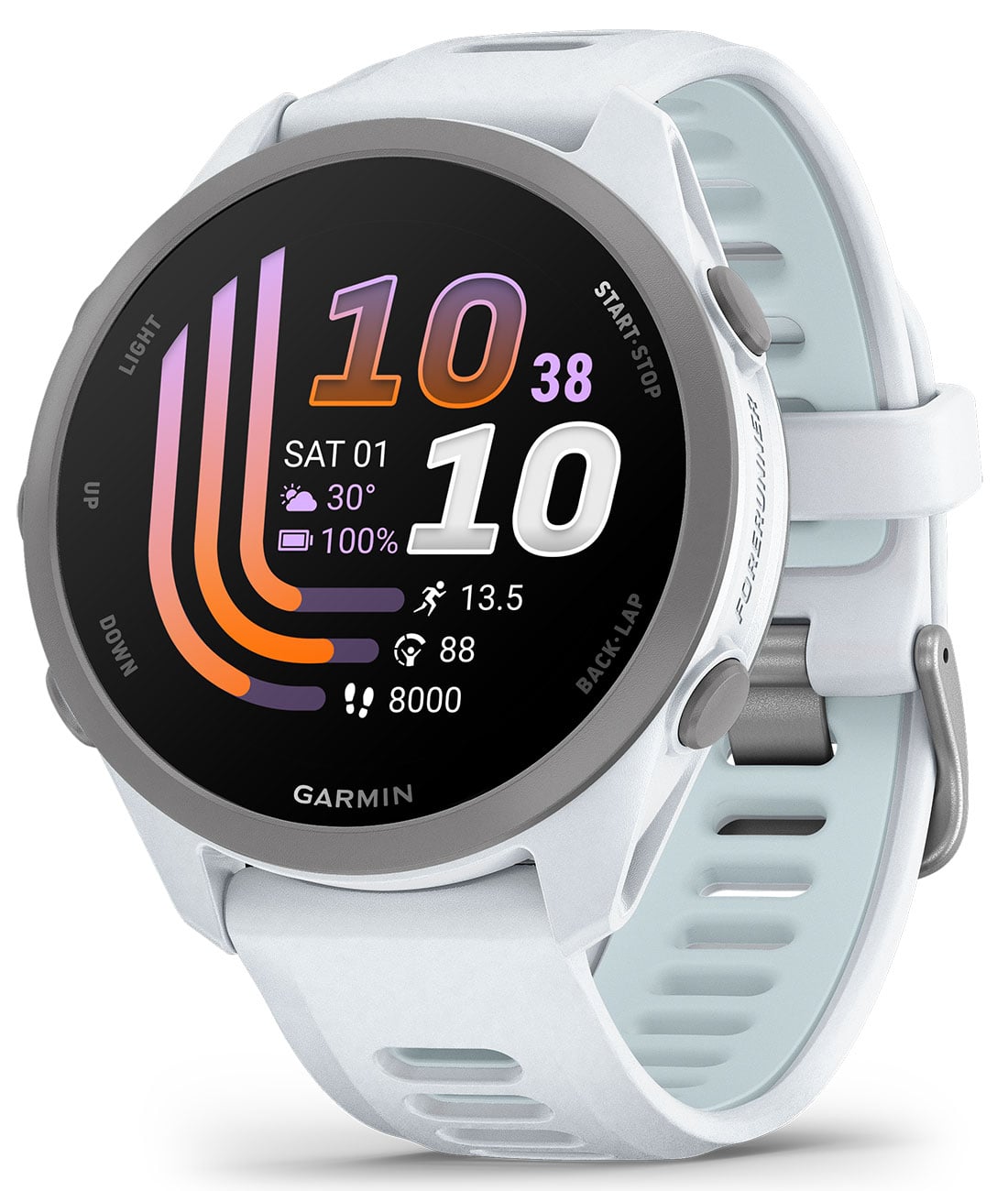
The Garmin Forerunner 170 makes the most sense for a runner who wants more guidance than a basic fitness tracker can provide but does not need premium mapping or the full depth of the Forerunner 970. At $299.99, it includes Training Readiness and Training Status, putting two of Garmin’s most useful progress-oriented tools into a much more accessible watch.
Garmin rates the Forerunner 170 for up to 10 days in smartwatch mode and up to 20 hours in GPS-only use. That is enough for ordinary weekly training, long runs, and marathon recording, although COROS offers substantially longer GPS endurance for less money.
The larger reason to choose the 170 is Garmin itself. Garmin Connect gives a developing runner room to move from basic run tracking into structured workouts, recovery analysis, training trends, and more deliberate race preparation without changing ecosystems later.
It is not automatically the best sub-$300 purchase. PACE 4 is stronger on battery and value, and Garmin’s own less expensive options may be sufficient for runners who only need fundamentals. The Forerunner 170 makes the most sense when Garmin’s training platform is specifically part of the buying decision.
Pros
✅ Training Readiness and Training Status at a lower Garmin price
✅ Good fit for runners moving into structured training
✅ Access to Garmin’s established training ecosystem
Cons
❌ Shorter GPS battery claim than COROS PACE 4
❌ Does not include the maps and premium hardware of the Forerunner 970
❌ Less compelling if you do not specifically want Garmin’s ecosystem
Who should skip it: experienced endurance runners who need maps, very long GPS battery life, or Garmin’s most advanced training features.
Alternative: COROS PACE 4 for stronger value and battery endurance.
- Easy-to-use GPS running smartwatch with a bright AMOLED touchscreen (43 mm).
- Tracks core running metrics: pace, distance and wrist-based heart rate.
- Provides advanced training and recovery metrics to monitor performance.
- Includes personalized, beginner-friendly Garmin Coach training plans to help prepare for races.
- Marketed as the "Music" model (43 mm), indicating a music-capable variant.
4. Polar Vantage M3 — Best for Recovery and Training Load
Best for: runners who want training stress, recovery, and long-term performance trends to play a central role in their plan.
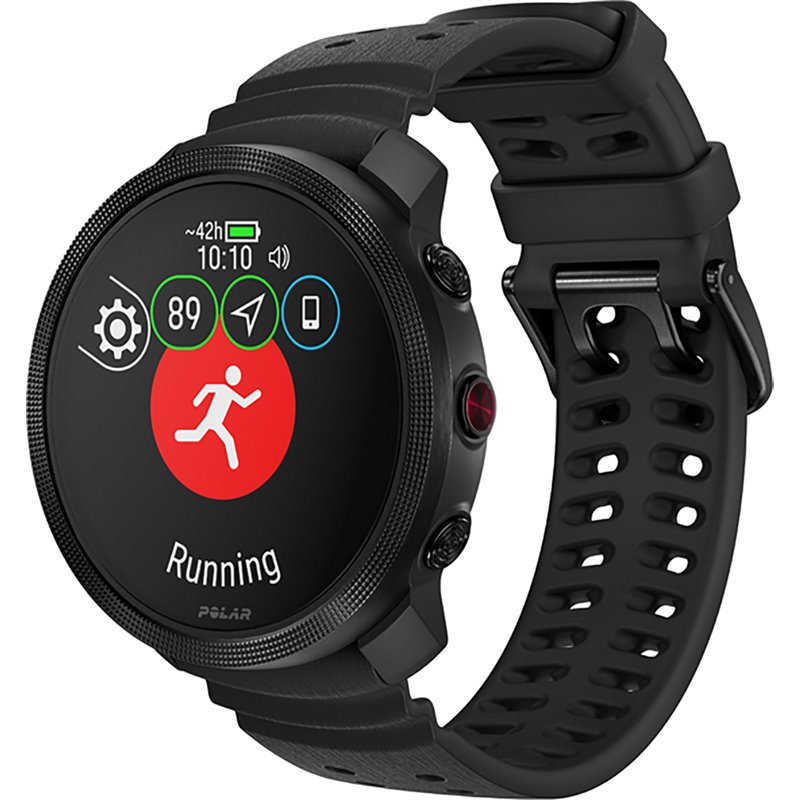
Polar Vantage M3 stands out because Polar’s platform is built around understanding how training affects the body rather than simply producing more workout screens. The $499.99 watch includes Training Load Pro, Running Index, wrist-based running power, recovery tools, sleep tracking, dual-frequency GPS, and offline topographic maps.
Those features make the Vantage M3 particularly relevant to the idea of tracking progress. A faster run is useful information, but sustainable improvement depends on how workload accumulates and whether recovery is supporting the next block of training. Polar Flow is designed to help connect those pieces.
Polar rates the watch for up to seven days in smartwatch mode, 30 hours in its performance training mode, and up to 70 hours in a more economical training configuration. That gives it enough endurance for normal marathon preparation and many longer events without entering the oversized ultra-watch category.
The trade-off is that Polar is more sports-platform than smartwatch ecosystem. Buyers prioritizing apps, communication, and phone integration may prefer Apple Watch Ultra 3. Runners who want even longer endurance for less money should look at PACE 4.
Pros
✅ Strong training-load and recovery focus
✅ Dual-frequency GPS and offline maps
✅ Running Index and running-power tools
✅ Useful sleep and recovery ecosystem
Cons
❌ $499.99 is much more than value-focused running watches
❌ Smart features are less extensive than Apple Watch
❌ Runners needing maximum heart-rate precision may still prefer a compatible chest strap for demanding sessions
Who should skip it: buyers mainly looking for smartwatch apps or extreme ultra-distance battery life.
Alternative: Garmin Forerunner 970 if maps, Garmin’s broader training platform, and premium running features justify the extra cost.

A sleek multisport watch that combines elegant design with precise training tools for athletes who want to improve performance.
- Continuous heart rate monitoring
- Integrated GPS for accurate tracking
- Detailed performance analysis for personalized training
- Recovery guidance to optimize rest and progress
- Durable yet lightweight for comfort during intense activity
- Smart features to enhance everyday use
Ideal for motivated athletes seeking a stylish, reliable device to support training and recovery.
5. Apple Watch Ultra 3 — Best for iPhone Runners
Best for: iPhone owners who want one device for running, everyday communication, apps, health features, and smartwatch use.
Apple Watch Ultra 3 is the strongest choice here when running is important but not the only reason you wear a watch. It starts at $799 and combines precision dual-frequency GPS with Apple’s broader watchOS ecosystem, cellular and connected features, and a growing set of running metrics.
For training, Apple supports heart-rate zones, training load, running power, cadence, stride-related metrics, pacing tools, and race-oriented workout functions. That is enough depth for serious road training while still providing the phone integration that dedicated running watches cannot match.
Battery life is the main compromise. Apple rates Ultra 3 for up to 42 hours of normal use and up to 72 hours in Low Power Mode. That is a major improvement over a typical mainstream smartwatch, but it is still far behind COROS PACE 4 or Garmin Enduro 3 when continuous GPS endurance and infrequent charging are priorities.
The ecosystem decision is equally important. Apple Watch Ultra 3 is designed around iPhone ownership. Android users should look elsewhere, while iPhone runners who care more about dedicated training analytics than apps may still prefer Garmin, COROS, or Polar.
If your choice is broader than running and you are comparing complete smartwatch ecosystems, our Apple Watch Series 11 vs Samsung Galaxy Watch9 comparison is the more relevant next step.
Pros
✅ Excellent fit for runners already using an iPhone
✅ Precision dual-frequency GPS
✅ Strong mix of running and smartwatch features
✅ Useful training-load and running-performance metrics
Cons
❌ $799 starting price
❌ Requires an iPhone ecosystem
❌ Battery endurance is much shorter than dedicated endurance watches
Who should skip it: Android users, ultrarunners, and buyers who prioritize week-plus battery life over smart features.
Alternative: Garmin Forerunner 970 for deeper running-first analysis and longer everyday battery life.
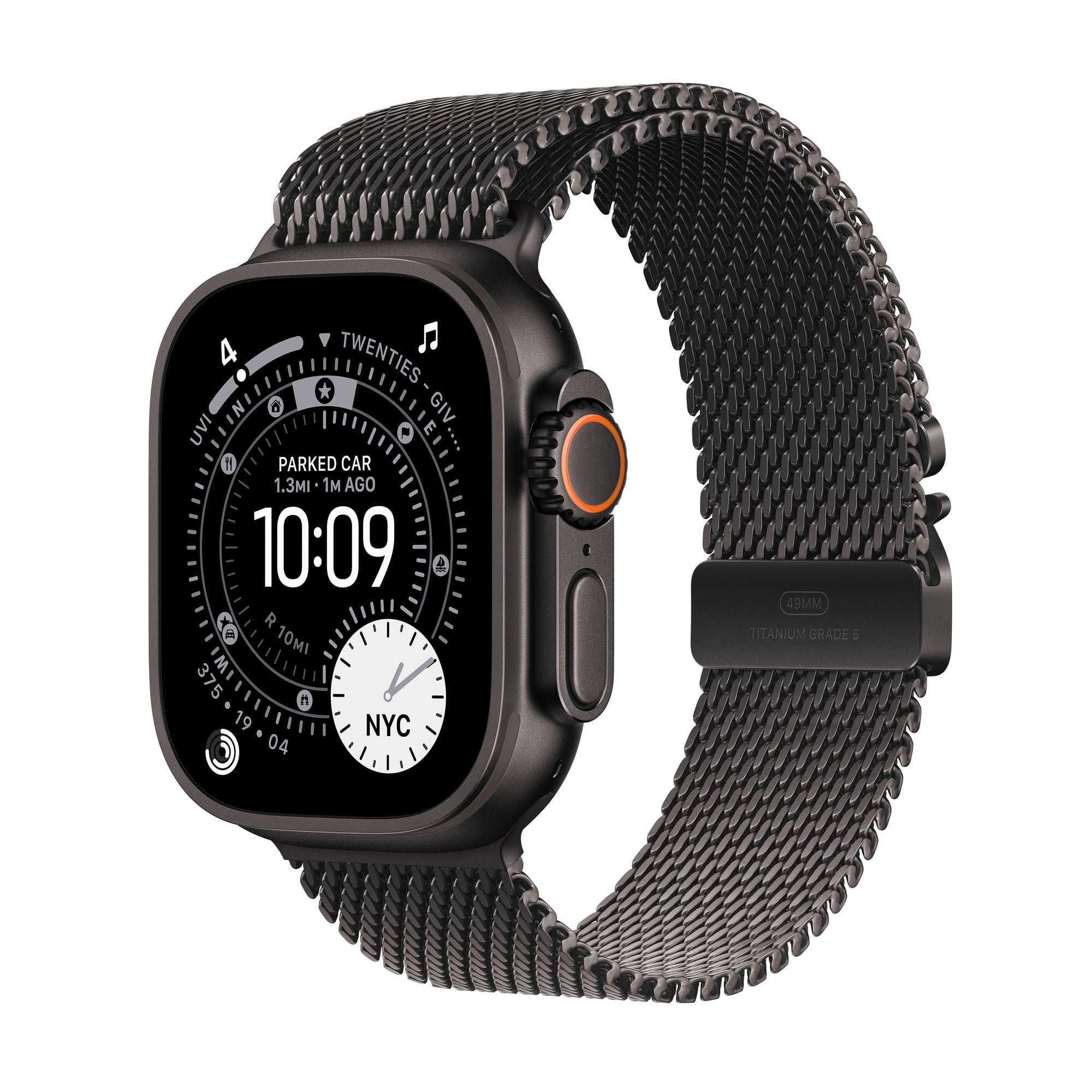
Personal beast. A rugged, adventure-ready sports watch built to last.
- Extremely tough titanium case and strong sapphire crystal display
- Water resistant to 100 m — suitable for swimming, diving, and high-speed water sports
- Bright, large display for easy viewing in active/outdoor use
Ideal for athletes and outdoor adventurers who need a durable, high-visibility smartwatch.
6. Suunto Run — Best Lightweight Running-First Watch
Best for: runners who want a light, focused GPS watch without paying for a large smartwatch ecosystem.
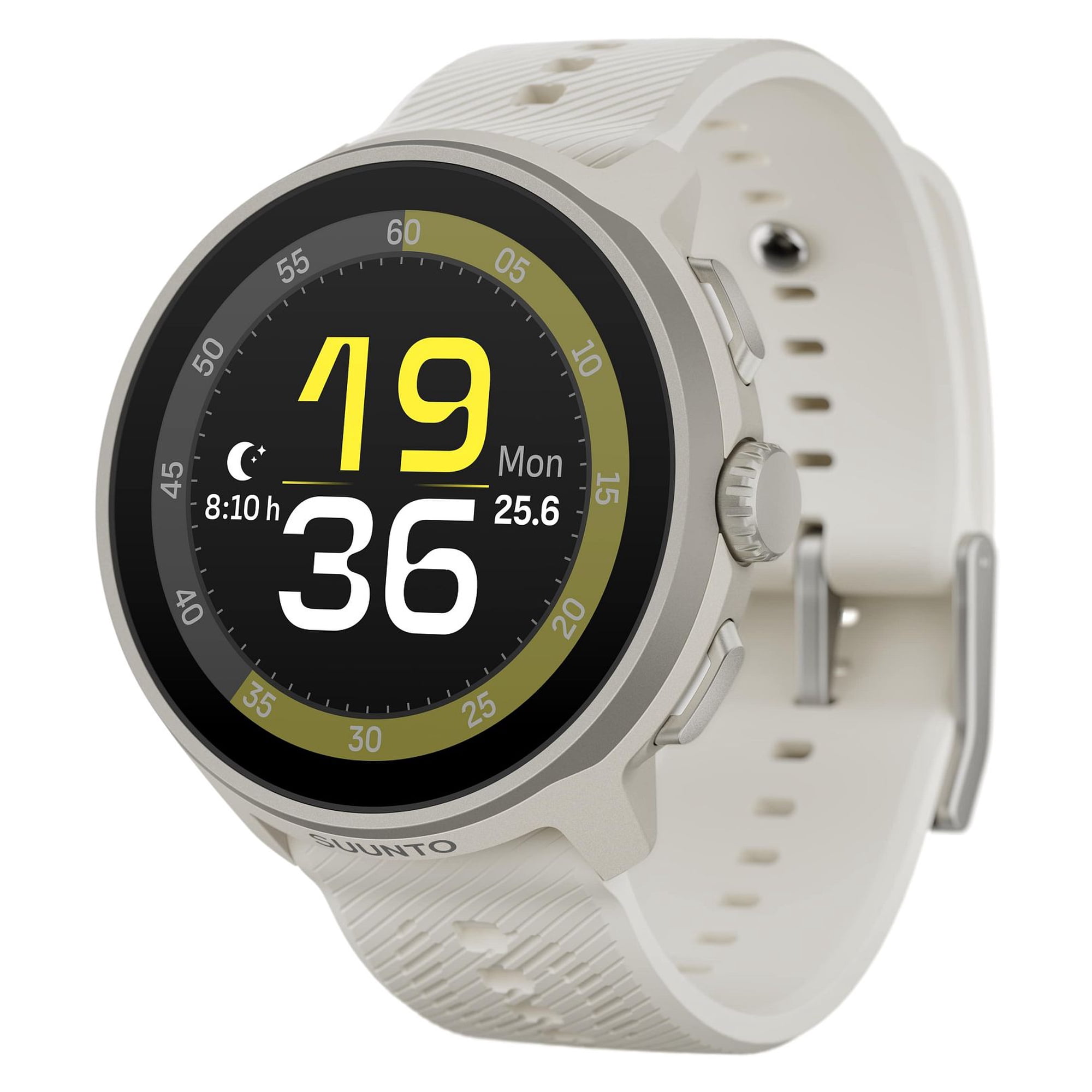
Suunto Run is one of the simplest recommendations here to understand. Its regular price is $249, it weighs only 36 grams, and it is designed specifically around running. Suunto includes dual-band GPS, interval tools, Ghost Runner, recovery tracking, sleep information, and training-load features.
That combination is attractive for runners who want useful progress data without turning every workout into a dashboard-management exercise. A light watch can also make consistent wear easier, which matters when sleep and recovery trends form part of the training picture.
Suunto rates the Run for up to 12 days in daily use and up to 20 hours in its highest-accuracy multi-band training mode. That is sufficient for most everyday runners and marathon training, but it is noticeably less GPS endurance than the 41-hour claim of COROS PACE 4 at the same regular price.
The Suunto therefore wins on simplicity, comfort, and a running-first experience rather than raw specification value.
Pros
✅ Very light 36-gram design
✅ Dual-band GPS
✅ Running-specific tools without excessive complexity
✅ Competitive $249 regular price
Cons
❌ Shorter high-accuracy GPS battery than PACE 4
❌ Smaller smartwatch ecosystem than Apple
❌ Less suitable for very long ultra-distance events
Who should skip it: ultrarunners who regularly need more than 20 hours of high-accuracy GPS recording.
Alternative: COROS PACE 4 if battery life and performance value take priority over Suunto’s minimalist approach.
Lightweight sports watch built for runners that combines accurate GPS, long battery life, run-focused training tools and a vivid AMOLED display.
- Authorized Suunto dealer
- Designed for runners; weighs just 36 g for all‑day comfort
- Dual‑band GPS for precise pace and distance tracking
- Battery life: up to 12 days (regular use), 20 hours in training mode
- Run-specific features: interval workouts, Ghost Runner, and other running tools
- Vivid AMOLED display with easy crown control
- Heart‑rate watch (wrist heart‑rate monitoring)
7. Garmin Enduro 3 — Best for Ultramarathons
Best for: ultrarunners, long-distance trail runners, and athletes who need GPS endurance measured in days rather than ordinary training sessions.
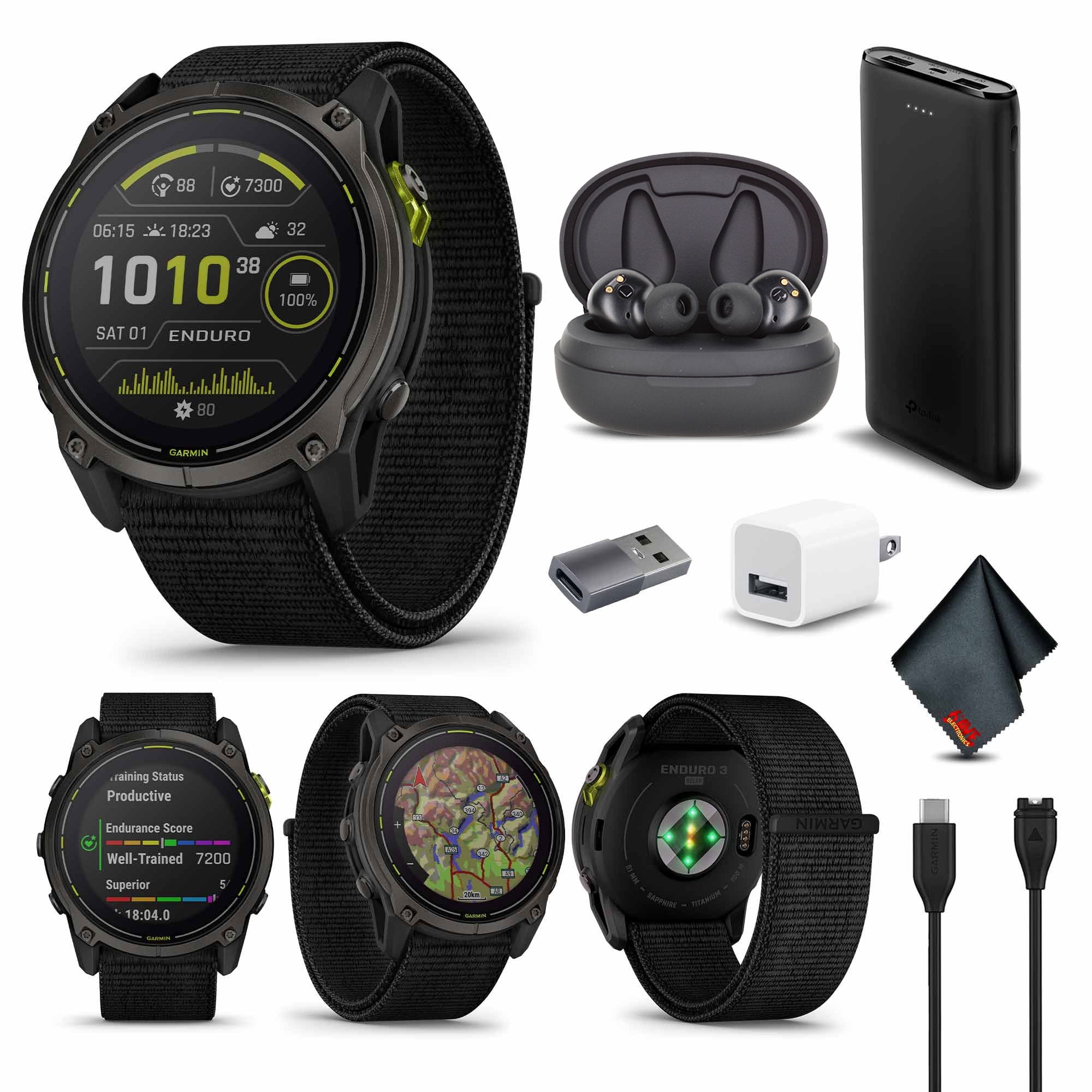
Garmin Enduro 3 earns its place for one reason that overwhelms nearly every other comparison point: battery life. Garmin rates it for up to 120 hours in GPS-only mode, up to 80 hours using all satellite systems, and up to 60 hours with all-satellite plus multi-band positioning before optional solar extensions are considered. Smartwatch mode is rated for up to 36 days under Garmin’s stated conditions.
That makes the Enduro 3 excessive for a typical 5K runner but highly relevant to someone preparing for ultras, stage races, long trail events, or multi-day adventures where a dead watch means losing part of the training or race record.
It also brings Garmin’s training status, readiness, navigation, and broader endurance ecosystem, so it is not merely a giant battery attached to a GPS receiver.
The cost is $899.99, and the product is physically and financially harder to justify for ordinary road training. A Forerunner 970 is more balanced for a runner who wants premium analytics and mapping but does not need ultra-class battery endurance.
Pros
✅ Exceptional GPS battery life
✅ Garmin training and navigation ecosystem
✅ Strong fit for ultras and multi-day endurance
✅ Solar-assisted endurance in supported conditions
Cons
❌ $899.99 MSRP
❌ More watch than most road runners need
❌ Larger endurance-focused design will not appeal to everyone
Who should skip it: most recreational road runners, especially anyone who rarely records sessions lasting more than a few hours.
Alternative: Garmin Forerunner 970 for a more balanced premium running watch.
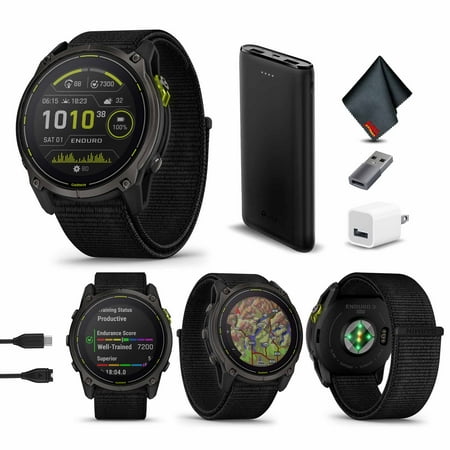
A lightweight GPS smartwatch built for athletes and adventurers who push their limits. The Carbon Gray DLC Titanium model with Black Ultrafit Nylon strap balances durability and minimal bulk.
- Purpose: Designed for athletes and adventurers
- Weight: 63 g
- Construction: Titanium bezel with Carbon Gray DLC finish
- Lens: Scratch‑resistant sapphire
- Strap: Black Ultrafit Nylon
- Key qualities: Durable yet lightweight, GPS smartwatch functionality
Running Watches We Considered but Did Not Select
Garmin fēnix 9 and fēnix 9 Pro: Garmin announced the new generation in late August 2026, which makes it important but too fresh to displace better-established recommendations solely on launch specifications. It deserves reassessment after more independent running evidence accumulates.
Garmin Forerunner 70: this newer entry-level Garmin is a sensible option for runners who want the fundamentals at a lower price. We selected the Forerunner 170 because it provides a more useful step into Garmin’s training ecosystem, while COROS PACE 4 already occupies the strongest overall value position.
Garmin Forerunner 265: this was previously an easy running-watch recommendation, but a new evergreen guide should favor current-generation products rather than build around a model being phased out.
Google Pixel Watch 5: it is a capable smartwatch with improved GPS, but its shorter battery profile and smartwatch-first emphasis make it better suited to a broader smartwatch comparison than this running-focused list.
Amazfit T-Rex 3 Pro: its rugged hardware, navigation capabilities, and battery life are attractive, but the selected seven watches have clearer roles specifically around running progress and training ecosystems.
Which Running Metrics Actually Show Progress?
A running watch is most useful when you follow consistent trends rather than treating every number as a score. Pace, heart rate, workload, recovery, and race estimates can all help, but each needs context.
GPS Pace and Distance
Reliable GPS gives you the foundation for comparing sessions. If the watch records distance inconsistently, your pace trends become less trustworthy. Multi-band or dual-frequency positioning can be particularly useful around tall buildings, dense tree cover, and other difficult environments, although not every runner needs the most advanced GPS mode for every session.
For progress tracking, consistency is more important than obsessing over a small difference on one run. Compare similar routes and workout types across several weeks.
Heart Rate and Heart-Rate Zones
Heart rate adds useful context to pace. Running the same route at a similar speed with a lower sustainable effort can be a positive sign, while a higher-than-normal heart rate may reflect heat, fatigue, illness, dehydration, or other factors rather than lost fitness.
Wrist optical sensors are convenient, but no watch should be treated as automatically equivalent to a well-fitted chest strap in every situation. Runners who base important interval or threshold sessions on precise heart-rate data may benefit from a compatible external sensor.
Training Load, Readiness, and Recovery
Training load is useful because improvement requires enough stress to create adaptation without endlessly increasing stress. Garmin, Polar, COROS, Suunto, and Apple approach this differently, but the practical question is similar: how much work have you accumulated, and are you ready for another hard session?
These metrics should support a training plan, not overrule how you feel. Sleep, life stress, soreness, and illness can matter even when a watch says you are ready.
VO₂ Max, Running Power, and Race Predictions
Estimated VO₂ max, running power, and race predictions can help reveal direction over time. Their greatest value is not necessarily the exact number displayed today. Watch whether estimates and performances move consistently as your training changes.
Race predictions are particularly useful when paired with real workouts and recent race results. Treat them as estimates, not guarantees.
How to Choose a Running Watch
The best running watches are not necessarily the models with the longest specifications sheet. Start with the type of training you actually do, then pay for the features that improve your decisions.
Start With Your Training Goal
A beginner preparing for a first 5K needs reliable GPS, straightforward workouts, and understandable recovery guidance. A marathon runner may care more about pacing, structured workouts, race prediction, and all-day recovery trends. An ultrarunner needs battery endurance and navigation that most road runners would never fully use.
If your priority is messaging, apps, payments, and phone integration with running as one activity among many, a general smartwatch may be the better category. Our guide to the best smartwatches compares that broader type of wearable.
Decide How Much GPS Accuracy You Need
Most current running GPS watches can record a normal road run effectively, but difficult environments can expose larger differences. Dual-frequency or multi-band systems are most appealing if you train around dense buildings, steep terrain, heavy tree cover, or places where ordinary satellite tracking has struggled.
Using a more demanding GPS mode can reduce battery life, so compare battery estimates in the mode you actually intend to use.
Check Training and Recovery Features
Basic activity tracking tells you what happened. A better running watch helps you understand what the workout means. Look for features such as training load, readiness, recovery time, HRV trends, VO₂ max estimates, race predictions, and structured workout support if you will actually use them.
Do not pay for ten advanced metrics if you know you only want pace, distance, heart rate, and a training plan.
Match Battery Life to Your Longest Events
Battery claims can be misleading if you compare smartwatch mode on one model with maximum-accuracy GPS mode on another. Think about your longest realistic recording session.
- For ordinary 5K, 10K, and half-marathon training, most current running watches provide ample GPS endurance.
- Marathon runners should leave comfortable headroom for warm-up, race delays, navigation, and battery degradation over time.
- Ultra runners should compare the exact GPS configuration they expect to use, not only the largest battery number on the product page.
Consider Comfort and Weight
A running watch only produces useful long-term sleep and recovery trends if you are willing to wear it regularly. Lightweight models such as COROS PACE 4 and Suunto Run have an advantage for runners who dislike bulky watches, while endurance-focused watches may justify more size in exchange for battery capacity.
Check Phone and App Compatibility
This decision is especially important with Apple Watch. Ultra 3 is compelling for iPhone owners but is not a cross-platform running-watch solution. Garmin, COROS, Polar, and Suunto are better starting points if you want a running ecosystem that is less dependent on one smartphone brand.
Understand Water-Resistance Ratings
A running watch marketed for outdoor use may handle sweat and rain, but “waterproof” is too broad a promise. Check the manufacturer’s exact water-resistance rating and supported activities before swimming, diving, or using the watch in high-pressure water conditions.
Set a Realistic Budget
You do not need an $800 watch to track meaningful progress. At roughly $249 to $300, products such as COROS PACE 4, Suunto Run, and Garmin Forerunner 170 already provide enough data for structured training.
Premium models become worthwhile when you specifically need better navigation, deeper analysis, smartwatch functionality, rugged construction, or exceptional battery endurance.
Best Running Watches by Use Case
| Use Case | Our Pick | Why It Fits |
|---|---|---|
| Best overall | Garmin Forerunner 970 | Deep training analysis, mapping, recovery, and premium running features |
| Best value | COROS PACE 4 | Excellent GPS endurance and training features at $249 |
| Newer runners | Garmin Forerunner 170 | Accessible path into Garmin’s training and recovery ecosystem |
| Recovery-focused training | Polar Vantage M3 | Strong load, recovery, sleep, and performance analysis |
| iPhone + running | Apple Watch Ultra 3 | Running metrics combined with Apple’s smartwatch ecosystem |
| Lightweight simplicity | Suunto Run | 36-gram running-first design with useful training tools |
| Ultramarathons | Garmin Enduro 3 | Exceptional GPS battery endurance and navigation |
Running Watches FAQ
What is the best running watch for tracking progress?
Garmin Forerunner 970 is our best overall choice because it combines GPS, training status, readiness, recovery, performance metrics, and mapping in one running-focused platform. COROS PACE 4 is the better value choice for runners who do not need all of Garmin’s premium features.
Do runners need dual-band GPS?
Not every runner needs it. Dual-band or multi-band GPS is most useful in environments where satellite reception is difficult, including dense urban areas, heavy tree cover, and challenging terrain. Standard GPS can still be sufficient for many open-road routes.
How accurate are wrist heart-rate sensors while running?
Wrist-based heart-rate tracking is convenient for everyday training and trend analysis, but accuracy can vary with fit, movement, workout type, temperature, and the individual runner. A compatible chest strap remains worth considering when precise heart-rate data is important for interval or threshold training.
Is Garmin or COROS better for tracking running progress?
Garmin offers the broader premium ecosystem, especially for mapping, training readiness, training status, and advanced multisport features. COROS is particularly compelling for runners who want long GPS battery life, low weight, and strong training tools at a lower price.
Which running watch is best for marathon training?
Forerunner 970 is the most complete choice in this guide for structured marathon training, while COROS PACE 4 is a strong lower-cost alternative. Both provide far more GPS battery life than a marathon normally requires, leaving useful headroom for warm-ups, delays, and longer training sessions.
How much GPS battery life does a runner need?
Choose a watch that comfortably exceeds your longest expected recording session in the GPS mode you plan to use. Normal road runners rarely need ultra-class battery life, while ultramarathon runners should pay close attention to the exact satellite and accuracy mode behind each manufacturer’s estimate.
Can a running watch replace a fitness tracker?
For many runners, yes. Current running watches commonly include daily activity, heart-rate, sleep, recovery, and workout tracking in addition to GPS running features. A simpler fitness tracker can still be cheaper and easier to wear if advanced run analysis is unnecessary.
Final Verdict: Which Running Watch Should You Buy?
Garmin Forerunner 970 is the best running watch in this group for athletes who want the deepest overall view of training progress. Its combination of training status, readiness, recovery, mapping, multi-band GPS, and performance analysis gives a serious runner room to grow without quickly outgrowing the watch.
COROS PACE 4 is the smarter purchase for many people. At $249, it provides strong GPS battery life, a lightweight design, race tools, recovery information, and a focused training ecosystem without charging premium-watch prices.
Garmin Forerunner 170 is the better starting point for runners who specifically want Garmin, Polar Vantage M3 is attractive when recovery and training load are central to the plan, and Apple Watch Ultra 3 is the obvious specialist pick for runners who want deep iPhone integration as much as they want running data. Suunto Run emphasizes simplicity and comfort, while Garmin Enduro 3 is built for distances where ordinary battery specifications stop being enough.
Best Overall: Garmin Forerunner 970
Best Value: COROS PACE 4
Best for Newer Runners: Garmin Forerunner 170
Best for iPhone: Apple Watch Ultra 3
Best for Ultramarathons: Garmin Enduro 3
Sources
- Runner’s World — Best Running Watches of 2026 — updated 2026
- Garmin — Forerunner 970 product information and training documentation — 2025–2026
- COROS — PACE 4 product information and launch specifications — 2025
- Apple — Apple Watch Ultra 3 product information and technical specifications — 2025
- Polar — Vantage M3 U.S. product information and specifications
Product Groups: Garmin Forerunner 970, COROS PACE 4, Garmin Forerunner 170, Polar Vantage M3, Apple Watch Ultra 3, Suunto Run, Garmin Enduro 3