The best stand mixer is not necessarily the biggest, most powerful-looking or most expensive machine on the counter. A baker who mostly makes cakes, cookies and whipped cream has very different needs from someone kneading several loaves of bread every weekend, while a small apartment kitchen can make a compact mixer far more practical than a 7-quart heavyweight.
For most home bakers, the KitchenAid Artisan Plus 5 Quart Stand Mixer offers the strongest balance of versatility, manageable capacity, low-speed control and attachment support. Serious bread bakers should look more closely at the Ankarsrum Assistent Original 6230, while the KitchenAid 7 Quart Bowl-Lift is better suited to larger general-purpose batches. Budget buyers and small-kitchen users have good options too.
We selected these best stand mixers by comparing current manufacturer specifications, design, capacity, attachment systems, availability, value and findings from independent comparative testing. Discompare does not claim hands-on laboratory testing of these mixers. Prices also change frequently, so the live comparison tools throughout this guide are useful when deciding between closely matched models.
Quick Answer: Best Stand Mixers by Use Case
Best Overall: KitchenAid Artisan Plus 5 Quart — its 5-quart size, 11-speed control, ½-speed folding setting, bowl light and broad attachment ecosystem make it the most versatile choice for typical home baking.
Best Budget: Hamilton Beach 7 Speed Stand Mixer — a 4-quart planetary-style mixer that covers basic cakes, cookies, whipping and occasional dough without KitchenAid-level pricing.
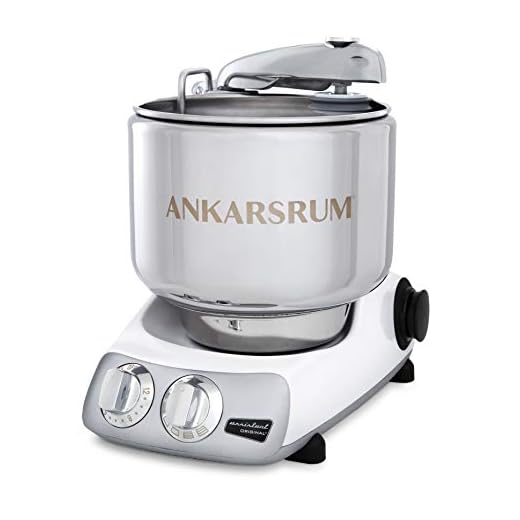
Best for Bread Dough: Ankarsrum Assistent Original 6230 — its rotating 7-liter bowl and roller/dough-hook system are particularly well suited to frequent bread and larger dough batches.
Best for Large Batches: KitchenAid 7 Quart Bowl-Lift — the large bowl and stable bowl-lift design make it better suited to bigger recipes and heavier workloads.
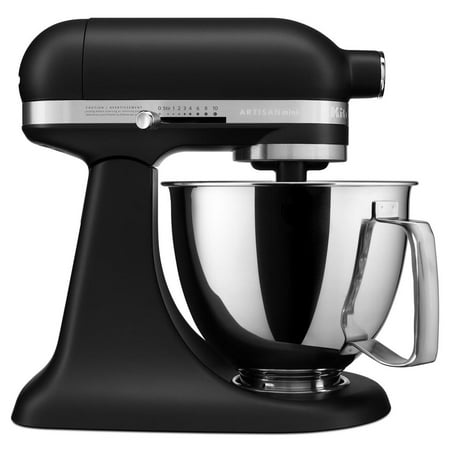
Best for Small Kitchens: KitchenAid Artisan Mini 3.5 Quart — it keeps the familiar KitchenAid tilt-head format and attachment hub in a smaller, lighter machine.
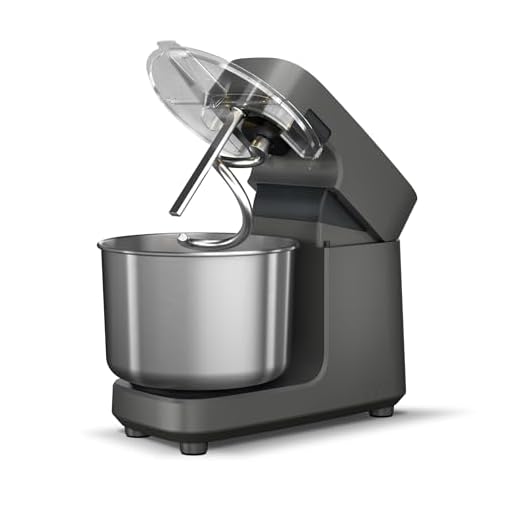
Best Spiral Mixer: Ooni Halo Pro — its rotating bowl, spiral hook and breaker bar bring a dough-focused spiral-mixing approach to a countertop machine.
How We Chose the Best Stand Mixers
Our selection focuses on what a stand mixer actually helps you make rather than ranking machines by motor wattage or bowl size alone. We considered performance evidence for whipping, creaming, cake batter, cookie dough and bread dough; bowl and attachment geometry; usable capacity; stability under heavier loads; control range; ease of accessing the bowl; cleaning; attachment availability; countertop size; price and current market availability. We also compared findings from independent testing by established food publications with current manufacturer specifications. A product had to serve a clear buyer use case to earn a place in the main ranking, which is why this guide contains eight distinct picks rather than several nearly identical KitchenAid variants. Discompare does not claim that its editors personally laboratory-tested these machines.
Best Stand Mixers Compared
| Stand Mixer | Award | Bowl Capacity | Mixing Design | Best For | Main Trade-Off |
|---|---|---|---|---|---|
| KitchenAid Artisan Plus | Best Overall | 5 qt | Tilt-head planetary | Most home bakers | Costs more than the classic Artisan |
| Hamilton Beach 7 Speed | Best Budget | 4 qt | Planetary-style | Occasional baking | Less suited to frequent heavy dough |
| KitchenAid 7 Quart Bowl-Lift | Best for Large Batches | 7 qt | Bowl-lift planetary | Large recipes | Large and heavy for small kitchens |
| Ankarsrum Assistent Original 6230 | Best for Bread Dough | 7 L | Rotating bowl / roller or hook | Frequent bread & sourdough | Different workflow and learning curve |
| Bosch Universal Plus | Best for Multiple Loaves | 6.5 qt | Bottom-drive | High-volume bread baking | Less conventional workflow |
| KitchenAid Artisan Mini | Best for Small Kitchens | 3.5 qt | Tilt-head planetary | Small batches | Limited capacity |
| Ooni Halo Pro | Best Spiral Mixer | 7.3 qt | Spiral hook + rotating bowl | Pizza, sourdough & serious dough | Specialized and expensive |
| GE Profile Smart Mixer | Best Smart Stand Mixer | 5.3 qt | Planetary / digital | Automation-focused bakers | Smart features add complexity and cost |
Stand Mixer Buying Guide: What Matters Most?
The best stand mixer should match your typical batch size and the foods you make most often. A 5-quart tilt-head mixer is a practical sweet spot for cakes, cookies, frosting, whipped cream and occasional bread, while serious dough bakers may benefit from a larger or fundamentally different mixing system.
Capacity is only part of the story. A large bowl gives you room for bigger recipes but can be less convenient for tiny quantities. Bowl shape and how closely the whisk or paddle reaches the ingredients also affect how much manual scraping you need.
Mixing architecture matters more than wattage alone. KitchenAid uses a familiar planetary system, Ankarsrum rotates the bowl around a roller or dough hook, Bosch uses a bottom-drive layout, and Ooni uses a spiral system with a rotating bowl. These approaches behave differently with dough.
Also consider where the mixer will live. Heavy bowl-lift and bread-focused machines are less likely to be moved into a cabinet after every use. Finally, think about attachments before paying for an ecosystem you may never use. KitchenAid’s attachment hub is a major advantage if pasta rollers, grinders and other accessories are part of your long-term plan.
Related Stand Mixer & Kitchen Guides
If you already know you want KitchenAid but are unsure which size or design to buy, our Best KitchenAid Stand Mixers for Home Bakers guide goes deeper into the Artisan, Artisan Plus, Mini and bowl-lift families.
Bread bakers deciding between two very different systems should see KitchenAid vs Bosch Mixer Showdown. Design-focused shoppers can also compare two iconic countertop brands in Smeg Stand Mixer vs KitchenAid.
If a stand mixer is only one part of a broader kitchen upgrade, explore Best Kitchen Blenders 2026 and our other kitchen-appliance buying guides before deciding which appliance deserves permanent countertop space.
Compare Stand Mixer Prices
Stand mixer prices can move substantially with retailer promotions, seasonal sales and color-specific discounts. A less expensive classic model can become a better buy than a newer version when the price gap widens, so compare current offers rather than relying only on MSRP.

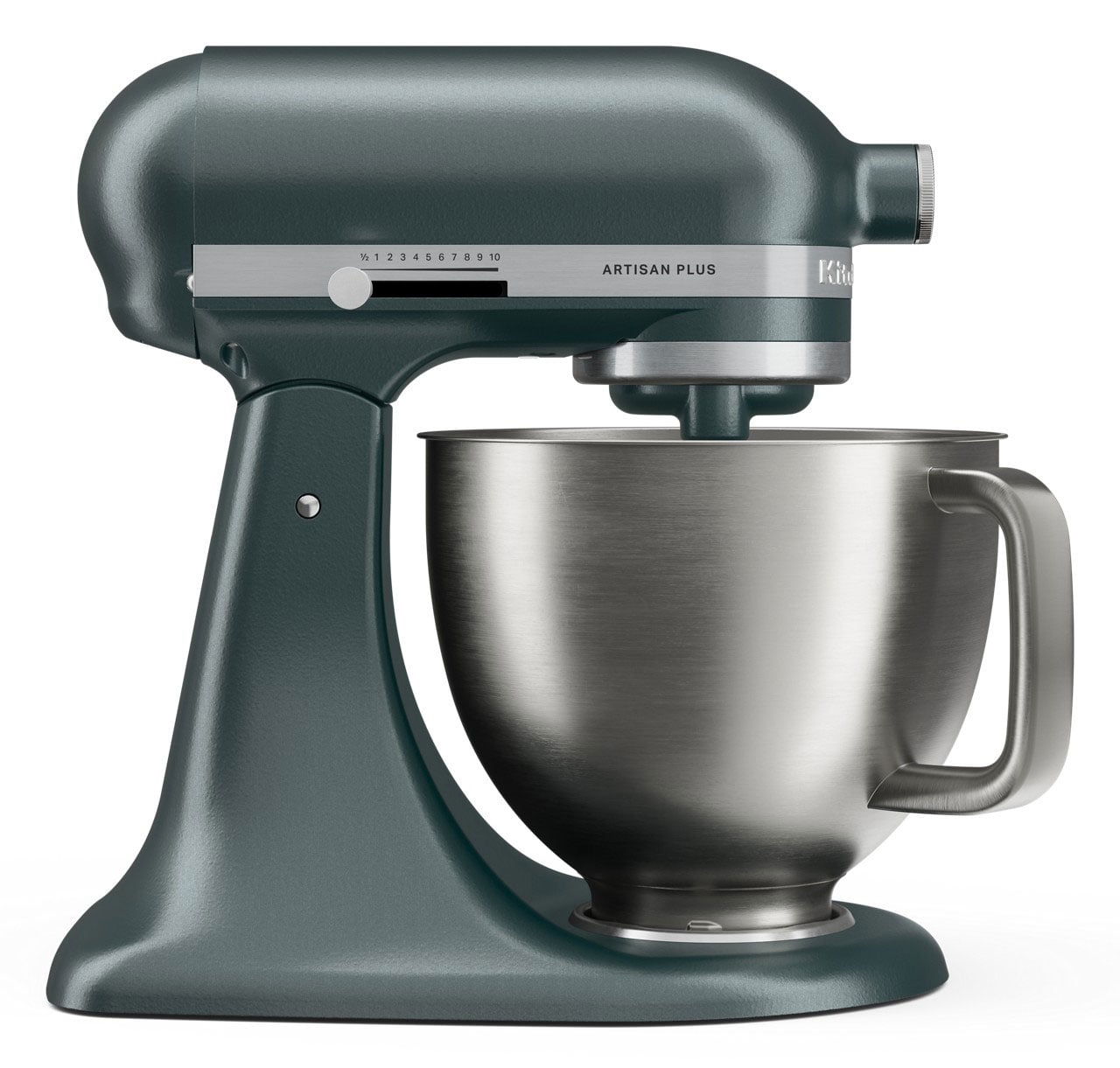

1. KitchenAid Artisan Plus 5 Quart Stand Mixer — Best Overall
The KitchenAid Artisan Plus 5 Quart is the best stand mixer for most home bakers because it combines an everyday 5-quart capacity with useful improvements to the familiar KitchenAid tilt-head design.
The biggest change is control. The Artisan Plus offers 11 speeds, including a very low ½-speed setting intended for folding delicate ingredients more gently than a conventional first speed. KitchenAid also adds Precision Speed Control, an integrated bowl light and a Double Flex Edge Beater designed to maintain better contact around the bowl.
Those upgrades matter because typical home baking is rarely about maximum power. You may need to cream butter and sugar, whip egg whites, slowly incorporate flour into batter and knead an occasional dough using the same machine. A broad usable speed range can be more valuable than a large motor figure on a specification sheet.
The 5-quart bowl also remains a sensible middle ground. It is large enough for ordinary family baking without turning the mixer into the countertop commitment of a 7-quart bowl-lift machine.
The other major advantage is KitchenAid’s attachment hub. Optional pasta rollers, grinders and other accessories can turn the mixer into more than a baking appliance, and the established ecosystem is broader than most competitors.
The main question is value. The classic KitchenAid Artisan is still an excellent mixer and can cost noticeably less during promotions. The Plus makes the most sense when its improved low-speed control, bowl light and updated accessories justify the premium for you.
Best for: Most home bakers who want one versatile mixer for cakes, cookies, whipping and occasional bread dough.
Pros
✅ Versatile 5-quart capacity
✅ 11 speeds including a ½-speed folding setting
✅ Integrated bowl light
✅ Broad KitchenAid attachment ecosystem
✅ Tilt-head design provides easy bowl access
Cons
❌ More expensive than the classic Artisan
❌ Serious high-volume bread bakers may want a different platform
❌ Still requires substantial countertop space
Alternative: Consider the classic KitchenAid Artisan 5-Quart if you want the established KitchenAid platform and find it at a substantially lower price.
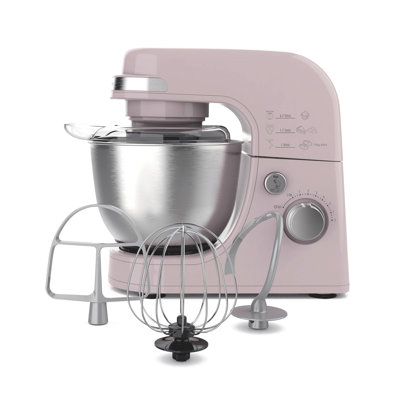
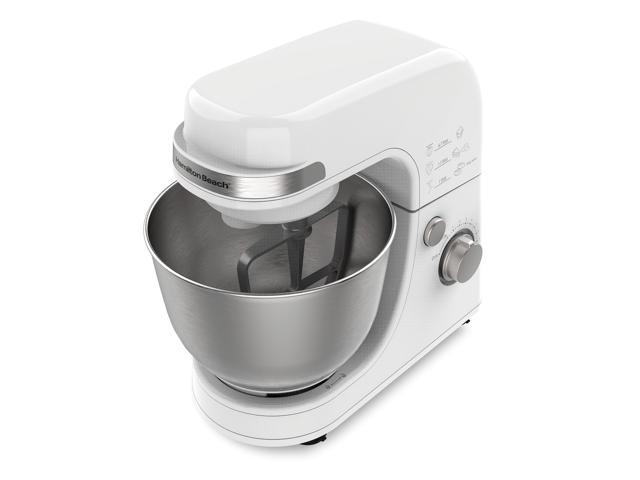
2. Hamilton Beach 7 Speed Stand Mixer 4 Quart — Best Budget
The Hamilton Beach 7 Speed Stand Mixer is the best budget option in this guide for shoppers who want a true countertop mixer without paying premium stand-mixer prices.
Its 4-quart bowl is smaller than the mainstream KitchenAid models but is still practical for many everyday baking jobs. The seven-speed control gives you enough range for basic mixing, beating and whipping, while the included flat beater, dough hook and whisk cover the expected stand-mixer tasks.
Hamilton Beach also uses planetary-style mixing action, moving the attachment around the bowl rather than simply spinning in one fixed location. That helps improve ingredient coverage compared with very basic stationary mixer designs.
The key is setting expectations correctly. This is not our recommendation for someone regularly kneading several heavy bread batches. The lower price makes more sense for occasional cakes, cookies, frosting, mashed potatoes and relatively modest dough jobs.
For a first stand mixer, that may be exactly the point. Spending several hundred dollars more is difficult to justify if the mixer comes out of the cabinet only a few times each month.
Best for: Occasional bakers, beginners and shoppers looking for a capable stand mixer at a lower price.
Pros
✅ Much lower price than premium stand mixers
✅ 4-quart bowl works for ordinary small-to-medium recipes
✅ Seven speeds
✅ Dough hook, whisk and flat beater included
✅ Good entry point for first-time stand-mixer buyers
Cons
❌ Smaller bowl than mainstream premium mixers
❌ Not our first choice for frequent heavy bread dough
❌ Smaller attachment ecosystem than KitchenAid
Alternative: Move up to the KitchenAid Artisan Plus if the mixer will become a regular part of your baking routine and long-term attachment compatibility matters.
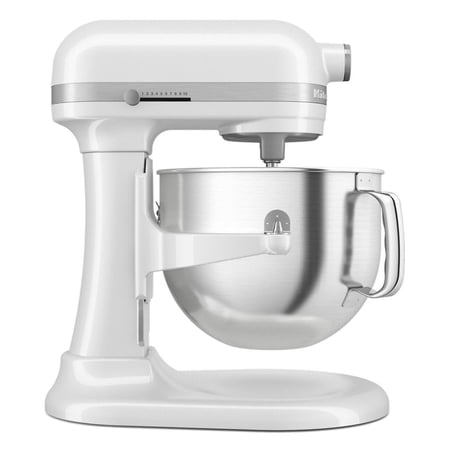
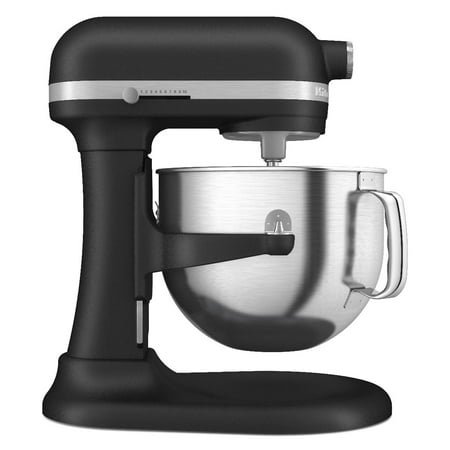
3. KitchenAid 7 Quart Bowl-Lift Stand Mixer — Best for Large Batches
The KitchenAid 7 Quart Bowl-Lift is the better KitchenAid choice when large recipes and heavier workloads matter more than compact dimensions.
Instead of tilting the mixer head backward, the bowl locks into support arms and is raised into mixing position. This design gives the bowl a more supported feel during heavier jobs and lets KitchenAid fit a 7-quart bowl into a machine aimed at bigger batches.
The current 7-quart platform offers 11 speeds, including a low ½-speed setting for folding. That wider control range is useful because a big mixer still needs to handle delicate ingredients, not just bread dough.
The trade-off is physical size. A bowl-lift mixer is tall, heavy and less convenient to move frequently. It can also be unnecessarily large if most recipes involve one cake, a small batch of cookies or a little whipped cream.
That is why we prefer the Artisan Plus for most households and reserve the 7-quart machine for people who can actually use the extra capacity. Bigger is useful only when your recipes are bigger.
Best for: Frequent bakers, larger households and anyone regularly making bigger batches of dough, cookies or batter.
Pros
✅ Large 7-quart bowl
✅ Stable bowl-lift configuration
✅ 11-speed control range
✅ Better fit for large recipes
✅ Compatible with KitchenAid’s broader mixer ecosystem
Cons
❌ Takes considerable countertop space
❌ Heavy to move between counter and storage
❌ Overkill for many small everyday recipes
Alternative: Choose the Artisan Plus if 5 quarts is enough for your normal recipes and easier bowl access matters more than maximum capacity.
4. Ankarsrum Assistent Original 6230 — Best for Bread Dough
The Ankarsrum Assistent Original 6230 is our best stand mixer for serious bread dough because its mixing system was designed around a very different approach from a conventional planetary mixer.
The machine uses a large 7-liter stainless-steel bowl that rotates while a roller and scraper or dough hook work the ingredients. Instead of watching a planetary dough hook travel around a stationary bowl, you control the relationship between the dough, rotating bowl and mixing tool.
That system is particularly appealing for frequent bread and sourdough bakers. The large bowl has room for substantial dough batches, and independent bread-focused comparisons consistently treat Ankarsrum as one of the strongest alternatives to the traditional KitchenAid approach.
There is a learning curve. Recipes written around a KitchenAid-style planetary mixer do not always translate perfectly to Ankarsrum’s workflow, and first-time users may need to learn when to use the roller instead of the dough hook and how to position the roller arm.
It is also an expensive machine if you mainly bake cakes twice a month. The Artisan Plus is easier to recommend for general household baking. Ankarsrum becomes compelling when bread is not an occasional side project but a major reason you are buying a stand mixer.
Best for: Frequent bread and sourdough bakers who regularly work with larger dough batches.
Pros
✅ Large 7-liter stainless-steel bowl
✅ Excellent fit for frequent bread making
✅ Rotating-bowl design handles dough differently from planetary mixers
✅ Roller and dough-hook options provide different dough workflows
✅ Strong accessory ecosystem for a specialist mixer
Cons
❌ Expensive for casual baking
❌ Requires learning a different mixing technique
❌ Less immediately familiar than KitchenAid-style mixers
Alternative: Consider the Bosch Universal Plus if your priority is producing several loaves or large traditional dough batches efficiently.
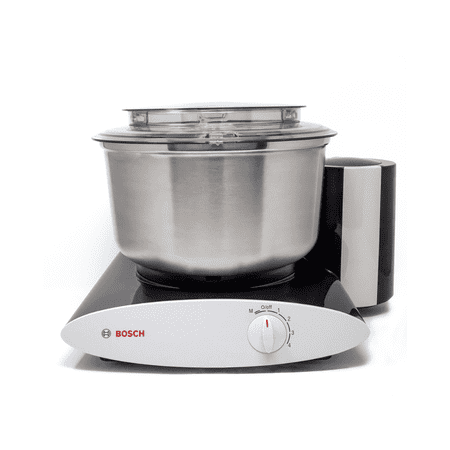
5. Bosch Universal Plus Mixer — Best for Multiple Loaves
The Bosch Universal Plus is our preferred choice for bakers who regularly make several loaves or other high-volume dough batches.
Its 6.5-quart bowl and bottom-drive design give it a very different shape from a traditional tilt-head mixer. With the drive system underneath the bowl rather than a large motor head suspended above it, bowl access is unusually open.
The Universal Plus has built a strong following among bread-focused home bakers because large batches are central to its design. It is particularly easy to justify in households where bread baking means making several loaves at once rather than kneading one modest dough every few weeks.
Its appearance and workflow are less conventional than KitchenAid, and someone buying primarily for cakes, decoration and familiar attachments may prefer the Artisan Plus. Bosch makes the most sense when dough volume is the defining requirement.
Compared with Ankarsrum, the choice comes down partly to preferred technique. Ankarsrum’s rotating-bowl roller system has a distinctive dough-handling style; Bosch’s bottom-drive bowl feels more purpose-built around efficient high-volume mixing.
Best for: High-volume bread bakers who frequently prepare multiple loaves in one session.
Pros
✅ 6.5-quart bowl
✅ Strong fit for large bread batches
✅ Open bowl access due to bottom-drive design
✅ Distinct alternative to conventional planetary mixers
Cons
❌ Unconventional design may not appeal to every baker
❌ Less compelling if bread is only an occasional task
❌ Attachment experience differs substantially from KitchenAid
Alternative: Choose Ankarsrum if you want a premium bread-focused system with a rotating bowl and roller-based dough workflow.
6. KitchenAid Artisan Mini 3.5 Quart Stand Mixer — Best for Small Kitchens
The KitchenAid Artisan Mini 3.5 Quart is the best choice here for small kitchens because it keeps the familiar KitchenAid experience while reducing bowl capacity and overall size.
The 3.5-quart bowl is designed for smaller batches, and the Mini uses the familiar tilt-head configuration that makes adding ingredients and removing tools straightforward. It also retains compatibility with KitchenAid’s power-hub attachments, which is a significant advantage over buying a compact mixer with no meaningful accessory ecosystem.
The smaller size is useful only if it matches how you bake. A couple making small batches of cookies or cakes may rarely need a 5- or 7-quart bowl. A family that doubles recipes or makes multiple bread loaves could outgrow 3.5 quarts quickly.
The Mini therefore should not be treated as simply a cheaper KitchenAid. Its strongest reason to exist is space efficiency. If you have enough countertop room and regularly make medium-sized batches, the Artisan or Artisan Plus is more flexible.
Best for: Apartments, smaller households and bakers who prioritize countertop space over large-batch capacity.
Pros
✅ Smaller than full-size KitchenAid mixers
✅ 3.5-quart bowl suits small batches
✅ Familiar tilt-head design
✅ 10-speed control
✅ Compatible with many KitchenAid power-hub attachments
Cons
❌ Limited capacity for large recipes
❌ Not ideal for frequent large bread batches
❌ Full-size KitchenAid models can offer better flexibility if space permits
Alternative: Choose the Artisan Plus if you can accommodate a larger mixer and want substantially more batch flexibility.
7. Ooni Halo Pro Spiral Mixer — Best Spiral Mixer
The Ooni Halo Pro is the most compelling choice in this guide for home bakers specifically looking for a spiral-mixing approach to pizza, bread and sourdough dough.
Instead of using the classic planetary system found on KitchenAid mixers, the Halo Pro combines a spiral dough hook with a rotating 7.3-quart bowl and breaker bar. This arrangement is inspired by commercial spiral mixers and is designed to work dough differently from a conventional hook moving around a stationary bowl.
The mixer also offers a broad range of speed control rather than functioning as a dough-only appliance. Ooni equips the Halo Pro with additional mixing tools so it can move beyond pizza dough into other baking jobs.
Still, its specialist appeal is important. If your normal week involves cake batter, cookies and whipped cream with bread only occasionally, buying Halo Pro simply because spiral mixing sounds more professional is unnecessary. The Artisan Plus is easier to live with as a general-purpose mixer.
The Ooni makes the strongest case when dough development is one of your main interests and you specifically want a countertop spiral system rather than another planetary mixer.
Best for: Serious pizza, sourdough and bread enthusiasts who specifically want spiral mixing.
Pros
✅ True spiral-style dough-mixing architecture
✅ Rotating 7.3-quart bowl
✅ Breaker bar helps manage dough movement
✅ Broad speed control
✅ Particularly appealing for pizza and sourdough enthusiasts
Cons
❌ Expensive for occasional bakers
❌ Large for a small countertop
❌ Specialized design may be unnecessary for general baking
Alternative: Consider the Ankarsrum Assistent Original if you want a premium bread-focused mixer with a broader established accessory ecosystem and a different rotating-bowl approach.
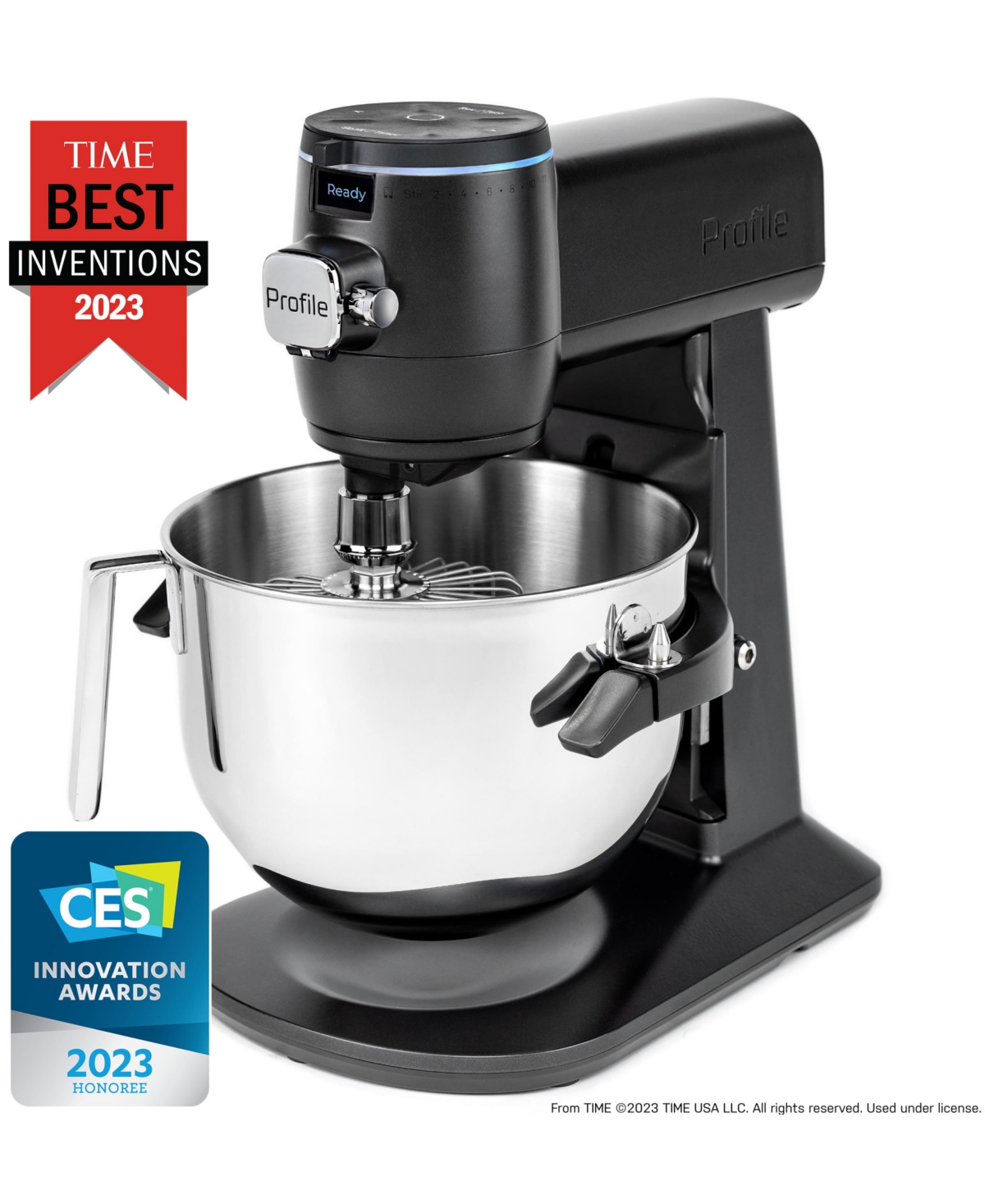
8. GE Profile Smart Mixer with Auto Sense — Best Smart Stand Mixer
The GE Profile Smart Mixer is the best option here for bakers who value integrated weighing and digital automation more than a traditional mechanical mixing experience.
Its standout feature is a built-in scale, eliminating one extra countertop tool for recipes where ingredients are weighed directly into the bowl. GE also incorporates Auto Sense technology, digital controls, a timer and connected SmartHQ features.
Those additions can be useful for recipe-driven bakers who like repeatability and guidance. They do not automatically make the GE a better mixer than KitchenAid, Ankarsrum or Bosch for every task.
That distinction matters because smart features should solve a problem rather than simply add specifications. If you already own a good kitchen scale and prefer manual control, much of the GE’s premium proposition becomes less important. If integrated weighing and automation simplify your workflow, the design becomes much more interesting.
Best for: Tech-oriented bakers who want built-in weighing, digital controls and automated mixing features.
Pros
✅ Integrated kitchen scale
✅ Auto Sense functionality
✅ Digital timer and controls
✅ SmartHQ connectivity for users who value connected appliances
Cons
❌ Smart features increase complexity
❌ Not our first pick for dedicated heavy bread production
❌ Built-in scale adds less value if you already prefer a separate precision scale
Alternative: Choose the KitchenAid Artisan Plus if you prefer a more conventional mixer with a larger established attachment ecosystem.
Other Stand Mixers Worth Considering
KitchenAid Artisan Series 5-Quart — Best Value KitchenAid Alternative
The classic Artisan remains one of the safest stand-mixer choices on the market. It does not have every update found on the Artisan Plus, but it retains the familiar 5-quart tilt-head format and KitchenAid attachment ecosystem. If retailer promotions create a large price gap between the two models, the regular Artisan can be the better-value purchase.
Ooni Halo Core — Compact Spiral Mixer Alternative
The smaller Halo Core brings Ooni’s spiral-mixing concept into a more manageable size than the Halo Pro. It is worth considering if spiral dough mixing is the attraction but a 7.3-quart mixer is larger than your normal batches require.
Breville Bakery Chef — Traditional Alternative Worth Watching
The Breville Bakery Chef remains an interesting conventional stand-mixer alternative with useful baking-oriented features. Availability can vary by exact SKU and retailer, so we would compare current stock carefully before choosing it over one of the more consistently available main picks.
Which Stand Mixer Should You Buy?
Choose the KitchenAid Artisan Plus if you mainly bake cakes, cookies, frosting and occasional bread.
Choose Hamilton Beach if budget matters more than maximum dough capacity or accessories.
Choose Ankarsrum if bread and sourdough are a major part of your baking routine.
Choose Bosch Universal Plus if large multi-loaf dough batches are your priority.
Choose the KitchenAid 7 Quart Bowl-Lift if you want a familiar general-purpose mixer with much more capacity.
Choose the Artisan Mini if counter space and small batches matter most.
Choose Ooni Halo Pro if you specifically want a spiral-mixing system for serious dough work.
Choose GE Profile if built-in weighing and smart automation are genuinely useful to your workflow.
Best Stand Mixers for Summer Baking
You do not need a separate “summer stand mixer” to bake well in warmer months—the same mixer should be chosen according to your recipes and batch sizes. Summer does, however, change the kinds of projects many home bakers take on, from fruit desserts and lighter cakes to pizza nights and larger gatherings.
Cakes, Cookies & Fruit Desserts
KitchenAid Artisan Plus is the most versatile summer pick for whipped toppings, cake batters, cookies and fruit-focused desserts.
Parties & Larger Batches
KitchenAid 7 Quart Bowl-Lift makes more sense when one baking session needs to produce significantly larger quantities for gatherings.
Small Kitchens & Vacation Homes
KitchenAid Artisan Mini keeps countertop requirements lower when full-size capacity is unnecessary.
Summer Pizza Nights
Ooni Halo Pro is the specialist choice when pizza dough and other spiral-mixed doughs are a major part of outdoor entertaining.
Bread & Sourdough
Ankarsrum Assistent Original remains the stronger choice when summer does not slow down a serious bread-baking routine.
These summer recommendations are drawn from the same stand mixers ranked in this guide. A separate seasonal ranking would largely repeat the same products and buying criteria, so keeping seasonal advice within this evergreen guide makes it easier to maintain one current source for the best stand mixers.
What Is the Best Stand Mixer for Bread Dough?
Ankarsrum Assistent Original is our best overall bread-dough pick, but the right mixer changes depending on how much bread you make and the dough style you prefer.
Occasional Bread: KitchenAid Artisan Plus
You do not need a specialist bread mixer for an occasional loaf, pizza dough or batch of rolls. The Artisan Plus is more versatile for general baking while still giving occasional bread bakers a dough hook and sufficient capacity for typical household recipes.
Frequent Bread & Sourdough: Ankarsrum Assistent Original
Ankarsrum’s rotating bowl and roller/hook system make more sense when dough is a central part of your weekly routine rather than an occasional task.
Multiple Loaves: Bosch Universal Plus
Bosch becomes particularly attractive when bread day means several loaves at once. Its large bowl and bread-focused design are better aligned with high-volume home production.
Spiral-Mixing Enthusiasts: Ooni Halo Pro
Ooni’s spiral hook, breaker bar and rotating bowl make it the most interesting choice for buyers specifically looking to bring a commercial-style spiral concept into a home kitchen.
Ankarsrum vs Bosch vs Ooni: Which Is Better for Bread?
| Mixer | Best At | Why Choose It | Main Trade-Off |
|---|---|---|---|
| Ankarsrum Original | Versatile serious bread baking | Large rotating bowl with roller/hook system | Learning curve |
| Bosch Universal Plus | Multiple loaves | Large bowl and high-volume dough workflow | Unconventional design |
| Ooni Halo Pro | Spiral mixing, pizza & sourdough | Spiral hook + rotating bowl + breaker bar | Expensive and specialized |
There is no absolute winner across all bread styles. Ankarsrum is the easiest of the three to recommend as a premium all-around bread system, Bosch is especially attractive for high-volume batches, and Ooni is the specialist choice for buyers specifically seeking spiral mixing.
Tilt-Head vs Bowl-Lift Stand Mixer: Which Is Better?
Tilt-head mixers are usually easier to access and better suited to ordinary household batches, while bowl-lift mixers prioritize capacity and stability.
Tilt-Head Mixers
The motor head pivots upward so you can access the bowl and attachments. KitchenAid Artisan, Artisan Plus and Artisan Mini use this design.
Tilt-head mixers generally work well when:
- countertop space is limited;
- you frequently add ingredients during mixing;
- batch sizes are small to medium;
- you want a familiar general-purpose mixer.
Bowl-Lift Mixers
The head remains fixed while the bowl moves upward into mixing position. This design is common on larger KitchenAid machines.
Bowl-lift mixers are more attractive when:
- you regularly make large batches;
- heavy mixtures are common;
- the mixer will stay permanently on the counter;
- maximum bowl capacity matters more than easy portability.
A bowl-lift mixer is not automatically superior to a tilt-head mixer. The best design depends on how much food you actually make.
What Size Stand Mixer Do You Need?
| Bowl Size | Best For | Typical Trade-Off |
|---|---|---|
| 3.5–4 qt | Small households, occasional baking, compact kitchens | Large recipes can exceed practical capacity |
| Around 5 qt | Most home bakers | Not ideal for very large production batches |
| 6–7+ qt | Large households, bulk baking and serious dough | More countertop space and weight |
Do not assume a larger bowl performs every job better. Whipping one egg white or mixing a very small quantity can sometimes be easier in a smaller bowl, while a large bowl becomes valuable when recipes are routinely doubled or tripled.
Do Stand Mixer Watts Matter?
Motor wattage matters, but it is not a reliable standalone measure of how well a stand mixer performs.
A stand mixer is a complete mechanical system. Real-world results also depend on gearing, torque delivery, drive efficiency, bowl geometry, attachment shape, dough-hook design, speed control and how the machine handles heat under sustained load.
This is why comparing two mixers only by saying one has a larger watt number can be misleading. A well-designed lower-wattage machine may perform better than a higher-rated competitor in a particular mixing task.
Instead of shopping for the largest motor number, start with the foods you make and look for comparative evidence involving those actual tasks.
Which Stand Mixer Has the Best Attachments?
KitchenAid has the strongest general-purpose attachment ecosystem among the mixers in this guide.
The front power hub can support optional accessories such as pasta rollers, food grinders and other food-preparation tools, giving a KitchenAid mixer a second role beyond baking.
Ankarsrum also has a meaningful accessory ecosystem built around its unusual drive system, while Bosch supports additional food-preparation attachments for the Universal Plus platform.
Ooni Halo’s strongest reason to buy is its mixing architecture rather than having the broadest attachment catalog, while GE’s differentiator is smart functionality and integrated weighing.
If attachment compatibility is a major reason you are choosing KitchenAid, see our KitchenAid Stand Mixers for Home Bakers guide before deciding between Mini, Artisan, Artisan Plus and bowl-lift models.
KitchenAid Artisan Plus vs Artisan vs Mini vs 7-Quart
| Your Priority | KitchenAid to Consider |
|---|---|
| Best balance for most bakers | Artisan Plus 5 Quart |
| Better value when heavily discounted | Artisan 5 Quart |
| Small kitchen and small batches | Artisan Mini 3.5 Quart |
| Large batches | 7 Quart Bowl-Lift |
The Artisan Plus is our preferred general-purpose KitchenAid, but price can change the recommendation. A heavily discounted classic Artisan can be a better value, while Mini and 7-Quart models solve completely different capacity problems.
How Much Should You Spend on a Stand Mixer?
Budget Stand Mixers
Budget models make the most sense for occasional baking. Prioritize basic mixing performance, useful included attachments and a bowl size that matches your recipes rather than expecting a large premium attachment ecosystem.
Mainstream Premium Stand Mixers
This is where KitchenAid’s mainstream products sit. Paying more can buy better build quality, finer control, broader attachments and a platform designed to stay in the kitchen for years.
Specialist & Premium Mixers
Ankarsrum, Ooni and advanced smart mixers can cost considerably more. The premium is easiest to justify when you can name the feature you actually need—large bread batches, spiral mixing, integrated weighing or another specific workflow.
Use the live price cards in this guide before buying. Stand mixers are frequently discounted, and the gap between two competing models can change enough to alter which one represents better value.
Stand Mixer vs Hand Mixer
A hand mixer is better when low price, light weight and storage matter most; a stand mixer is better for hands-free mixing, repeated baking and heavier dough.
A hand mixer is perfectly capable of whipping cream, beating eggs and handling many cake batters. It also fits inside a drawer or cabinet far more easily.
A stand mixer becomes worthwhile when you bake often enough to benefit from leaving the machine running while you prepare other ingredients, regularly work with thicker mixtures, knead dough or want optional powered attachments.
What to Look for Before Buying a Stand Mixer
1. What Do You Bake Most?
Buy around your most common recipes rather than your most ambitious hypothetical project. Cakes and cookies favor versatile planetary mixers; frequent bread can justify Ankarsrum, Bosch or a spiral system.
2. How Much Dough or Batter Do You Make?
A 7-quart machine is useful only if you regularly make recipes large enough to use it. Around 5 quarts remains a practical balance for most households.
3. How Much Counter Space Do You Have?
Measure height, width and depth before buying. Also consider whether the mixer will live on the counter permanently, because premium bread mixers can be inconvenient to move regularly.
4. Do Attachments Matter?
If pasta rollers, grinders and other powered accessories are important, investigate the ecosystem before committing to the mixer platform.
5. Do You Need Smart Features?
Built-in weighing and automation can genuinely simplify some workflows, but they are unnecessary costs if you already prefer a separate kitchen scale and manual controls.
Stand Mixer FAQ
What is the best stand mixer overall?
The KitchenAid Artisan Plus 5 Quart is our best overall stand mixer for most home bakers because its 5-quart capacity, broad speed range, low-speed folding setting and attachment ecosystem cover a wide range of everyday baking tasks.
Which stand mixer is best for bread dough?
The Ankarsrum Assistent Original is our best all-around pick for frequent bread dough. Bosch Universal Plus is particularly attractive for multiple loaves, while Ooni Halo Pro is the specialist choice for bakers who specifically want spiral mixing.
Is Ankarsrum better than KitchenAid for bread?
Ankarsrum is generally the more bread-focused choice for frequent dough work and larger bread batches, while KitchenAid is easier to recommend for someone who makes cakes, cookies and other recipes as often as bread.
Is a 5-quart stand mixer big enough?
A 5-quart mixer is enough for many home bakers and is a practical balance between useful capacity and manageable size. Bakers who routinely double recipes or make multiple loaves may benefit from a 6- or 7-quart machine.
Should I buy a tilt-head or bowl-lift mixer?
Choose a tilt-head mixer for easier bowl access, ordinary household batches and a somewhat more manageable footprint. Choose bowl-lift when larger capacity and stability under heavier workloads are higher priorities.
Do more watts mean a better stand mixer?
No. Wattage is only one specification. Gearing, torque delivery, bowl geometry, attachment design, speed control and drive efficiency can all affect real mixing performance, so wattage alone should not determine your purchase.
Is KitchenAid Artisan Plus worth more than the regular Artisan?
The Artisan Plus adds features including expanded low-speed control, a bowl light and updated accessories. It is easier to justify when the price difference is modest; a heavily discounted classic Artisan can still represent better value.
Which stand mixer has the best attachments?
KitchenAid has the strongest general-purpose attachment ecosystem in this guide, with a long-established power hub supporting accessories for tasks such as pasta making and food grinding.
How long should a good stand mixer last?
There is no universal lifespan because usage, load, maintenance, repairability and build design differ. A well-maintained premium stand mixer can remain useful for many years, but longevity should not be reduced to one fixed number for every brand and workload.
Final Verdict: Which Stand Mixer Is Best for You?
The KitchenAid Artisan Plus 5 Quart is the stand mixer we would recommend first to most home bakers. Its size works for typical household recipes, its expanded speed control adds meaningful flexibility, and KitchenAid’s attachment ecosystem leaves room to grow.
If budget is the priority, the Hamilton Beach 7 Speed covers the core stand-mixer jobs at a much lower entry price. For larger general-purpose batches, move to the KitchenAid 7 Quart Bowl-Lift.
Bread changes the decision. The Ankarsrum Assistent Original is our best bread-focused choice, the Bosch Universal Plus makes sense for high-volume multi-loaf baking, and the Ooni Halo Pro is the specialist option for buyers specifically seeking spiral mixing.
Small kitchens are better served by the KitchenAid Artisan Mini, while the GE Profile Smart Mixer offers a very different proposition for users who value integrated weighing and automation.
Best Overall: KitchenAid Artisan Plus 5 Quart Stand Mixer
Best Budget: Hamilton Beach 7 Speed Stand Mixer
Best for Bread: Ankarsrum Assistent Original 6230
Best for Large Batches: KitchenAid 7 Quart Bowl-Lift
Best for Small Kitchens: KitchenAid Artisan Mini
Best Spiral Mixer: Ooni Halo Pro
There is no reason to pay for extra capacity, specialized dough hardware or smart features unless your baking actually benefits from them. Start with what you make most often, choose the mixing system that fits that job, and then use current retailer prices to decide which model offers the strongest value.
Sources
- KitchenAid — current Artisan Plus, Artisan, Artisan Mini and 7 Quart Bowl-Lift product information.
- Ankarsrum — current Assistent Original product information and accessories.
- Bosch Mixers — current Universal Plus product information.
- Ooni — current Halo Pro and Halo Core product information.
- Hamilton Beach — current 7 Speed 4 Quart Stand Mixer product information.
- GE Appliances — current GE Profile Smart Mixer product information.
- Bon Appétit — current stand mixer comparative testing.
- Serious Eats — stand mixer testing covering baking, dough performance, usability and cleanup.
- Food Network — comparative stand mixer testing and KitchenAid Artisan Plus evaluation.
- Yahoo Shopping — current stand mixer comparison and price/use-case segmentation.
- Amy Bakes Bread — bread-focused comparison of KitchenAid, Bosch, Ankarsrum and Ooni mixing systems.
Product Groups: KitchenAid Artisan Plus 5 Quart Stand Mixer, Hamilton Beach 7 Speed Stand Mixer 4 Quart, KitchenAid 7 Quart Bowl-Lift Stand Mixer, Ankarsrum Assistent Original 6230, Bosch Universal Plus Mixer, KitchenAid Artisan Mini 3.5 Quart Stand Mixer, Ooni Halo Pro Spiral Mixer, GE Profile Smart Mixer with Auto Sense