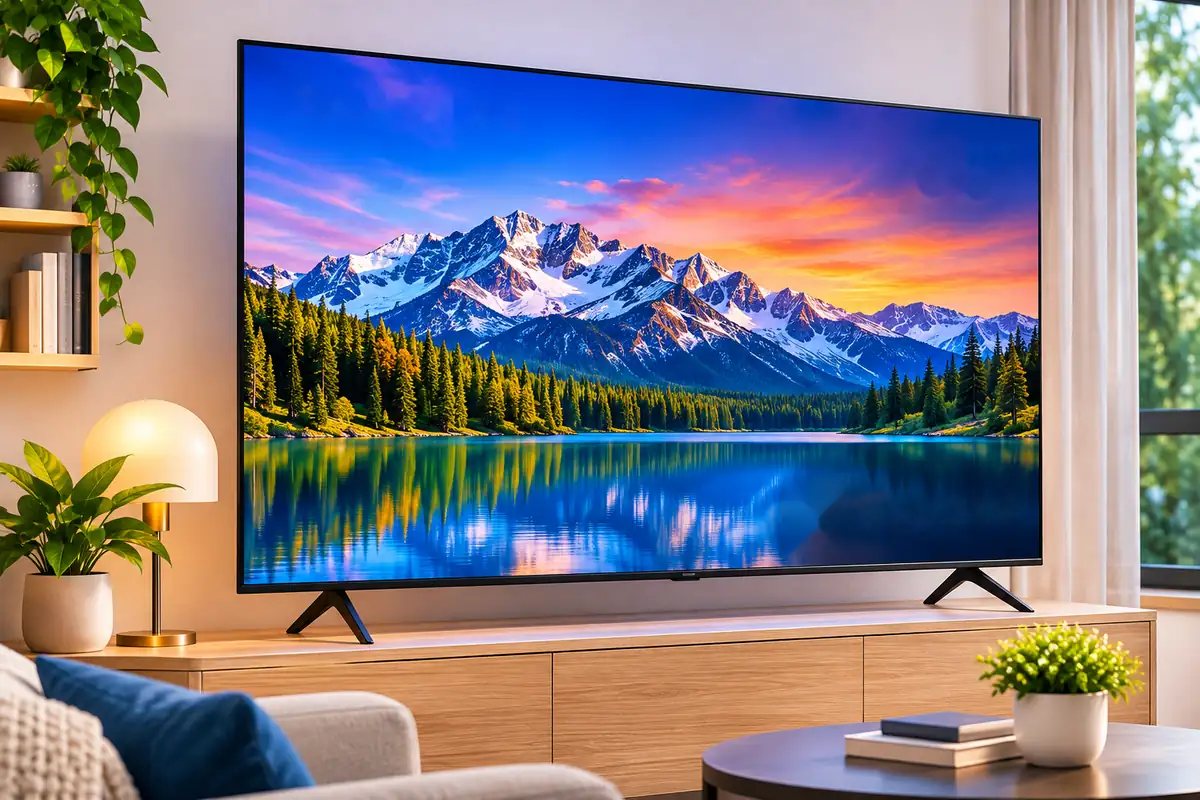
Best Samsung 65-Inch Smart TVs in 2026
The Samsung S90H OLED is the best Samsung 65-inch TV for most buyers because it combines excellent contrast, strong reflection handling, smooth gaming performance, and a more reasonable price than Samsung’s flagship OLED. If you want brighter HDR highlights and richer colors, the S95H is the premium upgrade. For shoppers who prefer Mini LED technology, the QN80H offers a practical alternative at a lower price.
However, not every Samsung television delivers the same picture quality. The affordable M80H offers high-refresh-rate gaming features but lacks local dimming, despite its Mini LED branding. The Frame prioritizes interior design, while the entry-level S85H OLED is better suited to darker rooms.
This guide compares six of the best Samsung 65-inch smart TVs using verified U.S. model specifications, independent testing, display technology, gaming capabilities, and practical drawbacks. It also explains how viewing distance, room brightness, HDMI connections, and installation costs affect your decision.
If you are considering different screen sizes, see our broader guide to the best Samsung TVs. Here, we focus specifically on the 65-inch models so you can compare televisions that fit the same space.
Quick Answer: Best Samsung 65-Inch TVs
Best Overall: Samsung S90H OLED — excellent picture quality, glare control, and up to 165Hz gaming at a more accessible price than the flagship.
Best Premium Picture: Samsung S95H OLED — brighter HDR highlights, exceptional color, and premium QD-OLED performance.
Best Midrange Mini LED: Samsung QN80H Neo QLED — genuine local dimming, good brightness, and extensive gaming features.
Best Affordable OLED: Samsung S85H OLED — perfect black levels and responsive 120Hz gaming for darker rooms.
Best for Interior Design: Samsung The Frame LS03HE — matte QLED screen, Art Mode, and a gallery-style wall installation.
How We Chose the Best Samsung 65-Inch TVs
We selected six current U.S. models that serve distinct buyers rather than filling the list with televisions offering nearly identical features. Our comparison considers display technology, HDR brightness, contrast, reflections, viewing angles, gaming responsiveness, HDMI connectivity, and overall value.
We checked Samsung’s official specifications against independent testing from RTINGS, including evaluations of 65-inch models where available. We also considered the limitations of each screen, such as OLED image retention risks, Mini LED blooming, motion clarity, and performance in bright rooms.
Discompare did not conduct its own hands-on or laboratory testing. Our recommendations are based on documented product information and independent evidence. Editorial rankings reflect performance and buyer suitability, not temporary retailer discounts. Current offers should be checked separately before purchasing.
Best Samsung 65-Inch Smart TVs Compared
All six televisions provide 4K resolution, but their differences become noticeable when watching HDR movies, playing games, or using the screen in a bright room.
| Samsung TV | Best For | Display Technology | Maximum 4K Refresh | Main Drawback |
|---|---|---|---|---|
| S90H OLED | Most buyers and gaming | WOLED, Glare Free | 165Hz | Lower HDR brightness than S95H |
| S95H OLED | Premium HDR and movies | QD-OLED, Glare Free | 165Hz | Higher price; blacks rise in ambient light |
| QN80H Neo QLED | Midrange Mini LED | Mini LED LCD with local dimming | 144Hz | Narrow viewing angles and motion blur |
| S85H OLED | Lower-cost OLED | WOLED | 120Hz | Limited brightness and glare control |
| M80H Mini LED | Budget gaming features | LED LCD, no local dimming | 144Hz | Weak HDR and dark-scene contrast |
| The Frame LS03HE | Art display and wall mounting | Matte QLED LCD, no local dimming | 144Hz | Limited HDR impact and black levels |
The refresh rates above describe supported maximum 4K input modes, not the frame rates produced by movies or streaming services. Higher settings generally require a compatible PC and the appropriate HDMI configuration.
Compare Current Samsung 65-Inch TV Prices
Samsung’s television prices can change significantly after launch. A discounted S90H may offer better value than an S85H, while a promotional QN80H may be a smarter purchase than a cheaper television with weaker HDR performance.
The product price cards below are designed to compare offers for each exact U.S. 65-inch model. When shopping, confirm the full model number, included warranty, delivery conditions, and return policy. Similar model names do not always mean identical screen technologies.
Do not choose a television based on the lowest advertised price alone. A stronger display or better gaming feature set may justify spending more, particularly if you intend to keep the television for several years.
The 6 Best Samsung 65-Inch Smart TVs
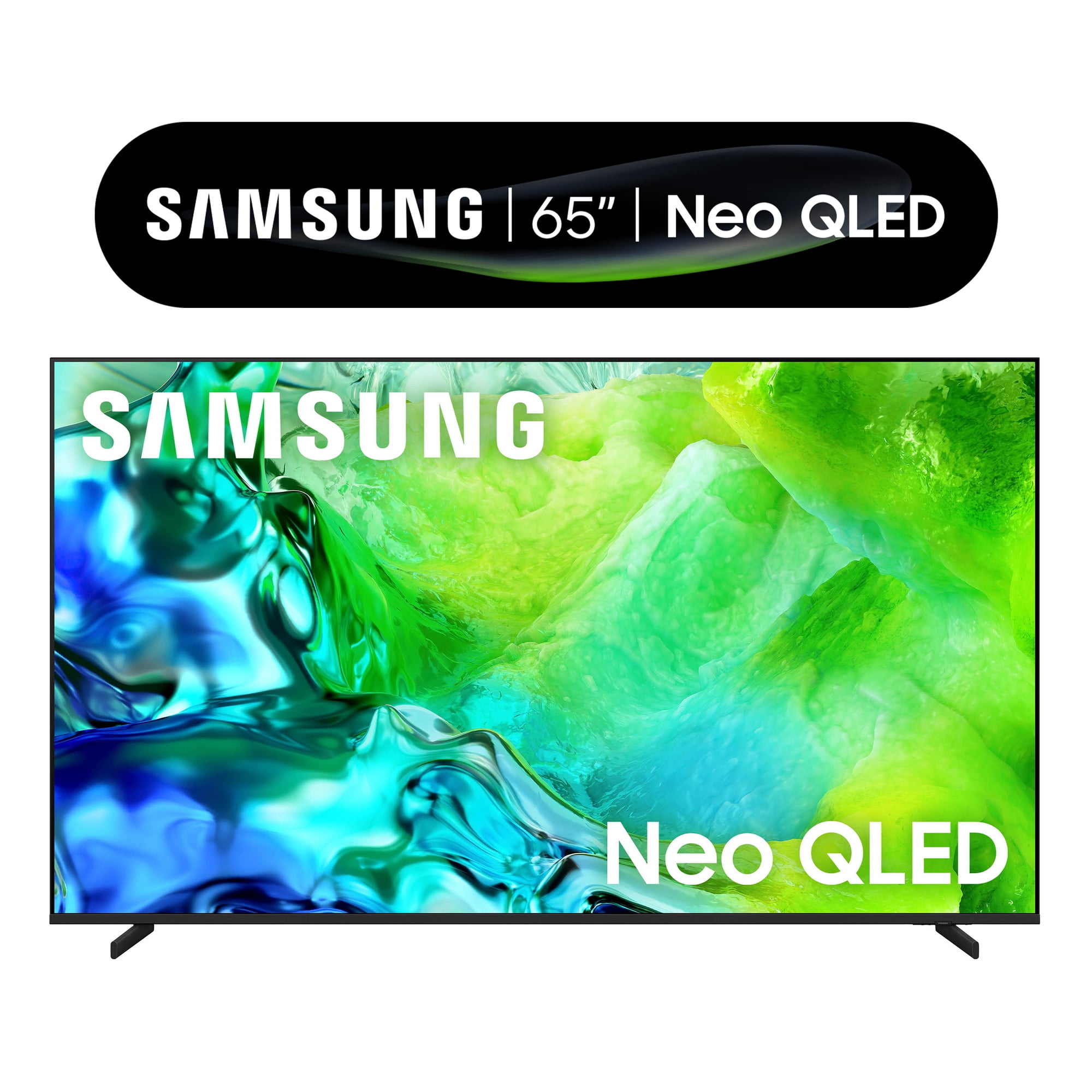
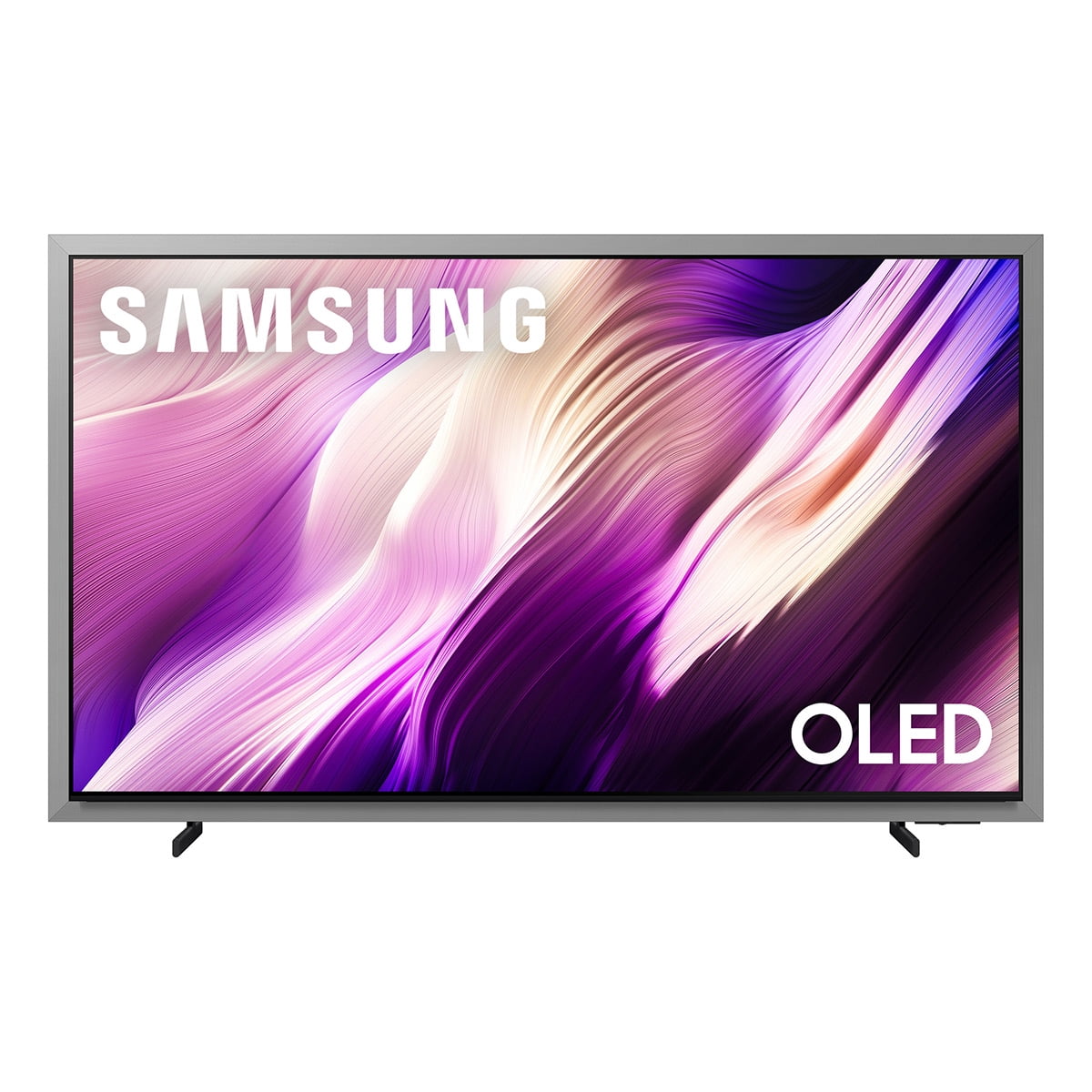
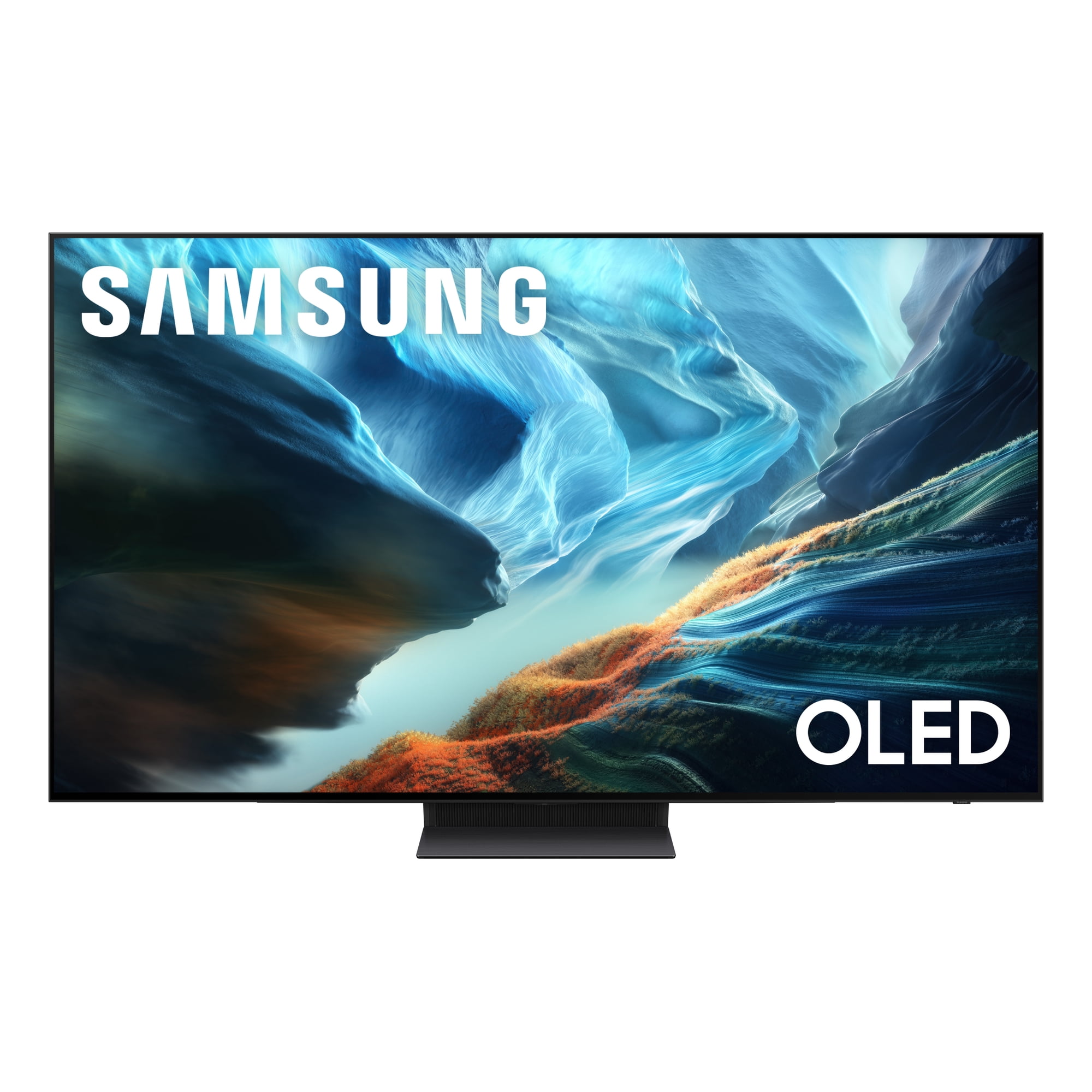


1. Samsung S90H 65-Inch OLED — Best Overall
Best for: Most households, gamers, movie enthusiasts, and anyone wanting premium OLED picture quality without flagship pricing.
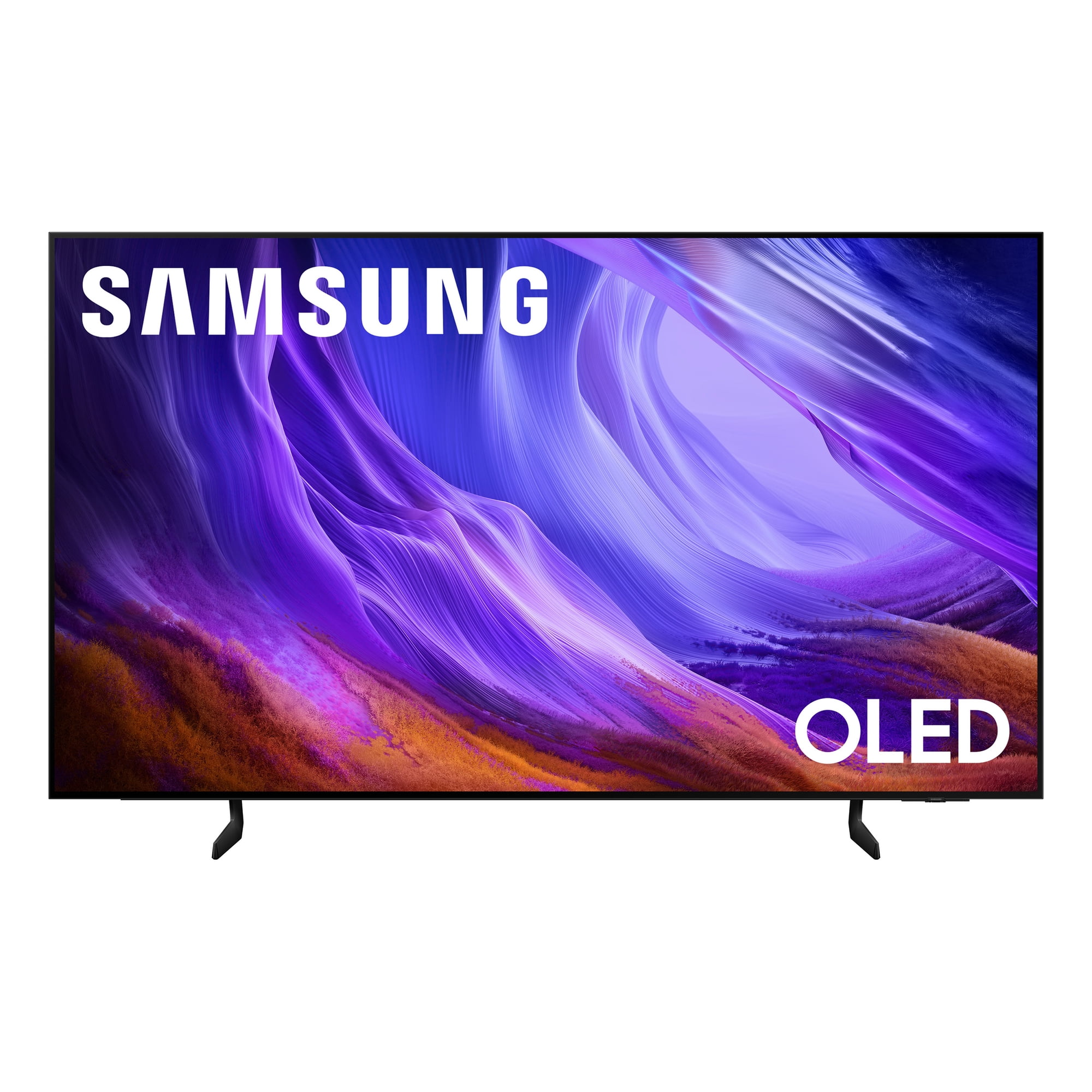
The Samsung S90H earns our best overall recommendation because it delivers an excellent combination of OLED contrast, glare reduction, color performance, and gaming features. It suits a wider range of rooms and viewing habits than Samsung's entry-level OLED.
The U.S. 65-inch model, QN65S90HAEXZA, uses a WOLED panel. That distinction matters because Samsung has used different OLED technologies across its product families and screen sizes.
Its self-emissive pixels can switch off individually, producing perfect blacks without the haloing around subtitles or small bright objects that can appear on locally dimmed LCD televisions.
The Glare Free matte screen coating is another major advantage. RTINGS found that it handles direct reflections exceptionally well, making daytime viewing more comfortable in rooms with windows or lamps opposite the screen. The wide viewing angle also helps when several people watch from different seats.
For gaming, the S90H includes four HDMI 2.1 inputs, variable refresh rate support, low input lag, and refresh rates up to 4K at 165Hz. PlayStation 5 and Xbox Series X owners can use supported 4K/120Hz modes, while compatible PCs can take advantage of higher refresh rates.
However, the S90H is not identical to Samsung's flagship S95H. Independent testing shows that the S95H produces brighter HDR highlights and more saturated colors, especially in demanding scenes. The S90H can also reduce brightness in large bright areas.
Those limitations are reasonable for many buyers because the S90H still provides the fundamental advantages of OLED. It is particularly appealing when its live price is substantially lower than the S95H.
Pros
✅ Perfect OLED blacks without local-dimming haloing
✅ Excellent glare reduction and wide viewing angles
✅ Four HDMI 2.1 ports with up to 4K/165Hz support
✅ Strong balance of picture quality and premium features
Cons
❌ Less impactful HDR highlights than S95H
❌ Bright full-screen content can trigger brightness reduction
❌ No Dolby Vision support
Who should skip it: Buyers seeking the brightest flagship HDR image or anyone who regularly displays static content for very long periods and wants to avoid OLED image-retention risk.
Consider instead: Samsung S95H for maximum OLED performance, or QN80H for an LCD-based option with local dimming.
2. Samsung S95H 65-Inch OLED — Best Premium Picture Quality
Best for: Home theater enthusiasts, premium HDR viewing, and buyers who prioritize picture quality over purchase price.
The Samsung S95H offers the strongest premium OLED picture in this comparison. Its 65-inch U.S. model, QN65S95HAFXZA, uses a QD-OLED panel that combines individually controlled OLED pixels with quantum-dot color technology.
The primary advantage over S90H is HDR performance. Independent testing found significantly brighter highlights and more vibrant colors, allowing demanding HDR movies and games to show additional detail and intensity.
The television also performs extremely well in dark rooms. Perfect black levels and excellent screen uniformity create a highly convincing image, particularly when bright objects appear against dark backgrounds.
Samsung's Glare Free coating reduces distracting direct reflections. Meanwhile, strong overall brightness makes the S95H suitable for rooms receiving substantial daylight.
There is one important limitation. RTINGS found that the QD-OLED panel's black levels become visibly raised in bright ambient conditions. Although reflections remain well controlled, perceived contrast can decrease when the room is brightly lit.
Gaming is another strength. The S95H supports 4K at up to 165Hz, variable refresh rates, and low input lag through four HDMI 2.1 ports. Its fast pixel response produces clear movement in compatible games.
The television can also work with Samsung's optional Wireless One Connect accessory, which adds connection flexibility. However, this is an additional purchase and should not be mistaken for an included accessory.
The main reason not to choose the S95H is its price. The improvement over S90H is meaningful, but the more affordable model already performs exceptionally well for most households.
Pros
✅ Outstanding HDR brightness and color performance
✅ Perfect blacks and excellent dark-room picture quality
✅ Excellent reflection handling and wide viewing angles
✅ Premium 165Hz gaming and HDMI 2.1 connectivity
Cons
❌ Considerably more expensive than S90H
❌ Black levels rise under strong ambient lighting
❌ No Dolby Vision or DTS audio decoding support
Who should skip it: Value-focused shoppers who will not benefit from the extra HDR brightness and color volume. The S90H offers much of the same premium experience for less.
Consider instead: Samsung S90H for everyday OLED value. Buyers who prefer Dolby Vision should also compare suitable Sony alternatives, including models in our Sony 4K home theater TV guide.
3. Samsung QN80H 65-Inch Neo QLED — Best Midrange Mini LED
Best for: Buyers wanting a capable 65-inch LCD television with genuine Mini LED local dimming, strong brightness, and modern gaming support.
The Samsung QN80H is our preferred midrange Mini LED option because it offers meaningful improvements over Samsung's more basic LCD models.
The U.S. 65-inch version, QN65QN80HAFXZA, combines a VA LCD panel with a Mini LED backlight and local dimming. Unlike televisions without local dimming, it can adjust lighting across different screen areas to improve dark-scene contrast.
RTINGS found good contrast, strong peak brightness, and accurate SDR colors. These qualities make the QN80H suitable for everyday television, movies, and streaming in rooms with moderate lighting.
It also provides a comprehensive gaming feature set. Four HDMI 2.1 inputs support variable refresh rate and up to 4K/144Hz. Compatible PC games can use a separate lower-resolution 240Hz mode, although that is not the same as displaying 4K at 240Hz.
However, specifications do not tell the whole story. Independent testing found that the screen's anti-reflective treatment is only moderately effective. Direct light sources can remain distracting during the day.
Viewing angles are another weakness. Picture quality changes noticeably when viewed from the side, making the QN80H less suitable for very wide seating arrangements than Samsung's OLED alternatives.
Fast-motion performance also falls short of the OLED models. Although the television supports high refresh rates and low input lag, some games display more motion blur than expected.
The QN80H is therefore a good middle-ground option rather than an automatic winner in every category. Its value depends on the live price difference versus S85H and S90H.
Pros
✅ Genuine Mini LED local dimming improves contrast
✅ Strong peak brightness and accurate SDR colors
✅ Four HDMI 2.1 ports with 4K/144Hz support
✅ No OLED burn-in risk from static content
Cons
❌ Picture quality deteriorates at wider viewing angles
❌ Reflection handling is less effective than premium OLED models
❌ Fast gaming motion can look blurry
Who should skip it: Buyers with seating far to the sides of the television or competitive gamers prioritizing exceptionally clear motion.
Consider instead: Samsung S85H for a darker movie room, or S90H for better viewing angles, reflection handling, and gaming responsiveness.
4. Samsung S85H 65-Inch OLED — Best Lower-Cost OLED
Best for: Movie enthusiasts who primarily watch in dark or moderately lit rooms and want OLED contrast without paying for a more expensive series.
The Samsung S85H makes OLED technology more accessible within Samsung's television lineup. The U.S. 65-inch model, QN65S85HAEXZA, uses a WOLED panel with individual pixel illumination.
Its greatest advantage is contrast. Every pixel can turn off completely, producing perfect blacks without the halos around bright subtitles or objects that can occur on LCD televisions.
That makes the S85H particularly appealing for evening movies and streaming. RTINGS also found a wide viewing angle, excellent gaming responsiveness, and impressive SDR color accuracy.
For gaming, the television supports 4K at 120Hz, variable refresh rate, low input lag, and HDMI 2.1 bandwidth on all four HDMI inputs. This is sufficient for the highest common refresh-rate modes available on current PlayStation and Xbox consoles.
The S85H's weakness is brightness. It cannot produce the same HDR impact as Samsung's premium OLEDs. Small highlights can look subdued, while bright scenes may appear less vivid than intended.
Its screen coating also struggles with direct reflections. Windows and lamps facing the display can create distracting glare. Consequently, the S85H is a much better choice for a controlled-light movie room than a very bright living room.
There is also an important value consideration. When S90H is heavily discounted, the difference in purchase price may become small enough that the more capable model is worth the upgrade.
Pros
✅ Perfect OLED black levels and contrast
✅ Excellent responsiveness for 4K/120Hz gaming
✅ Wide viewing angles
✅ Strong dark-room picture quality
Cons
❌ Limited HDR brightness
❌ Direct reflections can be distracting
❌ No Dolby Vision support
Who should skip it: Buyers who frequently watch television in rooms with direct sunlight or strong reflections. The S90H is a more versatile OLED for those conditions.
Consider instead: Samsung S90H when the price gap is manageable, or QN80H if an LCD-based alternative better suits your usage.
5. Samsung M80H 65-Inch Mini LED — Budget Gaming Features
Best for: Budget-conscious buyers who specifically want Samsung's smart platform and high-refresh-rate support but understand the limitations of its picture quality.
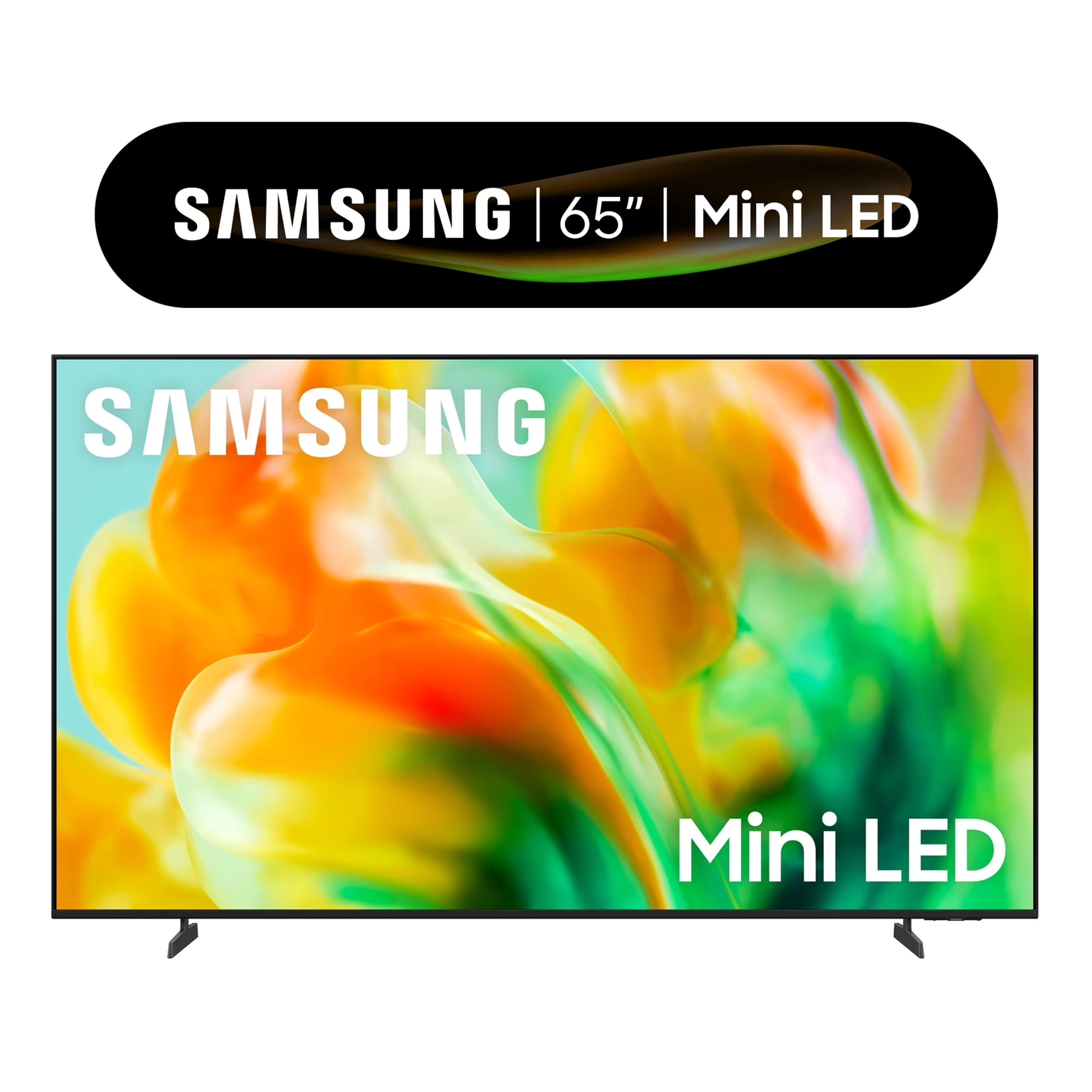
The Samsung M80H is one of the more unusual televisions in this comparison. Its 65-inch U.S. model, UN65M80HAFXZA, is advertised as a Mini LED television with 4K/144Hz gaming support.
Those specifications are appealing at an entry-level price. However, independent testing reveals a significant limitation: the M80H does not have local dimming.
That distinction is essential. Mini LED describes the backlight technology, but it does not guarantee that a television can independently adjust many screen zones. Without local dimming, dark scenes cannot achieve the same contrast improvements seen on more capable Mini LED models.
RTINGS found weak overall picture performance, particularly for HDR and dark-room viewing. Black levels are less convincing, and HDR highlights lack the intensity available on better televisions.
Where the M80H becomes more interesting is gaming connectivity. It supports high-refresh-rate input modes and variable refresh rate, giving buyers access to features that are not always present on inexpensive televisions.
Still, refresh rate and motion clarity are different things. Supporting a 144Hz input does not automatically make the screen as responsive or visually impressive as an OLED.
We recommend the M80H only with clear qualifications. It can make sense for a buyer who prioritizes Samsung, Tizen, and gaming features at a low price. Shoppers who prioritize image quality should strongly consider upgrading to QN80H or comparing similarly priced televisions from competing brands.
Pros
✅ High-refresh-rate 4K gaming support
✅ Variable refresh rate functionality
✅ Samsung Tizen smart TV platform
✅ Lower purchase cost than premium Samsung models
Cons
❌ No local dimming despite Mini LED branding
❌ Weak HDR picture quality
❌ Substantially worse overall image performance than QN80H
Who should skip it: Movie enthusiasts, HDR-focused gamers, and buyers expecting premium Mini LED contrast from the product name.
Consider instead: Samsung QN80H for genuine local dimming, or a competing 65-inch television offering stronger picture quality for a similar price.
6. Samsung The Frame LS03HE 65-Inch — Best for Interior Design
Best for: Buyers who want a television that blends into a living room, displays artwork, and looks attractive when not in use.
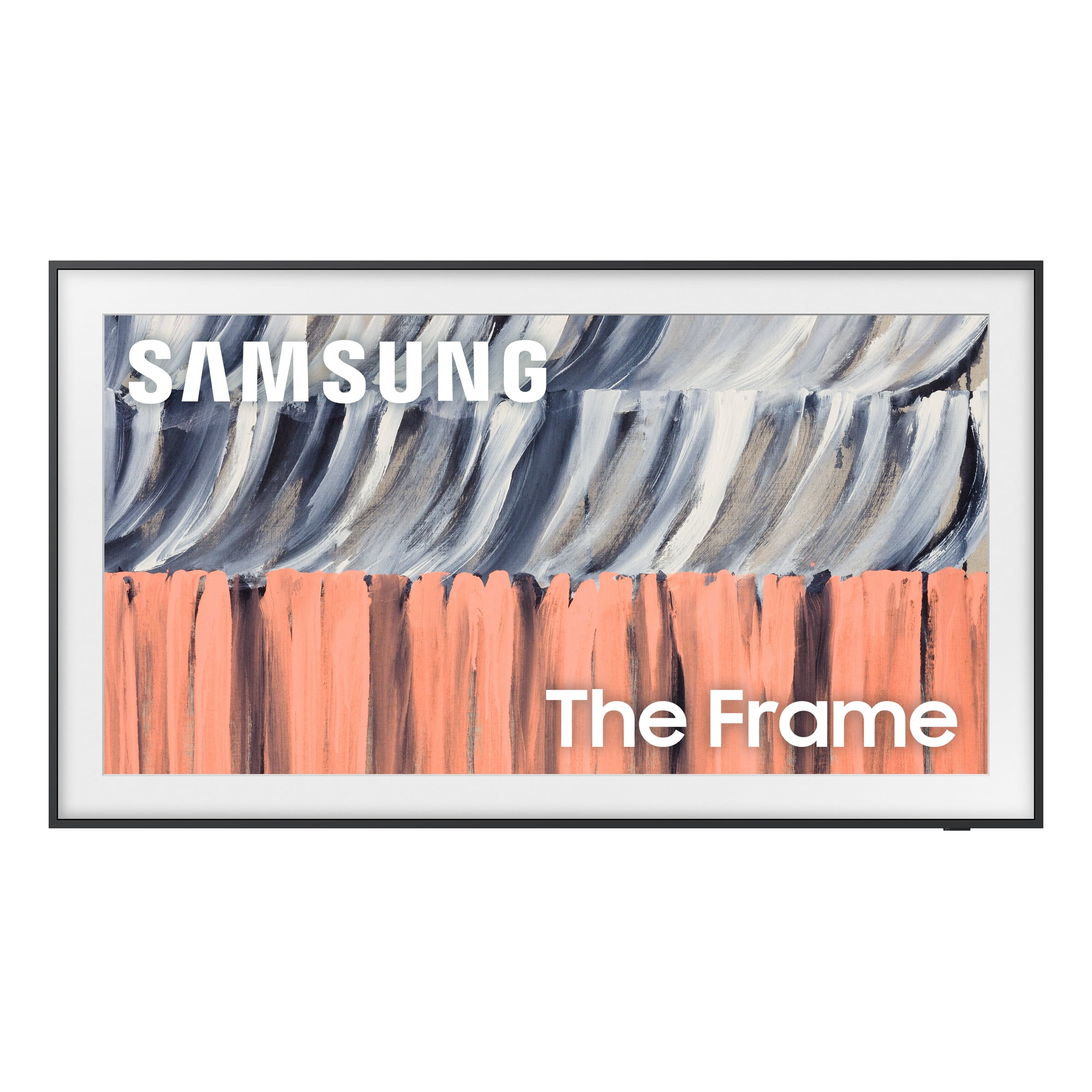
Samsung The Frame LS03HE is designed around appearance rather than maximum television performance. Its 65-inch U.S. version, QN65LS03HEFXZA, combines a slim gallery-inspired design with a matte QLED screen and Art Mode.
Art Mode allows the television to display personal images or artwork when you are not watching entertainment. Samsung also offers an Art Store with additional content, although access to the full collection may require a paid subscription.
The television includes a Slim Fit Wall Mount and supports optional customizable bezels. These accessories help it resemble a framed picture rather than a conventional television.
Its matte screen is particularly effective at reducing mirror-like reflections. Independent testing found the anti-reflective treatment very useful for daytime viewing and displaying artwork in rooms with natural light.
However, the standard Frame is not equivalent to Samsung's premium Neo QLED or OLED models. It does not include local dimming, so dark scenes lack depth and HDR highlights are less impactful.
It also has narrower viewing angles than OLED televisions. People seated far to the sides may notice changes in the picture.
The Frame supports modern gaming features, including variable refresh rate and up to 4K/144Hz, but its lower contrast and limited HDR brightness reduce the visual impact of demanding games.
An important installation detail is that the standard LS03HE uses built-in connections rather than the wireless external connection system offered with The Frame Pro. Plan cable routing before mounting the television.
For a more detailed look at installation, Art Mode, and overall value, read our Samsung The Frame TV review.
Pros
✅ Attractive gallery-style design and Art Mode
✅ Excellent reduction of direct reflections
✅ Slim wall mount included
✅ Customizable bezels and modern gaming features
Cons
❌ No local dimming for improved black levels
❌ Limited HDR performance
❌ Art Store and decorative accessories may add costs
❌ No included external One Connect box
Who should skip it: Buyers whose primary goals are cinematic HDR performance, dark-room contrast, or maximum picture quality per dollar.
Consider instead: Samsung QN80H for conventional Mini LED performance, or S85H for OLED movie quality in a darker room.
Other Samsung 65-Inch TVs We Considered
Samsung offers additional televisions that may be worth comparing, but they do not replace the main recommendations for most buyers.
Samsung QN90H: This higher-tier Neo QLED model may appeal to shoppers seeking a brighter premium LCD television. We have not placed it above the independently evaluated models without sufficient comparative evidence for the exact 65-inch version. Reassess it when current testing and retailer prices support a clear recommendation.
Samsung QN70H: The QN80H offers stronger local dimming, better brightness, and more capable gaming performance. The QN70H is mainly worth considering when the price difference is substantial.
Samsung M70H: This cheaper model offers fewer gaming capabilities than the M80H. Its lack of meaningful local dimming and weak HDR performance make it difficult to recommend for picture-focused shoppers.
Previous-generation Samsung TVs: Older OLED and Neo QLED televisions may become attractive during clearance sales. However, availability, warranty coverage, panel variations, and real price savings should be verified before choosing them over current products.
Samsung OLED vs. Neo QLED vs. Mini LED: Which Is Better?
Samsung uses several display technologies, and the differences affect far more than marketing terminology.
OLED: Best for Deep Blacks and Fast Response
OLED televisions control light at the pixel level. This allows them to display black without illuminating the surrounding screen, improving contrast and eliminating local-dimming halos.
The S90H and S85H use WOLED technology in their 65-inch U.S. versions, while the S95H uses QD-OLED. Both approaches provide exceptional black levels, but the S95H achieves brighter HDR highlights and more vibrant colors.
OLED is especially attractive for dark-room movies, wide seating arrangements, and gaming that benefits from fast pixel response.
However, OLED displays can experience permanent image retention under certain long-term usage patterns. Built-in protection systems help manage this risk, but buyers frequently displaying static dashboards or the same fixed interface should consider their habits.
Neo QLED: Mini LED with Local Dimming
Samsung's QN80H combines an LCD panel with a Mini LED backlight and local dimming. It can brighten or darken different screen areas, improving contrast compared with basic LCD televisions.
It cannot match OLED's individual pixel control, but it avoids OLED-specific burn-in concerns and may better suit certain usage patterns.
Local dimming quality varies across models. The number of LEDs alone does not determine performance; the television's zone control, processing, contrast, and response characteristics also matter.
Why Mini LED Branding Does Not Guarantee Better HDR
The Samsung M80H demonstrates why buyers should examine actual testing rather than relying solely on a technology label.
Despite using Mini LED branding, the M80H does not provide local dimming. As a result, it cannot produce the same dark-scene contrast and highlight separation as the QN80H.
The practical rule is simple: judge contrast, HDR brightness, and local dimming performance together, not the backlight name alone.
Is a 65-Inch Samsung TV Right for Your Room?
A 65-inch television is a practical choice for many living rooms, but screen size should be evaluated against seating distance, furniture width, and viewing angles.
Recommended Viewing Distance
A typical 65-inch 16:9 television has a visible screen width of approximately 56.7 inches and a height of 31.9 inches, excluding its frame and stand.
According to RTINGS' viewing-distance guidance, approximately 8 feet 10 inches provides a balanced experience for mixed television use at a 30-degree field of view. Movie enthusiasts may prefer a more immersive experience around 6 feet 6 inches, corresponding to roughly 40 degrees.
These are recommendations rather than strict limits. Personal comfort, content quality, and room layout should determine your final position.
Wall Mounting and TV Stand Dimensions
Before installation, confirm the exact dimensions of your television, including the stand, mounting hardware, and necessary clearance.
Different Samsung 65-inch models can have different stand widths, depths, mounting patterns, and weights. Do not assume every television in this comparison uses the same VESA mount.
For example, the QN80H 65-inch version uses a 400 × 300 mm VESA mounting pattern. Other models may require different hardware or mounting arrangements.
Use a wall mount rated for the exact television's weight and mounting pattern. If mounting above furniture, account for comfortable viewing height and cable access.
Viewing Angles and Room Lighting
Consider where people actually sit. If your family regularly watches from seats positioned far to the sides, OLED models such as S90H or S95H generally maintain image quality better than QN80H.
For bright rooms, screen reflections matter as much as peak brightness. Samsung's Glare Free OLEDs and The Frame reduce mirror-like reflections effectively, although each handles contrast differently under ambient light.
Choosing the right screen for your room often produces a greater improvement than purchasing a television with a more impressive specification sheet.
Gaming on Samsung 65-Inch TVs: What Matters Most?
Most televisions in this comparison offer modern gaming features, but their actual performance and connection options vary.
4K/120Hz vs. 144Hz and 165Hz
Current PlayStation 5 and Xbox Series X consoles support up to 4K/120Hz output in compatible games. That means a television capable of 4K/120Hz already provides the key refresh-rate capability these consoles need.
Samsung's 144Hz and 165Hz modes become more relevant when connecting a sufficiently powerful gaming PC. They do not automatically make console games run faster than the console's output limit.
HDMI 2.1, VRR, and ALLM
HDMI 2.1 connectivity can support higher-resolution gaming modes, while variable refresh rate helps reduce visible tearing when frame rates change.
Auto Low Latency Mode allows compatible televisions to switch into a lower-latency gaming configuration automatically.
The S90H, S95H, S85H, and QN80H offer four HDMI 2.1 inputs. This makes them particularly convenient for households connecting multiple consoles and a gaming PC.
Other models may provide fewer physical HDMI connections. Confirm the port layout before purchasing, especially when connecting multiple sources and a soundbar.
Motion Clarity Matters More Than Refresh Rate Alone
Refresh rate describes how frequently a screen can update its image. Pixel response time describes how quickly those pixels transition between colors or brightness levels.
The difference matters in practice. Independent testing found the OLED models especially responsive, while QN80H displayed more motion blur in fast games despite its high refresh-rate support.
If fast competitive games are your priority, S90H is the most balanced recommendation in this list. S95H offers additional picture-quality improvements, but those benefits may be less important than its higher price.
Samsung Smart TV Features and Important Limitations
All six models use Samsung's Tizen-based smart television platform, but shoppers should understand what is included and what requires compatible services or accessories.
Streaming Apps and Samsung Tizen
Samsung's smart platform provides access to popular streaming services, Samsung TV Plus, and supported connected-home functions. Specific apps and features can vary by country and software version.
If you prefer a different interface, an external streamer is another option. Our best streaming sticks guide
However, an external streaming device cannot add display capabilities the television lacks. For example, connecting a Dolby Vision-capable streaming stick does not make a Samsung television display Dolby Vision.
HDR10+ vs. Dolby Vision
Samsung supports HDR10 and HDR10+ across compatible televisions but does not provide Dolby Vision support on these models.
Both HDR10+ and Dolby Vision can use dynamic metadata to adjust picture presentation across scenes. The practical difference depends on which format your streaming service, disc, or device provides.
When Dolby Vision content is available but the television does not support that format, playback may use another compatible HDR format where the source provides one.
If Dolby Vision is a major requirement, compare suitable models from other manufacturers before buying.
Audio, eARC, and Soundbar Compatibility
Modern Samsung televisions can connect to external sound systems through supported HDMI audio return connections. However, the available HDMI ports and audio-format passthrough capabilities differ between models.
For buyers creating a larger home theater, budget for audio separately. A capable soundbar can improve dialogue clarity, bass, and surround presentation compared with built-in television speakers.
Our best soundbars for home theaters guide
Before buying a soundbar, verify eARC support, HDMI passthrough requirements, and compatibility with the audio formats you actually use.
Software Support and Long-Term Ownership
Samsung provides security-update support policies for its televisions. However, security updates should not be confused with guarantees that a television will receive every future smart-platform feature or operating-system upgrade.
Check the support information for the exact model when long-term software compatibility is important.
Also consider warranty terms, retailer support, replacement remote availability, and whether the television will be used primarily for streaming, gaming, or static-content applications.
Frequently Asked Questions
What is the best Samsung 65-inch smart TV?
The Samsung S90H OLED is our best overall recommendation because it combines excellent contrast, strong reflection handling, wide viewing angles, and gaming support up to 4K/165Hz. The S95H is better for premium HDR picture quality, while QN80H is the practical midrange Mini LED alternative.
Is the Samsung S95H worth buying over the S90H?
The S95H offers brighter HDR highlights, more vibrant colors, and higher-end QD-OLED performance. It is worth considering if picture quality is your top priority and the price difference fits your budget. Most buyers will find the S90H provides better overall value.
Is Samsung OLED better than Neo QLED?
OLED provides perfect pixel-level blacks, excellent viewing angles, and very fast response times. Neo QLED uses an LCD panel with advanced backlighting and, on models such as QN80H, local dimming. OLED generally excels in dark rooms and fast gaming, while Neo QLED may suit buyers who prefer LCD technology or frequently display static content.
Is the Samsung M80H a good 65-inch Mini LED TV?
The M80H offers appealing gaming features, including up to 4K/144Hz support. However, independent testing found that it lacks local dimming despite the Mini LED branding. Its HDR and dark-room picture quality are significantly weaker than QN80H, making it a conditional budget choice rather than a strong all-around recommendation.
How far should you sit from a 65-inch 4K Samsung TV?
Around 8 feet 10 inches is a balanced viewing distance for mixed television use, based on a 30-degree field of view. Movie enthusiasts may prefer approximately 6 feet 6 inches for a more immersive experience. The ideal distance depends on personal comfort, room layout, and content.
Do Samsung 65-inch smart TVs support Dolby Vision?
The Samsung models covered here do not support Dolby Vision. Samsung instead supports HDR10 and HDR10+ on compatible televisions. If Dolby Vision is essential for your streaming or disc collection, compare suitable alternatives from brands that support it.
Which Samsung 65-inch TV is best for PS5, Xbox, and PC gaming?
Samsung S90H is the best overall gaming choice here because it combines low input lag, fast OLED response, four HDMI 2.1 ports, VRR, and up to 4K/165Hz support. S95H offers better HDR picture quality at a higher price. S85H is a lower-cost OLED alternative with excellent 4K/120Hz console gaming performance.
Final Verdict: Which Samsung 65-Inch TV Should You Buy?
The Samsung S90H OLED is the best Samsung 65-inch TV for most shoppers. It delivers excellent black levels, strong reflection handling, wide viewing angles, and a complete gaming feature set without requiring the flagship S95H's higher purchase price.
Choose the S95H if premium HDR brightness and color performance matter most. The difference is visible in demanding movies and games, but not everyone needs to spend more for those improvements.
The QN80H Neo QLED is the practical midrange Mini LED choice, combining local dimming, good brightness, and modern gaming support. For darker rooms, the S85H OLED may provide better contrast when its price is sufficiently lower than S90H.
The M80H is worth considering only when budget and gaming features outweigh its weak HDR performance. Meanwhile, The Frame LS03HE is the right choice when appearance, Art Mode, and wall integration matter more than cinematic picture quality.
Best Overall: Samsung S90H OLED
Best Premium Picture: Samsung S95H OLED
Best Midrange Mini LED: Samsung QN80H Neo QLED
Best Affordable OLED: Samsung S85H OLED
Budget Gaming Alternative: Samsung M80H
Best for Interior Design: Samsung The Frame LS03HE
Before purchasing, compare current offers for the exact 65-inch model, verify your room dimensions, and prioritize the features you will actually use. A television that suits your lighting, seating, and entertainment habits is a better long-term purchase than one chosen solely for its advertised specifications.
Sources
- Samsung Electronics America — Samsung Upgrades 2026 OLED TVs with New Designs and Expanded Premium Features
- RTINGS — Best 65-Inch TVs
- RTINGS — Samsung S90H OLED Review
- RTINGS — Samsung QN80H Review
- RTINGS — Samsung M80H Review
Product Groups: Samsung S90H 65-Inch OLED 4K Smart TV QN65S90HAEXZA, Samsung S95H 65-Inch OLED 4K Smart TV QN65S95HAFXZA, Samsung QN80H 65-Inch Neo QLED 4K Smart TV QN65QN80HAFXZA, Samsung S85H 65-Inch OLED 4K Smart TV QN65S85HAEXZA, Samsung M80H 65-Inch Mini LED 4K Smart TV UN65M80HAFXZA, Samsung The Frame 65-Inch LS03HE 4K QLED Smart TV QN65LS03HEFXZA