The Garmin Forerunner 970 is the better choice for serious runners and endurance athletes, while the Apple Watch Ultra 3 is the better premium smartwatch for iPhone users who want strong sports tracking without giving up apps, cellular connectivity, communication, and everyday smart features.
Both watches can handle marathon training, multisport workouts, dual-frequency or multi-band GPS, heart-rate tracking, structured workouts, navigation, and detailed running metrics. The difference is what happens after the workout. Garmin builds more training analysis, recovery guidance, race preparation, and navigation directly into the watch and Garmin Connect. Apple focuses more heavily on making the watch an extension of your iPhone while still offering an increasingly capable running platform.
Price does not separate them by much: the Forerunner 970 launched at $749.99, while Apple Watch Ultra 3 starts at $799. The better purchase therefore depends less on the $49 difference and more on whether you want a training-first sports watch or a smartwatch-first wearable that is also excellent for running.
Quick Winner: Garmin Forerunner 970 or Apple Watch Ultra 3?
Best for Running and Training: Garmin Forerunner 970 — deeper native training analysis, recovery guidance, race tools, and running-specific metrics.
Best for Battery Life: Garmin Forerunner 970 — rated for up to 15 days in smartwatch mode, compared with up to 42 hours of normal use for Apple Watch Ultra 3.
Best for Smart Features: Apple Watch Ultra 3 — stronger apps, 5G cellular, messaging, calls, Apple Pay, and deeper iPhone integration.
Overall for Serious Athletes: Garmin Forerunner 970. Choose Ultra 3 instead if smartwatch functionality matters as much as training.
Garmin Forerunner 970 vs Apple Watch Ultra 3 at a Glance
| Feature | Garmin Forerunner 970 | Apple Watch Ultra 3 | Advantage |
|---|---|---|---|
| Starting Price | $749.99 | $799 | Garmin |
| Size | 47 × 47 × 12.9 mm | 49 × 44 × 12 mm | Depends on fit |
| Weight | 56 g | 61.6–61.8 g | Garmin |
| Display Protection | Sapphire crystal | Sapphire crystal | Tie |
| GPS | Multi-band GPS | L1/L5 dual-frequency GPS | Both strong |
| Smartwatch Battery Claim | Up to 15 days | Up to 42 hours normal use | Garmin |
| GPS Battery Claim | Up to 26 hours GPS-only; up to 21 hours all-systems multi-band | Apple does not present the same range of GNSS modes in its standard specification table | Garmin for documented endurance options |
| Training Analysis | Training Readiness, Training Status, recovery, Running Tolerance, race tools | Training Load, heart-rate zones, running power, workout metrics | Garmin |
| Maps and Navigation | Built-in maps with deep activity integration and routing | Offline maps, routes, compass, Backtrack | Garmin |
| Cellular | No standalone cellular | 5G and LTE support | Apple |
| Satellite Communication | No equivalent built-in standalone satellite messaging feature | Emergency SOS, Messages, and Find My via satellite where supported | Apple |
| Phone Compatibility | Compatible iPhone and Android devices | iPhone 11 or later with iOS 26+ | Garmin for flexibility |
| Water Resistance | 5 ATM | 100 m; recreational diving to 40 m | Apple |
Price and Value
Garmin Forerunner 970 has a small price advantage at $749.99 versus the Apple Watch Ultra 3’s $799 starting price, but $49 should not decide a purchase at this level. The more important question is which set of capabilities you will actually use.
The Garmin price buys a specialized running and multisport platform with built-in maps, long battery life, recovery analysis, training readiness, training status, race predictions, and extensive workout data. Ultra 3 costs slightly more but adds much deeper smartwatch functionality, including cellular connectivity, satellite communication, the App Store, messages, calls, and close integration with Apple’s wider ecosystem.
Garmin Forerunner 970 Current Offers
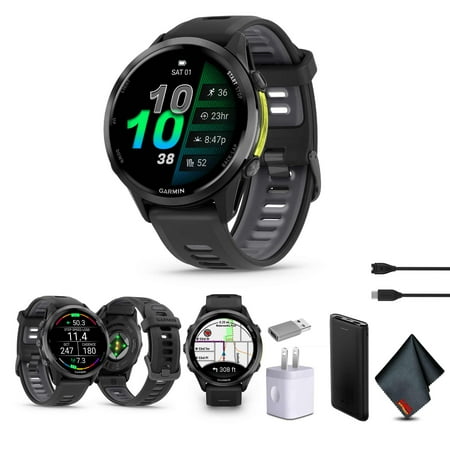
A high-performance GPS fitness smartwatch built for runners, triathletes, and endurance athletes.
- Target users: runners, triathletes, endurance athletes
- Display: Garmin’s brightest AMOLED screen
- Build: lightweight titanium bezel with a scratch-resistant sapphire lens
- Purpose: durable, performance-focused design made to handle intense training sessions
Apple Watch Ultra 3 Current Offers
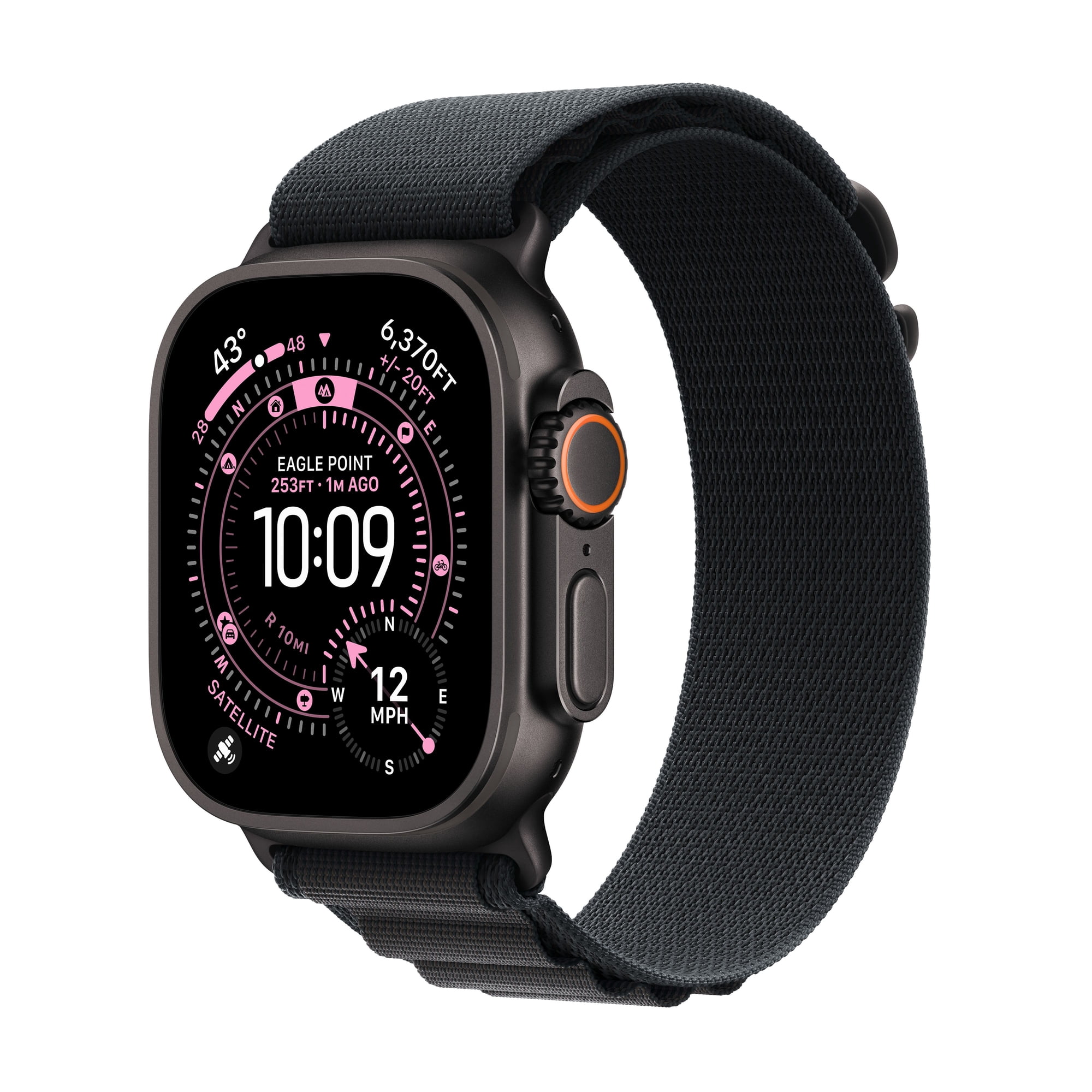
Personal beast — a rugged sports and adventure watch built to withstand tough conditions.
- Extremely tough titanium case
- Strong sapphire crystal display
- Water resistant to 100 m — suitable for swimming, diving, and high‑speed water sports
- Large, bright, beautiful display
Ideal for athletes and outdoor adventurers who need a durable, high‑visibility smartwatch.
Price winner: Garmin, but only narrowly. Value depends much more heavily on whether training depth or smartwatch functionality is your priority.
Design, Display and Comfort
Garmin Forerunner 970 is the easier watch to forget about during a long run. It weighs 56 grams and uses Garmin’s familiar round sports-watch layout with a 47 mm case, touchscreen, and physical buttons. The sapphire lens improves scratch resistance, while a titanium bezel adds a premium element without turning the entire case into a heavy metal design.
Apple Watch Ultra 3 uses a 49 × 44 mm Grade 5 titanium case with a sapphire display and weighs roughly 62 grams depending on finish. It feels more substantial and visually more like a premium smartwatch. Its display reaches up to 3,000 nits and the rectangular interface gives apps, messages, maps, and other connected functions more room.
For training, Garmin’s five-button design remains useful when hands are sweaty, when wearing gloves, or when you want to change data screens without depending completely on touch controls. Apple’s Digital Crown, Action button, side button, and touchscreen remain easy to use, but the two devices clearly come from different design philosophies.
Winner for running comfort: Garmin Forerunner 970. Winner for premium smartwatch construction: Apple Watch Ultra 3.
GPS Accuracy: Which Watch Tracks Runs Better?
Both watches have advanced satellite hardware and are capable of highly accurate running tracks. Forerunner 970 supports multi-band GPS, while Ultra 3 uses L1 and L5 precision dual-frequency GPS.
Independent head-to-head testing supports treating both as strong performers rather than declaring that one is universally accurate in every environment. In a 2026 half-marathon comparison, both watches recorded distances close to the official 13.1-mile course and produced very similar GPS tracks.
That matters because GPS performance changes with route, buildings, tree cover, satellite visibility, settings, and running environment. A single race cannot prove that one watch will win every future GPS test.
Garmin still has an advantage around how GPS data connects to the broader training platform. Its maps, routing, course tools, and battery modes are built around long-duration sports use, while Apple combines excellent GPS with a more general smartwatch experience.
GPS verdict: essentially a draw for raw capability, with Garmin taking the broader running-navigation advantage.
Heart-Rate Tracking
Both watches include optical heart-rate sensors and can provide useful heart-rate zones and workout trends, but wrist-based heart-rate accuracy can vary with fit, movement, cadence, temperature, skin contact, and workout intensity.
In the same 2026 half-marathon test, the Forerunner 970 stayed much closer to the reviewer’s Garmin HRM 600 chest-strap reference, while the Apple Watch Ultra 3 produced unusually high readings during parts of that specific race. That is useful evidence, but it should not be interpreted as proof that every Forerunner 970 will outperform every Ultra 3 during every activity.
Athletes who structure threshold sessions, intervals, or training zones around precise heart-rate data should still consider a compatible chest strap regardless of which watch they choose.
Winner based on the available direct test: Garmin Forerunner 970, with the qualification that wrist-sensor performance varies.
Running and Training Analysis
Training analysis is where the Garmin Forerunner 970 creates its clearest advantage. Apple has substantially improved its running platform, but Garmin still does more of the interpretation natively.
Garmin Forerunner 970 Training Tools
Garmin combines workout recording with tools designed to answer what an athlete should do next. Training Readiness uses recovery-related inputs to estimate preparedness for training, while Training Status evaluates longer-term trends rather than judging a run in isolation. Recovery guidance, race predictions, suggested workouts, and load information create a more complete training picture.
The Forerunner 970 also introduces Running Tolerance, which helps put running volume and mechanical impact into context rather than treating every mile as equivalent.
Running Economy is another advanced feature, but buyers should understand an important limitation before treating it as a reason to purchase the 970: Garmin requires several suitable outdoor runs plus a compatible accessory that measures step-speed loss, such as the HRM 600. It is not simply generated from the watch alone.
Apple Watch Ultra 3 Training Tools
Ultra 3 provides a strong set of native running metrics, including Training Load, customizable heart-rate zones, VO₂ max estimates, custom workouts, Race Route, Pacer, running power, stride length, ground-contact time, cadence, and vertical oscillation.
For many recreational runners and even marathoners, that is enough information to train seriously. The distinction is that Apple tends to provide more of the workout data while Garmin goes further in turning multiple days and weeks of information into native readiness, recovery, and training recommendations.
Third-party Apple Watch apps can extend training analysis considerably, but that means building a system around additional software rather than getting Garmin’s entire performance ecosystem directly from one platform.
Winner: Garmin Forerunner 970.
If you are comparing a wider range of dedicated training watches rather than only these two premium models, our best running watches for tracking progress guide covers more running-first options.
Battery Life
Battery life is the biggest practical difference between these watches. Garmin rates the Forerunner 970 for up to 15 days in smartwatch mode, while Apple rates Ultra 3 for up to 42 hours of normal use and up to 72 hours in Low Power Mode.
Garmin also publishes several dedicated satellite-mode estimates. The Forerunner 970 is rated for up to 26 hours in GPS-only mode, up to 23 hours with SatIQ AutoSelect, and up to 21 hours using all satellite systems plus multi-band positioning.
Apple structures its published battery information differently, so it is better not to pretend that the largest Apple and Garmin numbers represent identical test conditions. The practical difference remains substantial: the Forerunner 970 is designed to go several days of training between charges, whereas Ultra 3 still fits a more frequent charging routine.
This affects more than convenience. Regular charging can create gaps in overnight recovery, sleep, and resting data if you forget to put the watch back on. Garmin’s longer endurance makes continuous wear easier for athletes who want a more complete training record.
Winner: Garmin Forerunner 970.
Maps and Navigation
Both watches now offer meaningful navigation tools, but Garmin’s mapping experience is more deeply integrated into sports use.
Forerunner 970 includes built-in mapping, course navigation, routing, and the ability to view navigation information alongside activity data. This is particularly useful for long runs, trail training, cycling routes, and races in unfamiliar areas.
Apple Watch Ultra 3 supports offline maps, custom routes, compass tools, waypoints, Backtrack GPS data, and U.S. topographic maps for supported areas. These are significant capabilities and make Ultra 3 far more useful outdoors than a basic smartwatch.
The difference is workflow. Independent comparison testing found Garmin’s maps and routing more naturally integrated with activity tracking, while Apple can require more switching between workout and navigation views or additional third-party apps for a similarly sports-focused interface.
Winner: Garmin Forerunner 970.
Smart Features, Apps and Connectivity
Apple Watch Ultra 3 reverses the comparison once smartwatch functionality becomes the priority. It supports 5G and LTE cellular connectivity, calls, messages, Apple Pay, Siri, media, third-party apps, and Apple’s broader services without needing to behave like a dedicated sports computer first.
Satellite connectivity adds another meaningful distinction. Ultra 3 supports compatible Emergency SOS, Messages, and Find My functions through satellite when cellular and Wi-Fi networks are unavailable, subject to regional and service requirements.
Garmin Forerunner 970 has useful smart features including Garmin Pay, music storage, notifications, a speaker and microphone, and compatible voice functions through a paired smartphone. What it does not provide is Apple’s standalone cellular experience or comparable App Store ecosystem.
For an athlete who wants to leave an iPhone at home while remaining reachable, Apple has the clear advantage.
Winner: Apple Watch Ultra 3.
If everyday smartwatch features matter more than dedicated endurance training, our best smartwatches guide compares Apple with other current smartwatch-first options.
Health and Safety Features
Both devices track extensive wellness and physiological information, but they emphasize different outcomes. Garmin uses health and recovery information heavily to support athletic training decisions, while Apple integrates health, communication, and safety features more broadly into everyday smartwatch use.
Ultra 3 includes features such as ECG where available, heart-rate notifications, sleep tracking, sleep score, fall detection, crash detection, Emergency SOS, siren functionality, and satellite safety capabilities. Some health features depend on country, regulatory approval, software version, and individual eligibility, so sensor presence should not be treated as a guarantee that every function is available to every buyer.
Forerunner 970 includes Garmin’s ECG app where supported, Pulse Ox functionality, sleep information, recovery metrics, and extensive fitness-related physiological analysis.
Neither watch should be treated as a replacement for professional medical evaluation or diagnostic equipment.
Winner: Apple for broader connected health and safety functionality; Garmin for turning recovery data into sports-training guidance.
Phone Compatibility
Phone compatibility can decide this comparison before any performance specification matters.
Apple Watch Ultra 3 requires an iPhone 11 or later, including compatible iPhone SE models, running iOS 26 or later. It is not a practical smartwatch choice for an Android user.
Garmin Connect supports compatible Android phones and iPhones. That makes the Forerunner 970 the much safer purchase if you currently use Android or expect that you may switch phone platforms during the life of the watch.
iPhone owners still face a real choice. Garmin works with iPhone, but Apple Watch has much deeper access to Apple’s communication, apps, payments, and ecosystem features.
If you are choosing primarily by phone platform, our Apple Watch Series 11 vs Samsung Galaxy Watch9 comparison explores that ecosystem decision in more detail.
Winner for flexibility: Garmin. Winner for deep iPhone integration: Apple.
Durability and Water Resistance
Apple Watch Ultra 3 is the more ruggedly specified device. Its Grade 5 titanium case, flat sapphire crystal, IP6X dust resistance, 100-meter water-resistance rating, and recreational diving support to 40 meters make it more suitable for buyers who want a sports watch that also crosses into water and adventure use.
Forerunner 970 uses a sapphire lens, titanium bezel, and 5 ATM water rating. That is appropriate for its running and multisport positioning, but the Apple Watch carries broader water and durability specifications.
Winner: Apple Watch Ultra 3.
Which Watch Should You Buy?
Choose Garmin Forerunner 970 If:
- Running, triathlon, or endurance training is the main reason you are buying the watch.
- You want Training Readiness, Training Status, recovery guidance, race predictions, and deeper native training analysis.
- You want multi-day battery life without planning frequent charging.
- You regularly use maps and navigation during activities.
- You want a lighter watch for long workouts.
- You use Android or want flexibility between Android and iPhone.
Choose Apple Watch Ultra 3 If:
- You use an iPhone and want the deepest possible smartwatch integration.
- You want calls, messaging, cellular connectivity, apps, payments, and media on your wrist.
- You want built-in satellite communication and Apple’s wider safety ecosystem.
- You want serious running features but do not need Garmin’s full native training-analysis system.
- You prefer a titanium, rugged smartwatch design.
- You want one watch to handle both workouts and a highly connected everyday lifestyle.
Best for Serious Running: Garmin Forerunner 970
Best for Battery: Garmin Forerunner 970
Best for Navigation: Garmin Forerunner 970
Best Smartwatch: Apple Watch Ultra 3
Best for iPhone Users Wanting One Watch for Everything: Apple Watch Ultra 3
Alternatives to Consider
Garmin Forerunner 570: consider it if you want Garmin’s running ecosystem but do not need the 970’s premium maps, sapphire construction, and highest-level feature set.
Apple Watch Series 11: a more affordable Apple option for iPhone users who want strong fitness and smartwatch functions but do not need the Ultra’s rugged construction, larger battery, or adventure-oriented features.
COROS PACE 4: a substantially less expensive alternative for runners who care primarily about GPS, training, low weight, and long battery life rather than premium smartwatch functions.
Frequently Asked Questions
Is Garmin Forerunner 970 better than Apple Watch Ultra 3 for running?
For serious running and structured training, yes. Forerunner 970 provides deeper native training analysis, longer battery life, stronger activity-integrated navigation, recovery guidance, and race-focused tools. Ultra 3 remains an excellent running watch, especially for iPhone users who also prioritize smartwatch functionality.
Which has better GPS, Garmin Forerunner 970 or Apple Watch Ultra 3?
Both have advanced multi-frequency satellite systems and have performed strongly in direct testing. One recent half-marathon comparison produced very similar GPS tracks from both watches. Garmin has the broader advantage in mapping, route management, and sports-navigation integration rather than a proven universal advantage in raw GPS accuracy.
Which has better battery life?
Garmin Forerunner 970 has the clear battery advantage. Garmin rates it for up to 15 days in smartwatch mode and up to 26 hours in GPS-only mode. Apple rates Ultra 3 for up to 42 hours of normal use and up to 72 hours in Low Power Mode.
Is Apple Watch Ultra 3 good enough for marathon training?
Yes. Ultra 3 supports structured workouts, Training Load, heart-rate zones, running power, Race Route, Pacer, cadence, stride metrics, and precision dual-frequency GPS. Garmin becomes more compelling when you want deeper recovery, readiness, race prediction, and long-term training analysis built directly into the platform.
Does Garmin Forerunner 970 work with iPhone?
Yes. Forerunner 970 works with compatible iPhones through Garmin Connect. It does not integrate as deeply with iOS as Apple Watch does, but core Garmin training, synchronization, notification, and connected functions are available when device requirements are met.
Can Apple Watch Ultra 3 work with Android?
No. Apple Watch Ultra 3 requires a compatible iPhone. Android users should choose Garmin or another Android-compatible sports watch instead.
Is the Forerunner 970 worth buying instead of Apple Watch Ultra 3?
It is worth choosing the Forerunner 970 if running performance, training analysis, maps, recovery guidance, battery life, or Android compatibility matter more than apps and communication features. Ultra 3 is the better value for someone who wants serious sports tracking and a full premium iPhone smartwatch in the same device.
Final Verdict: Garmin Forerunner 970 vs Apple Watch Ultra 3
Garmin Forerunner 970 is our overall winner for runners and performance-focused athletes. It lasts substantially longer between charges, weighs less, provides stronger native navigation during activities, and offers a deeper training system built around readiness, recovery, workload, race preparation, and long-term performance.
Apple Watch Ultra 3 is not a lesser sports watch so much as a different type of product. Its running tools are advanced enough for marathon preparation and serious training, while 5G cellular, satellite communication, the App Store, calls, messages, Apple Pay, and close iPhone integration make it far more capable away from the workout screen.
Choose the Forerunner 970 if the watch’s primary job is helping you train. Choose the Apple Watch Ultra 3 if its job is helping you train while also replacing much of what you normally reach for your iPhone to do.
Sources
- Garmin — Forerunner 970 product information, specifications, and battery documentation — 2025–2026
- Apple — Apple Watch Ultra 3 technical specifications and product information — 2025
- Tom’s Guide — Apple Watch Ultra 3 vs Garmin Forerunner 970 long-term comparison — 2025
- Tom’s Guide — Apple Watch Ultra 3 vs Garmin Forerunner 970 half-marathon GPS and heart-rate comparison — 2026
Product Groups: Garmin Forerunner 970, Apple Watch Ultra 3