The Samsung HW-Q990H is the best soundbar for most serious home-theater buyers because it includes the soundbar, subwoofer, and wireless rear speakers in one 11.1.4-channel package. It also supports 4K/120Hz video passthrough, making it the most complete choice here for movies and current-generation gaming. It is expensive, however, and a discounted Samsung HW-Q990F can be the smarter value when the price gap is substantial.
Sonos Arc Ultra delivers room-filling sound from one bar, but a complete Sonos system costs much more. JBL Bar 1000MK2 provides detachable battery-powered surrounds. Sonos Beam (Gen 2) fits smaller spaces, while Hisense AX5140Q delivers real 5.1.4 surround at a much lower regular price.
This guide compares included hardware, surround and height methods, HDMI limits, room fit, expansion cost, and practical drawbacks. Regular U.S. prices and availability were checked on September 2, 2026; use the live blocks for current offers.
Quick Answer: The Best Soundbars at a Glance
Best overall: Samsung HW-Q990H combines the most immersive complete package with included rear speakers, a subwoofer, room correction, and 4K/120Hz passthrough.
Best premium all-in-one: Sonos Arc Ultra is the strongest choice when you want one polished bar now and the option to add a subwoofer and surrounds later.
Best flexible surround system: JBL Bar 1000MK2 uses detachable rechargeable rear speakers, so you can deploy real surrounds without permanent rear power cables.
Best compact option available now: Sonos Beam (Gen 2) is easy to place, clear with dialogue, and expandable, although the upcoming Beam Ultra may be worth waiting for.
Best affordable complete package: Hisense AX5140Q provides a subwoofer, physical rear speakers, and four up-firing drivers for a regular price below $500.
How We Chose the Best Soundbars
The strongest soundbar solves a specific room and system problem; it is not simply the model with the highest channel count. We compared U.S. availability, regular pricing, included hardware, formats, HDMI connections, room correction, and expansion costs, then checked manufacturer claims against independent findings on dialogue, bass, surround placement, height effects, and latency.
Discompare did not perform hands-on or laboratory testing for this guide. The rankings reflect a research-led comparison of manufacturer documentation, current retailer availability, and independent test evidence. Temporary discounts do not determine the editorial order; live offers can change much faster than the underlying strengths and weaknesses of each system.
Best Soundbars Comparison
| Soundbar | Best for | Regular price | System | Sub / rears | Atmos approach | HDMI passthrough | Main drawback |
|---|---|---|---|---|---|---|---|
| Samsung HW-Q990H | Complete premium theater | $1,999.99 | 11.1.4, 23 speakers | Both included | Physical rear and up-firing speakers | Up to 4K/120Hz | Expensive and similar to Q990F |
| Sonos Arc Ultra | Premium all-in-one sound | $1,099 | Claimed 9.1.4 spatial audio | Optional | Two up-firing drivers plus processing | No HDMI input | Full system becomes very expensive |
| JBL Bar 1000MK2 | Flexible detachable surrounds | $1,199.95 | 7.1.4 | Both included | Up-firing bar and detachable rears | 4K HDR10+ / Dolby Vision | Rears require charging |
| Sonos Beam (Gen 2) | Small rooms and TVs | $499 | Compact all-in-one bar | Optional | Virtual height processing | No HDMI input | Limited bass and large-room output |
| Hisense AX5140Q | Affordable physical surround | $399.99 | 5.1.4 | Both included | Four up-firing drivers and real rears | Up to 4K/60Hz | Room correction needs a compatible Hisense TV |
Use the live listings below to compare current retailer offers, then visit Discompare’s soundbars category if you want to browse a wider range. A temporary discount can change which model offers the strongest value, but it does not change the system each product includes.



Compare the Total System, Not Just the Soundbar Price
A complete soundbar package can be a better value than a cheaper standalone bar once the missing subwoofer and rear speakers are added. Samsung HW-Q990H, JBL Bar 1000MK2, and Hisense AX5140Q include all three parts. Sonos Arc Ultra and Beam (Gen 2) start as single bars; adding compatible Sonos components can improve bass and surround placement, but it changes the total budget dramatically.
Important: “Wireless” rarely means cable-free. Samsung and Hisense rear speakers communicate wirelessly but still need power. JBL’s detachable rears avoid permanent power cables behind the sofa, but their batteries must be recharged by returning the speakers to the soundbar.
Placement matters too. A bar-only system is easier in a bedroom or open-plan room with no rear outlets. A complete package makes more sense when you have space behind the seating position and want effects to originate from actual rear speakers rather than virtual processing.
1. Samsung HW-Q990H: Best Overall Complete Soundbar System
The Samsung HW-Q990H is the best overall choice because it delivers the most complete combination of physical surround speakers, powerful bass, room correction, format support, and gaming connectivity in this group. The 11.1.4-channel package includes a 23-speaker soundbar, a compact wireless subwoofer, and two wireless rear speakers with up-firing drivers.
Best For
Choose the Q990H for a medium-to-large room where movies, streaming series, and games are the priorities. Its physical rear and height channels can place effects around and above the seating area more convincingly than a standalone bar that relies heavily on virtualization. A dedicated center channel, Samsung’s Active Voice Amplifier Pro, and adaptive processing also make it a strong option when dialogue is often buried under music and effects.
The Q990H has two HDMI inputs plus an eARC output and supports 4K video passthrough at up to 120Hz. That makes it the safest choice here if your TV has limited HDMI 2.1 ports or you want to route a modern console through the soundbar. Dolby Atmos and DTS:X are supported, while SpaceFit Sound Pro uses built-in microphones to adjust the response for the room. Owners of compatible Samsung TVs can also use Q-Symphony, although the soundbar does not require a Samsung TV for its core functions. If you are pairing it with a new display, our Best Samsung TVs 2026: Comparison & Deals can help narrow the television side of the system.
Independent testing finds balanced sound, strong bass, clear dialogue, and useful room correction. The main concern is value: much of the change from Q990F centers on software and processing, so the older model remains sensible when clearance pricing creates a large gap.
Pros
✅ Complete bar, subwoofer, and rear-speaker package
✅ Physical surround and height channels
✅ Dolby Atmos, DTS:X, and 4K/120Hz passthrough
✅ Strong dialogue, bass, and room correction
Cons
❌ High regular price
❌ Rear speakers and subwoofer still need power outlets
❌ Q990F may offer better value when deeply discounted
Who should skip it: Buyers with no space behind the sofa, people in very small rooms, and anyone who wants a modular multiroom ecosystem should consider a different option. The system can also be excessive for viewers who mainly watch news and casual TV at moderate volume.
Consider instead: Choose JBL Bar 1000MK2 if rear power outlets are the problem, or compare the Q990F before paying for the latest generation.
Transform your living room into a cinematic soundstage with the Samsung HW-Q990H Q-Series 11.1.4 Soundbar — true 11.1.4 surround, wireless Dolby Atmos, Q‑Symphony, SpaceFit Sound Pro and AI-optimized bass deliver immersive, room‑tuned audio.
Ready to feel every detail? Order the HW-Q990H today and bring next‑level home audio to your space.
2. Sonos Arc Ultra: Best Premium All-in-One Soundbar
Sonos Arc Ultra is the best premium all-in-one option because it produces a wide, detailed presentation and strong dialogue from a single enclosure while preserving a clear path to add a subwoofer and rear speakers later. Sonos describes the bar as a 9.1.4 spatial-audio system, using 14 drivers, including two up-firing units, plus processing to create width and height.
Best For
Arc Ultra suits buyers who value simple placement, polished multiroom music features, and gradual expansion more than getting a complete surround package on day one. It connects to the TV through HDMI eARC or ARC, supports Dolby Atmos, offers Wi-Fi 6, Bluetooth 5.3, AirPlay 2, Trueplay room tuning, adjustable Speech Enhancement, and Night Sound.
Arc Ultra can stream over Wi-Fi or Bluetooth and join other Sonos rooms. For private late-night listening, consider Best Wireless Headphones 2026 for Every Budget instead of building an oversized surround system for every use case.
Independent reviews find Arc Ultra balanced, clear with voices, and spacious for one bar. Its integrated bass is strong but cannot replace a dedicated subwoofer. The regular $1,099 price buys only the bar; adding a Sonos subwoofer and rears can push the system far beyond Q990H pricing.
Arc Ultra also has no full HDMI input. Sources connect to the TV, and the TV sends audio back through eARC or ARC. This is simple when the television has enough ports and passes the required audio formats correctly, but it offers less routing flexibility than Samsung or JBL. Sonos supports DTS Digital Surround on Arc Ultra, not DTS:X, which matters to collectors with DTS:X Blu-ray or UHD disc libraries.
Pros
✅ Wide, clear sound from one enclosure
✅ Strong dialogue and useful Night Sound controls
✅ Wi-Fi, Bluetooth, AirPlay 2, and multiroom playback
✅ Can expand with a Sonos subwoofer and surrounds
Cons
❌ Subwoofer and rear speakers cost extra
❌ No HDMI input for source-device passthrough
❌ No DTS:X decoding
Who should skip it: Avoid Arc Ultra if you want physical rear speakers and deep sub-bass immediately, need DTS:X, or expect the bar to add HDMI inputs to your television.
Consider instead: Samsung HW-Q990H is the better complete system, while Sonos Beam (Gen 2) offers the same ecosystem logic for a smaller room and lower starting cost.
Experience cinematic, room‑filling sound with the Sonos Arc Ultra Dolby Atmos Soundbar White. Powered by Sound Motion™ technology and Dolby Atmos, it delivers unprecedented clarity, depth, and immersive surround sound. Order yours today and transform every movie, game, and song.
3. JBL Bar 1000MK2: Best Soundbar with Detachable Surrounds
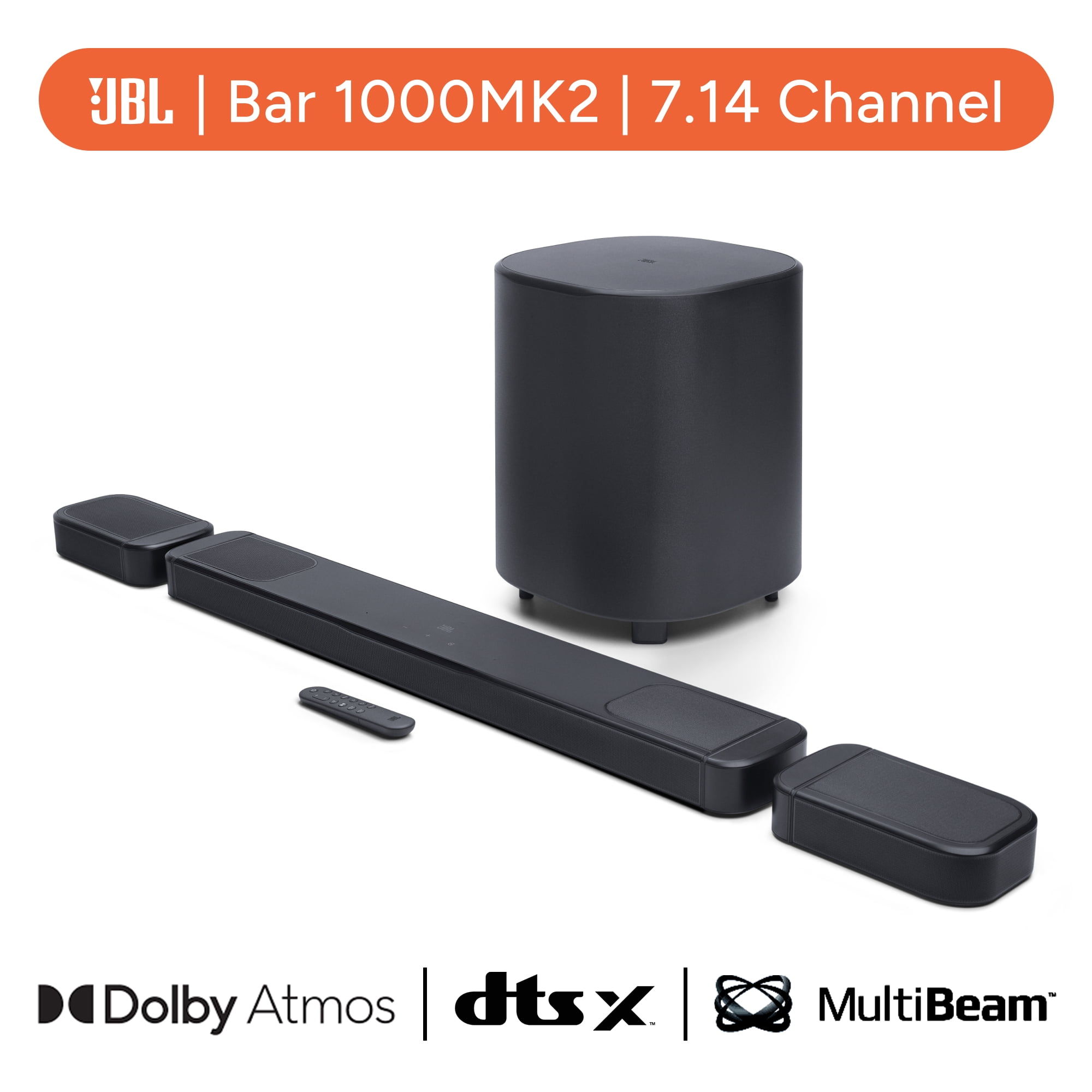
JBL Bar 1000MK2 is the best choice when you want real rear speakers but cannot leave them permanently wired to power behind the seating area. Its two rear modules detach from the ends of the soundbar, operate on rechargeable batteries, and return to the main bar for charging.
Best For
This design works especially well in rented homes, open-plan rooms, and multipurpose spaces. You can keep the system as a clean front soundbar for everyday viewing, then place the detached speakers behind the sofa for a movie. The package also includes a 10-inch wireless subwoofer, so no additional purchase is required to get stronger low-frequency output.
The 7.1.4-channel system supports Dolby Atmos and DTS:X and provides four up-firing drivers across the bar and rear modules. Three HDMI inputs are unusually generous for a soundbar, and the eARC output can return lossless audio from a compatible television. HDR10+ and Dolby Vision passthrough are supported, but the documented video features do not establish full 4K/120Hz passthrough. Serious console players should connect a PS5 or Xbox Series X directly to a suitable TV rather than assume the JBL can preserve every HDMI 2.1 gaming feature.
JBL supplies room calibration, app-based EQ, and dialogue processing. Independent testing finds it versatile, but the detachable design introduces charging and measured Atmos latency concerns. Height effects also depend on ceiling shape and listening position, so “7.1.4” does not guarantee equal overhead precision in every room.
Pros
✅ Detachable rechargeable rear speakers
✅ 10-inch wireless subwoofer included
✅ Dolby Atmos, DTS:X, and three HDMI inputs
✅ Flexible setup for multipurpose rooms
Cons
❌ Rear speakers must be recharged
❌ Wireless rear latency can increase with Atmos content
❌ Full 4K/120Hz passthrough is not verified
Who should skip it: Choose another system if you dislike battery maintenance, regularly watch for many hours without re-docking the rears, or need verified 4K/120Hz source passthrough.
Consider instead: Samsung HW-Q990H has always-powered rear speakers and stronger gaming connectivity. Hisense AX5140Q offers a less expensive fixed-rear arrangement.
Bring true Dolby Atmos® and DTS:X height effects into your home in seconds. Detachable wireless speakers let you position immersive rear channels for floor-to-ceiling sound that fills the room. Ready to upgrade your home theater? Buy the JBL Bar 1000 Mk2 7.1.4 Soundbar System today and feel every dimension of sound.
4. Sonos Beam (Gen 2): Best Compact Soundbar Available Now
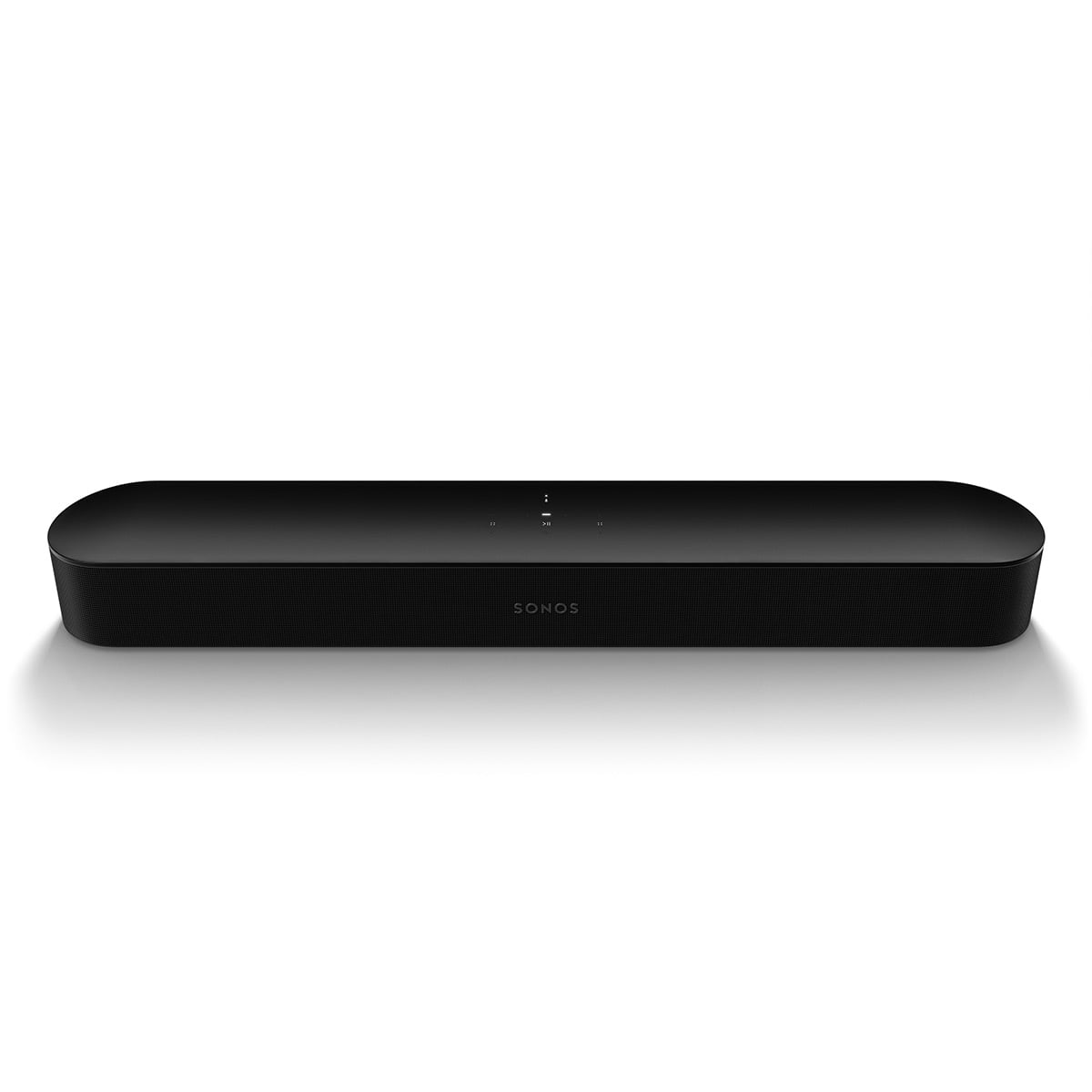
Sonos Beam (Gen 2) remains the best compact soundbar you can buy immediately because it combines clear dialogue, virtual Dolby Atmos, and the Sonos expansion ecosystem in a cabinet only 25.63 inches wide. It is a better fit than Arc Ultra under smaller TVs and in bedrooms, apartments, or secondary rooms.
Best For
Beam works best for viewers who care more about intelligible voices and simple daily use than deep bass or room-shaking output. Speech Enhancement can lift dialogue, while Night Sound reduces loud peaks and raises quieter details. It connects through HDMI eARC or ARC and can play music through Wi-Fi and AirPlay 2. Trueplay room tuning is available, although the established Beam (Gen 2) tuning process requires a compatible iOS device.
Beam has no physical up-firing drivers; processing creates virtual height. Independent tests also point to limited deep bass and maximum output, making it less convincing in a large room. Adding a Sonos subwoofer and rears improves those weaknesses but quickly changes the value.
If you are also considering Bose, the planned Bose Soundbar 600 vs Sonos Beam Gen 2 comparison is the more focused decision guide. For this roundup, Beam wins the compact role because of its dialogue performance, small footprint, and upgrade path.
Should you wait for Beam Ultra? As of September 2, 2026, Sonos Beam Ultra is a $699 preorder with estimated shipping on September 29, 2026. Sonos claims a 7.1.2 Dolby Atmos presentation with physical upward-firing drivers, but independent post-release testing was not yet available. Buy Beam (Gen 2) for a current discount or immediate need; wait if you can postpone the decision until Beam Ultra is reviewed.
Pros
✅ Compact enough for smaller TVs and rooms
✅ Clear dialogue with useful Speech Enhancement
✅ Dolby Atmos and HDMI eARC support
✅ Expandable within the Sonos ecosystem
Cons
❌ No physical up-firing drivers
❌ Limited deep bass and large-room output
❌ Beam Ultra may soon change the compact recommendation
Who should skip it: Beam is not the right choice for a large room, buyers who want a subwoofer and rear speakers included, or anyone seeking the most physical Atmos height effect.
Consider instead: Wait for verified Beam Ultra reviews if timing is flexible, choose Arc Ultra for a larger all-in-one bar, or select Hisense AX5140Q for physical surround at a similar regular-price tier.
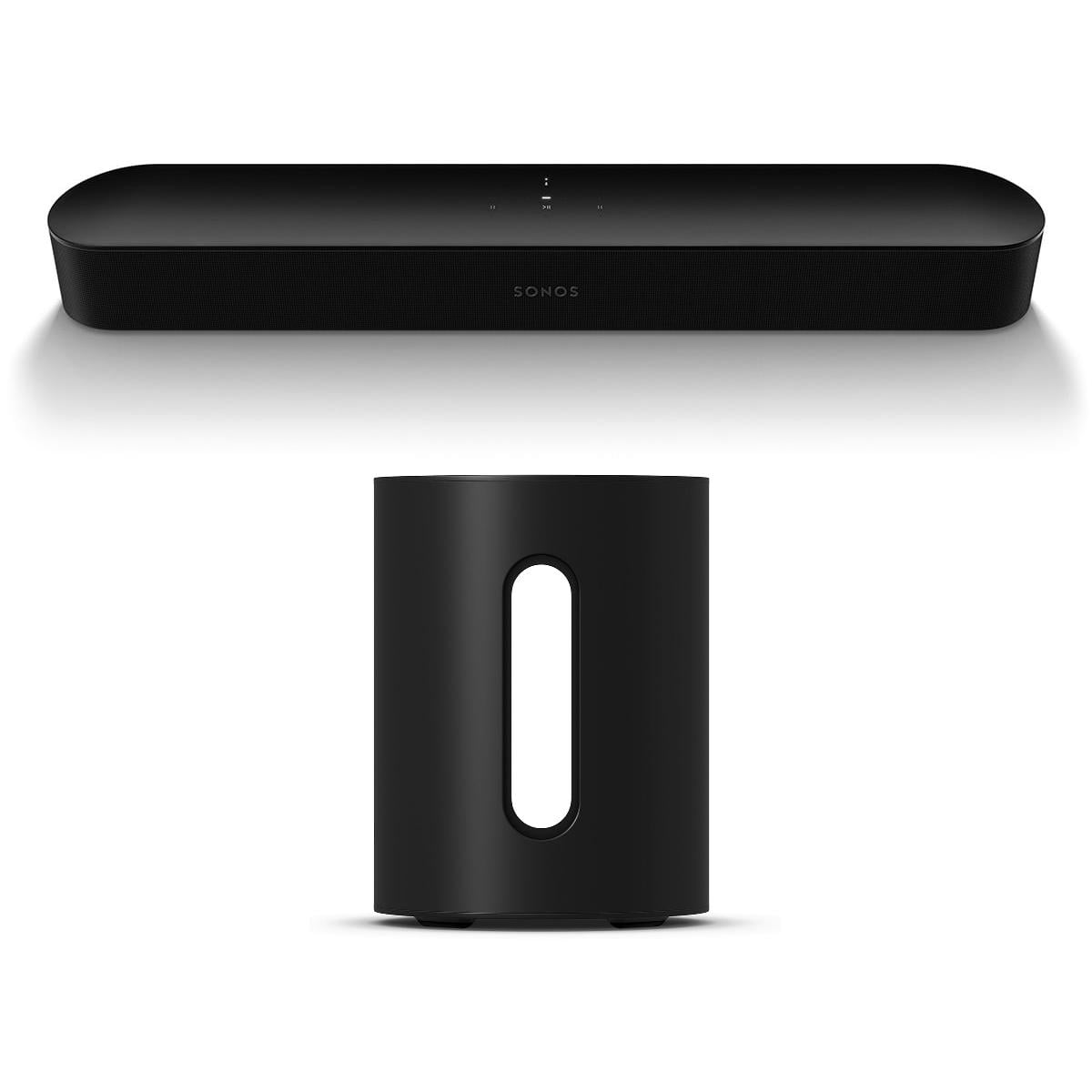
Bring cinematic Dolby Atmos to your living room with the Sonos Beam Gen 2 paired with the Sub Mini. Compact yet powerful, this combo delivers immersive, room-filling sound and deep, precise bass for movies, shows, games, and music. Upgrade your home audio today — hear the difference and shop now!
5. Hisense AX5140Q: Best Affordable 5.1.4 Soundbar Package
Hisense AX5140Q is the best affordable home-theater package because it includes a dedicated subwoofer, real rear speakers, and four up-firing drivers at a regular U.S. price of $399.99. Most similarly priced compact bars require virtualization or optional add-ons to approach the same speaker layout.
Best For
The AX5140Q suits first-time buyers seeking an obvious TV-speaker upgrade without four-figure pricing. Its 5.1.4 layout includes a center channel, rear surrounds, and height drivers. Independent testing finds strong output, broad movie-format support, and more convincing surround placement than a bar-only design.
The subwoofer emphasizes punch more than deep extension, and the system lacks Wi-Fi, AirPlay, and a broad multiroom platform. Bluetooth handles casual music, but portable listening is better served by top portable Bluetooth speakers.
Room correction is another limitation. Hisense offers room-adaptive features through compatible Hisense TVs, but owners of other television brands do not get the same automatic adjustment. The HDMI input passes video up to 4K/60Hz, not 4K/120Hz, so modern consoles should connect directly to a compatible TV. The system remained available from a major U.S. retailer when this guide was updated, even though Hisense’s direct store showed it as sold out.
Pros
✅ Complete 5.1.4 system below $500 at regular price
✅ Physical rear speakers and four up-firing drivers
✅ Dolby Atmos and DTS:X support
✅ Clear center-channel dialogue and strong output
Cons
❌ No 4K/120Hz passthrough
❌ Room correction is limited to compatible Hisense TVs
❌ No Wi-Fi or AirPlay streaming
Who should skip it: Avoid the AX5140Q if you need HDMI 2.1 gaming passthrough, premium sub-bass refinement, Wi-Fi music features, or room correction that works independently of the TV brand.
Consider instead: JBL Bar 1000MK2 offers better connectivity and rechargeable rears, while Samsung HW-Q990H provides the most polished complete system when the budget allows.
Ready for cinematic sound?
Transform your living room with the Hisense AX5140Q 5.1.4 Dolby Atmos Soundbar — immersive, room‑filling audio with a wireless 6.5” subwoofer and precise 5.1.4 staging.
Enjoy Dolby Atmos & DTS:X, Bluetooth 5.3 streaming, and hassle‑free HDMI eARC 4K HDR pass‑through for a true plug‑and‑play upgrade.
Order the AX5140Q now and feel every scene — upgrade your home theater today.
Other Soundbars We Considered
Samsung HW-Q990F: The previous flagship remains the most important alternative to the Q990H. Its hardware is very similar, and it can become the better purchase when clearance pricing is substantially lower. It was not ranked because this guide prioritizes current models, but every Q990H buyer should compare live Q990F offers first.
Sonos Beam Ultra: The new compact model is more relevant than Beam (Gen 2) on paper, with a claimed 7.1.2 presentation and physical up-firing drivers. It was excluded because it remained preorder-only on the research date and had not completed independent post-release testing.
JBL Bar 1300XMK2: This higher-end system suits buyers seeking more output, but Bar 1000MK2 covers the detachable-surround role at a more approachable regular price.
Bose Lifestyle Ultra Soundbar: This is a credible dialogue-focused competitor, but Arc Ultra offers a clearer expansion and multiroom path. Bose still makes sense for buyers committed to its ecosystem.
Sony BRAVIA Theater systems: These suit compatible BRAVIA TVs, but total cost rises quickly when separate subwoofers and rears are added.
Soundbar vs Speakers: Which Is Better for a Home Theater?
A soundbar is better for most buyers who want a fast, compact installation, while an AV receiver and separate speakers remain better for long-term upgradeability and precise speaker placement. Neither approach wins every room.
| Decision factor | Soundbar system | AV receiver and speakers |
|---|---|---|
| Setup | Fast, guided, fewer cables | More wiring, configuration, and calibration |
| Space | Fits smaller rooms and media furniture | Requires room for multiple speakers and equipment |
| Upgrade path | Usually limited to compatible brand add-ons | Components can be replaced individually |
| Surround precision | Very good with physical rears, more virtualized without them | More precise when speakers are correctly positioned |
| Best buyer | Convenience, clean design, straightforward control | Maximum flexibility, repairability, and future upgrades |
If you want to compare both approaches more broadly, browse Discompare’s home theater systems and home audio systems. A complete soundbar is usually the practical choice in a shared living room; a component system becomes more attractive when you own the space and expect to upgrade over time.
How to Choose the Best Soundbar for Your Home Theater
Start With the Total System Cost
Compare the cost of the experience you actually want, not the lowest entry price. A standalone soundbar may be enough for dialogue and casual streaming. If your goal is deep bass and physical surround effects, calculate the price of the compatible subwoofer and rear speakers before comparing it with a complete package.
Understand Channel Counts and Speaker Placement
In a label such as 5.1.4, the first number represents the main listening-level channels, the second represents subwoofer channels, and the final number represents height channels. Higher numbers can indicate a more elaborate layout, but they do not guarantee better sound. Driver quality, tuning, room shape, and actual speaker placement matter just as much.
Physical rear speakers usually create clearer behind-the-listener effects than processing from a front bar. Up-firing drivers bounce sound from the ceiling, so they work best with a flat, reflective ceiling at a suitable height. Vaulted, heavily treated, or irregular ceilings can weaken the overhead effect.
Check Dolby Atmos and DTS:X Support
Dolby Atmos is common across streaming services and modern discs, while DTS:X remains relevant for many Blu-ray and UHD Blu-ray soundtracks. Samsung, JBL, and Hisense support both formats in this guide. Sonos focuses on Dolby Atmos and supports DTS Digital Surround rather than DTS:X on Arc Ultra. Disc collectors should check their library and player settings before choosing.
Plan HDMI eARC and Gaming Connections
HDMI eARC allows a compatible TV to send high-bandwidth audio back to the soundbar, including lossless formats when the television and source support them. ARC handles common compressed formats but can be more restrictive. If the bar has no HDMI input, every source device must connect to the TV.
For gaming, “4K passthrough” is not specific enough. A soundbar may pass 4K at 60Hz but not 4K at 120Hz, VRR, or every HDMI 2.1 feature. Samsung HW-Q990H is the most clearly documented 4K/120 option in this group. JBL and Hisense owners should connect high-frame-rate consoles directly to a compatible display. Compare the available ports when browsing televisions, because the TV often becomes the connection hub.
Match Output and Bass to the Room
Large open rooms benefit from a dedicated subwoofer and physical rear speakers. Small rooms usually need less output and may sound better with a compact bar that avoids overwhelming bass. Apartment buyers should prioritize dialogue controls, night modes, and adjustable subwoofer levels rather than maximum wattage. Headphones can be a better solution for truly private late-night listening.
Decide What “Wireless” Means for Your Layout
Wireless communication reduces audio-cable runs, but most subwoofers and rears still need outlets. JBL’s battery-powered rears trade outlets for charging. Samsung and Hisense avoid battery maintenance but require power near the seating area.
Consider Room Correction and Brand Ecosystems
Room correction can reduce problems caused by placement and acoustics, but implementations differ. Samsung’s SpaceFit works from the soundbar, Sonos Trueplay depends on its app and compatible device, JBL supplies calibration through its platform, and Hisense reserves its room-fitting feature for compatible Hisense TVs. Brand-specific features such as Samsung Q-Symphony can add value, but they should not outweigh core performance and connectivity.
Best Soundbar by Use Case
| Use case | Best choice | Why |
|---|---|---|
| Movies and premium surround | Samsung HW-Q990H | Complete 11.1.4 system with physical rears and height channels |
| Gaming | Samsung HW-Q990H | Verified 4K/120Hz passthrough and directional surround |
| Premium bar without rear speakers | Sonos Arc Ultra | Strong standalone sound, dialogue, and expansion path |
| No permanent rear power cables | JBL Bar 1000MK2 | Detachable rechargeable surround speakers |
| Small room or apartment | Sonos Beam (Gen 2) | Compact size, clear speech, and Night Sound |
| Complete system under $500 | Hisense AX5140Q | Subwoofer, rears, and physical height drivers included |
Frequently Asked Questions
What is the best soundbar for a home theater?
Samsung HW-Q990H is the best overall option in this guide because its 11.1.4-channel package includes the soundbar, subwoofer, and physical rear speakers. It also supports Dolby Atmos, DTS:X, room correction, and 4K/120Hz passthrough. Buyers should still compare the previous Q990F when it is heavily discounted.
Is a soundbar better than surround-sound speakers?
A soundbar is better for simple setup, fewer cables, and smaller spaces. An AV receiver with separate speakers is better for precise placement, component-level upgrades, and long-term flexibility. A soundbar package with physical rear speakers sits between those approaches and is the most practical choice for many living rooms.
Do I need a subwoofer with a soundbar?
You do not need a subwoofer for dialogue and everyday television, but it adds deeper bass and reduces the low-frequency workload on the main bar. Action movies, games, and music usually benefit most. Arc Ultra has stronger integrated bass than many standalone bars, while Samsung, JBL, and Hisense include dedicated subwoofers.
Is Dolby Atmos worth it on a soundbar?
Dolby Atmos is worthwhile when the soundbar has physical up-firing drivers, suitable room acoustics, and content with a good Atmos mix. Virtual Atmos can add width and a sense of height, but it is less consistent. A flat reflective ceiling and correct seating position improve the result from up-firing systems.
Do wireless rear speakers need power?
Usually, yes. Wireless rear speakers receive audio without a long signal cable from the soundbar, but they still need electricity. Samsung and Hisense rears plug into power. JBL Bar 1000MK2 uses rechargeable detachable rears, which avoid permanent power cables but must be returned to the bar for charging.
Do I need HDMI eARC for Dolby Atmos?
Not for every Atmos source. Standard ARC can carry Atmos in compressed Dolby Digital Plus from many streaming services. HDMI eARC is preferable for higher-bandwidth formats such as Dolby TrueHD with Atmos and multichannel PCM, provided the TV, source device, and soundbar all support the required format.
Should I buy Sonos Beam (Gen 2) or wait for Beam Ultra?
Buy Beam (Gen 2) if you need a compact soundbar now and find it at a meaningful discount. Wait if you can postpone the purchase until Beam Ultra ships and receives independent reviews. Beam Ultra costs more but adds physical upward-firing drivers and a claimed 7.1.2 presentation.
Final Verdict
Samsung HW-Q990H is the best soundbar for a full home theater because it requires the fewest compromises: subwoofer and rear speakers are included, physical height channels improve immersion, and 4K/120Hz passthrough supports modern gaming systems. Its main weakness is value when the nearly identical Q990F is available for substantially less.
Choose Sonos Arc Ultra when you want the best single-bar experience and intend to expand gradually. JBL Bar 1000MK2 is the practical answer when permanent rear-speaker wiring is impossible. Sonos Beam (Gen 2) remains the compact buy-now pick, but shoppers who can wait should reassess after Beam Ultra ships. Hisense AX5140Q is the clear budget choice for buyers who want real surround speakers instead of a bar-only compromise.
Choose Samsung HW-Q990H for the strongest complete system.
Choose Sonos Arc Ultra for a premium all-in-one bar and ecosystem.
Choose JBL Bar 1000MK2 for detachable battery-powered rears.
Choose Sonos Beam (Gen 2) for a small room and immediate purchase.
Choose Hisense AX5140Q for affordable physical 5.1.4 surround.
Sources
- Samsung — Q990H Q-Series 11.1.4 Ch Soundbar with Subwoofer & Rear Speakers — 2026
- Sonos — Arc Ultra product page — accessed September 2026
- JBL — Bar 1000MK2 product page — accessed September 2026
- Sonos — Beam (Gen 2) and Beam Ultra product pages — 2026
- Hisense — AX5140Q 5.1.4-channel soundbar system product page — 2026
Product Groups: Samsung HW-Q990H 11.1.4-Channel Soundbar System, Sonos Arc Ultra Premium Soundbar, JBL Bar 1000MK2 7.1.4-Channel Soundbar System, Sonos Beam (Gen 2) Compact Soundbar, Hisense AX5140Q 5.1.4-Channel Soundbar System