Best Yoga Mats for Home Practice 2026
The best yoga mats for home practice balance grip, cushioning, stability, and easy care. However, the right balance depends on how you practice.
A dense 6mm mat can feel supportive on a hard floor. A thinner mat may offer better ground feedback. Meanwhile, sweaty practices often benefit from a surface designed to handle moisture.
For 2026, we selected five mats with different strengths. Manduka PRO is our all-around home pick. Liforme focuses on grip and alignment, while lululemon suits sweatier sessions. Jade offers natural-rubber traction. Gaiam covers beginners and tighter budgets.
Quick Answer: Best Yoga Mats for Home Practice
Best overall: Manduka PRO 6mm combines dense cushioning, strong stability, easy cleaning, and long-term durability.
Best for grip and alignment: Liforme Classic adds clear positioning guides and a moisture-absorbing grippy surface.
Best for sweaty practice: lululemon The Mat 5mm uses an absorbent top over a natural-rubber base.
Best natural-rubber mat: Jade Harmony offers a tacky rubber surface with useful cushioning and stability.
Best budget mat: Gaiam Premium 6mm provides generous cushioning at a much lower price.
How We Chose These Yoga Mats
We focused on features that matter during regular home practice. These include grip, cushioning, firmness, thickness, size, materials, cleaning, weight, and current pricing.
We also wanted five clearly different choices. Therefore, the list includes premium, alignment-focused, sweat-friendly, natural-rubber, and budget options.
We did not treat extra thickness as automatically better. Material density changes how a mat feels under standing poses and balance work.
We also checked current manufacturer specifications and 2026 independent testing. Discompare did not perform hands-on testing for this guide.
Yoga Mats Compared
| Mat | Best For | Thickness | Size | Material | Weight | Regular Price | Main Trade-Off |
|---|---|---|---|---|---|---|---|
| Manduka PRO | Daily home practice | 6mm | 71 × 26 in. | PVC | 7.5 lb | $144 | Heavy and can feel slick when very wet |
| Liforme Classic | Grip and alignment | 4.2mm | 185 × 68 cm | Natural rubber + polyurethane top | About 5.5 lb | $165 | Premium price |
| lululemon The Mat | Sweaty practice | 5mm | 71 × 26 in. | Rubber + polyurethane | 5.24 lb | $118 | Absorbent surface needs regular care |
| Jade Harmony | Natural-rubber grip | 3/16 in. | 68 or 74 × 24 in. | Natural rubber | About 5 lb | $99.95 | Needs more careful cleaning and storage |
| Gaiam Premium 6mm | Beginners and value | 6mm | Varies by version | PVC on many current models | About 3.3 lb on tested model | About $30–$40 | Softer and less secure when sweaty |



1. Manduka PRO 6mm — Best Overall Yoga Mat for Home Practice
Best for: Regular practice, hard floors, balance work, and buyers who want a long-lasting mat.
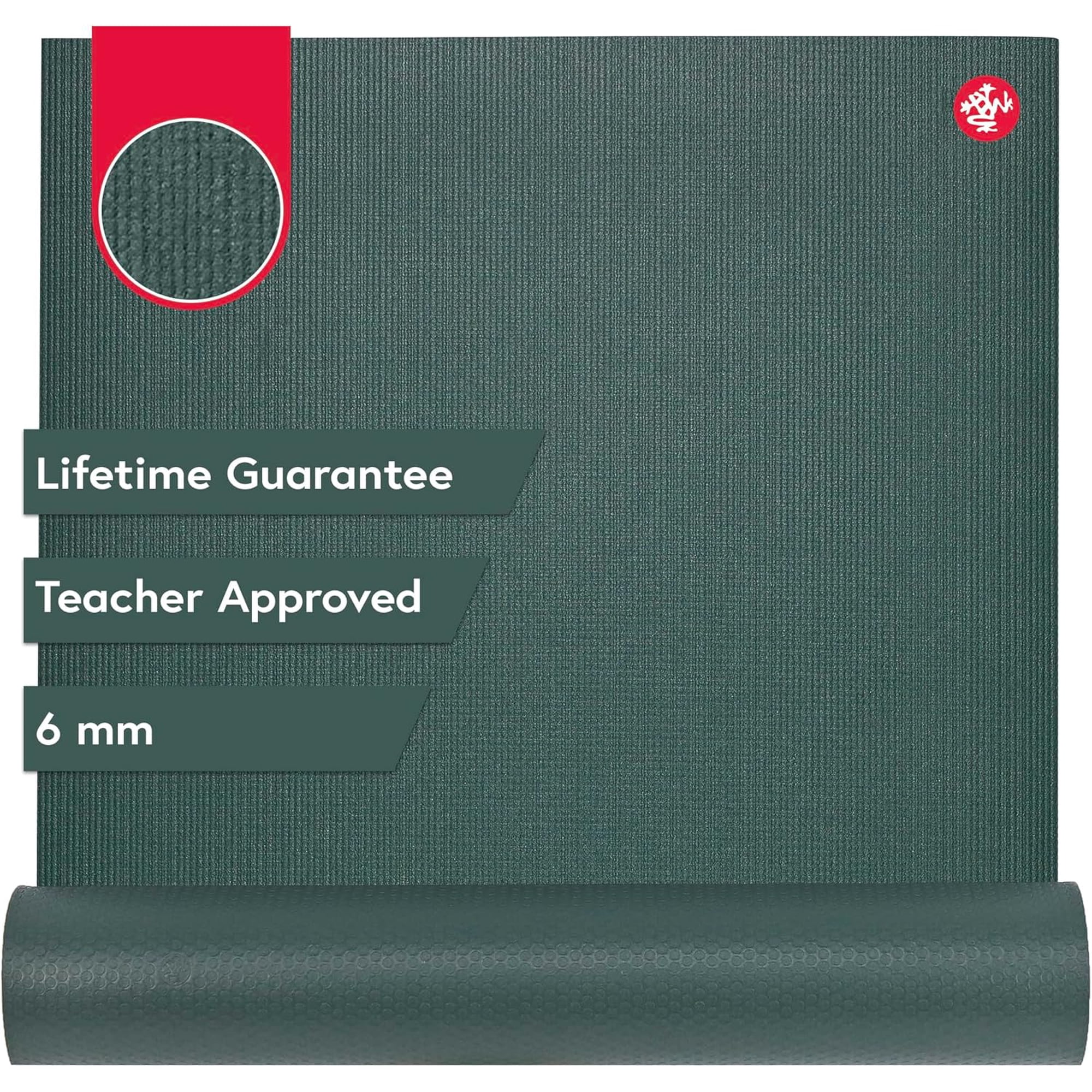
The Manduka PRO is our first choice for a permanent home setup. Its 6mm cushion is dense rather than soft and spongy.
That difference matters. The mat provides cushioning while still giving standing poses a firm foundation. Manduka describes the surface as high-density and stable.
The standard version measures 71 by 26 inches. It weighs 7.5 pounds, so it is not especially convenient for daily travel.
However, that weight matters less at home. The sturdy build also helps the mat stay flat during practice.
The PRO uses a closed-cell PVC surface. Moisture stays on top instead of soaking into the material. Therefore, cleanup is relatively simple.
There is one important trade-off. Manduka says the closed-cell surface can feel slick when sweat builds up. A yoga towel may help during heated or very sweaty sessions.
Independent 2026 testing from OutdoorGearLab also placed the PRO first for daily practice. Testers praised its dense cushioning, stability, durability, and easy cleaning.
You can also compare Manduka PRO prices across available retailers.
Pros
✅ Dense 6mm cushioning
✅ Firm support for standing poses
✅ Closed-cell surface is easy to wipe clean
✅ Backed by Manduka’s lifetime guarantee conditions
Cons
❌ Heavy at 7.5 pounds
❌ Premium purchase price
❌ Can feel slick during very sweaty practice
Skip it if: Hot yoga or heavy sweating is your main use case.
Alternative: Choose lululemon The Mat when moisture handling matters more than closed-cell cleaning.
2. Liforme Classic — Best Yoga Mat for Grip and Alignment
Best for: Alignment-focused practice, vinyasa, standing sequences, and practitioners who value positioning guides.
The Liforme Classic stands out before you even start moving. Its AlignForMe markings provide visual references for hands, feet, and body position.
The standard mat measures 185 by 68 centimeters. It is about 4.2mm thick and weighs roughly 2.5 kilograms.
Liforme uses a natural-rubber base with a polyurethane top layer. The upper surface absorbs moisture instead of leaving sweat sitting on top.
As a result, the mat is designed to maintain grip during more active practice. Independent testing has also found strong traction in both dry and sweaty conditions.
The 4.2mm thickness offers less cushion than the Manduka PRO. However, some practitioners may prefer the firmer connection to the floor.
At $165, Liforme is the most expensive main pick here. Therefore, its strongest case is the combination of grip and useful alignment markings.
Pros
✅ AlignForMe positioning markers
✅ Strong wet and dry grip
✅ Wider than many standard 24-inch mats
✅ Stable 4.2mm platform
Cons
❌ Highest regular price in this guide
❌ Less cushioning than a dense 6mm mat
❌ Moisture-absorbing surface needs careful cleaning
Skip it if: You do not use alignment markings and mainly want maximum cushioning.
Alternative: Manduka PRO offers a thicker and denser home-practice surface.

3. lululemon The Mat 5mm — Best for Sweaty Home Practice
Best for: Dynamic flows, warm rooms, higher-sweat sessions, and practitioners who want a reversible mat.
lululemon The Mat uses a different surface strategy from Manduka. Its upper layer absorbs moisture to improve grip as practice becomes sweatier.
The mat is 5mm thick and measures 26 by 71 inches. It weighs 5.24 pounds.
A natural-rubber base provides cushioning and textured grip on the reverse side. Therefore, you can use either surface depending on the session.
Five millimeters sits between Liforme and Manduka in thickness. That gives you useful cushioning without moving all the way to a dense 6mm platform.
The absorbent top has a maintenance trade-off. lululemon recommends wiping the mat after use and keeping it away from direct sunlight.
Material note: The Mat contains natural rubber and may contain latex. People with rubber or latex allergies should avoid contact with it.
Pros
✅ Moisture-absorbing upper surface
✅ Reversible construction
✅ Balanced 5mm thickness
✅ 26-inch width gives useful extra space
Cons
❌ Absorbent surface needs more regular cleaning
❌ Natural-rubber smell may be noticeable when new
❌ Not suitable for people with rubber or latex allergies
Skip it if: You want a closed-cell mat that does not absorb moisture.
Alternative: Manduka PRO is easier to wipe down after ordinary dry practice.
4. Jade Harmony — Best Natural-Rubber Yoga Mat
Best for: Practitioners who like tacky rubber grip and want a mat without PVC or EVA.
The Jade Harmony uses natural rubber rather than PVC foam. That gives it a noticeably different surface feel from the Manduka PRO.
The standard mat is 3/16-inch thick and 24 inches wide. Jade offers both 68- and 74-inch lengths.
It weighs about five pounds. Therefore, it is easier to move than Manduka PRO but still substantial enough for a home setup.
Grip is the Harmony’s main advantage. The rubber surface feels tacky and is designed to hold hands and feet during dry practice.
OutdoorGearLab’s current testing also supports the Harmony as a grip-focused option. However, natural rubber requires more careful treatment than closed-cell PVC.
Jade advises against leaving its natural-rubber mats in direct sunlight. It also recommends avoiding outdoor use for the standard Harmony.
Latex warning: Jade says its natural-rubber mats may contain trace latex proteins. People with latex allergies should avoid contact with them.
Pros
✅ Strong natural-rubber traction
✅ No PVC or EVA
✅ Useful balance of cushion and stability
✅ Two standard length choices
Cons
❌ Natural rubber needs more careful storage
❌ Rubber scent may be noticeable when new
❌ Not suitable for people with latex allergies
Skip it if: You want the easiest possible cleaning or need a latex-free mat.
Alternative: Manduka PRO is latex-free and uses a closed-cell surface.

5. Gaiam Premium 6mm — Best Budget Yoga Mat for Beginners
Best for: Beginners, stretching, gentle flows, restorative sessions, and shoppers who want more cushion for less money.
Gaiam’s Premium range gives you 6mm thickness at a much lower price than the premium mats above. Current versions usually cost around $30 to $40.
The extra foam feels comfortable for seated poses, floor stretches, and kneeling positions. It can also make a hard floor feel less harsh.
However, thickness tells only part of the story. Gaiam’s foam is softer than the dense Manduka PRO material.
That softer feel can compress more during standing poses. Independent 2026 testing also found less stability during challenging balance work.
Grip is another limitation. The tested Premium 6mm performed better during dry practice than when wet.
Those trade-offs are reasonable at this price. The Gaiam remains a useful starting point when you are new to yoga or practice occasionally.
You can compare Gaiam Premium 6mm prices from available retailers.
Pros
✅ Much lower price than premium mats
✅ Comfortable 6mm cushioning
✅ Lighter than Manduka PRO
✅ Good entry point for beginners
Cons
❌ Softer foam can feel less stable
❌ Wet grip is weaker
❌ Durability trails premium mats
Skip it if: Fast flows, hot yoga, or demanding balance poses dominate your practice.
Alternative: Liforme offers much stronger traction and a firmer platform.
Other Yoga Mats We Considered
Manduka GRP Adapt 2.0
The GRP Adapt is a strong choice for hot yoga. Its surface focuses heavily on grip during sweaty practice.
However, we already selected Manduka PRO. Adding another Manduka would make this general home-practice list less varied.
Manduka eKO 5mm
The eKO uses natural rubber and provides a firmer 5mm option. However, its role overlaps with Jade Harmony.
We chose Jade because it gives this guide a distinct natural-rubber alternative from another brand.
Gaiam Dry-Grip 5mm
The Dry-Grip model is better suited to sweat than the basic Premium range. However, it overlaps with lululemon The Mat.
For this roundup, Gaiam fills the budget and beginner role more clearly.
Extra-Thick Exercise Mats
Half-inch and one-inch exercise mats can feel comfortable during floor exercises. However, they are not ideal substitutes for every yoga practice.
Very soft foam can reduce ground feedback during standing and balance poses. These products fit a general exercise-mat guide better.
What Yoga Mat Thickness Is Best for Home Practice?
Thickness affects cushioning, but it does not determine support by itself. Material density is equally important.
3–4mm Yoga Mats
Thinner mats keep you closer to the floor. That can provide clearer feedback during standing and balancing poses.
However, they offer less cushioning on tile, concrete, or hardwood. Sensitive knees may also prefer more padding.
4–5mm Yoga Mats
This range is a useful middle ground. Liforme sits at about 4.2mm, while lululemon The Mat is 5mm.
Both give more cushioning than a thin travel mat. Yet they still maintain a relatively direct connection to the floor.
6mm Yoga Mats
Six millimeters can provide more cushioning, especially on hard floors. However, compare the material before choosing by thickness alone.
The Manduka PRO uses dense support. Gaiam’s budget foam feels softer and compresses more.
Therefore, two 6mm mats can feel completely different during the same standing sequence.
Firm vs. Soft Yoga Mats
A firm mat spreads pressure while keeping your hands and feet relatively stable. This can help during balances and strength-based poses.
A softer mat compresses more. Some users prefer that feel during kneeling, seated work, or restorative practice.
However, too much compression can make balance positions feel less secure. Your body weight also changes how much a mat compresses.
For home use, start with your main practice style. Dynamic standing sequences usually benefit from a stable platform. Gentle stretching can tolerate more softness.
Open-Cell vs. Closed-Cell Yoga Mats
The surface structure affects sweat handling and cleaning. This difference matters more than many buyers expect.
Open-Cell or Moisture-Absorbing Surfaces
These surfaces can take in moisture rather than letting sweat stay on top. That can improve traction during active sessions.
However, absorbed moisture means cleaning and drying deserve more attention. Liforme and lululemon use moisture-managing top surfaces.
Closed-Cell Surfaces
Closed-cell mats resist moisture absorption. They are generally easier to wipe down after practice.
However, sweat remains on the surface. That can make some closed-cell mats feel slick during very wet sessions.
Manduka PRO is the clearest example in this guide.
Which Yoga Mat Material Should You Choose?
PVC
PVC can create a dense, durable mat. Manduka uses it for the PRO and pairs it with a closed-cell construction.
The material suits shoppers who prioritize longevity and easy cleaning over natural-rubber construction.
Natural Rubber
Natural rubber often provides strong traction and a substantial base. Jade Harmony uses rubber throughout its main structure.
However, rubber has a distinct smell when new. It can also be unsuitable for people with rubber or latex allergies.
Polyurethane and Rubber
Liforme and lululemon combine rubber foundations with polyurethane-based top surfaces. These designs focus more heavily on grip and moisture handling.
They usually require more cleaning care than a closed-cell PVC mat.
Allergy note: Check material warnings before buying natural-rubber mats. Both lululemon and Jade warn people with rubber or latex allergies about contact with their relevant products.
What Yoga Mat Works Best on Hardwood, Tile or Carpet?
Hardwood Floors
Hardwood gives a mat a firm base. Most yoga mats work well on it if the underside grips securely.
A 5–6mm mat can add useful comfort without needing a separate pad underneath.
Tile and Other Hard Floors
Tile can feel unforgiving during kneeling poses. A denser 5–6mm mat may provide a more comfortable barrier.
Check the bottom grip too. A mat that slides on smooth tile can become distracting during transitions.
Carpet
Carpet changes the equation. The floor itself compresses, so a very soft mat can feel unstable on top.
A firmer mat generally works better than thick, squishy foam. Low-pile carpet is also easier than deep carpet.
If home workouts extend beyond yoga, our winter home fitness essentials guide covers additional floor-based equipment.
How to Clean and Store a Yoga Mat
Always start with the manufacturer’s instructions. Materials that look similar may require different cleaning products.
Manduka recommends wiping the PRO with its approved cleaner or warm water. It should not be soaked or machine-washed.
lululemon recommends wiping The Mat after use. The company also says to let it dry before rolling and keep it away from direct sunlight.
Natural-rubber mats also need careful storage. Jade advises keeping Harmony mats away from direct sun.
Whatever mat you own, let it dry completely before rolling it. Trapped moisture can create odor and shorten the useful life of some materials.
Do You Need a Yoga Towel at Home?
Not everyone needs one. A towel is most useful when sweat makes the mat surface slippery.
For slow stretching or dry restorative sessions, it may add unnecessary layers. The bare mat usually provides better feedback.
For heated practice, a purpose-made yoga towel can improve moisture management. Manduka specifically recommends a towel when the PRO becomes wet.
A towel also adds another item to clean. Therefore, choose one based on your actual practice rather than buying it automatically.
What Else Do You Need for Home Yoga?
A mat is enough for many basic sessions. However, blocks and a strap can make some poses easier to adapt.
A folded blanket or bolster may also help during restorative practice. You do not need a large equipment collection to begin.
If you are building a wider fitness setup, our workout essentials guide includes other useful home-training products.
Frequently Asked Questions
What is the best thickness for a home yoga mat?
Around 4–6mm works well for many home practitioners. Choose firmer materials for stability and more cushioning when hard floors make kneeling uncomfortable.
Is 5mm or 6mm better for yoga?
Neither is automatically better. A 5mm mat can offer a close floor connection, while 6mm adds cushioning. Material density can matter as much as the extra millimeter.
Is a thicker yoga mat better for knees?
More cushioning can make kneeling feel more comfortable. However, very soft foam may also reduce stability. Consider both thickness and firmness.
Which yoga mat is best for sweaty hands?
Liforme Classic and lululemon The Mat are strong choices here because their top surfaces manage moisture. A yoga towel can also help on closed-cell mats.
Are natural-rubber yoga mats better?
They can provide excellent grip, but they are not automatically better for everyone. Rubber smell, cleaning needs, sunlight sensitivity, and latex allergies may matter.
Can I use a yoga mat on carpet?
Yes, especially on low-pile carpet. A firmer mat usually feels more stable because the carpet already adds some compression beneath it.
How often should I clean my yoga mat?
Clean it based on use, sweat, and the manufacturer’s instructions. Sweaty sessions usually require more frequent wiping and drying than gentle dry practice.
Final Verdict: Which Yoga Mat Should You Buy?
The Manduka PRO 6mm is our strongest all-around choice for regular home practice. Its dense cushioning and stable feel suit a wide range of sessions.
Choose Liforme Classic when grip and alignment markings matter most. Meanwhile, lululemon The Mat is better suited to sweaty practice.
Jade Harmony makes sense if you prefer natural-rubber traction. However, people with latex allergies should avoid it.
Finally, Gaiam Premium 6mm is the practical budget choice. It provides generous cushioning without requiring a premium investment.
Quick decision: Choose Manduka for durable daily practice, Liforme for alignment and grip, lululemon for sweat, Jade for natural rubber, and Gaiam for an affordable first mat.
Sources
- Manduka — PRO Yoga Mat 6mm product specifications and care guidance
- OutdoorGearLab — The Best Yoga Mats of 2026
- Liforme — Classic Yoga Mat product specifications
- lululemon — The Mat 5mm product specifications and care guidance
- JadeYoga — Harmony Yoga Mat product information and material warning
How we research: Discompare reviews current manufacturer specifications, retailer availability, and relevant independent testing. We compare grip, cushioning, stability, materials, size, care, price, and important trade-offs. We do not claim that any yoga mat prevents injuries or treats joint problems. Prices and availability can change. Discompare may earn a commission from eligible retailer or price-comparison links.
Product Groups: Manduka PRO Yoga Mat 6mm, Liforme Classic Yoga Mat, lululemon The Mat 5mm, Jade Harmony Yoga Mat, Gaiam Premium 6mm Yoga Mat