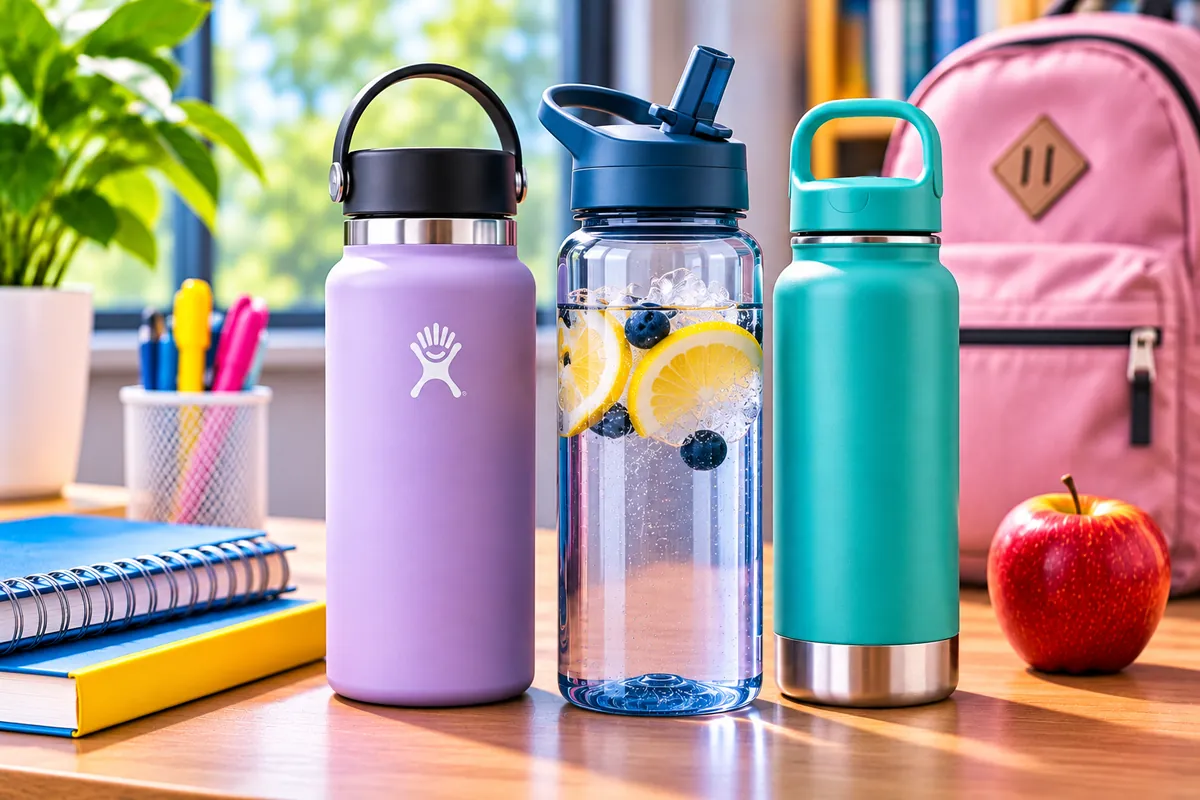
Best Refillable Water Bottles for School in 2026
The best refillable water bottles for school should be easy to use, simple to clean, and secure enough to travel in a backpack. Our top choice is the Owala Kids FreeSip 16 oz because it combines an insulated stainless-steel body, two drinking methods, and a locking lid. However, younger children, teenagers, and college students often need different bottle sizes and features.
For elementary school, the THERMOS FUNTAINER 12 oz is an affordable insulated option with a covered straw. The lightweight CamelBak Eddy+ Kids is another practical choice, especially when carrying weight matters. Meanwhile, the Hydro Flask Kids 12 oz Covered Cap offers premium construction and a locking lid designed to reduce spills.
Older students may prefer more capacity. The Nalgene On-The-Fly 24 oz offers lightweight plastic construction and a lockable drinking lid. The Stanley IceFlow Flip Straw 2.0 24 oz adds insulation and a larger capacity for busy school days and after-school activities.
This guide compares six refillable school bottles based on capacity, materials, insulation, cleaning, portability, and leak resistance. We’ll also explain which designs work best for different ages, why a spillproof straw is not always completely leakproof, and what to check before placing a bottle near books or electronics.
For bottles designed around general everyday use rather than school, explore our best reusable water bottles guide.
Quick Answer: Best Refillable Water Bottles for School
Best Overall: Owala Kids FreeSip 16 oz — insulated stainless steel, a locking lid, and two ways to drink.
Best for Younger Children: THERMOS FUNTAINER 12 oz — compact, affordable, and designed with a covered silicone straw.
Best Lightweight Option: CamelBak Eddy+ Kids 14 oz — lightweight Tritan Renew plastic with a spill-resistant bite valve.
Best Premium Kids’ Bottle: Hydro Flask Kids 12 oz Covered Cap — insulated stainless steel with a locking, covered drinking lid.
Best for Older Students: Nalgene On-The-Fly 24 oz — lightweight, affordable, and equipped with a lockable flip-top closure.
How We Selected These School Water Bottles
We selected six bottles for different school routines rather than ranking nearly identical models. Our priorities included secure closures, age-appropriate drinking mechanisms, manageable carrying weight, cleaning requirements, insulation, and value.
Manufacturer specifications provided capacity, materials, dimensions, care instructions, and advertised temperature retention. We also considered independent research from Bon Appétit and Consumer Reports, including their observations about durability, leaking, and straw maintenance.
Discompare has not independently performed leak, drop, or insulation testing on all six bottles. Therefore, manufacturer claims are identified as such. We also distinguish tests of older bottle versions from claims about newly redesigned lids.
Finally, we considered whether each bottle would work in a classroom, backpack, lunch area, or sports setting. A bottle is only practical if the student can open, drink from, close, and clean it properly.
Refillable School Water Bottles Compared
The following comparison highlights the differences that matter most. Cold-retention times are manufacturer ratings, not identical independent laboratory measurements. Actual performance depends on temperature, ice, and how frequently the bottle is opened.
| Water Bottle | Best For | Capacity | Material | Insulation | Main Drawback |
|---|---|---|---|---|---|
| Owala Kids FreeSip | Overall school use | 16 oz | Stainless steel | 24 hours cold | Hand-wash body |
| THERMOS FUNTAINER | Younger children | 12 oz | Stainless steel | 12 hours cold | Small capacity |
| CamelBak Eddy+ Kids | Lightweight carrying | 14 oz | Tritan Renew | None | Bite valve needs cleaning |
| Hydro Flask Kids Covered Cap | Premium kids’ bottle | 12 oz | Stainless steel | 24 hours cold | Higher price |
| Nalgene On-The-Fly | Older students | 24 oz | Tritan Renew | None | No cold retention |
| Stanley IceFlow 2.0 | Teens and activities | 24 oz | Stainless steel | 10 hours cold | More carrying weight |
Shopping tip: Capacity is not the same as portability. Insulated steel bottles generally weigh more when empty, and every bottle becomes heavier when filled. Consider both the bottle’s weight and its dimensions before choosing one for a school backpack.
Compare Current School Water Bottle Prices
Water bottle prices vary by size, color, retailer, and promotion. Some brands offer limited-edition designs that cost more than their standard versions, even when the functional features are similar.
The live price-comparison cards beneath each recommendation can help identify available U.S. retailer offers. Check that each listing matches the exact bottle size and lid configuration discussed here. A different cap can change leak resistance, cleaning requirements, and everyday convenience.
For students, a secure lid and easy cleaning usually matter more than a fashionable color or an unusually large capacity.
The 6 Best Refillable Water Bottles for School
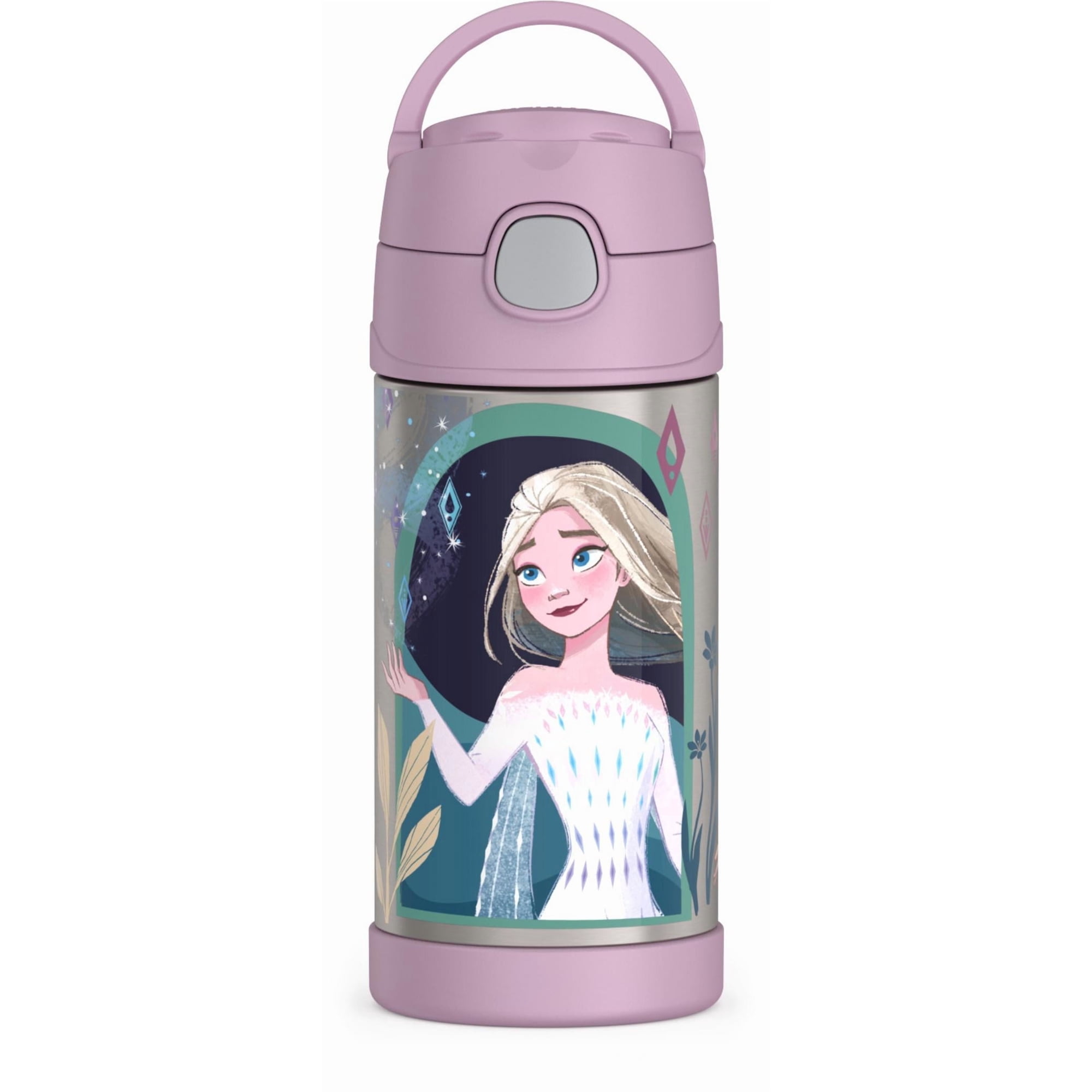
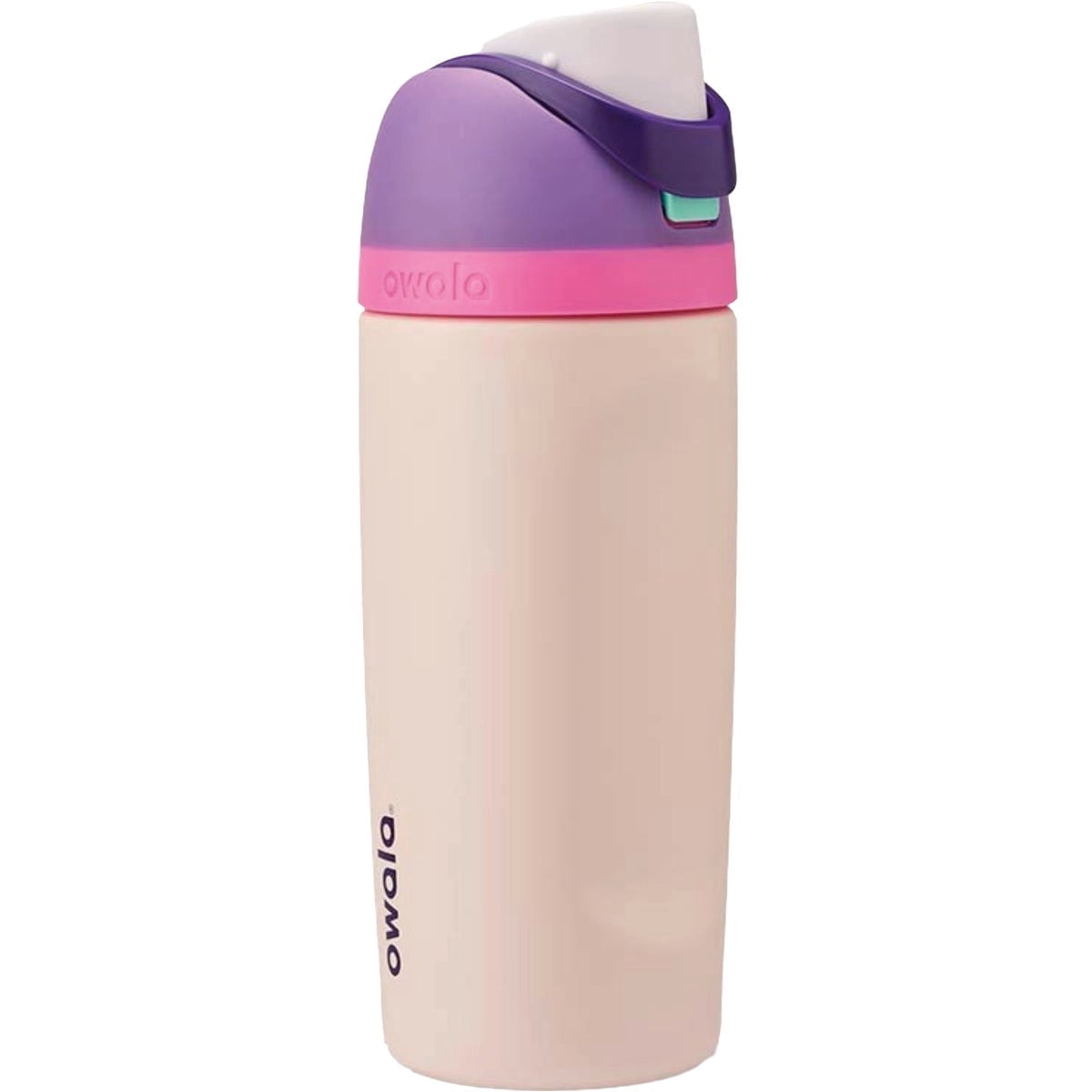


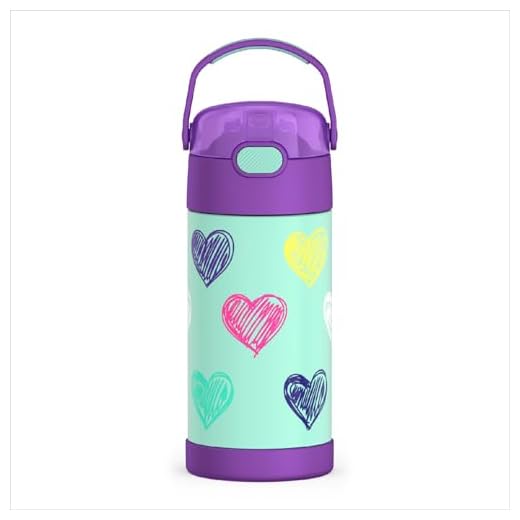


1. Owala Kids FreeSip 16 oz — Best Overall
Best For: Elementary and middle school students who need an insulated bottle with flexible drinking options and a secure closure.
The Owala Kids FreeSip 16 oz is our best overall choice because it combines convenient drinking with a locking lid. Its distinctive FreeSip spout allows children to sip through a built-in straw or tilt the bottle to drink directly from a wider opening.
This dual-purpose design gives students more flexibility than a traditional straw-only bottle. It also means they can continue using the bottle as their preferences change.
The stainless-steel body uses triple-layer insulation. Owala advertises up to 24 hours of cold retention, although actual performance depends on the environment and how frequently the lid is opened.
Another useful feature is the carry loop. It folds down to help lock the lid, reducing the chance of accidental opening inside a backpack. Owala describes the bottle as leakproof when properly closed.
The 16 oz capacity provides a practical middle ground between small elementary-school bottles and larger teen-oriented designs. Owala recommends the product for ages three and older.
However, cleaning requires more attention. The drinking lid contains several surfaces and a straw that need thorough washing. The lid is dishwasher safe, but Owala recommends washing the insulated bottle body by hand.
Independent Bon Appétit testing also identified cleaning convenience as a drawback of the kids' FreeSip design. Therefore, parents who prioritize putting every component into the dishwasher may prefer the THERMOS FUNTAINER or Hydro Flask Covered Cap.
Pros
✅ Two drinking methods with the FreeSip spout
✅ Locking lid for backpack carrying
✅ Up to 24 hours of manufacturer-rated cold retention
✅ Convenient carry loop and practical 16 oz capacity
Cons
❌ Insulated bottle body requires hand-washing
❌ Drinking-lid components need careful cleaning
❌ More expensive than basic plastic bottles
Who Should Skip It? Families who want an entirely dishwasher-safe bottle or a drinking lid with fewer components to maintain.
Alternative: THERMOS FUNTAINER 12 oz for a smaller, more affordable insulated bottle.
2. THERMOS FUNTAINER 12 oz — Best for Younger Children
Best For: Preschool and elementary-school students who need a compact insulated bottle with a simple covered straw.
The THERMOS FUNTAINER 12 oz is an excellent choice for younger children because its drinking mechanism is straightforward. Pressing a button opens the protective lid and reveals a soft silicone straw. The student can drink without tilting a relatively heavy stainless-steel bottle.
The covered straw also helps keep the mouthpiece away from dirt and other surfaces when the bottle is not in use. THERMOS describes the bottle as suitable for children approximately three to ten years old.
Its double-wall stainless-steel insulation keeps water cold for up to 12 hours according to the manufacturer. That is a useful rating for a normal school day, although results vary with temperature and use.
The integrated carrying handle folds down when not needed. This makes it convenient for children who carry their bottles separately or remove them from a backpack during lunch.
The bottle is also relatively compact. Its 12 oz capacity is easier to manage than a large insulated bottle, particularly for students who are still learning to handle their belongings independently.
There are two main limitations. First, the smaller capacity means more frequent refills. Second, the silicone straw needs proper cleaning, even though the product is dishwasher safe on the top rack.
Bon Appétit's independent long-term kids' bottle research also recommends the FUNTAINER for younger children, noting its accessible straw and availability of replacement components.
Overall, this is a practical option for families who want reliable everyday features without paying for premium styling.
Pros
✅ Easy-to-use push-button lid
✅ Covered silicone drinking straw
✅ Compact size for smaller hands
✅ Top-rack dishwasher-safe design
Cons
❌ Smaller 12 oz capacity
❌ Straw still requires thorough cleaning
❌ Less suitable for older students who prefer larger bottles
Who Should Skip It? Older students who need more capacity or families who prefer a bottle without a drinking straw.
Alternative: CamelBak Eddy+ Kids 14 oz for a lightweight plastic design, or Hydro Flask Kids Covered Cap for a premium insulated choice.
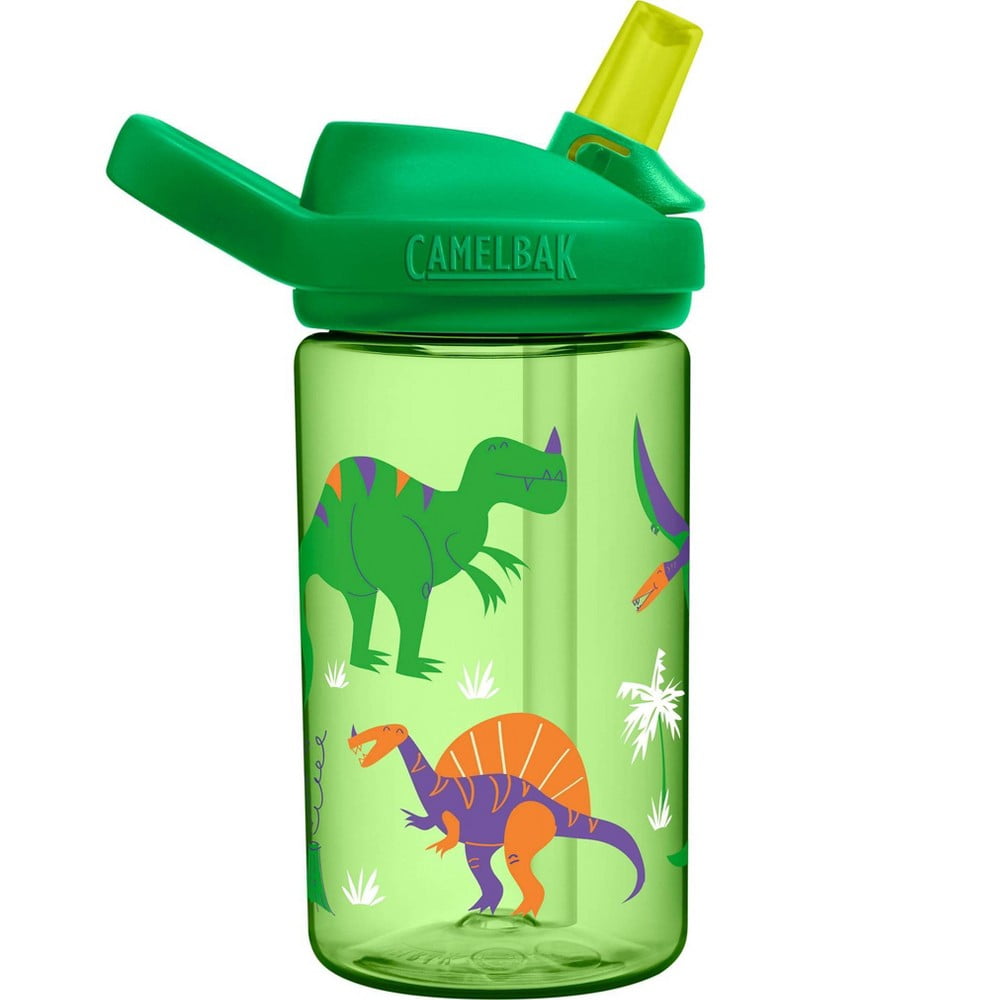
3. CamelBak Eddy+ Kids 14 oz — Best Lightweight School Bottle
Best For: Younger students who need a lightweight bottle and prefer a bite-valve straw instead of a conventional drinking spout.
The CamelBak Eddy+ Kids 14 oz uses Tritan Renew plastic rather than stainless steel. This makes it noticeably lighter than most insulated metal bottles, which can be useful when a child already carries books, lunch, and other school supplies.
CamelBak lists the empty bottle weight at approximately 156 grams. Its 14 oz capacity also creates a practical balance between portability and the need for refills.
The drinking system uses a flip-up bite valve. Children bite the soft valve gently while sipping through the internal straw. CamelBak describes the bottle as spillproof when open and leakproof when properly closed.
However, those two claims are different. An open bite valve is designed to resist spills, not guarantee that absolutely no liquid can escape. Closing the valve before placing the bottle in a backpack remains important.
The bottle and cap are dishwasher safe, according to CamelBak. The company also describes the materials as resistant to stains and odors, making the bottle suitable for repeated everyday use.
However, the bite valve may not suit every child. Some students find the bite-and-sip action less intuitive than drinking from a standard straw. The valve also needs careful cleaning and inspection.
Independent Bon Appétit testing reported problems with two individual Eddy+ Kids samples. Those experiences do not establish a general defect rate, but they reinforce the importance of checking that the straw and valve are complete and functioning correctly when the bottle arrives.
The Eddy+ Kids does not provide vacuum insulation. It is therefore better suited to students who prioritize low weight over keeping water cold for extended periods.
Pros
✅ Lightweight Tritan Renew construction
✅ Spill-resistant bite-valve drinking system
✅ Dishwasher-safe bottle and cap
✅ Convenient carry handle
Cons
❌ No insulation for cold-water retention
❌ Bite-valve operation may not suit every child
❌ Valve and straw require inspection and cleaning
Who Should Skip It? Students who prefer cold water throughout the day or dislike bite-valve drinking mechanisms.
Alternative: THERMOS FUNTAINER 12 oz for insulated stainless steel and a conventional straw.
4. Hydro Flask Kids 12 oz Covered Cap — Best Premium Bottle for Younger Students
Best For: Younger students who need a compact insulated bottle with a covered mouthpiece and a locking closure.
The Hydro Flask Kids 12 oz Covered Cap is a strong premium choice because it combines insulation with a redesigned drinking lid. The newer Covered Cap includes a locking closure and one-touch button opening, making it different from the brand's older Kids Straw Lid model.
Hydro Flask describes the new cap as leakproof when properly closed. Its covered design also helps keep the drinking surface protected when students carry the bottle between classrooms or place it on desks.
The bottle uses TempShield double-wall vacuum insulation. According to Hydro Flask, it can keep water cold for up to 24 hours. Its compact 12 oz capacity and relatively slim body are designed for smaller hands.
Another useful feature is the textured protective boot. It provides additional protection around the bottom of the bottle and can soften contact with hard surfaces.
Hydro Flask also states that the bottle is dishwasher safe. The new lid uses a one-piece straw component intended to simplify cleaning compared with more complicated assemblies.
However, the bottle has limitations. Its relatively high price may be difficult to justify for children who frequently lose school supplies. The 12 oz capacity also requires more frequent refilling than larger bottles.
The stainless-steel construction adds weight compared with lightweight plastic alternatives. Parents should consider both the empty bottle weight and the additional weight of the water.
Importantly, independent testing of the older Hydro Flask Kids Straw Lid should not be treated as testing of this newer Covered Cap. The locking design and leakproof claims for this version come from Hydro Flask's current product documentation.
For more information about the brand's other bottles and compatible accessories, explore our Hydro Flask bottles and accessories guide.
Pros
✅ Locking, covered drinking cap
✅ Up to 24 hours of rated cold retention
✅ Dishwasher-safe construction
✅ Protective textured bottle boot
Cons
❌ Higher price than basic school bottles
❌ Small capacity requires frequent refills
❌ Heavier than uninsulated plastic alternatives
Who Should Skip It? Families who prioritize affordability, minimal weight, or a larger water capacity.
Alternative: THERMOS FUNTAINER 12 oz for a more affordable insulated bottle, or Owala Kids FreeSip 16 oz for additional capacity.
5. Nalgene On-The-Fly 24 oz — Best Lightweight Bottle for Older Students
Best For: Middle school, high school, and college students who want a larger-capacity bottle without the weight of insulated stainless steel.
The Nalgene On-The-Fly 24 oz offers a practical combination of capacity, simplicity, and portability. Its Tritan Renew plastic body weighs approximately 131 grams empty, making it significantly lighter than many insulated metal bottles.
The 24 oz capacity provides more water between refills than smaller children's bottles. This can be convenient for students moving between classes, commuting, or participating in activities where refill stations are not always nearby.
The bottle uses a flip-top drinking lid with a locking mechanism. Nalgene designed the closure for convenient access while helping prevent accidental opening during transport.
Unlike many children's straw bottles, the On-The-Fly uses a drinking opening without a long internal straw. This reduces the number of narrow components that need cleaning.
However, the locking lid still requires attention. Its gasket and sealing surfaces should be cleaned and inspected regularly. Students should also confirm that the lid is fully closed before placing the bottle near laptops or books.
Nalgene lists the bottle body as dishwasher safe. For the lock-top cap, follow the manufacturer's component-specific care instructions; hand-washing is the cautious choice when cleaning guidance differs between regional listings.
The biggest trade-off is insulation. Tritan Renew plastic does not offer vacuum-insulated cold retention. Water will gradually approach the surrounding temperature, especially in warm classrooms or outdoors.
For students who value light weight and straightforward daily use, the On-The-Fly is an appealing alternative to larger insulated bottles.
Pros
✅ Lightweight construction at approximately 131 grams empty
✅ Practical 24 oz capacity
✅ Lockable flip-top drinking lid
✅ No long internal drinking straw
Cons
❌ No insulation for cold-water retention
❌ Lid gasket requires regular cleaning
❌ Larger capacity may be unnecessary for younger children
Who Should Skip It? Younger students who need a smaller drinking opening, or anyone who wants insulated cold water throughout the school day.
Alternative: Stanley IceFlow Flip Straw 2.0 24 oz for a similarly sized insulated bottle.
6. Stanley IceFlow Flip Straw 2.0 24 oz — Best for Teens and After-School Activities
Best For: High school and college students who prefer an insulated bottle for classes, sports, commuting, and other daily activities.
The Stanley IceFlow Flip Straw 2.0 24 oz combines a larger water capacity with an insulated stainless-steel design. It is a practical option for older students who want one bottle for classrooms, study sessions, and activities after school.
Stanley uses AeroLight spun-steel insulation to reduce the weight of its insulated construction. The manufacturer rates the 24 oz model for up to 10 hours of cold retention or up to two days when filled with ice under its test conditions.
The Flip Straw 2.0 lid opens for drinking and snaps shut when finished. Its covered configuration makes it more appropriate for carrying in a backpack than an open-straw tumbler that cannot be fully closed.
Another advantage is the removable drinking spout. Stanley designed the component to detach for deeper cleaning, while the replaceable seal provides a maintenance option if the original wears out.
The bottle also includes a carrying handle and is advertised as dishwasher safe. Its 24 oz capacity gives students more flexibility between refills than smaller insulated children's bottles.
However, size and weight matter. The bottle weighs approximately 0.84 pounds empty, before adding water. Its larger body can also be less convenient in small backpack side pockets.
The straw mechanism still needs careful cleaning, and the lid must be completely closed before transport. Students should avoid assuming that every Stanley tumbler or bottle offers the same leak resistance.
Our Hydro Flask vs Stanley comparison explains how the brands differ across their wider insulated drinkware ranges.
Pros
✅ Practical 24 oz insulated capacity
✅ Flip-straw closure for transport
✅ Removable spout and replaceable seal
✅ Dishwasher-safe design
Cons
❌ Heavier than lightweight plastic bottles
❌ May not fit smaller backpack bottle pockets
❌ Straw components require thorough cleaning
Who Should Skip It? Students who prioritize minimal carrying weight or need a very compact bottle for a small school backpack.
Alternative: Nalgene On-The-Fly 24 oz for lower weight and cost, or Owala Kids FreeSip 16 oz for a smaller insulated design.
Other School Water Bottles We Considered
Several additional bottles deserve consideration. However, they either overlap our main selections or suit a more specialized purpose.
- Owala FreeSip 24 oz: Excellent for older students, but it is already covered in our broader reusable-water-bottle guide. The 16 oz Kids version offers a more distinct school-focused recommendation.
- Hydro Flask Kids 20 oz with older Straw Lid: A useful larger option, although its lid configuration differs from the newer locking Covered Cap selected here.
- YETI Rambler Jr. 12 oz: Durable and well insulated, but comparatively heavy and expensive for a small school bottle.
- Stanley Quencher with an open straw: More appropriate for desk-side use than transporting inside a backpack unless choosing a specific model with a leakproof closure.
- ThermoFlask Kids 16 oz: A budget-friendly insulated alternative, particularly when sold in multipacks.
A different bottle may be better when its drinking mechanism, size, or current price more closely matches the student's needs.
How to Choose the Best Refillable Water Bottles for School
The right school water bottle is one a student can comfortably carry, use, refill, close, and clean. Consider the following factors before choosing a particular brand or design.
Choosing the Right Capacity by Age and Refill Access
Capacity affects carrying weight and how frequently a student needs to refill a bottle. However, the ideal size depends on the student's age, routine, activity level, and access to safe drinking water.
For many younger students, a 12–16 oz bottle is manageable. Larger 20–24 oz bottles can be practical for older students who spend long periods between refill opportunities.
A smaller bottle is not automatically inadequate if safe refill stations are readily available. Likewise, a larger bottle does not mean students should carry more water than they can comfortably manage.
Consider how often the student can refill their bottle, whether the school permits bottles in classrooms, and how much space is available in the backpack.
Leakproof vs Spillproof Lids
Leakproof and spillproof are not interchangeable descriptions. A leakproof closure is designed to prevent liquid escaping when the bottle is correctly closed. Spill-resistant designs may limit spills when open, but they can still release water under certain conditions.
The CamelBak Eddy+ Kids illustrates this difference. CamelBak describes it as spillproof when open and leakproof when closed.
Before placing any bottle inside a backpack, check that the drinking mechanism is closed and any locking feature is engaged. Also inspect the seal for damage or debris.
Even a bottle advertised as leakproof should be kept away from sensitive electronics when practical. No closure can compensate for a damaged gasket, incorrect assembly, or a lid left open.
Stainless Steel vs BPA-Free Plastic Water Bottles
Stainless-steel bottles are a good choice when insulation matters. Vacuum-insulated models can keep water cooler for longer, but they generally weigh more and cost more than simple plastic bottles.
Plastic bottles made with materials such as Tritan Renew are usually lighter. This can make them easier for children to carry, especially when their school bags are already full.
However, uninsulated plastic does not maintain cold temperatures like double-wall vacuum-insulated stainless steel.
Both materials can be suitable for everyday school use when the product is designed for food contact and used according to the manufacturer's instructions. Evaluate the complete bottle, including its lid, seals, and cleaning requirements, rather than choosing based on material alone.
Straw, Bite Valve, or Chug Spout?
Drinking mechanisms influence convenience, spills, and cleaning.
- Covered straw: Useful for younger children who prefer sipping without tilting the bottle. The straw needs regular cleaning.
- Bite valve: Helps reduce spills during drinking but requires the student to understand how to bite and sip.
- Chug spout: Provides a more direct drinking opening and may require fewer narrow components, but an uncovered opening can spill easily.
- Dual-purpose spout: Offers different drinking methods, although the lid may contain more parts to maintain.
For young children, check that they can operate the lid independently. Practice opening, drinking, and closing the bottle at home before the first school day.
Cleaning Lids, Straws, and Seals
Regular cleaning is essential because reusable bottles repeatedly contact hands, mouths, and drinking water. Moisture can remain inside straws, gaskets, and other small components.
Clean bottles after each school day using warm water, suitable dish soap, and the manufacturer's care instructions. Pay particular attention to drinking surfaces, straw interiors, and removable seals.
For narrow straws, a properly sized cleaning brush can reach areas that ordinary rinsing may miss. If a gasket or straw becomes damaged, discolored, or difficult to clean, investigate replacement parts.
Dishwasher compatibility also differs. Some bottles are fully dishwasher safe, while others require hand-washing for the insulated body or lid.
After cleaning, allow components to dry thoroughly before reassembly and storage. Avoid leaving liquid inside a closed bottle for extended periods.
Simple school-day routine: Empty the bottle after school, wash the body and drinking components according to the manufacturer's instructions, rinse thoroughly, and allow everything to dry before refilling.
Backpack Pockets, Weight, and School Rules
A bottle should fit securely in the student's backpack. Check its actual diameter and height rather than assuming a standard bottle pocket will accommodate every design.
Smaller insulated bottles may be easier for younger children to manage, while larger bottles offer more capacity but add weight when filled.
Some schools restrict certain bottle types, require transparent containers, or establish rules about classroom use. Confirm local policies before purchasing an expensive bottle specifically for school.
The CDC encourages schools to provide access to safe drinking water and identifies fountains, dispensers, and hydration stations as useful options. Classroom bottle policies can vary, so families should check the school's specific requirements.
Which Water Bottle Is Best for Your School Routine?
For Elementary School Students
The THERMOS FUNTAINER 12 oz is a practical choice for younger children. Its compact size, covered straw, and accessible push-button opening suit everyday school routines.
For families willing to spend more, the Hydro Flask Kids 12 oz Covered Cap adds a locking closure and longer advertised cold retention.
For Middle School Students
The Owala Kids FreeSip 16 oz offers a useful balance of capacity, insulation, and drinking convenience. Its locking carry loop can help prevent accidental opening during transport.
Students who prefer lightweight bottles may appreciate the CamelBak Eddy+ Kids, provided they are comfortable using its bite valve.
For High School and College Students
The Nalgene On-The-Fly 24 oz offers a larger capacity without the extra weight of an insulated steel body. It is particularly useful when portability and a simple drinking opening matter most.
The Stanley IceFlow Flip Straw 2.0 24 oz is a better fit for students who prefer insulated water throughout a busy day.
For Sports and After-School Activities
The Stanley IceFlow 2.0 combines insulation, a larger capacity, and a carrying handle. However, students should consider whether its size and weight are suitable for their sports bag.
For younger children, the Owala Kids FreeSip 16 oz provides a more compact insulated alternative.
Whichever bottle you choose, refill it with safe drinking water as needed and follow the student's school or activity rules.
Frequently Asked Questions
What is the best refillable water bottle for school?
The Owala Kids FreeSip 16 oz is our best overall recommendation because it combines insulation, a locking lid, and two drinking methods. Younger children may prefer the THERMOS FUNTAINER 12 oz, while older students may benefit from a larger Nalgene or Stanley bottle.
What size water bottle should a child take to school?
A 12–16 oz bottle is manageable for many younger students, while older students may prefer 20–24 oz. The right capacity depends on age, comfort, activities, and access to safe refilling stations. These are practical size suggestions, not individual hydration requirements.
Are stainless-steel water bottles better than plastic for students?
Neither material is automatically better. Insulated stainless steel is useful for keeping water cold, while uninsulated plastic is generally lighter and more affordable. Choose according to the student's carrying needs, cleaning preferences, and intended use.
Which school water bottles are least likely to leak?
Models with properly closed locking lids are strong candidates. Owala Kids FreeSip, Hydro Flask Kids Covered Cap, and Nalgene On-The-Fly all include secure closure features. However, no bottle should be assumed leakproof if its lid is damaged, incorrectly assembled, or left open.
How often should you clean a school water bottle?
Clean the bottle after each school day, following the manufacturer's care instructions. Wash the drinking lid, straw, and seals thoroughly, then allow the components to dry. Regular cleaning is particularly important for bottles with narrow straws or complex drinking mechanisms.
Are straw water bottles suitable for younger children?
They can be, provided the bottle matches the manufacturer's age guidance and the child can use it safely and independently. Covered straws are convenient for many children, but they require regular cleaning and inspection for damage.
Can students refill their water bottles at school?
Many schools provide drinking fountains, dispensers, or refill stations. U.S. schools participating in federal meal programs have specific requirements for providing free drinking water during meal service. Classroom bottle rules and refill access vary, so students should check their school's policies.
Final Verdict: Which School Water Bottle Should You Buy?
The Owala Kids FreeSip 16 oz is our best overall refillable water bottle for school. Its locking lid, insulated body, and two drinking methods make it versatile for everyday student routines.
For younger children, the THERMOS FUNTAINER 12 oz provides a compact, affordable alternative. Students who prioritize low weight should consider the CamelBak Eddy+ Kids 14 oz, while the Hydro Flask Kids Covered Cap is appealing for families who want premium insulation and a locking covered lid.
Older students have different priorities. The Nalgene On-The-Fly 24 oz offers lightweight capacity and a straightforward drinking opening. Meanwhile, the Stanley IceFlow Flip Straw 2.0 24 oz is a practical insulated option for high school, college, and after-school activities.
Before buying, consider the student's age, backpack dimensions, refill access, lid preferences, and cleaning routine. An easy-to-use bottle that is regularly washed and properly closed is often a better everyday choice than a more expensive model with unnecessary features.
Bottom line: Choose Owala Kids FreeSip for overall versatility, THERMOS FUNTAINER for younger students, or Nalgene On-The-Fly for lightweight older-student use. Prioritize a secure lid, manageable capacity, and easy cleaning before choosing a color or brand.
Sources
- Owala — Kids' FreeSip: Official Product Specifications and Care Instructions
- THERMOS — FUNTAINER 12 oz Kids Insulated Water Bottle: Product Specifications and Care Guidance
- CamelBak — Eddy+ Kids 14 oz with Tritan Renew: Official Features and Cleaning Information
- Bon Appétit — The Best Kids' Water Bottles Can Hold Up to Anything Your Child Tries to Do to It
- Centers for Disease Control and Prevention — Water Access in Schools
Product Groups: Owala Kids FreeSip 16 oz, THERMOS FUNTAINER 12 oz Water Bottle, CamelBak Eddy+ Kids 14 oz Tritan Renew, Hydro Flask Kids 12 oz Bottle Covered Cap, Nalgene On-The-Fly 24 oz Lock-Top Bottle, Stanley IceFlow Flip Straw 2.0 Bottle 24 oz