The Patagonia Down Sweater Hoody is the best Patagonia winter jacket for most people who want lightweight warmth, easy layering and enough versatility for everyday cold weather, travel and outdoor use. But it is not the right Patagonia jacket for every winter. The Nano Puff Hoody makes more sense when synthetic insulation and damp-weather performance matter, while the Jackson Glacier Parka is substantially better for everyday rain, wet snow and wind.
At the premium end, Patagonia’s Tres 3-in-1 Parka gives you three different ways to wear one system, while the Stormshadow Parka combines recycled down with a waterproof GORE-TEX shell for genuinely harsh winter conditions.
“Most popular” in this guide does not mean these are Patagonia’s five highest-selling jackets—Patagonia does not publish product-level unit sales. Instead, we considered current Patagonia Best Seller signals, review activity, continued U.S. availability, specifications and independent winter-jacket testing. The Down Sweater and Nano Puff families, in particular, appear in Patagonia’s current Best Sellers collection.
If you are still comparing brands rather than committed to Patagonia, our best men’s winter outerwear guide includes Patagonia alongside The North Face, Fjällräven, REI and other winter-jacket options.
Quick Answer: Best Patagonia Winter Jackets
Best Overall: Patagonia Down Sweater Hoody — lightweight 800-fill down insulation, excellent packability and broad cold-weather versatility.
Best Synthetic: Patagonia Nano Puff Hoody — light, packable PrimaLoft insulation that remains useful when damp.
Best Everyday Parka: Patagonia Jackson Glacier Parka — waterproof construction and recycled down for wet, windy city winters.
Best for Variable Weather: Patagonia Tres 3-in-1 Parka — wear the waterproof shell, down liner or both together.
Best for Severe Cold & Wet Weather: Patagonia Stormshadow Parka — premium GORE-TEX protection with substantial 700-fill recycled down insulation.
How We Chose These Patagonia Winter Jackets
We compared current Patagonia winter jackets around the factors that actually determine whether a coat works in winter: insulation type, weather protection, coverage, weight, packability, versatility, current U.S. price and independent performance evidence.
We did not rank jackets by fill power alone. An 800-fill jacket is not automatically warmer than every 700-fill parka. Fill power describes the loft and efficiency of down, while total warmth also depends on how much insulation is used, how the baffles are constructed, shell protection, hood design, jacket length, draft control and how active you are.
We also distinguish water-resistant insulated jackets from genuinely waterproof winter parkas. That difference becomes far more important than a small weight advantage when winter regularly means rain, sleet, wet snow and slush.
Patagonia Winter Jackets Compared
| Jacket | Best For | Insulation | Weather Protection | Packability | Reference Price* | Main Tradeoff |
|---|---|---|---|---|---|---|
| Down Sweater Hoody | Best overall | 800-fill RDS down | Windproof / water-resistant | Excellent | $345 | Not waterproof |
| Nano Puff Hoody | Damp conditions & layering | 60-g PrimaLoft Gold Eco | Windproof / water-resistant | Excellent | $299 | Less warmth than a heavy parka |
| Jackson Glacier Parka | Everyday wet winter | 700-fill recycled down | Waterproof | Low | $519–$599 by version | Bulky compared with a puffy |
| Tres 3-in-1 Parka | Variable seasons | 700-fill recycled-down liner | Waterproof H2No shell | Low | $699 | Expensive if layers are rarely separated |
| Stormshadow Parka | Severe cold & wet weather | 700-fill recycled down | Waterproof GORE-TEX ePE | Very low | $849–$899 by version | Very expensive and bulky |
Compare Current Patagonia Jacket Prices
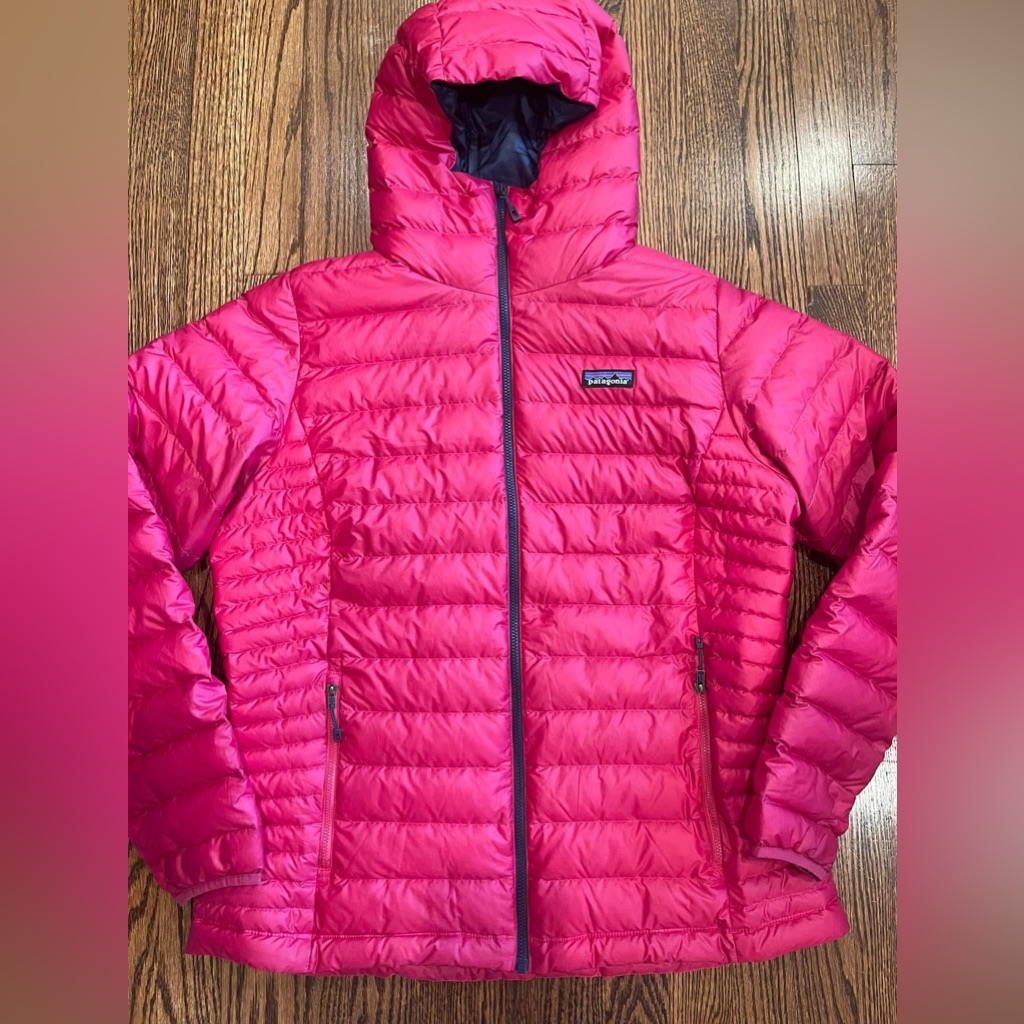
Patagonia outerwear is heavily affected by seasonal markdowns, discontinued colors and size availability. The live shopping block below can help compare currently available offers, but sale pricing does not determine the editorial ranking.


The Best Patagonia Winter Jackets
1. Patagonia Down Sweater Hoody — Best Overall
Best for: Everyday cold weather, travel, hiking, layering and anyone who wants useful warmth without wearing a full winter parka.
The Patagonia Down Sweater Hoody takes our top spot because it covers the widest range of everyday cold-weather situations without becoming excessively heavy or bulky. Patagonia uses 800-fill-power Responsible Down Standard down inside a lightweight NetPlus recycled-nylon ripstop shell.
The result is a strong warmth-to-weight ratio. The jacket can be worn over a base layer on cold dry days, used underneath a shell when conditions become more severe, or packed away when the temperature rises. The current men’s version even stuffs into an interior pocket, making it much easier to travel with than a winter parka.
Down Sweater is also one of Patagonia’s established Best Seller families, which supports its position here as a genuinely popular Patagonia jacket rather than a niche technical piece.
The important limitation is weather protection. Patagonia treats the Down Sweater as a windproof, water-resistant insulated jacket rather than a waterproof shell. Its DWR finish can handle light moisture, but sustained rain or wet snow calls for a shell or a jacket such as the Jackson Glacier.
That distinction is why we prefer the Down Sweater as the all-around Patagonia insulation choice rather than claiming it is the warmest or most weatherproof Patagonia coat.
Pros
✅ 800-fill down delivers excellent warmth-to-weight efficiency
✅ Lightweight and highly packable
✅ Works as a standalone jacket or insulating layer
✅ Current Patagonia Best Seller family
Cons
❌ Water-resistant rather than waterproof
❌ Lightweight shell requires more care around abrasion
❌ $345 is expensive for a lightweight puffy
Who should skip it: Buyers dealing with frequent winter rain, wet snow or long periods outdoors in severe weather should move to a waterproof parka.
Alternative: Jackson Glacier is the more practical everyday choice when wet-weather protection matters more than packability.
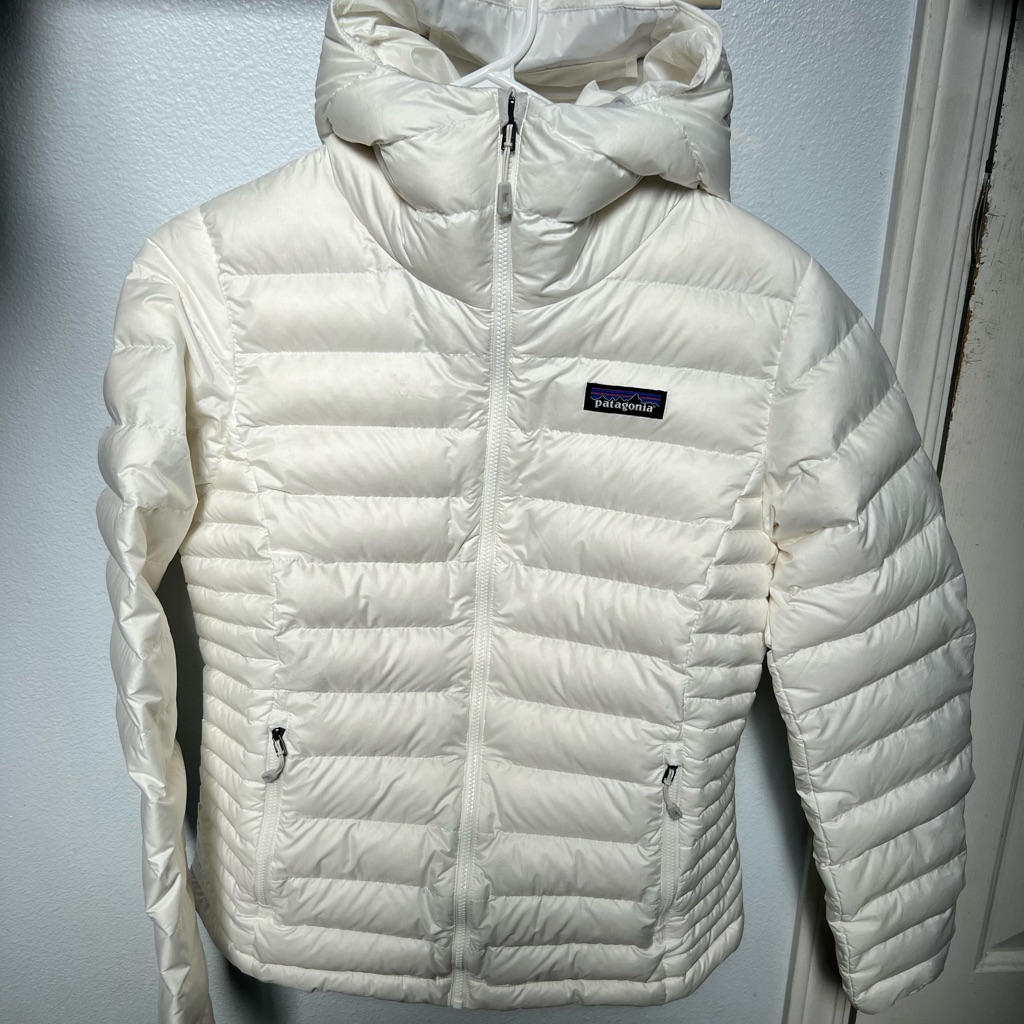
Patagonia Lightweight Down Sweater Hoody — Women’s Medium (Birch White) — Excellent Condition.
Lightweight, warm, and effortlessly packable, this hoody is perfect for layering, travel, and everyday wear.
Don’t wait — add it to your cart now and enjoy reliable Patagonia warmth with a timeless look.
2. Patagonia Nano Puff Hoody — Best Synthetic Insulation
Best for: Active winter use, travel, layering and climates where insulation may regularly encounter moisture.
The Nano Puff Hoody is one of Patagonia’s most recognizable insulation pieces and remains in its current Best Sellers collection. Unlike the Down Sweater, it uses synthetic insulation: 60-g PrimaLoft Gold Insulation Eco.
The main reason to choose synthetic insulation is moisture tolerance. Patagonia designed Nano Puff around remaining useful when damp, and current independent testing reaches a similar conclusion. OutdoorGearLab notes that the Nano Puff is not a deep-winter standalone parka but remains a strong lightweight midlayer because its synthetic fill continues insulating better when damp than untreated down typically does.
The Nano Puff is also highly packable and weighs far less than the waterproof parkas later in this list. That makes it easy to keep in a travel bag, hiking pack or vehicle and add when temperatures drop.
Its $299 regular price still places it firmly in premium territory. Buyers expecting a substantial winter coat may also be surprised by how light it feels. Nano Puff works best when viewed as versatile synthetic insulation rather than a replacement for a heavy city parka.
Pros
✅ Synthetic insulation keeps useful performance when damp
✅ Lightweight and packable
✅ Effective as a midlayer under a waterproof shell
✅ One of Patagonia’s current Best Seller product families
Cons
❌ Not designed as a severe-cold standalone parka
❌ DWR treatment is not the same as waterproof construction
❌ Expensive compared with many synthetic midlayers
Who should skip it: If you want one winter coat for standing outside in freezing temperatures, wind and heavy snow, choose a fuller parka.
Alternative: Down Sweater Hoody offers more down-based warmth-to-weight efficiency for relatively dry winter conditions.
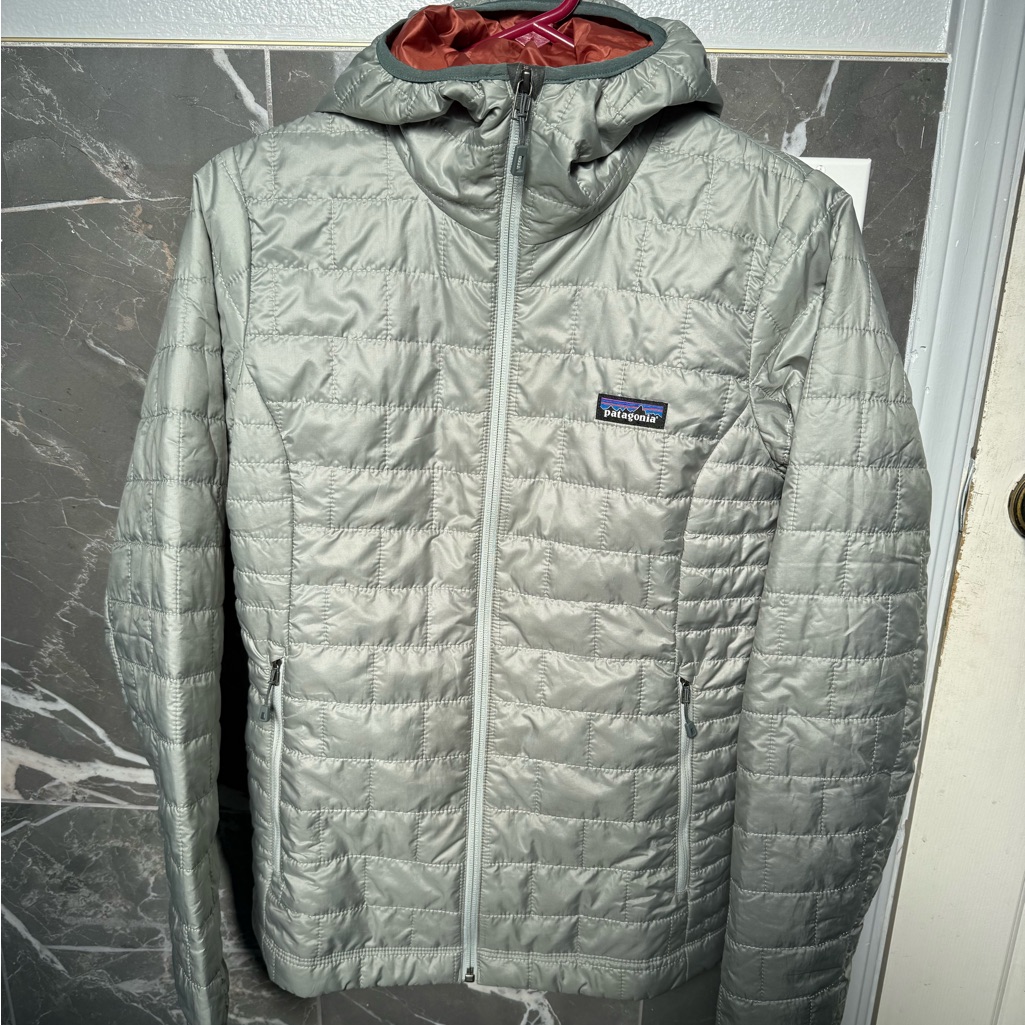
Score a like-new Patagonia Nano Puff Insulated Hoody (Women's Medium) in a rare, discontinued color — warm, lightweight, and impossibly packable. Don’t miss this unique find — add it to your cart now and grab it before it’s gone!
3. Patagonia Jackson Glacier Parka — Best Everyday Winter Parka
Best for: Commuting, city winters, walking the dog, wet snow, wind and shoppers who want one substantial everyday winter coat.
The Jackson Glacier Parka is the easiest Patagonia parka to recommend for ordinary winter life because it combines genuine waterproof protection with recycled-down insulation without moving all the way into Stormshadow pricing.
Current versions use 700-fill-power recycled down with a waterproof two-layer shell. Patagonia specifically positions the Jackson Glacier around rain- and windproof warmth, making it much better suited to slushy city winters than a lightweight DWR-treated puffy.
Independent testing supports that positioning. OutdoorGearLab gave the Jackson Glacier its “Daily Driver for the City Dweller” designation and rated it especially well for weather resistance, comfort and construction quality. Testers found it particularly useful in wet snow, cold wind and daily commuting conditions.
The primary tradeoff is portability. Jackson Glacier is a winter parka, not a packable insulating layer. It takes more room in a closet or suitcase and makes far less sense as something to carry in a backpack until needed.
Current U.S. pricing also differs between versions. The women’s Jackson Glacier Parka is currently listed around $519, while the men’s version carries a $599 reference price before color-specific promotions.
Pros
✅ Waterproof shell is much better suited to wet winter weather
✅ 700-fill recycled down provides substantial insulation
✅ Understated design works well for everyday city use
✅ Strong independent performance for weather protection and comfort
Cons
❌ Much bulkier than Nano Puff or Down Sweater
❌ Premium price even before moving to Stormshadow
❌ Less packable for travel
Who should skip it: Hikers and travelers who mainly want light insulation should stay with Down Sweater or Nano Puff.
Alternative: Stormshadow provides a more protective premium step up for harsher wet and cold conditions.
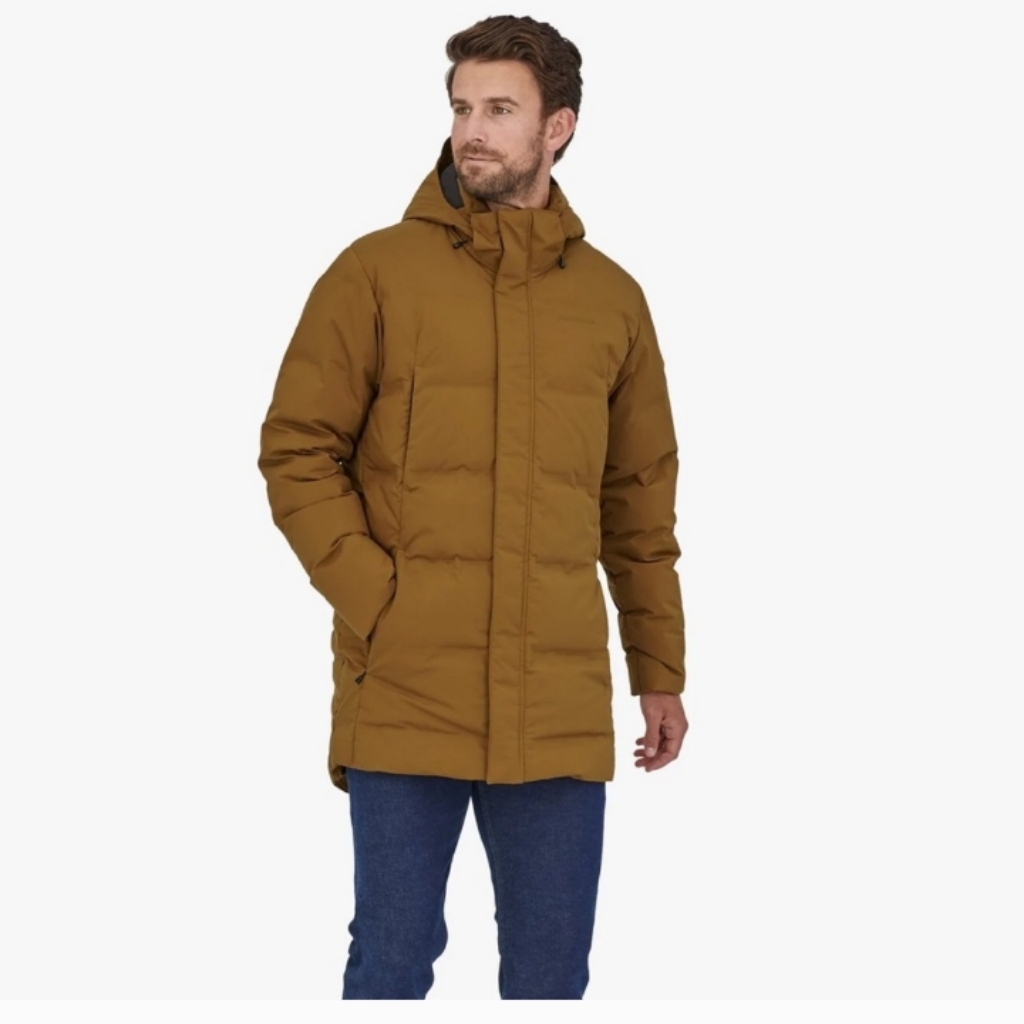
The Patagonia Men's Jackson Glacier Parka in Mulch Brown (XL) is a timeless, high-quality choice for your winter wardrobe. Limited stock available — don’t wait.
Add it to your cart now and secure your Mulch Brown XL before it’s gone.
4. Patagonia Tres 3-in-1 Parka — Best for Variable Weather
Best for: Shoppers who want one system to cover cool rain, cold dry weather and full winter conditions.
The Tres 3-in-1 is the most versatile Patagonia winter jacket in this group because it is really two garments designed to work in three configurations.
The outer layer uses Patagonia’s waterproof/breathable H2No Performance Standard construction. Inside is a removable jacket insulated with 700-fill recycled down. Wear the shell alone during wet but relatively mild weather, wear the down layer by itself in dry cold, or combine both for winter protection.
That flexibility explains why OutdoorGearLab currently names the Tres its best option for three-season wear. Its 2026 comparison gives the jacket especially strong scores for versatility, comfort and weather resistance.
The value proposition depends completely on whether you will use those configurations. At $699, the Tres is difficult to justify if the inner jacket stays permanently zipped into the shell every winter. In that case, a conventional insulated parka is simpler.
But for travel or climates where one week brings cold rain and the next brings snow, the ability to separate the layers can replace multiple jackets in the closet.
Pros
✅ Three useful wearing configurations
✅ Waterproof H2No outer shell
✅ Removable 700-fill recycled-down liner
✅ Excellent versatility across changing seasons
Cons
❌ $699 regular price
❌ More complicated than a single insulated parka
❌ Poor value if you rarely separate the layers
Who should skip it: If you want one straightforward coat for the coldest months and never expect to wear the shell or liner separately, Jackson Glacier is simpler.
Alternative: Jackson Glacier for everyday winter simplicity; Stormshadow for maximum weather protection.
Don’t miss out on this brand-new Patagonia Men's Tres 3‑in‑1 Down Parka (Style #28388) in black — size XXL and still NWT. Perfect, flawless condition from a smoke‑free home, this versatile, insulated parka is ready to keep you warm all winter. For product details and sizing guidance, visit the Patagonia website, then message to claim it before it’s gone!
5. Patagonia Stormshadow Parka — Best for Severe Cold & Wet Weather
Best for: Long exposure to genuine winter cold, wet snow, strong wind and buyers who prioritize maximum Patagonia winter protection over price and packability.
The Stormshadow Parka is the most serious winter coat in this roundup. Patagonia describes it as one of its warmest parkas and combines a premium waterproof GORE-TEX ePE shell with 700-fill-power recycled down.
The difference from a standard down jacket is the complete system. The shell blocks precipitation and wind, while features such as the insulated hood, cinchable waist and protected hand pockets help reduce heat loss in demanding conditions.
OutdoorGearLab’s February 2026 comparison ranked Stormshadow second out of 17 men’s winter jackets. It scored 8/10 for warmth, 8/10 for weather resistance and 9/10 for construction quality, with testing highlighting strong protection against wind, rain and snow.
The obvious problem is cost. The current men’s model is $899, while the women’s model is $849. That makes Stormshadow exceptionally difficult to justify for a mild winter where outdoor exposure consists mostly of moving between a car, train and heated buildings.
It also carries the expected bulk of a heavily insulated waterproof parka. If packability matters, the Down Sweater or Nano Puff belongs in a completely different category.
Pros
✅ One of Patagonia’s warmest current parkas
✅ Waterproof GORE-TEX ePE shell
✅ 700-fill recycled-down insulation
✅ Excellent independent scores for warmth, weather resistance and construction
Cons
❌ $849–$899 reference pricing
❌ Bulky compared with lightweight Patagonia insulation
❌ Excessive for mild or mostly indoor winters
Who should skip it: City users with moderate winters can save hundreds of dollars with Jackson Glacier, while dry-weather users may not need a waterproof parka at all.
Alternative: Jackson Glacier is the better everyday value when waterproof protection matters but maximum Stormshadow-level protection does not.
Grab this Patagonia Men's Stormshadow Parka XL in Old Growth — new with tags and ready to wear. Please check the photos for exact measurements (in inches) to ensure the perfect fit. We ship fast (typically next business day) — add it to your cart now to secure it!
Popular Patagonia Jackets We Didn’t Rank
Patagonia Nano Puff Jacket is arguably even more recognizable than the hooded version and currently has very high review volume, but ranking both would duplicate the same insulation system. We chose the Hoody because the hood makes more sense in a winter-specific roundup.
Patagonia Down Sweater Jacket is also excellent, but it overlaps almost completely with our first-place Down Sweater Hoody.
Patagonia Jackson Glacier Jacket provides a shorter silhouette than the parka. It is worth considering if mobility matters more than additional winter coverage.
Patagonia Silent Down Long Parka is relevant for shoppers wanting longer women’s winter coverage, but it is not as universal across Patagonia’s men’s and women’s ranges as our selected product families.
Patagonia Fitz Roy Down Hoody is a strong technical insulation piece for alpine and climbing use, but its intent is more specialized than this general winter-jacket guide.
Patagonia Torrentshell 3L is one of the brand’s best-known waterproof jackets, but it is an uninsulated rain shell. It belongs in a rainwear comparison rather than an insulated winter-jacket ranking.
How to Choose a Patagonia Winter Jacket
Down vs Synthetic Insulation
The Down Sweater and Nano Puff show the basic tradeoff clearly.
Down provides excellent warmth for its weight and compresses very efficiently. Patagonia’s Down Sweater uses 800-fill down and is especially attractive for cold, relatively dry conditions.
Synthetic insulation generally handles moisture better. Nano Puff’s PrimaLoft fill remains useful when damp, making it a more forgiving choice for mixed conditions, active use and situations where you may sweat inside the jacket.
Neither insulation type is universally superior. Match it to the conditions you repeatedly experience.
Fill Power Does Not Tell You How Warm the Whole Jacket Is
An 800-fill Down Sweater should not automatically be described as warmer than a 700-fill Stormshadow.
Fill power describes how efficiently down lofts. A high-fill-power down can provide excellent warmth without much weight, but total garment warmth also depends on how much down is actually used.
Stormshadow can therefore be substantially more protective in harsh winter weather despite using 700-fill recycled down because it uses a larger insulated construction, protective hood, draft-management features and waterproof outer shell.
Water-Resistant and Waterproof Are Different
Down Sweater and Nano Puff use DWR-treated shells designed to shed light moisture. They should not be treated like rain jackets.
Jackson Glacier and Tres use waterproof construction, while Stormshadow uses GORE-TEX. Those designs make far more sense if your winter regularly includes sustained rain, wet snow or slush.
Simple rule: Choose lightweight puffies for insulation. Choose waterproof insulated parkas when winter precipitation is part of the problem.
Jacket vs Parka
A shorter insulated jacket prioritizes lower weight and freedom of movement. A parka extends the protected area farther down the body, usually improving comfort when you stand still in cold wind.
For active use and travel, a shorter Down Sweater or Nano Puff is easier to manage. For commuting, waiting for public transport, watching outdoor events or spending long periods outside, additional parka coverage can be more useful.
Do You Really Need GORE-TEX?
Not everyone needs to pay for Stormshadow.
GORE-TEX becomes easier to justify when severe precipitation and wind are regular parts of your winter. It adds far less value when the jacket is primarily worn for short trips through dry cold.
If waterproofing matters but maximum protection does not, Jackson Glacier is the more economical Patagonia option.
When Does a 3-in-1 Jacket Make Sense?
Buy the Tres because you want to use all three configurations—not because “3-in-1” sounds like more value.
It works especially well for travel and climates with large seasonal swings. The shell can handle wet shoulder-season weather, the liner works as standalone insulation, and both pieces combine for winter.
If the two pieces will remain permanently zipped together, you are paying for modularity you do not use.
Packability vs Maximum Warmth
Down Sweater and Nano Puff can disappear into luggage or a backpack. Jackson Glacier, Tres and Stormshadow cannot.
If you frequently travel, hike or move between changing temperatures, packability may be more valuable than owning the warmest possible coat. If you stand outdoors in winter for long periods, bulk matters much less than protection.
Fit and Layering
Leave enough room for the layers you actually wear, but do not automatically size up several sizes. Excess empty space can make a winter jacket less efficient and create an awkward fit.
Men’s and women’s Patagonia versions can also differ in length, shaping, current colors and pricing even when they share the same product-family name. Check the specific version rather than assuming every specification is identical.
How Much Should You Spend on a Patagonia Winter Jacket?
The five picks in this guide span approximately $299 to $899 at current regular U.S. pricing.
At the lower end of Patagonia’s winter range, Nano Puff and Down Sweater make sense when you mainly need insulation. Spending $500–$700 brings waterproof parkas and more weather protection. The nearly $900 Stormshadow only becomes rational when harsh cold, wind and wet weather justify a premium integrated system.
Patagonia should therefore be treated as a premium brand rather than an “affordable” winter-jacket brand. Sale colors can reduce prices dramatically, but markdown availability changes by size and season.
Repairs and Patagonia’s Ironclad Guarantee
Long-term ownership is one reason some buyers accept Patagonia pricing. Patagonia backs its products with the Ironclad Guarantee and offers repair options rather than assuming a damaged jacket must immediately be replaced.
The company states that products that do not perform to satisfaction can be returned to Patagonia for repair, replacement or refund, while damage from normal wear and tear may be repaired for a reasonable charge.
That does not make every repair free, but the availability of manufacturer repair support is worth considering when comparing a premium jacket with inexpensive outerwear designed to be replaced more frequently.
Think About the Rest of Your Winter Setup
A premium parka does not solve poor winter footwear. If you regularly deal with snow, wet sidewalks and ice, our best women’s winter boots guide compares waterproof, insulated and traction-focused options for different winter conditions.
Best Patagonia Jacket by Winter Condition
| Winter Condition | Best Pick | Why |
|---|---|---|
| Cold & Mostly Dry | Down Sweater Hoody | Excellent warmth-to-weight efficiency and packability |
| Damp / Active Winter Use | Nano Puff Hoody | Synthetic insulation remains useful when damp |
| City Rain, Wet Snow & Wind | Jackson Glacier Parka | Waterproof shell plus substantial recycled-down insulation |
| Variable Fall, Winter & Spring Weather | Tres 3-in-1 Parka | Separate shell, liner or combined parka |
| Harsh Cold + Wet Weather | Stormshadow Parka | GORE-TEX shell, recycled down and maximum winter-focused protection |
FAQ About Patagonia Winter Jackets
What is the best Patagonia winter jacket overall?
The Down Sweater Hoody is our best overall choice because it combines lightweight 800-fill down insulation, excellent packability and broad everyday versatility. For wet winter weather, the Jackson Glacier Parka is the better choice.
Is the Patagonia Down Sweater warmer than the Nano Puff?
The Down Sweater uses high-loft down and is the stronger choice when warmth-to-weight in cold, relatively dry conditions matters most. Nano Puff uses synthetic insulation that handles damp conditions better. Actual warmth also depends on layering, activity and weather.
Is the Patagonia Nano Puff waterproof?
No. Nano Puff has a weather-resistant shell with a DWR finish designed to shed light moisture, but it is not a waterproof shell for sustained rain or wet snow.
Which Patagonia parka is warmest?
Patagonia describes Stormshadow as one of its warmest parkas. It combines substantial recycled-down insulation with a waterproof GORE-TEX shell and winter-focused draft-management features.
Is the Patagonia Jackson Glacier waterproof?
Yes. The current Jackson Glacier Parka is designed around waterproof and windproof winter protection rather than the lighter water-resistant construction used on Down Sweater and Nano Puff.
Is the Patagonia Tres 3-in-1 worth it?
It is most worthwhile if you will genuinely wear the waterproof shell and down liner separately as well as together. If you only need one conventional winter coat, a non-modular parka can provide better value.
Are Patagonia winter jackets worth the price?
They can be when the specific jacket matches your climate and you value the materials, repair support and long-term ownership. A premium Stormshadow is difficult to justify for a mild winter, while Down Sweater or Nano Puff can make more sense for everyday layering.
Does Patagonia repair old jackets?
Patagonia offers repair services and backs its products with the Ironclad Guarantee. Warranty-related issues may qualify for repair, replacement or refund, while normal wear-and-tear repairs can involve a charge.
Final Verdict
The Patagonia Down Sweater Hoody is the best Patagonia winter jacket for most shoppers because its 800-fill down insulation, low weight and packability make it useful across more everyday situations than a large parka.
The better choice changes with the weather. Pick the Nano Puff Hoody when you want lightweight synthetic insulation that deals with dampness better. Choose the Jackson Glacier Parka for a waterproof everyday winter coat, or the Tres 3-in-1 if you will genuinely use its separate shell and insulated liner across multiple seasons.
The Stormshadow Parka is the specialist choice. Its GORE-TEX shell, recycled down and strong independent winter-weather performance make it the most protective option here, but its $849–$899 pricing only makes sense when your climate demands that level of protection.
Bottom line: Choose Down Sweater for versatile dry-cold insulation, Nano Puff for damp-weather layering, Jackson Glacier for everyday waterproof winter use, Tres for three-season flexibility or Stormshadow for serious cold and wet weather.
Sources
- Patagonia — Down Sweater Hoody current U.S. product specifications and Best Sellers collection
- Patagonia — Nano Puff Hoody current U.S. product specifications and Best Sellers collection
- Patagonia — Jackson Glacier, Tres 3-in-1 and Stormshadow current U.S. product specifications
- OutdoorGearLab — Best Winter Jackets for Men
- OutdoorGearLab — Patagonia Stormshadow and Jackson Glacier tested reviews
Product Groups: Patagonia Down Sweater Hoody, Patagonia Nano Puff Hoody, Patagonia Jackson Glacier Parka, Patagonia Tres 3-in-1 Parka, Patagonia Stormshadow Parka