The best educational toy for most kids is the MAGNA-TILES Classic 32-Piece Set because it combines open-ended building, spatial reasoning, creativity and repeat play without forcing children through one fixed lesson. But the best choice depends on what your child is ready to practice. Numberblocks MathLink Cubes are stronger for early math, LeapFrog Mr. Pencil focuses on literacy and handwriting, Botley 2.0 introduces sequencing and coding logic, Gravity Maze develops problem solving, and Snap Circuits Jr. introduces basic electronics.
The most important thing is not whether a box says “educational.” A good learning toy should match the child’s age and abilities, encourage active participation, and be interesting enough to use repeatedly. For younger children especially, simple building, sorting, drawing and imaginative play can be more valuable than a toy that mainly flashes, talks or delivers passive instructions.
You can also browse Discompare’s educational toys category if you want to compare more learning-focused products by price and retailer.
Quick Answer: Best Educational Toys for Kids
Best Overall: MAGNA-TILES Classic 32-Piece Set — open-ended magnetic building for creativity, geometry and spatial reasoning from age 3+.
Best for Early Math: MathLink Cubes Numberblocks 1–10 — hands-on number building with 100 cubes and 30 activities.
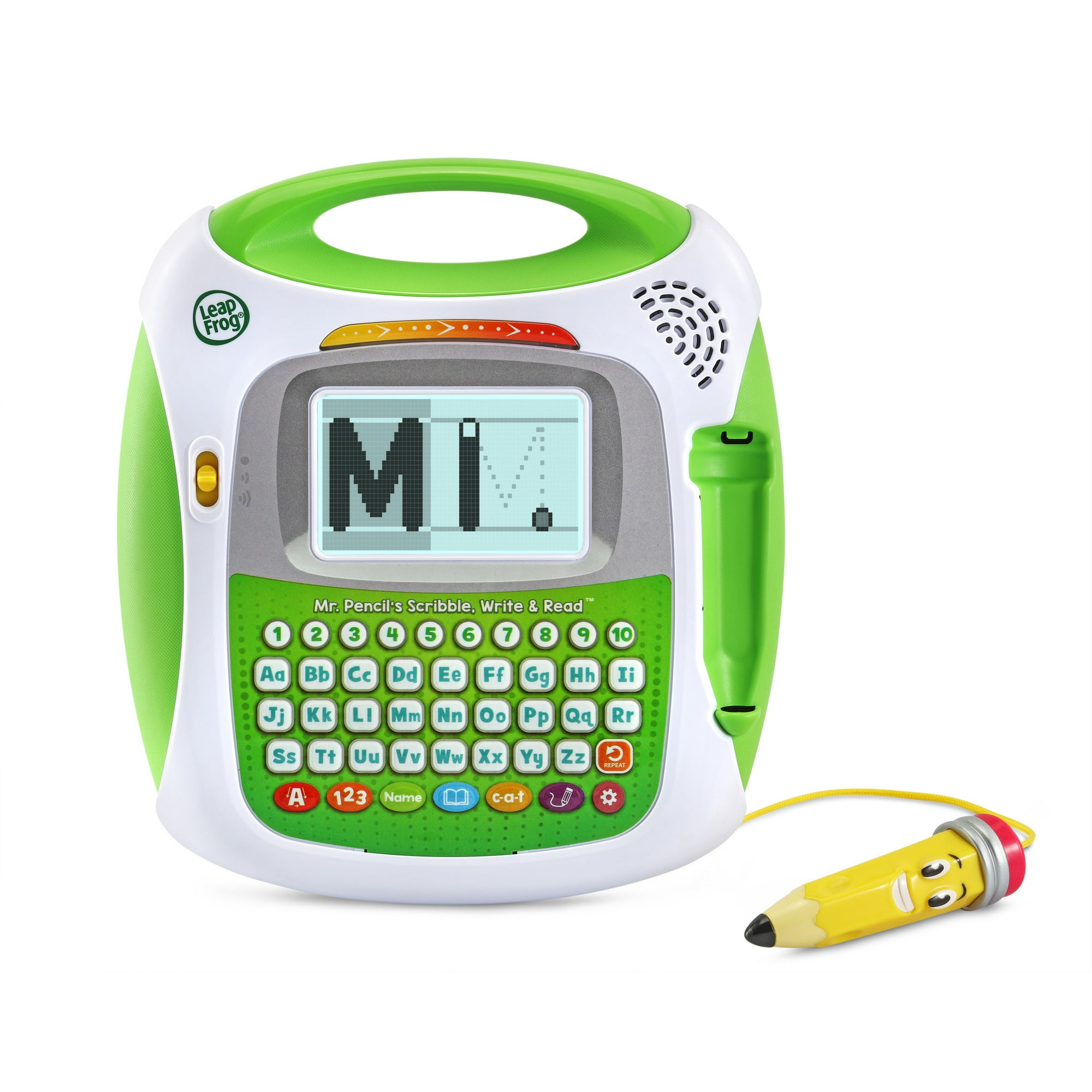
Best for Reading & Writing: LeapFrog Mr. Pencil’s Scribble, Write & Read — guided letter formation, sounds, spelling and number practice for preschoolers.
Best Coding Toy: Botley 2.0 Coding Robot Activity Set — screen-free sequencing and logic activities for ages 5+.
Best for Older Kids: ThinkFun Gravity Maze develops logic and spatial planning, while Snap Circuits Jr. introduces working electrical circuits for ages 8+.
How We Chose the Best Educational Toys
We prioritized toys that are current, age-appropriate, widely available in the U.S. and built around a clear type of play. The six final picks cover open-ended construction, early math, literacy, coding, logic and electronics rather than repeating several products that teach the same skill.
We also looked at replay value. A toy with multiple difficulty levels or many ways to play can remain useful longer than a product built around one short activity. Open-ended toys such as magnetic tiles score well here because the child decides what to build, while challenge-based products such as Gravity Maze provide progressively harder problems.
Safety matters just as much as educational value. Follow the manufacturer’s age grading, especially with toys that contain marbles, small pieces, batteries or magnets. Children under 3 should not have access to small parts, and any magnetic toy should be removed from use if a magnet becomes loose or exposed.
Educational Toy Comparison
| Toy | Best For | Recommended Age | Main Skill | Screen Needed? | Reference Price* |
|---|---|---|---|---|---|
| MAGNA-TILES Classic 32-Piece Set | Best overall | 3+ | Spatial reasoning & creativity | No | $49.99 |
| Numberblocks MathLink Cubes 1–10 | Early math | 3+ | Counting & number sense | No | $27.99 |
| LeapFrog Mr. Pencil | Literacy & handwriting | 3–5 | Letters, writing & spelling | No external screen | About $30 |
| Botley 2.0 Activity Set | Coding concepts | 5+ | Sequencing & logic | No | $99.99 |
| ThinkFun Gravity Maze | Critical thinking | 8+ | Logic & spatial planning | No | $29.99 |
| Snap Circuits Jr. SC-100 | Science & electronics | 8+ | Electrical circuits | No | Mid-$30 range |
Compare Current Educational Toy Prices
Use the live shopping block below to compare current offers. The editorial ranking is based on age fit, learning style, replayability and product quality rather than whichever item happens to be cheapest today.



The Best Educational Toys for Kids
1. MAGNA-TILES Classic 32-Piece Set — Best Overall
Best for: Kids age 3+ who enjoy building, experimenting and creating their own designs.
The MAGNA-TILES Classic 32-Piece Set is our best overall educational toy because it supports learning without telling the child exactly what the finished result should look like. The set contains magnetic squares and triangles that can connect into flat patterns, houses, towers, animals and three-dimensional geometric structures.
That open-ended format supports several kinds of thinking at once. Children can experiment with symmetry, balance, shapes, size relationships and basic construction while also using imagination to decide what they are building. The same set can be used differently at age three than at age seven, which gives it stronger replay value than a toy built around one fixed activity.
MAGNA-TILES recommends the Classic 32 set for ages 3 and up. The company also states that its tiles use a lattice structure and fastening rivets intended to keep the internal magnets secure.
The 32-piece count is a good starting size, but enthusiastic builders may eventually want an expansion. The benefit is that current MAGNA-TILES pieces are designed to be compatible with other sets, so the starter kit does not become obsolete when a larger collection is added.
Families interested in similar open-ended construction can also compare more building toys rather than limiting the search to magnetic tiles.
Pros
✅ Open-ended play allows many different builds
✅ Supports shape, spatial and construction concepts
✅ Compatible with additional MAGNA-TILES sets
✅ Screen-free and suitable from age 3+
Cons
❌ 32 pieces can feel limiting for larger builds
❌ Costs more than basic non-magnetic blocks
❌ Any damaged tile with an exposed or loose magnet should be removed from use
Who should skip it: Families looking for a structured curriculum or step-by-step academic activity may prefer Numberblocks, Botley or Snap Circuits.
Alternative: The MAGNA-TILES Classic 100-Piece Set offers much more building capacity if you already know magnetic construction will get frequent use.
Spark creativity and early STEM skills with the MAGNA-TILES Classic 32-Piece Magnetic Construction Set — perfect for little hands to build, explore, and learn through play. Add it to your cart now and bring hours of educational fun home today!
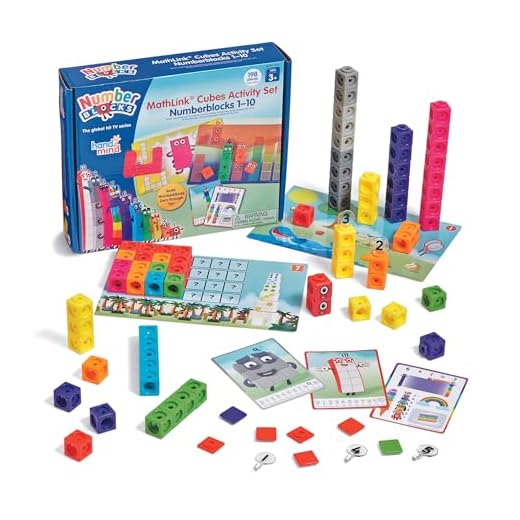
2. hand2mind MathLink Cubes Numberblocks 1–10 Activity Set — Best for Early Math
Best for: Preschool and early-elementary children learning counting, number composition, addition and subtraction concepts.
The Numberblocks 1–10 Activity Set turns numbers into something children can physically build and take apart. It includes 100 MathLink cubes plus activity materials that let kids construct the familiar Numberblocks characters from One through Ten.
The biggest advantage is that children can see a number as a quantity rather than only as a written symbol. Five is not just the character “5”—it can be represented by five connected cubes that can be split into two and three, four and one, or other combinations.
hand2mind includes 30 learning activities connected to the Numberblocks series. That structure can be useful for children who already recognize the characters because the toy links a familiar visual idea with hands-on counting.
The set is also screen-free. Watching the television series is not required to use the cubes, although children who already enjoy Numberblocks may engage with the activities more quickly.
The main limitation is range. The 1–10 edition is intentionally focused on early number concepts, so children already working confidently with larger numbers may be better served by the 11–20 or later MathLink sets.
Pros
✅ 100 physical cubes make number concepts visible
✅ Includes 30 guided learning activities
✅ Useful for counting and number composition
✅ Familiar Numberblocks characters can increase engagement
Cons
❌ Focused mainly on numbers one through ten
❌ Includes many small loose pieces that require organization
❌ Not appropriate for children below the manufacturer’s age guidance
Who should skip it: Children already comfortable with early arithmetic beyond ten may outgrow this specific set quickly.
Alternative: MathLink Cubes Numberblocks 11–20 is the natural next step once the first ten numbers are familiar.
Bring Numberblocks home with the MathLink Cubes Numberblocks 1-10 Activity Set — 100 connecting cubes, faceplates, stickers and 30 hands-on activities that teach counting, addition, subtraction and more. Perfect for ages 3–5, homeschoolers and gift-giving. Add to cart now and spark confident, playful number learning today!
3. LeapFrog Mr. Pencil’s Scribble, Write & Read — Best for Early Literacy & Writing
Best for: Preschoolers ages 3–5 practicing letter formation, sounds, early spelling and number writing.
Mr. Pencil’s Scribble, Write & Read fills an important gap in a category that is often dominated by STEM products. Instead of construction or coding, this toy focuses on early handwriting and literacy.
Children use the attached stylus to trace uppercase letters, lowercase letters and numbers. LeapFrog also includes activities around correct stroke order, simple word sounds, spelling and drawing. That gives the toy a clearer purpose than electronic products that mainly provide lights and sounds without requiring much participation.
The device is self-contained, so it does not require a tablet or phone. It does use electronics and audio feedback, which makes it more structured than an open-ended product such as MAGNA-TILES.
That structure can be helpful for children who enjoy guided practice, but it should not replace drawing on paper, reading with an adult or experimenting with crayons and pencils. Those activities involve different forms of motor control and interaction.
LeapFrog recommends this version for ages 3–5, and it requires three AA batteries.
Pros
✅ Focuses on letters, writing, spelling and numbers
✅ Stylus gives children active tracing practice
✅ No external phone or tablet required
✅ Clear preschool age target
Cons
❌ More structured and less open-ended than building or art toys
❌ Requires three AA batteries
❌ Children may outgrow the preschool-level activities relatively quickly
Who should skip it: Children who already write letters comfortably and are beginning independent reading may need a more advanced literacy system.
Alternative: LeapStart can provide a broader library of book-based guided activities for families that want to continue with an electronic learning system.
Bring home the LeapFrog Mr. Pencil: Scribble, Write & Read and make handwriting practice fun and magical. Kids trace letters and numbers with the stylus and watch them transform into playful animations that build confidence and spark curiosity. Order now to turn everyday practice into a joyful learning adventure — add to cart today!
4. Learning Resources Botley 2.0 Coding Robot Activity Set — Best Coding Toy
Best for: Kids age 5+ who are ready to practice sequencing, cause and effect and introductory coding logic without a screen.
Botley 2.0 is the strongest coding pick because it introduces programming ideas without requiring a tablet, phone or computer. Children use the included remote programmer to build a sequence of commands and then watch Botley carry them out.
The full Activity Set includes the robot, coding cards and obstacle-building pieces. The current set contains 78 pieces, giving children enough material to create routes and challenges rather than simply making the robot move across an empty floor.
The educational value comes from the sequence-test-correct cycle. A child plans a route, enters the commands, watches what happens and then changes the sequence if Botley does not reach the intended destination. That process introduces the idea of debugging without presenting it as formal computer programming.
Botley can also perform more advanced behaviors such as loops and object detection, giving the product more room to grow than a one-function remote-control toy.
The main drawback is price. At roughly $100 for the full Activity Set, Botley costs significantly more than the math, literacy and logic picks in this guide.
Pros
✅ Completely screen-free coding play
✅ Teaches sequencing and problem solving through physical movement
✅ Includes obstacle and coding pieces for varied activities
✅ Can progress into loops and object-detection challenges
Cons
❌ Most expensive toy in the main lineup
❌ Requires batteries for the robot and programmer
❌ Older children may eventually want a deeper programmable robotics platform
Who should skip it: Children who are already comfortable writing code in a visual programming environment may find Botley too introductory.
Alternative: Code & Go Robot Mouse provides a lower-cost screen-free introduction to directional coding.
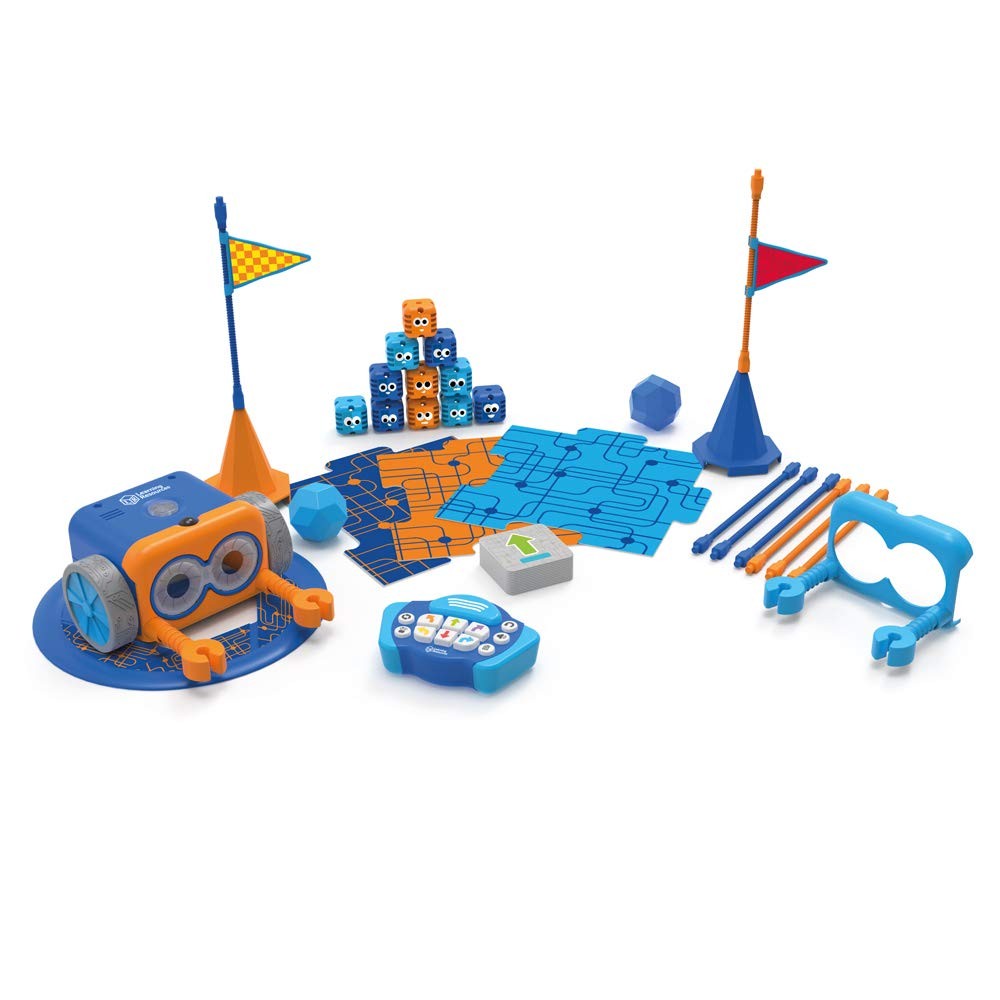
Ignite your child's imagination with 16 fun interactions—transform Botley into a train, police car, ghost and more. Code right out of the box with the next generation of our Toy of the Year winning coding robot. Order now and start the hands-on coding adventure today!
5. ThinkFun Gravity Maze — Best for Logic & Critical Thinking
Best for: Kids age 8+ who enjoy puzzles, spatial problems and trial-and-error challenges.
Gravity Maze combines a logic puzzle with a physical marble run. Each challenge shows a starting position and goal, and the player has to arrange translucent towers so gravity carries the marble through the correct path.
The current set includes 60 challenges that increase in difficulty. That progression is important because it gives the toy more longevity than a puzzle with one solution. Children can begin with relatively simple layouts and work toward problems that require more steps and planning.
The toy is particularly good for spatial reasoning because the solution has to be imagined in three dimensions. Players are not only deciding where a piece goes—they also have to anticipate how the marble will move through the structure.
Gravity Maze works primarily as a solo challenge, which can be either a strength or weakness. It is excellent for independent puzzle time but less suitable for children who mainly want cooperative play or imaginative storytelling.
It also contains marbles and small parts, so the age recommendation matters. Ravensburger lists it for ages 8+ and includes a choking warning for children under 3.
If your child enjoys this kind of structured thinking, you can also explore more logic games and puzzles.
Pros
✅ 60 progressively harder challenges
✅ Combines logic with physical spatial reasoning
✅ Screen-free independent play
✅ Compact compared with large building or robotics sets
Cons
❌ Primarily designed for solo puzzle solving
❌ Less open-ended than building toys
❌ Contains small marbles and is not appropriate for younger children
Who should skip it: Children who prefer imaginative, collaborative or free-building play may engage more with MAGNA-TILES or another construction toy.
Alternative: ThinkFun Rush Hour offers progressive logic challenges with sliding vehicles rather than a marble-run structure.

Spark curiosity and sharpen critical-thinking skills with the ThinkFun Gravity Maze Marble Logic Game — the hands-on STEM challenge kids will love. Ready to inspire endless creativity and collaborative play for ages 8 and up? Add it to your cart now and give the gift of problem-solving fun!
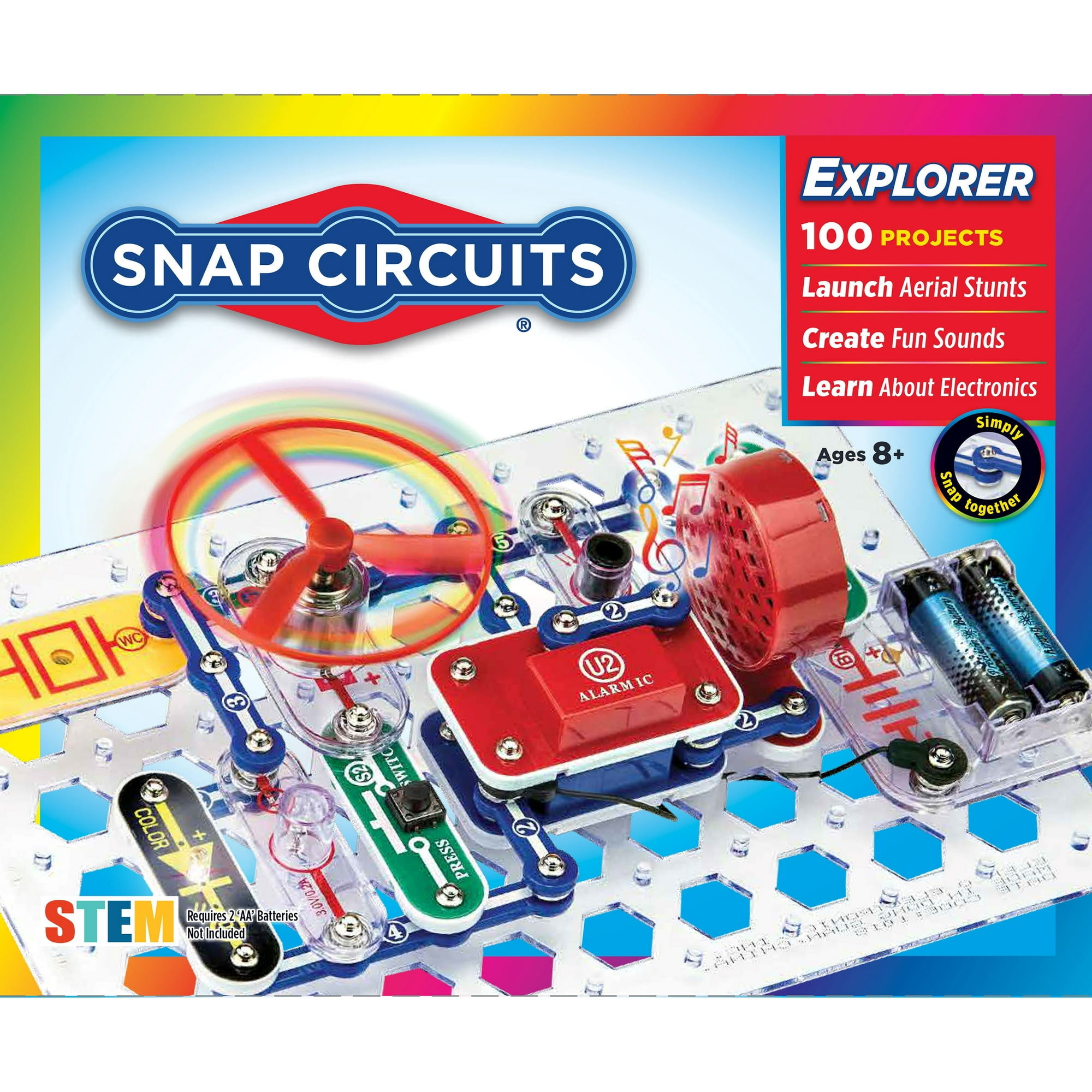
6. Snap Circuits Jr. SC-100 — Best Science & Electronics Toy
Best for: Kids age 8+ who are curious about electricity, circuits and how electronic components work together.
Snap Circuits Jr. SC-100 turns basic circuit building into a modular activity system. Instead of soldering wires, children snap components onto a plastic grid and follow illustrated layouts to build working electrical projects.
The kit contains more than 30 parts and supports more than 100 projects when the included and online instructions are combined. Examples include lights, sound effects, switches and motor-based activities.
The immediate cause-and-effect feedback is the strongest part of the experience. If a circuit is assembled correctly, something happens. If it does not work, the child can compare the build with the diagram and look for the problem.
Parents can make the toy more educational by discussing why each component is present instead of treating every project as a copying exercise. Questions such as “What changes if we remove this switch?” or “Why does the motor stop?” encourage experimentation beyond the manual.
The manufacturer recommends SC-100 for ages 8 and up. It requires two AA batteries, sold separately, and the instructions warn against connecting the kit to household electrical outlets.
Pros
✅ More than 100 guided electronics projects
✅ Snap-together components require no soldering
✅ Immediate feedback from working lights, sounds and motors
✅ Expandable into larger Snap Circuits kits later
Cons
❌ Requires two AA batteries that are not included
❌ Following diagrams alone does not guarantee deeper understanding
❌ Small components make the age guidance important
Who should skip it: Younger children who are not ready to follow multi-step diagrams will get more value from simpler building or math manipulatives.
Alternative: Snap Circuits SC-300 adds more parts and hundreds of project possibilities for children who outgrow the Jr. set.

Snap Circuits Jr. SC-100 Kit — 100+ Projects lets kids explore electronics with hands-on, screen-free fun that builds curiosity and STEM confidence. It keeps kids busy all year and pairs seamlessly with other Snap Circuits kits for even more creative projects.
Order yours today and spark a lifetime of learning — Add to Cart!
Educational Toys We Considered but Didn’t Pick
Sphero BOLT is a more advanced programmable robot with substantial coding potential, but its higher price and app dependence make it less suitable as the main coding recommendation in a broad family guide.
Wonder Workshop Dash is another capable robotics platform, but Botley provides a simpler and completely screen-free starting point for younger children.
Turing Tumble is an excellent mechanical logic system for older kids, but its problem-solving role overlaps with Gravity Maze and Snap Circuits in a six-product lineup.
MAGNA-TILES Classic 100-Piece Set offers far more building freedom than the 32-piece starter, but the much higher initial price makes the smaller set easier to recommend to families buying magnetic tiles for the first time.
We also excluded generic magnetic-stick sets and other unverified marketplace magnet toys. The CPSC issued multiple warnings in 2026 involving magnetic toy sets with small high-powered magnets that could become accessible and create a serious ingestion hazard.
How to Choose the Right Educational Toy
Start With Age and Readiness
The age range on a toy is not just a difficulty recommendation. It can also reflect choking hazards, small parts, magnets, marbles, batteries and the level of coordination needed to use the product safely.
A child who is advanced academically may still not be ready for a toy with small pieces if they continue to put objects in their mouth. Safety awareness, dexterity and individual development matter alongside the number printed on the package.
Choose the Skill, Not the “Educational” Label
The word “educational” is broad enough to mean almost anything. Start with what kind of play you actually want.
Choose MAGNA-TILES for open-ended spatial building. Choose Numberblocks for early number relationships. Choose Mr. Pencil for guided writing practice. Choose Botley for sequencing. Choose Gravity Maze for logic puzzles. Choose Snap Circuits for basic electronics.
Other kinds of learning matter too. Creative materials such as drawing supplies, clay and arts and crafts toys can build fine-motor control and imagination without needing a STEM label.
Open-Ended vs Guided Play
Open-ended toys do not have one correct final result. Magnetic tiles, blocks, art materials and pretend-play toys allow children to decide what happens next.
Guided toys provide a challenge, instruction or specific outcome. Gravity Maze asks the child to solve a defined problem, Mr. Pencil teaches particular writing patterns, and Snap Circuits provides circuit diagrams.
Neither type is automatically better. A balanced toy shelf can include both.
What Does “Montessori Toy” Actually Mean?
“Montessori” is widely used as a marketing term, especially for wooden toys, but wood does not automatically make a product Montessori.
Montessori-inspired play generally emphasizes hands-on activity, independence, concentration, real-world skills and materials that let children manipulate objects directly. A good toy can support those ideas without carrying the word Montessori anywhere on its packaging.
Screen-Free vs Electronic Learning
Screen-free does not automatically mean educational, and electronic does not automatically mean bad. The important question is what the child is doing.
Botley uses electronics but still requires the child to plan and physically test a sequence. Mr. Pencil is electronic but asks the child to trace and respond. MAGNA-TILES and Gravity Maze operate without electronics at all.
For younger children especially, electronic toys should complement rather than replace conversation, pretend play, books, drawing and interaction with other people.
Look for Replayability
A toy becomes a better value when the child can approach it differently over time.
MAGNA-TILES has no fixed endpoint. Gravity Maze provides 60 challenges. Snap Circuits includes more than 100 projects. Botley can be given new routes and obstacle layouts long after the included examples have been completed.
Before buying, ask whether the toy still has something meaningful to do after the first weekend.
Check Small Parts, Magnets and Batteries
Children under 3 should not have access to toys containing small parts that present a choking hazard. Products containing marbles or many small components require particular attention to manufacturer age guidance.
Magnets require additional caution. Swallowing more than one strong magnet can cause them to attract through intestinal tissue and result in life-threatening injuries. If a magnetic toy breaks and a magnet becomes loose or accessible, stop using it.
Safety check: Before giving a toy to a child, check the age label, inspect the product for damage, confirm that battery compartments close securely and review current recall information when appropriate.
What About Developmental Toys for Toddlers?
The ranked products in this article begin at age 3. That is deliberate. Infants and younger toddlers need toys matched to very different developmental and safety requirements.
For younger children, simple manipulatives, pretend-play objects, art materials, stacking toys and gross-motor play can be more appropriate than products with small parts or complex electronic features.
Best Educational Toy by Age
| Age Range | Good Starting Picks | Why |
|---|---|---|
| 3–4 | MAGNA-TILES, Numberblocks, Mr. Pencil | Building, early numbers and preschool literacy |
| 5–7 | Botley, MAGNA-TILES, Numberblocks expansions | Sequencing, construction and developing math concepts |
| 8+ | Gravity Maze, Snap Circuits Jr. | More complex logic and electronics challenges |
Age is only a starting point. Interest, safety awareness and individual readiness should determine whether a particular toy is a good fit.
FAQ About Educational Toys for Kids
What makes a toy genuinely educational?
A useful educational toy encourages the child to participate, experiment, solve problems, create or practice an age-appropriate skill. The word “educational” on the packaging alone does not guarantee meaningful learning value.
What are the best educational toys for preschoolers?
For many preschoolers, open-ended building toys, simple math manipulatives and guided literacy toys are useful starting points. MAGNA-TILES, Numberblocks MathLink Cubes and Mr. Pencil each target a different kind of preschool learning.
Are STEM toys better than traditional toys?
No. STEM toys can be excellent for building, coding, science and logic, but traditional blocks, pretend-play toys, art materials and games can support creativity, language, motor skills and social interaction. A varied mix is usually more useful than one category alone.
What is a Montessori toy?
The term is often used loosely in retail. Montessori-inspired materials generally encourage hands-on, purposeful and independent activity, but a toy is not automatically Montessori simply because it is wooden or minimalist.
Are magnetic building toys safe for kids?
Use only age-appropriate products with magnets that remain securely enclosed, inspect them regularly for damage and stop using any toy if a magnet becomes loose or exposed. Swallowed high-powered magnets can cause severe internal injuries.
What educational toys are good for an 8-year-old?
Logic puzzles, electronics kits, more advanced construction sets and coding products can work well at this age. Gravity Maze and Snap Circuits Jr. are good examples for children interested in structured problem solving and science.
Are electronic learning toys better than screen-free toys?
Not automatically. What matters is how actively the child participates. Electronic toys can be useful when they require problem solving or physical interaction, while simple screen-free toys can support open-ended creativity and social play.
How many educational toys does a child need?
There is no ideal number. A smaller collection of toys that support different kinds of play and get reused regularly can be more valuable than a large collection that receives little attention.
Final Verdict
MAGNA-TILES Classic 32-Piece Set is the best educational toy for most families because it combines broad age appeal, open-ended creativity and spatial problem solving without locking children into one activity. It is the strongest starting point when you want a toy that can evolve with the way a child plays.
For a more specific learning goal, choose accordingly. Numberblocks MathLink Cubes 1–10 makes early math physical and visible, LeapFrog Mr. Pencil focuses on preschool writing and literacy, and Botley 2.0 introduces coding logic without requiring a screen. For older children, Gravity Maze provides progressively harder logic challenges while Snap Circuits Jr. offers a practical introduction to electronics.
Bottom line: Choose a toy that matches the child’s age, interests and current abilities. The strongest educational toys invite children to do something—build, test, write, calculate, plan or experiment—rather than simply watch.
Sources
- American Academy of Pediatrics / HealthyChildren — Toy Buying Tips for Babies & Young Children
- U.S. Consumer Product Safety Commission — Toy Safety and Magnet Safety Guidance
- WIRED — Best STEM Toys for Kids
- MAGNA-TILES — Classic 32-Piece Set specifications
- Learning Resources — Botley 2.0 Coding Robot Activity Set specifications
Product Groups: MAGNA-TILES Classic 32-Piece Set, hand2mind MathLink Cubes Numberblocks 1-10 Activity Set, LeapFrog Mr. Pencil’s Scribble Write & Read, Learning Resources Botley 2.0 Coding Robot Activity Set, ThinkFun Gravity Maze, Snap Circuits Jr. SC-100