Best Trail Running Shoes for Men in 2026
The best trail running shoes for men combine dependable grip, secure footing, and enough cushioning for the terrain you run most often. Our best overall pick is the Saucony Peregrine 16. Its Vibram Megagrip outsole, protective upper, and balanced cushioning make it a versatile choice for rocky paths, dirt trails, and uneven ground.
However, no single shoe suits every runner. The HOKA Speedgoat 7 offers more cushioning for long distances. The Brooks Cascadia 20 emphasizes stability and protection, while the Salomon Speedcross 6 targets muddy terrain. Nike’s ACG Pegasus Trail works well for routes combining roads and trails. The Altra Lone Peak 9+ suits runners who prefer a roomy, zero-drop design.
We’ve narrowed the choices to six men’s trail running shoes, each with a clear purpose. Below, you’ll find their key specifications, strengths, limitations, and buying considerations. We also explain how to choose traction, cushioning, and fit without paying for features you don’t need.
Start with your usual terrain. Then compare the available sizes and retailer offers before making your decision.
Quick Answer: Best Men’s Trail Running Shoes
Best Overall: Saucony Peregrine 16 — versatile Vibram traction, protective construction, and balanced cushioning for varied trails.
Best for Long Runs: HOKA Speedgoat 7 — generous cushioning and technical-trail grip for longer outings.
Best for Beginners: Brooks Cascadia 20 — an adaptable, protective design with a stable platform and balanced cushioning.
Best for Road-to-Trail Running: Nike ACG Pegasus Trail — responsive ReactX cushioning and a versatile outsole for mixed routes.
Best for Mud: Salomon Speedcross 6 — deep lugs and a secure upper designed for soft, loose ground.
How We Selected the Best Trail Running Shoes
We selected these shoes by matching their design to real trail-running needs. Our criteria include traction, cushioning, stability, foot protection, fit, versatility, and current product availability.
We checked manufacturer specifications for outsole materials, heel-to-toe drop, construction, and intended terrain. We also considered independent coverage from established running publications, including iRunFar and OutdoorGearLab, to understand practical strengths and weaknesses.
We favored current models with clear buying roles rather than simply choosing the most expensive or most popular options. Each shoe offers something different, from aggressive mud traction to a wider toe-box design.
Testing transparency: Discompare did not conduct original hands-on or laboratory tests for this guide. Our recommendations are based on documented specifications and independent research. We do not present manufacturers’ performance claims as our own measurements.
Prices and inventory can change. A shoe’s position in this article reflects its intended use and overall suitability, not the lowest retailer offer.
Best Trail Running Shoes Compared
This comparison highlights the main differences between our six selections. Regular prices are U.S. reference prices, not guaranteed current deals.
| Trail Running Shoe | Best For | Heel-to-Toe Drop | Regular Price | Main Trade-Off |
|---|---|---|---|---|
| Saucony Peregrine 16 | Overall versatility | 4 mm | $150 | Less plush than maximum-cushion shoes |
| HOKA Speedgoat 7 | Long runs and cushioning | 5 mm | $165 | Higher stack reduces ground feel |
| Brooks Cascadia 20 | Beginners and stability | 6 mm | $160 | Heavier than some alternatives |
| Nike ACG Pegasus Trail | Road and trail combinations | 8 mm | $155 | Not a deep-mud specialist |
| Salomon Speedcross 6 | Mud and soft ground | 10 mm | $150 | Aggressive lugs on pavement |
| Altra Lone Peak 9+ | Zero-drop, foot-shaped fit | 0 mm | Check live offers | Zero-drop adjustment may be needed |
Shopping tip: Compare the same men’s model, width, size, and condition. A discount on an older shoe or an unusual color does not guarantee the same price for your preferred version.
Compare Current Trail Running Shoe Prices
Use the live product overview to compare available offers. Choose the shoe that matches your terrain before using price to narrow the retailer options. Always confirm the exact model and size at checkout.


The 6 Best Trail Running Shoes for Men
1. Saucony Peregrine 16 — Best Overall
Best For: Runners who want one reliable shoe for rocky paths, forest trails, dirt, and mixed technical terrain.
The Saucony Peregrine 16 is our best overall choice because it balances traction, protection, and agility without focusing too heavily on one type of trail.
Its biggest upgrade is the full-coverage Vibram Megagrip outsole. The rubber is paired with 4 mm lugs to provide traction across loose dirt, rocky sections, and wet ground. That makes it a useful option when your usual running route changes from smooth trail to more demanding surfaces.
Saucony also uses PWRRUN foam beneath the foot. The Peregrine 16 has a 4 mm drop, with a stated 32 mm heel and 28 mm forefoot stack. The cushioning provides protection while keeping the shoe relatively close to the ground compared with more heavily cushioned alternatives.
The protective mesh upper, reinforced toe area, and gaiter compatibility add practical value. These features matter when loose stones, branches, and trail debris become part of a run.
The Peregrine 16 is not the softest option here. Instead, its advantage is flexibility across different trail conditions. Independent coverage also highlights its improved outsole grip and additional underfoot cushioning compared with the earlier generation.
Its regular $150 price places it below some of the more cushioned options in this guide. Still, fit and terrain should determine the choice before price.
Pros
✅ Full-coverage Vibram Megagrip outsole
✅ Versatile 4 mm lugs
✅ Protective upper and toe reinforcement
✅ Balanced cushioning for varied terrain
Cons
❌ Less cushioned than Speedgoat 7
❌ Not specialized for deep mud
❌ Low drop may feel unfamiliar to some runners
Who should skip it: Runners who prioritize maximum cushioning for very long outings or need especially deep lugs for consistently muddy trails.
Alternative: Brooks Cascadia 20 provides a more stability-focused approach with a wider support platform and a 6 mm drop.
2. HOKA Speedgoat 7 — Best for Long Runs and Cushioning
Best For: Trail runners who spend long periods on their feet and want substantial cushioning without giving up technical-trail traction.
The HOKA Speedgoat 7 is our preferred choice for longer trail runs because it combines a protective, cushioned platform with an outsole designed for challenging terrain.
HOKA updated this generation with a supercritical EVA midsole. The foam is intended to deliver a more responsive ride than the previous Speedgoat. A 5 mm heel-to-toe drop and rocker-shaped geometry support smooth transitions during repeated strides.
The Vibram Megagrip outsole features multi-directional lugs that help the shoe engage with rocky, loose, and uneven ground. The design also aims to shed mud rather than allowing it to build up between the lugs.
Independent Runner’s World testing found the seventh-generation shoe more secure through the forefoot than its predecessor. Testers also noted a livelier ride and improved protection during longer efforts.
That combination makes the Speedgoat 7 especially interesting for trail runners covering greater distances. Extra cushioning can feel welcome as the hours add up, while the outsole provides traction for changing terrain.
However, more cushioning is not universally better. Some runners prefer a lower platform that delivers more immediate feedback from the ground.
Fit deserves attention as well. The Speedgoat’s upper can feel relatively snug for certain foot shapes. Check available width options instead of assuming your normal size will provide enough forefoot space.
Pros
✅ Substantial cushioning for longer distances
✅ Vibram Megagrip traction
✅ Responsive supercritical EVA midsole
✅ Protective design for technical terrain
Cons
❌ Less direct ground feel
❌ Fit may feel snug in the forefoot
❌ Higher regular price than Peregrine 16
Who should skip it: Runners who prefer a low-profile trail shoe or find heavily cushioned platforms uncomfortable on uneven ground.
Alternative: Saucony Peregrine 16 offers a more ground-connected option with a lower stack and versatile grip.
For longer outings, dependable navigation can matter as much as footwear. Our guide to the best running watches covers GPS tracking, mapping, and battery-life considerations for runners.
3. Brooks Cascadia 20 — Best for Beginners and Stability
Best For: Newer trail runners, hikers who also run, and anyone who values an adaptable platform on uneven terrain.
The Brooks Cascadia 20 is an approachable trail-running shoe because its design emphasizes stability, protection, and balanced cushioning rather than extreme speed or softness.
Brooks uses TrailAdapt technology to combine a broad support platform with flexibility in important areas. The result is a shoe designed to accommodate changing trail surfaces while maintaining secure footing.
The Cascadia 20 also introduces Vibram Megagrip traction with 4 mm lugs and Traction Lug technology. This helps distinguish it from older Cascadia versions and strengthens its case for wet and rocky terrain.
Underfoot, Brooks adds nitrogen-infused DNA FLASH v2 cushioning. The shoe has a 6 mm drop and a stated men’s weight of approximately 10.8 ounces, or 306 grams.
Its toe cap, mudguard, and reinforced mesh upper provide useful protection against trail debris. These features are particularly relevant for runners who frequently encounter roots, stones, and rough ground.
The Cascadia 20 is also available in men’s regular and wide configurations, although specific sizes can sell out.
The trade-off is weight. This is not the lightest shoe in our selection, and its protective construction may feel excessive on consistently smooth paths.
Beginners should also understand that stability comes from more than footwear. Running at an appropriate pace and choosing manageable trails matter when building confidence.
Pros
✅ Broad, adaptable support platform
✅ Vibram Megagrip with 4 mm lugs
✅ Toe protection and reinforced upper
✅ Regular and wide options
Cons
❌ Heavier than several competitors
❌ Protective build can feel substantial
❌ Fit changes may not suit previous Cascadia owners
Who should skip it: Runners who want the lightest possible shoe for fast sessions or spend almost all their time on paved surfaces.
Alternative: HOKA Speedgoat 7 offers more cushioning for longer trail efforts, while Peregrine 16 delivers a lighter-feeling, versatile approach.
If you’re just starting an outdoor fitness routine, our spring fitness trends guide covers practical ways to build regular activity without changing your entire training schedule at once.

4. Nike ACG Pegasus Trail — Best for Road-to-Trail Running
Best For: Runners who begin on pavement, continue onto gravel or dirt trails, and return home on the road.
The Nike ACG Pegasus Trail is our best crossover option because it brings familiar road-running comfort to routes that include moderate off-road sections.
Nike uses ReactX foam in the midsole, with an updated construction intended to provide responsive cushioning. The shoe has an 8 mm heel-to-toe drop and weighs approximately 305 grams in a men’s US size 10.
The outsole uses Nike’s All Terrain Compound rubber. Nike designed this version to improve traction on wet trails while retaining the versatility needed for mixed-surface running.
That matters when your route is not exclusively off-road. A shoe built only for deep mud can feel awkward on pavement. The Pegasus Trail aims for a more useful compromise when both surfaces are part of the same run.
Nike also redesigned the toe box with additional forefoot room. This may help runners who found earlier versions restrictive, although fit remains personal.
The upper uses engineered mesh to balance breathability and durability. However, the Pegasus Trail is still better understood as an all-around crossover design than an aggressive mountain-running specialist.
If most of your training happens on pavement, a dedicated road shoe may be more appropriate. Our guide to adidas running shoes covers road-focused alternatives for daily training and faster workouts.
Pros
✅ Comfortable road-to-trail design
✅ Responsive ReactX cushioning
✅ Improved forefoot room
✅ Versatile traction for mixed routes
Cons
❌ Not specialized for deep mud
❌ Less terrain-focused than aggressive trail shoes
❌ Frequent road runners may prefer a road-specific model
Who should skip it: Runners tackling prolonged soft mud, very loose slopes, or consistently demanding technical terrain.
Alternative: Saucony Peregrine 16 is the stronger choice when rough trails make up most of your route.
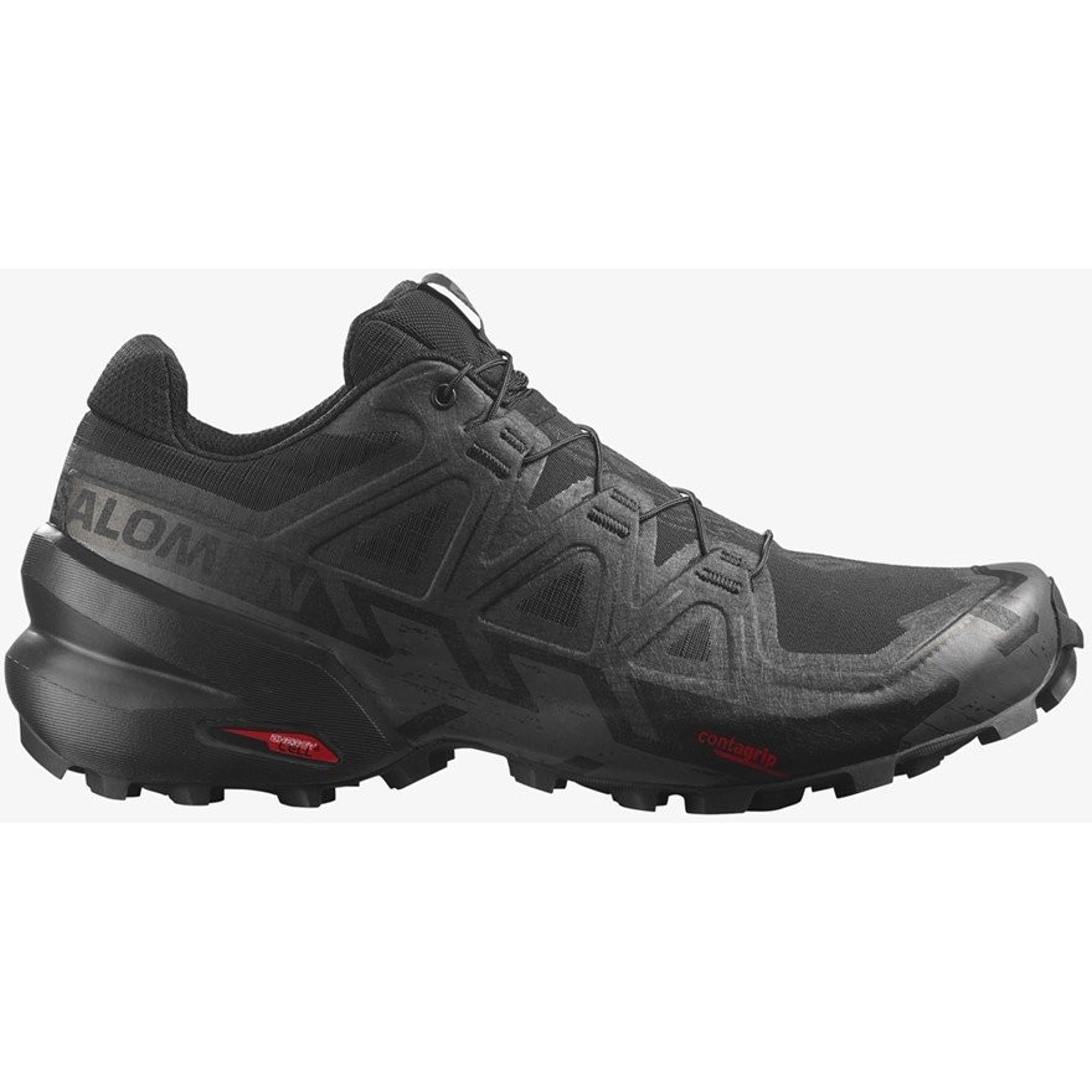
5. Salomon Speedcross 6 — Best for Mud and Soft Ground
Best For: Runners who frequently encounter muddy paths, soft soil, loose ground, and wet off-road conditions.
The Salomon Speedcross 6 earns its place because it focuses on traction where ordinary trail shoes can struggle: soft and muddy terrain.
Its Mud Contagrip outsole uses deep, sharply shaped lugs to engage with loose surfaces. Salomon lists a 5 mm lug depth, making this the most mud-focused design in our six-shoe selection.
The outsole pattern is also intended to release mud more efficiently. This matters because packed dirt between lugs can reduce the grip that aggressive tread is designed to provide.
Salomon combines the outsole with EnergyCell+ cushioning and a 10 mm heel-to-toe drop. The upper uses SensiFit construction for a secure hold, while the Quicklace system provides one-pull tightening.
That secure fit can be especially helpful on uneven trails where repeated changes in direction place demands on the shoe’s upper.
However, the Speedcross 6 is not the ideal choice for every trail. Deep lugs are less useful when your runs regularly include long paved sections. They can also feel less natural on hard, smooth ground.
The fit is another important consideration. Salomon’s secure construction may not suit runners who prefer a generous toe box or especially relaxed forefoot fit.
At a $150 regular U.S. price, the Speedcross 6 competes directly with several versatile trail shoes. Choose it for its specialist traction rather than assuming it will outperform those alternatives everywhere.
Pros
✅ Deep 5 mm lugs for soft terrain
✅ Mud-shedding outsole design
✅ Secure SensiFit construction
✅ Convenient Quicklace system
Cons
❌ Aggressive tread is less comfortable on pavement
❌ Secure fit may feel restrictive
❌ Less versatile for mixed road-and-trail running
Who should skip it: Runners whose routes are mostly dry, compact dirt, gravel, or pavement.
Alternative: Saucony Peregrine 16 provides a more versatile outsole for runners who encounter mud occasionally rather than on most outings.
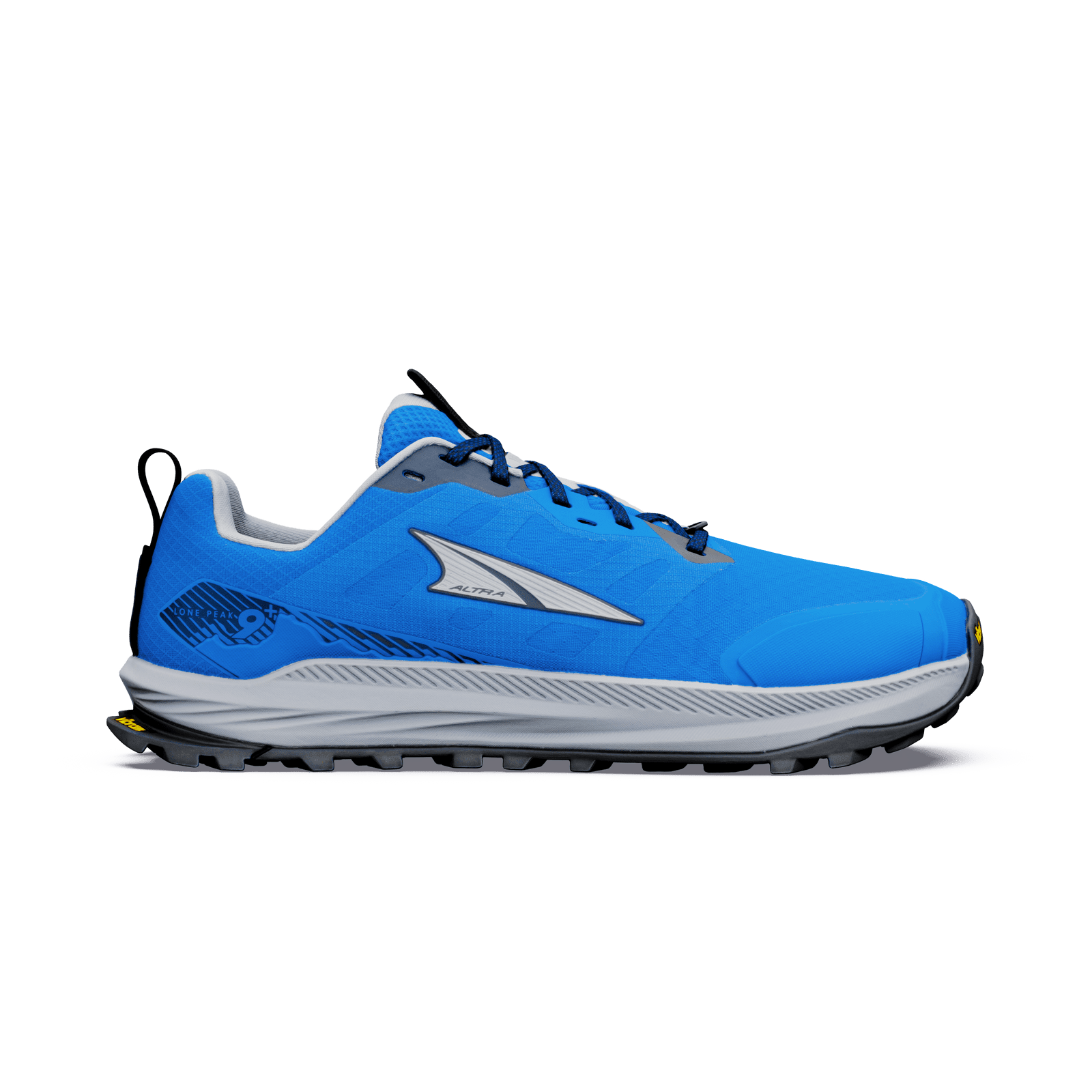
6. Altra Lone Peak 9+ — Best Zero-Drop Trail Running Shoe
Best For: Runners who already prefer zero-drop footwear and want a foot-shaped toe box for trails, hiking, and mixed outdoor use.
The Altra Lone Peak 9+ offers the most distinctive fit and geometry in this roundup. It combines Altra’s zero-drop platform with its Original FootShape design and a Vibram Megagrip outsole.
Zero drop means the heel and forefoot sit at the same stated height above the ground. The Lone Peak 9+ has a 25 mm stack at both ends, giving it a 0 mm heel-to-toe difference.
Altra’s Original FootShape provides substantial toe-box space. This can appeal to runners who dislike tightly tapered shoes, especially during longer outings when their feet may swell.
However, a roomy toe box is not the same as a universally correct fit. The midfoot and heel still need to hold securely, particularly when descending steep trails.
The Lone Peak 9+ also upgrades traction with Vibram Megagrip. This distinguishes it from the standard Lone Peak 9, which uses a different outsole design.
The midsole uses Altra EGO foam. Combined with the moderate stack height, it creates a more ground-connected design than heavily cushioned trail shoes such as the Speedgoat 7.
The biggest consideration is adaptation. Moving suddenly from conventional running shoes with a higher drop to zero-drop footwear changes loading patterns through the foot and lower leg. Some runners may need to introduce this geometry gradually.
Zero-drop footwear is not automatically better for running mechanics or injury prevention. The right choice depends on your experience, comfort, and individual response.
Pros
✅ Roomy Original FootShape toe box
✅ Vibram Megagrip outsole
✅ Zero-drop geometry for runners who prefer it
✅ Versatile for running and hiking
Cons
❌ Zero drop may require a transition period
❌ Less cushioned than maximum-stack alternatives
❌ Roomy forefoot may not suit narrow-footed runners
Who should skip it: Runners who have never used zero-drop footwear and want to change shoes immediately before a long race or demanding trail event.
Alternative: Brooks Cascadia 20 offers a more conventional 6 mm drop, protective construction, and available width choices.
Trail Running Shoes We Considered but Didn’t Select
Several other models deserve attention, but they either overlap with our choices or serve a narrower purpose.
HOKA Speedgoat 6: A capable previous-generation shoe. We chose Speedgoat 7 because its updated midsole and upper make it the more relevant current reference. A discounted Speedgoat 6 can still be worth comparing if the fit works for you.
Brooks Cascadia 19: Still potentially useful as a clearance purchase. However, Cascadia 20 brings a notable Vibram outsole upgrade and is the better current-model selection.
Nike Pegasus Trail 5: An older crossover option. Nike’s newer ACG Pegasus Trail offers updated cushioning and traction for mixed surfaces.
HOKA Torrent 4: A more affordable, lower-profile trail option worth considering when suitable stock is available. We favored shoes with clearer current-model coverage and more distinct roles.
HOKA Tecton X 4: A premium specialist designed around faster off-road performance. Its considerably higher price makes it less suitable for a general-purpose shortlist.
La Sportiva Prodigio Pro: A specialized performance option for demanding trail running. It deserves attention from experienced runners but is not necessary for most recreational buyers.
How to Choose Trail Running Shoes
The best trail running shoes for men should match the surfaces you actually run on. Start with traction, then evaluate cushioning, stability, fit, and protection.
Match the Outsole to Your Terrain
Traction is one of the biggest differences between road and trail footwear.
For firm dirt and gravel, moderate lugs usually provide enough grip without feeling unnecessarily aggressive. Shoes such as the Nike ACG Pegasus Trail are designed for mixed routes where comfort on firmer surfaces also matters.
Rocky and technical trails require more attention to outsole rubber, foot security, and protection. Saucony Peregrine 16 and Brooks Cascadia 20 are stronger fits for this type of terrain.
For frequent mud, deeper and more widely spaced lugs become useful. Salomon Speedcross 6 is the specialist here.
Remember that traction depends on more than lug depth. Rubber compound, tread arrangement, rock conditions, and surface moisture all affect grip. No outsole guarantees protection against slipping.
Choose Cushioning and Ground Feel
Cushioning changes how a shoe feels during long runs and on uneven ground.
A more cushioned shoe, such as HOKA Speedgoat 7, places more foam between your foot and the trail. That may improve comfort during long outings, especially for runners who prefer a softer ride.
However, a high stack can reduce immediate feedback from rocks and uneven surfaces.
Lower-profile alternatives offer a more direct sensation. This can help runners who like to feel the ground beneath them, but it may not provide the plushness they want during long efforts.
Choose the level of cushioning that feels comfortable and stable for your routes rather than assuming the thickest midsole is always best.
Understand Heel-to-Toe Drop
Heel-to-toe drop is the height difference between the shoe’s heel and forefoot.
For example, the Saucony Peregrine 16 has a 4 mm drop, while the Salomon Speedcross 6 has a 10 mm drop. Altra Lone Peak 9+ uses a zero-drop platform.
There is no universally ideal drop for every runner. Different geometries change how footwear feels and may influence loading through the ankle, foot, and lower leg.
If you are comfortable in conventional running shoes, avoid changing to a dramatically different drop immediately before a major event. Allow time to assess the new design during shorter runs.
Get the Right Fit and Toe-Box Space
A trail shoe should secure your heel and midfoot without crushing your toes.
Descending makes fit particularly important. Your foot should not slide forward enough to press your toes into the front of the shoe.
When checking fit, consider:
- Enough toe room for natural movement and moderate swelling.
- A secure heel that does not lift excessively.
- Midfoot support that prevents unnecessary sliding.
- No painful pressure around the little toe or forefoot.
- Comfort with the socks you actually use for running.
If you need more room, check dedicated wide versions rather than simply increasing shoe length. A larger size can create heel movement without solving the underlying width problem.
Waterproof vs. Breathable Trail Shoes
Waterproof trail running shoes make sense when you frequently run through cold, wet conditions and want added protection from moisture entering through the upper.
However, waterproof membranes can reduce ventilation. They also cannot prevent water from entering over the collar when you cross deeper streams or puddles.
In warm weather, breathable mesh shoes may be more comfortable and can allow water to escape more readily after becoming wet.
None of the six standard versions featured here should be treated as waterproof simply because they provide wet-surface traction.
If you need a waterproof version, check its exact product name and specifications. For example, Brooks offers a separate Cascadia 20 GTX model.
Check Protection, Durability, and Value
Trail shoes encounter more abrasive conditions than many road shoes.
Look for toe reinforcement, durable upper materials, and outsole rubber suited to the surfaces you use. However, more protection can also add weight.
Price matters, but it should come after fit and intended use. A cheaper mud-specific shoe is not a bargain if your route is mostly pavement. Likewise, maximum cushioning is unnecessary if you prefer a firmer, more flexible ride.
Runners shopping across several categories can also compare our men’s running shoes sale guide. It focuses on road-running models and explains when previous-generation discounts may provide worthwhile value.
Best Trail Running Shoes by Running Scenario
Use this summary to match your most common route with an appropriate shoe.
| Running Scenario | Recommended Shoe | Main Reason |
|---|---|---|
| Everyday mixed trails | Saucony Peregrine 16 | Versatile traction and balanced design |
| Long trail runs | HOKA Speedgoat 7 | Generous cushioning and protective grip |
| Beginning trail running | Brooks Cascadia 20 | Stable platform and adaptable protection |
| Roads mixed with gravel | Nike ACG Pegasus Trail | Comfortable crossover construction |
| Soft mud and loose ground | Salomon Speedcross 6 | Deep, mud-focused lugs |
| Zero-drop preference | Altra Lone Peak 9+ | Foot-shaped fit and level platform |
For longer trail adventures, also plan hydration around distance, temperature, and access to water. Our reusable water bottles guide compares lightweight options with insulated designs, while our Hydro Flask guide covers additional outdoor hydration choices.
Runners who want to compare route tracking and training information can also review our Garmin Forerunner 265 vs. COROS PACE 3 comparison for a closer look at GPS watches and their trade-offs.
Frequently Asked Questions
What are the best trail running shoes for men overall?
Saucony Peregrine 16 is our best overall choice because it balances Vibram traction, protective construction, and cushioning for varied trail surfaces. HOKA Speedgoat 7 is better for runners who prioritize cushioning on longer routes, while Salomon Speedcross 6 specializes in mud.
Are trail running shoes better than regular running shoes?
Trail running shoes are usually more suitable for loose, rocky, and uneven ground because they use specialized outsoles and often include additional protection. Road-running shoes are generally better suited to sustained pavement running. For mixed routes, a crossover shoe such as Nike ACG Pegasus Trail can offer a useful compromise.
Which trail running shoes are best for rocky terrain?
Saucony Peregrine 16 and Brooks Cascadia 20 are strong choices for rocky trails. Both use Vibram Megagrip outsoles and protective construction. HOKA Speedgoat 7 is another option when you want more cushioning for demanding terrain.
Do I need waterproof trail running shoes?
Not necessarily. Waterproof footwear can be useful in cold, wet conditions, but breathable non-waterproof shoes may be more comfortable in warm weather. Waterproof membranes also cannot stop water entering over the shoe collar. Choose based on your climate, routes, and comfort preferences.
Are zero-drop trail running shoes good for beginners?
They can work for some beginners, but zero-drop shoes are not automatically the best starting point. Runners accustomed to higher-drop footwear may need time to adapt. Altra Lone Peak 9+ makes the most sense when its geometry and roomy fit already match your preferences.
How should men’s trail running shoes fit?
They should hold your heel and midfoot securely while leaving enough room for your toes to move. Your toes should not hit the front during descents. Try shoes with your normal running socks, check width as well as length, and avoid choosing an oversized pair simply to gain toe-box space.
Final Verdict: Which Trail Running Shoes Should You Buy?
Saucony Peregrine 16 is our best overall trail running shoe for men. Its versatile outsole, protective design, and balanced cushioning suit runners who regularly move between rocky paths, dirt trails, and uneven terrain.
Choose HOKA Speedgoat 7 if cushioning for longer runs is your priority. Choose Brooks Cascadia 20 if you want adaptable stability and protection while developing confidence off-road.
The Nike ACG Pegasus Trail makes more sense when pavement and moderate trails share the same route. For frequent soft mud, Salomon Speedcross 6 provides specialized traction. Meanwhile, Altra Lone Peak 9+ serves runners who prefer a zero-drop platform and generous toe-box space.
Don’t buy a shoe based on its ranking alone. Match it to your running terrain, check the fit, and compare live retailer offers for your exact size and width.
Quick decision: Peregrine 16 for overall versatility. Speedgoat 7 for long-distance cushioning. Cascadia 20 for stability. ACG Pegasus Trail for mixed routes. Speedcross 6 for mud. Lone Peak 9+ for zero-drop preferences.
Sources
- iRunFar — Best Trail Running Shoes of 2026
- OutdoorGearLab — Best Trail Running Shoes of 2026
- Saucony — Peregrine 16 Product Specifications
- Brooks Running — Cascadia 20 Product Information
- Altra Running — Lone Peak 9+ Product Specifications
How we research: Discompare evaluates manufacturer specifications, current model information, retailer listings, and relevant independent running-shoe reviews. We do not claim original hands-on testing unless explicitly stated. Prices and availability can change by retailer, color, size, and width. Discompare may earn commissions from qualifying purchases through retailer or price-comparison links.
Product Groups: Saucony Peregrine 16 Men’s Trail Running Shoes, HOKA Speedgoat 7 Men’s Trail Running Shoes, Brooks Cascadia 20 Men’s Trail Running Shoes, Nike ACG Pegasus Trail Men’s Trail Running Shoes, Salomon Speedcross 6 Men’s Trail Running Shoes, Altra Lone Peak 9+ Men’s Trail Running Shoes