The Garmin Venu 4 is the better wearable overall, but the Fitbit Air is the better value for anyone who mainly wants health, sleep, and activity tracking.
These products are not really direct equivalents. Fitbit Air is a tiny, screenless tracker that starts at $99.99 and weighs only 12 grams with its standard band. Garmin Venu 4 starts at $549.99 and is a full fitness smartwatch with an AMOLED display, multi-band GPS, training metrics, music, payments, calls through a paired phone, and much more.
That makes the buying decision surprisingly simple. Choose Fitbit Air if you want passive wellness tracking with minimal distractions. Choose Garmin Venu 4 if running, workouts, GPS, training guidance, and smartwatch features justify spending substantially more.
Quick Answer: Fitbit Air vs Garmin Venu 4
Overall winner: Garmin Venu 4 — built-in multi-band GPS, AMOLED display, deeper training tools, music, Garmin Pay, ECG support where available, calls through a paired phone, and much richer on-watch functionality.
Best value: Fitbit Air — core activity, heart-rate, sleep, recovery, SpO2, and wellness tracking for a fraction of the Garmin’s price.
Best for sleep comfort: Fitbit Air — its 12-gram screenless design is much less noticeable overnight.
Best for running and outdoor workouts: Garmin Venu 4 — built-in multi-band GPS, on-watch pace and distance, structured workouts, recovery tools, and training metrics.
Best minimalist tracker: Fitbit Air — ideal if you deliberately do not want another screen, notification center, or app platform on your wrist.
Fitbit Air vs Garmin Venu 4 at a Glance
| Feature | Fitbit Air | Garmin Venu 4 | Winner |
|---|---|---|---|
| Starting price | $99.99 | $549.99 | Fitbit |
| Display | None | AMOLED touchscreen | Garmin |
| Weight with standard band | 12 g | 46 g / 56 g | Fitbit |
| Battery claim | Up to 7 days | Up to 10 days / 12 days | Garmin |
| Built-in GPS | No — connected phone GPS | Yes — multi-band GNSS | Garmin |
| Sleep tracking | Sleep Score, stages, HRV and wellness trends | Sleep Score, naps, HRV, Body Battery and recovery context | Depends on priority |
| ECG | No ECG app | Yes, where supported | Garmin |
| Training Readiness | Readiness / wellness-focused recovery guidance | Training Readiness + Training Status | Garmin |
| Music storage | No | Yes | Garmin |
| Payments | No | Garmin Pay | Garmin |
| Phone calls | No | Yes, with paired compatible phone | Garmin |
| Water resistance | 50 m | 5 ATM | Tie for normal swim use |
| Best for | Passive health and activity tracking | Fitness, training and smartwatch use | — |
These Are Two Very Different Wearables
Fitbit Air and Garmin Venu 4 both record health and fitness data, but they are built around very different ideas.
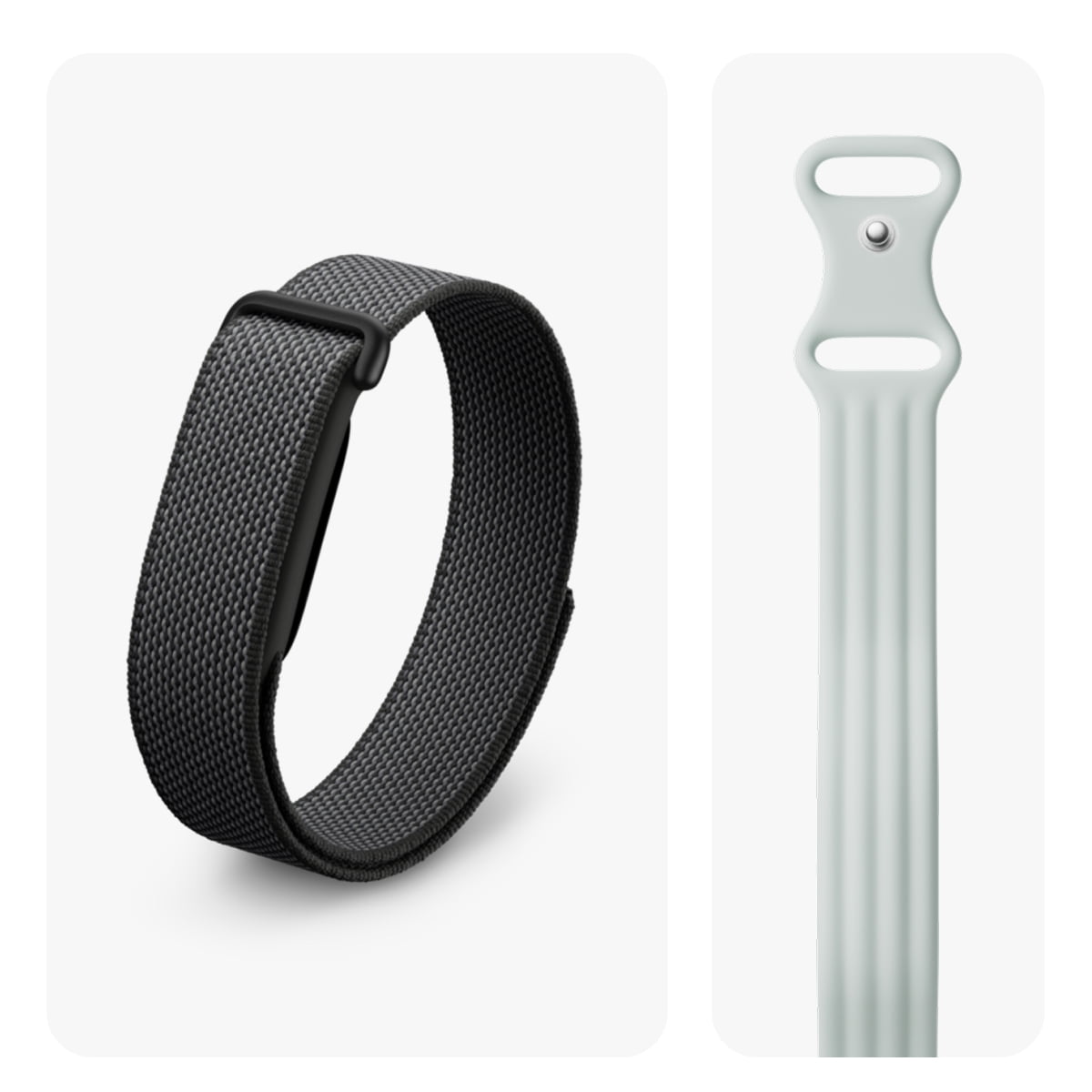
Fitbit Air is designed to disappear into the background. There is no screen to check, no watch face, and no stream of notifications. It collects data and sends it to the Google Health app.
Venu 4 is designed for interaction. You can start workouts, view live pace and heart rate, check recovery information, control music, pay from the wrist, view notifications, answer compatible phone calls, and interact with Garmin’s fitness ecosystem directly from the watch.
That difference matters more than comparing individual sensors.
Fitbit Air — Best for Minimalist Health Tracking
Best for: People who want activity, sleep, heart-rate, and recovery trends without wearing a full smartwatch.
Fitbit Air is Google’s newest officially released Fitbit wearable in 2026. It takes the Fitbit concept in a more minimalist direction rather than trying to become a smaller Pixel Watch.
The tracker itself weighs just 5.2 grams. With the standard band, total weight is about 12 grams.
What Fitbit Air Tracks
Current Google documentation lists:
- steps and distance;
- continuous heart rate;
- resting heart rate;
- heart-rate variability;
- sleep duration and stages;
- Sleep Score;
- breathing rate;
- SpO2 trends;
- skin-temperature variation;
- cardio fitness;
- Cardio Load;
- target Cardio Load;
- swim activity;
- connected GPS through your phone.
That is a substantial health-data package for a device at this price.
The Lack of a Screen Is the Point
You cannot glance at Air to check your current pace, heart rate, step count, notifications, or workout duration.
For some users, that is a major disadvantage.
For others, it is exactly why Air is appealing. You can wear it next to a traditional watch, sleep with it easily, and avoid adding another screen to your day.
Pros
✅ Very light 12 g design with band
✅ Up to 7 days of battery life
✅ Strong sleep and wellness tracking
✅ No mandatory subscription
✅ Works with Android and iPhone
✅ Much less expensive than Venu 4
Cons
❌ No display
❌ No built-in GPS
❌ No onboard workout data screen
❌ No music, payments or calls
❌ Much less useful for serious training
Who should skip it: Runners, cyclists, hikers, or gym users who want live performance information and phone-free GPS from the wearable itself.
For a deeper look at the tracker, see our full Fitbit Air review.
Garmin Venu 4 — Best Overall
Best for: Buyers who want one device for fitness tracking, GPS workouts, training guidance, sleep, health metrics, and everyday smartwatch functions.
Venu 4 occupies the middle ground between a general smartwatch and a dedicated Garmin sports watch.
It is much more capable than Fitbit Air, but it is also dramatically more expensive.
Two Case Sizes
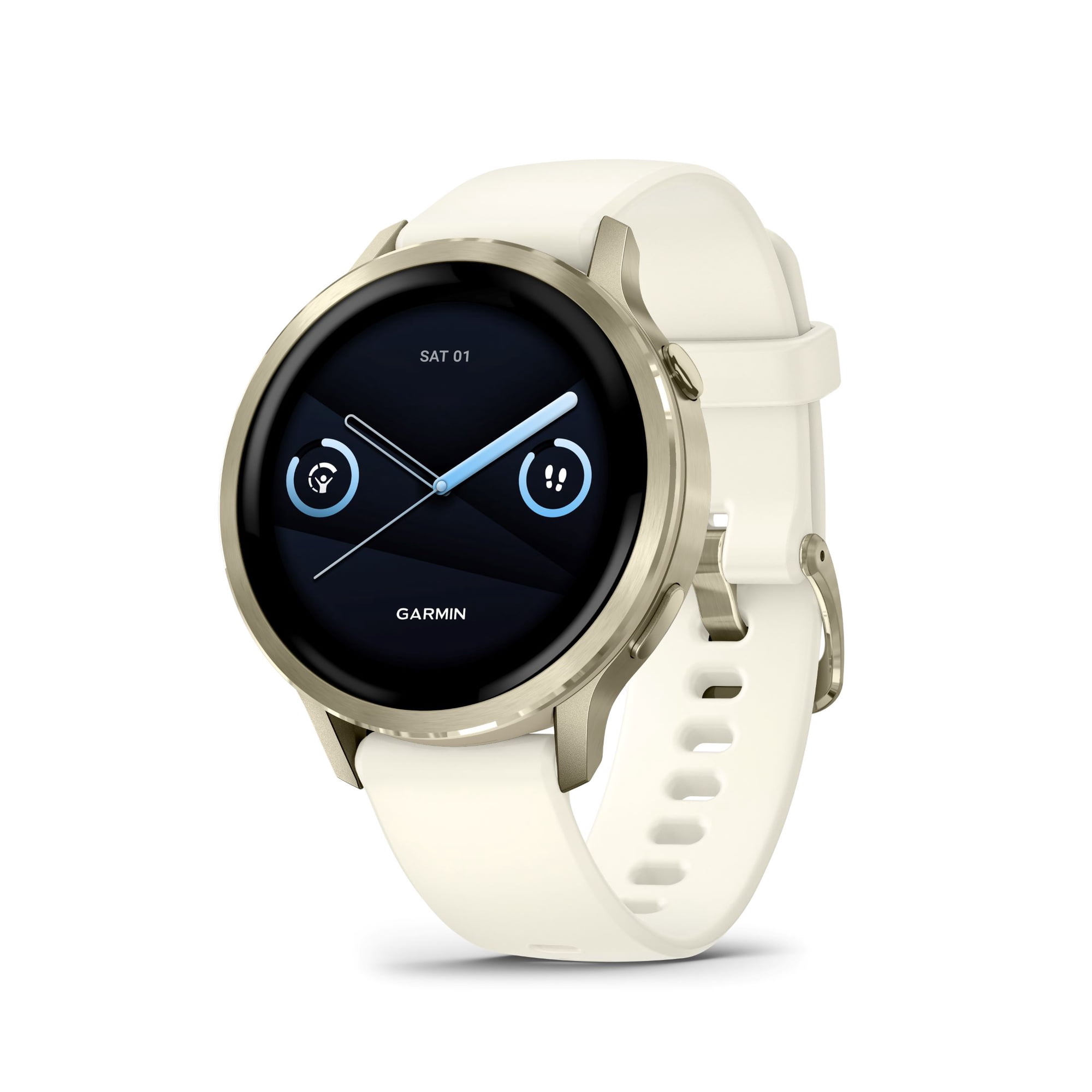
Garmin offers Venu 4 in 41 mm and 45 mm sizes.
The 41 mm model weighs about 46 grams with its included band and has a 1.2-inch 390 × 390 AMOLED display.
The 45 mm model weighs about 56 grams with its band and uses a larger 1.4-inch 454 × 454 display.
Built for Actual Training
Garmin includes multi-band GPS, Training Readiness, Training Status, recovery time, workout benefit, wrist-based running dynamics, structured workouts, and a much wider range of sport profiles.
You can see the important information while exercising rather than waiting to review everything on your phone afterward.
Much More Than a Fitness Tracker
Venu 4 also includes Garmin Pay, music storage, a speaker and microphone, smartphone notifications, voice functions, an LED flashlight, and calls through a paired compatible phone.
That turns it into an everyday watch as well as a fitness device.
Pros
✅ Multi-band GPS
✅ AMOLED touchscreen
✅ Training Readiness and Training Status
✅ Music storage and Garmin Pay
✅ ECG support where available
✅ Up to 10 or 12 days of smartwatch battery
✅ Works with Android and iPhone
Cons
❌ Costs several times more than Fitbit Air
❌ Much heavier for overnight wear
❌ More features and menus to learn
❌ Still less phone-like than Apple Watch or premium Wear OS watches
Who should skip it: Buyers who mainly want steps, sleep, heart rate, and wellness trends and have no need for GPS workouts or smartwatch functions.
Design and Comfort: Fitbit Air Wins
There is no close competition here.
Fitbit Air weighs 12 grams with its standard band. Garmin Venu 4 weighs approximately 46 grams in the 41 mm configuration or 56 grams in 45 mm form.
Air is also much narrower and has no display housing competing for space on the wrist.
Why That Matters for Sleep
Any health tracker only collects useful overnight data if you are willing to keep wearing it.
A small screenless band is easier to forget during sleep than a full stainless-bezel smartwatch.
Independent testing of Fitbit Air has also praised its lightweight, unobtrusive design.
Winner: Fitbit Air.
Display and On-Wrist Use: Garmin Wins
Fitbit Air has no display at all.
Venu 4 has a bright AMOLED touchscreen plus physical buttons.
The display allows you to see:
- heart rate;
- pace;
- distance;
- maps and activity information;
- timers;
- workout instructions;
- recovery data;
- notifications;
- music controls;
- health metrics.
That changes how the wearable works during exercise.
Air collects information. Venu 4 collects information and lets you act on it immediately.
Winner: Garmin Venu 4.
GPS and Outdoor Workouts: Garmin Wins Easily
This may be the single biggest practical difference.
Fitbit Air Uses Your Phone’s GPS
Fitbit Air does not include built-in GPS.
Google lists it as a connected-GPS device. That means your phone provides GPS data for route, speed, and distance tracking.
If you want a mapped outdoor run, you need to carry the phone and give the Google Health app the required location permissions.
Garmin Has Multi-Band GPS
Venu 4 includes built-in satellite positioning with multi-band GNSS support.
You can leave the phone behind and still record an outdoor run, ride, or hike.
Garmin also supports SatIQ, which can automatically balance positioning accuracy with battery use.
Winner: Garmin Venu 4 by a large margin.
If running is your main sport, Venu 4 is already much more appropriate than Fitbit Air. However, dedicated running watches go even deeper. Our best running watches guide covers those alternatives.
Fitness and Training Tools: Garmin Wins
Fitbit Air can track activity, Cardio Load, cardio-fitness trends, exercise, heart-rate zones, and recovery-related information.
That is enough for someone asking:
“Am I active enough, and how is my general fitness changing?”
Garmin is built for a different question:
“What should I do in today’s workout, and how is my training affecting performance and recovery?”
Garmin Adds Deeper Training Context
Venu 4 provides tools such as:
- Training Readiness;
- Training Status;
- recovery time;
- workout benefit;
- Garmin Coach;
- structured workouts;
- running dynamics;
- daily suggested workouts;
- sport-specific data pages.
Independent Venu 4 testing also found its optical heart-rate sensor reasonably close to a Polar H10 chest strap during a run, although a wrist sensor should not automatically be treated as identical to a chest strap for every athlete or workout.
Winner: Garmin Venu 4.
Everyday Health Tracking: Closer Than the Price Suggests
Garmin wins on total capability, but Fitbit Air tracks an impressive amount of wellness data for $99.99.
Fitbit Air Tracks
- continuous heart rate;
- resting heart rate;
- heart-rate variability;
- breathing rate;
- SpO2 trends;
- skin-temperature variation;
- sleep stages;
- Sleep Score;
- cardio fitness;
- Cardio Load;
- resilience and wellness trends.
It can also provide irregular-rhythm notifications for eligible users in supported regions.
Garmin Adds More Context
Venu 4 combines its heart-rate and wellness sensors with Body Battery, Training Readiness, Health Status, stress tracking, Pulse Ox, skin-temperature information, and the Garmin ECG App where supported.
Winner: Garmin for depth.
Value winner: Fitbit.
Health note: Consumer wearable health features are intended primarily for wellness information. Availability and eligibility vary by feature and region. Do not use a watch or tracker as a substitute for medical diagnosis or professional care.
Sleep Tracking: Fitbit for Comfort, Garmin for Recovery Context
There is no need to force one winner here.
Why Choose Fitbit Air for Sleep?
The main advantage is comfort.
At 12 grams with no display, Air is exceptionally easy to keep on overnight.
Google Health can show sleep duration, sleep stages, Sleep Score, heart-rate variability, breathing rate, resting heart rate, and other overnight trends.
Why Choose Garmin Venu 4 for Sleep?
Garmin adds sleep information to a broader recovery system.
Venu 4 tracks Sleep Score and naps while also using overnight data in Body Battery, HRV Status, Training Readiness, Sleep Coach, and related recovery metrics.
That makes Garmin more useful for athletes asking how last night’s sleep should affect today’s training.
Verdict: Fitbit Air for effortless overnight wear. Garmin Venu 4 for deeper training and recovery context.
Battery Life: Garmin Wins
Both products last much longer than many mainstream smartwatches.
Fitbit Air
Google rates Air for up to seven days.
A full charge takes about 90 minutes, while a five-minute quick charge can add roughly one day of rated use.
Garmin Venu 4
Garmin rates the 41 mm model for up to 10 days in smartwatch mode.
The 45 mm version extends that to up to 12 days.
Turning on the always-on display or using GPS and music regularly reduces those figures.
Winner: Garmin Venu 4.
Smartwatch Features: Garmin Wins Completely
Fitbit Air is not a smartwatch.
That means no display, app interface, notifications on the wrist, onboard music, NFC payments, or phone calling.
Venu 4 offers all of the following:
- smartphone notifications;
- Garmin Pay;
- onboard music storage;
- Connect IQ apps and watch faces;
- microphone and speaker;
- calls through a paired compatible phone;
- phone voice-assistant access;
- offline watch voice commands;
- LED flashlight.
It does not have its own cellular connection, so many communication features still rely on a paired phone.
Winner: Garmin Venu 4.
Fall Detection and Safety Features
Garmin added fall detection to Venu 4 through a September 2026 software update.
Users can enable it for all-day monitoring or for selected activities. If the watch detects a hard fall, it can send a message with the user’s location to preset assistance contacts when the required connectivity conditions are met.
Garmin also offers other safety features such as assistance and LiveTrack.
Fitbit Air is focused more heavily on passive wellness monitoring than on-device outdoor safety tools.
Winner: Garmin Venu 4.
Google Health vs Garmin Connect
The software ecosystem may matter as much as the hardware.
Google Health
Fitbit Air now works through the Google Health app.
The app brings activity, sleep, health metrics, wearable data, and compatible connected-health sources into one interface.
Its biggest premium feature is Google Health Coach, which uses Gemini-based tools to provide personalized fitness, sleep, and wellness guidance.
Garmin Connect
Garmin Connect is more training-focused.
It provides workouts, training trends, recovery information, performance metrics, challenges, routes, historical data, device settings, and deeper sport analysis.
Verdict: Google Health is simpler and more wellness-focused. Garmin Connect is much deeper for training.
Do Fitbit Air or Garmin Venu 4 Require a Subscription?
No.
Both work without a mandatory paid subscription.
Google Health Premium
Fitbit Air includes core health and activity tracking without Premium.
Google Health Premium is optional and adds features such as Google Health Coach and additional coaching experiences.
Current U.S. pricing is $9.99 per month or $99 per year.
Garmin Connect+
Standard Garmin Connect remains free.
Garmin Connect+ is an optional premium layer that adds features including Active Intelligence and enhanced LiveTrack functions.
Garmin introduced it at $6.99 per month or $69.99 per year and stated that existing Garmin Connect features and data remain free.
Verdict: Tie.
Fitbit Air vs Garmin Venu 4 for Running
Winner: Garmin Venu 4 by a huge margin.
Air can record running-related health and activity information, but route tracking relies on the GPS inside your phone.
There is also no screen for live pace, heart rate, distance, laps, or workout prompts.
Venu 4 provides built-in multi-band GPS, running dynamics, structured training, recovery information, live data screens, and much longer GPS-focused functionality.
If running is more than an occasional activity, Garmin easily justifies part of its higher price.
Fitbit Air vs Garmin Venu 4 for the Gym
This comparison is closer.
If your main goal is recording general activity, heart rate, effort, and recovery while lifting or taking fitness classes, Fitbit Air may provide everything you need.
Garmin makes more sense when you want to start workouts from the wrist, see live information, follow structured sessions, or combine gym work with running, cycling, and other sports.
Casual fitness: Fitbit Air can be enough.
Structured training: Garmin Venu 4.
Fitbit Air vs Garmin Venu 4 for Sleep
Choose Fitbit Air if physical comfort is the priority.
The tiny tracker is much less intrusive in bed.
Choose Garmin if sleep is part of a training plan.
Garmin connects overnight information more directly to Body Battery, recovery, Training Readiness, and other performance tools.
Fitbit Air vs Garmin Venu 4 for General Activity and Wellness
Fitbit Air is the better value.
Many people do not need multi-band GPS, training status, onboard music, or running dynamics.
If your goals are simply to:
- walk more;
- monitor sleep;
- follow resting-heart-rate trends;
- track general exercise;
- watch Cardio Load;
- understand broad wellness patterns;
then spending more than five times as much on Venu 4 may not produce five times as much useful information.
If you want to compare Air against other lower-cost options, see our best fitness trackers guide.
Fitbit Air vs Garmin Venu 4 for Serious Training
Garmin Venu 4 wins easily.
Training Readiness, Training Status, recovery time, workout benefit, running dynamics, GPS, sport profiles, and structured workout support put it in another category.
However, very serious runners and endurance athletes may still want a Garmin Forerunner or another dedicated sports watch rather than Venu 4.
Which Is Better for iPhone?
Both support iPhone.
Fitbit Air works particularly well as a platform-neutral health tracker because most interaction happens in the Google Health app.
Garmin also supports iPhone, but it cannot match the deep system-level integration of an Apple Watch for messaging and other phone features.
If fitness depth matters more than Apple ecosystem integration, Venu 4 remains a strong iPhone-compatible option.
Which Is Better for Android?
Both work with Android.
Google Health may feel more natural for users already invested in Google’s health and Android ecosystem.
Garmin is more platform-neutral and remains attractive if training capabilities matter more than first-party phone integration.
The decision should still come down to tracker versus smartwatch rather than phone platform alone.
Is Garmin Venu 4 Worth About $450 More?
For some people, absolutely.
The extra money buys major hardware and software additions:
- AMOLED display;
- multi-band GPS;
- live workout information;
- Training Readiness;
- Training Status;
- structured workouts;
- music storage;
- Garmin Pay;
- microphone and speaker;
- calls through a paired phone;
- ECG support where available;
- LED flashlight;
- longer rated battery life.
If you regularly use those features, Venu 4 is a much more complete product.
If most of that list sounds unnecessary, Fitbit Air is probably the smarter purchase.
What If Fitbit Air Is Too Simple?
There is a useful middle ground between these two products.
Fitbit Charge 6 adds a display and built-in GPS while staying much closer to fitness-band pricing than Venu 4.
That makes it worth considering if you like Fitbit’s ecosystem but need live workout information and phone-free GPS.
Garmin also has less expensive models if you want its training ecosystem without paying Venu 4 pricing.
For broader smartwatch alternatives, see our best smartwatches guide.
Frequently Asked Questions
Is Garmin Venu 4 better than Fitbit Air?
Venu 4 is much more capable overall. It adds built-in multi-band GPS, an AMOLED display, deeper training tools, music, Garmin Pay, calls through a paired phone, and more smartwatch functions. Fitbit Air is the better value if you mainly want passive health and sleep tracking.
Is Fitbit Air the latest Fitbit?
Yes. Fitbit Air is Google’s newest officially released Fitbit wearable as of this article’s research date. It launched in May 2026 as a lightweight screenless health and fitness tracker.
Does Fitbit Air have GPS?
Fitbit Air does not have built-in GPS. It uses connected GPS from a compatible smartphone, so you need the phone with you to record GPS route information.
Does Garmin Venu 4 work with iPhone?
Yes. Venu 4 works with compatible iPhones and Android phones. Some phone-level functions vary by platform, so check Garmin’s current compatibility details if a specific notification or communication feature matters to you.
Which is better for sleep tracking?
Fitbit Air is better for physical comfort because it is extremely light and screenless. Garmin Venu 4 provides deeper recovery context by connecting sleep with HRV, Body Battery, Training Readiness, and other fitness metrics.
Which is better for running?
Garmin Venu 4 is much better for running because it has built-in multi-band GPS, live pace and heart-rate data, structured workouts, recovery tools, running dynamics, and training metrics. Fitbit Air relies on smartphone GPS.
Which has better battery life?
Garmin Venu 4 has the higher smartwatch-mode claims. Garmin rates the 41 mm model for up to 10 days and the 45 mm model for up to 12 days, while Google rates Fitbit Air for up to seven days.
Does either require a subscription?
No. Core Fitbit Air and Garmin Venu 4 functionality works without a mandatory subscription. Google Health Premium and Garmin Connect+ are optional services that add extra features.
Does Fitbit Air have ECG?
Fitbit Air does not provide an ECG app. Garmin Venu 4 supports Garmin’s ECG App for eligible users in supported regions.
Can Garmin Venu 4 make phone calls?
Yes, when connected to a compatible paired smartphone. The watch has a built-in microphone and speaker, but it does not have independent cellular service.
Is Garmin Venu 4 worth the extra money?
It is worth the premium if you regularly use GPS workouts, training metrics, live exercise data, music, payments, calls, and smartwatch features. If your priority is basic activity, sleep, heart-rate, and wellness tracking, Fitbit Air offers much better value.
Final Verdict: Fitbit Air or Garmin Venu 4?
Garmin Venu 4 is the better wearable overall in 2026.
It provides far more information while you exercise, works without a phone for GPS tracking, and includes the training, recovery, music, payments, communication, and smartwatch features expected from a premium fitness watch.
Fitbit Air wins a different contest.
It costs far less, weighs almost nothing, lasts up to a week, tracks the core health and sleep metrics many people actually care about, and avoids the distractions of another screen.
If you are a runner, cyclist, structured-training enthusiast, or buyer looking for one watch that handles fitness and everyday smart functions, choose Garmin Venu 4.
If you mainly want a comfortable 24/7 health tracker and already carry your phone during exercise, choose Fitbit Air and save the money.
Bottom line: Choose Garmin Venu 4 for GPS, workouts, training analysis, live data and smartwatch features. Choose Fitbit Air for value, sleep comfort, passive wellness tracking and a distraction-free screenless design.
Sources
- Google — Google Fitbit Air Technical Specifications
- Google Health Help — Fitbit Air Health, Fitness and Connected GPS Documentation
- Garmin — Venu 4 Product Specifications and Feature Documentation
- TechRadar — Garmin Venu 4 Review and Heart-Rate Testing
- Tom’s Guide — Fitbit Air Review and Fitness-Tracking Testing
How we research: Discompare reviews current manufacturer specifications, software features, compatibility, current U.S. pricing, health and fitness capabilities, independent testing, and current product status. We do not conduct original wearable laboratory testing unless explicitly stated. Consumer wearable metrics can vary with fit, physiology, movement, software, activity type, and environmental conditions. Health features are not substitutes for medical diagnosis, and availability can vary by region, age, device, and regulatory approval. Prices and features can change. Discompare may earn a commission from eligible retailer or price-comparison links.
Product Groups: Google Fitbit Air Fitness Tracker, Garmin Venu 4 GPS Smartwatch