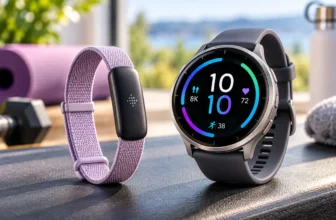
The Google Fitbit Air is worth buying if you want a small, comfortable fitness tracker that quietly monitors activity, heart rate, sleep, and recovery without putting another screen on your wrist. At $99.99, it delivers much of Fitbit’s core health-tracking experience, up to seven days of battery life, and access to the redesigned Google Health platform without requiring a subscription for basic tracking.
Its simplicity is also its biggest limitation. Fitbit Air has no display and no built-in GPS, so you cannot glance at pace, heart rate, notifications, maps, or workout statistics while exercising. Outdoor route tracking also depends on a paired smartphone. Serious runners and buyers who want a more interactive fitness tracker will be better served by the Fitbit Charge 6 or a dedicated running watch.
For everyone else, the screenless approach works surprisingly well. At just 12 grams with its band, Fitbit Air is easy to wear through workouts, work, and sleep, making it particularly compelling for people who care more about continuous health trends than smartwatch features.
Fitbit Air Review: Quick Verdict
Best For: Passive fitness, health, recovery, and sleep tracking without smartwatch distractions.
Price: $99.99 for the standard Fitbit Air.
Battery: Up to seven days, with a five-minute quick charge providing up to one day of use.
Biggest Limitation: No screen and no built-in GPS, so workout interaction and phone-free running are limited.
Bottom Line: One of the strongest low-cost fitness trackers for people who want continuous health data without wearing a miniature smartwatch.
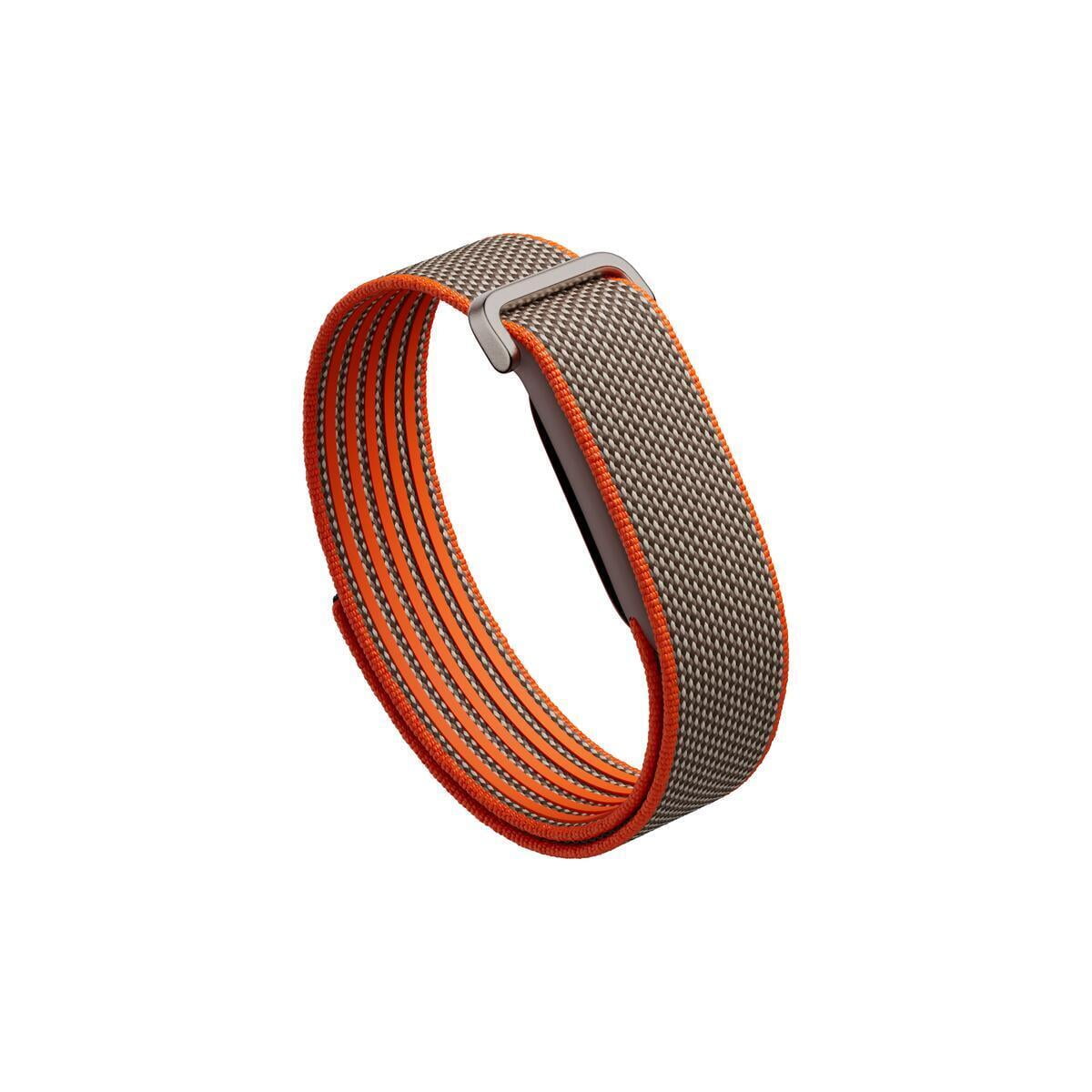
A Special Edition fitness band co-designed with NBA champion Stephen Curry that combines high-performance functionality with elevated, style-forward design to inspire confidence.
- Special Edition Stephen Curry Band
- Focus: performance + elevated style
- Designed in collaboration with Stephen Curry
- Limited availability — while supplies last
- Not available in all countries
Fitbit Air Specs at a Glance
| Specification | Google Fitbit Air |
|---|---|
| Starting Price | $99.99 |
| Display | None |
| Weight | 5.2 g tracker; 12 g with band |
| Dimensions | 34.9 × 17 × 8.3 mm |
| Heart Rate | Optical heart-rate sensor |
| Other Sensors | Accelerometer, gyroscope, SpO₂ sensors, temperature sensor |
| Built-In GPS | No; uses paired-phone location data |
| Battery | Up to 7 days |
| Full Charge | Approximately 90 minutes |
| Water Resistance | Up to 50 meters |
| Phone Compatibility | Android 11+ and iOS 16.4+ |
| Google Health Premium | Optional; $9.99/month or $99/year after eligible trial |
Design and Comfort: The Screenless Idea Works
Fitbit Air’s best feature may be how little you notice it. The tracker itself weighs only 5.2 grams and reaches 12 grams with the standard band attached. Its body is also only 8.3 mm thick.
That makes continuous wear easier than with most smartwatches. Sleep tracking becomes particularly convenient because there is less weight pressing against the wrist overnight, and there is no bright display waiting to illuminate when you move.
The absence of a screen is deliberate rather than simply a cost-cutting omission. Fitbit Air collects information in the background and sends it to Google Health for interpretation later. There are no messages, app icons, watch faces, or workout screens competing for attention.
Independent reviewers have consistently identified comfort as one of the strongest parts of the Fitbit Air experience. That matters because health trends improve when you actually wear the tracker consistently rather than leaving it on a charger or nightstand.
What Is It Like to Use a Fitbit With No Screen?
A screenless fitness tracker changes your relationship with the data. Fitbit Air is designed around reviewing information in Google Health rather than constantly checking numbers from your wrist.
For everyday activity and sleep tracking, that can be refreshing. You wear the device, go about your day, and check trends when you actually want to understand them. There are no notification alerts tempting you to interact with another device.
During exercise, however, the compromise becomes more obvious. You cannot glance down to see pace, elapsed time, heart-rate zone, distance, or workout status. Runners who frequently adjust effort based on live metrics will find a display-equipped tracker or running watch much more useful.
Fitbit Air therefore works best as a passive tracker. If you want your wearable to coach you through the workout itself, this is the wrong form factor.
Fitness Tracking and Accuracy
Fitbit Air automatically tracks core activity information including heart rate, steps, distance, active-zone minutes, and calories. It also supports workout tracking and feeds activity data into Cardio Load and Readiness information in Google Health.
Independent testing has been encouraging for a $99 tracker. Tom’s Guide found step and heart-rate results reasonably close to more expensive Garmin devices across several comparisons. Those findings suggest Fitbit Air is capable of useful trend tracking, but they should not be interpreted as proof that it will match a reference device during every activity.
Automatic exercise detection is another area where expectations should be realistic. WIRED reported occasional misclassification of activities, while other testing found that automatic workout tracking can take time to recognize an exercise session.
The better way to use Fitbit Air is to focus on patterns: whether your daily movement is increasing, how resting heart rate changes, whether Cardio Load is rising appropriately, and how sleep and recovery interact with activity.
Accuracy perspective: Fitbit Air is appropriate for consumer fitness and wellness tracking, but its measurements should be interpreted as estimates and trends rather than medical or laboratory-grade results.
Running and GPS: The Biggest Compromise
Fitbit Air does not have built-in GPS. If you want reliable location, route, pace, and elevation information during an outdoor workout, you will generally need to carry a paired smartphone so the tracker can use the phone’s location data.
That limitation immediately separates Fitbit Air from dedicated running watches and from Fitbit Charge 6. A runner who wants to leave a phone at home while recording a route should not buy Air.
The lack of a display compounds the issue. Even when your phone is providing location information, you cannot glance at the tracker for live pace, distance, or navigation.
Casual runners who simply want workouts logged afterward may be satisfied. Anyone training by pace, distance, intervals, or heart-rate zones should consider one of our best running watches for tracking progress instead.
Running verdict: useful for casual activity tracking, but not designed to replace a true GPS running watch.
Sleep Tracking Is One of Fitbit Air’s Strongest Features
Fitbit Air makes more sense at night than many larger wearables because its low weight and screenless design make it easy to leave on until morning.
Google Health uses the tracker to provide sleep duration, Sleep Score, sleep stages, sleep schedule information, and longer-term sleep trends. The device also collects supporting information such as heart rate, heart-rate variability, breathing rate, and skin-temperature variation.
Independent comparisons support Fitbit’s strength here. Tom’s Guide compared Air with a Garmin running watch across multiple nights and found broadly similar patterns for total sleep and several underlying metrics, although individual sleep-stage measurements did not match exactly.
That distinction is important. Consumer wearables estimate sleep stages using movement and physiological signals; they are not substitutes for clinical polysomnography. The more useful question is whether Fitbit Air gives you consistent trends that help identify changes in sleep duration, timing, or quality.
For that purpose, the combination of low weight, week-long battery life, and established Fitbit sleep analytics makes Air particularly convincing.
Heart Rate and Health Tracking
Fitbit Air includes an optical heart-rate sensor for continuous monitoring along with red and infrared sensors for SpO₂ monitoring and a temperature sensor used for skin-temperature variation.
Google Health can use this data to surface trends including resting heart rate, heart-rate variability, breathing rate, blood oxygen information, Cardio Load, and Readiness. Fitbit Air can also monitor heart rhythm while you are still or sleeping and may surface supported irregular-rhythm information.
These features are useful for personal awareness, but Fitbit Air should not be treated as diagnostic medical equipment. Heart-rate and other wearable measurements can be affected by physiology, device placement, movement, fit, and environmental factors. Health-related alerts or unusual trends that concern you should be interpreted with appropriate professional guidance rather than self-diagnosed from a tracker.
Google Health App: Half of the Fitbit Air Experience
Because Fitbit Air has no display, Google Health is effectively the other half of the product.
Google has moved the Fitbit experience into its broader Google Health platform, which organizes activity, sleep, heart-rate, recovery, wellness logging, and supported health information in one place. Users can customize which information receives the most attention rather than staring at every metric Fitbit records.
This app-first approach works well with the screenless hardware. Instead of presenting dozens of numbers throughout the day, Air collects them quietly and Google Health gives you a place to review trends later.
Independent reviewers disagree somewhat about the software experience. Tom’s Guide found the redesigned app easy to navigate and customize, while TechRadar criticized parts of the interface and AI-centered experience as less polished. That makes the software more subjective than the tracker hardware itself.
Google Health Premium and Health Coach: Do You Need It?
No. Google Health Premium is optional. Fitbit Air’s core activity, sleep, heart-rate, Cardio Load, Readiness, and wellness tracking remain available through the base Google Health experience.
Premium adds Google’s Gemini-powered Health Coach and deeper coaching-oriented features. Fitbit Air currently includes a three-month Premium trial for eligible users, after which Premium costs $9.99 per month or $99 per year unless canceled.
| Google Health Base | Google Health Premium |
|---|---|
| Activity tracking | Google Health Coach |
| Steps, calories and distance | Adaptive fitness plans |
| Cardio Load and Readiness | Personalized coaching questions |
| Sleep Score, duration and stages | Detailed coaching-oriented sleep insights |
| Core heart-rate and wellness metrics | Proactive insights, workout library and additional Premium tools |
Premium makes the most sense if you actively want adaptive coaching rather than simply more data. The Health Coach can create fitness plans, answer wellness questions, summarize trends, and provide sleep guidance based on information available through Google Health.
Some reviewers find that coaching useful; others find the AI interaction less compelling than the underlying tracking. Our recommendation is to use the included trial before deciding. Do not buy Fitbit Air assuming that a permanent subscription is necessary for the device to provide value.
Battery Life and Charging
Google rates Fitbit Air for up to seven days of battery life. Actual endurance varies with usage and enabled features, but independent reviews have generally found battery performance consistent with or occasionally better than Google’s estimate.
A full charge takes approximately 90 minutes. Google’s quick-charge claim provides up to one day of battery life from about five minutes of charging.
Battery endurance matters especially for a sleep tracker. A wearable that constantly needs to be charged overnight creates holes in the very data it is supposed to collect. Fitbit Air’s week-long battery makes it easy to choose a short daytime charging window instead.
Battery verdict: excellent for a $99 wearable and one of the strongest reasons to choose Air over a traditional smartwatch.
Water Resistance
Fitbit Air is water resistant to 50 meters. Google also specifies an IP68 rating when the product leaves the factory, while warning that water and dust resistance are not permanent and can diminish through wear, repair, disassembly, or damage.
That makes Air appropriate for normal sweat, rain, and supported water exposure, but it should be described as water resistant, not permanently waterproof.
Google recommends drying the band after it becomes wet and keeping both the band and skin clean and dry during regular wear.
Fitbit Air vs Fitbit Charge 6
Fitbit Air does not automatically replace Charge 6. The products serve different buyers.
| Feature | Fitbit Air | Fitbit Charge 6 |
|---|---|---|
| Starting Price | $99.99 | Typically higher |
| Display | None | AMOLED display |
| Built-In GPS | No | Yes |
| On-Wrist Workout Data | No display | Yes |
| ECG | No dedicated ECG app | Supported where available |
| Payments | No | Google Wallet support |
| Best For | Passive 24/7 tracking | More interactive fitness tracking |
Choose Fitbit Air if comfort, low price, simple health tracking, and the absence of a screen are advantages. Choose Charge 6 if you want built-in GPS, live workout information, an on-device display, payments, and more direct fitness interaction.
For runners, Charge 6 is the stronger Fitbit. For someone who already owns a smartwatch and simply wants a lightweight tracker for continuous health and sleep data, Air is the cleaner concept.
Fitbit Air Pros and Cons
Pros
✅ Lightweight 12-gram design is easy to wear day and night
✅ $99.99 starting price
✅ Strong sleep and wellness tracking
✅ Up to seven days of battery life
✅ No screen or notification distractions
✅ Core functionality does not require Google Health Premium
Cons
❌ No built-in GPS
❌ No display for live workout statistics
❌ No payments, apps, maps, or smartwatch notifications
❌ Automatic workout detection can be inconsistent
❌ Google’s most personalized coaching features require Premium
Who Should Buy Fitbit Air?
Fitbit Air is especially well suited to people who want health information without turning their wrist into another notification center.
- Sleep-focused users: the tiny, lightweight design is easy to keep on overnight.
- Casual exercisers: steps, heart rate, activity, workouts, Cardio Load, and Readiness provide useful everyday context.
- Smartwatch-fatigued buyers: there are no messages, watch faces, apps, or notifications to manage.
- People who dislike bulky wearables: 12 grams with the band makes Air dramatically lighter than most watches.
- Budget buyers: $99.99 is competitive for continuous health and sleep tracking without a mandatory subscription.
Who Should Skip Fitbit Air?
- Serious runners: no built-in GPS and no screen make live pace and route tracking inconvenient.
- Athletes who train by live metrics: you cannot look down and check heart-rate zone, elapsed time, or pace.
- People who want a smartwatch: Air does not provide an app ecosystem, messaging, payments, navigation, or a display.
- Phone-free exercisers: outdoor location tracking depends on your paired smartphone.
- Buyers who prefer on-device control: much of the interaction happens in Google Health.
Alternatives to Fitbit Air
Fitbit Charge 6
Charge 6 is the better Fitbit if you want built-in GPS, a display, live workout data, ECG functionality where supported, and Google Wallet. Air is more comfortable and minimalist; Charge 6 is more capable.
Google Pixel Watch
A Pixel Watch is a better fit if you want the Google health ecosystem alongside apps, notifications, navigation, payments, and a full smartwatch interface. It costs substantially more and requires more frequent charging, but it performs a completely different job.
If smartwatch functionality is central to your decision, see our Apple Watch Series 11 vs Samsung Galaxy Watch9 comparison for a broader look at the category.
Dedicated Running Watch
Garmin, COROS, and other running-first watches are better choices if your priority is GPS accuracy, live pace, race preparation, structured workouts, recovery analytics, and phone-free outdoor training. Fitbit Air is designed for passive tracking rather than interactive endurance training.
Frequently Asked Questions
Is Fitbit Air worth buying?
Fitbit Air is worth buying if you want an inexpensive, lightweight tracker for activity, heart rate, sleep, recovery, and wellness trends without wearing a smartwatch. It is less suitable for serious running because it lacks built-in GPS and a display.
Is Fitbit Air the replacement for Charge 6?
Not directly. Fitbit Air is a screenless tracker focused on passive health monitoring, while Charge 6 remains more fitness-oriented with a display, built-in GPS, and additional on-device features. They serve different buyers.
Does Fitbit Air have GPS?
Fitbit Air does not have built-in GPS. Outdoor location, route, pace, and elevation information depends on a compatible paired smartphone when location data is required.
Does Fitbit Air require a subscription?
No. Core activity, sleep, heart-rate, Cardio Load, Readiness, and wellness tracking are available without Google Health Premium. Premium adds features such as Gemini-powered Health Coach, adaptive fitness plans, deeper coaching, and additional content.
How accurate is Fitbit Air?
Independent tests have found Fitbit Air capable of useful step, heart-rate, sleep, and workout trend tracking, but results can vary with fit, activity type, movement, physiology, and phone connectivity. It should be treated as a consumer wellness tracker rather than medical or laboratory equipment.
Can you swim with Fitbit Air?
Fitbit Air is rated water resistant to 50 meters. Water resistance is not permanent and can diminish over time, so follow Google’s current care and water-exposure guidance and dry the device and band after they get wet.
Is Fitbit Air better than Charge 6?
Fitbit Air is better for low cost, comfort, simplicity, and distraction-free continuous tracking. Charge 6 is better for workouts because it adds a display, built-in GPS, and more on-device features.
Does Fitbit Air work with iPhone?
Yes. Google lists compatibility with iPhones running iOS 16.4 or newer and Android phones running Android 11 or newer. A Google Account, Google Health app, Bluetooth, and compatible smartphone are required.
Final Verdict: Should You Buy Fitbit Air?
Fitbit Air is one of the most convincing fitness trackers for people who want their wearable to disappear into the background. It costs $99.99, weighs only 12 grams with its band, lasts up to seven days, and collects the activity, heart-rate, sleep, and recovery information that many people actually want from a fitness tracker.
The missing screen is central to its appeal. There are no notifications to dismiss and no reason to constantly check your wrist. That makes Air particularly good for sleep tracking, passive health monitoring, and users who are tired of wearing a miniature smartphone.
The same simplicity creates clear limits. No built-in GPS means outdoor route tracking depends on your phone, and no display means runners cannot monitor live pace or heart-rate information from the tracker itself. Charge 6 or a dedicated running watch remains the better choice for that type of training.
Buy Fitbit Air if: you want affordable, comfortable, screenless health and sleep tracking.
Choose Charge 6 instead if: you need built-in GPS and live workout information.
Choose a smartwatch instead if: you want apps, notifications, navigation, payments, and a full on-wrist interface.
Sources
- Google — Introducing the all-new Fitbit Air — May 2026
- Google Store — Google Fitbit Air technical specifications and battery information — 2026
- Tom’s Guide — Fitbit Air review and fitness/sleep comparisons — May 2026
- WIRED — Google Fitbit Air review — May 2026
- Google — Google Health and Google Health Premium launch information — 2026
Product Groups: Google Fitbit Air