Philips Sonicare vs Oral-B is one of the most common electric toothbrush comparisons, and the biggest difference comes down to how each brush cleans. Sonicare uses high-frequency side-to-side bristle movements with an elongated brush head, while Oral-B’s iO technology combines oscillating-rotating motion with micro-vibrations and a smaller, round head. Both can provide effective everyday cleaning, but they offer noticeably different brushing experiences.
For this comparison, we’re focusing on the Philips Sonicare 7100 and Oral-B iO Series 5. Both are rechargeable, app-connected toothbrushes with multiple brushing modes and pressure feedback. The Sonicare 7100 provides four modes and three intensity settings, while the iO5 offers five modes and a three-color pressure sensor that shows whether you’re pressing too hard, too softly, or applying appropriate pressure.
Neither brand is automatically the right choice for everyone. Your preferred brush-head shape, sensitivity to vibration, interest in smart features, and ongoing replacement-head costs all matter. We’ll compare the two technologies, examine the clinical evidence, and explain which features are worth paying for before you choose your next electric toothbrush.
Quick Answer: Sonicare or Oral-B?
For an Elongated Sonic Brush Head: Philips Sonicare 7100 — a familiar toothbrush shape with high-frequency sonic movements and adjustable intensity.
For Round-Head Brushing: Oral-B iO5 — a smaller circular head designed to clean one tooth or a small group of teeth at a time.
For Adjustable Brushing Intensity: Philips Sonicare 7100 — four brushing modes and three intensity levels provide flexibility when adjusting your routine.
For Detailed Pressure Feedback: Oral-B iO5 — its colored sensor communicates excessive, insufficient, and appropriate pressure directly on the handle.
Philips Sonicare vs Oral-B: Specifications Compared
The Sonicare 7100 and Oral-B iO5 are comparable smart toothbrushes, but they do not offer identical features. Philips emphasizes sonic movement and customizable intensity, while Oral-B emphasizes its round-head system and detailed pressure feedback.
| Feature | Philips Sonicare 7100 | Oral-B iO Series 5 |
|---|---|---|
| Reference model | HX7421/06 | Matte Black |
| Cleaning technology | Next-Generation Sonicare | Oscillating-rotating with micro-vibrations |
| Brush-head shape | Elongated | Round |
| Brushing modes | 4 | 5 |
| Intensity settings | 3 | Mode-dependent; no equivalent three-level intensity control |
| Pressure feedback | Visual warning for excessive pressure | Three-color Smart Pressure Sensor |
| Brushing timer | 2-minute SmarTimer and BrushPacer | 2-minute timer with 30-second prompts |
| App connectivity | Sonicare app | Oral-B app |
| Battery | Up to 21 days under Philips’ stated usage conditions | Rechargeable lithium-ion; exact runtime varies |
| Replacement heads | Compatible Sonicare click-on heads | Oral-B iO heads only |
| Warranty | 2 years | 2 years |
| Manufacturer price reference | $159.99 launch MSRP | $119.99 at research |
Prices are U.S. reference figures, not guaranteed live offers. Promotions, colors, bundles, and replacement-head packages can change the total cost of either toothbrush.
Philips Sonicare 7100: What You Get
The Philips Sonicare 7100 is a current-generation sonic toothbrush designed for shoppers who want more control over their daily brushing experience. Its combination of four modes and three intensity levels offers flexibility without requiring a premium flagship toothbrush.
Best For: People who prefer elongated brush heads, want adjustable brushing intensity, and appreciate connected brushing guidance.
Its Next-Generation Sonicare system uses high-frequency bristle movements, with Philips specifying up to 62,000 movements per minute. The handle includes a pressure sensor that warns when excessive force is applied, while its timer and pacing prompts help users work through a complete two-minute routine.
The 7100 also connects to the Sonicare app for additional brushing insights. However, its most important daily functions remain accessible without keeping a phone next to the sink.
Its main drawbacks are its higher initial reference price and the ongoing cost of replacement heads. Buyers should also distinguish its four actual brushing modes from the twelve possible mode-and-intensity combinations.
Pros
✅ Four modes and three adjustable intensity settings
✅ Visual pressure warning
✅ Up to 21 days of battery life under stated conditions
✅ App connectivity and brush-head replacement reminder
Cons
❌ Higher initial price than the iO5 reference configuration
❌ Sonic vibration sensation may not appeal to everyone
❌ Advanced app functionality may be unnecessary for routine brushing
Who should skip it: Choose another model if you strongly prefer Oral-B’s round brush head or only need a simple timer and pressure sensor.
Alternative: Philips Sonicare 4100 provides a simpler sonic brushing experience without the 7100’s full customization and connected-feature set.
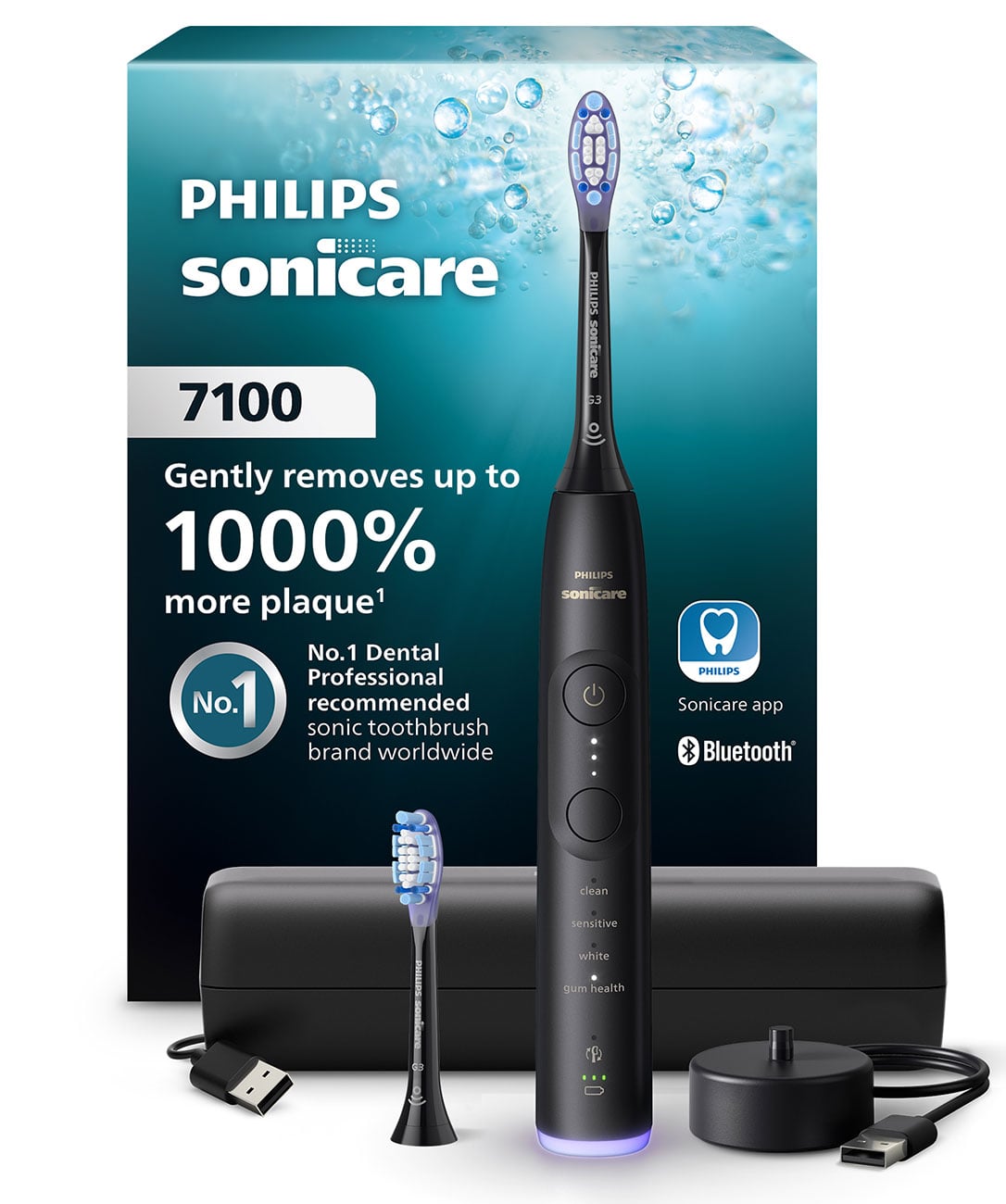
Experience next-generation Sonicare technology for more plaque removal and up to 600% healthier gums with every brush. The visual pressure sensor protects enamel while 4 brush modes and 3 intensities give a personalized clean in a sleek black finish. Ready for a brighter, healthier smile? Shop now →
Oral-B iO Series 5: What You Get
The Oral-B iO5 is a practical entry into the connected iO lineup. Its round brush head combines oscillating-rotating action with micro-vibrations, and its pressure sensor provides more detailed visual feedback than a basic excessive-pressure warning.
Best For: People who prefer round-head brushing, want direct pressure guidance, and are interested in app-based brushing feedback.
The iO5 includes five modes: Daily Clean, Intense Clean, Sensitive, Super Sensitive, and Whitening. Its Smart Pressure Sensor uses different colors to distinguish pressing too hard, too softly, or appropriately.
The Oral-B app can provide brushing guidance and tracking, while the handle includes a two-minute timer and 30-second pacing prompts. The exact matte-black package also includes an iO Ultimate Clean brush head, charger, and hard travel case.
Its main ownership consideration is compatibility. The iO5 works with Oral-B iO replacement heads, not the less expensive conventional heads used by older Pro, Smart, Genius, and Vitality handles.
Pros
✅ Round-head cleaning with iO micro-vibrations
✅ Five brushing modes
✅ Three-color pressure feedback
✅ App tracking, timer, and travel case
Cons
❌ Requires iO-specific replacement heads
❌ No separate three-level intensity adjustment comparable to Sonicare 7100
❌ App features are unnecessary for buyers who already brush consistently
Who should skip it: Buyers who prefer elongated sonic heads or want to reuse conventional Oral-B replacement heads should consider another system.
Alternative: Oral-B iO Series 3 retains the round-head iO concept and pressure feedback while removing some of the connected features.
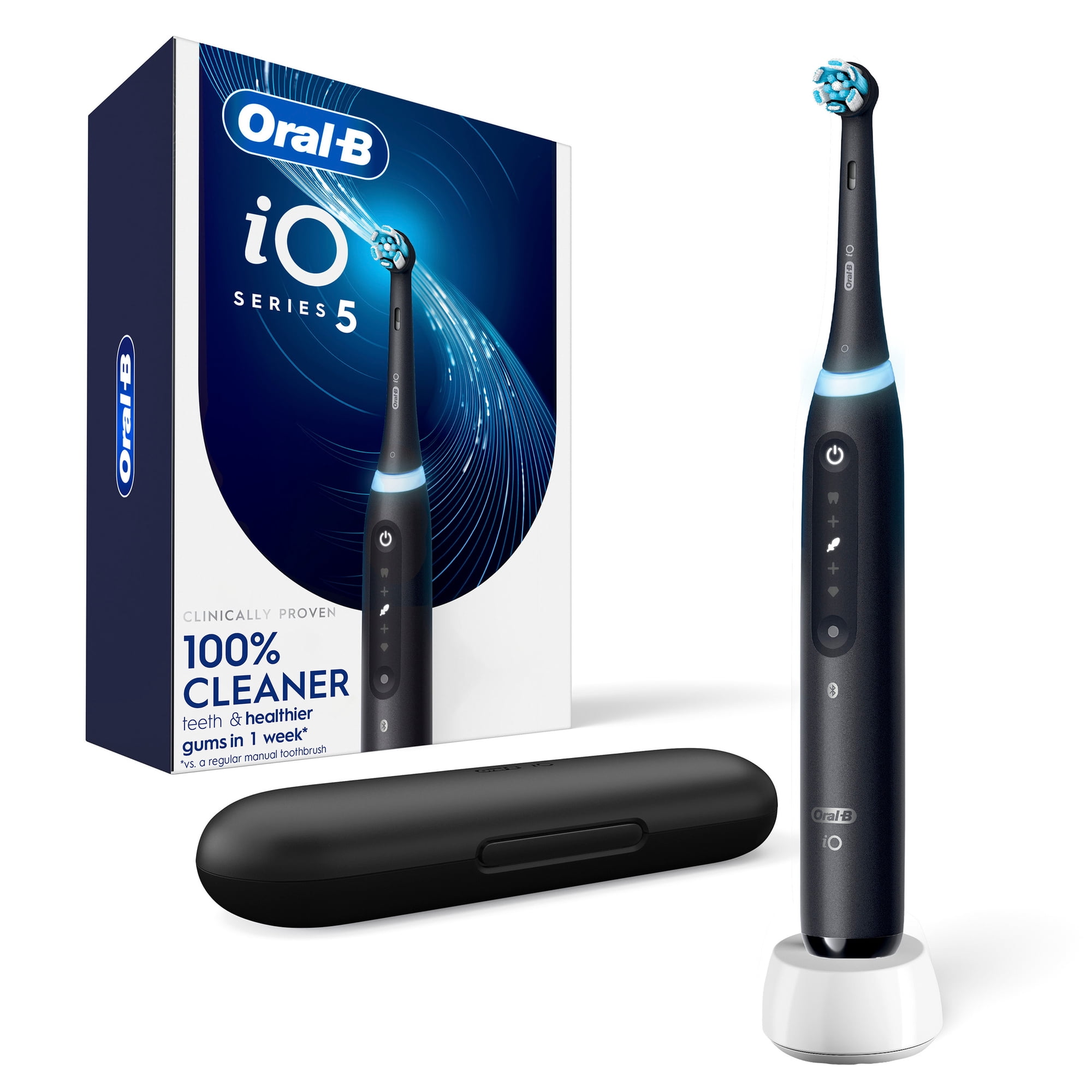
Upgrade your oral care with the Oral-B iO Series 5 Electric Toothbrush Black — clinically proven to deliver 100% cleaner teeth and healthier gums in 1 week versus a regular manual toothbrush.
Real-time personalized coaching from the Smart Display and the Oral‑B app guides you to a perfect clean every time.
Buy now and start brushing smarter — order your Oral‑B iO Series 5 Black today.
1. Cleaning Technology: Sonic vs Oscillating-Rotating
The main difference between Philips Sonicare and Oral-B is how the brush head moves against your teeth.
How Philips Sonicare Works
Sonicare uses high-frequency side-to-side bristle movement. Its elongated head resembles a conventional manual toothbrush, making the transition familiar to many users.
The Sonicare 7100’s newer motor system is designed to maintain consistent movement even when the user changes pressure or reaches more difficult areas.
With a sonic toothbrush, guide the head slowly across the tooth surfaces rather than applying heavy pressure or scrubbing aggressively.
How Oral-B iO Works
Oral-B iO combines oscillating-rotating motion with micro-vibrations. Its round brush head is designed to sit against an individual tooth or small group of teeth before moving to the next area.
The shape encourages a different technique from Sonicare: position the head, allow the brush to do the work, and move gradually from tooth to tooth.
Neither system requires forceful manual scrubbing. Applying excessive pressure can make brushing less comfortable regardless of the brand.
What matters: Choose the cleaning motion you find comfortable and easy to control. A brush you use consistently, with appropriate pressure and technique, is more useful than an expensive model whose brushing sensation you dislike.
2. Plaque Removal and Gum Health: What Does the Research Show?
Both sonic and oscillating-rotating toothbrushes can provide effective plaque removal. Some comparative research reports a small average advantage for oscillating-rotating technology, but that does not establish that every Oral-B model will outperform every Sonicare model for every user.
A 2026 network meta-analysis published in Clinical Oral Investigations examined 19 randomized controlled trials involving several powered-toothbrush technologies and manual brushes. Its results favored oscillating-rotating technology for average plaque and gingivitis outcomes.
However, the studies covered different devices, study populations, and observation periods. Only a limited subset directly compared the principal electric technologies. The results should not be interpreted as a direct clinical trial of the Sonicare 7100 against the Oral-B iO5.
Earlier systematic evidence also found a relatively small short-term difference between these brushing mechanisms, with uncertainty about its clinical significance.
The more useful purchasing conclusion is that both systems can support effective oral hygiene when used correctly. Brushing duration, consistency, appropriate pressure, and cleaning between teeth remain important regardless of which brand you choose.
3. Pressure Sensors and Brushing Control
Pressure feedback is one of the most practical features on an electric toothbrush because it addresses a common mistake: pressing harder in an attempt to clean better.
Philips Sonicare 7100
The Sonicare 7100 alerts you when excessive pressure is detected. Its separate intensity settings also let you adjust the brushing sensation without changing to a completely different device.
This combination is useful if you want control over how strongly the toothbrush feels during use.
Oral-B iO5
The iO5’s Smart Pressure Sensor provides three types of feedback. Its light indicates when brushing pressure is too high, too low, or within the intended range.
That makes the feedback more descriptive than a warning that activates only when excessive force is applied.
Neither sensor replaces proper technique. A pressure indicator can help build better habits, but you still need to move the head over all tooth surfaces and follow the product instructions.
4. Which Toothbrush Is Better for Sensitive Teeth and Gums?
People concerned about sensitive teeth or gums should prioritize soft bristles, appropriate pressure, and comfortable brushing settings rather than assume one cleaning technology is universally gentler.
The Sonicare 7100 allows intensity adjustment and warns against excessive pressure. Oral-B iO5 offers Sensitive and Super Sensitive modes alongside its three-color pressure sensor.
Brush-head selection matters as well. Sonicare offers compatible heads designed for different cleaning preferences, while Oral-B sells dedicated iO Gentle Care heads with softer bristles.
Neither model’s sensitive mode should be understood as treatment for an underlying dental condition. Persistent pain, bleeding, or worsening sensitivity deserves assessment by a dental professional.
Dental-care reminder: The American Dental Association recommends brushing for two minutes twice daily with a soft-bristled toothbrush. Whichever device you choose, avoid excessive pressure and follow your dentist’s guidance for any existing dental conditions.
5. Brush Heads: Shape, Compatibility and Replacement Cost
Replacement heads are a recurring expense, making compatibility one of the most important parts of the Sonicare vs Oral-B buying decision.
Philips Sonicare Brush Heads
The Sonicare 7100 uses compatible Sonicare click-on replacement heads. Philips offers different options for everyday cleaning and specific brushing preferences.
The 7100 also provides a brush-head replacement reminder, helping users keep track of when the installed head needs attention.
When comparing prices, check the exact head type and pack size. A large multipack may reduce the cost per head, but only when it contains heads compatible with your handle.
Oral-B iO Brush Heads
Oral-B iO5 requires iO-specific brush heads. Available options include Ultimate Clean and Gentle Care, among other variants.
Conventional Oral-B CrossAction, Precision Clean, and other Pro-family heads do not fit the iO5. This distinction is particularly important if you already own an older Oral-B handle and have spare replacement heads.
Specialist comparison testing has found that conventional Oral-B heads can be relatively inexpensive, but that advantage does not automatically extend to iO heads. Compare actual iO refill prices against Sonicare refills rather than treating every Oral-B head as interchangeable.
How Often Should You Replace the Head?
The ADA recommends replacing toothbrushes approximately every three to four months, or sooner when bristles are visibly worn or frayed. For powered brushes, apply the same principle to the removable head and follow the manufacturer’s instructions.
For budgeting purposes, one person replacing a head approximately every three months will need about four heads per year.
6. Battery Life and Travel Convenience
Battery specifications matter most when you travel frequently or do not keep your toothbrush on its charger between uses.
Philips states that the current 7100 platform can provide up to 21 days of regular brushing on a single charge under its specified conditions.
Oral-B describes the iO5 as having a rechargeable lithium-ion battery and low-charge indicator, but its current U.S. product page does not provide a directly comparable precise runtime figure.
Independent comparisons have generally found strong battery performance across many Sonicare models, although results vary by model and usage. Do not assume those findings establish an exact battery-life difference between these two configurations.
For travel, both have practical advantages. The Oral-B iO5 matte-black package includes a hard travel case, while Sonicare offers a range of travel accessories depending on the exact product bundle.
If battery life is a major purchasing factor, check the specific retailer package and the included charging equipment before ordering.
7. Smart Features: Do You Actually Need the App?
Smart connectivity can help users understand their brushing habits, but it is not essential for effective everyday cleaning.
Sonicare App
The Sonicare 7100 connects to Philips’ app for brushing insights and guidance. Its on-handle timer, pacing prompts, pressure feedback, and mode controls remain useful without relying on an app for every session.
Oral-B App
Oral-B’s app adds real-time guidance and brushing tracking to the iO5. The handle also provides basic feedback independently, including pressure indication and timing.
App connectivity may be useful if you frequently miss areas, rush through brushing, or enjoy tracking your routines. But it also adds setup and phone interaction that many users will not need.
Buying shortcut: If you already brush thoroughly for two minutes twice daily, a reliable toothbrush with a timer and pressure sensor may meet your needs. Pay extra for connected features when you expect to use the feedback regularly.
8. Cleaning, Noise and Daily Convenience
Daily convenience depends on more than the number of modes. Handle shape, brushing sensation, cleaning requirements, and how easily you maintain the brush all affect long-term satisfaction.
Independent testing from Electric Teeth has found that many Sonicare models produce a comparatively quiet, high-frequency hum. Oral-B’s iO lineup is quieter than some older Oral-B systems, but its round-head movement has a different sound and feel.
Neither brand should be described as universally silent, and noise measurements from older or different models should not be presented as exact figures for the 7100 and iO5.
Both devices require routine maintenance. Rinse the head after use, keep the handle and charging area clean according to the manufacturer’s instructions, and allow the brush head to dry appropriately.
Do not place the powered handle or brush head in a dishwasher or microwave. Follow the care directions provided for the exact model.
9. Price and Long-Term Ownership Cost
The Philips Sonicare 7100 launched in the U.S. with a $159.99 MSRP, while Oral-B’s current U.S. listing shows the iO5 matte-black configuration at $119.99 during our research.
Those reference prices establish their general market positions, but retailer promotions can change the initial price comparison substantially.
Over several years, replacement-head costs can matter just as much as the initial purchase difference.
| Ownership Factor | Sonicare 7100 | Oral-B iO5 |
|---|---|---|
| Initial reference price | $159.99 launch MSRP | $119.99 current reference |
| Replacement-head ecosystem | Compatible Sonicare click-on heads | iO-specific heads |
| Typical annual replacement planning | About 4 heads per user | About 4 heads per user |
| Other regular purchases | No mandatory app subscription established | No mandatory app subscription established |
To estimate three-year ownership cost, add the current toothbrush price to the cost of approximately twelve replacement heads, then adjust for any included spare heads, promotional multipacks, and your actual replacement schedule.
That approach is more reliable than comparing one discounted handle price or using the cost of an incompatible replacement-head family.
Who Should Choose Philips Sonicare?
Philips Sonicare 7100 makes sense if you prefer an elongated toothbrush head, want direct control over brushing intensity, and value its stated battery runtime.
- You prefer a sonic brushing sensation.
- You want four modes with three intensity settings.
- You appreciate a visual excessive-pressure warning.
- You want app connectivity but can use the main features without your phone.
- You already own compatible Sonicare replacement heads.
These are product-feature advantages rather than evidence that the 7100 will deliver a better clinical outcome for every user.
Who Should Choose Oral-B?
Oral-B iO5 makes sense if you prefer a small round brush head and want pressure feedback that distinguishes three different pressure conditions.
- You prefer tooth-by-tooth brushing with a round head.
- You want clear feedback for excessive, insufficient, and appropriate pressure.
- You value five selectable brushing modes.
- You are interested in real-time app guidance.
- You are comfortable buying iO-specific replacement heads.
Its lower current reference price may also be attractive, but compare live offers and compatible refill costs before making the final purchase.
Alternatives Worth Considering
Philips Sonicare 4100
The Sonicare 4100 is an alternative if you want a simpler sonic toothbrush without the full range of 7100 modes and connected features.
Oral-B iO Series 3
The iO3 offers a more straightforward introduction to Oral-B’s round-head iO system. It is worth comparing when the iO5’s app features are not important to your routine.
Philips Sonicare Prestige 9900
The Prestige 9900 adds premium SenseIQ functionality and connected guidance. Check the exact current model and color before ordering, because some configurations are no longer available.
Oral-B iO Series 9 and 10
Oral-B’s higher-end iO models introduce additional display and tracking features. The iO10 also includes an iO Sense smart charger.
Those upgrades may improve the user experience, but a higher model number does not automatically guarantee a clinically meaningful cleaning improvement over a properly used iO5.
If you’re also comparing other personal care devices, our guide to men’s grooming devices covers shavers, trimmers, and other grooming tools beyond oral care.
Frequently Asked Questions
Is Sonicare or Oral-B better for plaque removal?
Both technologies can remove plaque effectively. Some clinical reviews report a small average advantage for oscillating-rotating brushes, but the results do not prove that every Oral-B model outperforms every Sonicare model. Consistent brushing technique remains important.
What is the difference between sonic and oscillating-rotating toothbrushes?
Sonic toothbrushes use high-frequency side-to-side bristle movements, usually with an elongated head. Oscillating-rotating brushes use a round head that moves back and forth rotationally. Oral-B iO also incorporates micro-vibrations.
Which toothbrush is suitable for sensitive teeth and gums?
Both offer options for gentler brushing. Sonicare 7100 provides adjustable intensity and pressure warnings, while Oral-B iO5 includes Sensitive and Super Sensitive modes and a three-color pressure sensor. Use a suitable soft head and consult a dentist about persistent symptoms.
Do Sonicare and Oral-B use interchangeable brush heads?
No. Their replacement-head systems are different. Oral-B iO heads also cannot be used on older Oral-B Pro, Smart, Genius, or Vitality handles.
How often should electric toothbrush heads be replaced?
Plan for replacement approximately every three to four months, or sooner if the bristles become worn or frayed. Follow the guidance for your exact brush head and consider buying compatible multipacks when they offer a lower cost per head.
Does a more expensive electric toothbrush clean better?
Not necessarily. Premium models often add modes, sensors, displays, travel accessories, and app features. These can improve convenience and technique, but a well-used basic electric toothbrush can still provide effective cleaning.
Is app connectivity necessary for an electric toothbrush?
No. A timer, appropriate pressure, soft bristles, and consistent brushing remain useful without an app. Connected feedback may help if you want additional coaching or tend to miss areas.
What should I consider before switching from Sonicare to Oral-B or vice versa?
Consider the different head shape and movement, your preferred brushing technique, replacement-head compatibility, pressure feedback, battery needs, and total ownership cost. Switching brands also means purchasing a new set of compatible heads.
Final Verdict: Philips Sonicare vs Oral-B
Philips Sonicare 7100 and Oral-B iO5 both provide the essential functions expected from a modern connected toothbrush. The clearest differences are their cleaning motion, head shape, intensity controls, pressure feedback, and replacement-head ecosystems.
The Sonicare 7100 is a suitable choice for users who prefer an elongated sonic head and want independent intensity adjustment. The Oral-B iO5 offers a round-head brushing experience with more descriptive pressure feedback and a lower current manufacturer reference price.
Neither choice removes the need for good technique. Brush for two minutes twice daily with soft bristles and fluoride toothpaste, clean between teeth, and replace worn brush heads regularly. If you already own a reliable electric toothbrush and use it correctly, upgrading solely for additional modes or an app may offer little practical benefit.
Elongated sonic-head preference: Philips Sonicare 7100
Round-head brushing preference: Oral-B iO5
Three-level intensity adjustment: Philips Sonicare 7100
Three-color pressure guidance: Oral-B iO5
Long-term cost: Compare current handle offers plus the price of compatible replacement heads.
Sources
- Philips — Sonicare 7100 Series: U.S. Product Launch and Specifications
- Oral-B — iO Series 5 Customizable Clean: U.S. Product Specifications
- Clinical Oral Investigations — Comparative Efficacy of Electric Toothbrush Technologies: A Network Meta-analysis
- American Dental Association — Toothbrushes: Oral Health Topics
- Electric Teeth — Sonicare vs Oral-B: Head-to-Head Comparison
Product Groups: Philips Sonicare 7100 HX7421/06, Oral-B iO Series 5 Electric Toothbrush Matte Black