The best boys’ winter jackets should keep children comfortable through cold school mornings, outdoor play, and snowy weekends without making everyday movement difficult. But not every winter coat provides the same protection. A lightweight down puffer might be perfect for a dry winter day, while a waterproof insulated jacket is a more practical choice for wet snow, sledding, or skiing.
Our best overall pick is the REI Co-op Timber Mountain Insulated Jacket because it combines waterproof construction, synthetic insulation, and snow-specific features. The North Face McMurdo Parka is worth considering for families who prefer longer coverage, while Patagonia’s 4-in-1 Everyday Jacket offers the flexibility of a removable insulated layer. For everyday school wear, Columbia’s Pike Lake II and The North Face Reversible Perrito provide alternatives to more technical snow jackets.
We compared ten boys winter jackets across different price points and weather conditions. The goal is to help you match insulation, waterproofing, fit, and everyday practicality to your child’s actual winter routine rather than assuming the thickest coat is automatically the right one.
Quick Answer: Top 10 Boys’ Winter Jackets & Coats
1. Best Overall: REI Co-op Timber Mountain — waterproof insulation and snow-ready features for active winter days.
2. Best Full-Coverage Parka: The North Face McMurdo — substantial down insulation and longer coverage for cold weather.
3. Best Multi-Season System: Patagonia 4-in-1 Everyday Jacket — removable layers for different temperatures and conditions.
4. Best Snow Jacket: The North Face Freedom Insulated — waterproof protection and technical details for skiing and snow play.
5. Best Everyday Synthetic Puffer: Columbia Pike Lake II — reflective lining, synthetic insulation, and extendable sleeves.
6. Best Lightweight Down Jacket: Patagonia Down Sweater — compressible down warmth for layering and relatively dry conditions.
7. Best Reversible Everyday Jacket: The North Face Reversible Perrito — two looks and lightweight insulated comfort.
8. Best Warm Down Puffer: REI Co-op Snowballer — substantial 650-fill down insulation and a windproof shell.
9. Best Fleece-Lined Reversible Option: Patagonia Ready Freddy — a soft fleece side and insulated quilted side.
10. Best Lightweight Active Layer: REI Co-op Microtrek — packable synthetic insulation for mild winters and layering.
How We Chose the Best Boys’ Winter Jackets
We evaluated these jackets around the features that matter when shopping for children: insulation, protection from wind and precipitation, comfort, freedom of movement, sizing, care requirements, current U.S. availability, and value.
Weather protection was a major consideration. A water-resistant puffer may handle light snow or brief exposure to moisture, but a waterproof jacket with an appropriate membrane and sealed seams is more suitable for extended time in wet conditions. We also considered whether a jacket works as a complete winter outer layer or needs another shell when weather deteriorates.
Finally, we looked for meaningful differences between the ten selections. The lineup includes waterproof snow jackets, longer parkas, adjustable multi-layer systems, everyday synthetic puffers, and lighter down or synthetic layers. Manufacturer specifications inform the comparisons; Discompare has not conducted independent laboratory or hands-on testing of these exact jackets.
Best Boys’ Winter Jackets & Coats Compared
| Jacket | Best For | Insulation | Weather Protection | Hood | Price Position | Main Trade-Off |
|---|---|---|---|---|---|---|
| REI Timber Mountain | Best Overall | Mapped synthetic | Waterproof and windproof | Yes | Midrange | More technical than some everyday coats |
| The North Face McMurdo | Full-Coverage Parka | 600-fill down | Waterproof construction | Yes | Premium | Bulky and expensive |
| Patagonia 4-in-1 Everyday | Multi-Season Use | Removable insulated liner | Waterproof outer shell | Yes | Premium | Higher initial cost |
| The North Face Freedom | Skiing and Snow Play | Synthetic | Waterproof snow shell | Yes | Midrange–Premium | Specialized snow features |
| Columbia Pike Lake II | Everyday Puffer | Thermarator synthetic | Water-resistant | Yes | Midrange | Not waterproof |
| Patagonia Down Sweater | Lightweight Down | 600-fill recycled down | Water-resistant | No, jacket variant | Midrange–Premium | Requires a shell in wet weather |
| The North Face Perrito | Reversible Everyday Wear | Synthetic | Water-resistant | Yes | Midrange | Not suited to sustained wet snow |
| REI Snowballer | Warm Down Puffer | 650-fill down | Windproof, water-resistant | Yes | Midrange | Not waterproof |
| Patagonia Ready Freddy | Fleece-Lined Reversible | 60 g Thermogreen | Water-resistant | Yes | Midrange | Limited wet-weather protection |
| REI Microtrek | Lightweight Active Layer | 60 g synthetic | DWR water-resistant finish | Yes | Midrange | Needs layering in severe cold |
Prices, colors, sizes, and availability vary by retailer. Compare current offers below, and always confirm that the listing matches the intended kids’ or boys’ version rather than an adult, toddler, or older model.


The 10 Best Boys’ Winter Jackets & Coats for 2026
1. REI Co-op Timber Mountain Insulated Jacket — Best Overall
The REI Co-op Timber Mountain Insulated Jacket is our best overall selection because it combines the main features parents should look for when winter includes more than a quick walk between the car and school: insulation, waterproofing, wind protection, and snow-specific details.
Best For: Cold school days, sledding, snow play, and families needing one insulated jacket for active winter conditions.
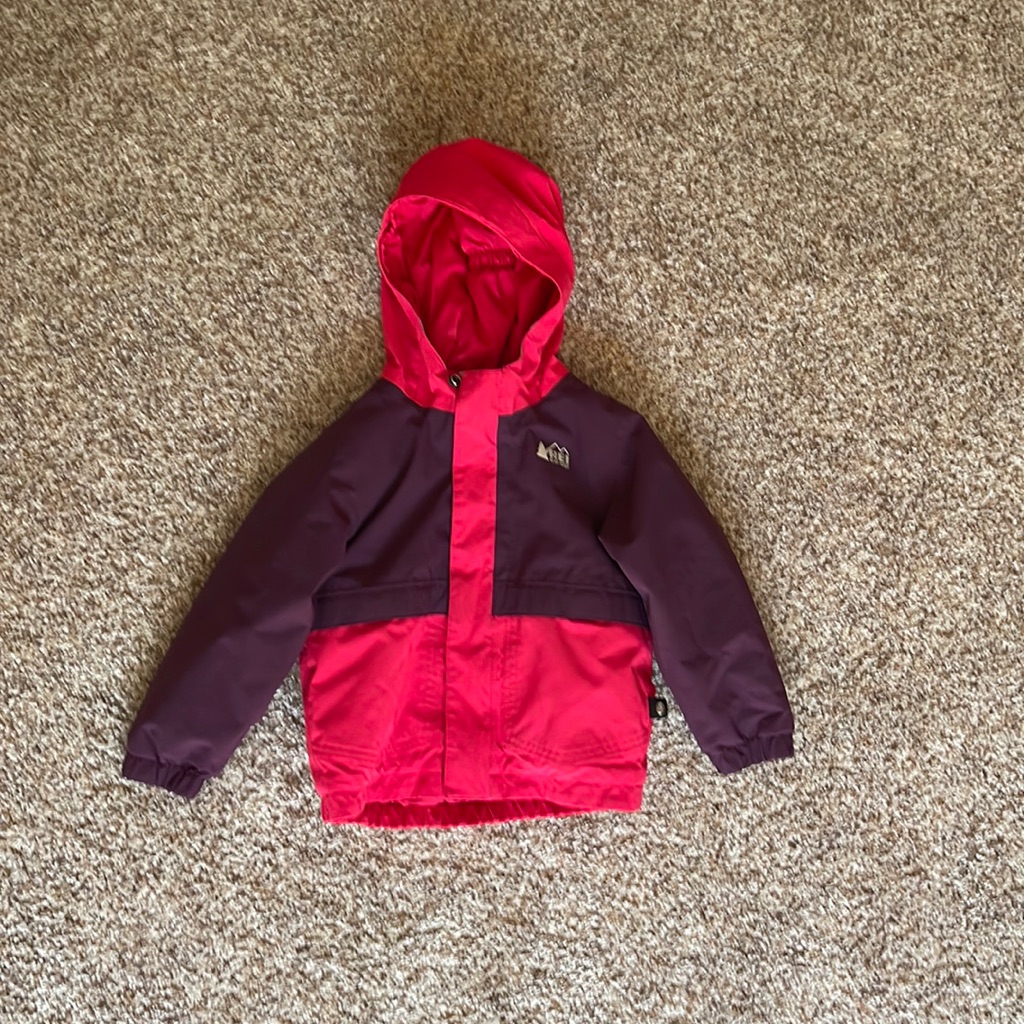
The current Timber Mountain uses a two-layer waterproof and breathable shell with fully taped seams. Synthetic insulation is mapped across the jacket, with 120 g in the lower body and 80 g in the upper body, hood, collar, and sleeves. Its fleece upper-body lining adds comfort without relying on a full heavyweight fleece construction throughout.
Practical details include a low-profile powder skirt, adjustable cuffs, stretch inner cuffs with thumbholes, a sleeve pocket, and reflective elements. Those features make it more appropriate for regular snowy activities than an ordinary water-resistant puffer.
Its trade-off is specialization. If your child lives somewhere with relatively mild, dry winters and spends limited time outside, a lighter everyday coat may be easier to wear. The current Timber Mountain version also has a limited independent review history, so long-term durability should not be overstated.
Pros
✅ Waterproof and windproof construction
✅ Mapped synthetic insulation for winter warmth
✅ Powder skirt and adjustable cuffs for snow protection
✅ Reflective details and practical storage pockets
Cons
❌ More technical than some children need for everyday use
❌ Bulkier than a lightweight insulated hoodie
❌ Limited review history for the current version
Who should skip it: Families in milder climates who mainly need a jacket for brief outdoor trips can consider the Columbia Pike Lake II or REI Microtrek instead.
Alternative: The North Face Freedom Insulated Jacket is worth considering when skiing or snowboarding is the primary activity.
Keep your toddler warm and dry with this insulated, waterproof, windproof, and breathable jacket—complete with a cozy fleece lining in purple/pink. In good condition with no rips, stains, or tears, it’s perfect for rainy, blustery days of play. Ready to grab it? Message me to reserve or click to buy now!
2. The North Face Boys’ McMurdo Parka — Best Full-Coverage Parka
The North Face McMurdo Parka takes a more traditional approach to winter protection. Instead of prioritizing a lightweight, athletic silhouette, it combines substantial down insulation with a longer parka design intended to provide additional coverage through cold weather.
Best For: Cold-weather commuting, longer outdoor waits, and children who prefer a substantial winter coat over a shorter puffer.
The boys’ McMurdo uses 600-fill down insulation and waterproof, windproof construction. The longer cut helps cover more of the upper legs and lower body than a waist-length jacket, making it appealing for school mornings, outdoor events, and cold days with less continuous activity.
That extra coverage can be particularly useful when a child spends time standing rather than running around. However, warmth also depends on the layers underneath, wind exposure, activity, and the individual child. The 600-fill specification describes down loft, not a certified temperature limit.
The main disadvantages are weight, bulk, and price. A full parka can feel restrictive to children who prefer lightweight jackets, and the McMurdo costs considerably more than many everyday synthetic puffers.
Pros
✅ Longer cut provides additional coverage
✅ 600-fill down insulation
✅ Waterproof and windproof construction
✅ Suitable for cold everyday outings
Cons
❌ Premium price
❌ Bulkier than short insulated jackets
❌ Less convenient for highly active children who prefer lighter layers
Who should skip it: If your child spends most winter days skiing, running, or climbing, a more technical and less bulky snow jacket may be preferable.
Alternative: REI Timber Mountain provides a waterproof, snow-ready design with synthetic insulation and a more activity-focused construction.

Keep him warm, dry and exploring in The North Face Boys' McMurdo Parka — waterproof DryVent shell, non‑PFC DWR and 600‑fill recycled down deliver serious warmth and coverage. With adjustable cuffs, secure pockets and a 3‑piece hood, it’s built for snowy adventures. Shop now and gear him up for every cold‑weather day.
3. Patagonia Kids’ 4-in-1 Everyday Jacket — Best Multi-Season System
Patagonia’s 4-in-1 Everyday Jacket is the most flexible choice in this roundup because it combines a waterproof outer shell with a removable insulated jacket. The two pieces can be worn together or separately, and the inner jacket is reversible.
Best For: Families dealing with changing temperatures, rainy winters, cold school days, and transitional seasons.
The outer layer uses Patagonia’s H2No Performance Standard waterproof and breathable construction. The removable inner jacket adds insulation and can be worn independently when the weather is cold but dry. On milder wet days, the outer shell can be used without the liner.
This arrangement gives the system a much wider usable range than a fixed heavyweight coat. Rather than relying on one insulation level for every day, parents can adjust the setup according to the weather forecast and activity.
There is a practical drawback: removable systems require a little more organization. Children need to manage the separate pieces, and attaching or removing the liner takes more effort than simply putting on a conventional puffer.
The initial cost is also higher than many single-piece jackets, although the versatility may be worthwhile if the same system is used across several parts of the year.
Pros
✅ Waterproof H2No outer shell
✅ Removable insulated inner jacket
✅ Four wearing configurations
✅ Useful beyond the coldest part of winter
Cons
❌ Higher initial cost
❌ Two-piece construction requires more handling
❌ More complicated than a single everyday puffer
Who should skip it: If you only need a coat for one specific winter condition, a conventional insulated jacket may provide better value.
Alternative: Columbia Pike Lake II is a simpler option for everyday cold-weather wear, while REI Timber Mountain prioritizes dedicated snow protection.
4. The North Face Boys’ Freedom Insulated Jacket — Best Snow Jacket
The North Face Freedom Insulated Jacket is designed for children who spend meaningful time in the snow. Its waterproof construction, synthetic insulation, and snow-sport details make it a more specialized choice than an everyday school puffer.
Best For: Skiing, snowboarding, sledding, and active winter days involving snow and moisture.
The Freedom uses waterproof and breathable construction alongside Heatseeker synthetic insulation. Its technical design is intended to keep precipitation out while retaining warmth during winter activities.
Snow-sport features such as an adjustable hood and snow-protection details are more useful when a child is regularly falling into snow, sitting on ski lifts, or playing outside for extended periods. A conventional water-resistant puffer is not designed around those same conditions.
The trade-off is that technical outerwear is not always the most comfortable or economical choice for ordinary daily use. Children who rarely ski or spend long periods in wet snow may not need all of the Freedom’s features.
Pros
✅ Waterproof construction for snowy conditions
✅ Synthetic insulation
✅ Snow-oriented design and adjustable features
✅ More suitable for extended snow play than a basic puffer
Cons
❌ Snow-sport features may be unnecessary for school use
❌ More expensive than simple insulated jackets
❌ Exact model, size, and seasonal availability require checking
Who should skip it: Families who mainly need a jacket for short trips and dry winter weather can choose a lighter everyday model.
Alternative: REI Timber Mountain offers another waterproof insulated construction with a powder skirt and practical snow-ready details.
Equip him with waterproof DryVent protection, 200g Heatseeker warmth, and kid-friendly features like a helmet-compatible hood and grow-with-them cuffs. Don’t let the weather slow him down — get reliable, sustainable performance built to last. Buy now and gear him up for adventure.
5. Columbia Kids’ Pike Lake II Hooded Jacket — Best Everyday Synthetic Puffer
The Columbia Pike Lake II is a practical everyday choice because it combines synthetic insulation, a thermal-reflective lining, and a child-focused growth feature without moving into the price and complexity of a technical ski jacket.
Best For: School days, casual outdoor activities, everyday cold weather, and families looking for a jacket with adjustable sleeve length.
Its Thermarator synthetic insulation works with Columbia’s Omni-Heat reflective lining to help retain warmth. The hood, adjustable cuffs, and waist-length puffer design make it suitable for a wide range of everyday winter situations.
One of the most useful features is Columbia’s OUTGROWN system. Hidden seams allow the sleeves to be extended by approximately 1.5 inches as a child grows. That may improve the jacket’s usable life, although it cannot guarantee an additional season if the child outgrows the chest or overall length.
The most important limitation is weather protection. Columbia classifies the Pike Lake II as water-repellent, not waterproof. It can handle light moisture, but it should not replace a sealed waterproof jacket for sustained wet snow or rain.
Pros
✅ Omni-Heat reflective lining
✅ Thermarator synthetic insulation
✅ OUTGROWN sleeve-extension system
✅ Comfortable everyday puffer construction
Cons
❌ Water-resistant rather than waterproof
❌ Less specialized for skiing and sustained snow play
❌ Sleeve extension cannot compensate for every type of growth
Who should skip it: If your child regularly plays in wet snow or spends long periods outdoors during heavy precipitation, choose a waterproof model.
Alternative: REI Timber Mountain provides more complete weather protection, while The North Face Perrito offers a reversible everyday design.
Columbia Kids Pike Lake II Hooded Jacket keeps your little one cozy with Omni-Heat thermal reflective lining and 100% recycled Thermarator insulation. The OUTGROWN grow system, adjustable hood and chin guard deliver comfort, protection and extra wear as they grow. Ready for chilly adventures—add it to your cart today and outfit them for the season.
6. Patagonia Kids’ Down Sweater Jacket — Best Lightweight Down Jacket
Patagonia’s Kids’ Down Sweater is designed for warmth without the bulk of a traditional heavyweight parka. Its compressible down insulation makes it useful for travel, layering, and relatively dry winter days.
Best For: Lightweight cold-weather warmth, school, travel, and children who prefer a less bulky jacket.
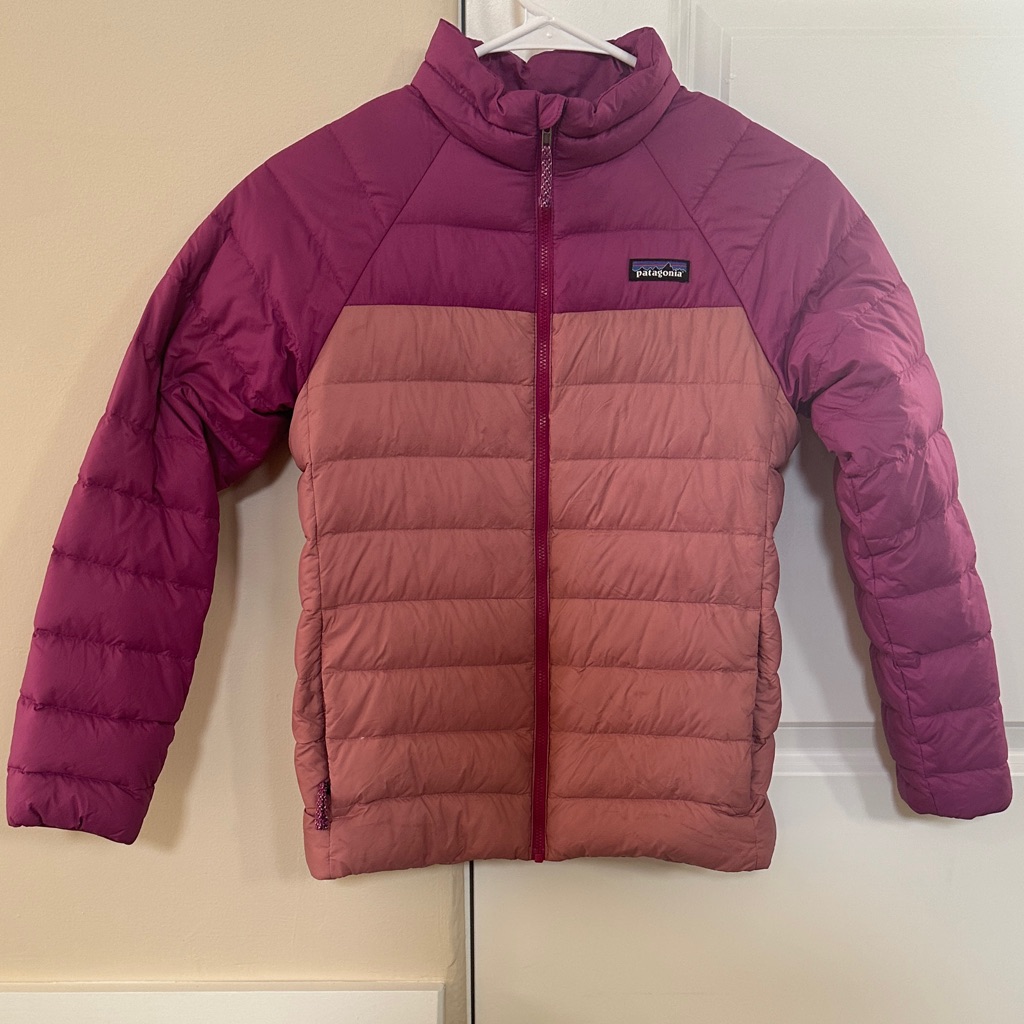
The current jacket uses 600-fill-power recycled down and a NetPlus recycled-nylon ripstop shell made from recycled fishing nets. A durable water-repellent finish helps resist light moisture, while the relatively streamlined construction makes the jacket easy to wear beneath a separate shell.
Its design is particularly appealing to children who dislike thick coats. It can provide useful insulation without the extra fabric and hardware of a snow-sport jacket.
However, this exact Down Sweater jacket does not include a hood, and the shell is water-resistant rather than waterproof. Down can also lose insulating performance when it becomes thoroughly wet, so a waterproof outer layer is important for sustained snow or rain.
Parents should also distinguish this jacket from Patagonia’s Down Sweater Hoody when comparing offers. They are different configurations, and the hooded version should not be silently substituted into a jacket-specific product group.
Pros
✅ 600-fill recycled down insulation
✅ Lightweight and compressible
✅ Recycled-nylon shell with water-repellent finish
✅ Easy to layer beneath a waterproof jacket
Cons
❌ Exact jacket version has no hood
❌ Not waterproof
❌ Requires additional protection during prolonged wet conditions
Who should skip it: If you need a single jacket for frequent wet snow, choose a waterproof insulated model rather than relying on the Down Sweater alone.
Alternative: REI Snowballer provides a more substantial down-filled design with an insulated hood and windproof shell.
Patagonia Kids Down Sweater Jacket keeps your little one cozy and cute with a stylish, warm puffer in playful pink and purple. Ideal for cold-weather days and perfect for layering on the playground or around town. Add it to your cart now and give them the warmth and style they’ll love.
7. The North Face Boys’ Reversible Perrito Hooded Jacket — Best Reversible Everyday Jacket
The North Face Reversible Perrito is an appealing everyday option for children who want a warm jacket without the look or feel of technical snow gear. Its reversible design offers two different appearances in one insulated jacket.
Best For: School, casual winter outings, family travel, and children who appreciate flexible styling.
The Perrito uses synthetic insulation and a water-repellent exterior. The hood provides additional coverage, while the reversible construction allows the jacket to be worn in either configuration.
For a child who wants to wear the same jacket with different everyday outfits, that versatility can make it more useful than a highly specialized outer layer. Its compact, casual design is also easier to integrate into ordinary school routines.
The main limitation is wet-weather performance. The Perrito should not be confused with The North Face Freedom or another waterproof snow jacket. Water repellency can help with brief exposure to moisture, but it does not provide the same protection as a waterproof membrane and sealed seams.
Pros
✅ Reversible construction offers two looks
✅ Synthetic insulation for everyday warmth
✅ Hooded design
✅ Less technical appearance than ski jackets
Cons
❌ Water-repellent rather than waterproof
❌ Less suited to prolonged snow activities
❌ Size and color availability can vary by season
Who should skip it: Parents shopping for regular skiing or extended snow play should prioritize a waterproof insulated jacket instead.
Alternative: Columbia Pike Lake II provides another everyday synthetic-insulated option with thermal-reflective lining and extendable sleeves.
Keep him warm and ready for anything — grab The North Face Boys' Reversible Perrito Hooded Jacket today.
Reversible, water-repellent, and made with recycled polyester plus 78 g synthetic insulation, it’s two looks in one that’s built for snow-day adventures.
Shop now and outfit him with packable, move-with-him warmth for every cold-weather outing.
8. REI Co-op Snowballer Down Jacket — Best Warm Down Puffer
The REI Co-op Snowballer is designed for families who want substantial down warmth in a shorter jacket rather than the longer silhouette of a parka.
Best For: Cold-weather outings, dry winter conditions, and children who prefer a warm down puffer with a hood.
REI uses 650-fill-power down with a windproof, water-resistant recycled-polyester shell. The down-filled hood, dropped back hem, storm guard, and elasticized openings help reduce exposure to cold air.
REI describes the Snowballer as its warmest kids’ down jacket. That is a useful indication of its positioning within REI’s own range, although it is not a standardized comparison against every jacket from other brands.
Its down insulation is a meaningful alternative to the synthetic products in this roundup, particularly for families who value loft and warmth. However, water-resistant does not mean waterproof. A separate waterproof shell is still advisable during sustained rain or wet snow.
As with other down products, follow the manufacturer’s washing and drying instructions carefully to preserve loft.
Pros
✅ 650-fill-power down insulation
✅ Windproof recycled-polyester shell
✅ Insulated hood and dropped back hem
✅ Substantial warmth without a full-length parka
Cons
❌ Not waterproof
❌ Requires appropriate down care
❌ Some colors and sizes may have limited availability
Who should skip it: Families who need reliable protection through prolonged wet snow should choose a waterproof insulated jacket instead.
Alternative: The North Face McMurdo provides a longer waterproof parka design, while Patagonia’s Down Sweater is more streamlined for layering.
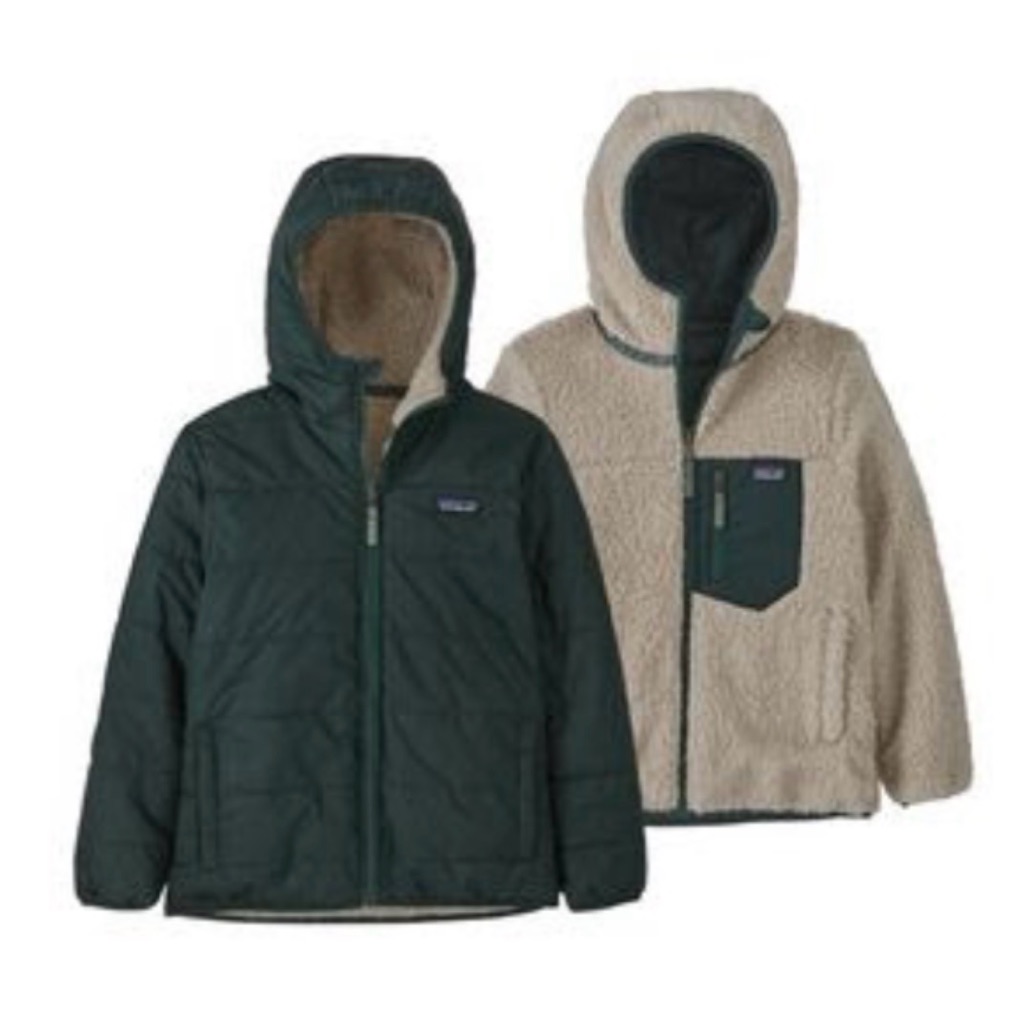
9. Patagonia Kids’ Reversible Ready Freddy Hoody — Best Fleece-Lined Reversible Option
The Patagonia Ready Freddy combines two familiar winter-jacket styles: a quilted insulated exterior and a soft fleece reverse. It is a practical choice for children who prefer a cozy fleece feel but still need an everyday insulated outer layer.
Best For: School, casual winter outings, cool-weather travel, and children who prefer soft fleece against their clothing.
The Ready Freddy uses 60 g Thermogreen recycled-polyester insulation between the water-resistant quilted side and the fleece side. The reversible design gives it two distinct looks, while the insulated hood, elastic-bound cuffs, and hem help retain warmth.
The synthetic insulation is also useful when conditions become damp. Unlike untreated down, synthetic insulation generally retains more of its insulating ability when wet.
The main limitation is that Ready Freddy is not a waterproof snow jacket. It is better suited to everyday winter conditions and relatively brief exposure to moisture than sustained wet-weather activities.
Pros
✅ Soft fleece reverse
✅ 60 g recycled synthetic insulation
✅ Reversible design provides two styles
✅ Insulated hood and elastic-bound openings
Cons
❌ Not waterproof
❌ Less appropriate for prolonged wet snow
❌ Fleece styling will not appeal to every child
Who should skip it: If your child needs a jacket primarily for skiing, snowboarding, or frequent wet-weather play, choose a waterproof model.
Alternative: The North Face Reversible Perrito offers another reversible everyday design, while Patagonia’s 4-in-1 Everyday Jacket adds a waterproof outer shell.
Keep your kid cozy and stylish with this Patagonia Kids Reversible Ready Freddy Hoody — forest green one side, beige the other, with hood and front pocket. Size Medium (10) and in great used condition from a smoke-free home; a very small snag is pictured but there are no holes. Snag this versatile, two-in-one jacket today — add it to your cart before it’s gone!
10. REI Co-op Microtrek Insulated Hoodie — Best Lightweight Active Layer
The REI Co-op Microtrek is the lightest and most packable option in this roundup. It is designed for children who need manageable warmth during active outdoor use rather than a heavyweight coat for standing in severe cold.
Best For: Mild winters, hiking, travel, active children, and layering beneath a waterproof shell.
Microtrek uses 60 g recycled-polyester insulation and a lightweight recycled-polyester ripstop shell. Its durable water-repellent treatment helps shed light moisture, while the jacket packs into its own pocket when it is not needed.
The approximately 9.6-ounce weight makes it easy to keep in a backpack or travel bag. It is useful for days when the temperature changes and children need a jacket they can remove without carrying a bulky parka.
However, lightweight insulation has limits. Microtrek is not intended to provide the same stand-alone protection as Timber Mountain or McMurdo during severe cold, wind, and sustained precipitation.
Its strongest use is as a flexible insulating layer that can be combined with an appropriate waterproof shell when conditions demand more protection.
Pros
✅ Lightweight 60 g synthetic insulation
✅ Packs into its own pocket
✅ Comfortable for active use
✅ Suitable as an insulating midlayer
Cons
❌ Not a heavyweight winter coat
❌ Water-resistant rather than waterproof
❌ Requires additional layering in severe cold
Who should skip it: If your child needs one stand-alone jacket for harsh winter conditions, choose a more substantial waterproof or heavily insulated model.
Alternative: Patagonia Down Sweater provides compressible down warmth, while REI Timber Mountain is a more complete winter outer layer.
Boys’ Winter Jackets We Considered but Didn’t Select
Columbia Alpine Action II: This is a relevant insulated snow-jacket design, but current direct availability is inconsistent. We prioritized alternatives with clearer current listings rather than recommending a model shoppers may struggle to find in the right size.
Older REI Timber Mountain versions: REI has sold several generations of Timber Mountain outerwear. We focused on the current insulated model rather than combining historical features and reviews from different versions.
Lands’ End Squall 3-in-1 Parka: The Squall family has a relevant winter-weather design, but the exact current variant needs further availability verification before it can be recommended alongside the selected products.
The North Face Antora: Antora is a waterproof rain-shell option, but it does not provide the built-in insulation expected from a complete winter-coat recommendation.
Patagonia Torrentshell 3L: A waterproof shell can be useful in a layered winter system, but it should not be presented as an insulated winter jacket by itself.
How to Choose the Right Winter Jacket for Your Child
Waterproof vs. Water-Resistant Jackets
This is one of the most important distinctions when choosing boys’ winter coats.
A waterproof jacket uses a protective membrane or coating, and well-designed models typically include sealed seams to help prevent water from entering. These features matter during prolonged exposure to wet snow, rain, or slushy conditions.
A water-resistant jacket usually relies on its shell fabric and durable water-repellent finish to shed lighter moisture. That can be sufficient for short outdoor trips or relatively dry cold weather, but it is not equivalent to full waterproof protection.
For regular skiing or wet snow play, prioritize a waterproof insulated design such as REI Timber Mountain or The North Face Freedom. For ordinary school use in drier conditions, Columbia Pike Lake II or another insulated puffer may be sufficient.
Down vs. Synthetic Insulation
Down is valued for its loft, warmth-to-weight ratio, and compressibility. A down jacket can provide substantial warmth without necessarily feeling as bulky as a traditional heavy coat.
Synthetic insulation is generally more tolerant of damp conditions and can dry faster. It is common in snow jackets because children may repeatedly come into contact with wet snow during outdoor activities.
Neither insulation type is automatically better in every situation. Down is appealing for dry cold and lightweight warmth, while synthetic insulation is often the more practical choice when moisture and activity are important concerns.
What Does Fill Power Mean?
Fill power describes the loft of down under standardized conditions. For example, a 650-fill jacket uses down with a higher loft rating than a 600-fill jacket.
However, fill power is not a direct temperature rating. The amount of down, its distribution, shell construction, fit, and other clothing layers also influence warmth.
A 650-fill jacket is not automatically warmer than every 600-fill jacket. Compare the complete garment rather than relying on a single number.
Getting the Right Fit
Children need enough room to move their arms, bend, and play comfortably. They also need space for appropriate base and midlayers without the jacket becoming excessively tight.
Before buying, check chest measurements, sleeve length, torso length, and the manufacturer’s size chart. Children’s sizes are not perfectly consistent between brands.
Buying a jacket several sizes too large can reduce comfort and make cuffs, hoods, and hems less effective. Growth features such as Columbia’s OUTGROWN system can help, but they do not replace choosing the right size initially.
When Is a Parka Better Than a Puffer?
Parkas provide additional body coverage and are often appealing for colder, less active situations such as waiting outdoors or commuting to school.
Shorter puffers generally offer easier movement and can be more comfortable during active play. Some also pack down more easily for travel.
Choose based on your child’s routine rather than assuming that a longer coat is automatically warmer under every condition.
How Much Should You Spend?
A more expensive jacket is not necessarily the right purchase. A premium parka may include features that are unnecessary in a mild climate, while a cheaper water-resistant puffer may not provide enough protection for frequent snow activities.
Prioritize appropriate weather protection and fit first. Then compare insulation, care requirements, durability features, and current offers.
Families shopping for multiple winter wardrobes can also explore our upcoming guides to winter outerwear for men and Patagonia winter jackets.
How to Layer Boys’ Winter Clothing
Layering helps children adjust to changes in weather and activity. A warm jacket is important, but the clothing underneath can make a major difference to comfort.
Base Layer → Insulating Midlayer → Weather-Protective Outer Layer
Base Layer
Start with comfortable clothing that manages moisture. Suitable synthetic or wool-blend base layers can help keep skin drier during active winter play.
Midlayer
Add a fleece or lighter insulated layer when additional warmth is needed. This is particularly useful with a waterproof shell that provides weather protection but has little built-in insulation.
Outer Layer
The outermost jacket should match the conditions. Waterproof insulated jackets work well for sustained wet snow, while a down puffer can be suitable for dry cold or as part of a larger layering system.
Avoid adding so many layers that your child cannot move comfortably or becomes excessively hot during activity.
Important: Winter Coats and Car-Seat Safety
The American Academy of Pediatrics advises against wearing bulky winter coats beneath a child car-seat harness. Thick padding can compress during a crash, leaving the harness too loose. Secure the child using appropriately fitted thinner layers, then place a coat or blanket over the properly fastened harness when needed. Always follow the car-seat manufacturer’s instructions.
Frequently Asked Questions
What are the best boys’ winter jackets for snow?
Waterproof insulated jackets are generally the most practical option for regular snow play. Look for sealed seams, adequate insulation, an adjustable hood, comfortable cuffs, and snow-specific features when needed.
Are down jackets warmer than synthetic jackets?
Not automatically. Down offers excellent warmth relative to its weight, but total insulation, construction, fit, and layering determine the actual result. Synthetic insulation often performs better when damp.
What is the difference between waterproof and water-resistant winter coats?
Waterproof coats are designed to prevent water penetration through protective materials and construction. Water-resistant coats can repel light moisture but may eventually become wet during sustained rain or snow.
What kind of winter jacket is best for school?
An everyday insulated puffer may be sufficient for short outdoor periods in relatively dry conditions. Children who regularly walk long distances or play in wet snow may need a waterproof insulated jacket instead.
Should I buy a winter coat one size larger?
Choose a size that accommodates appropriate layers while maintaining comfortable movement and a secure fit. Excessively large coats can reduce comfort and weather protection. Check the manufacturer’s size chart rather than automatically sizing up.
Are boys’ puffer jackets suitable for skiing?
A basic puffer may provide insulation, but skiing generally calls for weather protection and snow-specific features. A waterproof insulated ski jacket or an appropriate layered shell system is usually more suitable.
How should I wash a child’s winter jacket?
Follow the care label for the exact product. Synthetic and down jackets may require different washing and drying methods. Down insulation needs to dry thoroughly to restore loft, while waterproof outerwear may need special care to maintain its water-repellent finish.
Can children wear bulky winter coats in car seats?
Bulky coats should not be worn underneath a child car-seat harness because the padding can compress during a crash and leave the straps loose. Use appropriate thinner layers beneath the secured harness and add warmth over the straps according to car-seat safety guidance.
Final Verdict: Which Boys’ Winter Jacket Should You Buy?
The REI Co-op Timber Mountain is our best overall choice for families needing a waterproof insulated jacket that can handle regular winter activity. It combines weather protection, synthetic insulation, and useful snow-specific features without requiring a separate shell.
The North Face McMurdo is more appropriate for shoppers who prefer the coverage of a substantial parka. Patagonia’s 4-in-1 Everyday Jacket offers a more adjustable approach for changing weather, while The North Face Freedom makes sense when skiing and snowboarding are central to your child’s winter routine.
For everyday school wear, Columbia Pike Lake II and The North Face Reversible Perrito offer simpler insulated designs. Patagonia’s Down Sweater and REI Snowballer are alternatives for families seeking down warmth, while Ready Freddy adds reversible fleece comfort.
REI Microtrek completes the list as a lightweight option for active children, travel, and layering rather than severe-weather stand-alone protection.
Best Overall: REI Co-op Timber Mountain
Best Full-Coverage Parka: The North Face McMurdo
Best Multi-Season System: Patagonia 4-in-1 Everyday
Best Snow Jacket: The North Face Freedom Insulated
Best Everyday Puffer: Columbia Pike Lake II
Best Lightweight Down: Patagonia Down Sweater
Best Reversible Everyday Jacket: The North Face Perrito
Best Warm Down Puffer: REI Co-op Snowballer
Best Fleece-Lined Option: Patagonia Ready Freddy
Best Lightweight Active Layer: REI Co-op Microtrek
Sources
- REI Co-op — Timber Mountain, Snowballer, and Microtrek product specifications
- The North Face — McMurdo, Freedom Insulated, and Reversible Perrito product documentation
- Patagonia — Kids’ 4-in-1 Everyday Jacket, Down Sweater, and Reversible Ready Freddy product specifications
- Columbia Sportswear — Kids’ Pike Lake II Hooded Jacket specifications
- American Academy of Pediatrics — Winter Car Seat Safety Tips