The most popular action cameras for travelers are no longer dominated by a single brand. DJI, GoPro, and Insta360 now offer very different strengths, and the best choice depends on how you travel. For most people, the DJI Osmo Action 6 is the strongest all-around option because it combines excellent stabilization, deep waterproofing, strong low-light performance, built-in storage, and up to 8K recording in a compact body.
The GoPro HERO13 Black remains the better choice if you already use GoPro mounts and want the brand’s mature accessory ecosystem. The older DJI Osmo Action 5 Pro is the value pick, while Insta360’s Ace Pro 2, X5, and GO Ultra solve more specialized travel problems such as vlogging, 360-degree capture, and hands-free point-of-view footage.
Resolution alone should not decide what goes in your bag. Waterproofing, stabilization, battery endurance, weight, storage, mounting options, low-light performance, and editing workflow usually matter more during an actual trip than whether a specification sheet says 5.3K or 8K.
Quick Answer: Best Action Cameras for Travel
Best Overall: DJI Osmo Action 6 — the strongest balance of image quality, stabilization, waterproofing, battery, built-in storage, and travel-friendly features.
Best GoPro: GoPro HERO13 Black — the best fit for travelers who value GoPro mounts, Lens Mods, GPS, and the established GoPro ecosystem.
Best Value: DJI Osmo Action 5 Pro — 4K/120, 20-meter waterproofing, strong battery life, and 47GB of usable internal storage for less than the newer flagship.
Best for Vlogging and Night Travel: Insta360 Ace Pro 2 — a large sensor, flip screen, PureVideo processing, and 8K capture make it especially useful for solo creators and city travel.
Best 360 Camera: Insta360 X5 — capture everything around you first and choose the framing later.
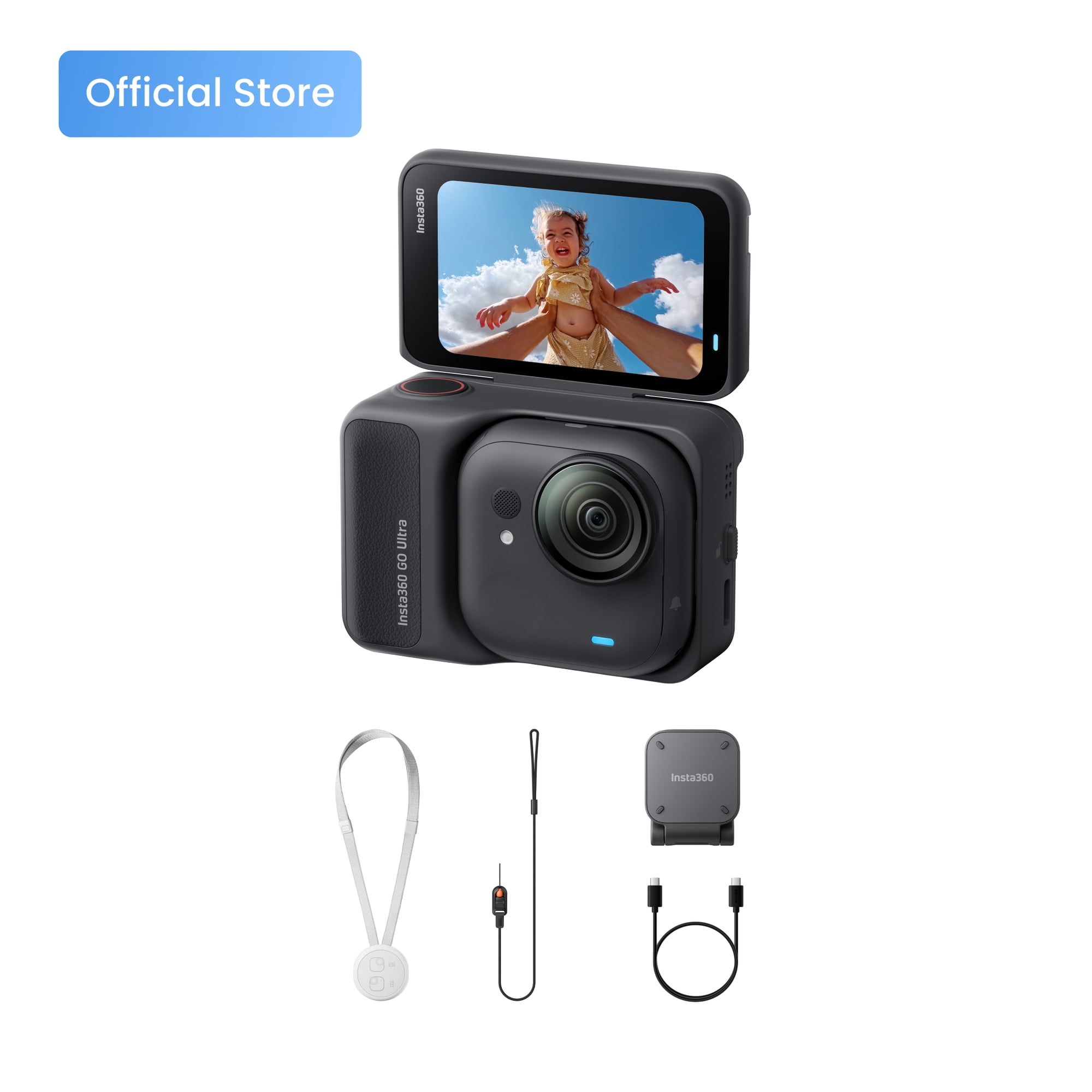
Best Hands-Free Camera: Insta360 GO Ultra — a tiny magnetic camera pod designed for lightweight wearable POV capture.
How We Chose These Action Cameras
We compared current action cameras using manufacturer specifications, U.S. availability, independent testing, and the factors that matter most during travel. Those include stabilization, video quality, low-light performance, waterproof depth, battery endurance, weight, microphones, mounting systems, storage options, durability, and editing workflow.
Discompare did not perform its own physical camera testing for this guide. Performance judgments are based on official product documentation combined with reputable independent testing.
We also avoided ranking cameras simply by maximum resolution. An 8K camera is not automatically better for travel than a 4K model if it requires larger memory cards, creates heavier editing files, or provides less useful battery life, waterproofing, or mounting flexibility.
Best Travel Action Cameras at a Glance
| Model | Best For | Max Video | Weight | Caseless Waterproofing | Travel Advantage | Main Trade-Off |
|---|---|---|---|---|---|---|
| DJI Osmo Action 6 | Best overall | 8K/30, 4K/120 | 149 g | 20 m | 50GB internal storage, strong stabilization and low light | U.S. buyers should verify seller warranty/service terms |
| GoPro HERO13 Black | GoPro ecosystem | 5.3K/60, 4K/120 | About 154 g | 10 m | Mounts, GPS and HB-Series Lens Mods | Less caseless waterproof depth than DJI rivals |
| DJI Osmo Action 5 Pro | Best value | 4K/120 | 146 g | 20 m | 47GB internal storage and strong battery | No resolution above 4K |
| Insta360 Ace Pro 2 | Vlogging and night travel | 8K/30, 4K/120 | About 177 g | 12 m | Flip screen and strong low-light tools | Heavier than DJI and GoPro conventional cameras |
| Insta360 X5 | 360 travel capture | 8K/30 360 | 200 g | 15 m | Capture everything, frame later | More editing and exposed dual lenses |
| Insta360 GO Ultra | Hands-free POV | 4K/60 | 52.9 g camera pod | 10 m camera pod | Tiny magnetic wearable capture | High price and limited waterproofing with Action Pod attached |
Current Prices for Our Top Action Camera Picks
Action-camera pricing changes frequently around travel seasons, holiday sales, and bundle promotions. Compare current U.S. offers below rather than relying on short-term discounts quoted in the article.

1. DJI Osmo Action 6 — Best Overall for Travelers
Best for: travelers who want one conventional action camera that can handle water, low light, hiking, sports, vlogging, and demanding stabilization.
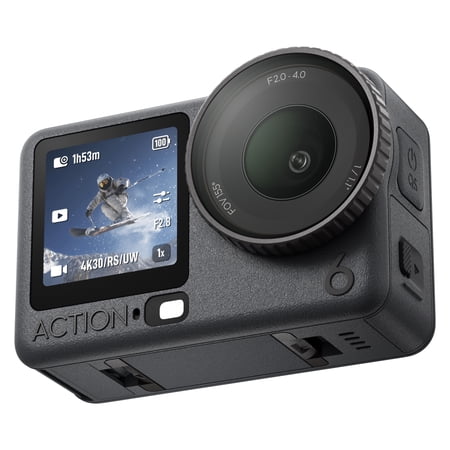
DJI Osmo Action 6 is the strongest all-around travel action camera in the current market. It uses a 1/1.1-inch square sensor and introduces a variable f/2.0–f/4.0 aperture, giving DJI more flexibility in low light and different shooting conditions than typical fixed-aperture action cameras.
The camera can record up to 8K at 30 fps and 4K at 120 fps. The practical benefit of 8K is not that every traveler should deliver videos in 8K; it gives editors more room to crop or reframe while retaining a 4K output. For ordinary vacation clips, 4K remains much easier to store, transfer, and edit.
Travelers also benefit from features that receive less attention than resolution. Action 6 is waterproof to 20 meters without an additional housing, includes 50GB of internal storage, and has front and rear touchscreens. Built-in storage can be particularly useful if your microSD card fills up or you accidentally leave a card in your laptop at the hotel.
Independent testing currently places Action 6 at the top of the action-camera category. Tom’s Guide recorded around 120 minutes at 4K/60 in its testing and praised stabilization, audio, waterproofing, image quality, and low-light performance.
The one issue U.S. shoppers should investigate before buying is support. Action 6’s U.S. distribution and service path has been less straightforward than GoPro’s established domestic retail ecosystem, so verify warranty and service terms with the specific seller you choose.
Pros
✅ Excellent all-around video quality and stabilization
✅ 20-meter waterproofing without a housing
✅ 50GB built-in storage
✅ Variable aperture and strong low-light capability
✅ 8K adds useful cropping flexibility
Cons
❌ 8K files consume storage quickly
❌ U.S. warranty/service path should be verified with the retailer
❌ Most casual travelers do not need the highest recording modes
Who should skip it: travelers already heavily invested in GoPro accessories or buyers who want the simplest established U.S. support path.
Alternative: GoPro HERO13 Black for GoPro mounts and creative Lens Mods, or Action 5 Pro if value matters more than 8K.
- DJI’s first action camera with a variable aperture (f/2.0–f/4.0), moving away from the typical fixed-aperture design.
- Multiple aperture modes let you adapt to a wide range of shooting scenarios.
- Larger maximum aperture enables greater creative control (e.g., better low-light capture and more pronounced background separation).
- Positioning emphasizes expanded creative possibilities compared with prior fixed-aperture action cameras.
Note: the provided product description was truncated ("With a maximum..."), so this summary covers only the text supplied. If you share the rest of the description, I can produce a more complete summary.
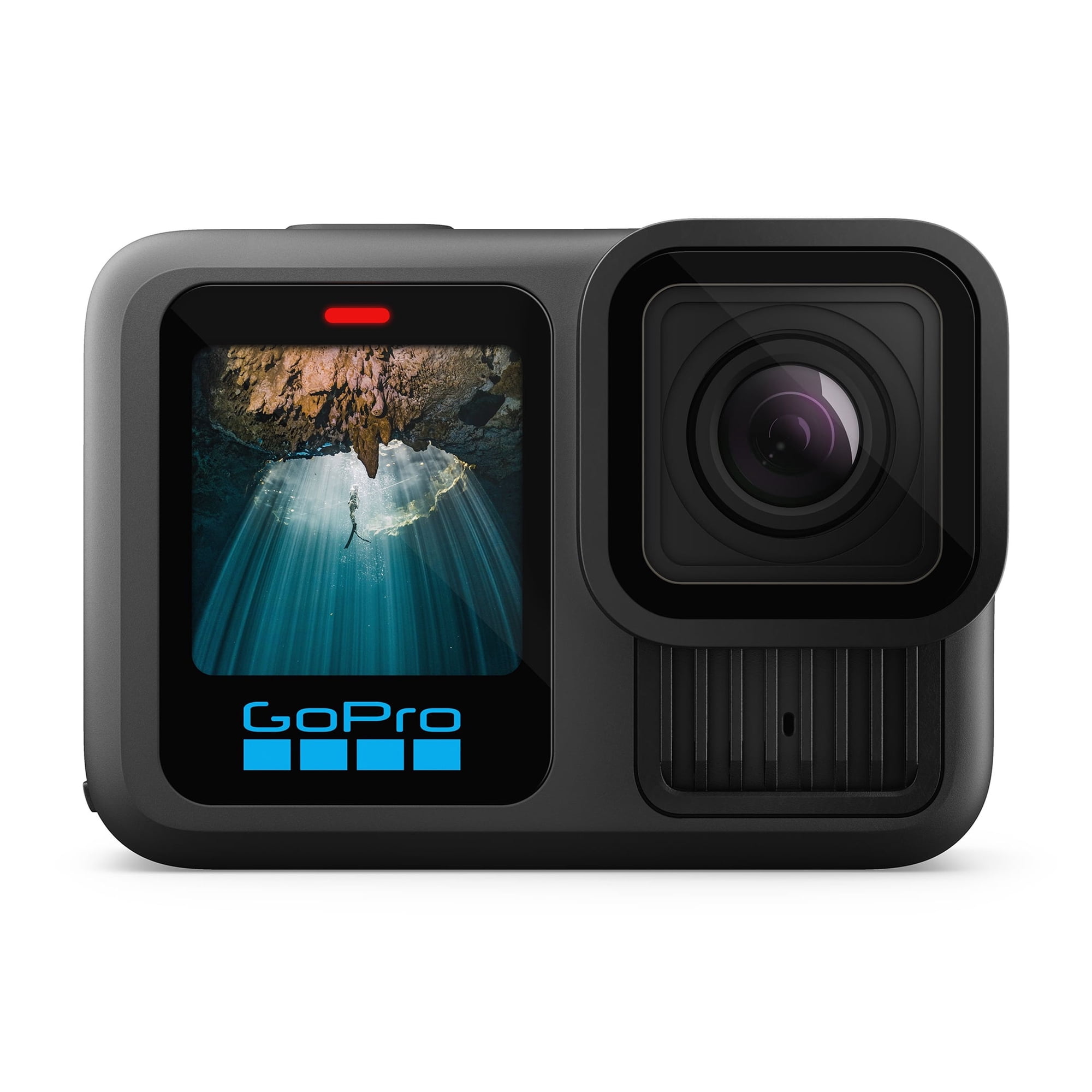
2. GoPro HERO13 Black — Best GoPro for Travel
Best for: travelers who want GoPro’s mature mounting system, GPS, familiar software ecosystem, and optional Lens Mods.
GoPro HERO13 Black remains a strong travel camera even as newer competitors push sensor size and resolution further. Its advantage is less about winning every specification and more about how many ways you can configure it.
HERO13 Black records 5.3K at 60 fps and 4K at 120 fps, with HyperSmooth 6.0 stabilization. It is waterproof to 10 meters without a case and includes GoPro’s folding mounting fingers plus a standard 1/4-20 tripod thread.
The magnetic latch system makes changing between compatible mounts quicker, which can be genuinely useful when you move from a handheld grip to a bike, helmet, chest mount, or tripod several times during one day.
GoPro’s HB-Series Lens Mods are another differentiator. Ultra Wide, Macro, ND filters, and other optical accessories give advanced users more creative flexibility than a typical fixed-lens action camera.
The trade-off is that HERO13 Black does not match DJI’s 20-meter caseless waterproof rating, and low-light performance is not its strongest reason to buy. Additional Lens Mods and accessories also add cost and take up more luggage space.
Pros
✅ Strong 5.3K/60 and 4K/120 recording
✅ Excellent HyperSmooth stabilization
✅ Huge mount and accessory ecosystem
✅ GPS
✅ HB-Series Lens Mods provide creative flexibility
Cons
❌ Only 10-meter waterproofing without a housing
❌ Low light is not its strongest advantage
❌ Lens Mods and accessories increase total cost
Who should skip it: buyers starting from scratch who value deep waterproofing, built-in storage, or low-light performance more than GoPro compatibility.
Alternative: DJI Osmo Action 6 for the strongest general-purpose performance.
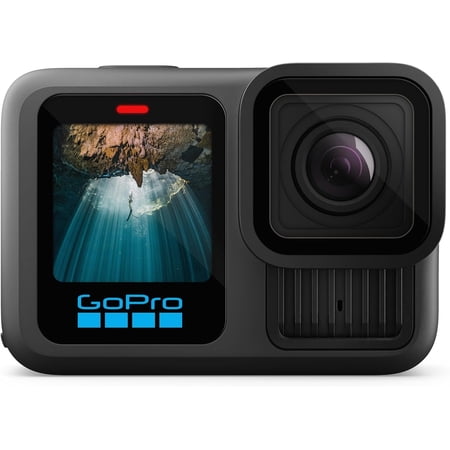
HERO13 Black is a versatile action camera built for creators, combining high-resolution video, rugged GoPro durability, and new lens compatibility to expand creative capture options.
Key points
- Best-in-class 5.3K video at 60 fps for high-detail footage
- Waterproof design (as indicated in the product title)
- Legendary GoPro durability for action and adventure use
- Compatible with new HB‑Series lenses to expand capture capabilities
- HB‑Series lenses enable more immersive POV shots and closer focusing than before
3. DJI Osmo Action 5 Pro — Best Value
Best for: travelers who want premium action-camera fundamentals without paying for the newest flagship.
Osmo Action 5 Pro has been replaced at the top of DJI’s lineup, but that is exactly why it has become such an attractive value choice. It still records 4K at up to 120 fps, uses dual OLED touchscreens, provides excellent stabilization, and is waterproof to 20 meters without an additional case.
The camera also includes 47GB of usable internal storage. That is unusually valuable on a trip because it provides a backup if a memory card is full, damaged, forgotten, or temporarily unavailable.
Battery performance remains another strength. DJI’s headline endurance claims are based on low-demand laboratory settings, so they should not be interpreted as four hours of continuous high-resolution travel filming. More demanding independent testing is more useful: Tom’s Guide recorded approximately 112 minutes at 4K/60.
The biggest compromise is simple: Action 5 Pro stops at 4K. For most travelers, that is not a serious limitation. 4K is already suitable for TVs, YouTube, social platforms, and conventional editing. Higher resolution becomes most useful when you expect to crop heavily during post-production.
Pros
✅ Excellent value after the arrival of Action 6
✅ 20-meter waterproofing
✅ 47GB usable built-in storage
✅ Strong stabilization and audio
✅ 4K/120 is enough for most travel creators
Cons
❌ Maximum resolution is 4K
❌ Action 6 is better for aggressive cropping and low light
❌ Value depends on keeping a meaningful price gap below Action 6
Who should skip it: buyers who specifically need 8K, the newest sensor, or Action 6’s variable aperture.
Alternative: Action 6 if its live price is close enough to justify the upgrade.
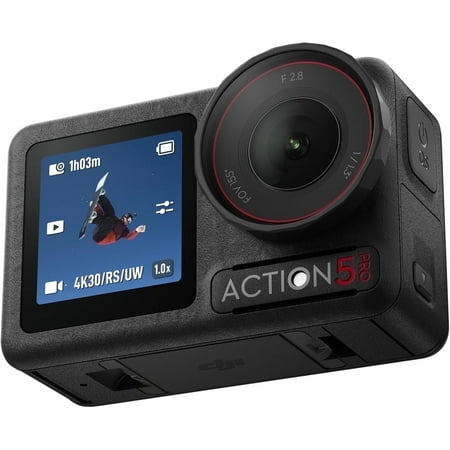
The DJI Osmo Action 5 Pro 4K Camera is designed to capture high-quality action footage with excellent clarity and detail. It features a 12 MP sensor (large 1/1.3") that improves low-light performance, producing vibrant, sharp images even in challenging lighting.
Key points:
- 12 MP camera
- Large 1/1.3" sensor for better low-light performance
- Optimized for clear, detailed action shots
- 4K-capable action camera (from the product title)
4. Insta360 Ace Pro 2 — Best for Travel Vlogging and Low Light
Best for: solo travelers, vloggers, city trips, restaurants, evening walks, and anyone who frequently films themselves.
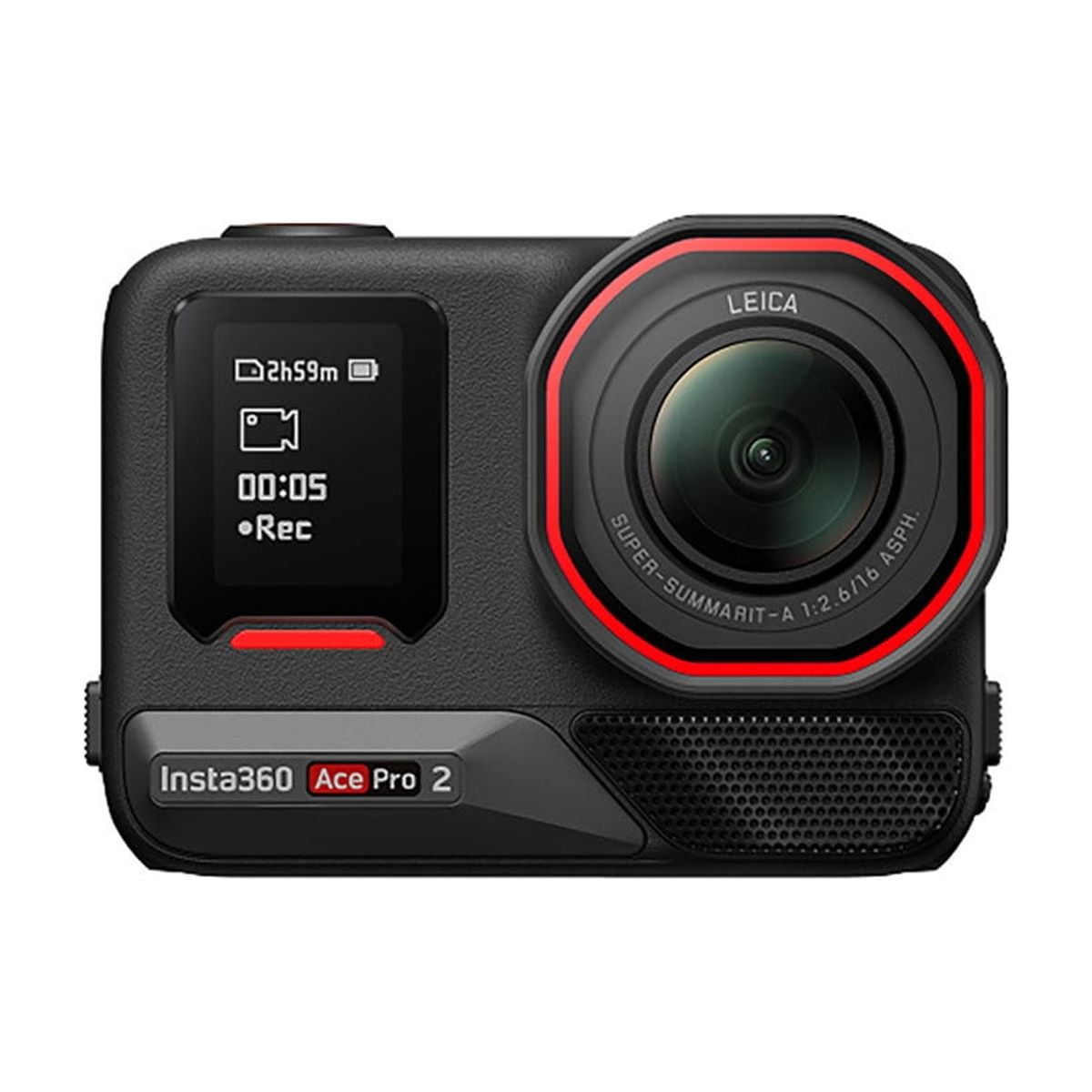
Insta360 Ace Pro 2 is the most natural choice in this list for travelers who regularly stand in front of the camera rather than mounting it to a helmet or handlebar. Its 2.5-inch flip touchscreen makes framing yourself much easier than using a small fixed front display.
The camera uses a 1/1.3-inch sensor with a Leica SUMMARIT lens and records up to 8K at 30 fps or 4K at 120 fps. Insta360’s PureVideo mode focuses specifically on low-light footage, while Active HDR provides another useful tool for difficult high-contrast scenes.
That combination makes the Ace Pro 2 particularly attractive for urban travel. Outdoor markets, nighttime streets, hotel interiors, restaurants, museums where recording is permitted, and evening walking footage are situations where low-light processing can matter more than extreme waterproof depth.
The trade-off is size and weight. At roughly 177 grams depending on configuration, the Ace Pro 2 is heavier than the conventional DJI and GoPro cameras here. It is waterproof to 12 meters without its dive case, which is enough for ordinary swimming but behind DJI’s 20-meter rating.
Pros
✅ Flip screen is excellent for self-framing
✅ 8K/30 and 4K/120
✅ Strong low-light-oriented PureVideo mode
✅ Good fit for travel vloggers and solo creators
Cons
❌ Heavier than Action 6, Action 5 Pro, and HERO13 Black
❌ 12-meter waterproofing trails DJI
❌ Flip-screen design is less important for helmet or chest-mounted use
Who should skip it: travelers who primarily film high-speed mounted sports rather than themselves.
Alternative: DJI Osmo Action 6 for a lighter, more rugged all-rounder.
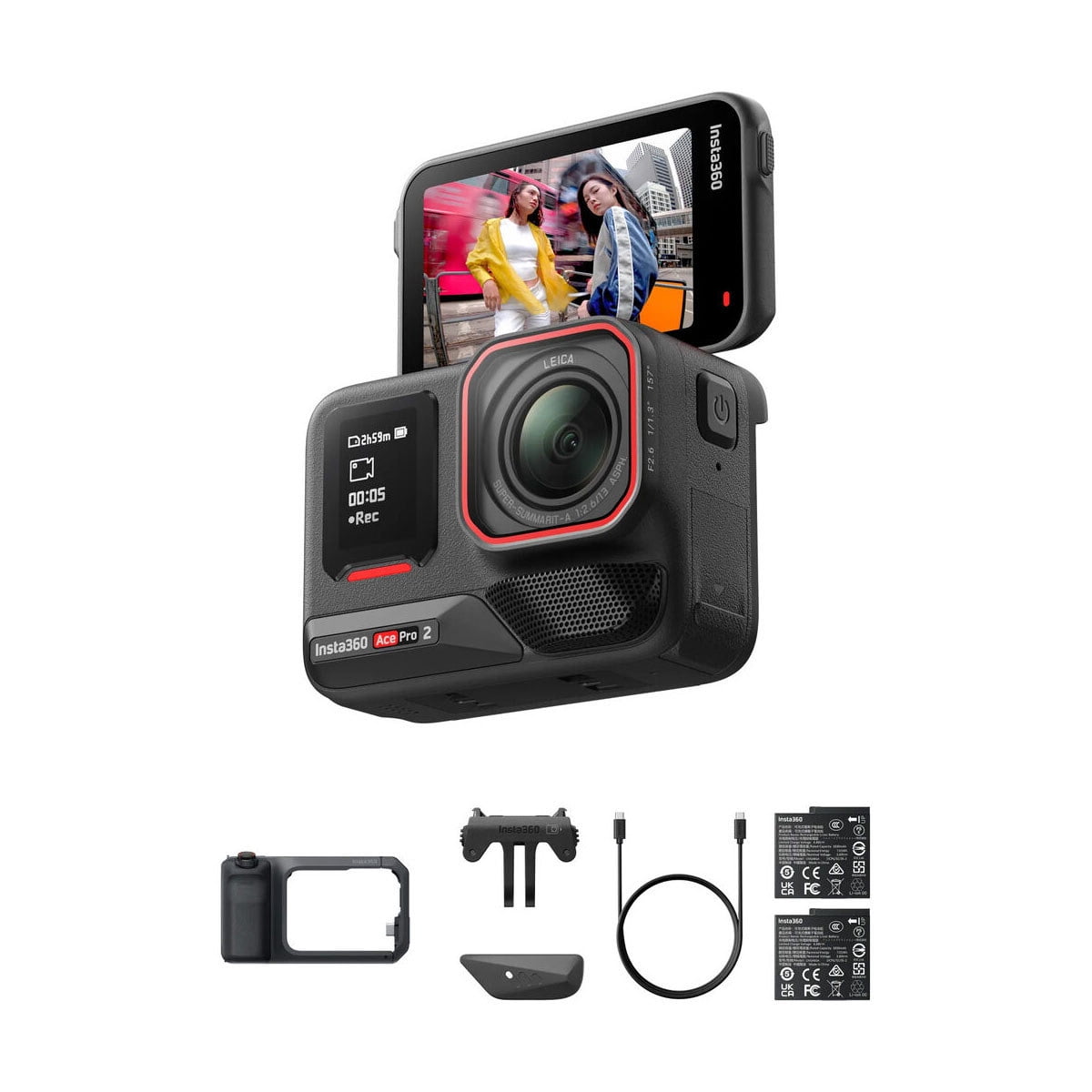
- Compact pro control: upgraded Xplorer Grip Pro Kit gives handheld, professional-style control on the go.
- Power: includes a 2010 mAh battery (bundle title indicates dual-battery configuration).
- Precision controls: dual control dials for fast, precise, effortless adjustments.
- Creative capability: designed to enable more advanced shooting and creative possibilities anywhere.
Note: summary based on the provided excerpt; the original product description was truncated.
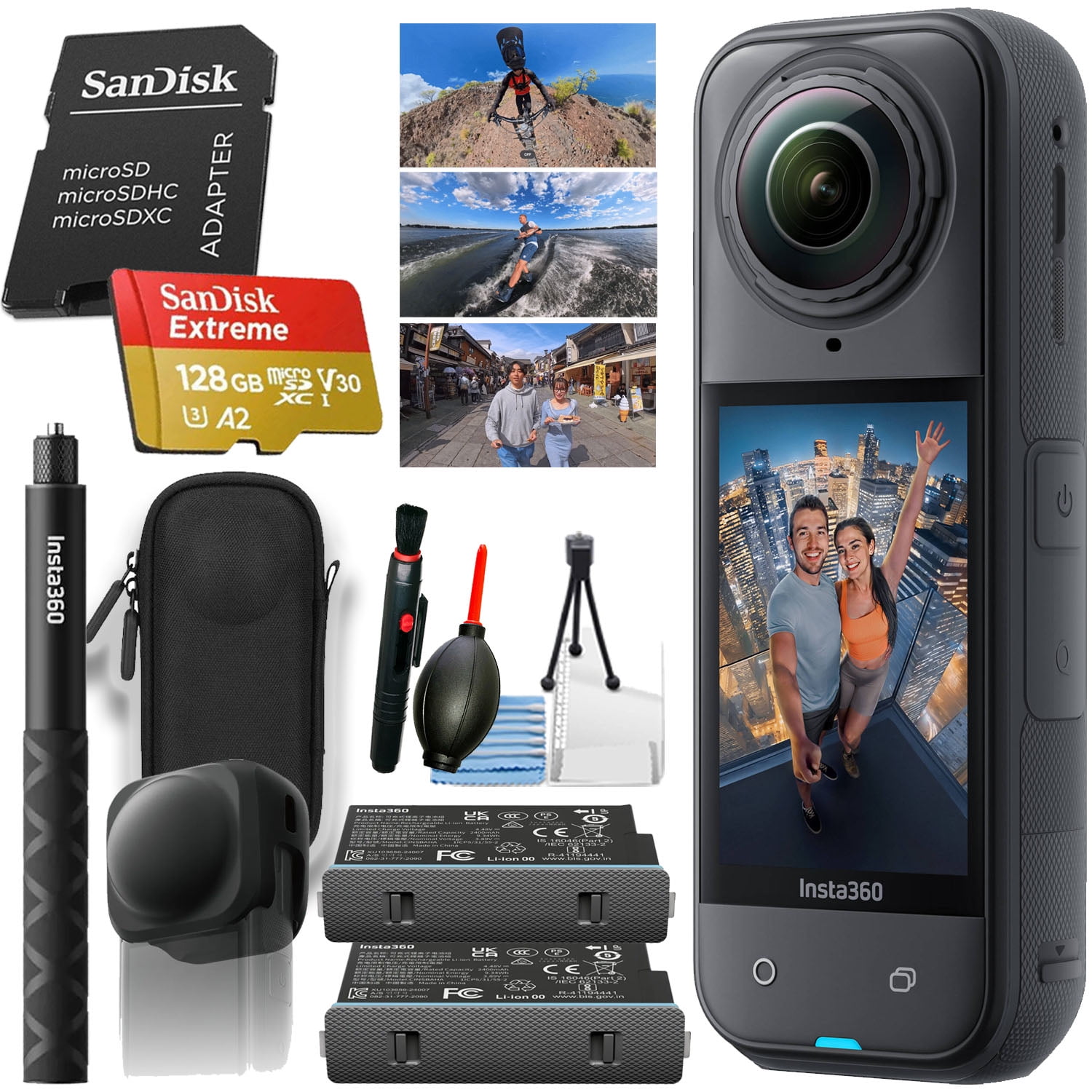
5. Insta360 X5 — Best 360 Camera for Travel
Best for: solo travel, cycling, skiing, motorcycles, scenic walks, and trips where you would rather capture everything first and decide the composition later.
Insta360 X5 changes how you shoot. Instead of aiming one conventional lens at a subject, its two lenses record the environment around the camera. You can later choose the viewing direction, create sweeping camera movements, or use an Invisible Selfie Stick effect that makes footage look as if it were filmed from a floating camera.
X5 records 8K/30 360-degree video, supports 5.7K at higher frame rates, and can also operate in a single-lens mode for more conventional footage. It uses dual 1/1.28-inch sensors and is waterproof to 15 meters without a dive case.
Replaceable outer lenses are especially useful for travelers because 360-camera lenses protrude from the body and are more exposed to scratches than a conventional action-camera lens. Replacement does not make them disposable, but it reduces the consequences of damaging one lens during a long trip.
Important: X5’s 8K resolution covers the entire 360-degree sphere. When you crop a conventional flat view from that sphere, you are using only part of the recorded image, so the resulting clip should not be treated like native 8K footage from a conventional camera.
The biggest disadvantage is workflow. 360 footage delivers enormous creative freedom, but you often need to reframe it before posting. Travelers who prefer to record a clip and upload it immediately may find a conventional action camera much faster.
Pros
✅ Capture first and choose framing later
✅ 8K/30 360 recording
✅ Replaceable outer lenses
✅ Excellent for solo travel and Invisible Selfie Stick footage
Cons
❌ Requires more editing than a conventional action camera
❌ Dual lenses need careful handling
❌ Heavier than conventional action-camera picks
Who should skip it: travelers who want the fastest possible point-shoot-upload workflow.
Alternative: DJI Osmo Action 6 for conventional framing.
- Captures HDR 8K30 360° video for immersive, high-resolution footage.
- PureVideo low-light enhancement improves clarity and color in dim conditions.
- 11K supersampling and high bit rates preserve ultra-detailed imagery.
- Produces vibrant color and balanced dynamic range for cleaner, more lifelike results.
- Built as a waterproof action camera for rugged, on-the-go use.
6. Insta360 GO Ultra — Best Hands-Free Travel Camera
Best for: hiking, walking tours, family travel, POV clips, food markets, and situations where a conventional action camera feels too large or intrusive.
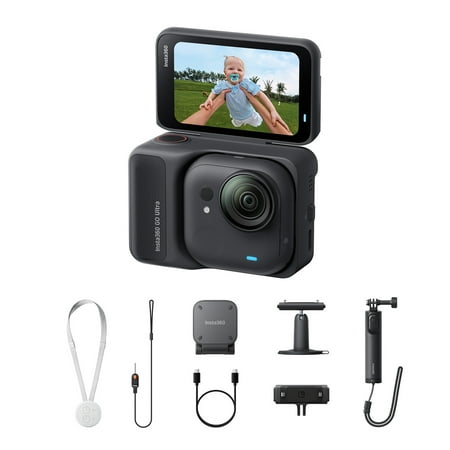
Insta360 GO Ultra takes a completely different approach. The standalone camera pod weighs only 52.9 grams and can be attached magnetically to compatible mounts for hands-free footage.
It records up to 4K at 60 fps and uses a 1/1.28-inch sensor. The standalone camera is waterproof to 10 meters without a case, but the Action Pod is only splash resistant. That distinction matters: attaching the camera to the Action Pod does not give the entire setup the same underwater rating as the standalone camera.
Battery life depends heavily on how you use it. Insta360 rates the standalone camera for about 70 minutes in a low-demand laboratory scenario, while the camera plus Action Pod can extend total operation to around 200 minutes. In Endurance Mode at 4K/30, the figures are lower at approximately 60 minutes standalone and 170 minutes with the Action Pod.
The GO Ultra also uses removable microSD storage rather than relying solely on built-in memory. For long trips, that makes it easier to carry additional storage or swap cards.
Magnet safety: the GO Ultra’s magnetic mounting accessories can interfere with some implanted medical devices. Follow Insta360’s safety guidance and do not wear the magnetic pendant over the chest if you use a pacemaker or other device affected by magnets.
Pros
✅ Tiny 52.9-gram camera pod
✅ 4K/60 recording
✅ Excellent hands-free mounting possibilities
✅ Removable microSD storage
Cons
❌ Expensive for a specialty miniature camera
❌ Action Pod is only splash resistant
❌ Conventional Action 5 Pro or Action 6 gives better value if hands-free size is not essential
Who should skip it: anyone who does not specifically need wearable, hands-free shooting.
Alternative: DJI Osmo Action 5 Pro for conventional action-camera value.
I’m missing the full product description — you only pasted the title. Please paste the complete product description you want summarized.
While you do that, pick a summary style (reply with the number you prefer):
- One-line elevator pitch
- Short bullets (3–5 key points)
- Detailed summary (short paragraph + 4 bullets)
Also tell me the tone you want: casual, neutral, or professional.
Action Camera vs Smartphone for Travel
A modern smartphone is usually the better primary travel camera. Phones are better suited to normal photography, portraits, telephoto shots, quick editing, maps, messaging, and instant sharing. Their computational photography also makes them remarkably capable in everyday situations.
An action camera wins when the environment becomes difficult. It can be mounted to a helmet, chest, bicycle, motorcycle, backpack, surfboard, or other gear. It can tolerate rain and underwater use, and its stabilization is designed around movement that would be difficult to film comfortably with a phone.
| Use | Better Choice | Why |
|---|---|---|
| General travel photography | Smartphone | Better everyday photo workflow, zoom, portrait modes and sharing |
| Swimming and snorkeling | Action camera | Purpose-built waterproofing and mounts |
| Cycling or skiing POV | Action camera | Mounting and stabilization |
| Portraits and food | Smartphone | More flexible focal lengths and computational processing |
| Hands-free action footage | Action camera | Safer and easier mounting options |
If ordinary photography matters more than rugged POV video, compare these products with our best smartphones for photography before buying another camera.
Which Action Camera Is Best for Your Trip?
| Trip Type | Best Pick | Why |
|---|---|---|
| Beach, swimming and snorkeling | DJI Osmo Action 6 | 20-meter caseless waterproofing and strong stabilization |
| Skiing and winter sports | Action 6 / Action 5 Pro | Rugged design, stabilization and strong battery positioning |
| Cycling or motorcycles | HERO13 Black | Excellent mounting ecosystem and GPS |
| Urban and night travel | Insta360 Ace Pro 2 | Flip screen and strong low-light tools |
| Solo travel | Insta360 X5 | Capture all directions and reframe yourself later |
| Hiking and hands-free POV | Insta360 GO Ultra | Tiny magnetic wearable camera |
| General family adventure | DJI Osmo Action 5 Pro | Strong fundamentals without flagship pricing |
What Matters Most in a Travel Action Camera?
Waterproofing
Look at the actual depth rating without a housing. “Waterproof” can describe cameras rated for very different depths. Action 6 and Action 5 Pro reach 20 meters without a case, HERO13 Black reaches 10 meters, Ace Pro 2 reaches 12 meters, and X5 reaches 15 meters.
Always follow manufacturer instructions for closing battery doors, USB covers, and lens guards before entering water. High-impact water sports may also require a dedicated housing even when the camera carries a strong static-depth rating.
Stabilization
Stabilization is one of the biggest reasons to own an action camera instead of simply holding a phone. Walking, biking, skiing, running, and vehicle-mounted footage all place unusual demands on electronic stabilization.
GoPro HyperSmooth, DJI RockSteady/HorizonSteady, and Insta360 FlowState are all mature systems. For most travelers, the difference between good and excellent stabilization is smaller than the difference between having stabilization and trying to correct shaky footage afterward.
Battery Life
Manufacturer battery claims often use low-resolution, low-frame-rate laboratory settings with wireless features and screens limited or disabled. Expect shorter runtimes when recording 4K/60, 4K/120, 8K, GPS, high brightness, or in extreme temperatures.
For long travel days, spare batteries and a USB-C power bank can be more important than the headline runtime.
Low-Light Performance
Sensor size, aperture, processing, and stabilization matter more than maximum resolution after sunset. Action 6’s larger sensor and variable aperture, plus Ace Pro 2’s PureVideo processing, make those models particularly interesting for travelers who film cities and interiors rather than only daytime sports.
Mounting
Consider where the camera will actually live. Helmet users need secure mounting. Cyclists may want handlebar and chest options. Vloggers may prioritize a compact grip. GO Ultra buyers are specifically choosing a wearable magnetic system.
Storage
High-resolution video consumes storage quickly. DJI’s built-in storage provides useful emergency capacity, while most serious trips still require microSD cards and a backup strategy.
Carry more storage than you expect to use, especially if filming 8K or 360 video.
Weight
A difference of 30 or 50 grams feels minor in a backpack but can be much more noticeable when the camera is attached to a helmet, cap, or chest for hours.
Editing Workflow
Conventional action cameras produce footage you can use immediately. A 360 camera gives you more creative freedom but usually requires reframing first. Decide whether you enjoy editing before choosing X5 primarily for its capture-everything workflow.
Warranty and Support
Travel equipment gets wet, dropped, and mounted in exposed positions. Before buying, check current U.S. warranty coverage, retailer return policy, available replacement parts, and whether accessories can be obtained easily where you live.
Frequently Asked Questions
What is the best action camera for travel?
DJI Osmo Action 6 is our best overall travel pick because it combines strong image quality, stabilization, low-light performance, 20-meter caseless waterproofing, built-in storage, and flexible recording modes in a compact conventional action-camera body.
Is DJI or GoPro better for travel?
DJI currently offers the stronger all-around hardware package for many travelers, particularly for waterproofing, battery, built-in storage, and low-light performance. GoPro remains especially attractive for buyers who value GPS, GoPro mounts, Lens Mods, and its established accessory ecosystem.
Which action camera is best for underwater travel?
DJI Osmo Action 6 and Action 5 Pro both offer 20-meter waterproof ratings without an additional housing, making them particularly strong for swimming and snorkeling. Deeper or high-impact water use may require a dedicated waterproof case.
Which action camera is best in low light?
DJI Osmo Action 6 and Insta360 Ace Pro 2 are the most compelling options in this group for lower-light travel. Action 6 combines a large sensor with a variable aperture, while Ace Pro 2 uses its PureVideo processing mode for low-light scenes.
Is a 360 camera worth it for travel?
A 360 camera is worth it if you value capturing everything around you and choosing the composition later. It is especially useful for solo travel, cycling, skiing, and immersive walking footage, but it requires more editing than a conventional action camera.
Is an action camera better than a smartphone for travel?
Not for every situation. Smartphones are usually better for normal photos, portraits, zoom, editing, and quick sharing. Action cameras are better for waterproof use, mounted POV footage, impacts, sports, and extreme stabilization.
Is 8K worth it in an action camera?
8K is most useful when you want extra room to crop or reframe during editing. It is not necessary for most travel videos and creates larger files, higher storage requirements, and heavier editing workloads.
Which action camera is best for travel vlogging?
Insta360 Ace Pro 2 is our travel-vlogging pick because its flip touchscreen makes self-framing easy, while its 1/1.3-inch sensor, PureVideo mode, 8K capture, and strong low-light features are useful for varied travel environments.
Final Verdict: Which Travel Action Camera Should You Buy?
DJI Osmo Action 6 is the best action camera for most travelers. It delivers the most complete combination of ruggedness, 20-meter waterproofing, stabilization, internal storage, low-light capability, flexible aperture control, and high-resolution video.
GoPro HERO13 Black remains the better choice if your travel setup already revolves around GoPro mounts or you want its Lens Mods and GPS. DJI Osmo Action 5 Pro is arguably the smartest value purchase if you do not need 8K.
Insta360 Ace Pro 2 is the strongest fit for vloggers and nighttime city travel, X5 provides a unique capture-everything 360 workflow, and GO Ultra earns its place by doing something conventional action cameras cannot: disappearing into a lightweight hands-free setup.
Best Overall: DJI Osmo Action 6
Best GoPro: GoPro HERO13 Black
Best Value: DJI Osmo Action 5 Pro
Best for Vlogging: Insta360 Ace Pro 2
Best 360 Camera: Insta360 X5
Best Hands-Free: Insta360 GO Ultra
Sources
- DJI — Osmo Action 6 and Osmo Action 5 Pro official specifications and support documentation
- GoPro — HERO13 Black official specifications, waterproofing, mounting and HB-Series Lens information
- Insta360 — Ace Pro 2, X5 and GO Ultra official specifications and waterproofing documentation
- Tom’s Guide — Best Action Cameras in 2026 and independent Action 6, Action 5 Pro and X5 testing
- GoPro — MISSION 1 Series announcement and positioning — 2026
Product Groups: DJI Osmo Action 6, GoPro HERO13 Black, DJI Osmo Action 5 Pro, Insta360 Ace Pro 2, Insta360 X5, Insta360 GO Ultra