The iPhone 17 Pro Max and Samsung Galaxy S26 Ultra represent two very different ideas of what a premium flagship should be. Apple focuses on a tightly integrated ecosystem, long battery endurance, consistent photography and professional creator tools. Samsung answers with more camera focal lengths, faster charging, stronger current AI features, an integrated S Pen and considerably more software flexibility.
That makes this iPhone 17 Pro Max vs Galaxy S26 Ultra comparison much closer than a simple specification sheet suggests. The Galaxy leads several raw performance benchmarks and packs more features into a lighter body, while the iPhone lasts longer in independent battery testing, starts at a lower price and remains particularly compelling for photography and Apple-centric creative workflows.
Neither phone is universally better. The right choice depends on whether you prioritize iOS or Android, zoom or camera consistency, battery endurance or charging speed, and whether features such as Galaxy AI, S Pen, MagSafe or professional video formats are genuinely useful to you.
This flagship phone faceoff compares the two devices category by category, including current pricing, display quality, gaming, cameras, video, battery life, charging, AI, productivity and long-term ownership.
Quick Answer: iPhone 17 Pro Max or Galaxy S26 Ultra?
Best for Apple Users: iPhone 17 Pro Max — especially if you already use a Mac, Apple Watch, AirPods, iCloud or Apple’s professional creator tools.
Best for Android Power Users: Samsung Galaxy S26 Ultra — stronger for S Pen productivity, multitasking, customization, AI features and camera zoom flexibility.
Best Overall Camera: iPhone 17 Pro Max by a slight margin for consistent still photography and selfies, while Galaxy provides clearly more versatile zoom hardware.
Best for Zoom, AI & Productivity: Galaxy S26 Ultra — dedicated 3x and 5x cameras, broader current Galaxy AI features and the integrated S Pen are meaningful differentiators.
Best Battery Life: iPhone 17 Pro Max — it lasted 17 hours 54 minutes in the independent battery test used for this comparison versus 16 hours 10 minutes for Galaxy S26 Ultra.
iPhone 17 Pro Max vs Galaxy S26 Ultra Specs at a Glance
| Feature | iPhone 17 Pro Max | Galaxy S26 Ultra |
|---|---|---|
| Display | 6.9-inch Super Retina XDR OLED | 6.9-inch Dynamic AMOLED 2X |
| Resolution | 2868 × 1320 | 3120 × 1440 |
| Refresh Rate | Up to 120Hz ProMotion | Adaptive 1–120Hz |
| Processor | Apple A19 Pro | Snapdragon 8 Elite Gen 5 for Galaxy |
| Rear Cameras | 48MP Main + 48MP Ultra Wide + 48MP Telephoto | 200MP Main + 50MP Ultra Wide + 10MP 3x + 50MP 5x |
| Native Telephoto | 4x | 3x + 5x |
| Front Camera | 18MP Center Stage | 12MP autofocus |
| Independent Battery Test | 17h 54m | 16h 10m |
| Wired Charging | Apple rates up to 50% in around 20 minutes with compatible adapter | Up to 60W |
| Storage | 256GB / 512GB / 1TB / 2TB | 256GB / 512GB / 1TB |
| Weight | About 231–233g depending on regional specification | 214g |
| Thickness | 8.75mm | 7.9mm |
| Stylus | No | Integrated S Pen |
| U.S. Starting Price | $1,199 | $1,299 |
iPhone 17 Pro Max vs Galaxy S26 Ultra Price Comparison
At their U.S. starting prices, the iPhone 17 Pro Max begins at approximately $1,199, while the Galaxy S26 Ultra starts at around $1,299. That gives Apple a $100 advantage before retailer discounts, carrier promotions or trade-in offers are considered.
The comparison becomes more interesting at higher storage levels. Apple offers configurations up to 2TB, while Samsung tops out at 1TB. Buyers who record large amounts of professional video or keep extensive local media may therefore find Apple’s additional storage tier useful.
However, MSRP should not decide this comparison by itself. Samsung frequently competes aggressively through retailer and carrier promotions, and a substantial Galaxy discount can erase or reverse Apple’s starting-price advantage. Trade-in values can also differ enough that two buyers see completely different effective prices.
Compare the live retailer offers below before deciding which flagship delivers better value today.
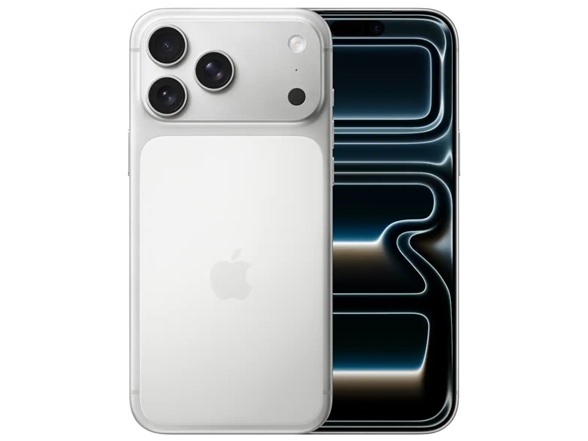
Apple iPhone 17 Pro Max Prices
Samsung Galaxy S26 Ultra Prices
Price verdict: if both phones are close to MSRP, the iPhone starts with the value advantage. If the Galaxy is available at a significant discount or with a stronger trade-in offer, its extra camera hardware, S Pen and software features can make the higher nominal MSRP much less important.
Design & Comfort
The two phones are almost identical in height and width, but they feel different in the hand. Samsung has managed to package its 6.9-inch display into a chassis that is both thinner and considerably lighter than Apple’s Pro Max.
The Galaxy S26 Ultra measures about 7.9mm thick and weighs 214g. The iPhone 17 Pro Max is 8.75mm thick and weighs roughly 231–233g depending on the regional Apple specification. That difference is noticeable during long reading, gaming or photography sessions.
Apple uses an aluminum unibody architecture designed partly around its vapor-chamber thermal system. The current design is visually distinctive, particularly around the enlarged camera plateau, but buyers who prioritize the lightest possible large-screen flagship may prefer Samsung.
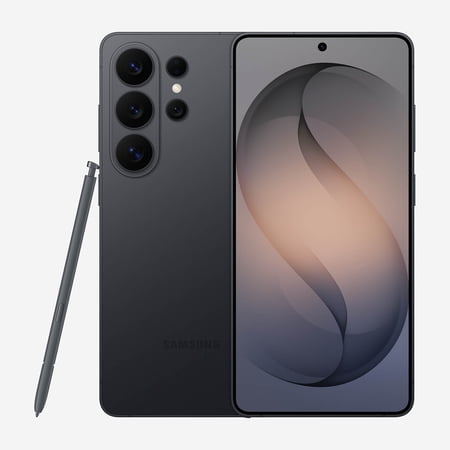
The Galaxy has another physical advantage: its integrated S Pen. The stylus stores inside the phone and provides functionality that iPhone simply does not offer, including precise notes, annotation and drawing.
Both are expensive devices with large displays and prominent camera hardware. A protective case is sensible regardless of which design you prefer.
Winner: Samsung Galaxy S26 Ultra for measurable comfort. Styling remains subjective, but Samsung gives you almost the same footprint at a lower weight and thickness while also accommodating an S Pen.
Screen Quality Comparison
Both phones use excellent 6.9-inch OLED displays with adaptive refresh rates reaching 120Hz. For normal web browsing, movies, photos and games, neither display should feel remotely inadequate.
Brightness & Outdoor Visibility
Apple rates the iPhone 17 Pro Max for up to 3,000 nits of outdoor peak brightness. Samsung rates the Galaxy S26 Ultra at up to 2,600 nits peak.
Manufacturer peak brightness numbers are measured under specific conditions and should not be interpreted as the brightness you will see across the entire display at all times. Independent measurements also vary from those maximum ratings.
Both manufacturers use anti-reflective strategies to improve outdoor readability, and real-world visibility depends on reflections as well as raw brightness.
Resolution & Display Features
The Galaxy uses a higher-resolution 3120 × 1440 QHD+ panel, compared with 2868 × 1320 on the iPhone. At these sizes and pixel densities, both look extremely sharp during normal use.
Samsung’s more distinctive advantage is Privacy Display. The feature can reduce side-angle visibility to make sensitive information harder for nearby people to read. It can be useful on public transport, airplanes, in offices or anywhere shoulder surfing is a concern.
Apple does not offer a direct equivalent integrated into the display.
Winner: Samsung Galaxy S26 Ultra by a slight margin. The iPhone has the stronger manufacturer-rated outdoor brightness figure, but Samsung combines QHD+ resolution with a genuinely different privacy feature.
Performance Comparison: A19 Pro vs Snapdragon 8 Elite Gen 5 for Galaxy
Both phones are exceptionally fast, and ordinary tasks such as messaging, browsing, streaming and social media will not expose major performance differences. The gap becomes more relevant in benchmarks, gaming, video processing and other sustained workloads.
| Performance Test | iPhone 17 Pro Max | Galaxy S26 Ultra |
|---|---|---|
| Geekbench Single-Core | 3,871 | 3,785 |
| Geekbench Multi-Core | 9,968 | 11,563 |
| 3DMark Wild Life Extreme | 5,855 | 6,645 |
The results show why saying one phone is simply “faster” would be misleading. Apple retains a small single-core advantage in this comparison, while Samsung leads the measured multi-core and graphics results.
That makes the Galaxy S26 Ultra particularly impressive for an Android flagship, while Apple’s A19 Pro remains one of the fastest smartphone platforms available.
Performance verdict: workload dependent. iPhone leads the selected single-core test; Galaxy leads multi-core and GPU benchmark results.
Which Phone Is Better for Gaming?
If you are looking for a top smartphone for gaming, both flagships are powerful enough for demanding mobile titles, but their strengths are different.
The Galaxy S26 Ultra has the stronger raw GPU benchmark result in the comparison above. Snapdragon’s Android gaming ecosystem also appeals to users interested in emulation, greater system customization and a wider range of performance-management options.
The iPhone 17 Pro Max benefits from the A19 Pro, Apple’s vapor-chamber cooling architecture and a growing collection of console-style AAA games optimized specifically for Apple’s hardware and software stack.
This means a benchmark victory does not automatically translate into a universal gaming victory. A game optimized exceptionally well for iOS may perform differently from an emulator or Android title that benefits from Snapdragon’s GPU capabilities.
Gaming verdict: Galaxy has the stronger raw GPU benchmark case, while iPhone remains extremely compelling for optimized iOS and AAA gaming. Choose based on the games and platform you actually use.
Camera Comparison: iPhone 17 Pro Max vs Galaxy S26 Ultra
A camera comparison between iPhone and Galaxy is much more complicated than comparing 48MP with 200MP. Resolution is only one part of image quality; lens design, sensor size, focal length, autofocus, stabilization and computational processing all influence the final photo.
| Camera | iPhone 17 Pro Max | Galaxy S26 Ultra |
|---|---|---|
| Main | 48MP, 24mm, f/1.78 | 200MP, f/1.4 |
| Ultra Wide | 48MP | 50MP |
| Telephoto | 48MP 4x native | 10MP 3x + 50MP 5x native |
| Extended Zoom | 8x optical-quality crop | 10x optical-quality crop; up to 100x digital |
| Front Camera | 18MP Center Stage | 12MP autofocus |
Main Camera & Everyday Photos
The iPhone’s advantage is consistency. Independent comparisons have generally found it particularly strong for natural-looking output, dependable exposure and predictable results across everyday scenes.
Samsung’s 200MP main sensor provides enormous potential resolution and a brighter f/1.4 aperture, but 200MP should not be interpreted as automatically producing a better photograph than Apple’s 48MP system.
Verdict: slight iPhone advantage for overall consistency.
Zoom
This is where Samsung has the clearer hardware advantage.
The Galaxy includes separate native 3x and 5x telephoto cameras. The iPhone uses one native 4x telephoto and generates its 8x optical-quality option through a crop from that high-resolution sensor.
Samsung’s 10x mode is also classified as optical-quality rather than native optical, but having two dedicated telephoto focal lengths gives the Galaxy greater flexibility before digital zoom becomes necessary.
Winner: Galaxy S26 Ultra.
Portraits & Selfies
Portrait performance can vary by lighting and subject, so there is no categorical winner in every scene. Samsung’s multiple telephoto options give photographers more framing choices, while Apple tends to produce reliable skin tones and processing.
The iPhone’s 18MP Center Stage front camera is also a meaningful improvement for selfies, framing and video calls.
Selfie winner: iPhone 17 Pro Max.
Low-Light Photography
Both phones are serious low-light cameras. Samsung’s brighter main lens is designed to gather more light, while Apple’s processing and stabilization remain highly competitive.
Results depend heavily on whether the subject is stationary or moving, which focal length is used and how aggressively each phone applies noise reduction.
Verdict: close and scene dependent.
Overall Camera Verdict
Our research gives the iPhone 17 Pro Max a slight edge for overall still photography, while the Galaxy S26 Ultra is the more versatile hardware package for photographers who frequently use zoom.
If camera performance is your main reason for buying a flagship, compare these phones with Xiaomi, vivo, OPPO, Pixel and other specialist options in our Best Smartphones for Photography: 2026 Top Picks.
Video Comparison
Video is another category where a simple winner hides important differences.
The Galaxy S26 Ultra supports features such as 4K 120fps Pro Video, 8K recording and Horizon Lock-style stabilization. In the direct comparison used for this guide, Samsung’s stabilization and low-light video behavior were strong enough to give it an advantage in practical capture.
The iPhone 17 Pro Max, however, remains exceptionally strong when video is part of a professional workflow. It supports ProRes RAW, Apple Log 2 and other tools designed for footage that will continue into color grading, editing and larger production pipelines.
This creates two different winners:
Best for stabilized capture and current direct-test video features: Galaxy S26 Ultra.
Best for professional creator workflow: iPhone 17 Pro Max.
A casual user recording family clips may never use ProRes RAW. A filmmaker integrating the phone into a larger editing workflow may consider it one of the most important differences in the entire comparison.
Battery Life Contest: Which Phone Lasts Longer?
Battery endurance is one of the clearest victories in this comparison.
| Phone | Independent Battery Test | 30-Minute Charge |
|---|---|---|
| iPhone 17 Pro Max | 17h 54m | 64% |
| Galaxy S26 Ultra | 16h 10m | 77% |
The iPhone lasted 1 hour and 44 minutes longer in this standardized test. Both are capable of strong all-day endurance, but Apple’s advantage is meaningful for heavy users, travelers and anyone who spends long periods away from a charger.
These numbers come from one standardized testing methodology and should not be interpreted as exact real-world runtimes for every user. 5G signal strength, brightness, gaming, navigation, cameras and background apps can all change battery consumption.
Battery endurance winner: iPhone 17 Pro Max.
Charging Comparison
Samsung answers Apple’s battery-life advantage with faster charging.
The Galaxy S26 Ultra supports up to 60W wired charging. Samsung says it can reach roughly 75% in around 30 minutes under specified conditions, while independent testing used for this comparison recorded approximately 77%.
The iPhone reached around 64% after the same 30-minute period in the comparison dataset. Apple also states that a compatible higher-output adapter can bring the Pro Max to approximately 50% in around 20 minutes.
Wireless charging is more nuanced. Both platforms support modern high-speed wireless options, but iPhone has magnets built directly into the phone for MagSafe and compatible accessories. Galaxy users may need an appropriate magnetic case for the same attachment experience.
Wired charging winner: Galaxy S26 Ultra.
Magnetic wireless convenience: iPhone 17 Pro Max.
Galaxy AI vs Apple Intelligence
AI is one of Samsung’s clearest current software advantages.
Galaxy AI combines Samsung’s own features with deeper integration of Google’s AI services. The practical toolset extends across photo editing, search, assistance, contextual recommendations and productivity features.
Apple Intelligence is integrated across iOS and Apple’s applications with a strong emphasis on platform integration and privacy, but its current consumer-facing feature breadth remains less differentiated than Samsung’s.
This is a fast-changing category, so the wording matters: at the time of this comparison, Galaxy S26 Ultra offers the broader consumer-facing AI toolkit.
Future software updates can narrow or change that difference without requiring new hardware.
Current AI winner: Galaxy S26 Ultra.
iOS vs Android: Which Ecosystem Is Better?
The iOS vs Android decision may matter more than any small hardware advantage in this article.
Choose iPhone if You Already Use Apple Products
iPhone makes particular sense if your daily setup includes a Mac, Apple Watch, AirPods, iPad or iCloud. AirDrop, Continuity, FaceTime and Apple’s broader ecosystem reduce friction between devices.
Creators may also value how naturally iPhone footage, files and apps fit into an Apple-centric editing environment.
Choose Galaxy if You Want More Flexibility
Samsung gives users more interface customization, more flexible multitasking, more direct file-management options and the integrated S Pen. Android also allows workflows that Apple’s more controlled platform may restrict or handle differently.
Galaxy AI and Samsung’s multitasking tools make the S26 Ultra feel more like a power-user device, particularly for people who actively customize how their phone works.
Ecosystem verdict: depends entirely on your existing devices and workflow. Switching ecosystems to gain a small camera or benchmark advantage may create more inconvenience than the hardware gain is worth.
Productivity & S Pen
For productivity performed directly on the phone, Samsung has the stronger feature set.
The integrated S Pen allows precise note-taking, document annotation, drawing and interface control without requiring a separate accessory. Combined with Android multitasking and Samsung’s software tools, it gives the Galaxy capabilities that iPhone does not directly replicate.
The iPhone can still be an excellent work device, especially inside a Mac-based workflow where AirDrop, cloud synchronization and cross-device continuity are valuable. But those advantages rely more heavily on the surrounding Apple ecosystem.
On-device productivity winner: Galaxy S26 Ultra.
Storage & Connectivity
Both phones start with 256GB of storage, but Apple extends the Pro Max range to 2TB. Samsung offers up to 1TB.
Two terabytes is unnecessary for most people, but creators recording professional video or storing large local media libraries may appreciate having the option.
Connectivity is much closer. Both support modern 5G, Wi-Fi 7 and Bluetooth 6-class connectivity, along with NFC and ultra-wideband functionality in supported configurations.
Both also use USB-C, though workflows and transfer implementations differ between platforms.
Storage ceiling winner: iPhone 17 Pro Max.
Connectivity: effectively a tie for most buyers.
Software Support & Long-Term Ownership
These are both phones designed to be kept for years rather than replaced after one annual upgrade cycle.
Samsung publishes an explicit long-term software-support commitment for its flagship Galaxy devices. Apple has a strong historical record of supporting iPhones for many years, although Apple does not always present that commitment using the same fixed public year-count format as Samsung.
Long-term ownership also depends on factors beyond software updates:
Resale value: premium iPhones historically maintain a strong used market, although exact resale values change by storage, condition and region.
Repair and accessories: both Samsung and Apple have mature accessory ecosystems and broad support in major markets.
Battery aging: either device may eventually need battery service if kept for many years.
Ecosystem investment: the more accessories and services you own on one platform, the more costly switching becomes.
Verdict: both are reasonable long-term devices; there is no simple universal winner.
iPhone 17 Pro Max vs Galaxy S26 Ultra Winner Scorecard
| Category | Winner | Why |
|---|---|---|
| Starting Price | iPhone | Starts around $100 lower at U.S. MSRP |
| Design / Weight | Galaxy | Thinner and considerably lighter |
| Display Features | Galaxy | QHD+ plus Privacy Display |
| Single-Core Benchmark | iPhone | Slight lead in selected Geekbench result |
| Multi-Core Benchmark | Galaxy | Higher selected Geekbench multi-core result |
| GPU Benchmark | Galaxy | Higher current graphics benchmark result |
| Gaming Overall | Depends | Galaxy raw GPU vs iPhone optimization |
| Overall Photography | iPhone, slight edge | Consistency and strong independent comparison results |
| Zoom | Galaxy | Dedicated 3x and 5x telephotos |
| Selfies | iPhone | 18MP Center Stage system |
| Video Stabilization | Galaxy | Strong Horizon Lock implementation in direct testing |
| Pro Video Workflow | iPhone | ProRes RAW and Apple Log 2 |
| Battery Life | iPhone | 17:54 vs 16:10 in selected independent test |
| Charging | Galaxy | 60W wired and faster 30-minute result |
| AI | Galaxy | Broader current consumer-facing feature set |
| Productivity | Galaxy | S Pen and stronger on-device multitasking |
| Maximum Storage | iPhone | Up to 2TB |
| Connectivity | Tie | Both have current flagship connectivity |
| Ecosystem | Depends | Apple integration vs Android flexibility |
Which One Should You Buy?
Buy the iPhone 17 Pro Max If You:
Already use Apple’s ecosystem. Mac, Apple Watch, AirPods, iCloud and other Apple products make the iPhone easier to integrate into an existing workflow.
Prioritize battery endurance. The independent battery result used here gives the iPhone a meaningful advantage.
Care about consistent photography. Samsung offers greater zoom flexibility, but iPhone remains extremely strong for predictable everyday photography and selfies.
Work with professional video. ProRes RAW and Apple Log 2 make more sense for creators who actually move footage into a serious post-production workflow.
Use MagSafe accessories. Integrated magnets make chargers, stands, wallets and other accessories particularly convenient.
Need very high local storage. The 2TB option exceeds Samsung’s maximum capacity.
Buy the Galaxy S26 Ultra If You:
Want Android flexibility. Samsung gives you more customization, multitasking options and control over how the phone behaves.
Use telephoto cameras frequently. Dedicated 3x and 5x lenses give Galaxy the more versatile mainstream zoom system.
Care about current AI features. Galaxy AI presently offers the broader consumer-facing toolkit.
Want an S Pen. There is no equivalent integrated stylus on iPhone.
Prefer faster charging. Samsung’s 60W wired system replenishes the battery faster.
Want a lighter large-screen phone. The Galaxy is noticeably lighter despite having a similarly sized display.
Value raw GPU and multi-core benchmark performance. The S26 Ultra leads the selected benchmark results in both categories.
Which Is Better for Students?
For the average student, both phones are more expensive and more powerful than necessary.
The Galaxy S26 Ultra makes more sense for students who will genuinely use the S Pen for notes, diagrams, annotation or creative work. Its multitasking tools can also be valuable for productivity-heavy workflows.
The iPhone 17 Pro Max may fit better for students already using a MacBook, iPad or other Apple devices, especially when AirDrop and ecosystem continuity are part of everyday study.
But if the primary needs are messaging, research, online classes, social media and basic photography, spending more than $1,000 is difficult to justify. See our Best Android Phones for Students for more practical options.
Do You Actually Need a $1,200+ Flagship?
Most smartphone users do not need either of these devices.
The premium makes more sense if you will genuinely use features such as:
• advanced telephoto photography
• professional video formats
• high-end mobile gaming
• S Pen productivity
• intensive multitasking
• large local storage
• premium displays and long-term ownership
If those features sound interesting but are unlikely to affect your daily life, a less expensive phone may offer far better value.
Modern midrange devices can already provide excellent displays, capable cameras, 5G, long battery life and years of software support. Our Best Budget Smartphones Under $500 guide covers alternatives that cost less than half as much as these Ultra/Pro Max flagships.
Android Alternative: Galaxy S26 Ultra vs Google Pixel
If you already know you want Android but are not committed to Samsung, Google’s Pixel family is the obvious alternative to investigate.
Pixel phones tend to emphasize Google’s computational photography, clean software experience and first-party AI features, while Galaxy Ultra focuses more heavily on hardware flexibility, S Pen productivity and multiple telephoto cameras.
For a deeper Android-only comparison, see our Samsung Galaxy S [Latest] vs Pixel [Latest]: Android Faceoff.
Protecting a Premium Flagship
Whichever phone you choose, both are expensive enough that drop protection deserves consideration. A case can also improve grip on these large devices and help protect the prominent rear camera assemblies.
If you want protection with more personalization than a standard clear or black case, see our Best Custom Phone Cases.
iPhone 17 Pro Max vs Galaxy S26 Ultra FAQ
Is iPhone 17 Pro Max better than Galaxy S26 Ultra?
Not universally. iPhone is stronger for battery endurance, overall photography consistency, MagSafe and Apple’s creator ecosystem. Galaxy is stronger for zoom, faster charging, AI, S Pen productivity, lighter design and current multi-core/GPU benchmark results.
Which has the better camera, iPhone 17 Pro Max or Galaxy S26 Ultra?
The iPhone has a slight edge for overall still photography in the independent comparisons used here, while Galaxy has the more versatile zoom system thanks to dedicated 3x and 5x telephoto cameras.
Which has better battery life?
iPhone 17 Pro Max. It lasted 17 hours 54 minutes in the standardized battery test used for this comparison, compared with 16 hours 10 minutes for Galaxy S26 Ultra.
Which phone is better for gaming?
Galaxy S26 Ultra has the stronger selected raw GPU benchmark result and greater Android/emulation flexibility. iPhone 17 Pro Max remains excellent for highly optimized iOS games and Apple’s growing collection of AAA titles. The better choice depends on the games you play.
Which has the better display?
Both have excellent 6.9-inch 120Hz OLED displays. iPhone has the higher manufacturer-rated outdoor peak brightness, while Galaxy offers higher QHD+ resolution and Privacy Display. We give Samsung a slight overall feature advantage.
Is Galaxy S26 Ultra better for AI?
At the time of this comparison, yes. Galaxy S26 Ultra has the broader consumer-facing AI feature set. This is software-dependent and can change as Samsung, Google and Apple release updates.
Which is better for students and productivity?
Galaxy S26 Ultra has the stronger on-device productivity case because of its S Pen and multitasking features. iPhone can fit better into a Mac/iPad workflow. Both are unnecessarily expensive for many students.
Is the Galaxy S26 Ultra worth $100 more than iPhone 17 Pro Max?
It can be if you genuinely value Samsung-specific features such as the S Pen, extra telephoto camera, faster charging, Galaxy AI and Android flexibility. If those features do not matter, the lower-priced iPhone may provide better value. Always compare current retailer and trade-in pricing before deciding.
Final Verdict: iPhone 17 Pro Max vs Galaxy S26 Ultra
The most important result of this comparison is that neither flagship dominates the other.
The iPhone 17 Pro Max has the stronger case for buyers who prioritize battery endurance, consistent photography, front-camera quality, MagSafe convenience, very high storage capacity and professional Apple-centric video workflows. It also starts at a lower U.S. MSRP.
The Galaxy S26 Ultra is arguably the more feature-packed power-user device. It is thinner and lighter, has more versatile telephoto hardware, charges faster, provides an integrated S Pen, offers stronger current AI features and leads the selected multi-core and GPU benchmark results.
Samsung also earns the slight display advantage through its QHD+ panel and Privacy Display, while Apple’s higher manufacturer-rated outdoor brightness remains a meaningful strength.
Camera performance is close enough that preferences matter. Choose iPhone if you value consistent still photography and professional video workflow. Choose Galaxy if long-range zoom and multiple physical focal lengths are more important.
Battery and charging split just as cleanly: iPhone lasts longer; Galaxy recharges faster.
For most buyers, however, the final decision should come down to two things: ecosystem and current price. If you already own several Apple products, switching to Galaxy for a handful of hardware advantages may create more friction than value. The reverse is also true for established Android and Samsung users.
Compare the live prices above, identify the features you will actually use, and choose the platform that fits the rest of your technology—not simply the phone that wins the most rows in a table.
Best for Apple Users: iPhone 17 Pro Max
Best for Android Power Users: Samsung Galaxy S26 Ultra
Best Battery Life: iPhone 17 Pro Max
Best Zoom, AI & Productivity: Samsung Galaxy S26 Ultra
Overall Recommendation: Choose based on ecosystem, the features you will actually use and today’s live price.
Sources
- Apple — iPhone 17 Pro Max technical specifications, display, storage, cameras, connectivity and charging information.
- Samsung — Galaxy S26 Ultra specifications, camera system, display, battery, charging, processor and Galaxy AI information.
- Tom’s Guide — iPhone 17 Pro Max vs Galaxy S26 Ultra performance, camera, video, battery and charging comparisons.
- AT&T — U.S. device pricing and retail comparison.
- GSMArena — comparative device specifications and flagship coverage.
- PhoneArena — camera, display and performance comparison data.
- Mark Ellis Reviews — real-world iPhone vs Samsung comparison and ecosystem observations.
Product Groups: Apple iPhone 17 Pro Max, Samsung Galaxy S26 Ultra