Buying your first espresso machine can feel unnecessarily complicated. Some machines expect you to understand grind size, dosing, tamping, extraction time and milk steaming before you have made your first decent latte. Others automate almost everything but leave little room to learn what is actually happening.
The best espresso machines for beginners sit at different points between those extremes. Some remove nearly all of the manual work, while others guide you through the process so you can gradually build real barista skills. That distinction matters because the easiest machine to operate is not necessarily the best machine for learning espresso.
For most beginners, we think the Ninja Luxe Café Premier offers the best balance. It combines a built-in grinder, grind recommendations, weight-based dosing and automatic milk frothing while keeping a real portafilter workflow. If you want even less involvement, the Philips 4400 LatteGo automates nearly the entire process. If you would rather learn traditional espresso skills, the Breville Barista Pro makes you do more yourself.
This guide compares six beginner-friendly machines based primarily on learning curve, workflow, milk preparation, grinder setup, cleanup and how much of the espresso-making process each machine handles for you.
Quick Answer: Best Espresso Machines for Beginners
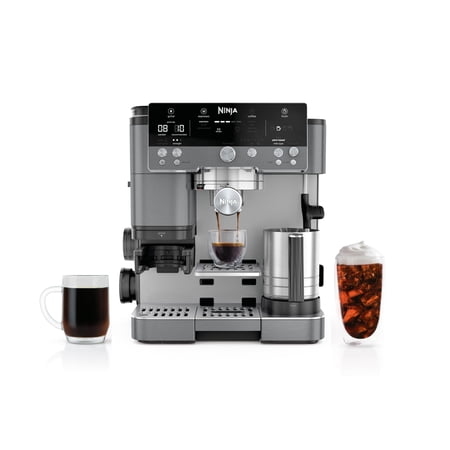
Best Overall for Beginners: Ninja Luxe Café Premier — a built-in grinder, weight-based dosing, grind recommendations and hands-free milk frothing remove much of the guesswork without eliminating the portafilter experience.
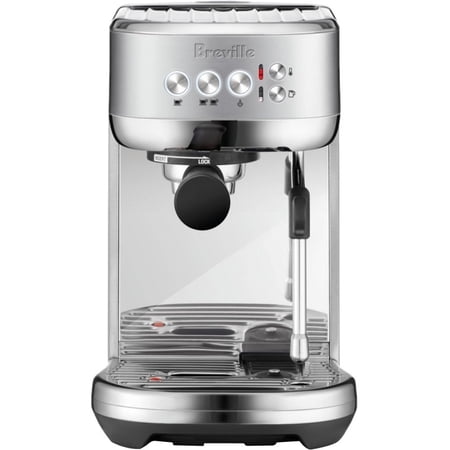
Best Simple & Compact Starter: Breville Bambino Plus — fast heating, straightforward controls and automatic milk texturing in a small footprint, although you still need a separate grinder.
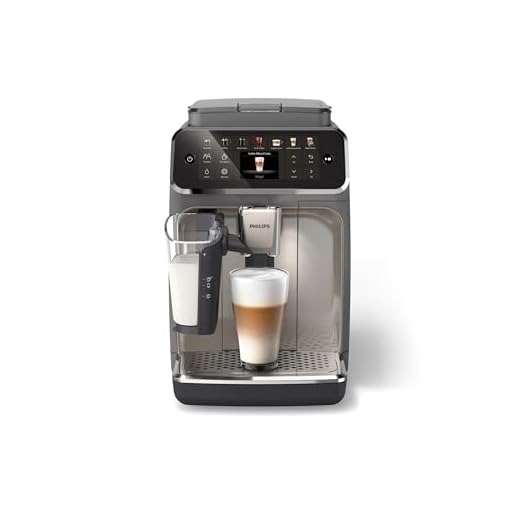
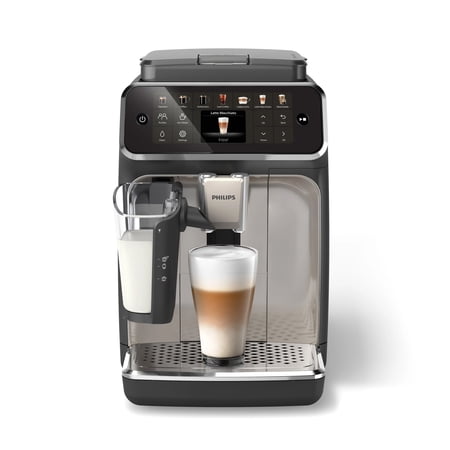
Easiest One-Touch Machine: Philips 4400 LatteGo — the least manual work in our lineup, with automatic grinding, brewing and milk preparation.
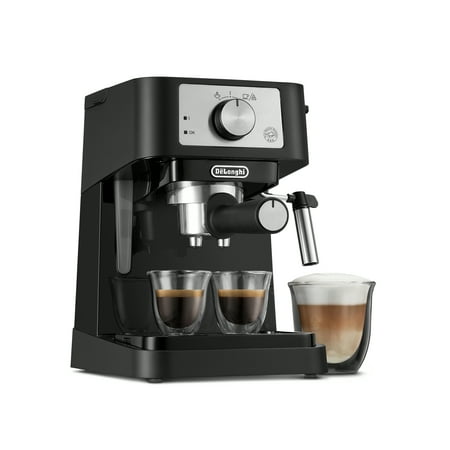
Best Budget Pick: De’Longhi Stilosa — a lower-cost way to start making espresso, but it requires substantially more manual technique than the assisted and automatic machines above.
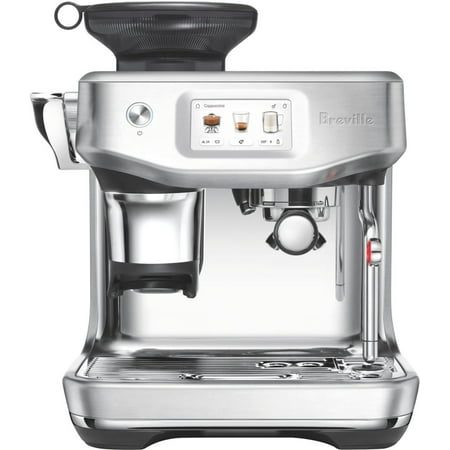
Best Premium Guided Machine: Breville Barista Touch Impress — step-by-step touchscreen guidance, intelligent dosing, assisted tamping and automatic milk texturing for beginners with a larger budget.
At a Glance: Which Beginner Espresso Machine Is Easiest?
| Machine | Best For | Grinder | Milk | Beginner Effort |
|---|---|---|---|---|
| Ninja Luxe Café Premier | Best overall balance | Built-in, 25 settings | Automatic | Low |
| Breville Bambino Plus | Simple, compact setup | Separate | Automatic | Low–Medium |
| Philips 4400 LatteGo | Maximum convenience | Built-in | Automatic | Very Low |
| Breville Barista Touch Impress | Premium guided workflow | Built-in, 30 settings | Automatic | Low |
| De’Longhi Stilosa | Low-cost entry | Separate | Manual | High |
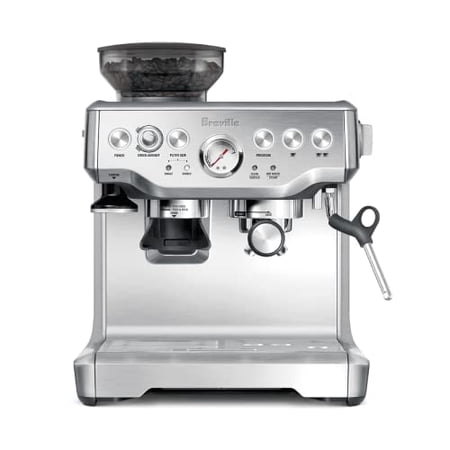
| Breville Barista Pro | Learning barista skills | Built-in, 30 settings | Manual | Medium–High |
How Much Work Does Each Espresso Machine Do for You?
This is the most useful way to compare a best starter espresso machine. Two machines may both be marketed as beginner-friendly while requiring completely different levels of involvement.
| Machine | Grind | Dose | Tamp | Brew | Milk |
|---|---|---|---|---|---|
| Ninja Luxe Café Premier | Guided | Weight-based | Assisted | Guided | Automatic |
| Breville Bambino Plus | Manual / separate | Manual | Manual | Preset / assisted | Automatic |
| Philips 4400 LatteGo | Automatic | Automatic | Automatic / internal | Automatic | Automatic |
| Breville Barista Touch Impress | Guided | Intelligent | Assisted | Guided | Automatic |
| De’Longhi Stilosa | Manual / separate | Manual | Manual | Manual | Manual |
| Breville Barista Pro | Built-in / adjustable | Grind-dose assistance | Manual | Assisted | Manual |
The Philips 4400 LatteGo requires the least work, but that also means it teaches you the least about traditional espresso preparation. Ninja provides a particularly useful middle ground: it helps with grind selection, dosing and milk while retaining a portafilter workflow. Breville’s Barista Pro sits farther toward the learning end of the spectrum.
What Kind of Espresso Beginner Are You?
I Just Want to Press a Button
Choose the Philips 4400 LatteGo. It is designed around bean-to-cup convenience rather than teaching you puck preparation, tamping or manual milk steaming.
I Want Real Espresso Without Constant Guesswork
The Ninja Luxe Café Premier is our strongest match. It keeps the portafilter experience while using built-in guidance to reduce some of the variables that frustrate beginners.
I Want Something Small and Simple
The Breville Bambino Plus is easier to fit into a small kitchen and has a straightforward interface. You do need to pair it with a grinder if you want to grind beans fresh.
I Want Premium Guidance and Room to Experiment
The Breville Barista Touch Impress guides grinding, dosing, tamping, extraction and milk preparation through a touchscreen-driven workflow. Its main disadvantage is cost.
I Want the Cheapest Reasonable Starting Point
The De’Longhi Stilosa keeps the initial machine cost low but asks you to perform substantially more of the process yourself.
I Actually Want to Learn Barista Skills
The Breville Barista Pro removes the need for a separate grinder but leaves tamping and milk steaming in your hands. That makes it less foolproof but more useful for deliberate skill-building.
Ninja Luxe Café Premier — Best Overall for Beginners
The Ninja Luxe Café Premier earns our top position because it targets one of the biggest problems facing new espresso makers: too many variables at once. Its Barista Assist system recommends grind settings, uses a built-in scale for weight-based dosing and monitors the brew while the integrated grinder keeps the entire setup in one appliance.
The conical-burr grinder offers 25 settings, so you can make adjustments as beans age or as you switch between espresso and the machine’s other brewing modes. Instead of requiring a beginner to immediately understand what every grind change means, the machine provides recommendations that reduce trial and error.
Milk preparation is also heavily simplified. Ninja’s hands-free frothing system combines steaming and whisking to create textured milk without requiring you to learn steam-wand positioning on day one. That makes the machine particularly attractive for latte and cappuccino drinkers.
Another major advantage is versatility. The Luxe Café Premier can make espresso, drip-style coffee and cold-brew-style drinks. That is useful in a household where one person wants espresso while another simply wants regular coffee.
The compromise is size and complexity. This is not a tiny appliance, and buyers who only drink espresso may not need its broader coffee functionality. Tamping is also assisted rather than completely automatic, so the machine still expects some participation.
Best For
Beginners who want a real portafilter-based espresso experience but would rather have the machine guide grinding, dosing and milk preparation instead of learning every variable at once.
Pros
✅ Built-in grinder with grind recommendations
✅ Weight-based dosing reduces guesswork
✅ Hands-free milk frothing
✅ Also makes drip coffee and cold brew
Cons
❌ Larger than a compact espresso-only machine
❌ More controls and functions than some beginners need
❌ Tamping is assisted rather than fully automatic
Alternative: Choose the Breville Bambino Plus if you prefer a smaller, simpler espresso-only machine and do not mind buying a grinder separately.
Breville Bambino Plus — Best Simple & Compact Starter
The Breville Bambino Plus takes a very different approach from Ninja. Instead of integrating a grinder and filling the interface with guidance, it focuses on making the espresso machine itself quick and approachable.
Its ThermoJet heating system reaches brewing temperature in roughly three seconds, so there is little waiting during a busy morning. One- and two-cup volumetric buttons simplify extraction, while low-pressure pre-infusion and controlled brewing help provide a more forgiving workflow than a basic manual machine.
The biggest beginner-friendly feature is the automatic steam wand. You can select milk temperature and texture, place the jug under the wand and let the machine handle much of the steaming process. The wand also purges itself after use, reducing one of the maintenance mistakes beginners commonly make with milk residue.
The trade-off is that Bambino Plus does not include a grinder. You still need to choose an espresso-capable grinder, adjust grind size, dose your coffee and tamp the puck. That is why its overall effort level is higher than an all-in-one assisted system.
Still, its narrow footprint and simple controls make it one of the strongest choices for anyone searching for a small home espresso machine that will not dominate the kitchen counter.
Best For
Beginners who want a compact semi-automatic machine, easy milk preparation and straightforward controls, and who are comfortable pairing it with a separate grinder.
Pros
✅ Very fast heat-up
✅ Automatic milk texturing
✅ Compact footprint
✅ Simple shot controls
Cons
❌ No built-in grinder
❌ Dosing and tamping remain manual
❌ Complete setup may cost more once a suitable grinder is added
Alternative: Choose the Ninja Luxe Café Premier if an integrated grinder and more guidance would make your first espresso setup less intimidating.
Philips 4400 LatteGo — Easiest One-Touch Machine
If your definition of easy is “put beans in the machine and choose a drink,” the Philips 4400 LatteGo is the strongest fit in this roundup.
Unlike the portafilter machines here, Philips is fully automatic. Grinding, dosing, brewing and internal puck preparation are handled by the machine. You choose your drink and preferences rather than manually preparing an espresso puck.
The 4400 offers a broad menu of hot and iced drinks, including espresso, coffee and milk-based beverages. Its ceramic grinder provides multiple grind settings, but you do not need to interact with those settings every time you make coffee.
LatteGo is particularly beginner-friendly because the milk system has only two main pieces and no complicated internal milk tubing. The system can be removed quickly for rinsing, and Philips designs it around easy day-to-day cleaning.
The downside is philosophical rather than operational: you learn very little about traditional espresso. If you eventually want to understand distribution, tamping, extraction ratios or manual milk steaming, a fully automatic machine hides most of that process from you.
Best For
Anyone who wants the lowest-effort bean-to-cup experience and values one-touch espresso, cappuccino and latte preparation more than learning manual barista technique.
Pros
✅ Very little manual espresso work
✅ Built-in grinder
✅ Automatic milk drinks
✅ Simple LatteGo milk-system cleanup
Cons
❌ Limited opportunity to learn traditional portafilter skills
❌ Less direct control than a semi-automatic setup
❌ Milk texture may not satisfy users chasing manually steamed café-style microfoam
Alternative: Choose the Breville Barista Touch Impress if you want extensive guidance but still want to participate in portafilter espresso preparation.
Breville Barista Touch Impress — Best Premium Beginner Machine
The Barista Touch Impress is what happens when a manufacturer tries to preserve the visible steps of making espresso while helping the user through nearly all of them.
The integrated Baratza precision burr grinder offers 30 grind settings. Breville’s Impress Puck System provides intelligent dosing, assisted 22-pound tamping and dose correction for the next shot. A touchscreen then guides the user through the workflow with real-time feedback.
Milk is equally beginner-focused. Auto MilQ provides hands-free microfoam with selectable temperature and texture settings, including profiles optimized for dairy, soy, almond and oat milk. That makes the Touch Impress particularly attractive for households making frequent lattes and alternative-milk drinks.
Its ThermoJet system reaches extraction temperature in roughly three seconds, and the touchscreen includes a collection of café-style drink presets. The result is a machine that can feel almost instructional: it does not simply make the drink for you, but it reduces many of the opportunities to make a serious mistake.
The obvious downside is price. This is a premium appliance and can be excessive for someone who is not yet sure espresso will become a long-term hobby. Its large feature set also means buyers prioritizing simplicity over guidance may prefer a Bambino Plus or fully automatic Philips.
Best For
Beginners with a larger budget who want an integrated grinder, guided puck preparation and automatic milk while keeping enough interaction with the process to understand how espresso is made.
Pros
✅ Step-by-step touchscreen guidance
✅ Integrated grinder with 30 settings
✅ Intelligent dosing and assisted tamping
✅ Excellent automatic milk flexibility
Cons
❌ Premium price
❌ Large feature set can be overkill for casual users
❌ Assisted tamping still requires user interaction
Alternative: Ninja Luxe Café Premier offers a similarly assistance-first philosophy at a more accessible price position while adding drip coffee and cold-brew functionality.
De’Longhi Stilosa — Best Budget Espresso Machine for Beginners
The De’Longhi Stilosa is here for a different reason from the automated machines above: it provides a relatively inexpensive entry into home espresso without pretending that low cost removes the learning curve.
It uses a traditional manual workflow with a 15-bar pump, stainless-steel boiler and manual milk frother. The controls themselves are straightforward, but the user still needs to manage coffee preparation and steaming.
That means you should not confuse affordable espresso machines with easy espresso machines. A beginner using Stilosa has more responsibility for grind selection, dosing, tamping and milk texture than someone using Ninja, Philips or a Touch Impress.
There is an upside to that extra work. You can learn fundamental espresso skills without paying for a large collection of automated features, and the relatively compact machine does not require a large section of the counter.
For buyers using pre-ground coffee or a more forgiving basket configuration, the initial learning process can also be less demanding than trying to immediately perfect a highly sensitive single-wall extraction.
Best For
Budget-conscious beginners who are willing to learn more manual technique in exchange for a much lower initial machine cost.
Pros
✅ Affordable entry into home espresso
✅ Straightforward controls
✅ Compact design
✅ Lets beginners practice fundamental skills
Cons
❌ No built-in grinder
❌ Manual milk steaming
❌ Much more technique required than assisted alternatives
Alternative: Spend more on the Breville Bambino Plus if automatic milk texturing, faster heating and an easier daily workflow matter more than minimizing the purchase price.
Breville Barista Pro — Best for Learning Barista Skills
The Barista Pro is beginner-friendly in the sense that it combines several essential tools into one appliance, not because it automates every part of making espresso.
Its integrated conical-burr grinder has 30 espresso grind settings and can dose coffee directly into the portafilter. ThermoJet heating reaches extraction temperature in around three seconds, while PID control, low-pressure pre-infusion and programmable shot volumes provide a capable foundation for learning.
Where the Barista Pro differs from Ninja and Touch Impress is what it deliberately leaves to you. Tamping is manual. Milk steaming is manual. You also need to learn how changing grind size affects extraction instead of relying on a system that continually tells you what adjustment to make.
For someone who eventually wants to become comfortable dialing in beans, preparing a puck and steaming milk by hand, those are advantages rather than flaws. The machine reduces equipment clutter by including the grinder while leaving enough of the craft intact to build transferable skills.
It is therefore not our easiest machine overall. It is our recommendation for the beginner who sees espresso as a hobby they actually want to learn.
Best For
Beginners who want an espresso machine with grinder but also want to learn tamping, milk steaming and grind adjustment instead of having those steps heavily automated.
Pros
✅ Integrated 30-setting grinder
✅ Fast ThermoJet heating
✅ Good room to develop real espresso skills
✅ No separate grinder required
Cons
❌ Tamping remains manual
❌ Milk steaming requires practice
❌ Greater learning curve than Ninja, Philips or Touch Impress
Alternative: Choose the Barista Touch Impress if you want a Breville all-in-one system that provides substantially more guidance with dosing, tamping and milk.
Espresso Machine With Grinder vs Separate Grinder
One of the first decisions a beginner faces is whether to buy an espresso machine with grinder or pair a simpler machine with a standalone grinder.
Why a Built-In Grinder Is Easier
An integrated grinder means one purchase, fewer cables and less countertop clutter. More importantly, machines such as the Ninja Luxe Café Premier and Barista Touch Impress can connect grinding with other parts of the workflow. Ninja can recommend grind settings, while Breville can coordinate grinding and dosing with its guided puck-preparation system.
That integration makes an all-in-one machine easier to understand during the first few weeks of ownership.
Why a Separate Grinder Can Be Better Long Term
A separate grinder gives you more flexibility. You can replace the espresso machine without replacing the grinder, upgrade the grinder independently or choose a model with features specifically suited to your preferred coffee.
This approach also makes compact machines such as the Bambino Plus possible. The machine itself remains small because the grinder lives elsewhere.
The downside is that the beginner has two products to research instead of one, and grind adjustment becomes another independent variable.
For most beginners prioritizing convenience, a built-in grinder is easier. For users who expect to turn espresso into a serious hobby, a separate grinder provides the stronger upgrade path.
Best Latte Machine for Home Beginners
The best latte machine for home depends on whether you want a finished drink with one touch or want to remain involved in making the espresso.
Easiest Latte: Philips 4400 LatteGo
Philips handles the bean-to-cup workflow and automatic milk preparation, making it the easiest choice if your goal is simply to select a latte or cappuccino and receive a finished drink.
Best Real Espresso + Easy Milk: Breville Bambino Plus
Bambino Plus keeps traditional portafilter espresso preparation but automates milk texturing. It is a good compromise for someone who wants to learn shots without simultaneously learning manual steaming.
Best Premium Guided Milk Workflow: Barista Touch Impress
Auto MilQ adds adjustable temperature and texture plus profiles optimized for several milk types. It is especially useful in households that regularly switch between dairy and alternatives such as oat or almond milk.
Ninja also deserves consideration because its hands-free frothing system complements an already highly assisted espresso workflow.
Espresso Machine vs Coffee Maker: Which Do You Actually Need?
The espresso vs coffee maker question is worth answering before spending hundreds of dollars on equipment.
An espresso machine forces hot water through finely ground coffee under pressure to produce a concentrated shot. That shot becomes the base for drinks such as lattes, cappuccinos and Americanos.
A traditional drip coffee maker uses a much less concentrated brewing process and is usually better suited to larger mugs or multiple cups at once. It also requires much less technique.
| Choose an Espresso Machine If… | Choose a Coffee Maker If… |
|---|---|
| You want espresso, lattes and cappuccinos | You mainly want larger cups of regular coffee |
| You enjoy café-style concentrated drinks | You prioritize speed and simplicity |
| You are willing to manage at least some extra cleaning or technique | You want easy batch brewing with minimal involvement |
If your morning priority is simply getting a full mug of coffee with very little setup, an espresso machine may create unnecessary work. Our Best Coffee Makers for Busy Mornings guide covers simpler alternatives.
Is a Simple Coffee Machine Better for a Complete Beginner?
Sometimes, yes. A simple coffee machine can be the smarter purchase if you mostly drink black coffee, want several cups at once or do not care about espresso-based milk drinks.
An espresso machine starts to make sense when the concentrated espresso shot itself matters—or when your favorite drinks are lattes, cappuccinos, flat whites and Americanos.
You should not buy a complicated espresso setup simply because it looks more advanced. The best machine is the one that matches what you actually drink.
How Much Should a Beginner Spend on an Espresso Machine?
There is no single correct beginner budget because greater spending often buys automation rather than simply better coffee.
Entry Level: Roughly Under $200
This range contains manual machines such as the De’Longhi Stilosa. They can provide a low-cost entry but usually require a separate grinder or pre-ground coffee and significantly more hands-on technique.
Midrange: Roughly $300–$800
This is often the most interesting zone for beginners because machines can start removing meaningful friction. Bambino-style systems simplify heating and milk, while more integrated products such as Ninja combine grinding, dosing guidance and automatic frothing.
Premium: $1,000+
Premium machines can add guided touchscreens, assisted tamping, extensive drink presets and more sophisticated automation. The Barista Touch Impress demonstrates what that extra spending can buy.
However, paying more does not automatically mean you will enjoy the coffee more. A beginner who prefers straightforward espresso may be happier with a smaller machine and good grinder than with a touchscreen full of features they never use.
Small Home Espresso Machines: What to Look For
Width is not the only measurement that matters when choosing a small home espresso machine.
Consider how far the portafilter extends while being inserted, whether a bean hopper needs clearance under cabinets, where the water tank is removed and whether you have enough space beside the machine for a milk pitcher and grinder.
A machine with a built-in grinder may reduce the number of appliances on the counter but can still be much wider than a slim espresso-only model.
Among our picks, the Breville Bambino Plus is the strongest choice for tight spaces because its espresso-only body is much narrower than the larger all-in-one machines. Just remember that the separate grinder also needs somewhere to live.
Beginner Barista Tips: 7 Things That Matter More Than Fancy Gear
1. Start With Fresh Beans
Espresso magnifies changes in coffee freshness. Beans that have been sitting open for a long time can make dialing in unnecessarily frustrating.
2. Change One Variable at a Time
If a shot tastes wrong, do not change dose, grind size and temperature simultaneously. Change one variable, taste again and learn what happened.
3. Focus on Grind Size Before Pump-Bar Marketing
A machine advertised with a very high maximum pump rating is not automatically better. Grind size, dose, puck preparation, temperature and actual extraction behavior matter much more to the drink in your cup.
4. Keep Your Dose Consistent
Consistency makes troubleshooting easier. Built-in scales and dosing systems can help, but a small external coffee scale is useful with more manual machines.
5. Clean the Steam Wand Immediately
Wipe and purge the wand after steaming rather than allowing milk residue to dry onto it. Machines with automatic purge make this easier, but the outside still needs normal care.
6. Do Not Overheat Milk
Milk texture and sweetness deteriorate when overheated. Automatic systems can reduce this learning curve by controlling temperature for you.
7. Learn What You Actually Like
Do not chase someone else’s idea of a perfect espresso recipe before learning your own preferences. A technically precise shot is not useful if you do not enjoy drinking it.
Do Beginners Need 15 or 20 Bars of Pressure?
No. Advertised pump pressure is one of the easiest specifications to misunderstand when shopping for an espresso machine.
A machine may contain a pump capable of much higher maximum pressure, while espresso extraction itself is controlled at a lower pressure. More advertised bars do not automatically produce better espresso.
For a beginner, factors such as temperature stability, grind quality, dose consistency and how well the machine manages extraction are much more useful than choosing whichever product has the largest pressure number on the box.
Should Beginners Use Pressurized or Single-Wall Baskets?
Pressurized, often called dual-wall, baskets are designed to be more forgiving. They can work reasonably well with pre-ground coffee or a grinder that is not capable of extremely precise espresso adjustments.
That makes them useful while you are learning or while you save for a better grinder.
Single-wall baskets rely more heavily on the coffee itself to create the correct resistance. They give you greater control and are generally the more interesting path for learning serious espresso, but they also expose grind and puck-preparation mistakes more quickly.
A beginner does not need to feel embarrassed about starting with a pressurized basket. It can reduce frustration while you learn the rest of the workflow.
Fully Automatic vs Semi-Automatic Espresso Machines for Beginners
Fully Automatic
A fully automatic machine such as the Philips 4400 LatteGo grinds, doses, prepares the puck internally and brews for you. Milk can also be automated.
Best advantage: minimum learning curve.
Main trade-off: less control and less opportunity to learn traditional espresso technique.
Assisted Semi-Automatic
Ninja Luxe Café and Barista Touch Impress occupy a useful middle ground. You still interact with a portafilter and parts of the espresso process, while the machine guides or automates several difficult variables.
Best advantage: convenience without completely hiding espresso preparation.
Main trade-off: higher complexity and often higher cost than a basic machine.
Traditional Semi-Automatic
Bambino Plus, Stilosa and Barista Pro leave more of the preparation in your hands, although their levels of assistance differ considerably.
Best advantage: more direct control and a stronger path toward learning real barista skills.
Main trade-off: a steeper learning curve.
For complete convenience, fully automatic is easiest. For many beginners who actually want to learn espresso, an assisted semi-automatic provides the best balance.
Jura vs Breville: Automatic Convenience or Barista Control?
The same convenience-versus-learning decision extends beyond the six machines in this roundup. Jura’s bean-to-cup approach emphasizes automated drink preparation, while a machine such as the Breville Barista Pro expects substantially more input from the person making the coffee.
If those two philosophies appeal to you, our Jura ENA 8 vs Breville Barista Pro: Espresso Showdown explores the trade-offs in greater detail.
Espresso Machines for Beginners FAQ
What is the easiest espresso machine for a beginner?
The Philips 4400 LatteGo requires the least manual work because it automates grinding, dosing, brewing and milk preparation. We prefer the Ninja Luxe Café Premier as the best overall beginner choice if you want more involvement because it reduces guesswork while retaining a real portafilter workflow.
Is a fully automatic espresso machine better for beginners?
It is easier, but not necessarily better for every beginner. Fully automatic machines minimize technique, while assisted semi-automatic machines provide more opportunity to understand grinding, puck preparation and extraction without forcing you to learn everything at once.
Do beginners need an espresso machine with a grinder?
No, but fresh coffee generally requires either a capable separate grinder or one built into the machine. Integrated grinders simplify the first setup, while a separate grinder is easier to upgrade independently later.
Is the Breville Bambino Plus good for beginners?
Yes. Its simple controls, very fast heating and automatic milk texturing make it beginner-friendly. The main consideration is that it does not contain a grinder, so grinding and dosing remain separate parts of the workflow.
What is the best affordable espresso machine for beginners?
De’Longhi Stilosa is our budget pick because it provides a relatively inexpensive entry into home espresso. It is important to understand that its lower price comes with more manual grinding, tamping and milk-steaming work than the assisted machines in this guide.
Is an espresso machine harder to use than a coffee maker?
Usually. Traditional espresso involves more variables than drip coffee, including grind, dose and puck preparation. Fully automatic espresso machines can dramatically reduce that difference by handling most of those steps internally.
What is the easiest machine for making lattes at home?
Philips 4400 LatteGo is the easiest option if you want a largely one-touch milk drink. Breville Bambino Plus is a better fit if you want to prepare espresso with a portafilter but would like the machine to automate milk texturing.
How much should a beginner spend on an espresso machine?
Spend according to the amount of automation you want rather than assuming a more expensive machine is automatically better. Budget machines typically require more technique, midrange models can remove significant friction, and premium systems often add guided dosing, tamping, milk automation and drink presets.
Final Verdict: Which Espresso Machine Is Easiest for Beginners?
There is no single definition of an easy espresso machine because beginners do not all want the same experience.
If you want the machine to do almost everything, the Philips 4400 LatteGo is the easiest model in this lineup. It removes grinding, dosing, tamping and milk technique from the normal daily workflow and turns espresso into a largely bean-to-cup process.
If you want to remain involved in making espresso without immediately learning every difficult variable, the Ninja Luxe Café Premier is our best overall recommendation. Its built-in grinder, grind guidance, weight-based dosing and automatic frothing reduce the parts most likely to frustrate a first-time user while preserving the physical portafilter process.
The Breville Bambino Plus is the better choice for a small kitchen or someone who values simplicity over an all-in-one design. Its automatic milk system is particularly useful, but remember to budget for an espresso-capable grinder.
The Breville Barista Touch Impress offers the most compelling premium guided experience. Intelligent dosing, assisted tamping, touchscreen guidance and Auto MilQ make complicated steps easier, but the price only makes sense if you expect to use those features regularly.
For lower budgets, the De’Longhi Stilosa gives you an accessible way to start, but it is important to understand the trade-off: budget does not mean easiest. You will be responsible for much more of the process.
Finally, choose the Breville Barista Pro if your goal is not simply to get good coffee quickly but to learn why one espresso shot succeeds and another fails. It gives beginners useful modern conveniences while still requiring manual tamping, milk steaming and grind adjustment.
The most useful question is therefore not “Which espresso machine has the most features?” It is: How much of the espresso-making process do you actually want to learn?
Best Overall: Ninja Luxe Café Premier
Easiest One-Touch: Philips 4400 LatteGo
Best Compact Starter: Breville Bambino Plus
Best Budget: De’Longhi Stilosa
Best for Learning: Breville Barista Pro
Sources
- Ninja — Luxe Café Premier product specifications, Barista Assist Technology, grinder, weight-based dosing and hands-free frothing information.
- Breville — Bambino Plus specifications and operating documentation.
- Philips — 4400 LatteGo specifications, beverage options, grinder and milk-system maintenance information.
- Breville — Barista Touch Impress specifications, Impress Puck System, Auto MilQ and grinder information.
- De’Longhi — Stilosa specifications and manual espresso/milk system information.
- Breville — Barista Pro specifications, grinder, ThermoJet, extraction and milk-texturing information.
- Bon Appétit — independent espresso-machine testing and beginner-focused buying recommendations.
- TechRadar — independent testing of Ninja Luxe Café and Philips LatteGo.
- Tom’s Guide — independent testing and beginner-use evaluation of Ninja Luxe Café.
Product Groups: Ninja Luxe Café Premier, Breville Bambino Plus, Philips 4400 LatteGo, Breville Barista Touch Impress, De’Longhi Stilosa, Breville Barista Pro