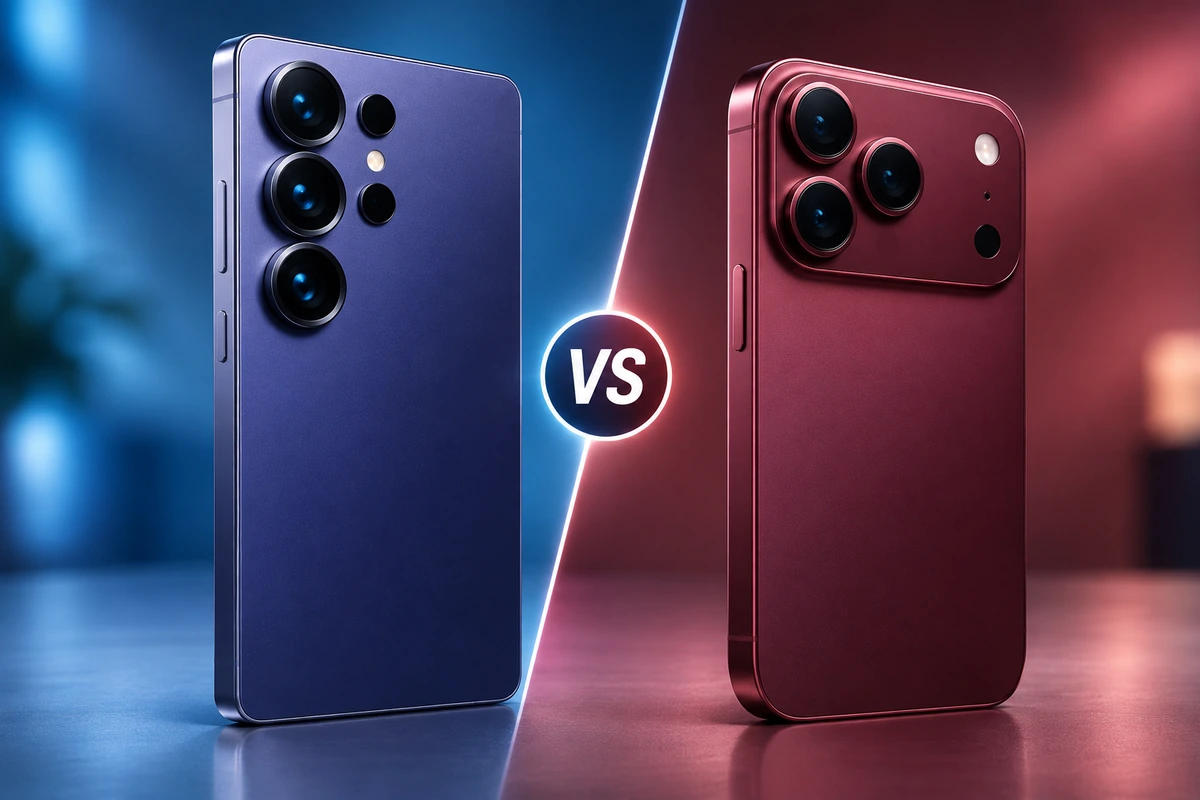
Galaxy S26 Ultra vs iPhone 18 Pro Max
Galaxy S26 Ultra vs iPhone 18 Pro Max: which flagship smartphone should you buy? The iPhone 18 Pro Max has a slight overall advantage for buyers who prioritize camera consistency, professional video recording, processing performance, and battery endurance. However, the Samsung Galaxy S26 Ultra remains an excellent alternative for long-distance zoom photography, productivity, Android customization, and its built-in S Pen.
Both phones represent the best of their respective ecosystems. Samsung combines a 200MP main camera, dual telephoto lenses, a 6.9-inch AMOLED display, and Snapdragon 8 Elite Gen 5 for Galaxy performance. Apple counters with its A20 Pro processor, a 48MP variable-aperture camera, advanced video tools, and a 6.9-inch Super Retina XDR display.
Price makes this comparison particularly interesting. Both launched in the United States at approximately $1,300 for their 256GB configurations, although current unlocked prices, carrier promotions, and trade-in offers can differ substantially.
We compared official specifications and independent testing across photography, video, battery life, performance, displays, software, and everyday usability. Our goal is simple: help you decide which premium phone offers the features you’ll actually use, rather than choosing a winner based on marketing claims or specifications alone.
Quick Answer: Galaxy S26 Ultra or iPhone 18 Pro Max?
Which Flagship Wins?
Best Overall for Most Buyers: iPhone 18 Pro Max — Excellent camera consistency, powerful processing, advanced video tools, and impressive battery endurance.
Best for Zoom Photography: Galaxy S26 Ultra — Dedicated 3x and 5x telephoto cameras provide greater flexibility when photographing distant subjects.
Best for Video Creators: iPhone 18 Pro Max — ProRes RAW, Apple Log 2, Dolby Vision, and professional recording controls support demanding production workflows.
Best for Productivity: Galaxy S26 Ultra — Integrated S Pen, Samsung DeX, multitasking tools, and Android flexibility make it particularly useful for work.
Best Battery Endurance: iPhone 18 Pro Max — Lasted 18 hours and 27 minutes versus 16 hours and 40 minutes for Samsung in Tom’s Guide’s standardized test.
Our recommendation: Choose iPhone 18 Pro Max if you want an exceptionally capable all-around flagship and prefer iOS. Choose Galaxy S26 Ultra if you value the S Pen, versatile telephoto photography, screen privacy, and Samsung’s productivity features. Neither phone is automatically a better purchase for someone already invested in the other ecosystem.
Galaxy S26 Ultra vs iPhone 18 Pro Max: Specifications Compared
Both smartphones feature large 120Hz OLED displays, powerful processors, premium cameras, and advanced wireless connectivity. Their important differences become clearer when you examine the details.
| Specification | Samsung Galaxy S26 Ultra | Apple iPhone 18 Pro Max |
|---|---|---|
| Display | 6.9-inch Dynamic AMOLED 2X | 6.9-inch Super Retina XDR OLED |
| Resolution | 3120 × 1440 | 2868 × 1320 |
| Refresh rate | Adaptive 1–120Hz | ProMotion up to 120Hz |
| Processor | Snapdragon 8 Elite Gen 5 for Galaxy | Apple A20 Pro |
| Base storage | 256GB | 256GB |
| Maximum storage | 1TB | 2TB |
| Main camera | 200MP, f/1.4 | 48MP, variable f/1.48–f/4.0 |
| Ultrawide | 50MP | 48MP |
| Telephoto | 10MP 3x + 50MP 5x optical | 48MP 4x optical |
| Front camera | 12MP autofocus | 18MP Center Stage |
| Battery | 5,000mAh typical capacity | Up to 45 hours manufacturer-rated video playback |
| Charging | Up to 60W wired, 25W wireless | Fast charging with compatible 60W-capable adapter; MagSafe up to 25W |
| Weight | 214g | 249g |
| Special features | S Pen, Privacy Display, Samsung DeX | Variable aperture, ProRes RAW, MagSafe |
| U.S. launch starting price | $1,299.99 | $1,299 |
Important: Manufacturer battery specifications use different measurements and should not be compared directly. Likewise, camera megapixels don’t establish image quality on their own. Sensor design, lenses, processing, and shooting conditions all matter.
Galaxy S26 Ultra vs iPhone 18 Pro Max: Price and Value


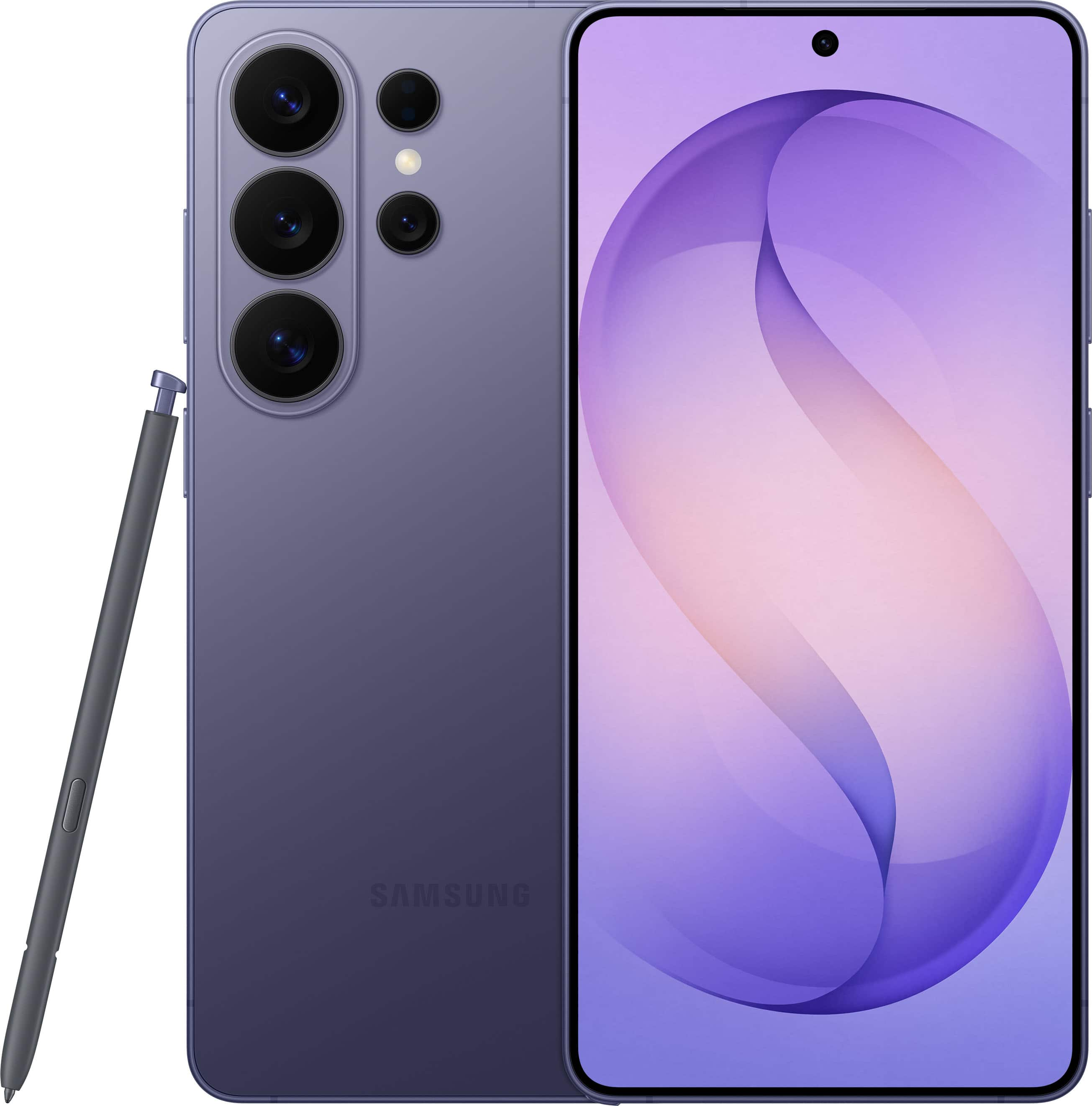
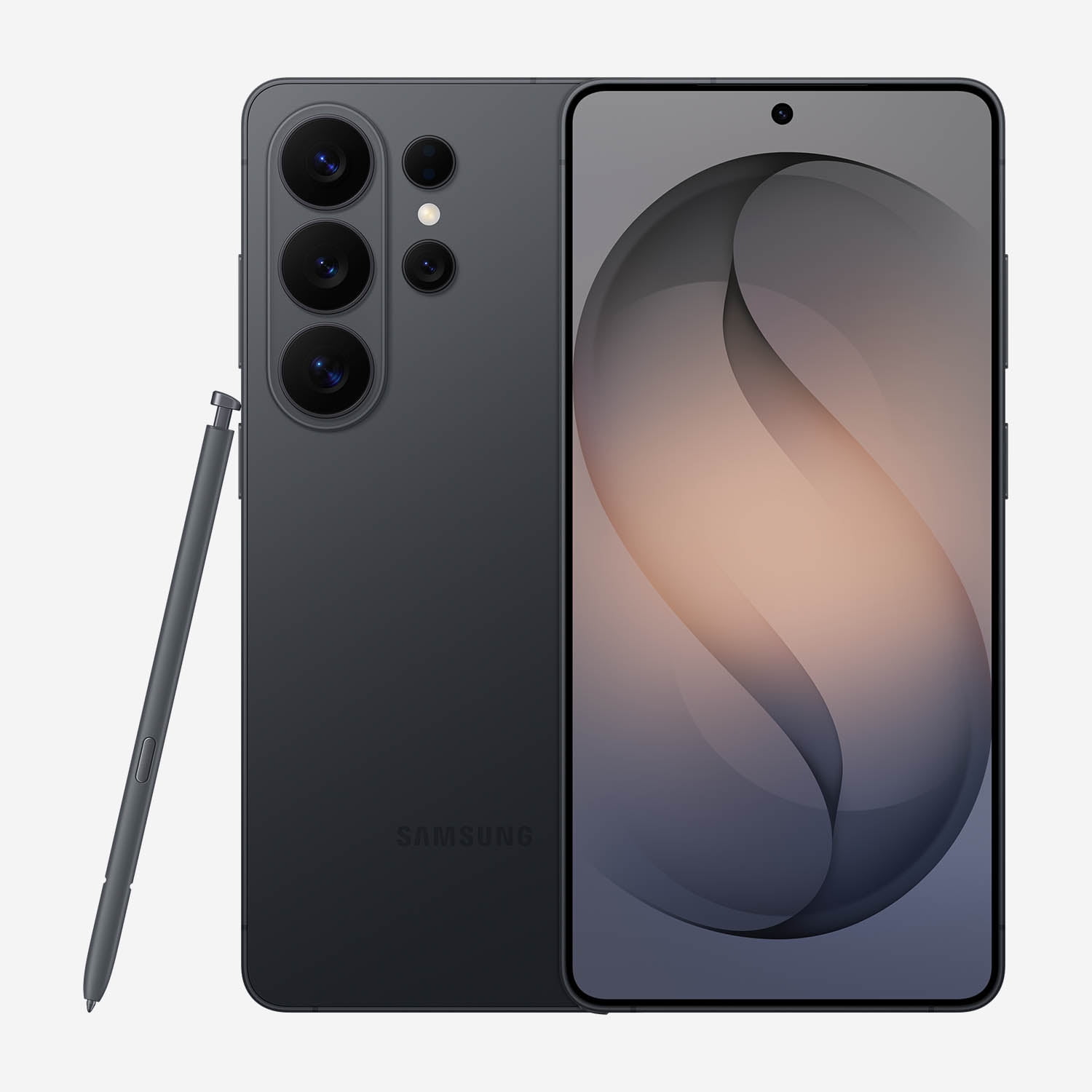
These smartphones launched at nearly identical U.S. starting prices. Samsung introduced the Galaxy S26 Ultra at $1,299.99 for its 256GB configuration, while Apple launched the iPhone 18 Pro Max from $1,299.
However, launch prices aren’t necessarily current checkout prices. Manufacturer pricing can change, and retailers may offer different discounts depending on color, storage, activation, financing, or trade-in eligibility.
For an accurate comparison, use the same 256GB storage capacity and check the unlocked purchase price before considering carrier incentives.
Samsung Galaxy S26 Ultra: Price and Buying Considerations
The Galaxy S26 Ultra is available in 256GB, 512GB, and 1TB configurations. Samsung’s U.S. launch price started at $1,299.99, but later price lists and retailer offers can differ.
Samsung frequently promotes trade-in programs and limited-time savings. However, the advertised maximum discount may require an eligible older device, carrier activation, or other conditions.
Before buying, confirm the exact model, storage, carrier compatibility, and final price without promotional assumptions.
The Galaxy S26 Ultra makes particularly good financial sense if you will actually use its integrated S Pen, telephoto cameras, and DeX features. Otherwise, some of its premium capabilities may go unused.
Apple iPhone 18 Pro Max: Price and Buying Considerations
The iPhone 18 Pro Max starts at $1,299 in the United States and is available with 256GB, 512GB, 1TB, or 2TB of storage.
Its 256GB configuration is a reasonable starting point for many users. However, people regularly shooting ProRes video, storing large files, or working with extensive offline media libraries should estimate storage requirements carefully.
Apple also offers carrier financing and eligible trade-in programs. Compare the total ownership cost rather than focusing only on an advertised monthly payment.
For U.S. buyers, the iPhone 18 Pro Max uses eSIM technology rather than a physical SIM card. Check carrier compatibility if you’re moving from a device or service that relies on a physical SIM.
Which Flagship Offers Better Value?
At comparable unlocked prices, value depends mainly on which features you’ll use.
The iPhone provides compelling camera consistency, battery endurance, and video-production capabilities. Samsung provides a lighter body, an integrated stylus, a more varied telephoto system, and additional desktop-style productivity options.
If you already own a recent flagship, don’t assume switching ecosystems is worth the cost. Your existing accessories, purchased apps, cloud storage, and connected devices can influence the real expense of changing phones.
Price winner: No automatic winner. Compare current unlocked offers and the actual value of each phone’s capabilities.
Design and Display: Which Phone Feels Better?
Both flagships offer large, high-quality screens. Yet their physical designs and daily handling are noticeably different.
Galaxy S26 Ultra: Lighter and More Productivity-Focused
The Galaxy S26 Ultra features a 6.9-inch Dynamic AMOLED 2X display with QHD+ resolution and an adaptive refresh rate up to 120Hz.
Its 214g weight makes it 35g lighter than the iPhone 18 Pro Max. That difference may be noticeable during extended handheld use, particularly when reading or browsing.
Samsung also integrates the S Pen directly into the device. You can remove it to write notes, annotate documents, or sketch without carrying a separate stylus.
The standout screen feature is Samsung’s built-in Privacy Display. It is designed to reduce visibility from certain off-axis viewing angles when activated, making it useful on public transportation and in shared environments.
However, privacy features involve trade-offs in viewing behavior. They also don’t replace basic precautions when handling sensitive information.
iPhone 18 Pro Max: Bright OLED and Apple Design
The iPhone 18 Pro Max features a 6.9-inch Super Retina XDR OLED display with ProMotion technology and adaptive refresh rates up to 120Hz.
Apple rates its outdoor peak brightness at up to 3,000 nits under specified conditions. An anti-reflective coating also helps improve usability in bright environments.
The aluminum unibody and Ceramic Shield construction create a premium appearance, although the phone weighs 249g.
For users comfortable with large iPhones, the dimensions may feel familiar. However, buyers moving from a smaller model should consider the weight before purchasing.
Both phones offer excellent display technology for reading, streaming, editing photos, and gaming.
Display winner: Galaxy S26 Ultra for integrated screen privacy and lighter weight. iPhone 18 Pro Max remains an excellent option for bright-screen usability and buyers who prefer Apple’s design.
Camera Comparison: Samsung Galaxy S26 Ultra vs iPhone 18 Pro Max
Camera performance is one of the biggest reasons to choose between these phones. The iPhone 18 Pro Max performs especially well in consistent everyday photography, while Galaxy S26 Ultra provides greater flexibility at longer focal lengths.
Independent comparisons reinforce this distinction. Tom’s Guide evaluated more than 200 photographs from both phones and preferred the iPhone overall, while identifying several situations where Samsung performed better.
Main Camera: 200MP vs 48MP Variable Aperture
Samsung uses a 200MP main camera with an f/1.4 aperture. Apple uses a 48MP main camera with a mechanical variable aperture offering f/1.48, f/1.8, f/2.8, and f/4.0 settings.
Samsung’s higher-resolution sensor offers flexibility for capturing detailed images, although its normal photo output depends on processing settings and pixel-binning techniques.
Apple takes a different approach. Its variable aperture changes how much light reaches the sensor and affects optical depth of field.
At wider apertures, the camera can admit more light and produce a shallower depth of field. At narrower settings, it can help keep more of a scene in focus under suitable conditions.
Importantly, variable aperture doesn’t guarantee superior results in every photograph. Image processing, subject movement, exposure, and lens quality remain essential.
In Tom’s Guide’s direct comparison, the iPhone produced more natural colors in several scenes, while Samsung sometimes delivered brighter, more saturated images.
Main camera winner: iPhone 18 Pro Max for consistent everyday output and additional aperture control. Samsung remains highly capable for detailed photography and more vivid image rendering.
Telephoto Zoom: Samsung’s Biggest Camera Advantage
The Galaxy S26 Ultra offers two dedicated telephoto cameras: a 10MP 3x optical lens and a 50MP 5x optical lens.
The iPhone 18 Pro Max uses a 48MP 4x optical telephoto camera. Apple also advertises an 8x optical-quality zoom option through its imaging system, but that is not the same as a separate native 8x telephoto lens.
Samsung’s dual-telephoto approach provides more native focal-length choices for portraits, events, architecture, and distant subjects.
Independent comparisons also show that the Galaxy can retain more recognizable details at extreme zoom settings. However, results vary with lighting, stabilization, and processing.
Both manufacturers use computational methods beyond their native optical focal lengths. Very high digital zoom figures shouldn’t be treated as equivalent to optical image quality.
Zoom winner: Galaxy S26 Ultra, particularly for users who regularly photograph distant objects, concerts, sporting events, or wildlife.
Portrait Photography and Skin Tones
Portrait quality involves more than background blur. Exposure, skin tones, edge detection, and subject separation all influence the result.
The iPhone’s variable aperture offers additional control over optical depth of field, while its portrait-processing system provides adjustable effects.
Samsung offers strong portrait capabilities and flexible focal lengths through its multiple cameras.
In Tom’s Guide’s 200-photo comparison, the iPhone produced more natural-looking skin tones and stronger exposure in several portrait scenarios.
However, image appearance is subjective. Some shoppers prefer Samsung’s brighter colors, while others prefer Apple’s more restrained rendering.
Portrait winner: iPhone 18 Pro Max, with the qualification that personal color preferences matter.
Low-Light Photography
Both phones use large sensors, optical stabilization, and computational photography to improve low-light images.
Apple’s f/1.48 main-camera setting helps admit light when conditions are dark. Samsung’s f/1.4 main aperture is also designed to gather substantial light.
The difference comes down to the combined camera system rather than aperture numbers alone.
In independent low-light comparisons, the iPhone captured clearer details and better-balanced shadows in several challenging scenes. Samsung remained competitive but did not always preserve the same level of definition.
Low-light winner: iPhone 18 Pro Max based on the referenced independent photo comparisons.
Ultrawide, Macro, and Selfie Cameras
Samsung includes a 50MP ultrawide camera, while Apple provides a 48MP ultrawide camera. Both are capable of wide landscapes, architecture, and creative close-up compositions.
The iPhone also features an 18MP Center Stage front camera. Its framing features are useful for selfies, video calls, and content creation.
Samsung counters with a 12MP autofocus front camera and extensive camera-app options.
Neither system wins every photographic situation. The result depends on framing, lighting, software processing, and personal expectations.
For shoppers comparing these flagships against other photographic specialists, our best smartphones for photography guide
Video Recording: Which Phone Is Better for Content Creators?
The iPhone 18 Pro Max is our recommendation for professional mobile video workflows. Its strongest advantage is not simply recording resolution, but the range of supported formats and production controls.
iPhone 18 Pro Max Video Features
Apple supports advanced video recording features including:
- 4K Dolby Vision recording with high-frame-rate options on supported cameras.
- ProRes and ProRes RAW recording for compatible workflows.
- Apple Log 2 for greater flexibility during color grading.
- Genlock support for applicable professional production environments.
- External recording options for demanding video formats.
- Advanced exposure, focus-tracking, and stabilization controls.
These capabilities matter most to creators who already understand their editing workflow. Large production files can also require substantial storage and compatible accessories.
For ordinary family videos and social media clips, you may never need ProRes RAW or external recording equipment.
Galaxy S26 Ultra Video Features
Samsung offers advanced recording capabilities of its own, including 8K video at 30fps and 4K recording at up to 120fps in supported modes.
Its camera system also provides greater native telephoto flexibility, which can be useful when recording distant subjects.
Samsung’s Horizon Lock feature is designed to keep footage level while the device changes orientation. This can be valuable for action-oriented recording, although stabilization results still depend on the shooting conditions.
Samsung also provides professional recording tools and options intended for advanced creators.
Video winner: iPhone 18 Pro Max for established professional recording and editing workflows. Galaxy S26 Ultra remains an excellent alternative for versatile focal lengths and high-resolution capture.
Performance and Gaming: A20 Pro vs Snapdragon
Both smartphones deliver flagship-level performance. Everyday activities such as messaging, navigation, streaming, and most applications should feel responsive on either device.
Differences become more significant during demanding games, sustained workloads, and specialized computing tasks.
iPhone 18 Pro Max: A20 Pro Performance
The iPhone 18 Pro Max runs Apple’s A20 Pro chip with a six-core CPU, seven-core GPU, and dedicated neural-processing capabilities.
Independent benchmarking by Tom’s Guide found that the iPhone outperformed Samsung in selected CPU and graphics tests.
For example, the iPhone 18 Pro Max recorded a Geekbench 6 single-core score of 4,741 compared with Samsung’s 3,785 in the publication’s test.
Benchmarks don’t directly measure every app experience. However, these results demonstrate the substantial processing capability available for demanding software and games.
Galaxy S26 Ultra: Snapdragon 8 Elite Gen 5 for Galaxy
The Galaxy S26 Ultra uses Qualcomm’s Snapdragon 8 Elite Gen 5 for Galaxy, paired with 12GB RAM in the 256GB and 512GB configurations.
Samsung also offers a 1TB variant with additional memory.
Its processor delivers strong gaming and multitasking performance, while Samsung’s software provides extensive control over app behavior and productivity features.
Independent tests suggest the A20 Pro has an advantage in certain raw computing and graphics benchmarks. However, Samsung remains extremely capable for current Android games and everyday workloads.
Performance winner: iPhone 18 Pro Max for the tested CPU and graphics results. Galaxy S26 Ultra remains a strong choice for Android gaming and multitasking.
Battery Life and Charging: Which Lasts Longer?
The iPhone 18 Pro Max has the advantage in the independent battery test used for this comparison.
Apple doesn’t publish a directly comparable battery-capacity specification in its standard technical listing. Instead, it rates the iPhone 18 Pro Max for up to 45 hours of video playback under specified conditions.
Samsung provides a 5,000mAh typical battery capacity for the Galaxy S26 Ultra.
The fairest comparison comes from testing both phones under the same methodology.
Independent Battery Test Results
| Phone | Tom’s Guide Battery Test | Difference |
|---|---|---|
| iPhone 18 Pro Max | 18 hours, 27 minutes | Winner |
| Galaxy S26 Ultra | 16 hours, 40 minutes | 1 hour, 47 minutes behind |
These figures come from Tom’s Guide’s standardized testing, not a Discompare laboratory test. Real-world results vary with cellular signal, brightness, applications, gaming, and device settings.
Wired and Wireless Charging
Samsung supports up to 60W wired charging with compatible equipment. The manufacturer advertises up to approximately 75% charge in 30 minutes under specified conditions.
Apple advertises up to 50% charging in approximately 15 minutes when using a compatible 60W-capable adapter with the required charging technology.
These marketing measurements use different charge ranges and shouldn’t be compared as direct equivalents.
Both devices also support high-speed wireless charging under compatible conditions. Apple’s MagSafe system offers a familiar accessory ecosystem, while Samsung supports wireless charging and Wireless PowerShare.
Charging adapters and other accessories may be sold separately.
Battery winner: iPhone 18 Pro Max for longer measured endurance. Charging performance should be evaluated using compatible accessories and comparable test conditions.
Galaxy AI vs Apple Intelligence: Which Is More Useful?
Artificial intelligence is now a major part of both smartphone ecosystems. However, the number of AI features isn’t as important as whether they solve problems you actually encounter.
Samsung Galaxy AI
Samsung combines Galaxy AI capabilities with Google-powered experiences and system-level productivity features.
Depending on the application and region, these tools can assist with tasks such as:
- Photo editing and object removal.
- Translation and communication assistance.
- Summarizing supported content.
- Voice-driven assistance and contextual interactions.
- Searching and working across compatible applications.
Samsung’s approach is particularly attractive to users who value Android customization and integrations with Google’s services.
However, individual capabilities may require internet access, account sign-in, supported applications, or additional service terms.
Apple Intelligence and Siri AI
The iPhone 18 Pro Max runs iOS 27 with Apple Intelligence and Apple’s updated Siri AI capabilities.
Apple focuses on integrating AI into familiar applications and workflows, including writing assistance, supported image-editing functions, and context-aware interactions.
Its approach can be particularly appealing when you also use a Mac, iPad, Apple Watch, or other Apple products.
However, supported features vary by language, region, application, and software version. AI-generated information can also be inaccurate.
Which AI System Wins?
Samsung offers a compelling combination of Galaxy AI, Gemini integration, and productivity customization.
Apple provides an increasingly integrated assistant experience built around its software ecosystem.
AI winner: Depends on your workflow. Samsung has a strong case for Google-integrated assistance and Android flexibility, while Apple is attractive for users who rely on its connected-device ecosystem.
Productivity: Samsung S Pen and DeX vs Apple Ecosystem
Productivity is one category where hardware and software differences matter more than raw processor scores.
Why Samsung’s S Pen Matters
The Galaxy S26 Ultra includes an integrated S Pen, allowing users to take handwritten notes, annotate documents, and draw directly on the screen.
For students, business users, and anyone who frequently marks up PDFs, this can be genuinely useful.
Samsung DeX adds another advantage by supporting a desktop-style working environment with compatible displays and accessories.
These features make the Galaxy S26 Ultra more flexible as a standalone mobile productivity tool.
Why Apple’s Ecosystem Matters
The iPhone 18 Pro Max doesn’t include an integrated stylus or offer a direct equivalent to Samsung’s S Pen.
However, Apple’s ecosystem provides conveniences for people who already own a Mac, iPad, or Apple Watch.
Features such as AirDrop, Continuity, shared clipboard functionality, and compatible cloud synchronization can simplify work across devices.
The better choice depends on whether you prefer completing tasks directly on your phone or moving seamlessly between several devices.
Productivity winner: Galaxy S26 Ultra for built-in stylus functionality and desktop-style versatility. Apple remains compelling for established Mac and iPad users.
Samsung Galaxy S26 Ultra: Pros and Cons
Pros
✅ Versatile cameras with dedicated 3x and 5x optical zoom.
✅ Integrated S Pen for writing, drawing, and annotations.
✅ Built-in Privacy Display for supported viewing scenarios.
✅ Samsung DeX and extensive Android multitasking features.
✅ Large, high-resolution AMOLED display.
✅ Lighter construction than iPhone 18 Pro Max.
Cons
❌ Shorter battery endurance in the referenced independent test.
❌ Some camera processing produces more saturated colors than buyers may prefer.
❌ Extensive software features can feel complex to new users.
❌ Premium pricing and potentially restrictive promotional conditions.
❌ Not integrated with Apple’s proprietary ecosystem features.
Apple iPhone 18 Pro Max: Pros and Cons
Pros
✅ Strong camera consistency in independent comparisons.
✅ Variable-aperture main camera provides additional creative control.
✅ Professional video tools including ProRes RAW and Apple Log 2.
✅ Excellent measured battery endurance.
✅ Powerful A20 Pro processor for demanding workloads.
✅ Close integration with supported Apple devices and services.
Cons
❌ Heavier than the Galaxy S26 Ultra at 249g.
❌ Fewer dedicated optical telephoto focal lengths.
❌ No integrated stylus or Samsung DeX equivalent.
❌ Switching from Android can involve app and accessory costs.
❌ Advanced video workflows may require substantial storage and accessories.
Which Phone Should You Buy?
Both smartphones are powerful enough for everyday use. The decision becomes easier when you start with your priorities.
| Your Priority | Recommended Phone | Reason |
|---|---|---|
| Everyday photography | iPhone 18 Pro Max | Consistent results in independent photo comparisons |
| Long-range zoom | Galaxy S26 Ultra | Dedicated 3x and 5x optical telephoto cameras |
| Professional video recording | iPhone 18 Pro Max | ProRes RAW, Apple Log 2, and creator-focused controls |
| Handwritten notes and annotations | Galaxy S26 Ultra | Integrated S Pen |
| Long battery endurance | iPhone 18 Pro Max | Longer result in the referenced standardized test |
| Screen privacy in shared spaces | Galaxy S26 Ultra | Integrated Privacy Display |
| Apple device integration | iPhone 18 Pro Max | Continuity with supported Mac, iPad, and Apple Watch devices |
| Android customization | Galaxy S26 Ultra | Flexible software and productivity tools |
Choose Galaxy S26 Ultra If…
You regularly photograph distant subjects, use a stylus for productivity, prefer Android customization, or value the Privacy Display.
It is also an attractive option for buyers who want a large premium phone without the iPhone 18 Pro Max’s additional weight.
Choose iPhone 18 Pro Max If…
You want consistent camera results, professional video features, excellent measured battery life, and strong processing performance.
It is particularly compelling if you already use a Mac, iPad, Apple Watch, or other Apple services regularly.
Should Existing Galaxy S25 Ultra or iPhone 17 Pro Max Owners Upgrade?
Most recent-flagship owners should evaluate the practical benefits before upgrading. Both new models offer improvements, but a previous-generation flagship can remain highly capable.
Upgrading From Galaxy S25 Ultra
The S26 Ultra introduces a newer processor, improved camera capabilities, Privacy Display, and refinements to performance and charging.
However, S25 Ultra owners already have a premium display, substantial camera versatility, an integrated S Pen, and powerful hardware.
Unless a specific improvement solves a problem with your current phone, upgrading immediately may provide limited value.
Upgrading From iPhone 17 Pro Max
The iPhone 18 Pro Max introduces the A20 Pro, variable-aperture main camera, updated professional controls, and substantial battery improvements.
Those changes are meaningful for dedicated creators and heavy users. However, the iPhone 17 Pro Max remains a capable premium phone.
If you’re considering an upgrade, compare the two generations through our iPhone 17 Pro Max review.
We also published an iPhone 17 Pro Max vs Galaxy S26 Ultra comparison for buyers evaluating Samsung against the previous iPhone generation.
These are different purchase decisions from the current iPhone 18 Pro Max matchup.
Consider the Alternatives Before Spending More
Flagship pricing can be difficult to justify if you mainly use your phone for messaging, browsing, photography, and occasional gaming.
Midrange phones may meet many of those needs for considerably less money.
Our top smartphones buying guide explores other models and useful purchase considerations.
Whichever flagship you choose, a compatible case can help protect a costly purchase. Our OtterBox vs Spigen comparison examines two established phone-accessory brands.
Frequently Asked Questions
Is the Galaxy S26 Ultra better than the iPhone 18 Pro Max?
Neither is better for every buyer. The iPhone 18 Pro Max has advantages in measured battery endurance, selected performance benchmarks, and professional video capabilities. The Galaxy S26 Ultra offers greater native telephoto flexibility, an integrated S Pen, Samsung DeX, and a Privacy Display. Your preferred operating system and everyday needs should determine the winner.
Which phone has the better camera?
The iPhone 18 Pro Max delivered more consistent overall results in Tom’s Guide’s 200-photo comparison, particularly in selected portraits, colors, and low-light scenes. Samsung’s Galaxy S26 Ultra provides excellent zoom flexibility with dedicated 3x and 5x telephoto cameras. Choose based on the subjects you photograph most often.
Which is better for video recording?
The iPhone 18 Pro Max is particularly attractive for professional recording workflows because it supports ProRes RAW, Apple Log 2, and advanced production controls. The Galaxy S26 Ultra also offers strong video features, including 8K recording, high-frame-rate 4K capture, and flexible telephoto lenses. Both are capable of excellent everyday video.
Does the iPhone 18 Pro Max have better battery life?
In Tom’s Guide’s standardized battery test, the iPhone 18 Pro Max lasted 18 hours and 27 minutes, compared with 16 hours and 40 minutes for the Galaxy S26 Ultra. Actual results depend on applications, screen brightness, cellular reception, and individual usage.
Is Samsung better for AI and productivity?
Samsung has clear productivity advantages for users who rely on handwritten notes, S Pen annotations, desktop-style DeX workflows, and Android customization. Both manufacturers offer AI-assisted features, but their availability and usefulness vary by region, software version, and application. Apple may be more convenient for people already using multiple Apple devices.
Is switching from iPhone to Samsung worth it?
Switching can make sense if you strongly prefer Samsung’s zoom cameras, S Pen, customization, or DeX functionality. However, moving between ecosystems may require transferring data, replacing certain accessories, and adjusting to different applications. Consider the total switching cost instead of comparing hardware alone.
Should iPhone 17 Pro Max or Galaxy S25 Ultra owners upgrade?
Not automatically. Both previous-generation flagships remain capable devices. Upgrade when a specific improvement, such as the iPhone 18 Pro Max’s variable-aperture camera or the Galaxy S26 Ultra’s Privacy Display, provides meaningful value. Otherwise, keeping your current phone can be the more economical choice.
Final Verdict: Galaxy S26 Ultra vs iPhone 18 Pro Max
The iPhone 18 Pro Max is our slight overall winner for buyers who prioritize camera consistency, professional video production, processing performance, and long battery endurance.
However, the Galaxy S26 Ultra is the better choice for specific needs. Its dual telephoto cameras, built-in S Pen, DeX functionality, and Privacy Display offer advantages Apple doesn’t match directly.
Both smartphones deliver premium displays, powerful processors, advanced photography, and extensive software capabilities. The difference isn’t whether either device can handle demanding everyday tasks. It’s which capabilities matter most to you.
Our recommendation: Choose iPhone 18 Pro Max for consistent all-around performance, battery life, and advanced video workflows. Choose Galaxy S26 Ultra for zoom photography, S Pen productivity, screen privacy, and Android flexibility. Compare the exact 256GB unlocked prices before buying, and don’t switch ecosystems unless the benefits justify the additional cost.
Sources
- Apple — iPhone 18 Pro and iPhone 18 Pro Max: Official Technical Specifications
- Samsung Newsroom — Samsung Unveils Galaxy S26 Series: Official Features and Specifications
- Tom’s Guide — iPhone 18 Pro Max vs Galaxy S26 Ultra: Seven-Round Comparison
- Tom’s Guide — 200-Photo iPhone 18 Pro Max vs Galaxy S26 Ultra Camera Comparison
- Digital Camera World — iPhone 18 Pro Max Review: Photography and Variable-Aperture Evaluation
Product Groups: Samsung Galaxy S26 Ultra 256GB Unlocked, Apple iPhone 18 Pro Max 256GB Unlocked