The Anker Nano Power Bank 10K 45W is the best power bank for most smartphone users because it combines a practical 10,000mAh capacity, up to 45W USB-C output, PPS support, a retractable built-in USB-C cable, and a genuinely portable design. It is powerful enough for current iPhones, Samsung Galaxy phones, Google Pixels, earbuds, and other everyday USB-C devices without turning into a heavy laptop-sized battery pack.
Not everyone needs the same format. The Nimble CHAMP is a simpler compact choice, the UGREEN MagFlow 10K Qi2 25W is better if magnetic wireless charging matters, and the Nitecore NB10000 Gen4 stands out for travelers and hikers trying to minimize weight. For long trips or multiple devices, the Anker Laptop Power Bank 25K 165W provides far more capacity and output—but it is much heavier than a normal phone power bank.
The biggest mistake is buying from the mAh or wattage number alone. A 25,000mAh battery is not automatically better than a 10,000mAh model for everyday smartphone use, and a 165W charger will not force 165W into a phone. Capacity, charging protocols, usable energy, size, weight, cables, and how you actually travel all matter.
Quick Answer: Best Power Banks for Smartphones
Best Overall: Anker Nano Power Bank 10K 45W A1638 — the strongest balance of capacity, fast USB-C charging, Samsung-friendly PPS support, portability, and an integrated retractable cable.
Best Compact Everyday Carry: Nimble CHAMP 10K — a simple 20W dual-USB-C charger that is smaller than a deck of cards and easy to keep in a daily bag.
Best Magnetic Wireless: UGREEN MagFlow 10K Qi2 25W — combines up to 25W Qi2 magnetic charging with a 30W wired USB-C fallback and built-in cable.
Best Ultralight Travel Pick: Nitecore NB10000 Gen4 — only about 143g with 10,000mAh-equivalent capacity, dual USB-C ports, 22.5W output, and an IPX7 rating.
Best High-Capacity Pick: Anker Laptop Power Bank 25K 165W A1695 — best when one battery needs to cover phones, tablets, laptops, handheld consoles, or several travelers.
How We Chose the Best Power Banks
We compared current U.S. power banks around the factors that matter most for smartphones: usable capacity, USB-C Power Delivery, PPS support, wireless Qi2 capability, charging output, portability, weight, built-in cables, multi-device behavior, safety information, current U.S. availability, and travel suitability.
Maximum wattage was not treated as a performance ranking. A phone accepts only the charging power and protocol it supports, so a compact 45W PPS power bank can be a better smartphone purchase than a much larger 100W or 165W model.
We also considered independent testing and long-term buying-guide recommendations where available. Discompare did not perform electrical bench testing of these power banks, so we do not claim to have independently measured capacity, thermal behavior, charging curves, or efficiency.
Best Smartphone Power Banks at a Glance
| Model | Best For | Capacity | Max Output | Wireless | Weight | Built-In Cable | Main Trade-Off |
|---|---|---|---|---|---|---|---|
| Anker Nano A1638 | Best overall | 10,000mAh | 45W USB-C | No | 0.51 lb | Retractable USB-C | Multi-device output drops |
| Nimble CHAMP 10K | Simple compact carry | 10,000mAh | 20W USB-C PD | No | 6.2 oz | No | Slower than newer 30–45W banks |
| UGREEN MagFlow 10K | Magnetic wireless | 10,000mAh | 30W wired / 25W Qi2 | Qi2 25W | 254g | USB-C | Wireless charging is less efficient |
| Nitecore NB10000 Gen4 | Ultralight travel | 10,000mAh equivalent / 39Wh | 22.5W | No | 143g | Lanyard cable included | Expensive and official U.S. store stock is limited |
| Anker Laptop Power Bank A1695 | High-capacity multi-device travel | 25,000mAh | 165W total / up to 100W USB-C | No | 595g | Two USB-C cables | Far too heavy for casual phone-only carry |
Current Prices for Our Top Power Banks
Power-bank prices move frequently during retailer promotions, so use the live comparison below instead of relying only on temporary sale prices. Pay particular attention to exact model numbers because similar-looking products within the same brand can have different capacity, output, wireless capability, or recall status.

1. Anker Nano Power Bank 10K 45W A1638 — Best Overall
Best for: most iPhone, Samsung Galaxy, Google Pixel, and other USB-C smartphone users.
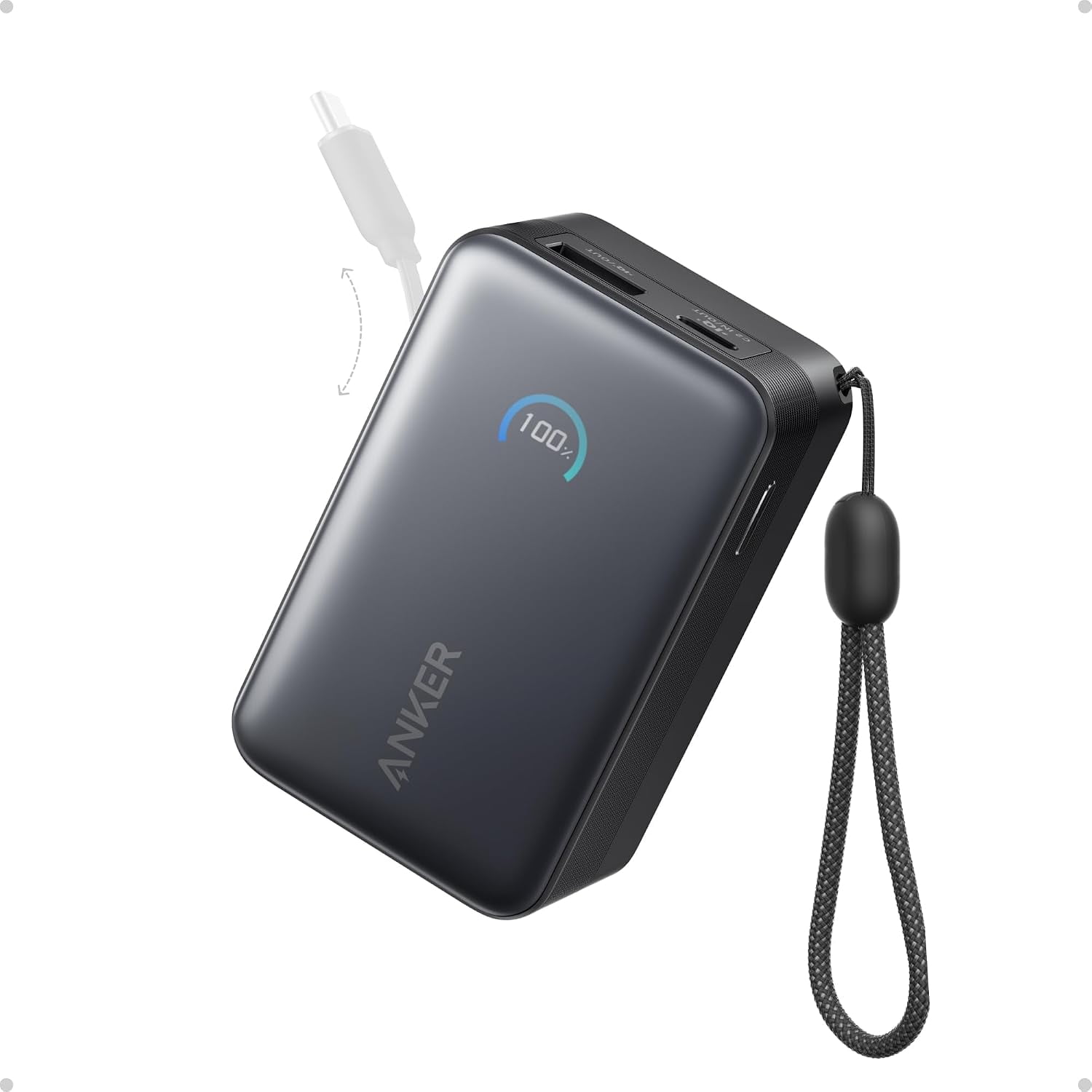
The Anker Nano A1638 gets the fundamentals right. It stores 10,000mAh, delivers up to 45W through either its USB-C port or built-in retractable USB-C cable, accepts up to 30W when recharging itself, and includes a separate USB-A output for older accessories.
The retractable cable is more useful than it sounds. A power bank cannot help if the right cable is sitting at home, and permanently integrating USB-C removes one item from your everyday-carry checklist. The cable retracts back into the body when not in use, keeping the bank more manageable inside a bag.
Anker also supports PPS-style charging behavior through the USB-C outputs and explicitly lists Samsung Fast Charging 2.0 compatibility. For the current iPhone 17 family, Anker lists up to 40W output where the phone and charging conditions allow it.
There is little reason for a normal smartphone user to carry a 100W laptop bank instead. A phone negotiates the power it accepts, and 45W already covers the charging requirements of a wide range of current smartphones.
The catch appears when you connect multiple devices. Using the USB-C port and built-in cable together reduces combined output to 22.5W, and connecting all three outputs divides that figure further. This is primarily an excellent single-phone charger, not a miniature multi-device charging station.
Pros
✅ 10,000mAh is a practical everyday capacity
✅ Up to 45W USB-C output
✅ PPS and Samsung fast-charging compatibility
✅ Retractable USB-C cable
✅ Smart battery display
Cons
❌ No wireless charging
❌ Multi-device output is much lower than the 45W single-output rating
❌ Chunkier than flat magnetic battery packs
Who should skip it: buyers who specifically want magnetic Qi2 charging with no cable between the phone and battery.
Alternative: UGREEN MagFlow 10K Qi2 25W for magnetic wireless charging.
2. Nimble CHAMP Series 2 10K — Best Compact Everyday Carry
Best for: commuters and casual users who prioritize a small, straightforward USB-C charger over maximum charging speed.
The Nimble CHAMP is intentionally simpler than the Anker Nano. It provides 10,000mAh of capacity with up to 20W USB-C Power Delivery through two USB-C ports, without a screen, wireless charging pad, or very high laptop-oriented output.
That simplicity makes sense if your goal is keeping a phone alive during commuting, conferences, day trips, or long workdays. Nimble says the bank is smaller than a deck of cards, while the current model weighs approximately 6.2 ounces.
WIRED currently selects the CHAMP Series 2 as its smaller power-bank recommendation after testing more than 100 portable chargers. That does not make it the fastest option here, but it supports the CHAMP’s role as a dependable compact alternative rather than a specification-sheet winner.
The two USB-C ports are useful for carrying one battery for a phone plus earbuds, although total available power remains modest compared with the 45W Anker Nano.
Nimble also emphasizes recycled materials and backs the current CHAMP with a two-year limited warranty.
Pros
✅ Compact 10,000mAh design
✅ Dual USB-C ports
✅ 20W Power Delivery covers mainstream phone charging
✅ Two-year warranty
✅ Recycled-material design
Cons
❌ Only 20W maximum output
❌ No integrated charging cable
❌ No magnetic wireless charging
Who should skip it: Samsung power users or anyone who specifically wants 30W–45W-class wired charging.
Alternative: Anker Nano A1638.
3. UGREEN MagFlow 10K Qi2 25W — Best Magnetic Wireless Power Bank
Best for: buyers who want to attach a battery magnetically to a compatible phone and keep using the phone without a separate charging cable.
The UGREEN MagFlow is the most flexible smartphone-focused power bank here because it gives you two distinctly different ways to charge. Its Qi2 system can provide up to 25W wirelessly to compatible devices, while the built-in USB-C cable and USB-C port can provide up to 30W wired output.
That wired fallback matters. Magnetic charging is convenient when walking through an airport, commuting, taking photos, or using maps, but wired USB-C remains the better choice when efficiency or predictable charging speed matters most.
UGREEN lists a 10,000mAh nominal capacity but a 5,600mAh rated capacity under its specified output conditions. That is a useful reminder that the number printed on the front of a power bank is not the amount of charge that ultimately reaches a phone battery.
The company also publishes efficiency figures showing lower efficiency for wireless transfer than wired discharge under its test conditions. Some of the energy becomes heat during wireless conversion, which is one reason magnetic charging should be treated primarily as a convenience feature rather than a free efficiency upgrade.
At 254 grams, MagFlow is also fairly heavy for a 10,000mAh smartphone bank. You are accepting that extra weight in exchange for the charging coil, magnets, cable, display, and more complex electronics.
Compatibility deserves attention. Receiving the full 25W Qi2 rate depends on the phone and accessory combination. Some Android phones may need a properly aligned Qi2-compatible magnetic case, while incompatible devices can charge more slowly or may not attach magnetically at all.
Pros
✅ Up to 25W Qi2 wireless charging
✅ 30W wired USB-C charging
✅ Built-in USB-C cable
✅ PPS support
✅ Can charge up to three connected devices
Cons
❌ Wireless charging is less energy-efficient than wired charging
❌ 254g is relatively heavy for 10,000mAh
❌ Full 25W depends on device compatibility
❌ Regular pricing is higher than basic wired power banks
Who should skip it: buyers who rarely use wireless charging and would rather maximize efficiency, portability, and wired speed.
Alternative: Anker Nano 10K 45W.

Get ultra-fast Qi2 25W wireless charging, a 30W built-in USB‑C cable, and a secure 1s snap from 17 magnets for dependable on‑the‑go power. With airline‑friendly 10,000mAh capacity and 13‑layer safety protection, it’s the perfect travel companion for your iPhone 17/16 and earlier MagSafe‑compatible models. Ready to stop hunting for outlets? Order yours today and stay powered wherever life takes you.
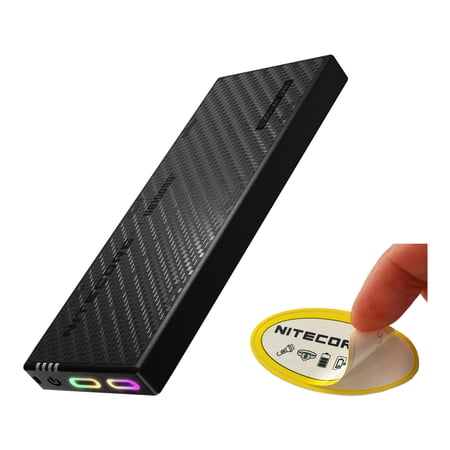
4. Nitecore NB10000 Gen4 — Best Ultralight Travel Power Bank
Best for: hikers, backpackers, runners, and one-bag travelers who care about every ounce.
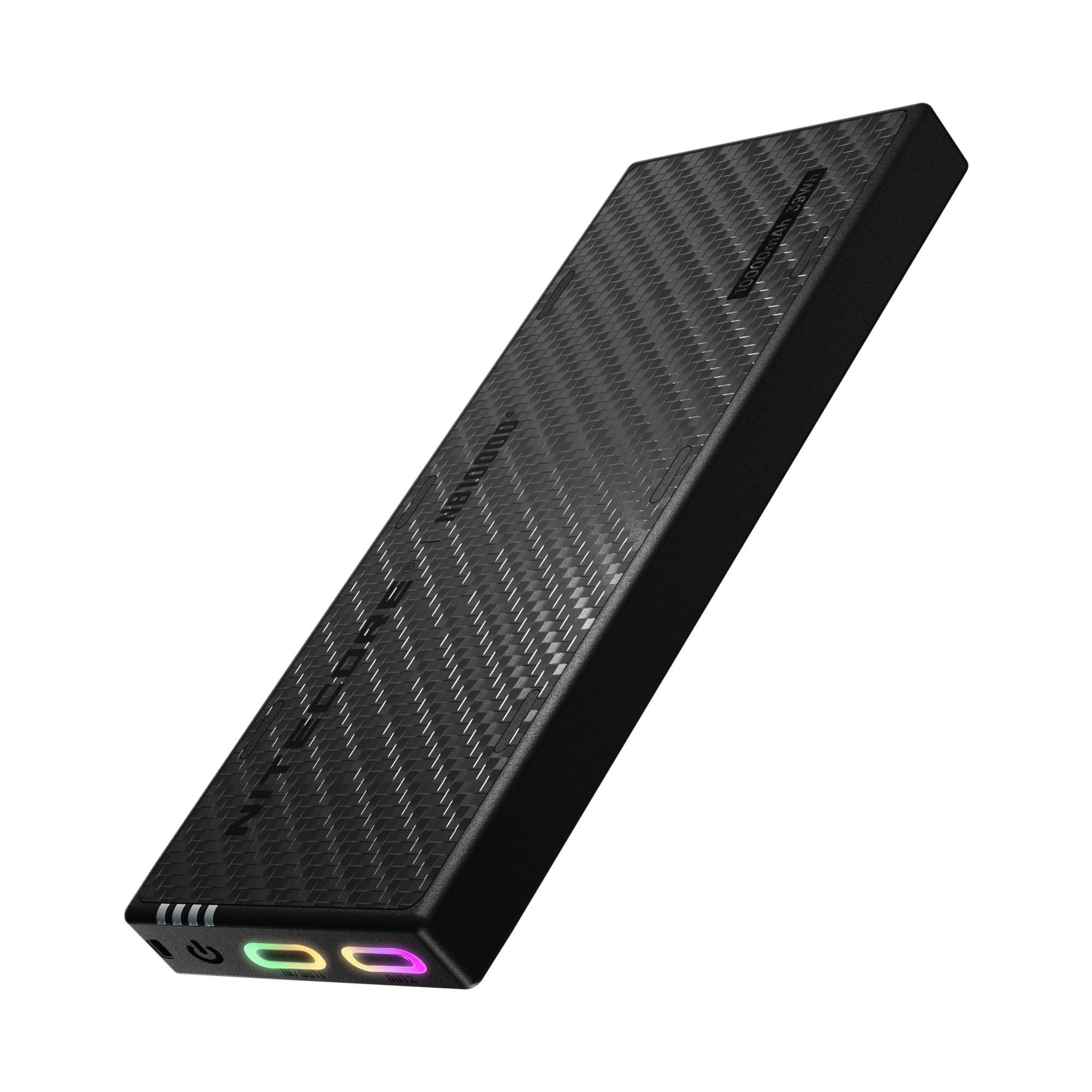
Nitecore takes the opposite approach from heavy multi-device power banks. The NB10000 Gen4 is designed around energy-to-weight efficiency, packing an equivalent 10,000mAh / 39Wh battery into a body weighing only about 143 grams, or 5 ounces.
It provides two USB-C connections and up to 22.5W through a single output. If both outputs are active, total output is lower at 15W, so this remains primarily a phone-focused lightweight battery rather than a high-powered charging hub.
The Gen4 also carries an IPX7 water-resistance rating and includes a USB-C lanyard charging cable. Those features make more sense on a hiking battery than a touchscreen or wireless coil would.
The trade-off is value. You pay a premium to remove weight, while 22.5W is modest compared with mainstream 30W and 45W competitors.
Availability also deserves checking before publication. Nitecore’s official U.S. store currently lists the NB10000 Gen4 as backordered, although legitimate U.S. third-party inventory can still be found. Use the live offers below and avoid purchasing from an unidentified marketplace seller merely because the product is scarce.
Pros
✅ Only about 143g
✅ 39Wh / 10,000mAh-equivalent capacity
✅ Dual USB-C connections
✅ IPX7 rating
✅ Excellent fit for weight-sensitive travel
Cons
❌ Expensive for 10,000mAh
❌ 22.5W maximum output
❌ Official U.S. store is currently backordered
❌ Independent cold-condition testing shows a measurable efficiency penalty
Who should skip it: everyday commuters who do not benefit from paying extra to save a few ounces.
Alternative: Nimble CHAMP for simpler everyday carry.
5. Anker Laptop Power Bank 25K 165W A1695 — Best High-Capacity Pick
Best for: long trips, families sharing one battery, or users carrying a phone plus tablet, laptop, handheld console, camera, or other USB-C devices.
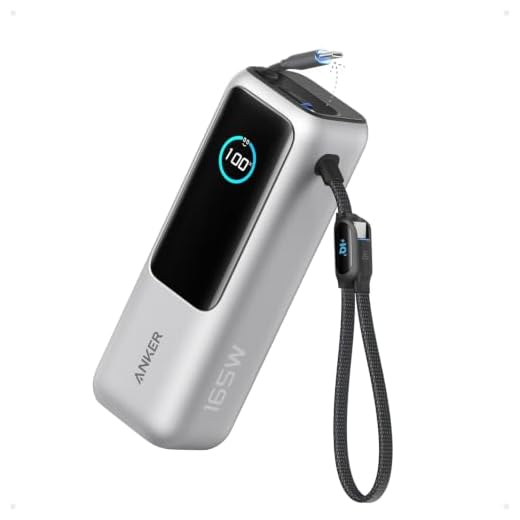
The Anker A1695 is deliberately overqualified for a single smartphone. It stores 25,000mAh and supplies up to 165W total output, with USB-C connections capable of up to 100W individually under supported conditions.
Its biggest practical advantage is cable management. Two USB-C cables are built into the battery, while an additional USB-C port and USB-A output allow as many as four devices to be connected.
That makes it far more useful on a family trip than a normal 10,000mAh bank. One battery can recharge phones during the day, help power a tablet on a flight, and still act as emergency laptop power.
But size matters. At 595 grams, or 21 ounces, this battery weighs several times as much as the Nitecore and substantially more than the other 10K models. Carrying it every day to recharge one phone defeats the point of a portable charger.
It is also important to understand usable capacity. Anker says conversion losses mean a fully charged 25,000mAh A1695 typically delivers roughly 13,750–17,500mAh under real output conditions. That is normal behavior for a power bank and illustrates why direct mAh-to-mAh division overstates how many complete phone charges you should expect.
When several devices are connected, power distribution changes as well. Anker specifies up to 165W total with two devices, while three or four devices reduce maximum total output.
Pros
✅ 25,000mAh high-capacity battery
✅ Up to 165W total output
✅ Up to 100W from supported USB-C outputs
✅ Two integrated USB-C cables
✅ Excellent for multiple devices and longer trips
Cons
❌ Heavy 595g design
❌ Overkill for one smartphone
❌ More expensive than normal 10K banks
❌ Maximum output changes when several devices are connected
Who should skip it: anyone looking for a pocket-sized emergency charger.
Alternative: Anker Nano 10K 45W for normal smartphone use.

Anker 25,000mAh 165W Laptop Power Bank keeps you powered anywhere — triple 100W USB‑C ports, built‑in retractable cables, and 25,000mAh capacity let you charge up to four devices on long trips, remote work days, or during emergencies. Airline carry‑on friendly and engineered for ultra‑fast recharges, it’s the reliable backup your kit needs. Order now to stay charged on the go.
What Power Bank Capacity Do You Actually Need?
For most smartphones, 10,000mAh is the best balance between useful extra runtime and carrying weight.
| Capacity Class | Best For | Main Limitation |
|---|---|---|
| 5,000mAh | Emergency top-ups, minimal carry | May not provide a complete modern flagship recharge |
| 10,000mAh | Best everyday balance for most phone users | Not ideal for laptops or several days away from power |
| 20,000–25,000mAh | Multiple devices, tablets, laptops, long travel | Much heavier and less pocketable |
If you only need enough energy to get through an unusually long day, a 5K magnetic pack may be more convenient. If you regularly need a complete recharge plus reserve capacity, 10K is the safer everyday choice.
Move to 20K or 25K when the battery has to serve several devices or you are deliberately trading weight for fewer charging opportunities.
Why 10,000mAh Does Not Mean 10,000mAh Reaches Your Phone
Power-bank capacity is commonly advertised using the nominal capacity of the internal lithium cells. Your smartphone is charged at a different voltage, so the power bank has to convert that energy before it reaches the phone.
Energy is lost through:
- voltage conversion;
- charging circuitry;
- cable resistance;
- heat;
- the phone’s own charging electronics;
- wireless conversion when Qi2 is used.
That is why dividing a 10,000mAh power-bank label by a 5,000mAh phone battery and promising exactly two full charges is misleading.
UGREEN provides a useful real example: its MagFlow is marketed as 10,000mAh but lists a rated output capacity of 5,600mAh under specified conditions. Anker similarly says its 25,000mAh A1695 normally delivers substantially less than the nominal cell-capacity number after conversion losses.
Buying rule: use mAh to compare broadly similar power banks, but do not use headline mAh alone to calculate guaranteed full-phone charges.
USB-C PD vs PPS vs Qi2
USB-C Power Delivery
USB-C Power Delivery, or PD, is the core wired fast-charging standard used across modern phones, tablets, laptops, and accessories. A compatible charger and device negotiate an appropriate charging voltage and current rather than simply sending the power bank’s maximum output into the phone.
PPS
Programmable Power Supply is an extension commonly used by Android devices to adjust charging voltage dynamically. It is particularly important when shopping for compatible Samsung fast charging.
This is one reason the Anker Nano is a stronger general Android recommendation than a basic 20W power bank: its USB-C output includes the voltage behavior required for supported Samsung fast-charging modes.
Qi2
Qi2 adds standardized magnetic alignment to compatible wireless charging systems. Correct coil alignment improves convenience and can support faster magnetic charging than older basic Qi implementations.
However, the charger and phone must both support the required Qi2 level to reach the headline wireless rate. A “25W Qi2 power bank” does not mean every phone attached magnetically will receive 25W.
Wired vs Magnetic Wireless Power Banks
| Priority | Better Choice | Why |
|---|---|---|
| Maximum efficiency | Wired USB-C | Avoids wireless conversion losses |
| Convenience while using phone | Magnetic Qi2 | No loose charging cable between phone and battery |
| Cross-platform compatibility | Wired USB-C | Works broadly across phones, tablets and other devices |
| Simplest one-piece iPhone carry | Magnetic Qi2 | Battery stays aligned with compatible phone |
If wireless charging is only an occasional convenience, a product such as UGREEN MagFlow works well because it also includes a 30W wired option. You are not forced to choose wireless every time.
Which Power Bank Is Best for Your Smartphone?
| Phone / User | Recommended Power Bank | Why |
|---|---|---|
| Most iPhone users | Anker Nano 10K | Fast USB-C plus built-in cable |
| Magnetic iPhone/Qi2 user | UGREEN MagFlow | 25W Qi2 plus wired fallback |
| Samsung Galaxy flagship | Anker Nano 10K | 45W-class USB-C and compatible PPS output |
| Google Pixel / normal daily user | Anker Nano or Nimble CHAMP | Choose Nano for more speed or CHAMP for simplicity |
| Hiker / one-bag traveler | Nitecore NB10000 Gen4 | Exceptional capacity-to-weight focus |
| Phone + tablet/laptop | Anker 25K A1695 | Much higher capacity and multi-device output |
If you are choosing a charger for a phone you have not bought yet, compare the current best smartphones first. Battery size and supported charging standards can change which power bank makes the most sense.
A larger battery can also be useful for accessories on a long trip. For example, the high-capacity Anker A1695 can cover a phone plus a pair from our best wireless headphones without requiring separate portable chargers.
Can You Take a Power Bank on a Plane?
Yes, but current U.S. FAA rules treat power banks as spare lithium batteries.
FAA rule: power banks and portable chargers must be carried in the cabin and cannot be placed in checked baggage. Batteries rated from 0–100Wh are generally permitted. Batteries from 101–160Wh require airline approval, and batteries above 160Wh are prohibited on passenger aircraft. Airlines can impose stricter limits.
The FAA also requires power banks to be protected from damage and short circuit. Check the Wh marking printed on the exact battery before flying rather than relying only on its mAh marketing number.
Nitecore explicitly rates the NB10000 Gen4 at 39Wh. The larger Anker 25K is still designed within the capacity class commonly used for airline-compatible laptop power banks, but you should check the printed Wh value and the specific airline’s current policy before each trip.
International carriers can also apply their own rules about how many power banks you may carry and whether they may be used during flight.
Power Bank Safety and Recall Checks
Lithium-ion battery recalls are not theoretical. CPSC announced another magnetic power-bank recall in September 2026 after identifying an overheating and ignition hazard, and several other portable chargers have been recalled in recent years.
The correct response is not to avoid every product from a particular brand. Recalls apply to identifiable products and model numbers.
For example, a 2025 CPSC Anker recall lists model numbers A1647, A1652, A1257, A1681, and A1689. Those are different from the A1638 and A1695 selected in this guide. Always check the current CPSC and manufacturer recall information yourself because recall status can change after an article is published.
Stop using a power bank if it:
- is covered by an active recall;
- begins swelling;
- has a cracked or deformed enclosure;
- becomes abnormally hot repeatedly;
- smells unusual;
- shows signs of liquid or impact damage;
- behaves erratically while charging.
The FAA says damaged or recalled lithium batteries that could generate dangerous heat or sparks generally cannot be carried aboard an aircraft unless they have been made safe under applicable guidance.
Frequently Asked Questions
What is the best power bank for smartphones?
Anker Nano Power Bank 10K 45W A1638 is our best overall choice because it combines a practical 10,000mAh capacity, up to 45W USB-C output, PPS support, a retractable cable, and a compact everyday design.
Is 10,000mAh enough for a smartphone?
Yes for most users. A 10,000mAh bank provides a useful balance between extra phone runtime and portability. Buyers charging several devices or spending multiple days away from outlets may prefer 20,000–25,000mAh.
How many times will a 10,000mAh power bank charge a phone?
There is no universal answer. A 10,000mAh label describes nominal cell capacity, while conversion losses mean less energy reaches the phone. The result also depends on the phone’s battery size, charging voltage, cable, temperature, and whether charging is wired or wireless.
Is a 20,000mAh or 25,000mAh power bank better?
It provides more energy but is not automatically better. Large banks are excellent for several devices and longer trips but are much heavier. For normal phone-only carry, 10,000mAh is usually the better compromise.
Is a 45W power bank safe for an iPhone?
Yes when you use a compliant USB-C Power Delivery charger and cable. The phone negotiates the supported charging level rather than being forced to consume the charger’s full maximum wattage.
What is PPS charging?
PPS, or Programmable Power Supply, is a USB-C charging feature that lets compatible devices dynamically adjust charging voltage. It is especially relevant when shopping for fast charging for supported Samsung Galaxy phones.
Is a wireless power bank worth it?
It is worth it if magnetic convenience matters more than maximum efficiency. Qi2 can make wireless charging much easier while using a phone on the move, but wired USB-C generally wastes less energy and works with more devices.
Can I bring a power bank on a plane?
Under current FAA rules, power banks must stay in carry-on baggage. Batteries up to 100Wh are generally permitted, 101–160Wh require airline approval, and batteries above 160Wh are prohibited. Airlines may impose stricter rules.
Are Anker power banks recalled?
Some specific Anker models have been recalled, but that does not mean every Anker power bank is recalled. Check the exact model number against current CPSC and Anker recall information before buying or continuing to use an older battery.
Which power bank is best for Samsung Galaxy phones?
Anker Nano 10K 45W is our first choice because its USB-C outputs support the PPS behavior used by compatible Samsung fast-charging modes and provide up to 45W single-device output.
Final Verdict: Which Power Bank Should You Buy?
Anker Nano 10K 45W is the best power bank for most smartphone owners. It is large enough to provide meaningful backup power, fast enough for modern phones, compact enough for daily carry, and its retractable USB-C cable removes one of the most common charging hassles.
Nimble CHAMP is better if you want a simpler, compact 20W battery. UGREEN MagFlow is the choice for magnetic Qi2 convenience, while Nitecore NB10000 Gen4 makes sense when every ounce matters on a hike or one-bag trip.
Move up to the Anker 25K only when you actually need its extra capacity and output. It is excellent for several devices and long trips, but carrying a 595-gram battery just to top up one smartphone is unnecessary for most people.
Best Overall: Anker Nano Power Bank 10K 45W A1638
Best Compact: Nimble CHAMP 10K
Best Magnetic Wireless: UGREEN MagFlow 10K Qi2 25W
Best Ultralight: Nitecore NB10000 Gen4
Best High Capacity: Anker Laptop Power Bank 25K 165W A1695
Sources
- Anker — Nano A1638 and Laptop Power Bank A1695 official U.S. specifications, output behavior, capacity guidance, and pricing
- UGREEN — MagFlow 10K Qi2 25W official U.S. specifications, rated capacity, charging protocols, efficiency, and warranty information
- Nitecore — NB10000 Gen4 official specifications and U.S. availability information
- WIRED — Best Power Banks 2026 independent buying guide and long-term comparative testing
- Federal Aviation Administration — Airline Passengers and Batteries / PackSafe lithium battery guidance, updated August 2026
Product Groups: Anker Nano Power Bank 10K 45W A1638, Nimble CHAMP Series 2 10000mAh, UGREEN MagFlow 10000mAh Qi2 25W Power Bank, Nitecore NB10000 Gen4, Anker Laptop Power Bank 25K 165W A1695