Samsung The Frame TV Review 2026
The Samsung The Frame TV is worth buying if you want a television that doubles as wall art. Its matte screen, slim mounting system, and customizable bezels make it an attractive choice for design-focused living rooms. However, the 2026 model is less impressive as a traditional home-theater TV, particularly when watching HDR movies in a dark room.
In this Samsung The Frame TV review, we focus on the latest standard model, the 2026 LS03HE. It offers a 4K QLED display, Samsung’s Glare Free screen treatment, Art Mode, and modern gaming features. The 65-inch version launched at $1,499.99, although current discounts can change its value.
The more expensive Samsung The Frame Pro uses a brighter Neo QLED display and Wireless One Connect system. Those upgrades make it appealing for some installations, but they also introduce tradeoffs.
Our verdict is straightforward: buy The Frame for its design and daytime viewing experience. Choose a conventional OLED or premium Mini LED television if movies, HDR performance, and picture quality matter more than displaying artwork.
Samsung The Frame TV: Quick Answer
Is Samsung The Frame Worth It?
Best For: Design-focused living rooms where the television should blend into the décor and display artwork between viewing sessions.
Biggest Strength: Excellent reflection handling, a realistic matte art-display appearance, and a slim wall-mounted design.
Biggest Weakness: Limited HDR brightness, no local dimming on the standard model, and disappointing black levels in dark rooms.
Best Upgrade: Samsung The Frame Pro 2026 if you want a brighter display and more flexible device placement through Wireless One Connect.
Our Verdict: A distinctive art-first television, but not the strongest picture-quality value at its regular price.
Samsung The Frame 2026 at a Glance
The latest standard Samsung The Frame belongs to the LS03HE series. It uses a 4K QLED LCD panel with a matte anti-reflective finish. Samsung also includes a Slim Fit Wall Mount, allowing the television to sit close to the wall.
For this review, our primary reference is the 65-inch U.S. model, QN65LS03HEFXZA. Independent testing of this size provides a useful basis for judging the television’s actual performance.
| Feature | Samsung The Frame 2026 |
|---|---|
| Series | LS03HE |
| Reference model | QN65LS03HEFXZA |
| Display | 4K QLED LCD |
| Resolution | 3840 × 2160 |
| Screen sizes | 55, 65, 75, 85, and 98 inches |
| Screen finish | Glare Free matte treatment |
| Processor | NQ4 AI Gen2 |
| Gaming refresh | Up to 4K at 144Hz with compatible inputs |
| HDMI | 4 HDMI 2.1 inputs |
| Smart platform | Samsung Tizen |
| Art Mode | Yes, with Art Store and personal photos |
| Connection system | Built-in ports; no external One Connect box |
| Included mounting | Slim Fit Wall Mount |
| 65-inch launch MSRP | $1,499.99 |
| Dolby Vision | Not supported |
Samsung offers modern television features, but its main differentiator is still its appearance. The Frame is intended to look like a framed artwork when you are not watching entertainment.
Samsung The Frame 2026 Price and Availability
The standard 2026 Frame was introduced with five U.S. screen sizes. These are Samsung’s original launch prices, not guaranteed current selling prices.
| Screen Size | Launch MSRP | Recommended Room |
|---|---|---|
| 55 inches | $1,199.99 | Bedrooms and smaller living spaces |
| 65 inches | $1,499.99 | Typical living rooms |
| 75 inches | $1,999.99 | Larger shared spaces |
| 85 inches | $2,999.99 | Spacious living rooms and large walls |
| 98 inches | $4,499.99 | Very large rooms and gallery-style installations |
The 65-inch version is a practical starting point for many living rooms. However, choosing a screen size should depend on viewing distance, seating arrangement, and available wall space.
Compare current retailer offers before deciding. A temporary discount can make The Frame more appealing, but the correct comparison is always between TVs of the same screen size.
Design and Installation: Does Samsung The Frame Really Look Like Art?
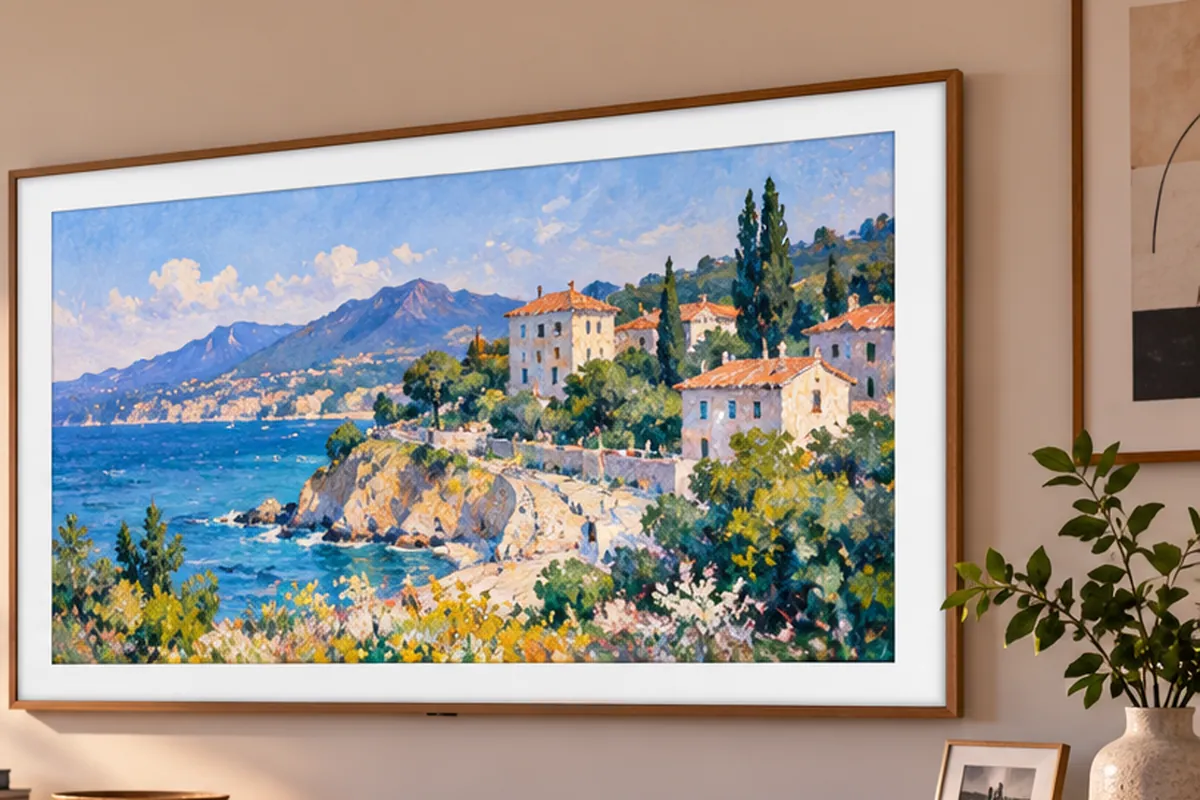
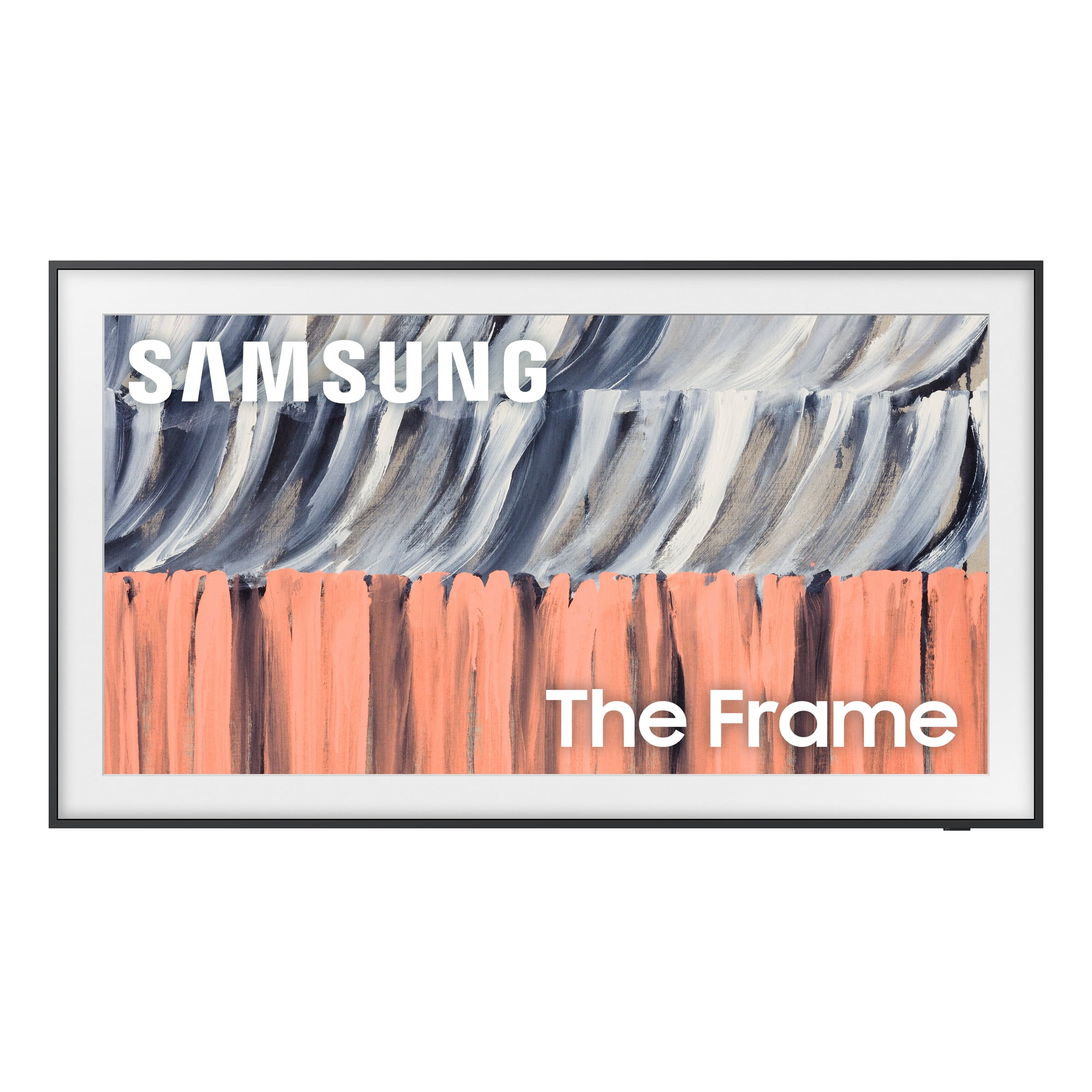
Samsung The Frame looks more convincing as wall art than a typical television, particularly when viewed in a bright room. Its slim design, matte screen, and optional decorative bezels help reduce the visual presence of a conventional black TV.
Matte Screen, Slim Wall Mount, and Customizable Bezels
Most televisions have glossy displays that reflect windows, lamps, and nearby furniture. The Frame uses Samsung’s Glare Free matte treatment to reduce distracting reflections.
This is one of its biggest advantages. Independent testing by RTINGS found excellent direct-reflection handling on the standard 2026 model.
The included Slim Fit Wall Mount also helps the television sit close to the wall. This matters because a screen that projects significantly into the room is less likely to resemble a framed painting.
Samsung offers interchangeable decorative bezels in different finishes. These can make the television better match wooden furniture, wall colors, or other picture frames.
However, additional bezels generally cost extra. Their availability and pricing depend on the chosen size and finish.
Design verdict: The Frame delivers its strongest advantage when wall-mounted with carefully planned cables and an artwork selection that complements the room.
Built-In Connections: The Important 2026 Change
The standard 2026 Frame has its connections built into the television. Unlike earlier Frame models that used an external One Connect box, the LS03HE provides its HDMI and other ports directly on the rear of the display.
Samsung added rear stoppers to make cable access easier without fully removing the mounted TV. This is useful, but it does not eliminate the need for careful installation.
If several devices will be connected, think about cable routing before mounting the television. HDMI cables, power wiring, external storage, and soundbar connections can affect the finished appearance.
For a cleaner installation, consider how cables will reach an appropriately positioned outlet or approved cable-management system. Follow electrical and building requirements rather than running ordinary power cords inside a wall.
The Frame Pro approaches this problem differently. Its Wireless One Connect box allows most external devices to connect away from the screen, although the television still needs its own power connection.
Art Mode and Samsung Art Store: What Do You Actually Get?
Art Mode is the main reason to buy The Frame instead of a conventional QLED television. It displays paintings, photographs, and other artwork when you are not watching regular content.
How Realistic Does Art Mode Look?
The matte surface gives artwork a softer appearance than the glossy screens commonly found on televisions. This helps reduce the mirror-like reflections that can make digital art feel artificial.
Samsung also provides Art Mode brightness controls and automatic adjustments based on room conditions. Compatible motion-detection features can turn off the display when the room is unoccupied, depending on the configured settings.
These features make The Frame better suited to displaying artwork throughout the day.
However, it remains an illuminated LCD screen. It does not reproduce the texture, surface depth, or exact appearance of a physical painting. Its effectiveness depends on room lighting, the selected artwork, and your viewing distance.
Art Mode also consumes electricity when the display is illuminated. It should not be treated as a zero-power decorative feature.
Free Artwork vs. Paid Samsung Art Store
You do not need a paid subscription to use The Frame’s basic Art Mode. Samsung offers a selection of free artwork, and owners can display their own photographs.
For additional variety, Samsung Art Store provides access to a larger premium collection. Samsung advertises more than 5,000 works from museums, galleries, and artists.
| Art Option | Price | What You Get |
|---|---|---|
| Personal photos | Free | Display compatible images from your own collection |
| Selected free artwork | Free | A limited selection of Samsung’s curated artwork |
| Monthly Art Store subscription | $4.99/month | Premium Art Store collection |
| Annual Art Store subscription | $49.99/year | Premium access with lower annual cost than paying monthly for a full year |
These are Samsung’s published U.S. subscription prices. Offers and subscription terms may change.
If you enjoy changing artwork frequently, an Art Store subscription can add value. However, shoppers who plan to display family photos or a small personal collection may not need it.
Can You Display Your Own Photos?
Yes. Samsung supports adding personal photographs through the SmartThings app. Its support documentation also describes USB-based photo importing.
With SmartThings, you can choose compatible photos, transfer them to the television, and adjust their presentation in Art Mode.
This is useful if you want to create a rotating gallery of family memories, vacation photographs, or digital artwork rather than pay for a large subscription collection.
Remember that Art Mode’s value comes from using it regularly. If you rarely display artwork, a conventional television may be the more economical purchase.
Samsung The Frame Picture Quality: How Good Is It as a TV?
The Frame delivers acceptable everyday picture quality, but its performance is not competitive with the strongest televisions available at similar prices.
Independent testing reveals a consistent pattern. The matte screen works extremely well against reflections, but the standard model’s limited HDR brightness and lack of local dimming reduce its appeal for serious movie watching.
Bright-Room Performance and Reflection Handling
The Frame is most convincing during daytime viewing. Its matte display reduces direct reflections from lamps and windows, helping maintain visibility in living rooms with ambient light.
RTINGS found that bright scenes remain reasonably clear in moderate room lighting. The TV also offers useful image processing and upscaling for lower-resolution content.
However, the standard Frame is not exceptionally bright by modern premium-TV standards. A matte surface helps manage reflections, but it cannot completely replace sufficient screen brightness.
Therefore, it is well suited to ordinary daytime television and artwork display, but less impressive in exceptionally bright conditions than some higher-output TVs.
HDR, Contrast, and Dark-Room Movies
Dark-room picture quality is The Frame’s biggest weakness. The standard 2026 model does not provide local dimming, meaning it cannot independently adjust backlight intensity across different areas of the screen.
As a result, black areas tend to appear gray instead of truly black. Shadow details can look washed out, especially in dark scenes.
HDR performance is also limited. RTINGS found that the television does not deliver strong bright highlights, making HDR movies less impactful than on many OLED and premium Mini LED alternatives.
The Frame supports HDR10+ but not Dolby Vision. This also matters if you frequently watch content mastered in Dolby Vision.
For a clearer explanation of these display technologies, read our Samsung QLED vs LG OLED comparison, including their differences in contrast, backlighting, and picture quality.
Movie verdict: The Frame is adequate for casual entertainment, but it is not our first choice for a dedicated dark-room home theater.
Viewing Angles, Sports, and Motion
The Frame is less suitable for wide seating arrangements. Independent testing found noticeable picture degradation when viewing the screen from the sides.
This matters when several people watch sports or movies from different positions across a room.
Screen uniformity is another limitation. RTINGS observed visible brightness variations across the panel, which can become distracting during sports and other content with broad, relatively uniform backgrounds.
Motion processing is competent for general viewing, but the panel’s response behavior can produce blur and minor color artifacts during fast movement.
For families who frequently watch sports together, a television with better viewing angles and screen uniformity may offer greater value.
Gaming Performance: Is Samsung The Frame Good for PS5 and Xbox?
The standard Samsung The Frame 2026 is a capable gaming TV when responsiveness and modern connection features matter more than HDR picture quality.
It supports variable refresh rate, Auto Low Latency Mode, and HDMI 2.1 bandwidth across its four HDMI inputs.
With compatible PCs, the television supports 4K refresh rates up to 144Hz. PlayStation 5 and Xbox Series X users can also take advantage of supported 4K/120Hz gaming features.
RTINGS found low input lag, helping games respond quickly to controller inputs. This is one area where the standard Frame compares favorably with the more expensive Frame Pro when the latter uses its wireless connection system.
However, high refresh rate support does not guarantee perfect motion clarity. RTINGS observed blur in fast-moving content, particularly at lower refresh rates.
The Frame’s limited HDR brightness also reduces the impact of visually demanding games.
Gaming verdict: Good for casual and responsive gaming, but a premium OLED or high-performance gaming TV is preferable if motion clarity, HDR, and overall picture quality are your priorities.
Smart Features, Sound, and Everyday Use
The Frame runs Samsung’s Tizen smart TV platform. It supports major streaming applications, Samsung TV Plus, connected-device features, and Samsung’s Gaming Hub in supported regions.
For many households, the built-in software should be sufficient for everyday streaming.
However, some buyers prefer a separate streaming device for its interface, remote, or specific applications. If that applies to you, our comparison of the best streaming sticks covers Roku and Amazon Fire TV options.
Is the Built-In Audio Good Enough?
The standard 65-inch Frame uses a two-channel, 20-watt speaker system. It supports features such as Dolby Atmos processing and Samsung Q-Symphony with compatible soundbars.
Independent sound testing indicates that dialogue remains understandable, but the built-in speakers lack substantial bass and powerful output.
That is typical of slim televisions. However, it becomes more important if you plan to use The Frame for movies, action-heavy entertainment, or music.
A dedicated soundbar can improve the experience. Our best soundbars for home theaters guide compares compact and more immersive systems for different budgets.
When planning the installation, account for soundbar mounting, HDMI eARC connectivity, and cable management before placing the television on the wall.
Samsung The Frame Pros and Cons
The Frame makes the most sense when its lifestyle features solve a problem that a conventional television cannot. Its drawbacks become more significant when picture performance is the main priority.
Pros
✅ Convincing art-inspired design and matte display.
✅ Excellent direct-reflection handling.
✅ Slim Fit Wall Mount included.
✅ Art Mode supports personal photos and free artwork.
✅ Four HDMI 2.1 inputs with modern gaming features.
✅ Good processing for lower-quality video sources.
Cons
❌ Weak dark-room contrast without local dimming.
❌ Limited HDR brightness and impact.
❌ Narrow viewing angles and uneven screen uniformity.
❌ No Dolby Vision or DTS audio support.
❌ Premium Art Store access and decorative bezels cost extra.
❌ Design-focused pricing limits picture-quality value.
What About Long-Term Reliability?
Long-term ownership deserves attention because the standard Frame uses a thin, edge-lit LCD design.
RTINGS’ October 2026 reliability-risk assessment identifies potential concerns associated with edge-lit televisions. These include backlight failures and degradation of optical components that can affect image uniformity.
This is a technology-based risk assessment, not proof that a particular Frame TV will fail early.
On the positive side, the standard Frame does not carry the same permanent OLED burn-in concern associated with prolonged static imagery.
Before buying, review the retailer’s return policy, Samsung’s warranty terms, and any optional protection-plan costs. These can influence the overall value of a premium lifestyle television.
Samsung The Frame vs The Frame Pro: Which Should You Buy?
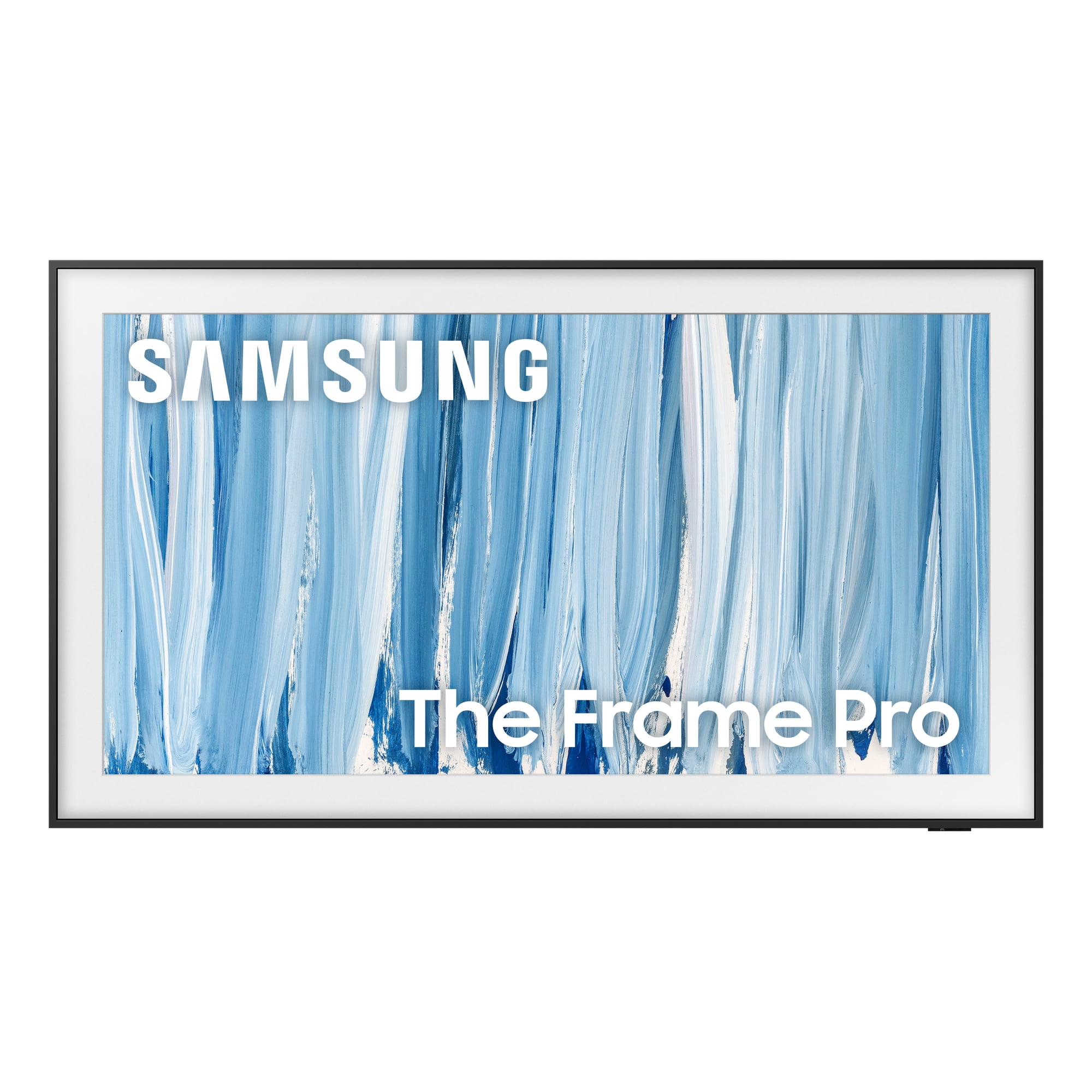
The standard Frame is the better-value choice for most buyers who primarily want an attractive art television. The Frame Pro is more appealing when higher brightness and flexible connection placement justify the additional cost.
Samsung’s 2026 Frame Pro uses Neo QLED technology, an NQ4 AI Gen3 processor, a basic local dimming system, and Wireless One Connect.
However, the Pro’s picture-quality upgrade is not equally significant in every situation. RTINGS found substantially better brightness but limited improvement in dark-room black levels.
| Feature | The Frame 2026 | The Frame Pro 2026 |
|---|---|---|
| Series | LS03HE | LS03HW |
| Display | QLED 4K | Neo QLED 4K |
| Processor | NQ4 AI Gen2 | NQ4 AI Gen3 |
| Local dimming | No | Yes, basic edge-lit system |
| Brightness | Lower | Considerably higher in independent testing |
| Connections | Built into television | Wireless One Connect plus direct Micro-HDMI |
| Art Mode | Yes | Yes |
| Available sizes | 55–98 inches | 55–85 inches |
| 65-inch launch MSRP | $1,499.99 | $1,999.99 |
| Best reason to buy | Lower-cost art TV and responsive gaming | Greater brightness and flexible source placement |
Is The Frame Pro Worth the Extra Money?
The Pro launched at a $500 premium over the standard 65-inch Frame. Whether that difference makes sense depends on your installation and viewing priorities.
Its brighter display is a meaningful improvement for daytime television and HDR content. However, its basic local dimming system still struggles to deliver convincing dark-room blacks.
Wireless One Connect is another advantage. It lets you place most connected devices away from the television, reducing the need to route several HDMI cables directly to the wall-mounted screen.
However, the display still requires its own power connection.
There is also an important gaming limitation. RTINGS found that the wireless connection system adds substantial input lag. Connecting a gaming device to the Pro’s direct Micro-HDMI port significantly improves responsiveness.
Therefore, buyers seeking the cleanest installation may appreciate the wireless system, while serious gamers need to plan a direct connection.
Upgrade verdict: Pay more for The Frame Pro if brightness and connection flexibility are important. Otherwise, the standard Frame delivers the essential art-TV experience for less.
Is the 2026 Samsung The Frame Worth Upgrading From an Older Model?
The 2026 Frame is not an automatic upgrade for every existing owner. Its value depends on which older model you have and whether its new installation approach or screen features solve a real problem.
The latest standard LS03HE features updated Glare Free technology, modern gaming capabilities, expanded size availability, and built-in connections.
However, the move away from an external One Connect box may be inconvenient if your existing installation depends on keeping multiple source devices away from the display.
Owners of an older Frame with working Art Mode and acceptable picture quality may gain relatively little from replacing the entire television.
The Frame Pro 2026 is also worth comparing against earlier Frame Pro models. Its wireless connection system and display improvements may appeal to certain buyers, but upgrading solely for a newer model year is difficult to justify without a specific benefit.
Our recommendation: Upgrade if you want a larger screen, need a different connection system, or are unhappy with your current display. Otherwise, consider keeping your existing television until a more substantial improvement meets your needs.
Which Samsung The Frame Size Should You Buy?
For most living rooms, the 65-inch Frame is a sensible starting point. It balances viewing area, wall presence, and price without requiring an exceptionally large room.
However, The Frame has two jobs: displaying entertainment and functioning as wall art. Both should influence your decision.
55-Inch: Smaller Rooms and Bedrooms
The 55-inch version suits smaller walls, bedrooms, and compact living areas. It can provide the decorative effect without dominating the room.
65-Inch: The Most Versatile Starting Point
The 65-inch model provides a substantial screen for films, television, and artwork. It is also the size independently tested in the research used for this review.
It is our preferred reference size for shoppers who want to balance viewing comfort with the appearance of wall-mounted art.
75-Inch and 85-Inch: Larger Living Rooms
These sizes make artwork more visually prominent and improve the sense of scale during television viewing.
However, larger screens need more wall space and careful installation. The price also rises considerably, making the comparison with conventional premium televisions more important.
98-Inch: Statement Installation
The 98-inch standard Frame is designed for exceptionally large walls and living spaces. Samsung includes a special decorative bezel with this size.
It can create a gallery-style visual centerpiece, but the launch price of $4,499.99 makes it a specialist purchase rather than a mainstream recommendation.
Before choosing any size, measure your wall, seating distance, mounting position, and surrounding furniture. Also check the full exterior dimensions with the selected bezel.
Who Should Buy Samsung The Frame—and Who Should Skip It?
The Frame offers the most value when it improves how a room looks between viewing sessions. Buyers focused solely on television performance can usually find stronger alternatives for similar money.
Buy Samsung The Frame If…
- You want a television that resembles framed artwork when not in use.
- Your living room receives enough ambient light to make reflection handling important.
- You value flush wall mounting and optional decorative bezels.
- You want to display personal photography or curated artwork.
- You watch mostly everyday streaming content rather than dark-room HDR movies.
- You want capable modern gaming features without making the television your primary competitive gaming display.
Skip Samsung The Frame If…
- You want the deepest blacks and strongest HDR movie performance.
- You primarily watch films in a dark room.
- Your seating arrangement includes many off-center viewing positions.
- You want maximum picture quality for your budget.
- You have no interest in displaying artwork.
- You prefer a television with no potential art-subscription or decorative-accessory expenses.
Better Alternatives for Picture Quality
For dark-room movies, OLED televisions offer pixel-level light control and genuinely black backgrounds. Premium Mini LED televisions can also provide stronger brightness and more advanced backlight control than the standard Frame.
Consider our comparison of the best Sony 4K televisions for home theaters if movie performance is your main priority.
Alternatively, our best Samsung TVs guide compares current Samsung models with stronger overall picture-quality and gaming performance.
There are also competing art televisions, including the Hisense CanvasTV. Those are worth comparing if you specifically want the framed-art design at a different price.
The deciding factor is simple: choose The Frame for how it fits your home, not because it outperforms traditional televisions.
Frequently Asked Questions
Is Samsung The Frame TV worth buying?
Yes, if you value its art-display appearance, matte finish, and wall-mounted design. The 2026 Frame is particularly appealing for design-focused living rooms. However, conventional OLED and premium Mini LED televisions generally offer better picture-quality value for movie enthusiasts.
What is the latest Samsung The Frame TV?
Samsung’s current U.S. lineup includes the 2026 The Frame LS03HE and The Frame Pro LS03HW. The standard Frame uses QLED technology with built-in connections, while the Pro uses Neo QLED and Wireless One Connect.
Do you have to pay for Samsung Art Store?
No. You can display personal photographs and access selected free artwork without a paid subscription. Samsung’s premium Art Store subscription is listed at $4.99 per month or $49.99 per year in the United States. Pricing may change.
Does Samsung The Frame have good picture quality?
The Frame provides acceptable everyday picture quality and excellent reflection handling. However, the standard 2026 model lacks local dimming and has limited HDR brightness. Those limitations make it less suitable for demanding dark-room movie viewing.
What is the difference between The Frame and The Frame Pro?
The Frame Pro offers a brighter Neo QLED display, more advanced processing, basic local dimming, and Wireless One Connect. The standard Frame costs less and provides more direct gaming connections. Both support Art Mode and matte display technology.
Is Samsung The Frame good for gaming?
The standard 2026 Frame supports HDMI 2.1, VRR, low input lag, and high-refresh-rate gaming. However, its HDR performance and motion clarity are less impressive than leading gaming televisions. The Frame Pro’s wireless connections can introduce additional input lag.
Does Samsung The Frame use electricity in Art Mode?
Yes. Art Mode requires power while the screen displays artwork. Samsung offers brightness adjustment and motion-detection features that can reduce unnecessary operation. Actual electricity use depends on the display size, brightness, settings, and usage patterns.
Final Verdict: Is Samsung The Frame Worth It?
The Samsung The Frame 2026 is worth buying for homeowners who want a television that contributes to their interior design rather than becoming a large black rectangle when switched off.
Its matte display, interchangeable bezels, included slim wall mount, and Art Mode create a distinctive ownership experience. Excellent reflection handling also makes it a practical choice for many bright living rooms.
However, this is not a television built around maximum picture quality. Limited HDR brightness, raised black levels, uneven screen uniformity, and narrow viewing angles prevent it from matching stronger conventional TVs at similar prices.
The standard 65-inch Frame is our preferred choice for buyers who mainly want the art-display experience. Choose The Frame Pro when greater brightness and Wireless One Connect are worth the additional cost. Remember that the Pro’s wireless connection system is not ideal for latency-sensitive gaming.
For dedicated movie watching, a capable OLED or premium Mini LED model is a better investment.
Bottom Line: Buy Samsung The Frame for art, design, and bright-room versatility. Choose The Frame Pro for higher brightness and flexible installation. If you want the strongest movie and HDR performance for your money, choose a conventional performance-focused television instead.
Sources
- Samsung Electronics America — Samsung Elevates 2026 The Frame Lineup
- Samsung — The Frame LS03HE 65-Inch QLED 4K TV — Official specifications and pricing
- RTINGS — Samsung The Frame 2026 TV Review
- RTINGS — Samsung The Frame Pro 2026 TV Review
- Samsung — Art TV and Samsung Art Store — Features and subscription information
Product Groups: Samsung The Frame 65-Inch QLED 4K TV QN65LS03HEFXZA; Samsung The Frame Pro 65-Inch Neo QLED 4K TV QN65LS03HWFXZA