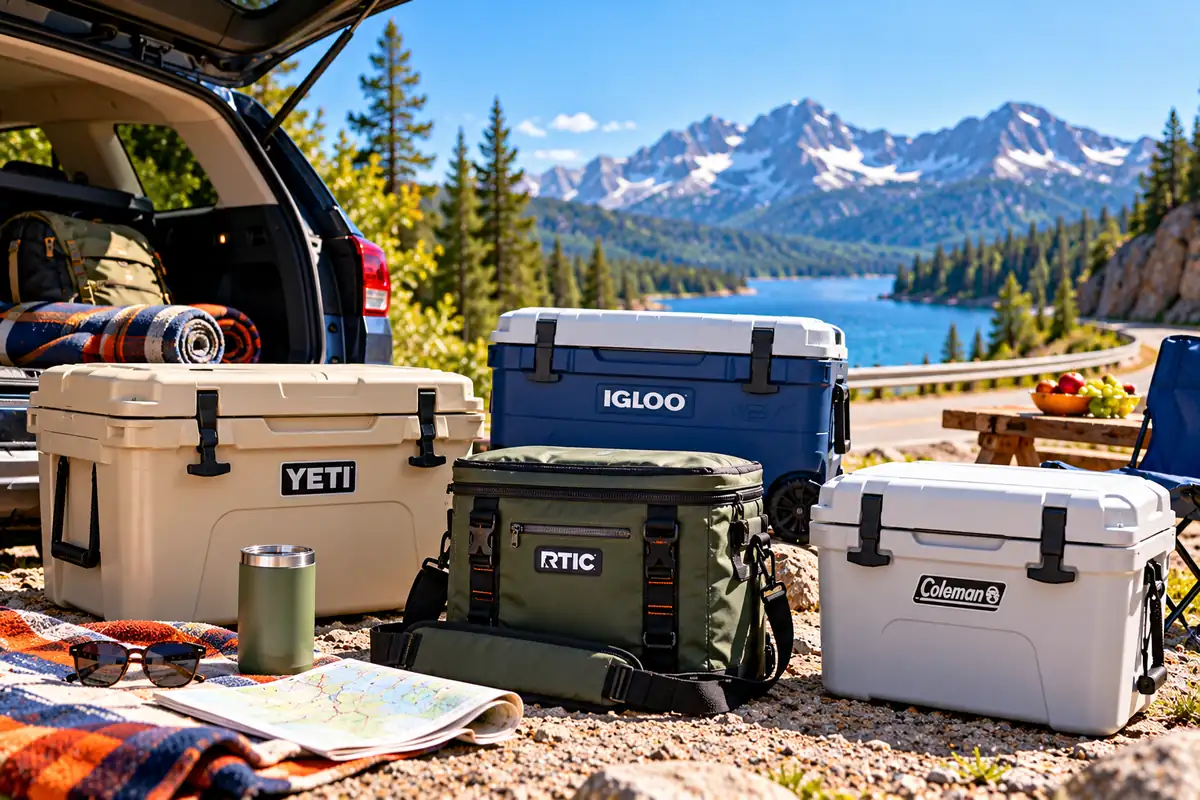
Top Coolers for Road Trips in 2026
The best coolers for road trips balance cold retention, usable storage, portability, and vehicle space. Our best overall pick is the RTIC 32 QT Ultra-Light Cooler. It offers practical capacity without the weight of a traditional heavy-duty cooler, making it a strong choice for weekend drives and family adventures.
However, the right cooler depends on your trip. The YETI Roadie 24 suits travelers who want a compact premium cooler. The Coleman Classic 52-Quart offers affordable family-size storage. Meanwhile, the Igloo Trailmate Journey makes moving a large load easier with wheels.
For shorter trips, the Hydro Flask Carryout Tote provides lightweight convenience. If you’re planning extended travel with reliable vehicle power, the Dometic CFX5 45 offers compressor cooling without ice.
We’ve selected six coolers for different road-trip needs. This guide compares their capacity, weight, cooling systems, portability, and limitations. You’ll also learn how to choose the right size, pack food safely, and avoid common cooling mistakes.
If you’re still exploring your options, you can also compare camping coolers across different sizes and designs on Discompare.
Quick Answer: Best Coolers for Road Trips
Best Overall: RTIC 32 QT Ultra-Light Cooler — a balanced combination of capacity, insulation, portability, and value.
Best Compact Premium Cooler: YETI Roadie 24 — rugged construction and a convenient size for cars and smaller groups.
Best Budget Family Cooler: Coleman Classic 52-Quart — generous storage capacity at an accessible price.
Best Wheeled Cooler: Igloo Trailmate Journey 70 Qt — large capacity, oversized wheels, and convenient accessories for group outings.
Best Electric Cooler: Dometic CFX5 45 — temperature-controlled compressor refrigeration for extended trips with suitable power access.
How We Selected These Road Trip Coolers
We selected these coolers by comparing their usefulness during real vehicle travel. Our main criteria included cooling method, insulation, usable capacity, empty weight, exterior dimensions, carrying design, durability, and value.
We reviewed current manufacturer specifications, U.S. retailer information, and relevant independent cooler testing. We also considered practical limitations, such as whether a loaded cooler can be lifted easily or whether an electric model needs continuous power.
Each product fills a different role. This approach avoids recommending several expensive hard coolers that serve nearly identical needs.
Research transparency: Discompare did not conduct original hands-on or laboratory testing for this guide. We use manufacturer data for specifications and independent publications for additional performance evidence.
We also distinguish advertised ice retention from food-safe temperatures. A cooler may still contain ice after several days without maintaining every perishable item below 40°F throughout that period.
Best Road Trip Coolers Compared
The following table compares our six recommended coolers. Manufacturer can-capacity figures generally describe storage without ice, so actual usable space will be lower when ice or frozen packs are added.
| Cooler | Type / Capacity | Best For | Empty Weight | U.S. Reference Price |
|---|---|---|---|---|
| RTIC 32 QT Ultra-Light | Hard / 32 qt | Overall versatility | Approx. 13 lb | $159 |
| YETI Roadie 24 | Hard / 33 cans without ice | Compact premium travel | 13.1 lb | $250 |
| Coleman Classic 52-Quart | Hard / 52 qt | Budget family trips | 8.6 lb | $54.99 |
| Igloo Trailmate Journey | Wheeled / 70 qt | Large groups | 34.7 lb | $289.99 |
| Hydro Flask Carryout Tote | Soft / 20 L | Day trips and picnics | 1.88 lb | $99.95 |
| Dometic CFX5 45 | Electric / 45 L class | Extended powered travel | 40.3 lb | $1,049.99 |
Price note: These figures are manufacturer reference prices checked during research, not guaranteed live retailer offers. Colors, stock levels, and promotions may change. Cooler capacities also use different measurement conventions, so compare usable dimensions before buying.
Compare Current Cooler Prices
Use the available retailer offers below to explore cooler prices. Compare the exact product name, capacity, and condition before selecting an offer.
The recommendations in this guide are ranked by their suitability for different road trips, not by retailer prices or the order in which products appear in the shopping block.


The 6 Best Coolers for Road Trips
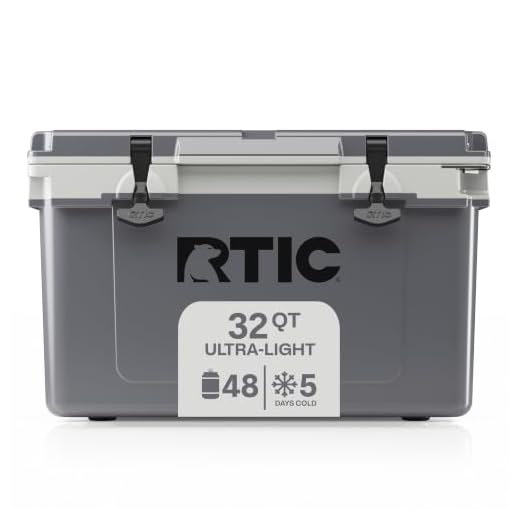
1. RTIC 32 QT Ultra-Light Cooler — Best Overall
Best For: Couples, small families, and travelers who want a versatile hard cooler without excessive empty weight.
The RTIC 32 QT Ultra-Light Cooler is our best overall road-trip cooler because it provides substantial insulation and practical capacity in a relatively manageable package.
RTIC uses up to 2.5 inches of closed-cell foam insulation, combined with a freezer-style gasket. The company claims up to five days of cold retention when users follow its recommended cooling procedures.
That figure is a manufacturer claim, not a guarantee of safe food storage for five days. Actual cooling depends on how much ice you add, how often you open the lid, and the temperature surrounding the cooler.
At approximately 13 pounds empty, the RTIC is easier to handle than many heavy rotomolded coolers of similar capacity. Its injection-molded construction helps reduce weight while maintaining a useful insulated interior.
The cooler holds up to 48 standard cans without ice. Its exterior measures approximately 23.4 by 15.4 by 14.8 inches, making it a practical option for many vehicle cargo areas.
Other useful features include rope handles, non-slip feet, secure T-latches, tie-down slots, dual drainage openings, and a built-in bottle opener.
This combination makes it suitable for weekend road trips, picnics, and camping stops where you want to unload your cooler without struggling with excessive weight.
However, the RTIC still requires ice or frozen packs. If your trip involves several days without reliable access to fresh ice, an electric refrigerator may be more convenient.
Pros
✅ Manageable empty weight for its capacity
✅ Up to 2.5 inches of insulation
✅ Built-in bottle opener and drainage system
✅ Strong balance of capacity and value
Cons
❌ Requires ice or frozen packs
❌ Takes more cargo space than compact totes
❌ No wheels for transporting a heavy load
Who should skip it: Solo travelers with very limited vehicle space or anyone who needs consistent temperature control without replenishing ice.
Alternative: Choose the YETI Roadie 24 for a more compact premium hard cooler.
RTIC also competes directly with YETI across several cooler categories. Our YETI vs RTIC cooler comparison explores insulation, construction, warranties, and value in greater detail.

2. YETI Roadie 24 — Best Compact Premium Cooler
Best For: Solo travelers, couples, and small groups who prioritize compact storage, durable construction, and convenient carrying.
The YETI Roadie 24 Hard Cooler is our premium compact recommendation because its design suits frequent loading, unloading, and short stops during a road trip.
It measures approximately 16.6 inches wide, 14 inches deep, and 17.4 inches tall. YETI designed the Roadie 24 to fit conveniently behind a vehicle seat while providing enough interior height for many bottles.
The cooler holds up to 33 standard cans without ice, or 26 pounds of ice when packed without other contents. Its empty weight is approximately 13.1 pounds.
YETI uses pressure-injected PermaFrost insulation, a ColdLock gasket, and an insulated lid system to reduce heat transfer.
The DoubleDuty strap makes the cooler easier to carry, while the QuickLatch system allows convenient access. A drain plug simplifies cleanup after ice melts.
Independent REI testing supports the Roadie 24’s role as a dependable travel cooler. Testers praised its rugged construction, useful capacity, and ability to fit in vehicles. They also noted that its weight becomes noticeable when carrying it over longer distances.
The main drawback is price. At a $250 reference price, the Roadie 24 costs substantially more than several larger coolers.
For frequent travelers who appreciate sturdy hardware and a compact footprint, that premium may be worthwhile. Occasional travelers may prefer to spend less.
Pros
✅ Compact design for vehicle travel
✅ Durable construction and secure latches
✅ Comfortable carrying strap
✅ Positive independent testing evidence
Cons
❌ Expensive for its capacity
❌ Heavy for extended hand carrying
❌ Accessories may require separate purchases
Who should skip it: Families needing substantial food storage or buyers who prioritize maximum capacity per dollar.
Alternative: RTIC 32 QT Ultra-Light provides greater practical capacity at a lower reference price.

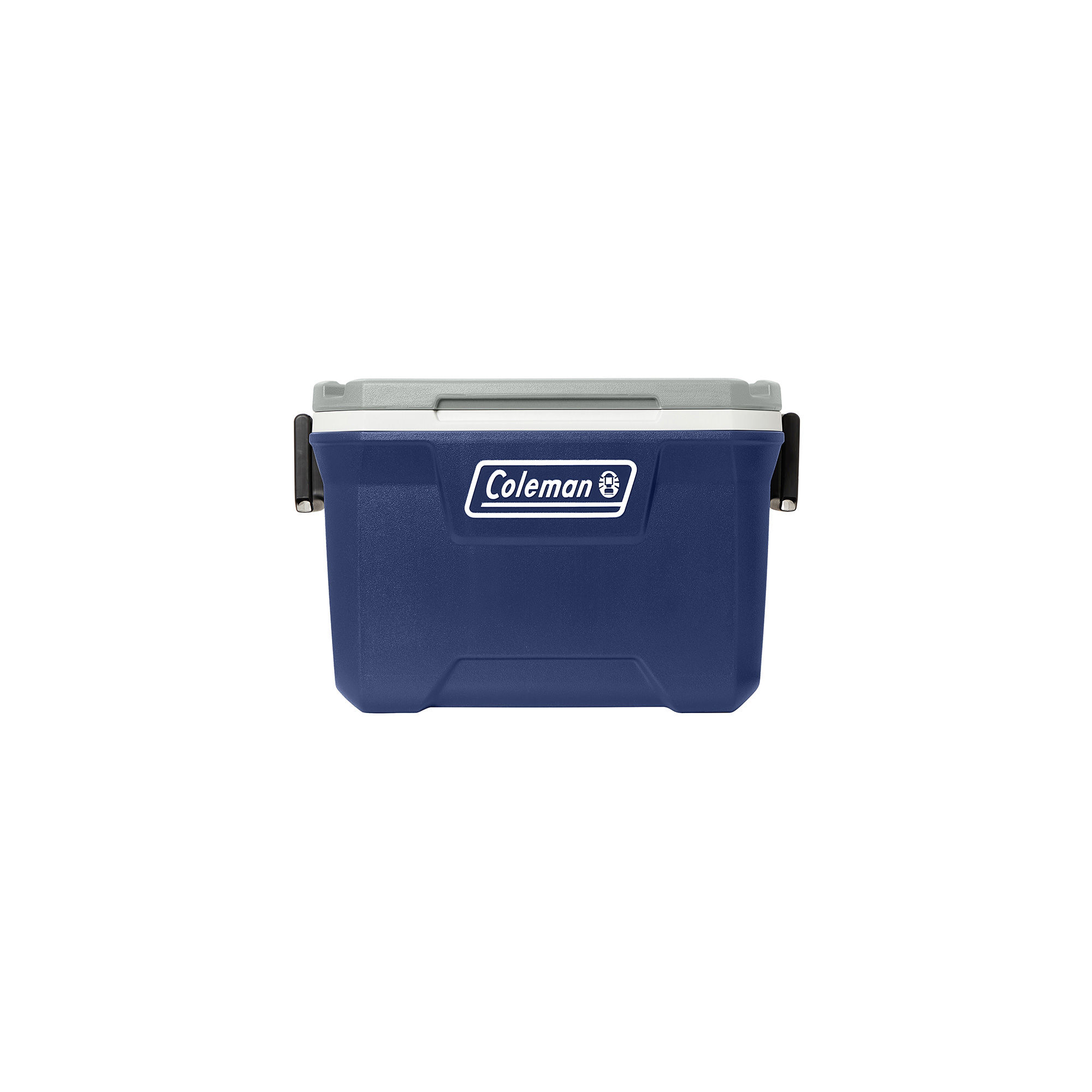
3. Coleman Classic Series 52-Quart — Best Budget Family Cooler
Best For: Families and occasional travelers who need generous storage without spending hundreds of dollars.
The Coleman Classic Series 52-Quart Hard Cooler is our budget winner because it delivers ample storage with a simple, practical design.
It offers 52 quarts of capacity and holds up to 80 standard cans without ice. Coleman also provides a more realistic mixed packing example: approximately 40 cans alongside 26 pounds of ice.
This matters for family road trips. Snacks, bottled drinks, fruit, prepared meals, and ice packs can quickly fill a smaller cooler.
The Coleman has insulated walls and a fully insulated lid. Its manufacturer claims ice retention for up to three days under specified conditions.
That makes it suitable for short camping trips and weekend travel when you can replenish ice as needed.
Despite its larger capacity, the cooler weighs approximately 8.6 pounds empty. However, it becomes much heavier once filled with ice and food, so two-person lifting may still be sensible.
Practical details include molded side handles, cup holders, a drain plug, an easy-clean lid, and a stain-resistant liner. The lid is also designed to support up to 250 pounds when used as a seat.
The trade-off is construction. The Coleman is a straightforward budget cooler rather than a heavily insulated premium model with elaborate hardware.
For occasional family travel, its value is difficult to ignore. You can spend less on the cooler and allocate more of your budget to the rest of your trip.
If your journey includes overnight camping, our guide to the best family tents for camping can help you choose a shelter that accommodates both passengers and their gear.
Pros
✅ Affordable 52-quart capacity
✅ Lightweight when empty
✅ Built-in cup holders and drain plug
✅ Practical for families and occasional use
Cons
❌ Basic construction compared with premium coolers
❌ Requires substantial ice for a full load
❌ Large size can become awkward when fully packed
Who should skip it: Frequent travelers seeking a compact cooler with more substantial insulation or premium carrying hardware.
Alternative: RTIC 32 QT Ultra-Light provides a smaller footprint and a stronger insulation-focused design.
4. Igloo Trailmate Journey 70 Qt — Best Wheeled Cooler
Best For: Large families, group road trips, beach stops, and travelers who need to move a substantial cooler away from their vehicle.
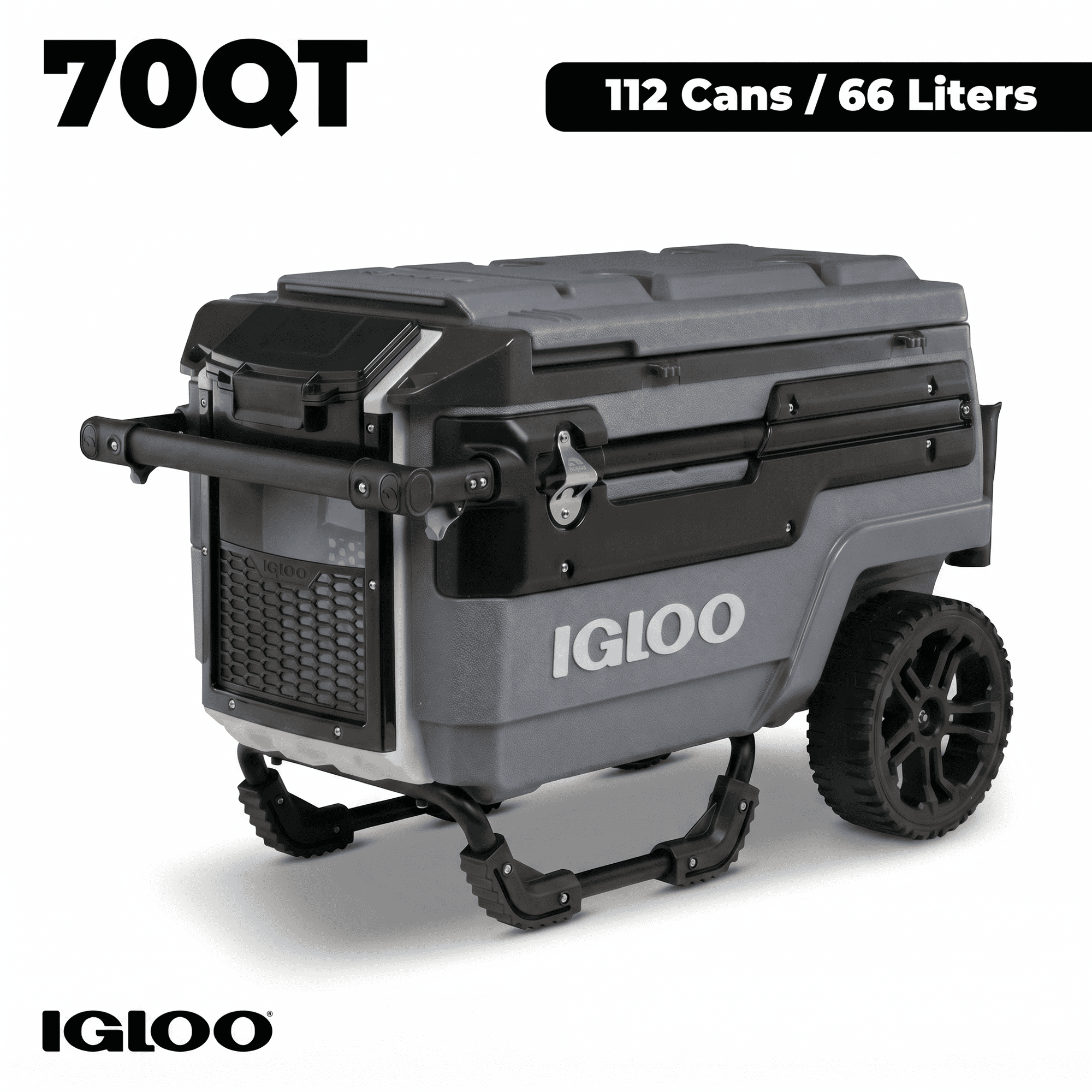
The Igloo Trailmate Journey 70 Qt Cooler earns our wheeled recommendation because it combines large capacity with features designed for moving heavy loads.
Its 70-quart interior holds up to 112 standard cans without ice. That provides substantial room for group beverages, picnic supplies, and food for extended outings.
The most important feature is the wheel system. Igloo equips the Trailmate Journey with 10-inch wheels designed to handle surfaces such as sand, gravel, and uneven pathways.
A telescoping Glide handle helps users pull the cooler rather than carrying its full weight.
Its additional features include cup holders, bottle openers, a threaded drain plug, dry storage, and an accessory tray. These are particularly convenient when the cooler becomes the central storage station at a campsite or picnic area.
Igloo also includes THERMECOOL insulation and Cool Riser technology. The raised-body design is intended to reduce heat transfer from hot surfaces.
However, the Trailmate is not small. It weighs approximately 34.7 pounds empty and measures about 33.8 inches long, 20.3 inches wide, and 23.6 inches high.
Those dimensions matter when packing a vehicle. The cooler may fit inside an SUV or large trunk, but it can consume space needed for luggage, camping equipment, or other essentials.
Its wheels also offer less benefit when you rarely move the cooler beyond the vehicle.
Choose this model when its transport features will see regular use, not simply because it holds more cans.
Pros
✅ Large 70-quart capacity
✅ Oversized wheels for varied terrain
✅ Telescoping pull handle
✅ Useful storage and serving accessories
Cons
❌ Heavy even when empty
❌ Requires considerable vehicle space
❌ More expensive than basic family coolers
Who should skip it: Travelers with small cars, limited cargo space, or no need to move a cooler across a parking lot or campground.
Alternative: YETI Roadie 48 offers a smaller wheeled premium format, while Coleman Classic 52-Quart provides lower-cost storage without wheels.
For road trips involving overnight outdoor stays, our camping tent recommendations can help you plan the rest of your setup without overloading your vehicle.
5. Hydro Flask Carryout Soft Cooler Tote 20 L — Best Soft Cooler
Best For: Day trips, short drives, picnics, and travelers who prefer a lightweight cooler that is easy to carry.
The Hydro Flask Carryout Soft Cooler Tote 20 L is our favorite soft-sided option because it prioritizes portability and convenient access over maximum ice retention.
At approximately 1.88 pounds empty, the tote weighs far less than the hard coolers in this guide.
Its 20-liter design holds up to 24 standard 12-ounce cans without ice. In practice, adding frozen packs and food containers reduces the available space.
Hydro Flask uses lightweight insulation and a compression-molded body. The manufacturer describes all-day cooling when the tote is used with an ice pack.
That makes it a sensible option for a morning drive, afternoon picnic, or day at a park. It is not designed to replace a high-capacity hard cooler during an extended trip.
The tote includes a FlexClip strap system, removable carrying straps, a zipper closure, and welded interior liner seams. Its 100% recycled polyester main fabric has a durable coating.
The interior is designed to resist leaks, but that should not be confused with a guarantee that the entire closed bag can be tipped over without spilling.
Another benefit is accessibility. A soft cooler can be more comfortable to carry from the car to a picnic table, hotel room, or outdoor seating area.
The main limitation is cooling duration. If you need to protect perishable food for multiple days, choose a suitable hard cooler with adequate ice or a powered refrigerator.
For drinks you want to keep within easy reach, see our guide to Hydro Flask bottles and accessories. Insulated bottles can complement a soft cooler when you want cold water throughout the drive.
Pros
✅ Very lightweight design
✅ Comfortable, flexible carrying options
✅ Easy-clean insulated interior
✅ Lifetime manufacturer warranty
Cons
❌ Not intended for multiday ice retention
❌ Limited space after adding ice packs
❌ Less protective than a rigid cooler
Who should skip it: Travelers carrying large amounts of perishable food or needing refrigeration over several days.
Alternative: YETI Roadie 24 offers a compact hard-sided design with more substantial insulation.
6. Dometic CFX5 45 — Best Electric Cooler for Extended Road Trips
Best For: RV owners, camper-van travelers, and drivers planning extended journeys with a suitable 12V, 24V, or AC power source.
The Dometic CFX5 45 Electric Cooler takes a different approach from every other model in this guide. Instead of relying on ice, it uses a compressor to regulate the internal temperature.
Dometic markets the CFX5 45 as a 45-liter-class portable refrigerator/freezer. Its adjustable temperature range extends from approximately -7°F to 68°F under appropriate operating conditions.
This gives travelers more control over cooling than a traditional ice chest. You can set the compartment to a suitable refrigeration temperature without sacrificing a large portion of the interior to ice.
The cooler uses vacuum-insulated panels and a variable-speed compressor designed to reduce energy consumption.
It can operate from 12V or 24V DC vehicle power and compatible AC power supplies. Dometic also provides battery-protection settings to help prevent excessive discharge of a vehicle battery.
Other features include Bluetooth app controls, a digital display, an interior light, removable storage components, and folding handles.
However, the CFX5 45 is expensive. Its reference price is approximately $1,050, and the unit weighs about 40.3 pounds empty.
It also requires reliable electrical power. Battery protection can shut down the unit when voltage falls too low, so travelers still need to check temperatures and plan their power supply.
Unlike some larger compressor refrigerators, the CFX5 45 is a single-zone model. It should not be described as providing two independently controlled refrigerated and frozen compartments.
Its size and price make it unnecessary for most short trips. However, travelers spending days or weeks on the road may appreciate being able to refrigerate food without regularly purchasing ice.
For a broader comparison of compressor refrigerators and vehicle power options, see our guide to the best portable car fridges.
Pros
✅ Compressor refrigeration without ice
✅ Adjustable temperature control
✅ AC and DC power compatibility
✅ Battery-protection and app features
Cons
❌ High purchase price
❌ Heavy and bulky
❌ Requires a suitable power supply
❌ Single-zone temperature control
Who should skip it: Casual travelers who only need cold drinks for a day or two and do not have a reliable plan for powering an electric cooler.
Alternative: RTIC 32 QT Ultra-Light is a simpler and much less expensive option that does not require electricity.
Coolers We Considered but Didn’t Select
Several other coolers are worth considering, but they either overlap with our main recommendations or serve a narrower purpose.
YETI Roadie 48: An excellent premium wheeled cooler with strong independent insulation results. However, the Igloo Trailmate Journey provides a different combination of large capacity and built-in conveniences at a lower reference price.
YETI Tundra Haul: A durable wheeled option for travelers who prioritize premium construction. It costs more than most casual road-trip users need to spend.
Igloo MaxCold Latitude 54 Qt: A capable traditional hard cooler with positive independent testing. It remains an alternative when the exact model is available from a trusted retailer.
RTIC 52 QT Ultra-Light Wheeled: A useful middle ground between a traditional hard cooler and a more expensive premium wheeled model. It is particularly interesting when low weight and rolling convenience are both priorities.
Dometic CFX5 75DZ: A larger dual-zone electric refrigerator/freezer designed for more demanding travel needs. It belongs in a dedicated powered-refrigeration comparison rather than a general cooler shortlist.
How to Choose a Cooler for a Road Trip
Choosing the best cooler for car travel starts with three questions: How long is the trip, how much food must stay cold, and where will the cooler fit in your vehicle?
Hard Cooler vs. Soft Cooler vs. Electric Cooler
Hard coolers are a strong choice when you need substantial storage and insulation. Their rigid construction also protects food containers and makes them useful for camping.
Soft coolers are better for short trips where carrying comfort matters most. They usually weigh less and fit more easily into tight spaces, but their insulation and capacity vary considerably.
Electric coolers offer temperature control without ice. Compressor models can be useful for extended travel, but they cost more and need a reliable power supply.
For most weekend travelers, a conventional hard cooler is the simplest starting point.
What Cooler Size Do You Need for a Road Trip?
Choose capacity based on your passengers, food requirements, trip length, and access to ice.
| Cooler Size | Typical Use | Main Consideration |
|---|---|---|
| Up to 20 qt | Solo travel, drinks, short trips | Limited room after adding ice |
| 20–35 qt | Couples and small families | Balanced portability and capacity |
| 35–55 qt | Family weekends and camping | Loaded weight and cargo space |
| 60 qt and above | Large groups and extended outings | Transport, weight, and vehicle fit |
These size ranges are planning guidelines, not fixed rules. A cooler filled mostly with ice holds less food than its advertised empty capacity suggests.
For example, a manufacturer may advertise space for 80 cans, but that does not mean 80 cans will fit alongside the ice needed for safe cooling.
Check Vehicle Space, Weight, and Accessibility
Measure your available cargo space before buying a large cooler.
Check the cooler’s external width, depth, and height. Leave enough room to open the lid without unloading half your vehicle.
Also consider where passengers will access snacks and drinks. A cooler buried beneath luggage is inconvenient during frequent stops.
Secure the cooler so it cannot slide or become a hazard during sudden braking. Heavy coolers should travel in a suitable cargo area rather than loose beside passengers.
Finally, consider the loaded weight. A lightweight empty cooler can still become difficult to lift when filled with ice, food, and beverages.
Understand Ice Retention and Real-World Cooling
Manufacturer ice-retention claims are useful for understanding a cooler’s intended performance, but they do not represent guaranteed results.
Actual cooling depends on ambient temperature, pre-chilling, ice quantity, lid openings, sunlight, and how full the cooler is.
Two coolers that both claim several days of ice retention may behave differently when left in a hot vehicle.
For perishable food, the key measurement is temperature. Use a thermometer rather than judging food safety by whether some ice remains.
Is a Wheeled Cooler Worth It?
Wheels become valuable when the cooler is too heavy to carry comfortably or needs to travel beyond the parking lot.
Large wheeled coolers work well for beaches, group picnics, and campsites with reasonably accessible paths.
However, wheels add weight and exterior size. They may offer little benefit when the cooler stays in the vehicle throughout the trip.
Choose a wheeled model because you expect to move it regularly, not simply because it has more features.
Power Requirements for Electric Coolers
Electric coolers need more planning than passive ice chests.
Before buying, confirm that your vehicle can safely supply the required power. Consider the cooler’s voltage, electrical consumption, connector type, and expected operating duration.
For overnight use, you may need a suitable auxiliary battery or external power source.
Battery-protection systems can reduce the risk of draining a vehicle battery, but they do not create additional power. If the cooler shuts down, the stored food can warm.
Keep the ventilation areas unobstructed and follow the manufacturer’s electrical and installation instructions.
How to Pack a Cooler Safely for Travel
Safe cooler packing starts before you leave home. Pre-chill the contents, use adequate ice or frozen packs, and monitor the temperature of perishable food.
Keep Perishable Food at or Below 40°F
According to the USDA Food Safety and Inspection Service, perishable foods should be kept cold enough to stay outside the bacterial danger zone.
The danger zone extends from 40°F to 140°F. Bacteria can multiply rapidly in this range.
The USDA’s general rule is to discard perishable food left in unsafe temperatures for more than two hours, or more than one hour when conditions exceed 90°F.
Use a cooler thermometer to check the temperature. Do not rely on how cold a container feels or whether ice remains visible.
Food safety warning: A manufacturer’s five-day ice-retention claim does not mean meat, dairy, or prepared meals remain safe for five days. Keep perishables at or below 40°F and discard food that has exceeded applicable time and temperature limits.
Pre-Chill Food and Use Adequate Ice or Ice Packs
Refrigerate or freeze food before packing it. A cooler should maintain cold conditions rather than spend its limited cooling capacity chilling warm groceries.
Use frozen gel packs, ice blocks, or sufficient bagged ice. Large ice blocks generally melt more slowly than small cubes.
Fill empty spaces where practical, and keep the cooler closed between stops.
Keep Raw Foods Separate and Limit Lid Openings
Raw meat and poultry should be securely wrapped and separated from ready-to-eat foods.
The USDA recommends using a separate cooler when possible. If you use one cooler, keep raw foods below ready-to-eat items to reduce contamination risk.
A separate drink cooler can also help. Travelers tend to open drink storage more frequently, which allows warmer air to enter.
Check Temperatures During Long Journeys
Keep the cooler shaded whenever possible. Avoid leaving it in direct sunlight or unnecessarily exposing it to heat inside a parked vehicle.
Check temperatures during stops, especially when transporting meat, dairy, or other refrigerated foods.
Replenish ice when necessary, and avoid keeping food that has become unsafe.
For ordinary drinking water, you can reduce cooler space requirements by carrying separate bottles. Our guide to the best reusable water bottles compares insulated and lightweight designs for travel.
Best Cooler by Road Trip Scenario
The best choice becomes easier when you match the cooler to how you actually travel.
| Travel Scenario | Recommended Cooler | Reason |
|---|---|---|
| Weekend road trip | RTIC 32 QT Ultra-Light | Capacity, insulation, and manageable weight |
| Compact car travel | YETI Roadie 24 | Small footprint and premium construction |
| Budget family vacation | Coleman Classic 52-Quart | Generous storage for less money |
| Large group or beach stop | Igloo Trailmate Journey | Large capacity and wheels |
| Short day trip | Hydro Flask Carryout Tote | Lightweight carrying and easy access |
| Extended RV or camper travel | Dometic CFX5 45 | Temperature control without ice |
Planning to prepare meals at your destination? A cooler works best as part of a practical food-storage setup. Our guide to outdoor cooking equipment covers grilling options for camping and other outdoor meals.
Frequently Asked Questions
What is the best cooler for road trips?
The RTIC 32 QT Ultra-Light is our best overall recommendation because it balances capacity, insulation, portability, and value. For smaller vehicles, the YETI Roadie 24 is a strong premium alternative. Travelers needing powered refrigeration should consider the Dometic CFX5 45.
What size cooler do I need for a family road trip?
A 35–55-quart hard cooler is a useful starting point for many family weekend trips, although the right size depends on passenger count, meals, trip length, and ice requirements. Remember that advertised can capacity often excludes ice. Measure your cargo area before choosing a larger model.
How long will a cooler keep food cold in a car?
Cooling duration depends on insulation, outside temperature, ice quantity, pre-chilling, and lid openings. Manufacturer ice-retention claims are not food-safety guarantees. Keep perishable food at or below 40°F and check it with a thermometer throughout the trip.
Are electric coolers worth buying for road trips?
Electric compressor coolers can be worthwhile for extended travel when you have reliable power. They offer adjustable refrigeration without ice. However, they are more expensive, heavier, and require electrical planning. For occasional weekend trips, a passive hard cooler is usually simpler.
Are soft coolers better than hard coolers for travel?
Soft coolers are often easier to carry and store, making them convenient for day trips. Hard coolers generally provide more rigid protection and often greater capacity for longer journeys. Choose based on the amount of food, intended cooling duration, and how far you’ll carry the cooler.
Can I leave a cooler inside a parked car?
You should avoid leaving perishable food in a hot parked vehicle without confirmed safe cooling. Interior temperatures can rise quickly, reducing a cooler’s effective cooling duration. Keep the cooler shaded where practical, minimize lid openings, and monitor its internal temperature.
How do I keep food safe during a multiday road trip?
Pre-chill food, use adequate ice or a reliable powered refrigerator, separate raw foods, and keep the cooler closed as much as possible. Maintain perishable food at or below 40°F. Check temperatures regularly and replenish ice or address power interruptions before food becomes unsafe.
Final Verdict: Which Road Trip Cooler Should You Buy?
RTIC 32 QT Ultra-Light is our best overall cooler for road trips. It combines useful capacity, substantial insulation, and manageable weight at a reasonable reference price.
However, different travel needs justify different choices.
Choose the YETI Roadie 24 if you want a compact premium hard cooler. The Coleman Classic 52-Quart offers better value for families that need more space without a large investment.
If you regularly move substantial loads to campsites or beaches, the Igloo Trailmate Journey makes transport easier. Meanwhile, the Hydro Flask Carryout Tote is better for short trips where carrying comfort matters most.
For extended vehicle-based adventures with dependable power, the Dometic CFX5 45 offers a different level of convenience through adjustable compressor refrigeration.
Before buying, check your vehicle dimensions, estimate the space needed for ice and food, and consider the cooler’s fully loaded weight.
The best choice is not necessarily the largest or most expensive cooler. It is the one that keeps your contents appropriately cold while fitting comfortably into the way you travel.
Bottom line: RTIC for overall versatility. YETI for compact premium quality. Coleman for budget family storage. Igloo for wheeled capacity. Hydro Flask for easy day-trip carrying. Dometic for extended travel with reliable electrical power.
Sources
- REI Co-op Expert Advice — The 5 Best Coolers of 2026: Tested
- OutdoorGearLab — The Best Coolers of 2026
- Igloo — Trailmate Journey 70 Qt Cooler Product Specifications
- Dometic — CFX5 45 Electric Cooler Product Specifications
- USDA Food Safety and Inspection Service — Food Safety While Hiking, Camping & Boating
How we research: Discompare reviews manufacturer specifications, independent product testing, current retailer information, capacity, portability, construction, and practical buying considerations. We do not conduct original cooler laboratory testing unless explicitly stated. Advertised ice-retention periods depend on use conditions and do not guarantee safe food-storage temperatures. Prices and availability can change. Discompare may earn commissions from qualifying retailer or price-comparison purchases.
Product Groups: RTIC 32 QT Ultra-Light Cooler, YETI Roadie 24 Hard Cooler, Coleman Classic Series 52-Quart Hard Cooler, Igloo Trailmate Journey 70 Qt Cooler, Hydro Flask Carryout Soft Cooler Tote 20 L, Dometic CFX5 45 Electric Cooler