The best reusable water bottles make staying hydrated convenient without creating unnecessary weight, complicated cleaning routines, or frequent replacement costs. For most people, the Owala FreeSip 24 oz is an excellent everyday choice because it combines an insulated stainless-steel body, a leakproof locking lid, and two drinking methods in one spout.
However, the right bottle depends on how you use it. Hydro Flask’s 32 oz Wide Mouth is a strong option for all-day cold-water storage, while the lightweight Nalgene Sustain is better suited to hiking and budget-conscious buyers. YETI offers robust insulated construction, Purifyou provides a glass alternative, and Bivo makes a specialized insulated bottle for cyclists.
In this guide, we’ve selected six reusable water bottles for six different lifestyles. We’ll compare their materials, capacity, insulation, lid designs, portability, cleaning requirements, and everyday limitations. We’ll also explain what BPA-free and recycled-content claims mean, when an insulated bottle is worth the extra weight, and how to choose a bottle you’ll actually use.
Rather than selecting products based on popularity alone, our recommendations focus on practical buying decisions supported by manufacturer specifications and independent editorial research.
Quick Answer: Best Reusable Water Bottles
Best Overall — Owala FreeSip 24 oz: A versatile insulated bottle with a dual-purpose spout, built-in straw, and leakproof locking lid for everyday hydration.
Best for All-Day Cold Water — Hydro Flask 32 oz Wide Mouth: Generous capacity, strong insulation, and interchangeable Wide Mouth caps for different drinking preferences.
Best Lightweight Value — Nalgene 32 oz Sustain: An affordable, non-insulated plastic bottle that’s convenient for hiking, backpacking, and everyday carrying.
Best Glass Bottle — Purifyou 22 oz: Borosilicate-glass construction with a protective silicone sleeve for home, office, and shoppers who prefer drinking from glass.
Best for Cycling — Bivo Trio 21 oz: An insulated stainless-steel bottle with a high-flow sports nozzle and a shape designed for standard bicycle bottle cages.
How We Selected These Water Bottles
We selected six products that serve genuinely different purposes rather than comparing six similar insulated bottles. Our criteria included material, capacity, insulation, empty weight, lid convenience, cleaning requirements, product availability, and the suitability of each design for its intended use.
We reviewed manufacturer documentation for specifications, care instructions, and product claims. We also considered independent editorial testing from OutdoorGearLab and REI, including their 2026 assessments of insulated bottles, lightweight alternatives, durable drinkware, and cycling-specific products.
Each recommendation includes its practical advantages, limitations, and a sensible alternative. Importantly, we distinguish a bottle advertised as leakproof when closed from one that may leak through an open drinking nozzle or an improperly secured lid.
Discompare did not perform its own hands-on or laboratory testing. Manufacturer temperature-retention figures are reported as advertised claims, while independent observations are attributed to their original sources.
Reusable Water Bottles Compared
The table below summarizes the six selected models. Regular manufacturer price references reflect U.S. listings checked during September 2026; current retailer offers may differ.
| Bottle | Capacity | Material | Insulated? | Best For | Price Reference | Main Trade-Off |
|---|---|---|---|---|---|---|
| Owala FreeSip | 24 oz | Stainless steel | Yes | Everyday hydration | $29.99 | Multi-part lid cleaning |
| Hydro Flask Wide Mouth | 32 oz | Stainless steel | Yes | All-day cold water | $49.95 | Wide base |
| Nalgene Sustain | 32 oz | Tritan Renew plastic | No | Lightweight carrying | $16.99 | No temperature retention |
| YETI Rambler Chug | 26 oz | Stainless steel | Yes | Durability | $40.00 | Heavy for its capacity |
| Purifyou Glass | 22 oz | Borosilicate glass | No | Home and office | Check current offers | Breakable |
| Bivo Trio | 21 oz | Stainless steel | Yes | Cycling | From $49.00 | Specialized sports nozzle |
Shopping tip: A bottle’s capacity is only part of the decision. A lightweight 32 oz plastic bottle may be easier to carry than a smaller insulated steel model, while a bottle designed for cycling needs to fit securely in a cage and deliver water without complicated handling.
Compare Current Reusable Water Bottle Prices
Compare current U.S. retailer offers for the six selected bottles below. Prices and available colors may vary, and some merchants sell different capacities or lid configurations under similar product names.


The 6 Best Reusable Water Bottles
1. Owala FreeSip 24 oz — Best Overall
Best For: Everyday hydration, commuting, gym sessions, and people who want both straw sipping and direct drinking in one bottle.
The Owala FreeSip 24 oz stands out because it gives you two ways to drink without changing lids. Hold the bottle upright to sip through its integrated straw, or tilt it back to drink through the larger opening.
That versatility is useful when your routine changes throughout the day. You might prefer the straw while working at a desk, then use the larger opening after exercise when you want a faster drink.
The bottle has a vacuum-insulated stainless-steel body, with Owala advertising up to 24 hours of cold retention. Its push-button lid includes a locking carrying loop and is designed to be leakproof when securely closed.
Its 24 oz capacity also strikes a useful balance between portability and hydration. However, buyers who spend long periods away from refill stations may prefer a larger 32 oz bottle.
The biggest limitation is cleaning. The FreeSip spout, integrated straw, and lid components need regular attention. Owala recommends hand-washing the stainless-steel bottle body to preserve its finish, while the lid is top-rack dishwasher safe.
The manufacturer also advises against using the stainless-steel FreeSip with hot, carbonated, or perishable beverages.
Pros
✅ Two drinking methods in one spout
✅ Leakproof locking lid when properly closed
✅ Insulated stainless-steel construction
✅ Convenient 24 oz capacity for everyday carrying
Cons
❌ More lid components to clean than a simple screw cap
❌ Bottle body is recommended for hand-washing
❌ Not intended for hot or carbonated beverages
❌ Smaller capacity than several alternatives
Who should skip it: Buyers who want a simple single-piece drinking cap, regularly carry hot coffee or tea, or need more than 24 oz between refills.
Alternative: The Hydro Flask 32 oz Wide Mouth with Flex Straw Cap provides more capacity and interchangeable lid options.

2. Hydro Flask 32 oz Wide Mouth with Flex Straw Cap — Best for All-Day Cold Water
Best For: Work, outdoor activities, longer gym sessions, and people who want a larger insulated bottle.
The Hydro Flask 32 oz Wide Mouth with Flex Straw Cap is an excellent option when temperature retention and capacity matter more than minimizing empty weight.
Its TempShield double-wall vacuum insulation is rated by Hydro Flask for up to 24 hours of cold retention. The bottle’s wide opening accommodates ice cubes, while the Flex Straw Cap allows convenient sipping without tilting the bottle.
The cap is advertised as leakproof when closed, making it more appropriate for carrying in a bag than an open-straw tumbler. Its compatibility with Hydro Flask Wide Mouth caps also means owners can change the drinking experience without replacing the bottle.
OutdoorGearLab’s 2026 testing supports the Wide Mouth platform’s insulation and everyday practicality. Its testers particularly appreciated the alternative Flex Chug cap for combining a smaller drinking opening with convenient cleaning access.
The conventional 32 oz Wide Mouth measures approximately 3.8 inches in diameter, so it may not fit many standard vehicle cupholders. Its approximately 1.05 lb empty weight also becomes noticeable after adding a full 32 oz of water.
The included Flex Straw Cap is not intended for hot beverages.
If you’d like a more detailed breakdown of Hydro Flask capacities, lid designs, and accessories, see our Hydro Flask Bottles & Accessories guide.
Pros
✅ Generous 32 oz capacity
✅ Manufacturer-rated 24-hour cold retention
✅ Wide opening for ice and cleaning
✅ Compatible with interchangeable Wide Mouth caps
Cons
❌ Wide base may not fit standard cupholders
❌ Heavier than non-insulated plastic alternatives
❌ Straw components need regular cleaning
❌ Included straw cap is unsuitable for hot drinks
Who should skip it: Buyers who prioritize lightweight carrying or need a bottle specifically shaped for a narrow car cupholder.
Alternative: Owala FreeSip 24 oz for a smaller everyday bottle, or the Hydro Flask 32 oz Travel Bottle for a tapered cupholder-oriented design.
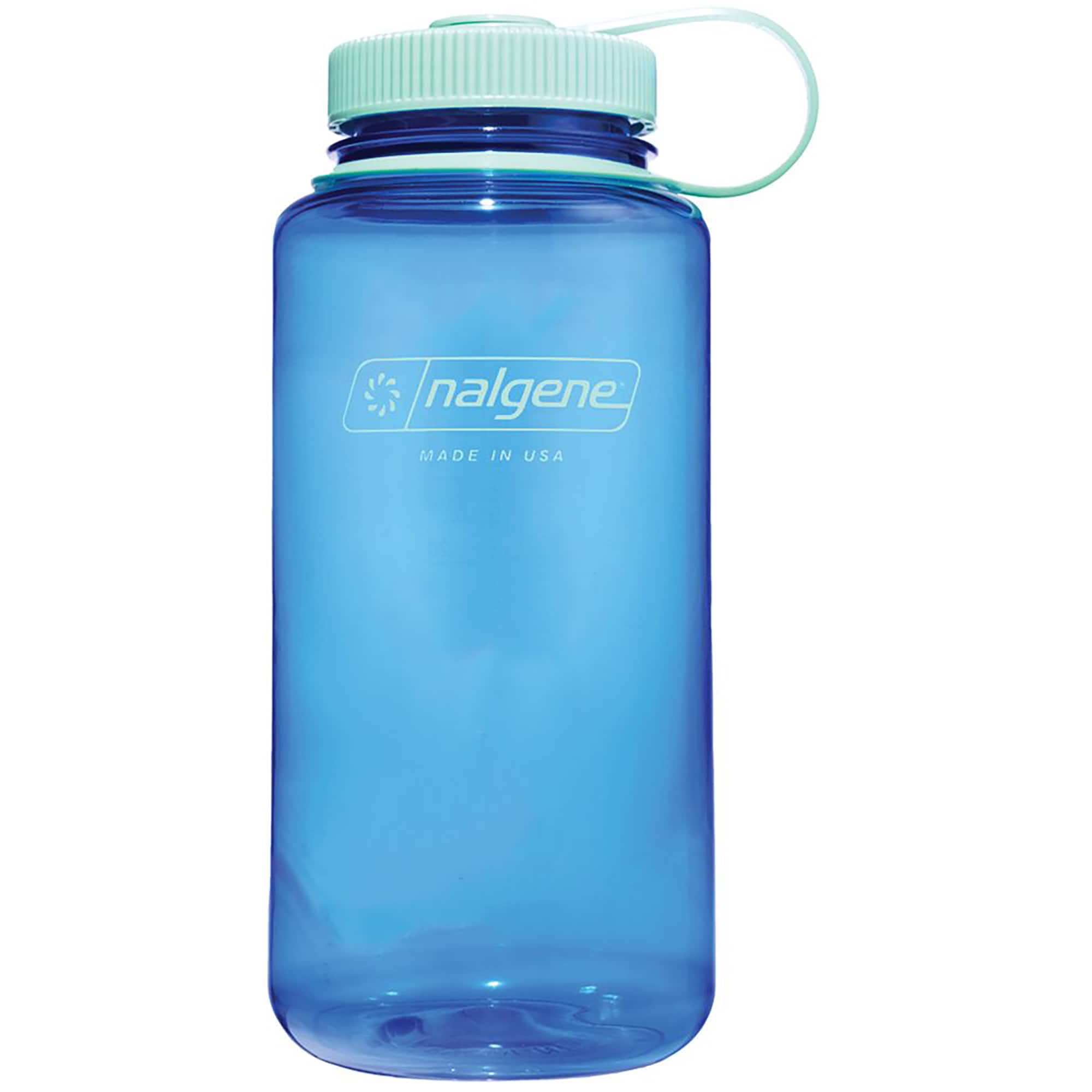
3. Nalgene 32 oz Wide Mouth Sustain — Best Lightweight Value
Best For: Hiking, backpacking, students, travel, and shoppers who do not need vacuum insulation.
The Nalgene 32 oz Wide Mouth Sustain offers a different approach to reusable hydration. Instead of adding an insulated steel body, it focuses on low weight, straightforward construction, generous capacity, and an affordable price.
Its Tritan Renew construction is BPA/BPS-free. Nalgene states that the Sustain range uses material derived from 50% plastic waste through an ISCC-certified mass-balance process.
That manufacturing claim should not be interpreted as meaning that every individual bottle physically contains exactly 50% post-consumer recycled plastic. Mass balance is an accounting method used to attribute recycled feedstock within a certified production system.
The bottle has a wide opening for refilling, adding ice, and cleaning. Its screw cap is connected to the bottle, helping prevent the lid from getting lost during outdoor activities.
REI’s 2026 water-bottle testing includes the Nalgene Sustain as a practical option for outdoor and everyday use. Its lightweight, non-insulated construction also makes it useful when carrying weight matters more than maintaining water temperature.
However, Nalgene does not provide the same temperature retention as Hydro Flask, Owala, or YETI. Water can warm up relatively quickly in hot conditions, and the wide base may not fit many vehicle cupholders.
Pros
✅ Lightweight construction for a 32 oz bottle
✅ Affordable manufacturer price reference
✅ Wide opening and dishwasher-safe design
✅ Material derived from plastic waste through certified mass balance
Cons
❌ No vacuum insulation
❌ Water temperature follows ambient conditions more closely
❌ Wide base is inconvenient for many cupholders
❌ Screw cap must be removed before drinking
Who should skip it: Buyers who need cold water for many hours without refrigeration or who prefer a straw or one-touch lid.
Alternative: CamelBak Chute Mag 32 oz Tritan Renew offers a lightweight plastic design with a smaller drinking spout. Check its current stock and color availability before purchasing.
4. YETI Rambler 26 oz Bottle with Chug Cap — Best for Durability
Best For: Frequent travel, outdoor activities, active workdays, and buyers who want robust insulated drinkware.
The YETI Rambler 26 oz combines kitchen-grade 18/8 stainless steel with double-wall vacuum insulation and a removable Chug Cap.
The Chug Cap uses a smaller drinking opening for controlled gulps. When it’s time to refill or clean the bottle, you can remove the cap assembly to access the wider opening underneath.
YETI advertises the bottle as leakproof when properly closed and lists it as dishwasher safe. Compatible Rambler bottle caps also provide options for buyers who eventually prefer a different drinking method.
REI’s May 2026 testing identified the Rambler 26 oz with Chug Cap as an Editors’ Choice selection, emphasizing its dependable construction and practical performance across outdoor and everyday use.
However, the Rambler is comparatively heavy for its 26 oz capacity. YETI lists an empty weight of approximately 1.4 lb, making it less suitable for hikers who count every ounce.
Its approximately 3.4-inch diameter also means it won’t fit every vehicle cupholder.
The Chug Cap has additional usage restrictions. YETI advises against using it with carbonated beverages, food, perishables, boiling liquids, or contents above 185°F.
Pros
✅ Robust stainless-steel construction
✅ Leakproof Chug Cap when properly closed
✅ Double-wall vacuum insulation
✅ Dishwasher-safe bottle and removable cap assembly
Cons
❌ Heavy relative to its capacity
❌ Wide design may not fit standard cupholders
❌ More expensive than basic non-insulated bottles
❌ Chug Cap has restrictions for certain beverages
Who should skip it: Backpackers prioritizing minimum weight, or commuters who require a narrow cupholder-friendly bottle.
Alternative: The Hydro Flask 32 oz Wide Mouth offers greater capacity with a straw-equipped configuration. Nalgene Sustain is a more economical alternative when insulation isn’t important.
5. Purifyou 22 oz Glass Water Bottle — Best Glass Option
Best For: Home, office, desk-side hydration, and shoppers who prefer a glass drinking surface.
The Purifyou 22 oz Glass Water Bottle is an alternative to stainless-steel and plastic designs. It uses borosilicate glass with a food-grade silicone sleeve designed to improve grip and provide additional protection against everyday impacts.
The bottle includes volume and time markings, which can help users monitor how much water they have consumed throughout the day. Its 22 oz capacity is suitable for desk-side use without the bulk of a large travel tumbler.
One advantage of glass is that it provides a non-plastic drinking surface. Users who dislike the taste or feel of some plastic bottles may prefer this design.
However, glass remains breakable. The silicone sleeve offers additional protection, but it cannot guarantee that the bottle will survive a fall onto a hard surface.
Unlike the insulated steel options, the Purifyou does not provide vacuum insulation. It is therefore a better match for room-temperature drinking or situations where temperature retention is not essential.
OutdoorGearLab’s testing of glass-bottle options supports the appeal of glass for a clean-tasting drinking experience while recognizing the practical trade-offs in weight and breakage risk.
Pros
✅ Borosilicate-glass drinking surface
✅ Protective silicone sleeve for improved grip
✅ Volume and time markings
✅ Practical 22 oz capacity for home or office use
Cons
❌ Can break if dropped
❌ No vacuum insulation
❌ Less suitable for rough outdoor activities
❌ Protective sleeve adds cleaning and drying considerations
Who should skip it: Buyers who need a highly impact-tolerant bottle for hiking, cycling, or activities where the container may be dropped frequently.
Alternative: Nalgene Sustain is a lightweight non-insulated option, while Owala FreeSip provides insulation and greater impact tolerance than glass.

6. Bivo Trio 21 oz Insulated — Best for Cycling
Best For: Road cycling, indoor cycling, mountain biking, and riders who want an insulated bottle designed for standard bicycle cages.
The Bivo Trio 21 oz is a specialized reusable bottle built around cycling requirements. Unlike a conventional insulated bottle with a screw cap, it uses a high-flow sports nozzle designed to let riders drink without squeezing the bottle.
Its stainless-steel body includes double-wall vacuum insulation, with Bivo advertising more than 12 hours of cold retention. The bottle also has a tapered shape designed to fit most standard bicycle bottle cages.
REI’s 2026 testing praised the Bivo Trio’s drinking flow, clean taste, and cycling-oriented design. Its 21 oz capacity and approximately 9.4 oz empty weight make it more suitable for bike use than many large insulated travel bottles.
However, the standard sports nozzle requires more care than a fully sealed travel-bottle cap. During REI’s testing, one reviewer reported some seepage after the bottle remained on its side for an extended period.
It should therefore be treated as a cycling bottle rather than a guaranteed leakproof container for carrying loose inside a bag.
The Bivo Trio is also relatively expensive for a 21 oz bottle. Its value comes from the combination of insulation, stainless-steel construction, and a cycling-specific drinking system rather than maximum capacity.
Pros
✅ Designed for standard bicycle bottle cages
✅ High-flow sports nozzle for convenient drinking
✅ Insulated stainless-steel construction
✅ Removable components for cleaning
Cons
❌ Higher price than conventional cycling bottles
❌ Smaller capacity than many everyday bottles
❌ Standard sports nozzle may seep in some situations
❌ Specialized design is less useful if you rarely cycle
Who should skip it: Shoppers who primarily need a sealed commuter bottle or who do not need bicycle-cage compatibility.
Alternative: The Bivo One 21 oz offers a similar cycling-oriented concept without vacuum insulation.

Other Reusable Water Bottles We Considered
Several additional products are worth considering, but they address narrower requirements or overlap with the six selections above.
- Stanley Quencher H2.0: A popular handled tumbler for desk-side drinking and commuting. Its straw-lid design is a different proposition from a sealed bottle intended for carrying inside a bag.
- CamelBak Chute Mag 32 oz Tritan Renew: A lightweight plastic alternative with a smaller drinking opening. Color and retailer availability can vary.
- Owala FreeSip Sway: A variation worth considering for shoppers who prefer a different carrying design, but the standard FreeSip already represents Owala’s dual-spout approach.
- Brita Stainless Steel Filter Bottle: Useful when filtration is a priority, although filter specifications and replacement schedules require a separate buying decision.
- Hydro Flask Kids Bottle: A more specialized option for younger users, with different capacity and handling requirements.
Our recommendations focus on everyday drinking, insulation, portability, glass construction, and cycling rather than attempting to cover every drinkware category in a single list.
How to Choose a Reusable Water Bottle
The best reusable water bottle is the one that fits your routine closely enough that you’ll continue using it. Start with material and capacity, then consider insulation, lid convenience, cleaning, and how the bottle will be carried.
Stainless Steel vs Plastic vs Glass
Stainless steel is a practical choice for shoppers who want durable, reusable drinkware. Insulated stainless-steel bottles can maintain beverage temperature for extended periods, but they usually cost more and weigh more than non-insulated plastic alternatives.
Plastic is useful when low empty weight and price matter most. Bottles such as the Nalgene Sustain are well suited to hiking and everyday carrying, but they do not provide the same temperature retention as vacuum-insulated models.
Glass offers a different drinking experience and can be convenient for home or office use. However, even a bottle with a protective sleeve remains vulnerable to breakage.
No single material is automatically the most sustainable choice in every situation. Durability, replacement frequency, manufacturing, cleaning, and actual use all contribute to the overall picture.
Insulated vs Non-Insulated Water Bottles
An insulated water bottle makes sense when you spend long periods outdoors, commute in hot weather, or prefer cold water throughout the day.
Hydro Flask and Owala advertise up to 24 hours of cold retention for their selected models. Bivo advertises more than 12 hours for the Trio, making it suitable for longer rides in warm conditions.
These are manufacturer claims, not guaranteed results under every condition. Actual performance depends on the starting beverage temperature, ambient temperature, ice, and how often the bottle is opened.
If you have convenient access to a refill station and rarely need cold water for extended periods, a non-insulated bottle may provide better value with less carrying weight.
Choosing the Right Capacity
Around 20–24 oz: A useful starting point for everyday carrying, desk use, and shorter activities. These bottles are generally easier to fit into bags than larger models.
Around 26–32 oz: A practical range for extended workdays, gym sessions, hiking, and people who prefer fewer refills.
40 oz and above: Suitable when large capacity matters more than portability, such as desk-side drinking or long trips with limited refill opportunities.
Capacity should not be confused with a universal hydration target. Individual fluid needs vary with activity, conditions, diet, and personal circumstances.
Leakproof Lids and Drinking Methods
A leakproof closure matters when a bottle will be carried inside a backpack, tote, or gym bag.
Owala FreeSip, Hydro Flask Flex Straw, Nalgene Sustain, and YETI Rambler all offer closures designed to prevent leaks when properly secured. However, an open straw or incompletely closed cap can still allow water to escape.
Sports nozzles are different. Bivo’s standard nozzle prioritizes fast drinking during cycling, and independent testing has documented some seepage under certain conditions.
Choose the lid based on your routine:
- Straw lid: Convenient for frequent sipping, but requires thorough cleaning.
- Chug cap: Useful for controlled drinking without a straw.
- Screw cap: Simple and often easy to maintain, but requires removing the lid.
- Sports nozzle: Practical during cycling or exercise, but may be less secure for loose bag storage.
Weight, Cupholders, and Bottle Cages
Before buying, consider where your bottle will spend most of its time.
A large insulated bottle can become heavy when filled, even when its empty weight looks manageable. Likewise, a wide bottle may fit comfortably in a backpack’s main compartment but not in a car cupholder.
For cycling, check both bottle diameter and cage compatibility. A conventional insulated bottle may be too wide, heavy, or awkward to use safely while riding.
For school or commuting, also check whether the bottle fits securely in the intended bag pocket and whether its lid remains protected from dirt.
Are Reusable Water Bottles More Sustainable?
Reusable water bottles can help reduce dependence on disposable drink containers when they replace repeated single-use purchases and remain in service for a long time.
However, a reusable product is not automatically environmentally superior simply because it is made from stainless steel, glass, or recycled plastic.
Look Beyond Broad Eco-Friendly Claims
Nalgene’s Sustain range provides an example of a specific material claim. The manufacturer states that its bottles use material derived from 50% plastic waste through an ISCC-certified mass-balance process.
That is more informative than an unqualified claim that a bottle is simply green or sustainable. However, the material claim alone does not establish the bottle’s total environmental impact.
Similarly, a stainless-steel or glass bottle still requires materials, manufacturing, transportation, and eventual disposal. Repeated use is central to realizing the practical benefit of a reusable product.
Use What You Already Own
If your existing bottle is functional, safe to use, easy to clean, and suitable for your routine, there may be little reason to replace it solely because a newer model has different colors or a sustainability-related marketing claim.
When a replacement is genuinely needed, consider durability, compatible replacement parts, cleaning requirements, and how likely you are to use the new bottle regularly.
The same principle applies to household purchases more broadly. Our Eco-Friendly Kitchen Gadgets guide explains how reusable storage and durable kitchen products can reduce unnecessary purchasing when chosen for actual needs.
Cleaning and Maintaining Your Reusable Water Bottle
Regular cleaning is important regardless of whether your bottle is made from stainless steel, plastic, or glass. Lids, straws, seals, and drinking spouts deserve particular attention because moisture and beverage residue can collect in small spaces.
Clean the Bottle and Lid Regularly
Wash your bottle according to its manufacturer’s care instructions. For routine cleaning, warm water and a suitable dish detergent are generally appropriate where permitted by the product guidance.
Disassemble removable lid components when the manufacturer allows it. A bottle brush can help reach the bottom of taller containers, while a narrow brush can clean straw interiors.
Allow the bottle and all lid components to dry thoroughly before storing them.
Check Dishwasher Compatibility
Do not assume every insulated bottle is dishwasher safe.
YETI lists the Rambler 26 oz as dishwasher safe. Nalgene also lists its Sustain bottle as dishwasher safe. Owala recommends hand-washing the stainless-steel FreeSip body to preserve its finish, while its lid is top-rack dishwasher safe.
For Hydro Flask, Purifyou, and Bivo, follow the current care instructions for the exact model and individual components.
Replace Damaged Parts When Appropriate
Inspect lids, seals, straws, and bottle bodies for damage. A worn seal or cracked component may prevent a bottle from closing properly.
If compatible replacement parts are available, replacing an individual component can be more practical than buying an entirely new bottle.
However, stop using a glass bottle that is cracked or chipped, and do not assume a damaged plastic or metal container remains suitable for food contact.
For a broader approach to maintaining reusable household products, see our Spring Cleaning: Eco-Friendly Products guide.
Frequently Asked Questions
What is the best reusable water bottle for everyday use?
The Owala FreeSip 24 oz is a versatile everyday option because it combines an insulated stainless-steel body, dual-purpose drinking spout, built-in straw, and leakproof locking lid. Buyers who want greater capacity may prefer the Hydro Flask 32 oz Wide Mouth.
Are stainless-steel water bottles better than plastic bottles?
Stainless steel is useful for durability and temperature retention, particularly in vacuum-insulated designs. Plastic bottles are generally lighter and can be more affordable. The better material depends on your carrying requirements, budget, and need for insulation.
Are BPA-free water bottles safe?
BPA-free means a product is made without bisphenol A, but the label alone does not establish every aspect of material safety. Choose drinkware from reputable manufacturers, follow its intended-use instructions, and replace products that become damaged or unsuitable for continued use.
Which water bottle keeps drinks cold the longest?
Insulated bottles such as Hydro Flask, Owala, and YETI are designed to maintain beverage temperature. Hydro Flask and Owala advertise up to 24 hours of cold retention for the models featured here. Actual performance varies with environmental conditions, ice, starting temperature, and frequency of opening.
Can reusable water bottles go in the dishwasher?
Some can, but compatibility varies. Nalgene Sustain and YETI Rambler are listed as dishwasher safe. Owala recommends hand-washing its stainless-steel FreeSip body, while the lid is top-rack dishwasher safe. Always follow the cleaning instructions for the exact bottle and cap.
Are glass water bottles worth buying?
Glass bottles can be a good option for home or office use, especially for people who prefer a glass drinking surface. However, they are breakable and may be less convenient for rough outdoor activities. A silicone sleeve provides additional protection but does not make glass shatterproof.
How often should I replace my reusable water bottle?
There is no universal replacement schedule for every bottle. Continue using a product while it remains functional, cleanable, and suitable for its intended use. Replace damaged seals or components where possible, and stop using bottles that develop cracks, unsafe damage, or other problems that cannot be corrected.
Final Verdict: Which Reusable Water Bottle Should You Buy?
For most shoppers, the Owala FreeSip 24 oz offers an excellent combination of everyday convenience, insulation, and drinking flexibility. Its dual-purpose spout is particularly useful for people who switch between desk-side sipping and more active routines.
The Hydro Flask 32 oz Wide Mouth is a stronger fit when larger capacity and interchangeable caps matter most, while Nalgene Sustain offers an affordable, lightweight alternative for buyers who don’t need temperature retention.
YETI Rambler suits shoppers prioritizing robust insulated construction, Purifyou provides a glass option for home or office, and Bivo Trio addresses the specific requirements of cycling.
Ultimately, the right bottle depends on where you’ll use it, how you’ll carry it, and how much maintenance you’re comfortable with. Compare current offers, confirm the exact capacity and lid configuration, and choose a product you’ll continue using rather than replacing unnecessarily.
Best Overall: Owala FreeSip 24 oz
Best for All-Day Cold Water: Hydro Flask 32 oz Wide Mouth
Best Lightweight Value: Nalgene 32 oz Sustain
Best for Durability: YETI Rambler 26 oz
Best Glass Option: Purifyou 22 oz
Best for Cycling: Bivo Trio 21 oz
Sources
- Owala — FreeSip 24 oz Stainless Steel: Product Specifications and Care Instructions
- Hydro Flask — 32 oz Wide Mouth with Flex Straw Cap: Product Specifications
- REI — The Best Water Bottles of 2026
- OutdoorGearLab — The Best Water Bottles of 2026
- Purifyou — Glass Water Bottles: Product Information and Specifications
Product Groups: Owala FreeSip 24 oz Stainless Steel, Hydro Flask 32 oz Wide Mouth with Flex Straw Cap, Nalgene 32 oz Wide Mouth Sustain, YETI Rambler 26 oz Bottle with Chug Cap, Purifyou 22 oz Glass Water Bottle, Bivo Trio 21 oz Insulated