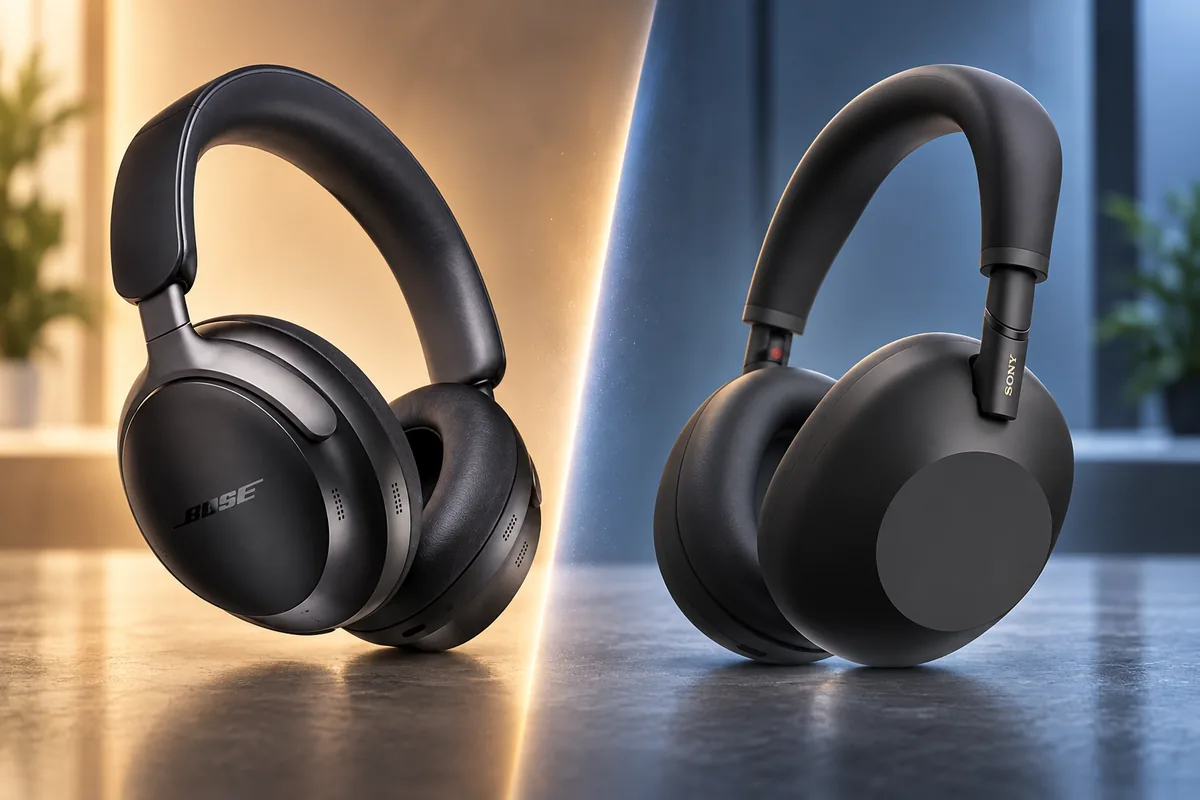
Bose QuietComfort Ultra 2 vs Sony WH-1000XM6: Which Is Better?
The Bose QuietComfort Ultra 2 vs Sony WH-1000XM6 comparison is one of the closest battles in premium wireless headphones. Both are flagship over-ear models built around excellent active noise cancellation, comfortable travel-friendly designs, multipoint Bluetooth, strong call performance, and premium pricing. But they are designed for slightly different buyers.
The Sony WH-1000XM6 is the stronger all-round choice for most people. It offers excellent sound, deeper EQ customization, LDAC support, strong call performance, fast charging, and a highly flexible feature set. The Bose QuietComfort Ultra Headphones (2nd Gen), meanwhile, makes its strongest case with outstanding long-session comfort, extremely effective noise blocking, straightforward controls, CustomTune personalization, and something Sony does not offer: digital audio directly over USB-C.
Neither headphone wins every category. If you fly frequently or wear headphones for hours at a time, Bose may be the smarter purchase. If you want one pair for music, calls, commuting, Android devices, and everyday use, Sony has the broader appeal.
This guide compares sound quality, ANC, comfort, battery life, calls, connectivity, apps, travel performance, device compatibility, and value to help you decide which flagship deserves your money.
Quick Verdict: Sony WH-1000XM6 vs Bose QC Ultra 2
Best Overall: Sony WH-1000XM6 — the more versatile flagship for most buyers thanks to excellent sound, deeper customization, strong calls, LDAC support, capable ANC, and fast charging.
Best for Comfort & Long Flights: Bose QuietComfort Ultra Headphones (2nd Gen) — particularly strong for extended wear, maximum noise blocking, and travelers who value the QuietComfort fit.
Best for Sound & Customization: Sony WH-1000XM6 — the better music-focused all-rounder with substantially deeper EQ flexibility.
Best for USB-C Audio: Bose QuietComfort Ultra 2 — supports digital audio over USB-C, giving it a meaningful advantage for compatible laptops, phones, and wired digital listening.
Best Value: Check today’s price. When they cost roughly the same, Sony is our overall recommendation. A meaningful Bose discount can change the value equation.
Sony WH-1000XM6 vs Bose QC Ultra 2: Compare the Two Headphones
Before getting into specifications and detailed performance differences, compare the two flagship headphones side by side and check their current pricing.


Sony WH-1000XM6 vs Bose QC Ultra 2: Specs at a Glance
| Feature | Sony WH-1000XM6 | Bose QC Ultra 2 |
|---|---|---|
| Bluetooth | Bluetooth 5.3 | Bluetooth 5.4 |
| Multipoint | Yes | Yes |
| Key Bluetooth Codecs | SBC, AAC, LDAC, LC3 | SBC, AAC, aptX Adaptive* |
| Rated Battery With ANC | Up to 30 hours | Up to 30 hours |
| Rated Battery Without ANC | Up to 40 hours | Up to 45 hours |
| Analog Wired Audio | ✅ Yes | ✅ Yes |
| USB-C Digital Audio | ❌ No | ✅ Yes |
| Our Overall Positioning | Best for most people | Best for comfort, travel & USB-C |
*aptX Adaptive and Snapdragon Sound functionality depends on compatible hardware.
Price & Value: Which Headphones Are Worth More?
Price can change the winner more than a small difference in ANC or sound quality.
Both products occupy essentially the same premium segment, and retailer discounts are frequent enough that comparing launch prices alone is not particularly useful. When they are available for roughly the same amount, Sony offers the stronger overall value because its broader feature set suits more buyers.
If they cost roughly the same, we would buy the Sony WH-1000XM6 unless Bose’s specific strengths—comfort, USB-C audio, or maximum noise blocking—matter more to you.
If Bose receives a substantial retailer discount while Sony stays significantly more expensive, the recommendation becomes much closer. This is why price comparison matters with premium headphones: the technically stronger all-round product is not always the better purchase on the day you shop.
Sony WH-1000XM6 Current Prices

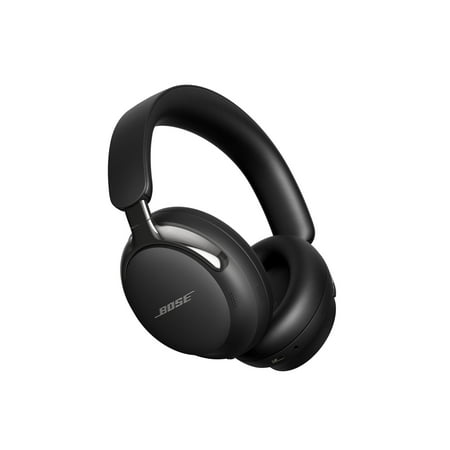
Bose QuietComfort Ultra Headphones (2nd Gen) Current Prices
If neither flagship looks like good value at today’s price, compare more price levels in our Best Wireless Headphones 2026 for Every Budget guide.
Design & Build Quality
Sony returned to a foldable design with the WH-1000XM6, making the latest flagship easier to pack than the WH-1000XM5. Its design is clean, understated, and focused primarily on portability and everyday usability rather than luxury materials.
The Bose QuietComfort Ultra 2 also folds inward for travel and combines lightweight construction with aluminum details and heavily padded earcups. Bose feels slightly more premium visually while still prioritizing portability rather than the heavier construction found on luxury audiophile headphones.
Neither headphone has a meaningful build-quality advantage that should decide the purchase on its own. Both are designed primarily for commuting, travel, work, and everyday listening rather than exercise or wet environments.
Winner: Draw. Sony feels modern and practical; Bose feels slightly more premium. Both are foldable and travel-friendly.
Comfort: Bose Lives Up to the QuietComfort Name
Comfort is one of the clearest reasons to choose Bose.
Both headphones are comfortable enough for long listening sessions, but the Ultra 2 has a more relaxed fit, generous cushioning, and relatively light clamping pressure. That can make a noticeable difference if you regularly wear headphones for several hours at a time.
The Sony WH-1000XM6 is still very comfortable. Sony improved its headband design and provides substantial padding, but the fit feels somewhat more secure than Bose’s. That can be beneficial while walking or commuting, but Bose has the advantage for stationary long-session listening.
The difference can become even more relevant for glasses wearers because earcup pressure and seal consistency may change when glasses arms pass underneath the cushions.
Best for long sessions: Bose QuietComfort Ultra 2
Best for glasses wearers: Bose QuietComfort Ultra 2
More secure fit: Sony WH-1000XM6
Winner: Bose QuietComfort Ultra 2.
Sound Quality: Sony WH-1000XM6 Wins
If sound is the main reason you are buying expensive wireless headphones, we prefer the Sony WH-1000XM6.
Sony delivers a detailed, dynamic, and relatively balanced presentation while still providing plenty of low-frequency impact for mainstream listening. The WH-1000XM6 is particularly strong because users can make extensive adjustments through Sony’s companion software.
Bose has a fuller, more immediately energetic presentation with a strong low end. CustomTune automatically adapts the listening experience to the wearer, which is useful for people who want good results without manually adjusting several settings.
The difference becomes larger for users who enjoy tuning their headphones. Sony offers much deeper EQ control, while Bose deliberately keeps its equalizer simpler.
That combination of a strong default tuning and greater customization makes Sony the more flexible choice for music.
Winner: Sony WH-1000XM6.
Noise Cancellation: A Draw With Different Strengths
This is where declaring one universal winner would be misleading.
Both products are among the strongest noise cancelling headphones available. Sony provides exceptional isolation while maintaining an ANC experience that can feel relatively natural. Bose, meanwhile, can be particularly aggressive when the goal is simply to reduce as much external noise as possible.
Choose Bose for: maximum raw noise blocking, long flights, trains, and environments where reducing outside noise is the top priority.
Choose Sony for: exceptional ANC with a more natural-feeling all-round experience.
Real-world performance is close enough that fit, comfort, and personal sensitivity to ANC pressure can influence which system you prefer.
Winner: Draw.
Transparency Mode & Environmental Awareness
Both headphones can let outside sound back in when you need to hear announcements, traffic, or conversations.
Sony provides extensive Ambient Sound controls and adaptive behavior through its companion software. Users can adjust how much environmental sound reaches them and create a more personalized balance between isolation and awareness.
Bose uses Aware Mode and ActiveSense to provide a simpler approach. The system is designed to reduce the impact of sudden loud sounds while still allowing environmental audio through.
Sony provides more control. Bose is easier to understand and requires less configuration.
Winner: Draw — Sony for customization, Bose for simplicity.
Battery Life & Fast Charging: Sony Has the Edge
On the official specification sheets, both headphones are rated for up to 30 hours of playback with active noise cancellation enabled.
Independent battery testing has shown that the Sony can exceed its official figure under some controlled conditions and last noticeably longer than Bose. Actual results vary with volume, codec, ANC behavior, calls, and other features, but Sony has the stronger practical battery story overall.
Sony’s fast charging is also particularly useful. A short charging session can provide several hours of playback, which is valuable when you discover a nearly empty battery just before commuting or boarding a flight.
Bose still offers enough battery life for several days of normal use, but battery-focused buyers should lean Sony.
Winner: Sony WH-1000XM6.
Calls & Microphone Quality
This category is closer than marketing claims suggest.
Sony places significant emphasis on microphone processing and voice isolation, and the WH-1000XM6 performs particularly well for work calls, outdoor conversations, and users who regularly switch between listening and meetings.
Bose is also capable of clear calls and can perform very well depending on the speaker’s voice and surrounding noise. Microphone performance can change significantly depending on wind, traffic, room acoustics, and connection quality.
If calls are one of your main uses, Sony gets our preference by a small margin. If you only make occasional calls, this category should not determine which headphone you buy.
Winner: Sony WH-1000XM6 — slight advantage.
Bluetooth, Codecs & Multipoint
Both headphones support multipoint Bluetooth, making them useful for people who move between a laptop and smartphone throughout the day.
Sony supports SBC, AAC, LDAC, and LC3. LDAC is particularly relevant to compatible Android users because support is available across a wide range of devices and provides a higher-bitrate Bluetooth option.
Bose supports the standard Bluetooth formats and can provide aptX Adaptive and Snapdragon Sound functionality with compatible devices. The important word is compatible: not every Android phone receives the same benefit.
For most Android users, Sony offers the simpler route to advanced Bluetooth audio.
Wireless codec winner: Sony WH-1000XM6.
USB-C & Wired Listening: Bose Wins Easily
This is one of the most meaningful differences between the two headphones.
Both products provide an analog wired option, so either can connect to traditional audio sources with a cable.
The difference is USB-C.
The Bose QuietComfort Ultra Headphones (2nd Gen) can receive digital audio directly over USB-C from compatible devices. That makes the connection useful for laptops, USB-C phones, lossless files, and situations where you prefer a wired digital signal rather than Bluetooth.
The Sony WH-1000XM6 does not offer equivalent USB-C audio playback. Its USB-C connection is used primarily for charging, while analog wired listening uses the headphone’s traditional audio input.
For users who spend significant time listening directly from a laptop or USB-C device, Bose has a genuine advantage.
Winner: Bose QuietComfort Ultra 2.
Apps, EQ & Controls
Sony’s software philosophy is feature-rich. Its companion ecosystem exposes considerably more sound and behavior customization, making the WH-1000XM6 a better fit for power users.
The ability to make deeper EQ adjustments is particularly valuable if you listen to several genres or prefer a specific sound signature.
Bose takes a simpler approach. The app still provides EQ, listening modes, shortcuts, and ANC controls, but it feels more focused and requires less configuration.
Best for customization: Sony WH-1000XM6
Best for simplicity: Bose QuietComfort Ultra 2
Overall winner: Sony WH-1000XM6.
Which Is Better for Travel?
The Sony WH-1000XM6 is an excellent travel headphone. It folds, has excellent ANC, strong battery performance, fast charging, good microphones, multipoint connectivity, and a compact travel-oriented design.
But the Bose QuietComfort Ultra 2 brings together two characteristics that become disproportionately important on a long flight: comfort and maximum noise blocking.
Add USB-C and analog wired options, and Bose becomes particularly flexible for travelers moving between phones, laptops, and in-flight entertainment systems.
If your typical use is a short commute, Sony’s broader feature set may matter more. If you regularly spend six or more hours wearing headphones on a flight, we would choose Bose.
Travel winner: Bose QuietComfort Ultra 2.
Which Is Better for Work?
For a normal office or remote-work environment, Sony gets the advantage.
The WH-1000XM6 combines strong call quality, multipoint Bluetooth, ANC, transparency features, extensive customization, and good battery endurance. That makes it easy to switch between meetings, music, and commuting without changing headphones.
Bose has one important work-specific advantage: USB-C audio. If you spend much of your day connected directly to a laptop and prefer a wired digital connection, the Ultra 2 can actually be the more useful desk headphone.
General work winner: Sony WH-1000XM6.
USB-C desk setup winner: Bose QuietComfort Ultra 2.
Bose vs Sony for iPhone
The comparison becomes more even on an iPhone because Apple devices do not make normal Bluetooth use of Sony’s LDAC or Bose’s Snapdragon Sound advantages.
Both work well through AAC, so the decision shifts toward their broader feature differences.
Choose Sony: for deeper customization, excellent sound, strong calls, and battery performance.
Choose Bose: for comfort, aggressive noise blocking, and USB-C digital listening from compatible devices.
Winner: Sony WH-1000XM6 — slight advantage.
Bose vs Sony for Android
For most Android users, Sony makes the stronger case.
LDAC support is available across many compatible Android devices and gives the WH-1000XM6 a straightforward higher-bitrate Bluetooth option. Sony’s deeper EQ and software customization also fit well with users who enjoy tuning their audio setup.
Bose becomes more competitive if your phone supports the Snapdragon Sound features available with the Ultra 2. Compatible users may benefit from aptX Adaptive functionality and additional wireless capabilities, but this is more device-dependent.
Winner for most Android users: Sony WH-1000XM6.
Which Is Better With Glasses?
Glasses arms can create a small gap in over-ear cushions, affecting comfort, bass consistency, and noise isolation. Bose’s relaxed clamp and padded QuietComfort design make it particularly suitable for people who regularly struggle with this issue.
Sony remains comfortable, but Bose is our safer recommendation when glasses fit is an important concern.
Winner: Bose QuietComfort Ultra 2.
Sony WH-1000XM6 Pros & Cons
Pros
✅ Stronger all-round recommendation
✅ Excellent sound quality
✅ Very strong ANC
✅ LDAC and LC3 support
✅ Deep EQ and app customization
✅ Strong call performance
✅ Excellent battery and fast charging
Cons
❌ No USB-C audio playback
❌ Bose can be more comfortable for very long sessions
❌ Premium price
❌ Touch controls will not suit everyone
Bose QuietComfort Ultra 2 Pros & Cons
Pros
✅ Exceptional noise cancellation
✅ Outstanding long-session comfort
✅ USB-C digital audio
✅ Excellent travel headphone
✅ Strong fit for glasses wearers
✅ Straightforward controls and app experience
Cons
❌ Sony offers deeper EQ customization
❌ Sony has the stronger overall sound in our comparison
❌ Bluetooth codec advantages are more device-dependent
❌ Premium price
Winner Scorecard
| Category | Winner |
|---|---|
| Overall | Sony WH-1000XM6 |
| Sound Quality | Sony |
| Noise Cancellation | Draw |
| Comfort | Bose |
| Battery | Sony |
| Fast Charging | Sony |
| Calls | Sony, slight |
| EQ & Customization | Sony |
| App Simplicity | Bose |
| Bluetooth Codec Flexibility | Sony |
| USB-C Audio | Bose |
| Travel | Bose |
| Work & Everyday Use | Sony |
| Glasses Wearers | Bose |
| Most Android Phones | Sony |
| iPhone | Sony, slight |
| Value at Similar Price | Sony |
What About Sony WH-1000XM5 and the Original Bose QC Ultra?
Previous-generation models can still make sense when retailer discounts are large.
The Sony WH-1000XM5 remains a capable premium ANC headphone, and the original Bose QuietComfort Ultra retains many of the characteristics that made the line popular. Neither suddenly became a poor product when its replacement arrived.
But their role has changed. Instead of default recommendations, they are now price-driven alternatives. A heavily discounted previous-generation flagship can deliver better value than a newer midrange headphone, while a small discount is usually not enough to justify giving up newer features.
If you are specifically comparing older Sony and Bose models, see our Sony WH-1000XM5 vs Bose QC45: Headphone Showdown.
Which One Should You Buy?
BEST ALL-ROUNDER
Buy the Sony WH-1000XM6 if…
✅ You care about sound quality and deeper EQ customization.
✅ You use an Android phone with LDAC support.
✅ Calls are an important part of your day.
✅ You want strong battery performance and fast charging.
✅ You move between commuting, work, travel, and music.
✅ You want one premium headphone that does almost everything well.
BEST SPECIALIST
Buy the Bose QC Ultra 2 if…
✅ You wear headphones for hours at a time.
✅ You fly frequently.
✅ Maximum external-noise reduction matters most.
✅ You wear glasses and struggle with over-ear comfort.
✅ You want digital audio directly over USB-C.
✅ You prefer a simpler app and control experience.
Sony wins more individual categories in this comparison, but that does not automatically make it better for every buyer. Bose’s advantages are concentrated in areas—comfort, travel, strong noise blocking, and USB-C connectivity—that can outweigh several smaller Sony wins if they match your priorities.
Related Headphone Guides
Still considering other brands? Our Best Wireless Headphones 2026 for Every Budget compares premium flagships with significantly less expensive alternatives.
If you already prefer the Bose approach but are unsure which QuietComfort model to buy, see our Best Bose Headphones 2026: Noise Cancelling Guide.
If you have not decided whether a wireless ANC flagship is the right headphone category at all, our Best Headphones 2026: Top Picks & Buying Guide also covers wired, open-back, audiophile, and value alternatives.
Bose QC Ultra 2 vs Sony WH-1000XM6 FAQ
Is the Sony WH-1000XM6 better than the Bose QuietComfort Ultra 2?
For most buyers, yes. We prefer the Sony WH-1000XM6 overall because of its sound quality, deeper customization, call performance, LDAC support, battery performance, and all-round versatility. Bose remains better for some users, especially those prioritizing long-session comfort, maximum noise blocking, or USB-C digital audio.
Which has better noise cancellation, Bose or Sony?
Both are among the strongest ANC headphones available. Bose can be particularly aggressive at blocking external noise, while Sony combines excellent isolation with a more natural-feeling ANC experience. The difference is close enough that we consider this category a draw overall.
Which sounds better, Sony WH-1000XM6 or Bose QC Ultra 2?
We give Sony the advantage. The WH-1000XM6 offers a detailed and dynamic presentation plus much deeper EQ customization. Bose delivers a fuller, energetic sound and simpler automatic personalization through CustomTune.
Which is more comfortable?
The Bose QuietComfort Ultra 2 is our comfort winner. Its generously padded design and relatively light clamping pressure make it particularly suitable for long flights, extended work sessions, and many glasses wearers.
Which is better for flying?
We prefer Bose for long flights because of its combination of comfort, strong noise blocking, foldable design, USB-C audio, and analog wired flexibility. Sony is also excellent for travel and has particularly strong battery and quick-charging performance.
Can the Sony WH-1000XM6 play audio over USB-C?
No. Sony supports analog wired listening but does not provide the same USB-C digital audio functionality as the Bose QuietComfort Ultra 2. Bose can receive digital audio directly from compatible USB-C sources.
Which is better for Android?
Sony is the easier recommendation for most Android users because the WH-1000XM6 supports LDAC, which is widely available on compatible Android phones. Bose can provide Snapdragon Sound and aptX Adaptive functionality, but those benefits depend more heavily on compatible hardware.
Should I buy whichever one is cheaper?
Price should influence the decision, but not completely determine it. At similar prices we prefer Sony overall. If Bose receives a meaningful discount and you value comfort, ANC, travel performance, or USB-C listening, it can become the smarter purchase. Check current retailer prices before buying.
Final Verdict: Sony Wins Overall, but Bose Is Better for Some Buyers
The Sony WH-1000XM6 wins this comparison for most people. It delivers the stronger overall combination of sound quality, EQ flexibility, battery performance, calls, wireless codec support, and everyday versatility. If both headphones cost roughly the same and you do not have a specific preference, Sony is the model we would buy.
But this is not a one-sided noise cancelling headphones battle. The Bose QuietComfort Ultra Headphones (2nd Gen) has several important advantages that a simple score cannot capture. It is exceptionally comfortable over long periods, provides extremely effective noise blocking, works particularly well for frequent travelers and many glasses wearers, and offers USB-C digital audio that Sony does not match.
Buy the Sony WH-1000XM6 if you want the best all-round premium wireless headphone.
Buy the Bose QuietComfort Ultra 2 if comfort, travel, maximum noise blocking, or USB-C audio matter more than Sony’s broader feature advantage.
Before choosing either, check current prices. With two headphones this close in performance, a meaningful retailer discount can be enough to change which one offers the better value.
Sources
- Sony — WH-1000XM6 official specifications and product information.
- Bose — QuietComfort Ultra Headphones (2nd Gen) official specifications and USB-C audio information.
- RTINGS — Sony WH-1000XM6 vs Bose QuietComfort Ultra Headphones (2nd Gen) direct comparison.
- SoundGuys — Bose QuietComfort Ultra 2 vs Sony WH-1000XM6 comparative testing.
- What Hi-Fi? — Sony WH-1000XM6 vs Bose QuietComfort Ultra 2 direct comparison.
Product Groups: Sony WH-1000XM6, Bose QuietComfort Ultra Headphones 2nd Gen