The best garden tools for early spring help you prepare your outdoor space without damaging emerging plants or purchasing equipment you do not need. A dependable pair of pruning shears, a planting tool, a leaf rake, and a suitable watering can cover many essential tasks. Larger garden beds may also benefit from a cultivator or garden fork, while a multipurpose Hori Hori can simplify more specialized jobs.
Early spring is an important time to inspect your garden, assess winter damage, prepare planting areas, and maintain existing equipment. However, the right starting date depends on your local climate, soil moisture, and the plants you grow. A gardener in Minnesota may still be dealing with frozen ground when someone in a warmer region is already preparing vegetable beds.
For this guide, we selected seven garden tools with different roles, from the FELCO 2 pruning shears to the Dramm 5 Liter Watering Can. Each selection is supported by manufacturer specifications and considered for practical gardening tasks rather than appearance alone.
Below, you will find a comparison of all seven tools, their advantages and limitations, advice for beginners and raised-bed gardeners, and an early spring garden preparation checklist. The goal is to help you identify which tools will make your seasonal work easier and which purchases can wait.
Quick Answer: Essential Spring Garden Tools
Best for Pruning: FELCO 2 — a repairable bypass pruner for suitable live branches, with a manufacturer-listed cutting capacity of 0.98 inches.
Best for Planting: Fiskars Ergo Transplanter — a compact tool with depth markings for transplanting flowers and small plants.
Best for Spring Cleanup: Fiskars Pro Leaf Rake — a long-handled rake with steel tines for collecting leaves and loose yard debris.
Best for Soil Preparation: Fiskars Ergo Cultivator for small beds, or the Ergo D-handle Garden Fork for larger areas and heavier soil-moving tasks.
Best for Gentle Watering: Dramm 5 Liter Watering Can — a long-spout watering can with a detachable brass rose for controlled watering.
Before You Start: Early Spring Garden Preparation
Preparing a garden is not simply a matter of waiting for the calendar to say March. Check the weather, inspect your plants, and assess the soil before deciding which jobs to tackle.
University extension guidance emphasizes several practical precautions: avoid working saturated soil, consider insects that overwinter in plant debris, and time pruning according to the plant species. These decisions can matter more than purchasing another tool.
Check Whether Your Soil Is Ready
Soil that is too wet can become compacted when you walk on it or work it with a fork, cultivator, or tiller. Compaction reduces the soil’s pore space and can make root growth more difficult.
A useful initial check is to squeeze a small handful of soil. If it forms a sticky ball that maintains its shape instead of crumbling when pressed, wait for conditions to improve. Soil texture affects this test, so treat it as a practical indicator rather than an exact measurement.
You can still inspect equipment, organize supplies, and plan planting locations while waiting for the ground to become workable.
Do Not Remove Every Leaf Immediately
Leaves and standing plant stems can provide overwintering habitat for beneficial insects. Iowa State University Extension recommends allowing temperatures to reach a consistently warmer range, around 50°F, before major perennial-bed cleanup when practical.
This is a useful regional guideline, not a universal date or a guarantee that every insect has emerged. Remove debris that is creating an immediate problem, but consider leaving suitable material in less frequently used parts of the garden.
Inspect Plants Before Pruning
Late winter and early spring are suitable pruning periods for many trees and shrubs, but not all of them.
Spring-flowering shrubs such as lilacs and forsythia often produce flower buds on the previous year’s growth. Pruning them before flowering can remove the buds you were hoping to enjoy. These plants are generally pruned after they finish blooming.
Check species-specific recommendations before cutting, particularly for trees susceptible to regional diseases. If a branch is too large for your hand pruner, use an appropriately sized tool or seek professional assistance.
Important: Do not force gardening work when the ground is frozen or saturated. Avoid pruning unfamiliar trees without checking their requirements, and use suitable protective equipment when handling sharp tools. If you are uncertain about large branches, nearby utilities, or tree stability, consult a qualified professional.
How We Selected These Garden Tools
We selected seven tools around the actual jobs involved in preparing a home garden for spring: pruning, planting, clearing debris, loosening soil, moving larger amounts of material, completing detailed tasks, and watering new plants.
Our research considered official manufacturer specifications, tool dimensions, materials, grip design, maintenance requirements, available replacement parts, and whether the tool is appropriate for small or larger gardens.
We also considered independent gardening recommendations and university extension guidance on when particular tasks should be performed.
These are evidence-based product selections, not the results of original hands-on testing by Discompare. A tool’s suitability depends on the user’s hand size, gardening space, existing equipment, and intended tasks.
For shoppers comparing additional options, Discompare’s Garden Tools category provides a broader selection of products and available retailer offers.
Best Garden Tools for Early Spring Compared
| Tool | Best For | Key Feature | Garden Size | Main Limitation |
|---|---|---|---|---|
| FELCO 2 | Pruning | Replaceable parts; 0.98-inch cutting capacity | Small to large | Right-handed, large-hand design |
| Fiskars Ergo Transplanter | Planting | Depth-marked aluminum head | Pots and small beds | Not designed for large holes |
| Fiskars Pro Leaf Rake | Yard cleanup | Long aluminum handle and steel tines | Medium to large | Wide head limits precision |
| Fiskars Ergo Cultivator | Surface cultivation | Three-tine cast-aluminum head | Small beds | Limited reach and coverage |
| Fiskars Ergo Garden Fork | Turning soil and compost | 47-inch steel construction | Medium to large | Unnecessary for many container gardens |
| Fiskars Hori Hori | Multipurpose tasks | 7-inch stainless-steel blade | Small to medium | Sharp blade requires careful handling |
| Dramm 5 Liter Watering Can | Gentle watering | Long spout and detachable brass rose | Pots and small beds | Refilling is inconvenient for larger areas |
Price comparison: Retailer prices and availability change. Review the individual product cards below for current offers when available, and confirm that a retailer’s listing matches the exact tool model.
Our 7 Best Garden Tool Picks for Early Spring
1. FELCO 2 Pruning Shears — Best for Spring Pruning
Best For: Gardeners who regularly prune appropriate live branches and want a repairable hand tool.
The FELCO 2 is a traditional bypass pruner with forged aluminum handles and a hardened steel blade. Its design has remained recognizable for decades, and FELCO supplies replacement parts to support continued maintenance.
The manufacturer lists a cutting capacity of 0.98 inches, an overall length of 8.46 inches, and a weight of 0.55 lb. The standard FELCO 2 is intended for right-handed users with large hands.
Bypass blades work by passing one cutting edge alongside another, making them suitable for controlled cuts on appropriate live stems. A sharp, properly adjusted pruner can also make routine maintenance easier.
However, a maximum cutting diameter is not a recommendation to cut every branch of that size. Branch hardness, tool condition, cutting position, and user strength all affect the task. Do not force the tool through material that requires a lopper or pruning saw.
The FELCO 2 is particularly relevant when inspecting shrubs and removing appropriate dead, damaged, or crossing growth. For flowering plants, check the correct pruning period before making cuts.
Pros
✅ Replaceable parts support maintenance and repair.
✅ Forged aluminum handles and hardened steel blade.
✅ Bypass design for controlled pruning of suitable live branches.
✅ Published cutting capacity and dimensions make selection easier.
Cons
❌ Higher reference price than many basic pruners.
❌ Standard version is designed for right-handed users with large hands.
❌ Not intended for branches beyond its rated capacity.
Who Should Skip It: Gardeners who need a left-handed model, have smaller hands, or only occasionally trim very thin stems should consider a more appropriately sized pruner.
Alternative: FELCO 8 offers a different handle and cutting-head geometry, although it is also intended for larger hands. Explore smaller or left-handed models if fit is the main concern.

Felco F2 Classic Pruning Shears — the original, high-performance pruner with lightweight forged aluminum handles, non-slip coating, hardened steel blade, riveted anvil blade and a lifetime guarantee. Tackle every cut with precision and comfort — order your Felco F2 today and see the difference in your pruning. Buy now and enjoy reliable performance season after season.
2. Fiskars Ergo Transplanter 300S — Best for Planting
Best For: Transplanting small plants, flowers, and seedlings into containers or prepared garden beds.
The Fiskars Ergo Transplanter 300S is a compact hand tool designed for controlled planting. Its narrow, depth-marked blade is useful when creating appropriately sized holes for small transplants.
Fiskars lists model 384230-1001 at 12 inches long, 2 inches wide, and 0.43 lb. The cast-aluminum head resists rust, while the handle includes a hanging hole for storage.
The depth markings can help gardeners follow planting guidance for particular bulbs and transplants. However, always follow the plant’s instructions rather than assuming every seedling requires the same depth.
This tool is particularly practical for raised beds, flower borders, and containers. Its compact size makes it easier to work around existing plants than with a full-size shovel.
Its narrow blade is less efficient when moving large amounts of compost or digging substantial planting holes. For that work, a wider garden trowel or spade may be more appropriate.
Pros
✅ Depth markings assist with consistent planting.
✅ Compact size works in containers and raised beds.
✅ Rust-resistant cast-aluminum head.
✅ Handle designed for comfortable hand placement.
Cons
❌ Narrow blade moves relatively little soil.
❌ Short reach requires bending or kneeling for ground-level beds.
❌ Not suitable for extensive digging.
Who Should Skip It: Gardeners primarily digging large holes or preparing extensive beds may benefit more from a full-size shovel.
Alternative: Fiskars Ergo Trowel provides a wider scoop for general soil movement.
Before selecting additional containers, soil accessories, or planting equipment, explore the Planters & Gardening Supplies category.
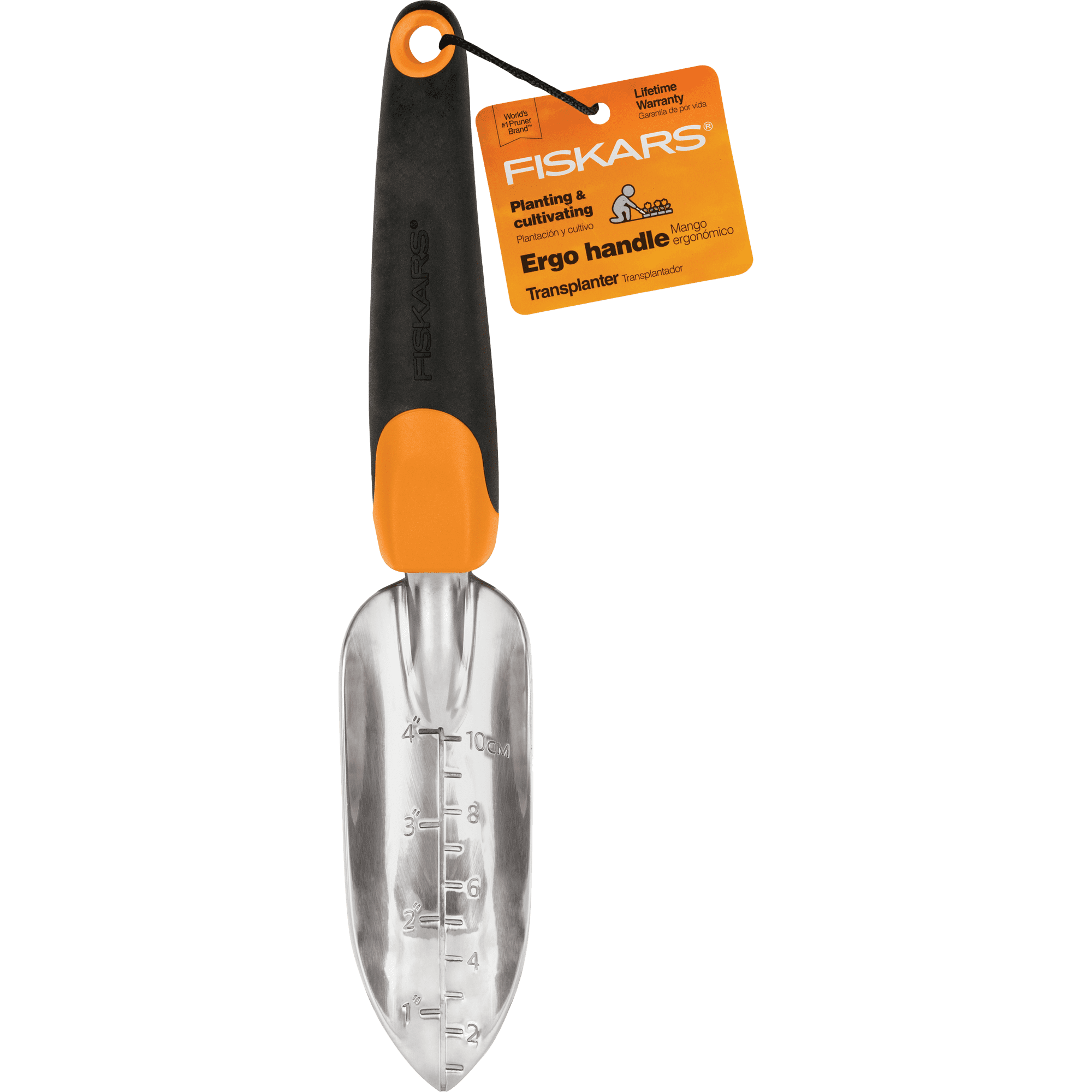
The Fiskars Ergonomic Hand Transplanter Tool reduces hand and wrist fatigue with a natural-fit handle and Softgrip surface, giving you better comfort and control for precise transplanting of small plants and flowers. Spend less time struggling and more time enjoying your garden.
Shop now — add the Fiskars Ergo Transplanter to your cart and feel the difference in your next gardening session!
3. Fiskars Pro Leaf Rake — Best for Spring Cleanup
Best For: Collecting loose leaves and yard debris across paths, lawns, and larger open areas when cleanup is appropriate.
The Fiskars Pro Leaf Rake is designed for substantial yard-maintenance tasks. It uses an extruded aluminum handle, double-bolted connections, and steel tines secured by metal tabs.
Fiskars lists the tool at 66.25 inches long with a 23.75-inch-wide head. Its extended handle and teardrop-shaped shaft are intended to support grip and control.
The wide head helps cover larger areas more efficiently than a small hand rake. It is useful when clearing walkways, collecting loose material, or preparing access to planting areas.
However, early spring cleanup should be selective. Removing all plant debris immediately may disturb beneficial insects that overwinter in leaves and hollow stems.
Where possible, leave suitable debris in less-used garden areas until local conditions support cleanup. Work carefully around emerging bulbs and perennial shoots to avoid damaging new growth.
The Pro Leaf Rake is less suitable for detailed work between closely spaced plants. A small hand rake may be easier to control in those areas.
Pros
✅ Wide head covers larger cleanup areas.
✅ Aluminum handle and steel-tine construction.
✅ Double-bolted connections improve structural security.
✅ Extended handle reduces the need to reach forward repeatedly.
Cons
❌ Wide head is difficult to maneuver around closely spaced plants.
❌ Requires more storage space than a compact rake.
❌ Not designed for moving heavy soil or gravel.
Who Should Skip It: Gardeners with only a few containers or a small balcony probably do not need a full-size leaf rake.
Alternative: Choose a compact hand rake for small flower beds or restricted spaces.
Tackle leaves and debris with the Fiskars Pro 25-Tine Steel Leaf Rake — rugged steel tines, an extruded aluminum handle, and a Softgrip, ergonomically shaped shaft for all-day comfort and control. Built to last with double-bolted connections and secure tine tabs, it reduces back fatigue while delivering reliable, heavy-duty performance. Order yours today and see how effortless yard work can be!
4. Fiskars Ergo Cultivator 300S — Best for Small Garden Beds
Best For: Loosening the surface of workable soil, removing small weeds, and preparing compact planting areas.
The Fiskars Ergo Cultivator 300S is a three-tine hand tool intended for controlled work in garden beds and containers.
Its cast-aluminum head is designed to resist rust, while the ergonomic handle supports a secure grip. The pointed tines can help loosen surface material around planting areas.
This tool is useful when preparing a small bed for new plants or dealing with emerging weeds before their roots become established.
However, the cultivator should not be used to work saturated soil. If soil is sticky or easily compacted, wait until it becomes workable.
When working near established plants, cultivate shallowly to reduce the risk of damaging roots. There is also no need to disturb an entire bed if the existing soil structure is suitable and the area only requires surface preparation.
The short handle and limited working width make the Ergo Cultivator more practical for smaller spaces than large vegetable plots.
Pros
✅ Three tines support controlled surface cultivation.
✅ Compact design suits raised beds and containers.
✅ Rust-resistant cast-aluminum head.
✅ Useful for removing small weeds from workable soil.
Cons
❌ Limited working width for larger plots.
❌ Requires bending or kneeling for ground-level use.
❌ Cannot replace a full-size fork for substantial soil movement.
Who Should Skip It: Gardeners who regularly work extensive beds may prefer a long-handled tool.
Alternative: Fiskars Ergo D-handle Steel Garden Fork offers additional reach and capacity for larger soil-preparation jobs.

Take the strain out of soil prep with the Fiskars Ergo Cultivator SoftGrip Handle. Its sculpted SoftGrip handle, cast‑aluminum rust‑resistant head, and large angled tines give you superior comfort, control, and fast soil‑loosening power. Order yours today and make every gardening task easier — shop now!
5. Fiskars Ergo D-handle Steel Garden Fork — Best for Larger Beds
Best For: Turning suitable garden soil, lifting loose material, and moving compost or mulch.
The Fiskars Ergo D-handle Steel Garden Fork is a 47-inch long-handled tool intended for more substantial soil and material-handling tasks.
It features pointed boron-steel tines, a welded steel head, a steel shaft, and an angled D-handle. The manufacturer also specifies a mid-grip area for additional control.
Compared with a small hand cultivator, this fork provides greater reach and is more suitable for working a larger bed without remaining in a kneeling position throughout the task.
Its tines can help lift and loosen appropriate soil and move loose compost or mulch. However, a garden fork is not a universal replacement for a shovel, particularly when you need a clean-edged planting hole or precise excavation.
University extension guidance notes that many home gardens need only limited soil disturbance in spring. If a bed is already in suitable condition, there may be little reason to turn it extensively.
Use the fork only when soil moisture permits. Working saturated ground can damage soil structure regardless of how durable the tool is.
Pros
✅ Long handle provides additional reach.
✅ Welded steel construction and pointed boron-steel tines.
✅ Angled D-handle supports controlled gripping.
✅ Useful for moving soil, compost, and loose garden materials.
Cons
❌ Requires more storage space than hand tools.
❌ Not necessary for most container gardens.
❌ Less suitable than a spade for creating clean-edged holes.
Who Should Skip It: Gardeners with only a few pots or a small raised bed may find a hand cultivator and trowel sufficient.
Alternative: A garden spade is more appropriate for certain digging and edging tasks, while a compact hand cultivator works better in limited spaces.
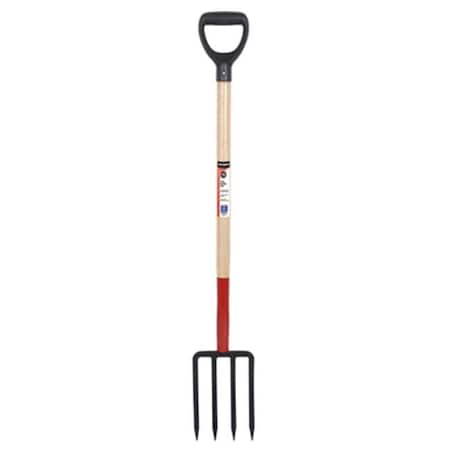
Tackle tough garden and landscaping jobs with the sturdy 45 in D-handle digging fork — a durable steel head combined with a comfortable wood handle for long-lasting performance. At just 3.92 lbs and measuring 45 in in length (2.5 x 6.63 x 45.5 in), it offers strength and control without being cumbersome. Order yours today and upgrade your toolkit — add the 45 in D-Handle Steel and Wood Fork to your cart now!
6. Fiskars Hori Hori Planting Tool — Best Multipurpose Tool
Best For: Gardeners who want one hand tool for several detailed planting, weeding, and cutting tasks.
The Fiskars Hori Hori Planting Tool combines a pointed, concave blade with a straight cutting edge and a serrated edge.
Its 7-inch stainless-steel blade includes depth markings. Fiskars also specifies full-tang construction, a wooden handle, and a protective sheath with a belt loop.
This combination makes the tool useful for digging smaller planting holes, dividing suitable plants, opening soil bags, and cutting some stubborn roots.
It can reduce the number of separate hand tools needed for certain jobs. However, it should not be treated as a complete replacement for pruning shears, a long-handled fork, or a conventional shovel.
The Hori Hori is especially relevant for gardeners who work in mixed planting beds and frequently move between different small tasks.
Because both blade edges can be sharp, handle it with care, keep fingers away from the cutting surfaces, and use the supplied sheath when storing or carrying it. It is not an appropriate tool for unsupervised use by children.
Pros
✅ Multipurpose blade for several detailed gardening tasks.
✅ Depth markings support planting work.
✅ Full-tang stainless-steel construction.
✅ Includes a storage sheath.
Cons
❌ Sharp edges require careful handling and storage.
❌ More tool than many beginners need for simple planting.
❌ Not intended for heavy digging or large-branch pruning.
Who Should Skip It: Beginners who only need to transplant flowers may be better served by a conventional trowel or transplanter.
Alternative: Fiskars Ergo Transplanter provides a simpler option for creating small planting holes and moving seedlings.

Ready to make gardening easier? Grab the Fiskars Hori Hori Garden Knife with Sheath — a durable, corrosion‑resistant, dual‑edged stainless steel tool designed to weed, plant, split, and transplant with precision. Order yours today and add this versatile, all‑in‑one knife to your garden toolkit.
7. Dramm 5 Liter Watering Can — Best for Gentle Watering
Best For: Watering containers, newly planted seedlings, and small garden beds with greater control over water placement.
The Dramm 5 Liter Watering Can features an extra-long spout and a detachable brass rose. The manufacturer describes the rose as producing a gentle, rain-like water pattern.
Model B5L has a 5-liter capacity, approximately 1⅓ gallons, and is offered in several colors. Dramm identifies the product as made in the United States.
The long spout helps direct water toward the intended planting area, while the rose spreads the flow across a wider area. This can be useful when watering freshly planted seedlings without directing a concentrated stream at delicate soil or foliage.
Five liters is a practical capacity for some smaller gardening tasks, but consider the weight when the can is full. Gardeners with limited lifting strength may prefer a smaller model.
For larger beds, repeated refilling becomes inconvenient. A suitable hose, gentle nozzle, or properly planned irrigation system may be more efficient.
Water according to the needs of the plant and the moisture already present in the soil. Spring rainfall can vary considerably, and a fixed watering schedule is not appropriate for every garden.
Pros
✅ Long spout supports controlled water placement.
✅ Detachable brass rose creates a gentle watering pattern.
✅ Suitable capacity for many small-garden tasks.
✅ Multiple color options are available.
Cons
❌ Repeated refilling is inconvenient for larger gardens.
❌ Full capacity may be uncomfortable for some users to carry.
❌ Requires storage space when not in use.
Who Should Skip It: Gardeners maintaining extensive vegetable beds or large landscaped areas may benefit more from a suitable hose or irrigation system.
Alternative: A smaller watering can for balcony containers or a hose with a gentle watering attachment for larger spaces.

Dramm 5L Premium Plastic Watering Can — water your plants with confidence.
Lightweight, durable high-grade plastic and an ergonomic spout make precise, comfortable watering easy — perfect for both indoor and outdoor gardening.
Add the green 5L Dramm to your toolkit today — order now and keep your garden thriving!
Which Garden Tools Do You Actually Need?
Not every gardener needs all seven products. The right selection depends on the size of your outdoor space, the plants you grow, and the equipment you already own.
For Beginners
Start with a planting tool, an appropriate pair of pruning shears if you have plants that need pruning, and a suitable watering method.
Add a rake or cultivator only when your garden requires those tasks. A ready-made tool set may be convenient, but check whether every included item will actually be useful.
For Raised-Bed Gardeners
A transplanter and small cultivator cover many routine jobs. A watering can may also be useful when working with young plants.
If your raised beds are already filled with suitable soil, there may be no reason to purchase a full-size garden fork solely to turn the soil every spring.
For Larger Gardens
A long-handled rake, garden fork, and suitable pruning equipment may be useful for maintaining bigger spaces.
The exact tool selection still depends on your garden’s layout. A property with extensive lawns has different maintenance needs from a vegetable garden or mixed perennial border.
For Container and Balcony Gardens
A compact transplanter, small watering can, and a suitable hand tool may be enough.
A full-size leaf rake or garden fork is unlikely to provide much value unless you maintain an additional outdoor area.
Buying tip: Before purchasing a new tool, inspect your current equipment and decide whether cleaning, sharpening, replacing a component, or choosing a different handle size would solve the problem. Avoid buying duplicate tools simply because they appear in a seasonal roundup.
Early Spring Garden Preparation Checklist
Use this checklist to organize your first gardening sessions. The sequence is flexible: if your soil is still frozen or saturated, work on equipment maintenance and planning before moving into the beds.
Step 1: Inspect Your Garden
- ☐ Check plants for visible winter damage.
- ☐ Identify areas with standing water or poor drainage.
- ☐ Look for emerging bulbs and perennial growth.
- ☐ Check paths, supports, raised beds, and containers.
- ☐ Note which plants need pruning and confirm the correct timing.
Step 2: Prepare Your Equipment
- ☐ Remove soil and debris from existing tools.
- ☐ Inspect handles, fasteners, and cutting edges.
- ☐ Sharpen pruning equipment where appropriate.
- ☐ Replace worn components when replacement parts are available.
- ☐ Confirm that watering equipment works properly.
If you are also reorganizing your shed, garage, or household storage, our spring cleaning checklist includes a broader room-by-room organization plan.
Step 3: Plan Your Cleanup
- ☐ Clear paths and areas where debris creates an immediate problem.
- ☐ Consider leaving suitable overwintering habitat undisturbed until conditions improve.
- ☐ Protect emerging plants when working around beds.
- ☐ Separate appropriate compostable material from diseased or unsuitable waste.
- ☐ Check local disposal rules for yard waste.
Step 4: Prepare Planting Areas
- ☐ Wait until soil conditions permit safe work.
- ☐ Remove weeds where necessary.
- ☐ Add suitable organic matter based on your soil and planting needs.
- ☐ Avoid excessive disturbance of established beds.
- ☐ Prepare planting holes at the depth required by each plant.
Step 5: Plant and Water
- ☐ Check your local planting calendar and expected frost conditions.
- ☐ Select seeds or transplants suitable for the season.
- ☐ Follow planting-depth and spacing instructions.
- ☐ Water appropriately after planting.
- ☐ Monitor soil moisture and new growth.
Inspect → Maintain Tools → Clean Up Selectively → Check Soil → Prepare Beds → Plant → Water
How to Maintain Your Garden Tools
Maintaining existing tools can be more useful than replacing them. Clean equipment is easier to inspect, and well-maintained cutting tools can reduce unnecessary damage to plants.
Clean Tools Before and After Use
Remove soil, sap, and plant debris from tools before storing them. Follow the manufacturer’s cleaning instructions, particularly for tools with wooden handles, coatings, or moving components.
Dry metal surfaces thoroughly before storage to reduce corrosion.
Disinfect When Needed
Tools can transfer plant pathogens between infected and healthy plants. University of Minnesota Extension recommends removing visible dirt and debris before applying a suitable disinfectant.
Disinfection is particularly important after working with diseased plants and before moving to susceptible healthy plants. Follow the disinfectant’s label, including compatibility, contact time, ventilation, and protective-equipment requirements.
Do not assume that an ordinary household all-purpose cleaner is suitable for disinfecting pruning tools.
Maintain Cutting Edges
Keep pruner blades sharp and properly adjusted according to the manufacturer’s instructions. Inspect blades for damage and replace worn components when appropriate.
For tools such as the FELCO 2, manufacturer-supported replacement parts can help extend the useful life of the equipment.
Store Tools Safely
Hang long-handled tools when practical, keep small tools organized, and store sharp blades in their protective sheaths or a secure location.
Avoid leaving equipment exposed to unnecessary moisture. Keep sharp tools and cleaning products out of the reach of children.
Frequently Asked Questions
What are the most essential garden tools for early spring?
A suitable planting tool, pruning shears when needed, and an appropriate watering method cover many basic tasks. A rake, cultivator, or garden fork becomes useful depending on the size of your garden and the work required.
When should I start preparing my garden for spring?
Start by inspecting your garden and maintaining equipment before planting season. The correct time for cleanup, soil preparation, and planting depends on local temperatures, soil moisture, frost conditions, and the plants you grow.
Should I remove all leaves from my garden in early spring?
Not necessarily. Leaves and plant debris can provide habitat for overwintering insects. Remove material that creates immediate problems, but consider leaving suitable debris in less-used areas until local conditions support cleanup.
Can I use a garden fork when the soil is wet?
Avoid working saturated soil because it can become compacted and lose structure. If a handful of soil remains sticky and holds its shape rather than crumbling, wait until it becomes more workable.
What is the difference between a trowel and a transplanter?
A conventional trowel usually has a broader blade for moving soil and digging small holes. A transplanter generally has a narrower blade, often with depth markings, for placing small plants or bulbs more precisely.
Do beginners need a Hori Hori knife?
No. A Hori Hori can be useful for detailed digging, weeding, and cutting tasks, but a conventional trowel or transplanter may be sufficient for basic planting. Choose the tool according to your tasks and comfort handling sharp blades.
How often should I clean and disinfect pruning shears?
Remove debris after use and inspect the tool regularly. Disinfect before use when appropriate, particularly after contact with diseased plants and before moving to susceptible healthy plants. Always follow the disinfectant and tool manufacturers’ instructions.
Final Verdict: Which Spring Garden Tools Should You Buy?
The most useful early spring garden tools are the ones that solve the tasks your garden actually requires. There is no need to purchase all seven products if you already own suitable equipment or maintain only a small planting area.
For pruning, the FELCO 2 offers a repairable bypass design, provided its hand size and handedness suit the user. The Fiskars Ergo Transplanter serves small planting jobs, while the Pro Leaf Rake is appropriate for larger cleanup areas when conditions support debris removal.
The Fiskars Ergo Cultivator and D-handle Garden Fork address different scales of soil preparation. The Hori Hori is a multipurpose option for more detailed work, and the Dramm 5 Liter Watering Can provides controlled watering for containers and smaller garden beds.
Your Final Spring Gardening Checklist
☐ Inspect your garden and identify the jobs that need attention.
☐ Clean and check existing tools before replacing them.
☐ Confirm the correct pruning period for each plant.
☐ Wait for appropriate soil conditions before cultivation.
☐ Leave suitable overwintering habitat undisturbed when practical.
☐ Choose planting tools that match your garden size.
☐ Prepare an appropriate watering method.
☐ Compare exact product models and current retailer offers before buying.
Start with the work your garden needs today, and add specialized equipment only when a particular task justifies it. With a small collection of appropriate tools and a realistic preparation plan, you can begin the growing season without unnecessary purchases or avoidable damage to your plants and soil.
Discompare prepares shopping guides using manufacturer documentation, authoritative gardening resources, and independent editorial research. We may earn commissions when readers purchase through qualifying retailer or price-comparison links, at no additional cost to them. Prices and availability may change.
Sources
- Iowa State University Extension — Spring Garden Tasks
- University of Minnesota Extension — Pruning Trees and Shrubs
- University of Minnesota Extension — Clean and Disinfect Gardening Tools and Containers
- FELCO North America — FELCO 2 Product Specifications
- Fiskars and Dramm — Official Garden Tool Specifications and Product Documentation
Product Groups: FELCO 2 Pruning Shears, Fiskars Ergo Transplanter 300S, Fiskars Pro Leaf Rake, Fiskars Ergo Cultivator 300S, Fiskars Ergo D-handle Steel Garden Fork 47-Inch, Fiskars Hori Hori Planting Tool, Dramm 5 Liter Watering Can