The Bose Smart Soundbar and Sonos Beam (Gen 2) are two compelling compact Dolby Atmos soundbars, but they approach home theater audio differently. Sonos is the stronger choice for a wide stereo soundstage, music, and an expandable multi-room system, while Bose has advantages in Dolby Atmos presentation, wireless connectivity, and performance at higher volumes.
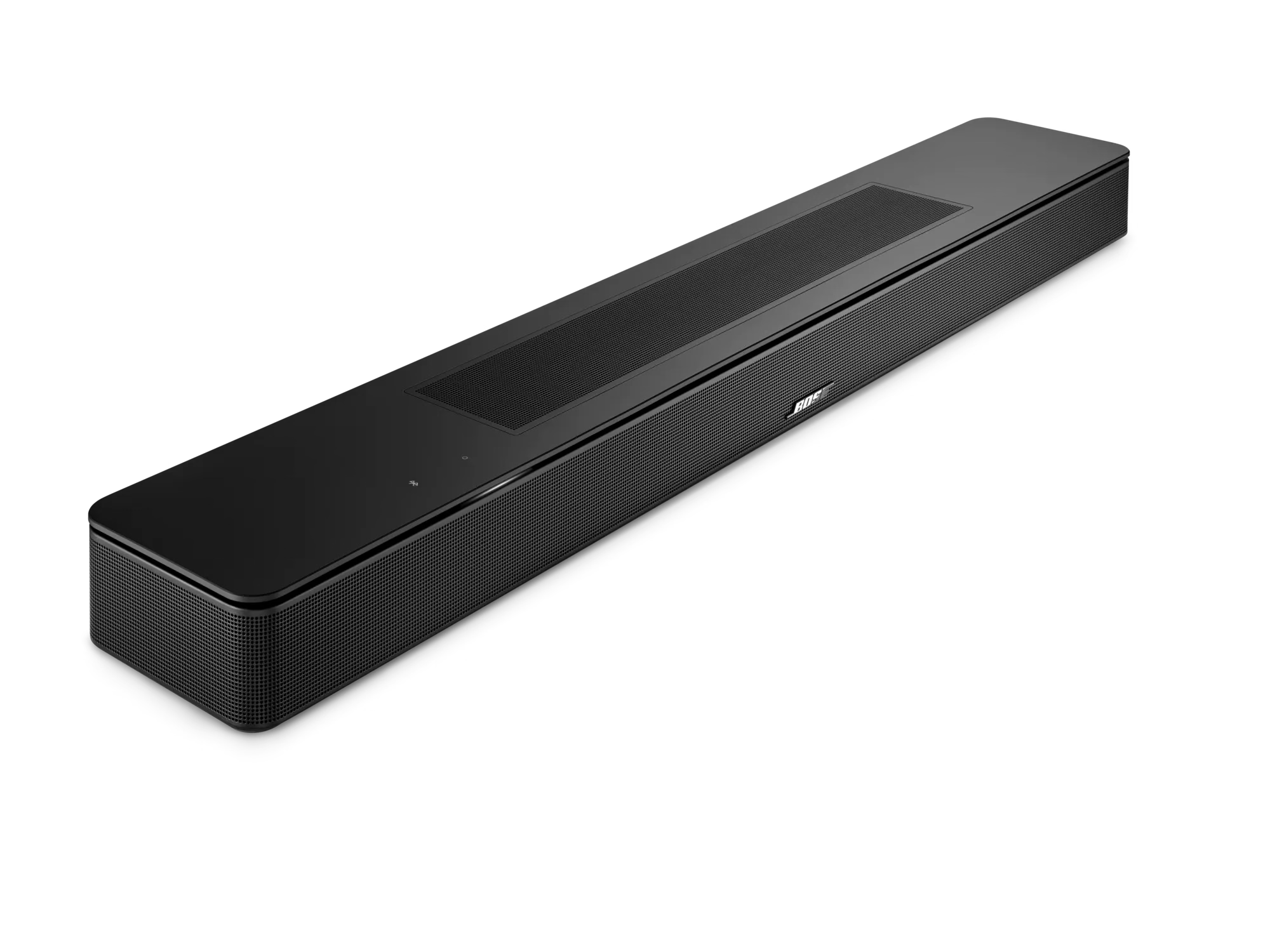
This Bose vs Sonos soundbar comparison focuses on the current Bose Smart Soundbar, which replaced the Bose Smart Soundbar 600 in 2024, and the Sonos Beam (Gen 2). Both are compact enough for a bedroom or small living room, support Dolby Atmos, and can be expanded with compatible subwoofers and rear speakers.
However, neither soundbar delivers the deep bass or fully directional surround effects of a complete home theater system on its own. Your TV’s audio capabilities, room layout, preferred streaming services, and existing speakers will also influence which product makes sense.
There is another important consideration: Sonos has announced the $699 Beam Ultra, scheduled for release on September 29, 2026. If you’re shopping for a new soundbar rather than replacing a broken one, its upcoming availability deserves attention.
We’ll compare the specifications, independent audio findings, connectivity, dialogue enhancement, and upgrade costs so you can decide which soundbar fits your setup. For a broader selection, explore our Best Soundbars for Home Theaters guide.
Quick Answer: Bose vs Sonos Soundbar
For music and stereo sound: Sonos Beam (Gen 2). Independent comparisons favor its wider stereo soundstage and balanced presentation for everyday listening.
For Dolby Atmos movies: Bose Smart Soundbar. Its physical upward-firing drivers provide an advantage over the Beam’s virtual height processing, although room acoustics still matter.
For flexible wireless streaming: Bose Smart Soundbar. Bluetooth, Google Cast, AirPlay 2, and Spotify Connect provide several ways to play audio.
For an existing Sonos household: Sonos Beam (Gen 2). It integrates with compatible Sonos speakers, supports Trueplay room tuning, and provides a straightforward expansion path.
For buyers considering an upgrade: Compare the Beam Ultra after its September 29 launch. Its announced hardware changes could be significant, but independent performance should be verified before purchasing.
Bose Smart Soundbar vs Sonos Beam Gen 2: Specs Compared
Both products fit beneath most modern televisions, but their audio architecture and connectivity differ in ways that matter more than their compact dimensions.
| Feature | Bose Smart Soundbar | Sonos Beam (Gen 2) |
|---|---|---|
| U.S. price reference | $549 | $499 |
| Standalone configuration | 3.0.2 | 5.0 |
| Dolby Atmos | Physical upward-firing drivers | Virtual height processing |
| Width | 27.34 inches | 25.63 inches |
| Height | 2.21 inches | 2.68 inches |
| TV connection | HDMI eARC/ARC; optical | HDMI eARC/ARC; included optical adapter |
| Bluetooth audio | Yes | No |
| Wi-Fi / AirPlay 2 | Yes / Yes | Yes / Yes |
| Google Cast | Yes | No native Google Cast |
| DTS Digital Surround | No native DTS decoding | Yes; supported DTS Digital Surround |
| Room correction | No ADAPTiQ | Trueplay; compatible iOS device required |
| Dialogue tools | AI Dialogue Mode | Speech Enhancement; Night Sound |
| Expandable system | Compatible Bose bass modules and surround speakers | Compatible Sonos Sub products and surround speakers |
| Primary advantage | Physical height drivers and streaming flexibility | Stereo soundstage and Sonos ecosystem |
Important: A higher advertised channel count does not automatically produce more convincing Atmos. The Bose has actual height drivers, while the Sonos creates height effects through signal processing. Neither includes a dedicated subwoofer or rear speakers in its standard package.
Price and Value: What Are You Actually Paying For?
At the manufacturer-listed U.S. prices checked in September 2026, the Bose Smart Soundbar costs $549 and the Sonos Beam (Gen 2) costs $499. That $50 difference is relatively small compared with the cost of adding a subwoofer or surround speakers later.
These are price references, not guaranteed checkout prices. Compare the live offers below, including retailer availability, warranty coverage, and whether the listing is for a genuinely new product.
Bose Smart Soundbar: Compare Current Prices
The current Bose is worth considering when physical Atmos height drivers, direct Bluetooth streaming, and Google Cast matter. It is also a natural upgrade for a household with compatible Bose audio equipment.
Sonos Beam (Gen 2): Compare Current Prices
Beam offers a slightly lower manufacturer-listed price, room tuning, a wide stereo soundstage, and compatibility with the Sonos ecosystem. Compare new-stock offers carefully as the Beam Ultra approaches release.

Don’t Forget the Cost of a Complete System
Neither soundbar includes a separate subwoofer. Adding a compatible bass module can improve deep bass, while a matched pair of rear speakers can make surround effects more directional.
For Bose, check compatibility with the Bass Module 500 or 700 and supported Bose surround speakers. Sonos buyers can consider compatible Sub products and supported rear speakers, including suitable Sonos Era models.
If you eventually plan to buy a soundbar, subwoofer, and rear speakers together, compare the total package price against complete systems in our home theater soundbar buying guide before committing to an expensive expansion path.
Sound Quality: Music, Movies, and Dialogue
The differences are most noticeable when you separate stereo music from spatial movie sound. Independent RTINGS comparisons favor the Beam’s stereo soundstage and everyday music presentation, while identifying advantages for Bose in Dolby Atmos, surround effects, and maintaining dynamics at higher volumes.
Music and Stereo Sound: Sonos Has the Wider Presentation
For music, Sonos Beam (Gen 2) has an advantage in stereo presentation. Its processing creates a soundstage that extends beyond the bar’s compact physical dimensions, helping vocals and instruments feel less concentrated around the television.
It also supports streaming through the Sonos app, compatible music services, and Apple AirPlay 2. For an Apple household or an existing multi-room Sonos system, that integration makes Beam particularly convenient.
The Bose Smart Soundbar remains capable for casual music listening and supports more direct playback methods. If you frequently switch between Android phones, laptops, and guests’ devices, its Bluetooth and Google Cast support may be more useful than Sonos’s stereo advantage.
Music verdict: Sonos for stereo presentation and ecosystem listening; Bose for flexible device-to-device streaming.
Dolby Atmos and Movie Immersion: Bose Has the Hardware Advantage
For Dolby Atmos content, Bose uses two physical upward-firing drivers to reflect height information toward the listening position. Sonos Beam (Gen 2) does not have dedicated upward-firing drivers; it uses processing to simulate height channels.
Independent comparisons support an advantage for Bose in Atmos and surround presentation. That makes it appealing for action movies, atmospheric scenes, and games with compatible spatial audio.
However, the height effect is not guaranteed to be equally convincing in every room. Ceiling height, seating position, soundbar placement, and reflective surfaces can affect the experience. An open-plan room or an unusually high ceiling may limit the benefit of upward-firing drivers.
Bose TrueSpace can also process non-Atmos material to create a more spacious presentation. This adds flexibility when watching ordinary television, but processing stereo content is not the same as playing native Dolby Atmos.
Movie verdict: Bose when physical height effects are a priority. For a complete surround experience with real sounds coming from behind the sofa, either soundbar needs compatible additional speakers.
Dialogue Clarity: Two Different Solutions
Both soundbars offer dedicated tools for improving speech clarity, making them suitable for dialogue-heavy television, news, podcasts, and streaming series.
Bose AI Dialogue Mode detects speech and dynamically adjusts the tonal balance to make voices easier to follow alongside effects and background music. You can enable or disable it through the Bose app.
Sonos provides Speech Enhancement, which emphasizes dialogue frequencies, and Night Sound, which reduces the intensity of louder effects while making quieter sounds easier to hear.
These features solve related but different problems. Bose’s dynamic dialogue processing is useful when voices are repeatedly buried in a changing soundtrack. Sonos Night Sound is particularly practical when watching movies late at night without sudden explosions becoming disruptive.
Neither feature can fully correct poorly mixed content, extreme background noise, or unsuitable TV audio settings.
Dialogue verdict: Both are suitable for speech-focused listening. Choose based on whether dynamic dialogue adjustment or separate speech and nighttime controls are more useful to you.
Bass and Maximum Volume: Consider Room Size
Both compact soundbars improve on typical TV speakers, but neither can reproduce the deepest movie effects with the authority of a dedicated subwoofer.
The Beam’s limited low-frequency extension is noticeable in bass-heavy music and action scenes. Bose also benefits from an optional bass module when deeper impact is required.
At higher output levels, independent testing indicates that Bose maintains its dynamics with less compression than Beam. That can matter when filling a larger living room, although neither model should be mistaken for a large premium soundbar system.
For a small apartment, either bar can be sufficient without extra components. If your main goal is room-shaking bass, budget for a compatible subwoofer or consider a complete home theater package.
Connectivity and TV Compatibility
Connectivity is one of the most practical differences in this soundbar comparison. Bose offers greater wireless flexibility, while Sonos provides a useful Ethernet connection, supported DTS playback, and a straightforward app-based ecosystem.
HDMI eARC, ARC, and Optical Audio
Both soundbars connect to a TV through HDMI eARC or ARC. An HDMI eARC connection is the preferred option for obtaining the widest supported selection of multichannel audio formats.
Most streaming services deliver Dolby Atmos using Dolby Digital Plus, which compatible HDMI ARC connections can carry. Lossless Dolby TrueHD Atmos requires HDMI eARC and compatible source-to-TV passthrough.
The Bose includes a dedicated optical connection. Sonos Beam (Gen 2) includes an optical adapter for televisions without HDMI ARC.
Optical audio does not deliver Dolby Atmos on these soundbars. If your television only has an optical output, both can still provide an improvement over its built-in speakers, but you should not expect their full Atmos capabilities.
Neither soundbar has a separate HDMI source input. Your console, Blu-ray player, or streaming box connects to the TV, and the TV sends audio back to the soundbar. This means the television’s audio-passthrough support is important.
Our Most Popular Streaming Devices for Home Entertainment guide explains the differences between common streaming boxes and sticks when planning a TV setup.
Bluetooth, AirPlay 2, and Google Cast
Bose offers Bluetooth, Wi-Fi, Apple AirPlay 2, Google Cast, and Spotify Connect. That makes it practical for households using a mixture of iPhones, Android devices, and different music services.
Sonos Beam (Gen 2) supports Wi-Fi streaming, AirPlay 2, and music playback through the Sonos ecosystem, but it does not offer ordinary Bluetooth audio streaming or native Google Cast.
For an iPhone user, the lack of Bluetooth may not matter because AirPlay 2 provides a convenient wireless option. For an Android user who frequently casts audio or wants uncomplicated Bluetooth pairing, Bose is more versatile.
These are mains-powered TV soundbars, not portable wireless speakers. If you need battery-powered music playback outdoors or while traveling, our JBL Flip 7 vs UE BOOM 4 comparison covers that different category.
DTS and Physical-Media Compatibility
Sonos Beam (Gen 2) supports DTS Digital Surround, which can matter for certain Blu-ray discs and other physical-media sources. Bose does not provide equivalent native DTS decoding.
Do not confuse DTS Digital Surround with DTS:X. Beam’s listed DTS support does not mean it can decode every DTS format.
If you use a Blu-ray player or game console, check its audio-output settings and your TV’s passthrough capabilities. Some systems can convert unsupported formats into compatible PCM or Dolby audio, but the available options depend on the connected devices.
Smart Features and Home Theater Expansion
Sonos offers a cohesive platform for building a multi-room music system, while Bose combines its smart-home ecosystem with broad wireless playback options and a distinctive personal-surround feature.
Voice Assistants and App Control
The Bose Smart Soundbar includes Amazon Alexa in supported regions and can work with Google Assistant through a compatible external Google Home device. The Bose app manages audio adjustments, system grouping, and additional features.
Sonos Beam (Gen 2) supports Sonos Voice Control and compatible voice-assistant services. The Sonos app provides access to EQ, speech enhancement, Night Sound, music services, and grouped playback.
Neither soundbar should be treated as a universal smart-home hub. If smart-device automation is a priority, our Best Smart Speakers for Connected Homes guide compares dedicated devices and ecosystems.
Room Tuning: Sonos Trueplay vs Bose
Sonos Beam (Gen 2) supports Trueplay, which analyzes the listening environment and adjusts the soundbar’s tuning. The established Trueplay process for this model requires a compatible iOS device.
Bose’s compact Smart Soundbar does not include the company’s ADAPTiQ room-calibration system. You can adjust its audio settings in the Bose app, but that is not equivalent to automatic room measurement.
Trueplay can be useful in rooms where furniture placement, wall proximity, and other acoustic factors affect the sound. However, it should not be treated as a guarantee that the Beam will outperform Bose in every room.
Adding a Subwoofer and Rear Speakers
Both products support expansion, but their accessories are not interchangeable.
For Bose, compatible Bass Module products can add low-frequency impact, and Bose surround speakers can provide physical rear effects. Bose also offers Personal Surround with compatible Ultra Open Earbuds, allowing one listener to experience additional spatial effects without installing rear speakers.
For Sonos, compatible Sub products add deeper bass. Supported Sonos speakers can be paired as rear surrounds, and other Sonos products can be grouped for multi-room music playback.
If you already own several Sonos speakers, Beam has a practical ecosystem advantage. If you already own compatible Bose equipment, staying with Bose can reduce the need to replace existing components.
Check exact accessory compatibility before purchasing. Simply owning two speakers from the same brand does not guarantee that they can function as rear surround channels.
Bose Smart Soundbar: Pros and Cons
Best for: Buyers prioritizing Dolby Atmos height effects, flexible streaming, and integration with compatible Bose products.
Pros
✅ Physical upward-firing Dolby Atmos drivers
✅ Bluetooth, Google Cast, and AirPlay 2
✅ Dynamic AI Dialogue Mode
✅ Less compression at high volumes in independent testing
✅ Compatible Bose bass and surround upgrades
Cons
❌ Narrower stereo soundstage than the Beam
❌ No ADAPTiQ automatic room correction
❌ No native DTS decoding
❌ Limited deep bass without an added module
❌ No dedicated HDMI source input
Who should skip it: Music-first listeners who prioritize stereo width, buyers who require native DTS Digital Surround, and Sonos owners who want to expand their existing system.
Alternative: A discounted Bose Smart Soundbar 600 can be considered if new-stock availability and warranty coverage are satisfactory.
Sonos Beam Gen 2: Pros and Cons
Best for: Compact living rooms, music and dialogue listening, and households planning to build a Sonos system.
Pros
✅ Wide stereo soundstage for its size
✅ Clear dialogue and useful Night Sound mode
✅ Trueplay room tuning with a compatible iOS device
✅ DTS Digital Surround support
✅ Extensive compatible Sonos expansion options
Cons
❌ Virtual rather than physical Atmos height channels
❌ No ordinary Bluetooth audio streaming
❌ No native Google Cast
❌ Limited deep bass and maximum output
❌ Trueplay tuning requires a compatible iOS device
Who should skip it: Buyers who need direct Bluetooth streaming, prioritize physical height drivers, or want to purchase the newest Sonos compact hardware without first considering Beam Ultra.
Alternative: Sonos Beam Ultra is scheduled for release on September 29, 2026, at $699. Evaluate its post-release performance and pricing before deciding whether the additional cost is justified.
Should You Buy Bose Soundbar 600 or Wait for Sonos Beam Ultra?
This is an important purchasing question because the models in the original Bose 600 vs Sonos Beam Gen 2 comparison are no longer the only relevant compact soundbars.
Is the Original Bose Smart Soundbar 600 Still Worth Buying?
The Bose Smart Soundbar 600 launched in 2022 and was replaced by the current Bose Smart Soundbar in September 2024. However, replacing a product in the manufacturer’s lineup does not automatically make the older hardware obsolete.
The 600 already provides physical upward-firing Atmos drivers, HDMI eARC, Bluetooth, Wi-Fi, AirPlay 2, and Google Cast. Bose also brought AI Dialogue Mode and Personal Surround support to the 600 through a firmware update in March 2025.
Consequently, these two features should not be treated as permanent exclusives of the newer Bose Smart Soundbar.
A 600 can still be a sensible option when an authorized retailer offers a substantial discount on a new unit. Compare the final price, condition, warranty, return policy, and accessory compatibility rather than relying on the older model’s original MSRP.
What Changes With Sonos Beam Ultra?
Sonos announced Beam Ultra in September 2026, with a U.S. price of $699 and general availability scheduled for September 29.
Its announced specifications represent a notable change from Beam (Gen 2). Beam Ultra introduces a 7.1.2 configuration with physical upward-firing drivers, Bluetooth audio, and updated speech-enhancement features.
Those additions address two important limitations of Beam (Gen 2): the absence of physical height drivers and the lack of conventional Bluetooth streaming.
However, a specification sheet does not establish how the new product performs against the Bose Smart Soundbar. Its stereo presentation, bass, dialogue processing, and real-world Atmos performance should be assessed through independent testing.
Buying timing: If you need a soundbar immediately, compare the current Bose and Beam Gen 2 offers. If your purchase can wait until after September 29, reassess the Beam Ultra once independent findings and actual retailer availability are established.
Which Bose or Sonos Soundbar Fits Your Setup?
The strongest choice depends on your listening habits, television, and existing equipment rather than brand reputation alone.
| Your Priority | Suggested Soundbar | Reason |
|---|---|---|
| Dolby Atmos movies | Bose Smart Soundbar | Physical upward-firing drivers |
| Music and stereo listening | Sonos Beam (Gen 2) | Wider stereo soundstage |
| Mixed Android and iPhone household | Bose Smart Soundbar | Bluetooth, Google Cast, and AirPlay 2 |
| Existing Sonos speakers | Sonos Beam (Gen 2) | Compatible system expansion |
| Late-night TV | Sonos Beam (Gen 2) | Dedicated Night Sound and Speech Enhancement |
| Existing compatible Bose products | Bose Smart Soundbar | Bose system integration |
| Compact bar with physical Atmos from Sonos | Evaluate Beam Ultra | Announced physical height drivers; post-release testing needed |
| Older TV with optical audio only | Either, with limitations | Both support optical TV audio, but not Atmos over optical |
Frequently Asked Questions
Is Bose better than Sonos for Dolby Atmos?
The Bose Smart Soundbar has an advantage over Beam (Gen 2) in physical height reproduction because it includes upward-firing drivers. Independent comparison findings also favor its Atmos and surround performance. Results depend on room acoustics, and a complete system with rear speakers can create a more convincing experience than either standalone bar.
Is Sonos Beam Gen 2 better for music?
Independent comparisons favor the Beam’s wider stereo soundstage and everyday music presentation. Bose offers more direct wireless playback options, including Bluetooth and Google Cast. Your preferred streaming method and existing speakers may be more important than a small difference in soundstage.
Does Sonos Beam Gen 2 have Bluetooth?
No. Beam (Gen 2) does not support conventional Bluetooth audio streaming. Music can be played through its Wi-Fi-based ecosystem and compatible services, including Apple AirPlay 2. Bose Smart Soundbar supports Bluetooth, while the upcoming Beam Ultra also lists Bluetooth among its features.
Can I connect either soundbar to an older TV?
Yes, provided the television offers a compatible audio output. Both support HDMI eARC/ARC, and each offers an optical connection method. Optical connections cannot carry Dolby Atmos to these bars. Check the television’s manual for its supported audio formats and passthrough settings.
Can Bose and Sonos speakers work together as one surround system?
No. You cannot ordinarily pair Bose surround speakers as rear channels for a Sonos Beam or use Sonos surrounds as rear channels for a Bose soundbar. Use the manufacturer’s compatibility list when selecting subwoofers or rear speakers.
Should I buy Beam Gen 2 or wait for Beam Ultra?
Beam (Gen 2) remains a relevant compact soundbar when available at an attractive price. Beam Ultra adds announced physical height drivers and Bluetooth at a higher $699 price, with availability scheduled for September 29, 2026. If you can wait, compare independent test results and current offers after release before making your decision.
Final Verdict: Bose vs Sonos Soundbar
The Bose Smart Soundbar and Sonos Beam (Gen 2) are both capable compact TV upgrades, but each has a different strength.
Choose Bose Smart Soundbar if you prioritize physical Dolby Atmos height drivers, flexible Bluetooth and Google Cast streaming, or integration with compatible Bose equipment. Its AI Dialogue Mode and comparatively strong performance at higher volumes are additional benefits.
Choose Sonos Beam (Gen 2) if stereo presentation, music playback, Trueplay tuning, and the wider Sonos ecosystem are more important. Its Speech Enhancement, Night Sound, and DTS Digital Surround support also make it a practical everyday TV soundbar.
If you can postpone your purchase, reassess the comparison after the September 29 Beam Ultra release. The new model’s announced specifications address several Beam Gen 2 limitations, but its actual performance still needs independent verification.
Bottom line: Bose offers the more flexible wireless setup and physical Atmos hardware. Sonos Beam (Gen 2) offers a wider stereo presentation and a well-established multi-room ecosystem. Compare current prices, confirm your TV’s supported audio formats, and consider the total cost of future upgrades before buying.
Sources
- Bose — Bose Smart Soundbar: Product Information and Technical Specifications
- Sonos — Beam (Gen 2): Product Information and Technical Specifications
- RTINGS — Sonos Beam (Gen 2) vs Bose Smart Soundbar
- Bose Support — Smart Soundbar 600 Software and Firmware Versions
- Sonos — Beam Ultra: Product Information and Availability
Product Groups: Bose Smart Soundbar, Sonos Beam Gen 2