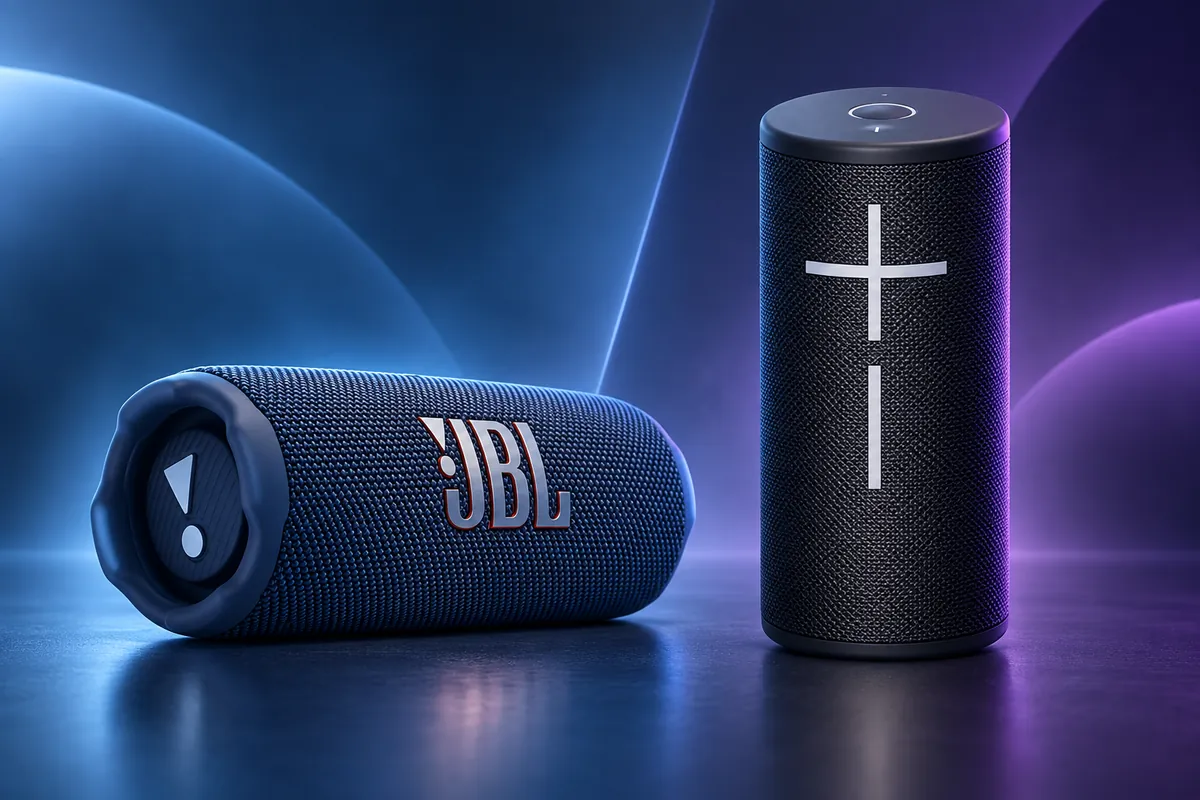
JBL Flip 7 vs UE BOOM 4
The JBL Flip 7 is the better portable Bluetooth speaker for most buyers. It delivers stronger bass punch, newer Bluetooth connectivity, Auracast multi-speaker support, IP68 protection and the unusual option to play high-resolution audio over USB-C. At roughly the same regular price, it offers the more modern overall feature set.
The Ultimate Ears BOOM 4 still has important advantages. Its cylindrical design produces much more consistent 360-degree sound, it floats if dropped in water, and its PartyUp system can connect with a large range of current and previous-generation Ultimate Ears speakers. That makes it particularly appealing around a pool, picnic table or group gathering where listeners are positioned on different sides of the speaker.
The choice therefore comes down to how you plan to listen. Choose the Flip 7 for stronger bass, travel-friendly portability and newer connectivity. Choose the BOOM 4 for 360-degree coverage, pool use and an established UE multi-speaker setup.
Quick Answer: JBL Flip 7 vs UE BOOM 4
Best Overall: JBL Flip 7 — stronger bass punch, Bluetooth 5.4, Auracast, USB-C audio and IP68 durability give it the more complete current feature set.
Best for 360° Sound: UE BOOM 4 — its cylindrical design provides more consistent sound for listeners positioned around the speaker.
Best for Pool Use: UE BOOM 4 — it is IP67-rated, waterproof and designed to float.
Best for Bass: JBL Flip 7 — independent direct comparison found more low-end punch than the BOOM 4.
Best for an Existing Speaker Collection: It depends — UE PartyUp works with many older BOOM-family products, while Flip 7 uses the newer Auracast ecosystem instead of JBL’s older PartyBoost system.
JBL Flip 7 vs UE BOOM 4: Specs Compared
| Feature | JBL Flip 7 | Ultimate Ears BOOM 4 |
|---|---|---|
| Regular price reference | $149.95 | $149.99 |
| Weight | 560g / about 1.23 lb | 620g / 21.87 oz |
| Bluetooth | Bluetooth 5.4 | Bluetooth 5.0 |
| Rated battery | Up to 14 hours standard; 16 hours with Playtime Boost | Up to 15 hours |
| Water/dust rating | IP68 | IP67 |
| Floats | Not a highlighted design feature | Yes |
| Multi-speaker system | Auracast | PartyUp |
| USB audio | Yes | No equivalent wired digital audio feature |
| App EQ | JBL Portable app with 7-band custom EQ | UE | BOOM app with graphic EQ and presets |
| Best for | Bass, portability and modern connectivity | 360° listening and poolside gatherings |
Price and Value
These two speakers are unusually easy to compare because their regular U.S. prices sit almost exactly in the same $150 class. That means the decision should be based on features and intended use rather than assuming one is a cheaper category of speaker.
Both models regularly receive discounts, however. Current sale pricing can easily shift the value equation, so use the live comparison cards instead of relying on a temporary sale mentioned in editorial text.
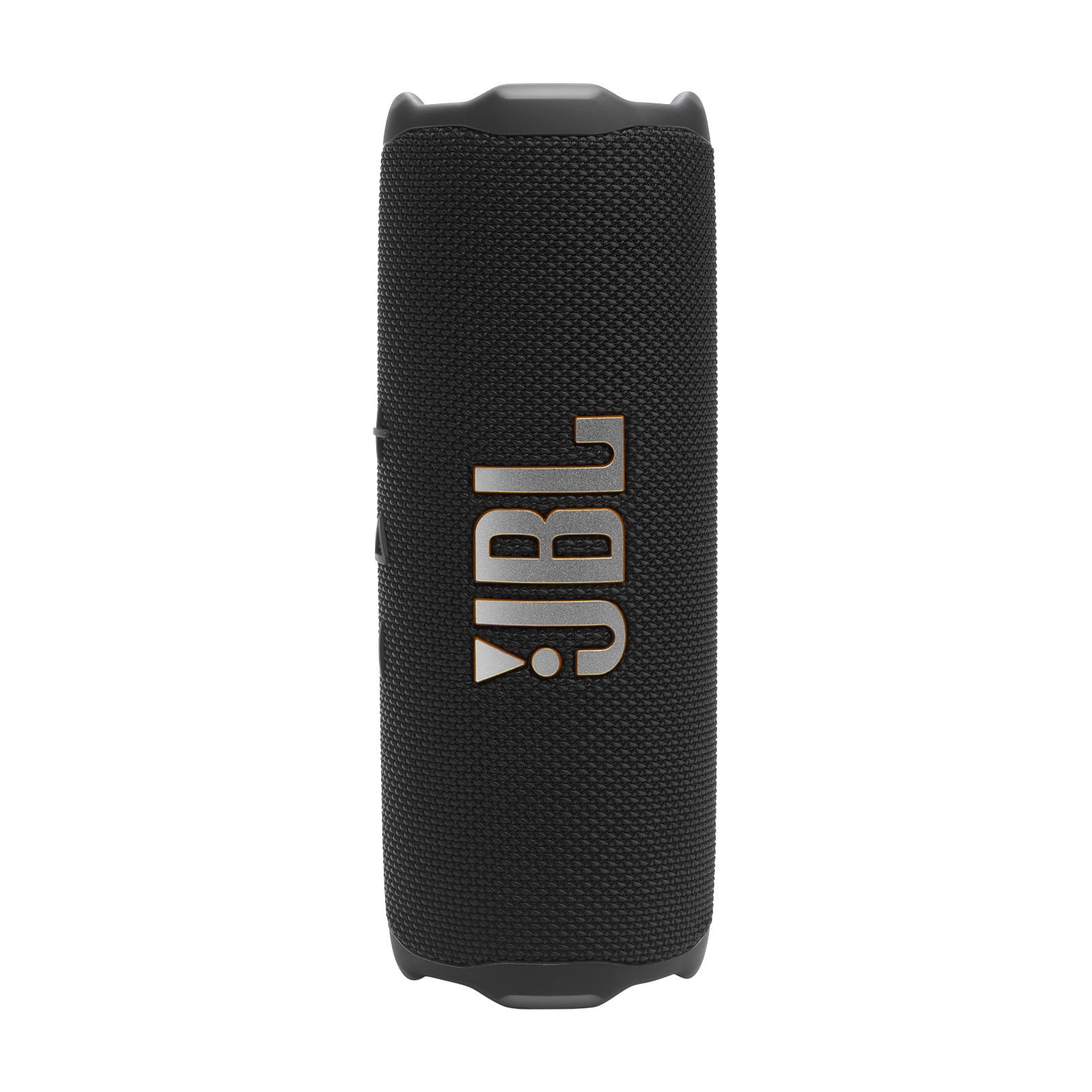
Bring the soundtrack of your life everywhere with the JBL Flip 7 AI-Boost Waterproof Speaker, 16-Hour. Experience undefeated JBL sound, AI-Boost clarity, and worry-free waterproof design in a compact, portable package. Buy now and take your music farther — shop the Flip 7 today.

Grab the Ultimate Ears BOOM 4 (Blue) and take powerful, immersive sound with you everywhere. Rugged, waterproof, and built for parties, it transforms any moment into a full‑bodied audio experience. Add to cart now and start enjoying bold sound on the move.
At similar prices, the Flip 7 offers more current technology for the money. Auracast, Bluetooth 5.4, USB-C digital audio and IP68 protection are meaningful upgrades rather than minor specification changes.
BOOM 4 provides its value in a different way. Its 360-degree acoustic design, floating construction and broad PartyUp compatibility can be more useful than newer Bluetooth specifications if the speaker will spend most of its time around groups, pools or an existing Ultimate Ears collection.
Design and Portability: JBL Flip 7 Wins
Both speakers use the familiar cylindrical portable-speaker shape, but the Flip 7 is slightly easier to carry. At about 560g, it is roughly 60g lighter than the 620g BOOM 4.
JBL also redesigned the attachment system for this generation. The PushLock mounting point can accept interchangeable carrying accessories, allowing the speaker to use a wrist loop or compatible carabiner-style attachment depending on the situation.
BOOM 4 remains highly portable at 184 mm tall and 73 mm wide, and its tall cylindrical design works particularly well when placed vertically in the center of a table. Its large physical volume buttons are also easy to identify outdoors without looking closely at the speaker.
Neither is heavy enough to become a burden in a backpack, but the Flip 7 has the advantage when every ounce matters for hiking, commuting or travel.
Winner: JBL Flip 7.
Sound Quality: JBL Flip 7 Has More Bass, BOOM 4 Has Better Coverage
There is no single sound-quality winner without considering where listeners are positioned.
WIRED’s direct A/B comparison found the BOOM 4 produced a somewhat wider soundstage and more midrange presence, while the Flip 7 delivered more bass punch. That matches the basic design difference between them.
JBL Flip 7 Sound
The Flip 7 uses JBL’s compact mono architecture with a dedicated woofer and tweeter, assisted by the company’s AI Sound Boost processing. For its size, the speaker produces surprisingly substantial bass and a full presentation that works particularly well for pop, electronic music, hip-hop and other tracks where low-end impact matters.
Its limitation is directionality. The Flip 7 can be positioned horizontally or vertically, but it does not create the same even around-the-speaker listening experience as the BOOM 4.
UE BOOM 4 Sound
BOOM 4 uses two 2-inch drivers and two passive radiators inside its cylindrical enclosure. Ultimate Ears designs the BOOM family around broad 360-degree output rather than concentrating most energy in one direction.
RTINGS highlights directivity as one of the BOOM 4’s strongest characteristics. That matters when several people are sitting around a table or campfire because one person does not have to sit directly in front of the speaker to hear a balanced presentation.
The trade-off is bass depth. BOOM 4 does not reproduce deep low frequencies with the same authority as larger portable speakers, and direct comparison favors the Flip 7 for bass punch.
Sound verdict: JBL Flip 7 for bass and impact; UE BOOM 4 for 360° coverage.
360° Sound vs Directional Sound: Why It Matters
This is the most important practical difference between the two speakers.
If a speaker normally sits on a shelf, desk or the edge of a patio with listeners in front of it, directional output is not a major disadvantage. In that situation, the Flip 7’s stronger bass and newer audio features make more sense.
If the speaker sits in the middle of a picnic table, campsite or pool area, the BOOM 4’s cylindrical design becomes much more valuable. Listeners can move around it without the tonal balance changing as dramatically with angle.
That is why the BOOM 4 can be the better social speaker even when the Flip 7 wins our overall recommendation.
Battery Life: UE BOOM 4 Has the Better Evidence
JBL rates the Flip 7 for up to 14 hours of normal playback and up to 16 hours when Playtime Boost is enabled. UE rates BOOM 4 for up to 15 hours.
Those manufacturer figures look almost identical, but real battery life changes dramatically with volume, content, EQ and testing method.
SoundGuys measured only 6 hours and 16 minutes from the Flip 7 in its standardized test at a steady 80dB from one meter. That does not mean every owner will get only six hours, but it demonstrates why JBL’s maximum figure should not be treated as a guaranteed everyday result.
Playtime Boost also comes with an important compromise. Independent testing found that the mode extends playback partly by reducing bass energy, producing a noticeably thinner sound. It is useful when battery life matters more than fidelity, but we would not leave it enabled by default.
RTINGS measured more than 12 hours of continuous use from the BOOM 4 under its own methodology. Because RTINGS and SoundGuys use different test procedures, those figures should not be treated as a laboratory head-to-head comparison. They do, however, give BOOM 4 the more reassuring independent battery evidence.
Winner: UE BOOM 4.
Waterproofing and Durability: Different Strengths
The Flip 7 has the higher formal ingress-protection rating. Its IP68 certification provides top-level dust protection and water resistance beyond the common IP67 level. JBL also rates the speaker as drop-resistant from one meter.
BOOM 4 carries an IP67 rating and is also marketed as waterproof and drop-proof. Its special advantage is that it floats, making accidental drops into a swimming pool, lake edge or shallow water much less stressful.
For hiking, dusty trails and general rugged travel, we would favor the Flip 7’s IP68 specification. For water recreation, the BOOM 4’s floating design can matter more than the difference between IP67 and IP68.
Winner: Tie overall — Flip 7 for the stronger IP rating, BOOM 4 for floating.
Best Speaker for the Pool or Beach: UE BOOM 4
The BOOM 4 is the better poolside recommendation because water resistance is only part of the equation. A speaker that survives water but sinks still needs to be retrieved quickly. BOOM 4 is designed to float.
Its 360-degree output also makes sense at a pool or beach gathering because people tend to move around rather than sit directly in front of a speaker.
Flip 7 remains an excellent beach option because its IP68 rating provides strong dust and water protection and its lighter body is easier to carry. If sand resistance and compact travel matter more than floatability, it may still be the better choice.
Winner: UE BOOM 4.
Bluetooth and Connectivity: JBL Flip 7 Wins
Connectivity is one of the clearest generational advantages for JBL.
The Flip 7 uses Bluetooth 5.4 and supports Auracast for linking compatible speakers. It can also receive high-resolution digital audio over USB-C from a compatible source, a relatively uncommon capability in a compact Bluetooth speaker.
BOOM 4 uses Bluetooth 5.0 with SBC and offers a manufacturer-rated wireless range of up to 45 meters under suitable conditions. Its USB-C port is for charging rather than an equivalent wired digital-audio feature.
For normal Spotify or Apple Music listening over Bluetooth, both do the basic job well. The Flip 7 simply gives enthusiasts and future multi-speaker buyers more modern connectivity options.
Winner: JBL Flip 7.
Auracast vs PartyUp: Check Your Existing Speakers First
Do not assume a new speaker will connect with every older product from the same brand.
JBL moved the Flip 7 from its older PartyBoost system to Auracast. That gives JBL a standards-based path for newer compatible speakers, but it also means Flip 7 does not pair through PartyBoost with models such as Flip 6 or Charge 5.
This matters if you already own older JBL speakers. Buying a Flip 7 may start a new multi-speaker ecosystem rather than expanding your current PartyBoost setup.
Ultimate Ears takes a more legacy-friendly approach with PartyUp. UE says BOOM 4 can join more than 150 compatible speakers across the BOOM, MEGABOOM, EVERBOOM, EPICBOOM and HYPERBOOM families, including previous BOOM generations.
Winner for existing collections: UE BOOM 4.
App and EQ: JBL Gives You More Detailed Control
The JBL Portable app provides four EQ presets plus a customizable 7-band equalizer for the Flip 7. That gives owners considerably more control than the basic bass/mid/treble adjustment found on some older portable speakers.
The app also manages Auracast-compatible JBL speaker connections and Playtime Boost.
The UE | BOOM app includes EQ presets and a graphic equalizer, PartyUp controls and the Magic Button playlist functionality. It is easy to use and especially valuable when managing several UE speakers.
Both apps are useful, but JBL’s 7-band EQ gives the Flip 7 more detailed sound-shaping flexibility.
Winner: JBL Flip 7.
Which Is Better for Parties?
For a small group sitting around one table, BOOM 4 can actually be the better party speaker because everyone hears a more consistent sound regardless of where they sit.
If you want more bass impact from one compact speaker or plan to build a newer Auracast system, Flip 7 is the better starting point.
Neither product is intended to replace a larger party speaker. If you regularly need much higher output, deeper bass or enough volume for a backyard event, move up to a larger class such as JBL Charge 6, UE MEGABOOM 4 or a dedicated party speaker.
Our best portable Bluetooth speakers guide compares larger and smaller alternatives across several price ranges.
JBL Flip 7 Pros and Cons
Pros
✅ Strong bass punch for its compact size
✅ IP68 water and dust resistance
✅ Bluetooth 5.4 and Auracast
✅ USB-C digital audio support
✅ 7-band customizable EQ
✅ Lighter than the BOOM 4
Cons
❌ Less even 360-degree coverage than BOOM 4
❌ Independent battery testing can fall well below the maximum claim
❌ Playtime Boost noticeably reduces bass quality
❌ Auracast is not backward-compatible with older JBL PartyBoost speakers
UE BOOM 4 Pros and Cons
Pros
✅ Excellent 360-degree sound coverage
✅ IP67 waterproof and dust-resistant design
✅ Floats in water
✅ More than 12 hours in independent continuous battery testing
✅ PartyUp works with many current and previous UE speakers
✅ Graphic EQ and presets in the UE app
Cons
❌ Less deep bass impact than Flip 7
❌ Bluetooth 5.0 rather than JBL’s newer Bluetooth 5.4 implementation
❌ No equivalent USB-C digital audio feature
❌ Relatively modest upgrade over the older BOOM 3
Alternatives to JBL Flip 7 and UE BOOM 4
JBL Charge 6
Move up to the Charge 6 if you want stronger bass, considerably longer rated battery life and a built-in power bank. It is larger and more expensive, so it is not a direct BOOM 4 competitor.
Ultimate Ears WONDERBOOM 4
WONDERBOOM 4 is a better fit if you want something smaller and less expensive. It remains waterproof, floatable and highly portable, though it does not offer the same output or PartyUp ecosystem as BOOM 4.
Ultimate Ears MEGABOOM 4
MEGABOOM 4 is the more logical UE option if BOOM 4 feels too small. It provides more bass and up to 20 hours of manufacturer-rated battery life while retaining the 360-degree UE design philosophy.
Bose SoundLink Flex (2nd Gen)
Bose is worth considering if you prioritize a more conventional sound-focused portable speaker and Bluetooth multipoint. It is also covered in our broader portable-speaker comparison.
If you want private listening rather than shared audio, see our best wireless headphones guide or our best wireless earbuds roundup.
Frequently Asked Questions
Is JBL Flip 7 better than UE BOOM 4?
For most buyers, yes. Flip 7 offers stronger bass punch, Bluetooth 5.4, Auracast, USB-C audio and IP68 protection. BOOM 4 is better if 360-degree sound, floating construction or compatibility with older UE PartyUp speakers matters more.
Which has better bass, JBL Flip 7 or UE BOOM 4?
JBL Flip 7 has the advantage for bass. Independent direct comparison found more low-end punch from the JBL, while BOOM 4 prioritizes broader 360-degree coverage and a balanced midrange.
Which speaker is louder?
Neither has such a decisive real-world loudness advantage that volume alone should determine the purchase. Independent tests show both can fill a small outdoor gathering, but larger Charge, MEGABOOM or party-class speakers are better when maximum output is the priority.
Which has better battery life?
UE rates BOOM 4 for up to 15 hours, while JBL rates Flip 7 for up to 14 hours normally or 16 hours with Playtime Boost. Independent testing has been more reassuring for BOOM 4, but results from different publications should not be compared as if they use identical test methods.
Can UE BOOM 4 float?
Yes. Ultimate Ears specifically designs BOOM 4 to be waterproof and floatable, making it particularly suitable for poolside use.
Is JBL Flip 7 waterproof?
Yes. Flip 7 is IP68-rated for water and dust resistance. JBL also rates it for drop resistance from one meter.
Can JBL Flip 7 connect to older JBL speakers?
Not through the older PartyBoost system. Flip 7 uses Auracast, so buyers with older PartyBoost speakers such as Flip 6 or Charge 5 should not assume they can add a Flip 7 to the same multi-speaker group.
Which is better for the beach or pool?
BOOM 4 is our pool pick because it floats and provides even 360-degree coverage. Flip 7 is arguably the stronger beach and travel choice when IP68 dust protection, lower weight and stronger bass matter more.
Final Verdict: JBL Flip 7 or UE BOOM 4?
The JBL Flip 7 wins this comparison for most buyers. Its stronger bass punch, lower weight, IP68 protection, Bluetooth 5.4, Auracast support, USB-C audio and deeper app EQ make it the more advanced portable speaker at essentially the same regular price.
The UE BOOM 4 remains the better choice for a specific type of listener. Its 360-degree design distributes sound more evenly around a group, it floats in water, and PartyUp preserves compatibility with a broad range of existing UE speakers. Those advantages are highly practical around pools, campsites and social gatherings.
If you are starting from scratch and simply want the strongest all-around compact Bluetooth speaker, buy the JBL Flip 7. If your speaker will live beside the pool or in the center of group gatherings—or you already own compatible UE speakers—the BOOM 4 can be the smarter purchase.
Overall Winner: JBL Flip 7
Best Bass: JBL Flip 7
Best 360° Sound: UE BOOM 4
Best for Pool Use: UE BOOM 4
Best Connectivity: JBL Flip 7
Best for an Existing UE Speaker Collection: UE BOOM 4
Sources
- JBL — Flip 7 official product specifications and launch information
- Ultimate Ears / Logitech — BOOM 4 official specifications and product information
- WIRED — JBL Flip 7 review and direct comparison with UE BOOM 4
- SoundGuys — JBL Flip 7 review and standardized battery testing
- RTINGS — Ultimate Ears BOOM 4 review
Product Groups: JBL Flip 7, Ultimate Ears BOOM 4