Best Smart Speakers for Connected Homes 2026
Amazon Echo Dot Max is the best smart speaker for most connected homes because it combines Alexa, Matter support, a Thread border router and a built-in Zigbee hub in one compact speaker. That combination gives it broader smart-home connectivity than most similarly sized speakers while still working well for music, timers, routines and everyday voice control.
The right choice still depends heavily on your ecosystem. Google Home Speaker is the better fit for Google Home and Gemini users, Apple HomePod mini makes the most sense in an Apple Home household, Sonos Era 100 prioritizes music and multi-room audio, and Amazon Echo Pop is the inexpensive entry point for basic Alexa control.
Choose the ecosystem before obsessing over speaker specifications. Matter improves compatibility between many smart-home devices, but it does not make Alexa, Gemini and Siri interchangeable, and it does not turn speakers from different brands into one universal multi-room audio system.
Quick Answer: Best Smart Speakers
Best Overall for Connected Homes: Amazon Echo Dot Max — Alexa plus Matter, Thread and Zigbee support make it the most versatile smart-home controller in this shortlist.
Best for Google Home: Google Home Speaker — Gemini for Home, Matter-hub functionality, Thread 1.3 and modern Wi-Fi/Bluetooth connectivity at an aggressive price.
Best for Apple Home: Apple HomePod mini — Siri, Apple Home hub functionality, Thread networking, AirPlay multi-room audio and temperature/humidity sensing.
Best for Multi-Room Music: Sonos Era 100 — stronger music-first features, Wi-Fi, Bluetooth, AirPlay 2, Trueplay and excellent Sonos multi-room expansion.
Best Budget Smart Speaker: Amazon Echo Pop — affordable Alexa voice control and Matter compatibility for rooms where premium audio is not the priority.
How We Chose the Best Smart Speakers
We evaluated these smart speakers as connected-home products rather than ranking them only by music quality. The most important factors were voice-assistant ecosystem, Matter support, Thread or Zigbee capability where available, multi-room audio, Bluetooth and Wi-Fi options, privacy controls, current subscription requirements and U.S. availability.
Audio still matters, but a speaker with excellent sound can be the wrong purchase if it cannot control the devices or services already used throughout your home. Likewise, a technically capable smart-home hub may be disappointing if music is your primary use.
Discompare did not perform hands-on acoustic or smart-home testing for this guide. Product specifications come from current manufacturer documentation, with independent reviews used to identify real-world strengths, weaknesses and software limitations.
Best Smart Speakers Compared
| Speaker | Best For | Assistant | Matter | Thread | Zigbee | Bluetooth Audio | Main Tradeoff |
|---|---|---|---|---|---|---|---|
| Amazon Echo Dot Max | Connected Homes | Alexa / Alexa+ | Yes | Thread 1.3 border router | Built-in hub | Yes | Higher price and Alexa+ subscription economics |
| Google Home Speaker | Google Home | Gemini for Home | Yes; Matter hub | Thread 1.3 border router | No built-in Zigbee hub | Bluetooth 5.4 | Some Gemini features and reliability still need maturity |
| Apple HomePod mini | Apple Home | Siri | Apple Home supports Matter | Thread-enabled home hub | No Zigbee hub | Not conventional generic Bluetooth playback | Best only when you already favor Apple devices |
| Sonos Era 100 | Multi-Room Music | Alexa + Sonos Voice Control | Not its role | No Thread-border-router role | No Zigbee hub | Bluetooth 5.3 | Costs more because audio is the priority |
| Amazon Echo Pop | Budget Alexa | Alexa | Yes | No built-in Thread border router | No built-in Zigbee hub | Yes | Limited bass and room-filling output |
Choose Your Smart-Home Ecosystem Before the Speaker
Your smart-home platform usually matters more than a small difference in speaker sound quality. If your lights, thermostats, cameras and routines already live inside Alexa, buying a Google speaker because it wins one audio test creates unnecessary friction.
Choose Amazon Alexa If You Want Broad Smart-Home Hardware Support
Amazon’s current Echo lineup supports a wide range of smart-home devices, and Echo Dot Max is unusually capable because it combines Matter, a Thread 1.3 border router and Zigbee in the speaker itself.
That makes it particularly useful if your connected home contains a mixture of newer Matter devices and older Zigbee accessories.
Choose Google Home If You Prefer Gemini and Google’s Ecosystem
Google Home Speaker is the first major new Google smart speaker in years and is built around Gemini for Home. It also functions as a Matter hub and Thread 1.3 border router, making it a much more modern smart-home foundation than older Nest speakers.
Gemini is capable of more conversational commands than older voice assistants, although independent reviewers still report occasional delays, misunderstandings and incorrect responses.
Choose Apple Home If Your Household Runs on Apple Devices
HomePod mini works particularly well when iPhone, Apple Music, Apple TV and Apple Home already form the center of the household. It automatically functions as an Apple Home hub and can support Thread-based Matter accessories.
AirPlay also makes multi-room music straightforward across compatible Apple and AirPlay devices.
Choose Sonos If Music Comes First
Sonos is less about being the central protocol hub and more about building a reliable multi-room audio system. Era 100 supports Alexa, but its strongest features are Sonos grouping, Trueplay tuning, Bluetooth, AirPlay 2 and the option to expand into additional Sonos speakers and soundbars.
Compare Current Smart Speaker Prices
Smart-speaker pricing changes quickly during major Amazon, Google, Apple and holiday sales. Alexa devices in particular are frequently discounted, while Sonos and Apple pricing tends to move less often outside major promotional periods.
Compare live prices after deciding which ecosystem fits the home. Saving $20 on the wrong platform is rarely worth rebuilding routines, replacing incompatible devices or giving up the multi-room system you actually want.


1. Amazon Echo Dot Max — Best Overall for Connected Homes
Best For: Alexa households, mixed Matter/Zigbee smart homes and buyers who want a compact speaker to double as a capable smart-home hub.
Echo Dot Max is our best overall smart speaker because it goes well beyond basic voice commands. Amazon’s current platform documentation lists the model as Matter-compatible, a Thread 1.3 border router and a built-in Zigbee smart-home hub.
Those three capabilities solve different problems. Matter helps compatible products work across modern smart-home ecosystems. Thread provides the low-power mesh network used by many Matter-over-Thread accessories. Zigbee lets the Echo connect directly to many compatible legacy and current Zigbee lights, plugs, locks and sensors without requiring a separate Zigbee hub.
This broader protocol support gives Dot Max a meaningful advantage over Echo Pop and most music-first speakers.
Alexa+ also changes what Amazon’s assistant can do. It is designed for more conversational requests and broader task handling than traditional Alexa. In the United States, full Alexa+ access is currently included with Prime membership; non-Prime access to the full service is priced separately, while Amazon also offers a more limited free chat tier.
That subscription distinction matters. You do not need to pay a monthly Alexa+ fee simply to use ordinary Echo functions such as music, timers and compatible smart-home control, but some buyers may find the full AI experience more attractive inside a Prime household.
WIRED currently ranks Echo Dot Max as its best Alexa smart speaker and praises both its voice pickup and stronger-than-expected sound for its compact size.
Pros
✅ Matter-compatible smart-home controller
✅ Built-in Thread 1.3 border router
✅ Built-in Zigbee smart-home hub
✅ Strong Alexa and Alexa+ integration
✅ Good balance of audio and connected-home capability
Cons
❌ More expensive than basic Echo models
❌ Full Alexa+ value is strongest for Prime households
❌ Music-first buyers can get stronger audio from larger speakers
Who should skip it: Apple-centric households should choose HomePod mini, while buyers building around Google Home will get cleaner integration from Google’s own speaker.
Alternative: Google Home Speaker if Gemini and Google Home compatibility are more important than built-in Zigbee.

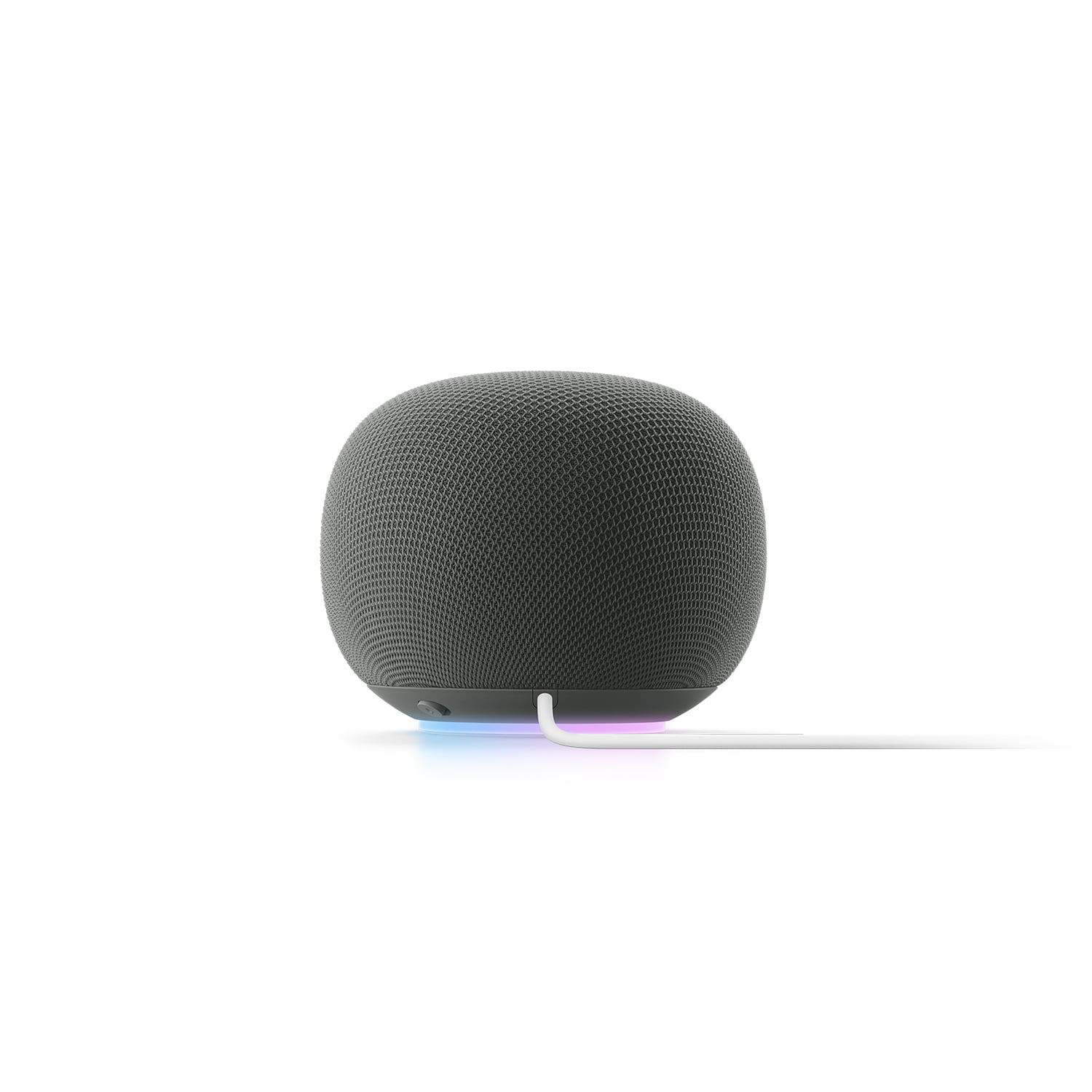
Bring room‑filling sound and smarter home control to every room. With Omnisense personalization, a built‑in smart home hub, and eero‑built mesh Wi‑Fi, the Echo Dot Max delivers powerful audio, seamless automation, and privacy protections you can trust. Ready to upgrade? Add the Amazon Echo Dot Max — Graphite to your cart and transform your home today.
2. Google Home Speaker — Best for Google Home and Gemini
Best For: Google Home households, Gemini users and buyers who want a modern Matter/Thread hub without moving into premium speaker pricing.
Google Home Speaker is one of the most important smart-speaker updates of 2026. It replaces years-old Google speaker hardware with a new platform built specifically for Gemini for Home.
The compact speaker uses a 58 mm full-range driver and three far-field microphones. Connectivity includes Wi-Fi 6, Bluetooth 5.4 and a Thread 1.3 border router. Google also explicitly lists it as a Matter-compatible Google Home hub.
That makes it a strong foundation for newer smart-home accessories. Matter-over-Wi-Fi devices can integrate into Google Home, while compatible Matter-over-Thread accessories can use the speaker’s Thread network.
Gemini is the main attraction. Compared with traditional command-based assistants, it is designed to understand more natural follow-up requests and more complex phrasing. WIRED rated the new speaker highly and found Gemini useful in conversational smart-home interactions.
The software is not flawless. Other independent testing has reported slow responses, occasional incorrect answers and inconsistent smart-device commands. That matters because a smart-home speaker needs reliability as much as intelligence.
Subscription costs also deserve attention. Core Gemini for Home functionality comes with the speaker, but Google’s more advanced Gemini Live and home-AI features are tied to Google Home Premium. The current U.S. Standard plan starts at $10 per month, while the Advanced plan adds broader camera-history and AI features at a higher monthly price.
Pros
✅ Gemini for Home built in
✅ Matter hub for Google Home
✅ Thread 1.3 border router
✅ Wi-Fi 6 and Bluetooth 5.4
✅ Strong hardware value for a current-generation smart speaker
Cons
❌ Gemini can still be inconsistent in real-world smart-home control
❌ Some advanced Gemini features require Google Home Premium
❌ No built-in Zigbee hub like Echo Dot Max
Who should skip it: If you already have a deeply established Alexa household with Zigbee accessories, switching ecosystems solely for Gemini may create more complexity than benefit.
Alternative: Echo Dot Max for broader built-in smart-home protocol support.
Experience immersive 360° sound and Gemini Hazel’s intelligent help for a more helpful, effortless home. Ask questions, control devices, and enjoy crisp audio from every corner of the room. Order your Google Home Smart Speaker with Gemini Hazel today and start living smarter.
3. Apple HomePod mini — Best for Apple Home
Best For: iPhone, Apple Music, Apple TV and Apple Home users who want a compact speaker and smart-home hub inside the Apple ecosystem.
HomePod mini is older than the newest Amazon and Google hardware, but its integration remains its strongest advantage. Once configured in Apple Home, HomePod mini automatically works as a home hub for automations, remote accessory control and compatible Matter devices.
It also provides Thread networking. Apple specifically identifies HomePod mini as a Thread-enabled home hub suitable for Thread-based Matter accessories.
For music, HomePod mini supports stereo pairing and multi-room playback. AirPlay lets compatible Apple devices send audio to the speaker and makes it easy to group playback across multiple HomePods or other supported AirPlay devices.
The built-in temperature and humidity sensor can also be used inside Apple Home automations. For example, a compatible automation could respond to a room-temperature threshold without requiring a separate basic climate sensor.
There is an important Bluetooth distinction. Apple lists Bluetooth 5.0 hardware in the HomePod mini specifications, but HomePod mini is not a conventional generic Bluetooth audio speaker that you pair with arbitrary phones or laptops for ordinary Bluetooth music playback. Its consumer audio workflow centers on AirPlay, supported services and the Apple ecosystem.
That difference matters if you want one speaker that visitors using many different devices can pair with directly. A conventional Bluetooth speaker or Sonos Era 100 is more flexible in that situation.
Pros
✅ Automatically functions as an Apple Home hub
✅ Thread-enabled for compatible Matter accessories
✅ AirPlay stereo and multi-room audio
✅ Temperature and humidity sensing
✅ Deep integration with iPhone, Apple Music and Apple TV
Cons
❌ Current price is high relative to some newer compact competitors
❌ Not a conventional Bluetooth playback speaker
❌ Less compelling for households that do not use Apple devices
Who should skip it: Android households or users who rely heavily on generic Bluetooth playback should choose Google, Amazon or Sonos instead.
Alternative: Sonos Era 100 if cross-device audio flexibility and stronger music performance matter more than Apple Home hub functionality.
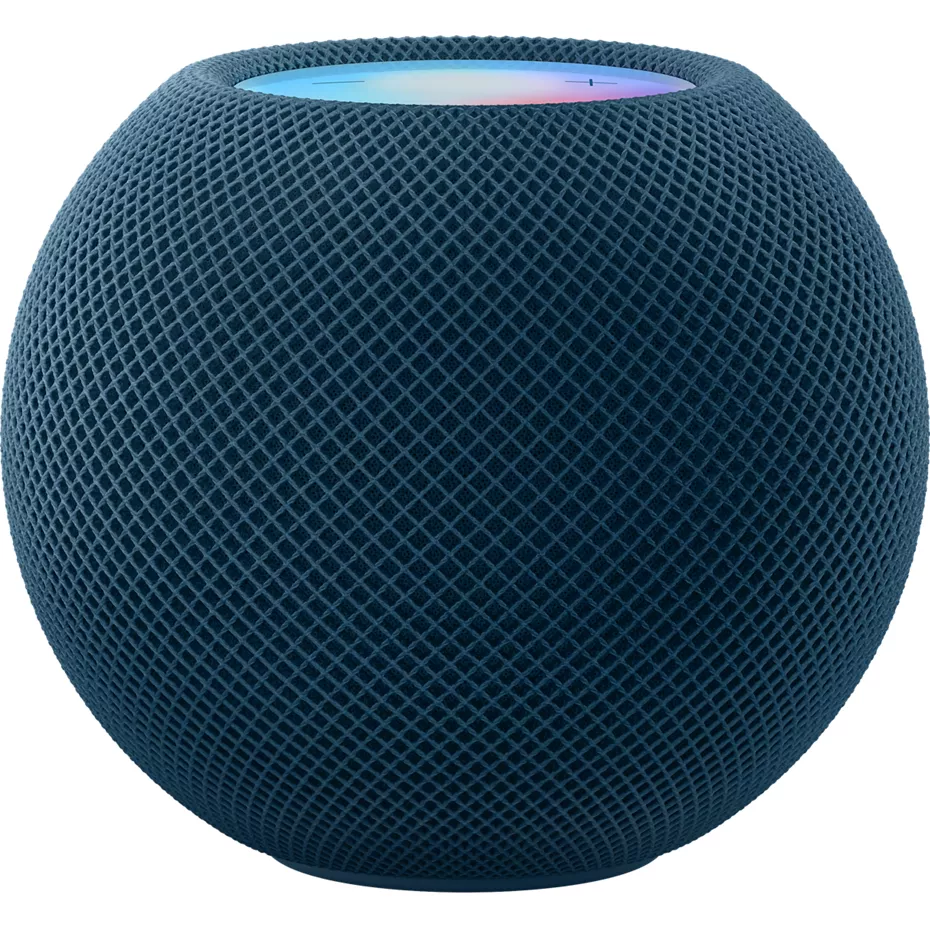
Bring room‑filling, 360° sound and hands‑free Siri intelligence into any room with the Apple HomePod mini in Blue—available from Verizon. Order yours from Verizon today to enjoy personalized music, seamless iPhone handoff, and effortless smart‑home control.
4. Sonos Era 100 — Best for Multi-Room Audio
Best For: Music-first households that want to build a multi-room Sonos system while retaining Alexa, AirPlay and Bluetooth playback.
Sonos Era 100 belongs in this guide for a different reason than Echo Dot Max. It is not our preferred smart-home protocol hub. It is the stronger choice when the primary goal is music throughout several rooms.
Era 100 supports Wi-Fi 6, Bluetooth 5.3, Apple AirPlay 2 and optional USB-C line-in through the appropriate Sonos adapter. It also works with Amazon Alexa and Sonos Voice Control.
Sonos Trueplay can tune the speaker for room acoustics, and multiple Sonos products can be grouped in the app for synchronized playback. Two Era 100 speakers can also create a stereo pair.
The larger Sonos ecosystem is the real advantage. You can start with one Era 100 in a kitchen or office and later add speakers elsewhere, or integrate compatible Sonos products into a television system.
If improving TV audio is the actual goal, however, do not use a standalone smart speaker as a substitute for equipment designed around television connections and dialogue. Our best soundbars for home theaters guide covers that separate use case.
Era 100 also includes a physical microphone switch on the rear that disconnects power to the microphone hardware, which is useful for users who want a stronger hardware-level privacy control.
The downside is that Sonos does not give Era 100 the Matter-controller, Thread-border-router or Zigbee-hub role offered by our Amazon and Google picks. You are paying for better audio and Sonos expansion rather than a central smart-home radio hub.
Pros
✅ Excellent Sonos multi-room ecosystem
✅ Wi-Fi 6 and Bluetooth 5.3
✅ Apple AirPlay 2
✅ Amazon Alexa and Sonos Voice Control
✅ Physical switch disconnects microphone hardware
Cons
❌ More expensive than mainstream compact smart speakers
❌ No Google Assistant or Gemini for Home
❌ Not the smart-home protocol hub that Echo Dot Max or Google Home Speaker can be
Who should skip it: If the speaker’s main job is controlling smart lights, locks and sensors, buy a platform-first speaker or dedicated hub rather than paying extra for Sonos audio.
Alternative: Echo Dot Max for a broader smart-home controller, or HomePod mini for Apple-focused multi-room audio.
Bring premium, voice‑enabled sound into every room with the SONOS Era 100.
Connect effortlessly via Wi‑Fi, Bluetooth 5.0, Apple AirPlay 2 or Line In — TruePlay tuning, touch controls and a humidity‑resistant matte white design ensure studio-quality listening anywhere in your home.
Order your Era 100 today and hear the difference.
5. Amazon Echo Pop — Best Budget Smart Speaker
Best For: Bedrooms, small offices and secondary rooms where inexpensive Alexa access matters more than strong bass or advanced hub radios.
Echo Pop is the simplest product in this shortlist, which is exactly why it works as the budget pick. It provides Alexa voice control, Wi-Fi and Bluetooth audio in a very compact speaker.
Amazon’s current smart-home documentation also includes Echo Pop among Matter-compatible Echo devices. That means it can participate in Alexa’s Matter ecosystem rather than being limited only to older cloud-based smart-home integrations.
Do not confuse Matter support with the hardware inside Echo Dot Max. Echo Pop does not appear on Amazon’s current list of Echo devices with built-in Thread border routers, and it is also absent from the current Zigbee-hub list.
That distinction is important when choosing the first speaker for a new smart home. Echo Pop is excellent as an inexpensive Alexa endpoint in another room, but Dot Max is the more capable centerpiece for a broader connected-home setup.
Independent audio testing also shows the limitation of the smaller design: Echo Pop cannot match larger Echo speakers for bass extension or maximum output. That is acceptable for speech, timers, podcasts and casual background music, but music-focused listeners should spend more.
Pros
✅ Affordable entry into Alexa
✅ Matter-compatible
✅ Compact enough for small rooms
✅ Bluetooth audio support
✅ Useful as a secondary-room Alexa speaker
Cons
❌ No built-in Thread border router
❌ No built-in Zigbee hub
❌ Limited bass and maximum volume compared with larger speakers
Who should skip it: Buyers building a new Matter-over-Thread or Zigbee-heavy home should choose a more capable hub speaker instead.
Alternative: Echo Dot Max when smart-home infrastructure matters more than minimum price.
Amazon Echo Pop brings surprisingly full sound, hands-free Alexa help, and smart‑home control to any room in a compact, privacy‑focused design. With eero‑built‑in, sustainable materials, and instant voice access to music, news, routines, and more, it’s the stylish upgrade your space needs.
Add the Echo Pop to your home today — buy now and start enjoying richer sound and smarter living.
What Does Matter Actually Mean on a Smart Speaker?
Matter is designed to improve interoperability between compatible smart-home products and ecosystems. It can make devices such as lights, plugs, locks, sensors, thermostats and other supported categories easier to connect across participating platforms.
Matter does not mean every device works identically in every app. Platform-specific features can still differ, and manufacturers can provide additional functionality through their own applications.
Matter also does not merge Alexa, Gemini and Siri into one assistant. The speaker you speak to still uses its own ecosystem and voice interface.
The Matter 1.6 specification released in 2026 further improves setup and multi-ecosystem management, but the practical experience still depends on the Matter version and device types currently supported by each platform.
Matter vs Thread vs Zigbee
| Technology | What It Does | Why It Matters in a Speaker |
|---|---|---|
| Matter | Smart-home interoperability/application standard | Allows compatible devices to work with supported ecosystems |
| Thread | Low-power IP mesh network | A Thread border router connects compatible Thread devices to the wider home network |
| Zigbee | Low-power smart-home wireless protocol | A built-in Zigbee hub can connect compatible Zigbee accessories without another dedicated bridge |
Echo Dot Max supports all three roles relevant here. Google Home Speaker supports Matter and Thread but not a built-in Zigbee hub. HomePod mini is a Thread-enabled Apple Home hub for Matter accessories. Echo Pop supports Matter but lacks Dot Max’s built-in Thread-border-router and Zigbee-hub roles.
Alexa+ vs Gemini for Home vs Siri
Alexa+ and Gemini for Home are trying to make smart speakers more conversational, while Siri remains most compelling because of Apple ecosystem integration rather than being the most open smart-home assistant.
Alexa+ can handle more natural multi-part requests than older Alexa and remains tied to Amazon’s broad smart-home ecosystem. Full U.S. Alexa+ access is included with Prime, while Amazon currently charges non-Prime users separately for the complete service.
Gemini for Home provides conversational control on Google’s current speaker. Its natural-language behavior can be impressive, but independent reviews in 2026 show that reliability still varies depending on the command.
Siri’s advantage is continuity across iPhone, Apple Watch, HomePod and Apple Home. If those products already make up the household, adding HomePod mini creates less platform friction than introducing another assistant solely because one benchmark ranks it higher.
Which Smart Speaker Is Best for Smart-Home Control?
Echo Dot Max has the broadest built-in smart-home connectivity in this shortlist. Matter, Thread and Zigbee make it unusually flexible as one compact device.
Google Home Speaker is nearly as attractive for a newer Matter-focused home and is particularly strong when Gemini and Google devices already dominate the household.
HomePod mini should be chosen primarily for Apple Home. Its Thread-enabled home-hub role makes it capable with modern Matter accessories, but its value is highest when paired with Apple’s wider ecosystem.
For buyers starting from scratch, our upcoming best smart home devices for beginners guide will cover plugs, lighting, security and automation devices beyond speakers.
Which Smart Speaker Sounds Best?
Sonos Era 100 is the best music-first speaker in this group. Its larger acoustic design, stereo presentation and Sonos tuning features give it a clearer audio-focused role than the compact hub-first speakers.
Echo Dot Max and Google Home Speaker both provide surprisingly capable sound for their size, but they are still compact smart speakers. HomePod mini remains impressive for its footprint, especially in a stereo pair.
If portability is more important than always-on Wi-Fi smart-home control, these products are the wrong category. Our best portable Bluetooth speakers guide covers battery-powered options designed for travel, outdoor use and easy device-to-device Bluetooth playback.
Best Smart Speaker for Multi-Room Audio
Sonos Era 100 is our top choice for buyers explicitly building a music system across several rooms, but every major ecosystem has its own multi-room approach.
Alexa can group compatible Echo speakers. Google Home can create speaker groups within its ecosystem. Apple supports multi-room AirPlay playback and HomePod grouping. Sonos has built its platform around synchronized room-based audio from the beginning.
The important limitation is interoperability. Matter does not currently mean that an Echo, HomePod, Google Home Speaker and Sonos speaker can automatically form one perfectly synchronized cross-brand audio group.
Choose the audio ecosystem you expect to expand before buying five inexpensive speakers from different platforms.
Smart Speaker vs Bluetooth Speaker
A smart speaker is best as a permanent connected-home device; a Bluetooth speaker is best for portable and direct-device listening.
Smart speakers usually depend on wall power and Wi-Fi for their most useful features. They excel at voice assistants, routines, multi-room streaming and smart-device control.
Portable Bluetooth speakers generally include batteries, emphasize direct phone pairing and are designed to move between rooms or outdoors.
Some smart speakers, including Echo and Sonos models here, also support Bluetooth audio. HomePod mini is the major exception: its listed Bluetooth hardware does not make it a conventional generic Bluetooth playback speaker.
Smart Speaker vs Smart Display
A smart display adds a screen for cameras, video calls, recipes, timers, visual smart-home controls and other information. That screen also increases size, price and visual presence in a room.
Choose a speaker when voice control and audio are enough. Choose a display when you frequently need visual information or camera feeds.
We intentionally keep smart displays out of this ranking because they solve a different problem and deserve separate comparisons.
Do Smart Speakers Require a Monthly Subscription?
No. The basic operation of the speakers in this guide does not require a universal mandatory monthly smart-speaker subscription. Music services and optional AI or smart-home services can add recurring costs.
Amazon’s full Alexa+ service is currently included for U.S. Prime members. Non-Prime users can pay for full Alexa+ access, while a more limited free chat experience is also available.
Google Home Speaker includes core Gemini for Home functionality, but Google Home Premium adds features such as Gemini Live, richer home automation tools and camera-related capabilities. Current U.S. pricing starts at $10 per month for Standard and $20 per month for Advanced.
HomePod mini does not require a comparable monthly Siri subscription. Music services such as Apple Music may still require their own plans.
Sonos similarly does not require a Sonos subscription just to use an Era 100, although the music services you stream through it may have subscription costs.
Smart-Speaker Privacy Controls
Every always-listening voice assistant deserves deliberate privacy setup.
Google Home Speaker includes a hardware microphone-mute switch. Sonos Era 100 has a rear switch that disconnects power to the microphone hardware. Amazon Echo devices provide microphone controls, while HomePod privacy behavior is managed through Apple’s Home and Siri ecosystem.
Hardware mute is only one part of privacy. Also review voice-history settings, household-member access, third-party integrations and whether sensitive devices such as locks or cameras require additional authentication.
Best Smart Speaker by Use Case
| Use Case | Best Pick | Why |
|---|---|---|
| Broad connected-home control | Amazon Echo Dot Max | Matter + Thread + Zigbee |
| Google Home and Gemini | Google Home Speaker | Gemini + Matter hub + Thread 1.3 |
| Apple household | Apple HomePod mini | Apple Home hub, Thread and AirPlay |
| Multi-room music | Sonos Era 100 | Sonos ecosystem, Bluetooth, AirPlay and Trueplay |
| Low-cost Alexa access | Amazon Echo Pop | Compact, affordable and Matter-compatible |
Frequently Asked Questions
What is the best smart speaker overall?
Amazon Echo Dot Max is our best overall choice for a connected home because it combines Alexa with Matter, a Thread 1.3 border router and a built-in Zigbee hub. Google or Apple households should still prioritize their existing ecosystem.
Is Alexa better than Google Home?
Alexa currently offers especially broad smart-home hardware support, while Google Home Speaker combines Gemini with modern Matter and Thread capabilities. The better platform depends on the devices and services already used in your home.
Does a smart speaker need Matter?
No, but Matter can make a smart speaker more useful as the center of a modern connected home by improving compatibility with supported devices across participating ecosystems.
What is the difference between Matter and Thread?
Matter defines how compatible smart-home devices communicate at the application level, while Thread is a low-power IP mesh network that many Matter devices use for connectivity. A Thread border router links those Thread devices with the wider home network.
Can HomePod mini play normal Bluetooth audio?
Not like a conventional Bluetooth speaker. HomePod mini includes Bluetooth hardware, but normal consumer playback centers on AirPlay and supported services rather than generic Bluetooth pairing from arbitrary audio sources.
Which smart speaker is best for music?
Sonos Era 100 is our music-first pick because it combines strong sound with Sonos multi-room playback, Trueplay, Bluetooth, AirPlay 2 and expansion into a larger Sonos system.
Do smart speakers require subscriptions?
Basic smart-speaker functions do not universally require a monthly subscription, but premium AI features and music services can. Alexa+ and Google Home Premium have optional paid tiers or membership-related benefits, while streaming services may have separate fees.
Can different smart speaker brands play multi-room audio together?
Not reliably as one universal system. Matter improves smart-device interoperability but does not create a cross-brand synchronized audio standard for Alexa, Google, Apple and Sonos speakers. Choose one primary audio ecosystem if multi-room playback is important.
Final Verdict: Which Smart Speaker Should You Buy?
Amazon Echo Dot Max is the best smart speaker for the broadest connected-home setup. Matter, Thread and Zigbee support give it capabilities that most compact speakers cannot match, while Alexa remains useful for routines, music and everyday voice control.
Choose Google Home Speaker if Gemini and Google Home are already central to your household. Its new hardware, Matter-hub functionality and Thread 1.3 support make it the strongest Google smart-speaker option, although Gemini’s reliability still has room to improve.
Choose HomePod mini for an Apple household, especially if you already use Apple Music, Apple TV and Apple Home. Choose Sonos Era 100 when music and multi-room expansion matter more than being the home’s Matter or Zigbee controller.
Echo Pop remains the budget option for adding Alexa to another room, but it should not be confused with Dot Max as a full smart-home radio hub.
Most importantly, do not buy smart speakers one room at a time without thinking about the system you are building. Voice assistants, multi-room audio and platform-specific features still create meaningful ecosystem boundaries even in the Matter era.
Bottom line: Buy Echo Dot Max for the broadest smart-home control, Google Home Speaker for Gemini and Google Home, HomePod mini for Apple Home, Sonos Era 100 for multi-room music or Echo Pop when low-cost Alexa access is the priority.
Sources
- Amazon Developer — Alexa Matter, Thread and Zigbee Smart Home Support
- Google Store — Google Home Speaker Technical Specifications and Google Home Premium
- Apple — HomePod mini Technical Specifications and Apple Home Hub Support
- Sonos — Era 100 Product Specifications
- WIRED — Best Smart Speakers and Google Home Speaker Review
Product Groups: Amazon Echo Dot Max, Google Home Speaker, Apple HomePod mini, Sonos Era 100, Amazon Echo Pop