Summer Cooling Devices 2026
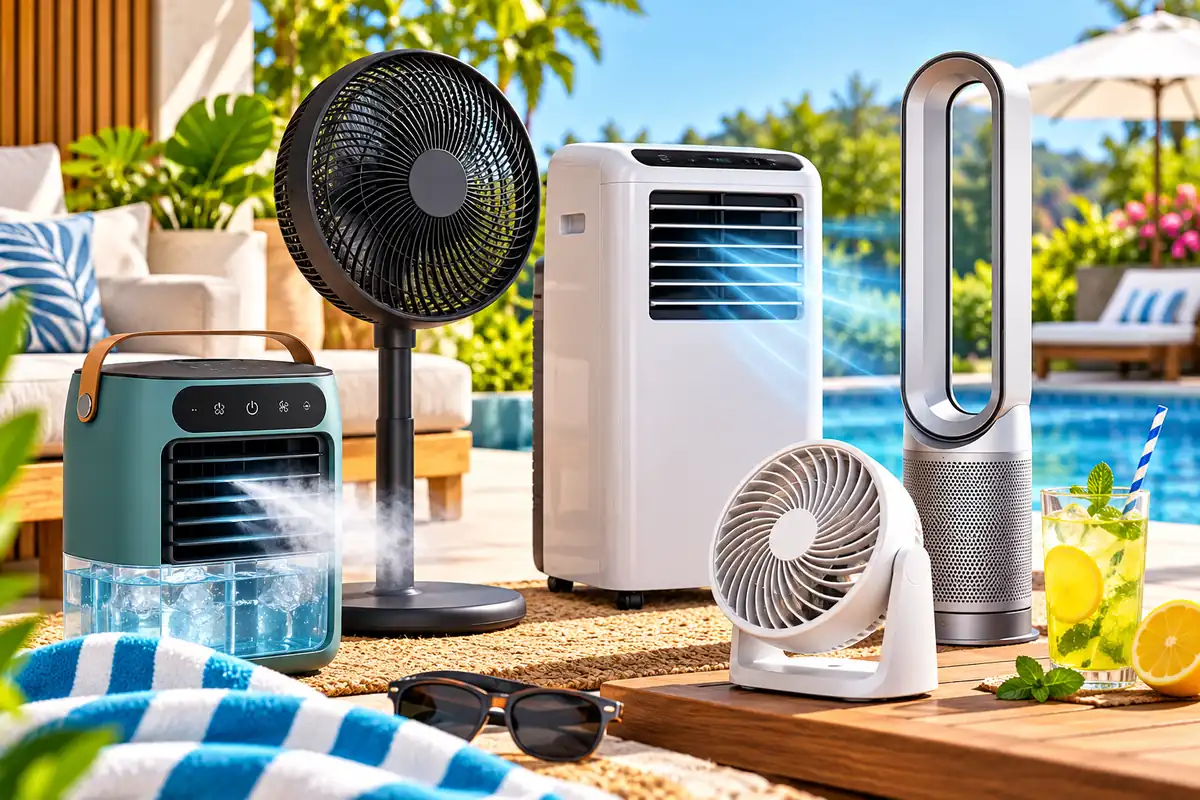
Some summer cooling devices actually lower the temperature of a room. Others only make you feel cooler. That difference matters before you spend money.
A properly sized air conditioner is the most reliable choice when you need to reduce indoor temperature and humidity. A window unit such as the Midea U-Shaped Smart Window Air Conditioner is our first choice when installation allows it. A dual-hose portable AC such as the Midea DUO can also cool a room, but portability comes with efficiency, noise, and floor-space trade-offs.
Fans work differently. A Vornado 660 moves air across your body and can make a warm room feel more comfortable, but it does not refrigerate the air. Evaporative coolers can genuinely lower air temperature in a dry climate, while misting fans and cooling towels are better understood as personal cooling tools.
The key is matching the technology to the problem rather than buying something simply because the box says “cooling.”
Quick Answer: Which Summer Cooling Devices Actually Work?
Best for Actually Cooling a Room: Window air conditioner — removes heat and humidity and is usually the strongest room-cooling option when your window can accept one.
Best When a Window AC Is Not Practical: Dual-hose portable air conditioner — genuine refrigerated cooling, but generally less efficient and more intrusive than a comparable window unit.
Best Low-Cost Comfort: Fan or air circulator — makes people feel cooler through airflow but does not meaningfully lower room temperature.
Best for Hot, Dry Climates: Evaporative cooler — can lower incoming air temperature when humidity is low but becomes much less useful as humidity rises.
Best Personal Cooling: Misting fans and evaporative cooling towels — useful close to the body, but neither should be mistaken for whole-room air conditioning.
Cooling Devices Compared: What They Really Do
| Device Type | Lowers Room Temperature? | Best Conditions | Main Advantage | Main Limitation |
|---|---|---|---|---|
| Window AC | Yes | Hot or humid indoor rooms | Strong room cooling + dehumidification | Requires suitable window/install |
| Portable AC | Yes | Rooms where window units are impractical | Flexible installation | More floor space, noise, lower efficiency |
| Fan / Air Circulator | No | Mild-to-hot rooms with people present | Low-cost personal comfort | Does not remove heat from room |
| Evaporative Cooler | Yes, conditionally | Hot, dry, ventilated environments | Low-power evaporative cooling | Poor fit for humid climates |
| Misting Fan | Mostly local | Outdoor / personal cooling | Airflow plus evaporation | Humidity limits evaporation |
| Cooling Towel | No | Exercise, work, outdoor activities | Cheap personal heat relief | Needs water and evaporation |
| Dehumidifier | No | Humid rooms | Reduces moisture and clammy feeling | Slightly warms the room while operating |
1. Window Air Conditioners — The Most Reliable Room-Cooling Device
If your goal is to make an indoor room measurably colder, a properly sized air conditioner is the strongest option in this guide.
An air conditioner uses a refrigeration cycle to move heat from inside the room to the outdoors. It also removes moisture as air passes over its cold evaporator coil, which is especially helpful in humid summer weather.
Window units have an important efficiency advantage over many portable systems: the heat-producing compressor and condenser sit largely outside the conditioned room.
ENERGY STAR also highlights modern variable-speed room air conditioners because they can adjust compressor output instead of simply switching between full power and off. That can improve temperature stability and efficiency.
Example: Midea 12,000 BTU U-Shaped Smart Window Air Conditioner
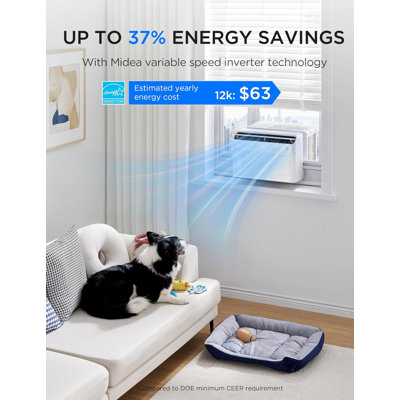
The current Midea 12,000 BTU U-Shaped model is designed for rooms up to 550 square feet. It combines cooling, dehumidification, and ventilation with variable-speed inverter operation.
The U-shaped design places the window between the interior and exterior portions of the air conditioner. That helps isolate compressor noise and still allows the window to open and close when the installation permits it.
Midea also provides app and compatible voice-assistant control.
The important buying decision is not simply choosing the largest BTU number available. Oversizing can lead to short cycling and poorer moisture control. Match the unit to the room size, sun exposure, insulation, ceiling height, and other heat sources.
Pros
✅ Actually lowers indoor air temperature
✅ Removes humidity while cooling
✅ Inverter models can modulate output
✅ Usually a stronger efficiency choice than portable AC
Cons
❌ Requires a compatible window and secure installation
❌ Heavy units can be difficult for one person to install safely
Bottom line: If you need genuine indoor cooling and can install a window unit, start here.
2. Portable Air Conditioners — They Work, but With Trade-Offs
A portable air conditioner really does cool air. It is not the same thing as a fan or evaporative “personal air cooler.”
The catch is efficiency.
A portable AC keeps the compressor and other heat-producing components inside the room. It then uses one or more hoses to move hot condenser air outdoors through a window kit.
Consumer Reports has found portable air conditioners generally less effective and more energy-intensive than comparable window units. Its testing also found dual-hose systems preferable when a portable AC is the only practical option.
Example: Midea DUO 12,000 BTU Smart Inverter Portable AC
The current Midea DUO uses a hose-in-hose arrangement that functions as a dual-hose design. One airflow path supports condenser intake while another expels hot air.
The 12,000 BTU DOE model is intended for spaces up to about 550 square feet and provides cooling, dehumidification, ventilation, and smart controls. Midea advertises operation as low as 42 dBA under qualifying conditions.
The unit weighs more than 70 pounds, so “portable” mainly means it has casters and can be relocated within a home. It is not something most people will want to carry between floors frequently.
The exhaust hose must also reach a suitable window or opening. Keep the hose arrangement as short and direct as the manufacturer recommends because the exhaust side carries heat you are trying to remove from the room.
Pros
✅ Genuine refrigerated air conditioning
✅ Easier option when conventional window AC installation is unavailable
✅ Can dehumidify while cooling
✅ Casters allow room-to-room repositioning on one level
Cons
❌ Generally less efficient than a comparable window unit
❌ Takes up floor space
❌ Exhaust hose and compressor remain inside the room
Bottom line: Buy a portable AC because your installation limits require one, not because portability automatically makes it the better cooling technology.

3. Fans and Air Circulators — They Cool People, Not Rooms
A fan can make you feel substantially more comfortable without lowering the room’s actual air temperature.
Moving air improves heat transfer from your skin and supports evaporation of perspiration. That creates the familiar wind-chill effect.
The Department of Energy puts the distinction simply: fans cool people, not rooms.
That is why leaving a fan running in an empty room does not store “coolness” for later. The motor actually adds a small amount of heat to the space while it operates.
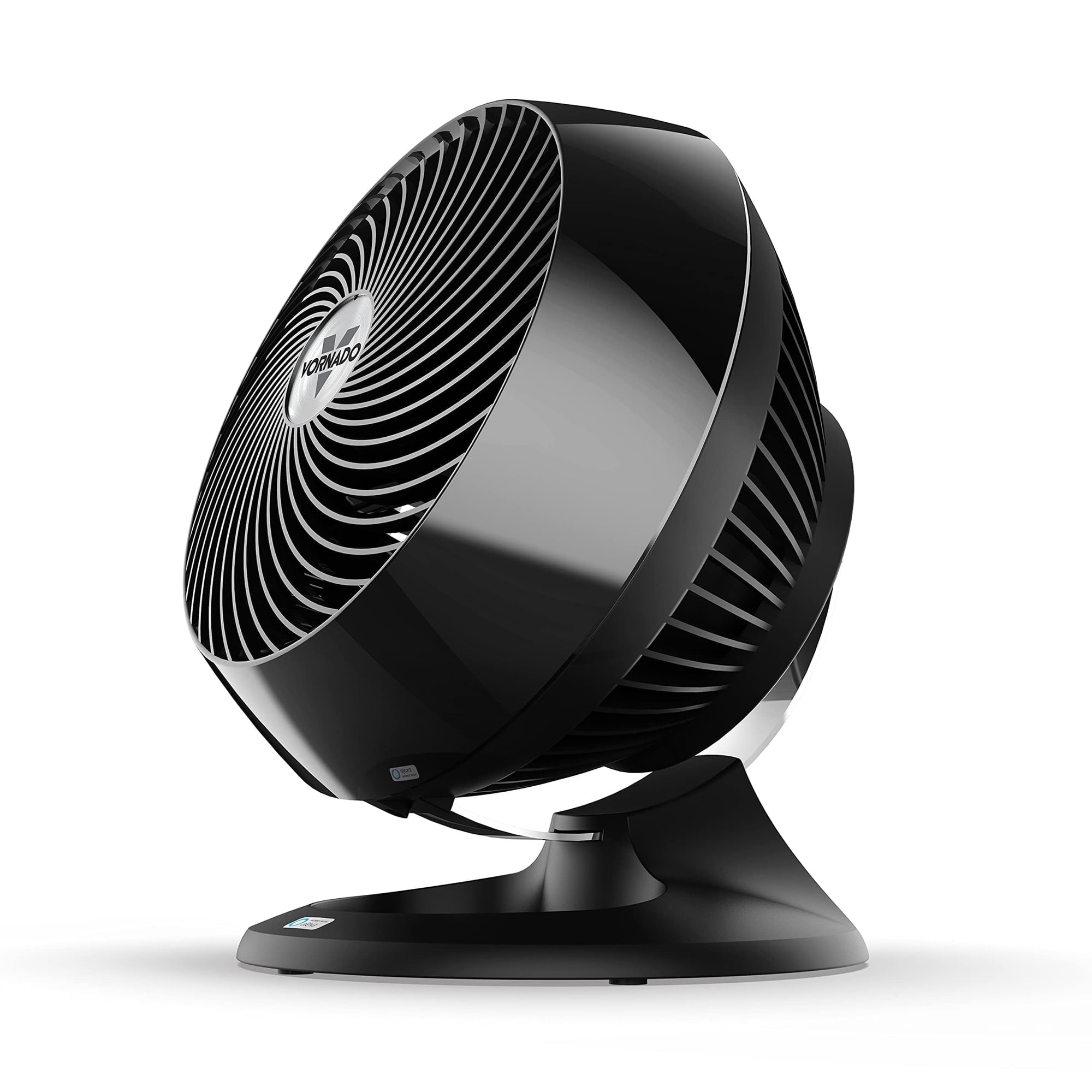
Example: Vornado 660 Whole Room Air Circulator
The Vornado 660 is designed to circulate air through a room rather than merely create a narrow breeze directly in front of the blades.
It currently has four speed settings, multidirectional tilt, a removable grille for cleaning, and a five-year warranty. Vornado advertises airflow reaching up to 100 feet under its test conditions.
A circulator can be especially useful alongside air conditioning. Better air movement can reduce hot and cold pockets and let occupants feel comfortable at a slightly warmer thermostat setting.
However, a fan is not a replacement for air conditioning during dangerous heat.
Extreme-heat warning: CDC advises against relying solely on electric fans when temperatures are extremely hot because airflow may provide comfort without preventing heat-related illness. Move to an air-conditioned location or follow local public-health guidance when indoor heat becomes unsafe.
Pros
✅ Low-cost way to improve personal comfort
✅ Much lower power demand than compressor cooling
✅ Useful alongside air conditioning
✅ Easy to move between rooms
Cons
❌ Does not remove heat from the room
❌ Should not be the only heat-protection strategy during dangerous temperatures
Bottom line: A fan works very well for comfort when the conditions are appropriate. It does not work as a miniature air conditioner.
4. Evaporative Coolers — Effective in Dry Air, Disappointing in Humidity
Evaporative coolers can genuinely lower air temperature, but climate determines whether the technology makes sense.
These devices pull hot air through water-saturated media. As water evaporates, heat is absorbed from the incoming air. The cooler then blows that cooler, more humid air toward the occupied space.
This works best where summer air is hot and dry.
As relative humidity rises, the air has less capacity to accept additional water vapor. Evaporation slows, and so does the cooling effect.
That is why an evaporative cooler that performs well in Arizona may be disappointing during a humid summer in Florida.
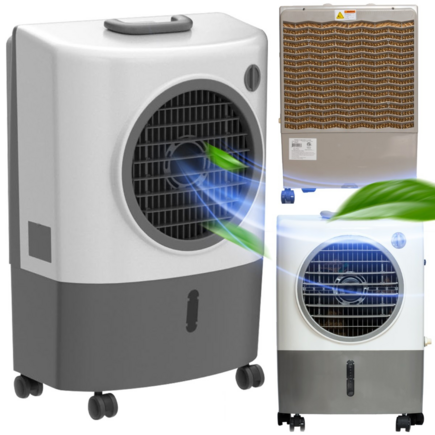
Example: Hessaire MC18M 1,300 CFM Evaporative Cooler
The Hessaire MC18M is a portable evaporative cooler rated at 1,300 CFM. The current specification lists an 85-watt power draw, a 4.8-gallon water tank, a 16-pound body, and coverage guidance up to 500 square feet.
Its low electrical draw illustrates the appeal of evaporative cooling: there is no refrigeration compressor.
However, Hessaire specifically positions the unit for patios, workshops, and ventilated spaces. Retail guidance also makes clear that it is not intended to replace an indoor refrigerated air conditioner.
Ventilation matters because direct evaporative cooling continuously adds moisture. The moist air needs somewhere to go rather than accumulating inside a sealed room.
Pros
✅ Can lower air temperature in hot, dry conditions
✅ Much lower electrical draw than compressor AC
✅ Useful for patios and ventilated workshops
✅ Adds moisture in very dry air
Cons
❌ Performance falls as humidity rises
❌ Requires water and periodic maintenance
❌ Adds moisture instead of dehumidifying
Bottom line: Evaporative coolers are real cooling devices in the right climate. They are not universal substitutes for air conditioning.
5. Misting Fans — Useful Personal Cooling, Especially Outdoors
A misting fan combines two useful effects: moving air and evaporating fine water droplets.
That can make a patio, campsite, sports sideline, or work area feel noticeably more comfortable. Like other evaporative technologies, the effect is strongest when the surrounding air has room to absorb more moisture.
Example: Shark FlexBreeze HydroGo
The Shark FlexBreeze HydroGo combines a rechargeable fan with an integrated misting tank.
It can operate corded or cordless, weighs about five pounds, and Shark rates battery life at up to 12 hours under qualifying operating conditions. The company also advertises airflow that can be felt at long range.
Shark reports a local temperature reduction of up to 5 degrees under controlled testing at roughly three feet from the fan. That is a manufacturer test of personal misting performance, not evidence that the device can reduce an entire room by 5 degrees.
That distinction is important. HydroGo is best treated as a personal comfort device.
Pros
✅ Combines airflow with evaporative misting
✅ Cordless operation
✅ Useful for patios, camping, sports, and outdoor work
✅ Integrated water tank avoids a garden-hose connection
Cons
❌ Primarily personal cooling rather than whole-room cooling
❌ Evaporative benefit decreases as humidity increases
Bottom line: Misting fans work best when you understand the scale of the effect. They cool the area around a person, not an entire home.
6. Cooling Towels — Simple Evaporation That Works Close to the Body
Cooling towels are among the simplest summer cooling products, and their basic mechanism is legitimate.
You wet the material, remove excess water, and expose it to moving air. As water evaporates from the towel, heat is absorbed.
This does not cool the room. It provides a cooler wet surface against the neck, head, or other area of the body.
Example: Ergodyne Chill-Its 6602 PVA Cooling Towel
The Chill-Its 6602 uses PVA material and measures 13 by 29.5 inches. Ergodyne says it activates with water and can provide up to four hours of cooling before it needs to be rewet, depending on conditions.
The towel is machine washable. It dries stiff, then softens again when reactivated with water.
At a regular manufacturer price below $10 at the time of research, it is also the least expensive product in this guide.
Cooling duration depends on airflow, temperature, humidity, how wet the material remains, and how the towel is worn. Expect shorter effective cooling in conditions where evaporation is limited.
Pros
✅ Very inexpensive
✅ No battery or electricity required
✅ Easy to reactivate with water
✅ Useful for outdoor work, exercise, and travel
Cons
❌ Does not cool surrounding air
❌ Effect depends heavily on evaporation and humidity
Bottom line: A cooling towel is useful for local comfort. It is not a replacement for shade, hydration, or air conditioning during severe heat.

Do Dehumidifiers Cool a Room?
No. A standard portable dehumidifier removes moisture, but it does not function as an air conditioner.
In fact, ENERGY STAR notes that the air immediately around a dehumidifier can be warmer because the refrigeration process and electrical components release heat into the space.
That does not make dehumidifiers useless in summer.
High humidity slows the evaporation of perspiration and can make moderate temperatures feel uncomfortable. Lowering indoor relative humidity can therefore make a room feel less clammy even when the thermometer does not fall.
A dehumidifier makes most sense when excess moisture is the problem. If the room is simply too hot, use actual cooling instead.
What About Mini “Personal Air Conditioners”?
Read the product description carefully before buying a small desktop device marketed as a personal air conditioner.
Many inexpensive devices contain a fan, a water reservoir, and wet filter media. That makes them small evaporative coolers, not compressor air conditioners.
They may produce a cool-feeling stream of air close to your desk in dry conditions. They will not provide the same room cooling as a refrigerated AC.
A useful test is simple: if the device has no compressor or refrigeration system and does not exhaust collected heat outdoors, it should not be expected to behave like a conventional air conditioner.
Window AC vs Portable AC: Which Should You Choose?
Choose a window unit when your window, building rules, and installation situation allow it.
ENERGY STAR-certified window units can offer strong efficiency, and newer inverter designs can maintain temperature with less on/off cycling.
Choose a portable AC when you cannot install a conventional window model, have an unusual window configuration, or need a unit that can be relocated occasionally.
Do not assume the word “portable” means installation-free. A portable AC still needs to exhaust heat outside.
Fan vs Air Conditioner: When Is a Fan Enough?
A fan is enough when the room temperature is tolerable and you mainly need increased airflow.
It is particularly useful at night, during mild summer weather, or together with air conditioning.
A fan can also let you use a warmer thermostat setting while maintaining comfort, which can reduce how hard the air conditioner needs to work.
It is not enough when indoor heat itself is becoming dangerous. CDC specifically warns against relying solely on a fan during very hot conditions.
Evaporative Cooler vs Air Conditioner
The choice mostly comes down to climate.
In dry conditions, an evaporative cooler can provide effective cooling with far lower electrical demand because it does not run a compressor.
In humid conditions, adding more moisture is often exactly what you do not want. A conventional air conditioner both lowers temperature and removes moisture.
If summer humidity is routinely high where you live, skip the swamp cooler.
How to Make Any Cooling Device Work Better
Block Solar Heat Before It Enters
Closing suitable blinds, shades, or curtains during intense direct sun reduces the heat load that your cooling equipment must remove later.
Use Cooler Outdoor Air When Conditions Allow
When outdoor temperature drops below indoor temperature, cross-ventilation can help flush accumulated heat from the building.
Do not open windows during the hottest part of the day simply out of habit if the outdoor air is hotter than the air indoors.
Reduce Indoor Heat Sources
Ovens, stovetops, powerful computers, lighting, and other appliances add heat to the room.
Reducing unnecessary heat generation makes every cooling system’s job easier.
Clean AC Filters
Restricted airflow hurts air-conditioner performance. Check and clean or replace filters according to the manufacturer schedule.
Keep Portable AC Exhaust Hoses Short
Follow the manufacturer’s installation guidance and avoid unnecessary exhaust-hose length or tight bends.
Use Fans Where People Are
Because fans cool occupants rather than storing cool air in the room, switch them off when the room is empty unless the fan serves a separate ventilation purpose.
Don’t Forget Hydration During Hot Weather
Cooling equipment helps manage the environment, but it does not replace basic heat precautions.
CDC recommends drinking more water than usual during hot weather rather than waiting until you feel thirsty.
If you need a bottle that is practical for summer travel, work, or outdoor activities, our guide to the best reusable water bottles compares insulated and lightweight options.
For homes where cooling equipment is part of a broader connected setup, our guide to the best smart home devices for beginners explains smart plugs, thermostats, sensors, and compatible ecosystems.
And when the seasons change, our guide to the best heating devices for winter home comfort applies the same principle in reverse: choose the technology based on the space and problem rather than the marketing label.
Summer Cooling Devices: What Works by Situation?
| Situation | Best Approach | Why |
|---|---|---|
| Hot, humid bedroom | Window AC | Removes heat and moisture |
| Window unit prohibited | Dual-hose portable AC | Real cooling with less permanent installation |
| Warm but not dangerously hot room | Fan / circulator | Improves personal comfort cheaply |
| Hot, dry patio or workshop | Evaporative cooler | Dry air allows strong evaporation |
| Sports sideline or patio seat | Misting fan | Localized airflow + evaporation |
| Walking or outdoor work | Cooling towel + shade + hydration | Portable personal evaporative cooling |
| Humid but not especially hot room | Dehumidifier | Improves moisture comfort without being AC |
Frequently Asked Questions
What summer cooling device works best?
For lowering the temperature of an indoor room, a properly sized air conditioner is the most reliable choice. Fans improve personal comfort, while evaporative coolers can work well in hot, dry climates.
Do fans actually cool a room?
No. Fans primarily cool people by moving air across the skin. They do not remove heat from the room, so switch them off in empty rooms unless they are being used for ventilation.
Do portable air conditioners actually work?
Yes. A real portable air conditioner uses refrigeration to remove heat and exhausts that heat outdoors. However, portable units are generally less efficient than comparable window air conditioners.
Do evaporative coolers work?
Yes in hot, dry conditions. They cool air through water evaporation, so performance declines as humidity rises. Direct evaporative coolers also add moisture to the air.
Are mini personal air conditioners real air conditioners?
Some are not. Many small desktop products are evaporative coolers that use water and a fan rather than a compressor. They may cool a small stream of air but should not be expected to cool a room like conventional AC.
Will a dehumidifier make a room cooler?
It can make humid conditions feel more comfortable, but it does not lower room temperature like an air conditioner. A portable dehumidifier actually releases some heat into the room while it operates.
Do cooling towels actually work?
They can provide local cooling as water evaporates from the material. The effect is strongest when air can evaporate the moisture efficiently and becomes less noticeable in very humid conditions.
Final Verdict: Which Summer Cooling Devices Are Worth Buying?
If you need to reduce indoor temperature, buy actual air conditioning. A window AC is our first choice when installation permits it, while a dual-hose portable AC is a useful compromise when a window unit is not practical.
If the room is only moderately warm, a good fan may be all you need. It costs much less to operate and can make occupants feel cooler even though the room temperature remains nearly unchanged.
Evaporative coolers are effective technology, but only in the right climate. They make far more sense in hot, dry regions than in humid ones.
Misting fans and cooling towels work at the personal level. They can make summer activities more comfortable, but neither should be marketed or purchased as whole-room air conditioning.
The products to be most skeptical of are devices that blur these categories. A tiny water-and-fan desktop unit may be useful inches from your face, but calling it an “air conditioner” does not give it a compressor or the ability to move substantial heat outside.
Best for True Room Cooling: Midea U-Shaped Window AC
Best Portable True Cooling: Midea DUO Portable AC
Best for Airflow: Vornado 660
Best for Dry Climates: Hessaire MC18M Evaporative Cooler
Best Portable Misting: Shark FlexBreeze HydroGo
Best Low-Cost Personal Cooling: Ergodyne Chill-Its 6602
Sources
- CDC — Heat and People without Air Conditioning.
- U.S. Department of Energy — Home Cooling and Energy Saver 101: Home Cooling.
- ENERGY STAR — Room Air Conditioners.
- Midea — U-Shaped Smart Window Air Conditioner and DUO Smart Inverter Portable Air Conditioner specifications.
- Honeywell — Evaporative Air Cooler performance and low-humidity guidance.
How we research: Discompare compares current manufacturer specifications, U.S. product availability, government energy guidance, public-health heat guidance, and practical differences between cooling technologies. We do not claim hands-on testing unless explicitly stated. Manufacturer airflow, battery, noise, coverage, and cooling figures are reported as manufacturer claims where applicable and can vary with room conditions, humidity, installation, and operating settings. Discompare may earn a commission from eligible retailer or price-comparison links.
Product Groups: Midea 12000 BTU U-Shaped Smart Window Air Conditioner, Midea DUO 12000 BTU Smart Inverter Portable Air Conditioner, Vornado 660 Whole Room Air Circulator, Hessaire MC18M Evaporative Cooler, Shark FlexBreeze HydroGo Misting Portable Fan, Ergodyne Chill-Its 6602 Cooling Towel