Best Air Purifiers for Allergy Sufferers 2026
The Coway Airmega Mighty2 AP-1512N is the best air purifier for allergies for most homes because it combines strong particle-cleaning performance, conventional HEPA and activated-carbon filtration, low operating noise and a sensible filter-replacement schedule. The Winix 5510 is the stronger value choice if smoke and odors are also major concerns, while the Honeywell HPA5300B has the highest large-room CADR in this shortlist.
An air purifier can reduce airborne pollen, dust, pet dander, smoke particles and other pollutants, but it is not a treatment for allergies or asthma. The U.S. Environmental Protection Agency recommends filtration as a supplement to controlling pollutant sources and ventilating with clean outdoor air. Studies using portable HEPA air cleaners have found improvements in some allergy and asthma symptoms, but results are not always large or consistent.
For that reason, our rankings focus on measurable air-cleaning ability rather than medical promises: CADR, realistic room sizing, particle-filter design, operating noise, filter life and whether a purifier is practical enough to run consistently.
Quick Answer: Best Air Purifiers for Allergies
Best Overall: Coway Airmega Mighty2 AP-1512N — strong CADR, conventional HEPA plus activated carbon, quiet operation and a one-year filter-life target.
Best Value for Allergies & Smoke: Winix 5510 — AHAM verified for 392 sq. ft. at 4.8 air changes per hour, with True HEPA, pellet carbon and strong independent test results.
Best for Large Rooms: Honeywell HPA5300B — 323 smoke, 335 dust and 335 pollen CADR with AHAM verification for 500 sq. ft. at 4.8 ACH.
Best Affordable Smart Bedroom Pick: Levoit Vital 200S-P — 250 CFM CADR, 23 dB minimum noise and useful app, scheduling and automatic controls.
Best Premium Allergy-Focused Pick: Alen BreatheSmart 45i — quiet operation, HEPA filtration and independent Asthma & Allergy Friendly® certification.
Can an Air Purifier Actually Help With Allergies?
An air purifier can help reduce the concentration of airborne particles such as pollen, dust, pet dander and some mold particles when the purifier is appropriately sized and operated long enough. That makes a properly selected particle-filter air purifier useful as one part of an allergy-focused indoor-air strategy.
The limitation is equally important. A purifier cannot remove every allergen in a home, including particles already settled into carpets, bedding, furniture and other surfaces. It also cannot stop new pollen from entering through open windows, fix a mold-causing moisture problem or replace medical care for allergy or asthma symptoms.
The EPA therefore recommends combining filtration with source control and ventilation. In practical terms, that can mean vacuuming and cleaning surfaces, controlling indoor moisture, keeping obvious pollutant sources out of the room and ventilating when outdoor air quality allows.
What to expect: Think of an air purifier as a tool for reducing airborne exposure, not as a cure. A good purifier may make the air cleaner; it cannot diagnose, prevent or treat allergies or asthma.
How We Chose These Air Purifiers
We evaluated air purifiers for allergies using measurable particle-cleaning performance first. That means looking at smoke, dust and pollen CADR; room size at a meaningful air-change rate; filter design; noise; filter replacement intervals; independent test evidence and whether the machine is realistic to operate for long periods.
We also looked carefully at filtration terminology. A high-quality particle filter matters, but the word “HEPA” alone does not tell you how quickly the complete purifier cleans a room. Airflow and CADR matter too. Likewise, activated carbon addresses gases and odors rather than serving as a substitute for particle filtration.
Finally, we considered ozone and ionization. The EPA advises avoiding air cleaners that intentionally produce ozone because ozone is a lung irritant. Where a selected purifier includes an optional plasma or ionization function, that technology is not part of our reason for recommending the product.
Air Purifiers for Allergy Sufferers Compared
| Model | Best For | Particle Filter | Smoke CADR | Pollen CADR | Room-Size Basis | Noise | Main Caution |
|---|---|---|---|---|---|---|---|
| Coway Mighty2 | Best Overall | HEPA + carbon | 240 | 249 | ≈370 sq. ft. in independent max-speed testing | 19–50 dB manufacturer range | 1,800 sq. ft. claim is based on 1 ACH |
| Winix 5510 | Allergies & Smoke | True HEPA + pellet carbon | 253 | 247 | 392 sq. ft. @ 4.8 ACH | Can get loud on high | Includes PlasmaWave |
| Honeywell HPA5300B | Large Rooms | True HEPA + carbon prefilter | 323 | 335 | 500 sq. ft. @ 4.8 ACH | Large unit | Uses three HEPA filters |
| Levoit Vital 200S-P | Smart Bedroom Use | High-efficiency particle filter + carbon | 250 CFM overall CADR | Not separately published here | 388 sq. ft. @ 4.8 ACH | 23–54 dB | Do not assume “True HEPA” terminology |
| Alen BreatheSmart 45i | Premium Allergy-Focused | HEPA | CADR 255 overall | CADR 255 overall | ≈390 sq. ft. using EPA CADR sizing | About 23–50 dB | Premium price; optional ionizer |
Compare Current Air Purifier Prices
Air-purifier prices frequently change by retailer and promotion, and the cheapest machine is not necessarily the cheapest to own. Replacement filters can materially change long-term cost, especially on models that use multiple filter cartridges or expensive combination filters.
First choose a purifier with enough CADR for the room and a filtration setup you are comfortable running regularly. Then compare live prices, replacement-filter availability and the cost of maintaining the exact model.


1. Coway Airmega Mighty2 AP-1512N — Best Overall
Best For: Bedrooms, living rooms and medium-size spaces where strong particle filtration and quiet long-term operation matter more than app control.
The Airmega Mighty2 is the strongest overall choice because it gets the fundamentals right. Coway combines a washable prefilter with a Max2 filter containing activated carbon and HEPA media. Official CADR ratings are 240 for smoke, 242 for dust and 249 for pollen, giving it the balanced performance needed for airborne allergens rather than relying on a single headline filtration claim.
The important number to question is Coway’s advertised 1,800-square-foot coverage. That figure represents one air change per hour. For allergy-focused use, faster recirculation is generally more useful. Independent RTINGS testing measured a PM1 CADR of 237 CFM and recommended about 370 sq. ft. at maximum fan speed. That is a much more realistic way to think about this purifier for a bedroom, office, dining room or modest living space.
Noise is another reason the Mighty2 ranks first. Coway specifies a 19–50 dB operating range, while independent testing found especially good filtration performance when constrained to lower-noise operation. That matters because an air purifier that is too loud to tolerate at night or during work will often spend more time switched off.
The Max2 filter combines HEPA media with activated carbon and is designed for roughly a year of typical use. A filter-change indicator tracks replacement timing, while the washable prefilter can be removed from the side for routine cleaning.
There are no Wi-Fi or app controls. For some buyers that is a disadvantage; for others it removes unnecessary complexity from an appliance whose most important job is simply moving enough air through a good filter.
Pros
✅ Strong and balanced smoke, dust and pollen CADR
✅ HEPA and activated-carbon filtration
✅ Quiet enough for bedrooms and workspaces
✅ Washable prefilter simplifies maintenance
✅ Main filter is designed for up to roughly one year of use
Cons
❌ No Wi-Fi or app control
❌ Advertised 1,800 sq. ft. coverage is based on only one air change per hour
❌ Not the right single-unit choice for very large open-plan spaces
Who should skip it: Choose a larger-CADR model if the purifier needs to serve a large open-plan room, or Winix if app controls are a priority.
Alternative: Winix 5510 for Wi-Fi, stronger carbon filtration and excellent smoke-focused performance.
Ready for cleaner, healthier air? Get the Coway Airmega Mighty2 Large-Room HEPA Purifier today — purify up to 900 ft² in 30 minutes (1,800 ft² in 60) with IEST-RP-CC007 certified HEPA filtration, real-time MegaScan sensing, and whisper-quiet Smart Mode.
Enjoy effortless maintenance with a precise filter-life indicator, energy-saving operation, award-winning design, and an industry-leading 3-year warranty. Order now and start breathing easier.
2. Winix 5510 — Best Value for Allergies and Smoke
Best For: Homes dealing with a combination of pollen, dust, pet dander, smoke particles and household odors where strong air cleaning matters more than minimum noise.
The Winix 5510 offers unusually strong performance for its price class. It is AHAM verified for a 392-square-foot room at 4.8 air changes per hour, with CADRs of 252 for dust, 247 for pollen and 253 for smoke.
Its filtration stack uses a washable prefilter, pellet-based Advanced Odor Control carbon filter and True HEPA filter. The carbon layer is worth highlighting because thin carbon sheets should not be treated as equivalent to a substantial amount of adsorbent material. The EPA notes that carbon can help remove gases when enough material is present, while CADR itself measures particle-cleaning performance rather than gas removal.
Independent TechGearLab testing supports the Winix particularly strongly for allergy and smoke use. It ranked the model third overall in its 2026 comparison and named it its Best for Allergies and Smoke, with an 8.7/10 air-cleaning score. The tradeoffs were higher filter costs and more noticeable noise on its strongest setting.
The 5510 also includes Wi-Fi, Alexa support, automatic fan control and dual air-quality sensors. Both its HEPA and carbon filters are rated for approximately 12 months.
The additional consideration is PlasmaWave. Winix publishes a very low ozone result from its stated chamber test, but an allergy-focused buyer does not need to consider plasma technology a reason to purchase the machine. If you specifically prefer conventional filter-only purification, Coway or Honeywell will be easier choices.
Pros
✅ Strong AHAM-verified smoke, dust and pollen CADR
✅ True HEPA plus substantial pellet carbon filtration
✅ Excellent 2026 independent air-cleaning test results
✅ Wi-Fi, app and automatic controls
✅ HEPA and carbon filters are rated for about 12 months
Cons
❌ Replacement filters can increase long-term ownership cost
❌ High fan speed is noticeably louder
❌ PlasmaWave may not appeal to buyers who want filter-only purification
Who should skip it: Buyers who strongly prefer no plasma or ionization-related technology should choose Coway Mighty2 or Honeywell HPA5300B.
Alternative: Coway Mighty2 for quieter, simpler conventional filtration.
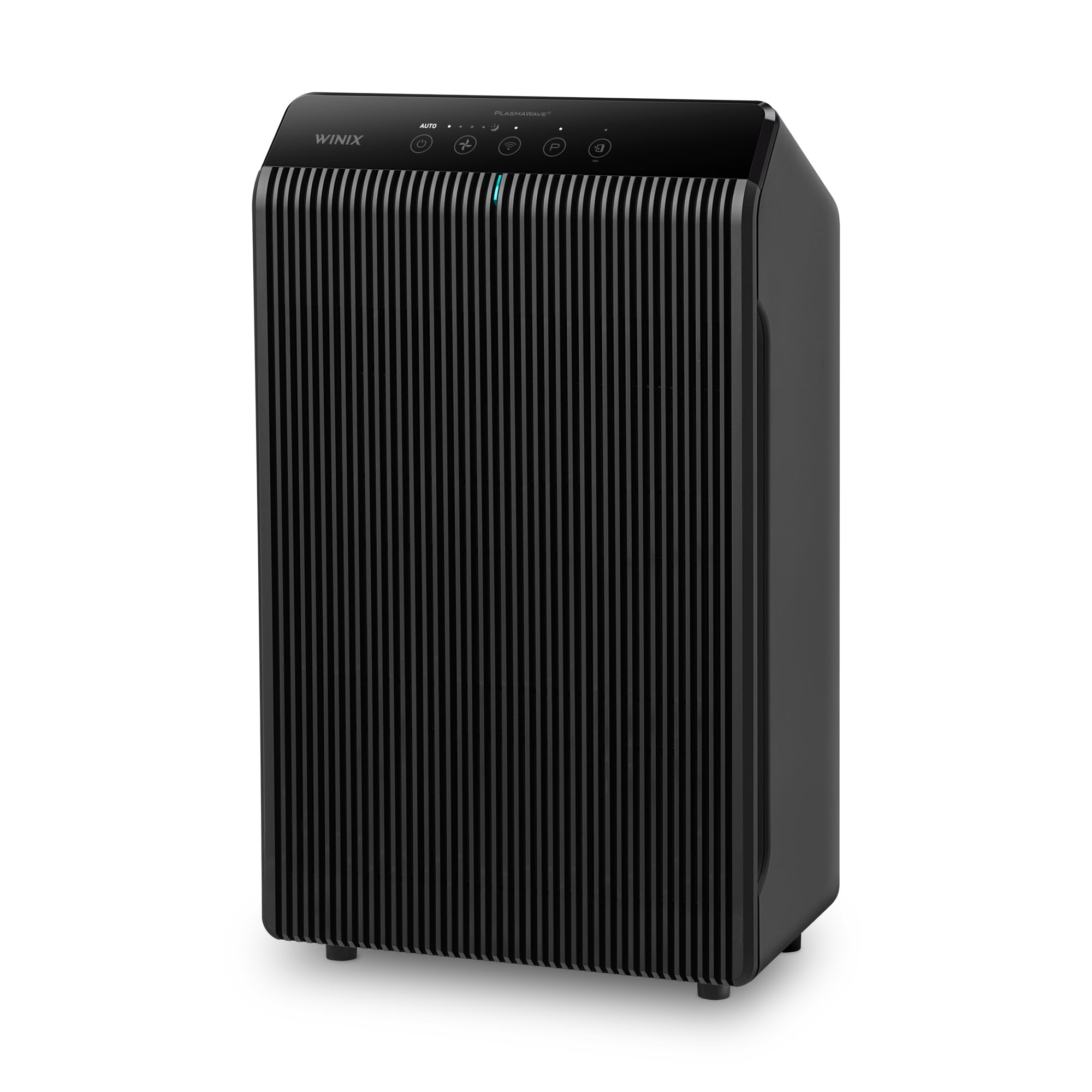
Breathe cleaner, smarter air with the WINIX 5510 HEPA WiFi Air Purifier — a 4-stage system that captures 99.99% of airborne particles down to 0.01 microns and uses Winix PlasmaWave® Technology to help reduce airborne impurities.
With built-in Smart Sensors and WiFi control, you can monitor air quality and manage performance from anywhere.
Upgrade your home’s air today — order the WINIX 5510 now or learn more to find the right settings for your space.
3. Honeywell HPA5300B — Best for Large Rooms
Best For: Larger bedrooms, family rooms and enclosed living spaces where high particle CADR matters more than portability or smart-home features.
Honeywell’s HPA5300B is the strongest large-room option in this shortlist because its AHAM ratings are tied to a useful 4.8-air-change standard rather than a low-frequency maximum-coverage claim. It is verified for 500 sq. ft. at 4.8 ACH, with CADRs of 323 for tobacco smoke, 335 for dust and 335 for pollen.
Those numbers are especially useful for an allergy-focused buyer because they show strong performance across different particle sizes. Pollen represents larger particles, while smoke CADR gives a better indication of performance with smaller particles.
The filtration system uses three Honeywell R True HEPA filters plus an activated-carbon prefilter. Honeywell states that the HEPA filters capture up to 99.97% of 0.3-micron-and-larger particles passing through the filter, while the carbon prefilter helps with larger debris, odors and some VOCs.
There are four cleaning levels, including a Pollen setting and Turbo, plus an automatic mode driven by an air-quality sensor. The HEPA cartridges are generally replaced every 12 months, while the standard prefilter requires more frequent replacement.
The downside is physical scale and maintenance cost. At about 27 pounds, this is not a purifier most people will want to carry from room to room every day, and replacing three HEPA filters makes it important to calculate ownership cost before purchase.
For households also making other practical home-appliance upgrades, our affordable Whirlpool washing machines guide applies the same approach of comparing real capabilities rather than headline discounts.
Pros
✅ AHAM verified for 500 sq. ft. at 4.8 ACH
✅ Excellent 335 pollen and dust CADR
✅ Conventional True HEPA filtration
✅ Automatic air-quality monitoring
✅ Five-year limited warranty
Cons
❌ Large and heavy compared with medium-room models
❌ Requires three HEPA cartridges
❌ Less appealing if smart-app control is important
Who should skip it: Small-bedroom shoppers should choose a quieter, more compact purifier rather than paying for unused capacity.
Alternative: Coway Mighty2 for medium-size spaces and easier maintenance.
Breathe easier with the Honeywell HEPA Air Purifier (938 sq ft) — proven to capture over 99.99% of airborne dust, pollen, pet dander and smoke while reducing stubborn odors. Fast, powerful cleaning with 4 levels (including Turbo Clean) keeps large rooms fresh and allergy-friendly. Order now to protect your home and start enjoying cleaner, healthier air today.
4. Levoit Vital 200S-P — Best Affordable Smart Bedroom Pick
Best For: Bedrooms and medium-size rooms where low noise, scheduling, app control and a lower purchase price matter.
The Vital 200S-P is the most attractive affordable smart option because Levoit provides useful room-sizing data alongside its larger marketing figure. The purifier has a 250 CFM CADR and is specified for approximately 388 sq. ft. at 4.8 air changes per hour. That is the number allergy-focused shoppers should pay attention to—not the much larger 1-ACH coverage figure.
The three-stage system includes a washable prefilter, high-efficiency particle filtration and activated carbon. Levoit states that the filter captures at least 99.97% of 0.3-micron airborne particles such as pollen, dust, pet dander and smoke particles.
Terminology matters here. Levoit’s current documentation specifically describes the original filter as HEPA-grade while operating in Sleep Mode based on independent lab testing. We would not rewrite that into a blanket “True HEPA” claim for every operating condition.
For bedroom use, noise is one of the model’s biggest strengths. Levoit specifies 23–54 dB operation, and Sleep Mode combines quiet running with lower-display disruption. The VeSync app adds schedules, filter-life information and remote control, while Auto Mode responds to readings from the infrared dust sensor.
That makes the Vital 200S-P especially easy to run consistently. For allergy-focused filtration, a quieter purifier that stays on can be more useful than a more powerful machine that you routinely switch off because it is disruptive.
If you want a deeper comparison within the brand, our upcoming best Levoit air purifiers guide will compare the current Levoit lineup by room size and use case.
Pros
✅ 250 CFM CADR with 388 sq. ft. rating at 4.8 ACH
✅ Quiet 23 dB minimum operating level
✅ App control, schedules and Auto Mode
✅ Washable prefilter helps manage larger debris
✅ Two-year limited warranty
Cons
❌ Current filtration terminology requires more nuance than a simple “True HEPA” label
❌ Smaller realistic room size than Honeywell HPA5300B
❌ App features may be unnecessary for buyers who prefer simple controls
Who should skip it: Buyers specifically requiring an explicitly marketed True HEPA filter should choose Honeywell, Winix, Coway or Alen instead.
Alternative: Winix 5510 if stronger smoke and carbon-filter performance matter more than minimum noise.
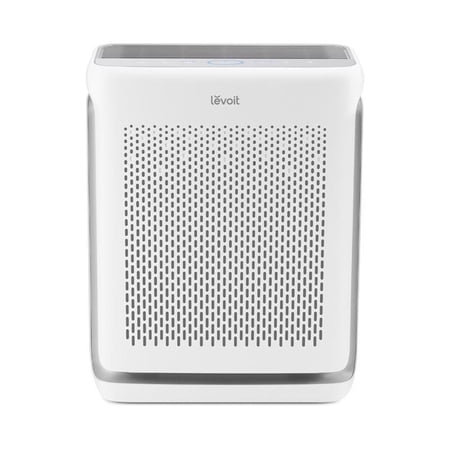
Breathe cleaner, healthier air with the Levoit Vital 200S-P Smart Carbon Air Purifier. Removes 99.97% of 0.3-micron particles and traps dust, pet dander, pollen, odors, smoke, and VOCs for rooms up to 675 sq ft—quiet and easy to control via smartphone or voice (24–54 dB). Order now and start enjoying fresher air tonight.
5. Alen BreatheSmart 45i — Best Premium Allergy-Focused Pick
Best For: Buyers willing to pay more for quiet operation, HEPA filtration and independent allergy-focused product certification.
The strongest reason to choose the BreatheSmart 45i is not simply its premium price or app. It is independently listed under the Asthma & Allergy Friendly® certification program developed by the Asthma and Allergy Foundation of America and Allergy Standards Limited.
That certification requires products to meet defined standards for allergen reduction and redistribution. It does not mean the purifier treats asthma or allergies, but it provides a more relevant third-party signal for an allergy-focused shopper than a generic wellness marketing claim.
Alen currently lists a CADR of 255, HEPA filtration and filter life of roughly 9–12 months for its basic Essential filter when used as recommended. Operating noise is approximately 23–50 dB, making it competitive for bedroom or office use.
The purifier also includes automatic speed adjustment and app compatibility. An optional ionizer is built in, but it is not necessary for our recommendation. Alen reports 0 PPM ozone with the ionizer disengaged and less than 0.001 PPM when engaged. Buyers concerned about ionization can simply leave the feature off.
The 45i’s biggest weakness is value. A buyer who only needs strong particle CADR can spend considerably less on Coway or Winix. The premium makes the most sense if quiet operation, certification and Alen’s broader ownership package are specifically important.
Alen also advertises a Forever Guarantee, but it is conditional: product registration and an active filter subscription are required. That condition should be included whenever the warranty is compared with conventional fixed-term warranties.
Pros
✅ Asthma & Allergy Friendly® certified
✅ Quiet 23–50 dB operating range
✅ HEPA filtration with multiple filter options
✅ App and automatic controls
✅ Filter life can reach roughly 9–12 months with the standard option
Cons
❌ Significantly more expensive than strong mid-range alternatives
❌ Optional ionizer is unnecessary for our recommended use
❌ Forever Guarantee requires registration and an active filter subscription
Who should skip it: Value-focused buyers should start with Coway or Winix, which deliver strong particle-cleaning performance for less.
Alternative: Coway Mighty2 for a simpler and less expensive conventional-filter approach.
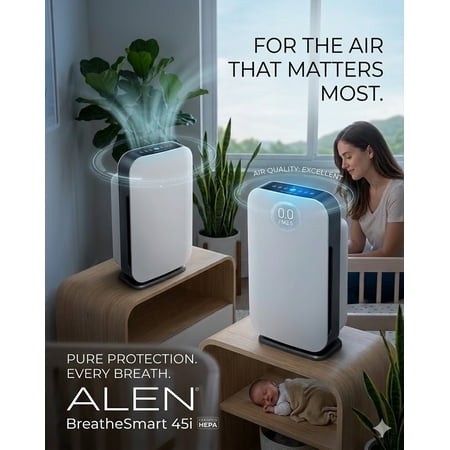
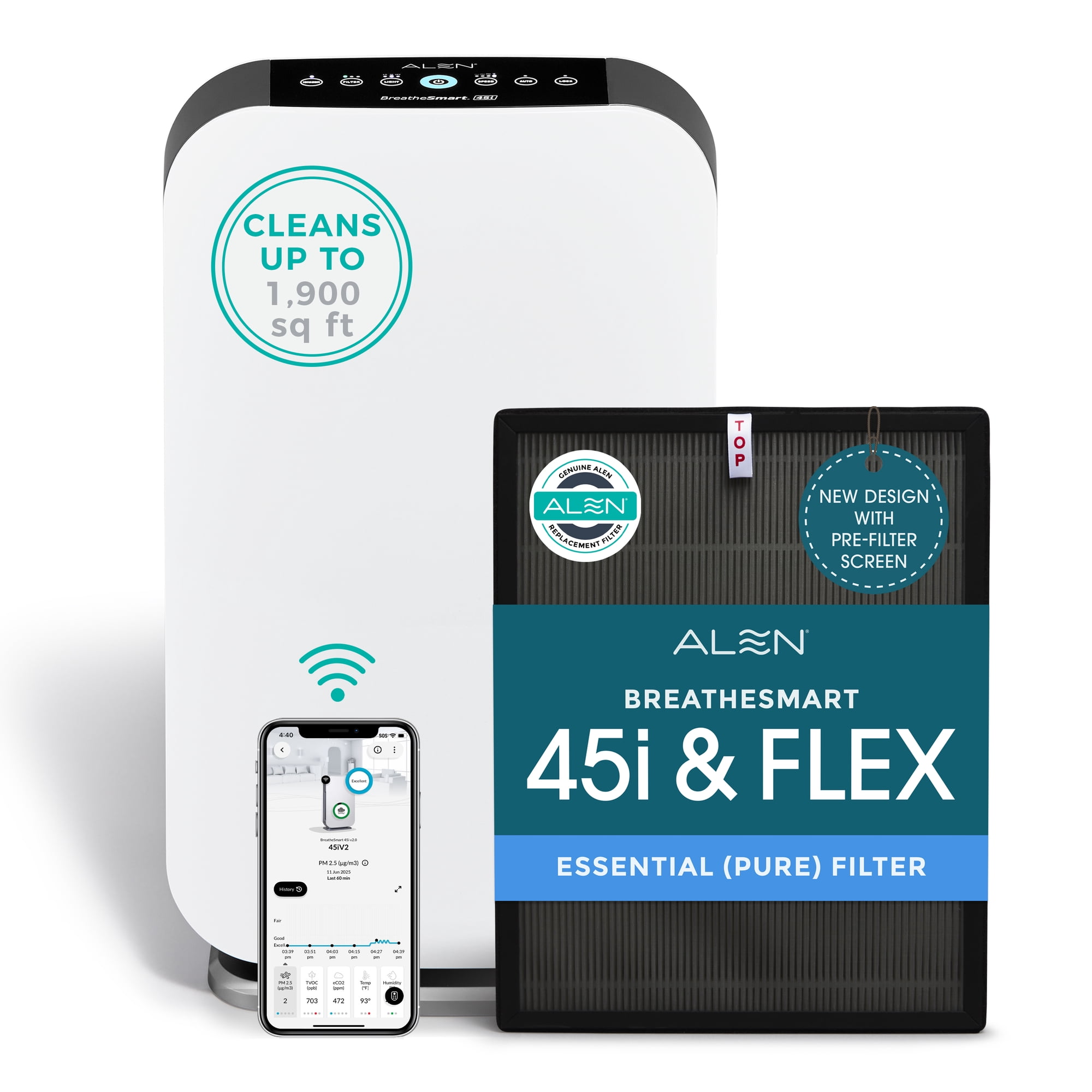
The Alen BreatheSmart 45i delivers medical-grade True HEPA (H13) filtration for large spaces up to 1,900 sq ft and includes two H13 filters to keep your home fresh longer. Order your bundle today and start enjoying cleaner, healthier-feeling air throughout your home—shop now.
Air Purifiers We Considered but Didn’t Pick
Blueair Blue Pure 311i+ Max: This is a very strong purifier with high CADR and excellent current independent test results. Good Housekeeping currently places it first overall in its broad air-purifier comparison. We left it outside the core allergy shortlist because its HEPASilent system combines mechanical and electrostatic filtration, while the selected lineup gives allergy-sensitive shoppers a simpler set of conventional HEPA or clearly described particle-filter options.
Coway Airmega Mighty AP-1512HH: The original Mighty remains a well-known performer, but the 2026 Mighty2 is the more current model and improves the sensor, filter arrangement and overall user experience.
Winix C909: A capable larger purifier, but the 5510 has a clearer value position, strong current independent allergy/smoke testing and more mainstream availability for the intended room sizes in this guide.
Levoit Core 300-P: Still a useful compact budget option, but Vital 200S-P offers more room capacity, stronger smart features and a more useful bedroom role. A separate Levoit-specific article is the better place to compare more models from the brand.
Oversized premium models: Products such as very large Alen or premium specialty purifiers can make sense for unusually large rooms or specific air-quality requirements, but they add cost and capacity most typical bedroom or living-room allergy shoppers do not need.
How to Choose an Air Purifier for Allergies
Start With CADR, Not the Biggest Square-Foot Number
CADR—Clean Air Delivery Rate—is one of the most useful numbers on an air purifier because it combines airflow with particle-removal performance. Higher CADR means the purifier can deliver more cleaned air per minute.
Room-size marketing becomes confusing because the same purifier can legitimately advertise dramatically different square-foot figures depending on how often the room air is assumed to pass through it. A purifier advertised for 1,800 sq. ft. at one air change per hour may be much better suited to roughly 350–400 sq. ft. when the goal is several air changes per hour.
EPA’s sizing guidance for an 8-foot ceiling suggests approximately:
| Room Size | Suggested Minimum CADR |
|---|---|
| 200 sq. ft. | 130 CFM |
| 300 sq. ft. | 195 CFM |
| 400 sq. ft. | 260 CFM |
| 500 sq. ft. | 325 CFM |
If your ceilings are higher than 8 feet or your room opens into another space, size up rather than assuming the floor area alone tells the whole story.
HEPA, HEPA-Grade and HEPASilent Are Not the Same Label
HEPA is a filter-performance classification, while complete air-purifier performance also depends on airflow, sealing and fan design. A small HEPA purifier can clean a room more slowly than a larger machine with greater airflow.
Manufacturers also use related terms differently. Levoit currently describes its Vital 200S-P as capturing at least 99.97% of 0.3-micron airborne particles and specifically calls its filter HEPA-grade in Sleep Mode. Blueair’s HEPASilent technology combines mechanical and electrostatic filtration. These descriptions should not automatically be rewritten into the same label.
Instead of buying by a single filter word, verify both the filter technology and CADR for the complete machine.
Pollen, Dust and Smoke CADR Tell You Different Things
Air purifiers may publish separate CADR values for smoke, dust and pollen because these represent different particle-size ranges. Pollen is relatively large, while smoke represents smaller particles.
For seasonal pollen allergies, strong pollen CADR is obviously useful. But a purifier with solid smoke CADR also shows that it can move and filter smaller particles effectively. A balanced purifier should not rely on one impressive number while performing poorly on the others.
What Activated Carbon Can and Cannot Do
Particle filters and activated carbon solve different problems. HEPA or other high-efficiency particle filters are used for airborne particles such as pollen, dust and dander. Activated carbon is intended for gases and odors.
The EPA notes that carbon can be effective when the purifier contains a substantial amount of adsorbent material. A thin carbon sheet should not automatically be assumed to remove gases as effectively as a deeper bed of carbon pellets.
For an allergy-focused purchase, prioritize particle CADR first. Consider stronger carbon filtration when smoke, cooking odors, pet odors or VOC concerns are also important.
Should Allergy Sufferers Avoid Ionizers and Ozone?
Safety note: The EPA recommends avoiding portable air cleaners that intentionally produce ozone because ozone is a lung irritant. Some ionizers, electrostatic precipitators, UV systems and plasma technologies may have the potential to emit ozone. If a purifier includes an optional ionization feature, you do not need to enable it to use the mechanical filter.
This distinction is particularly important when searching for an “asthma air purifier.” No consumer purifier should be treated as an asthma treatment, and adding an ozone-producing feature would be counterproductive to the goal of improving indoor air quality.
How Quiet Should a Bedroom Air Purifier Be?
Noise matters because air cleaning increases with longer operating time and usually with higher fan speeds. A purifier that sounds acceptable for ten minutes during a demonstration may become irritating after eight hours beside a bed.
For bedroom use, look at minimum noise as well as maximum CADR. Coway Mighty2, Levoit Vital 200S-P and Alen 45i all provide low-speed settings designed for quieter continuous operation.
Remember that the quietest setting also moves less air. If a purifier is undersized for the bedroom, running it quietly may not deliver enough clean air. It is often better to buy a little more CADR and operate the machine at a comfortable medium setting.
How Often Should You Replace the Filter?
There is no universal replacement interval. Coway Mighty2 and Winix 5510 target about a year for their primary filters under typical conditions, Honeywell’s HEPA cartridges are generally replaced annually, and Alen’s standard 45i filter is rated around 9–12 months.
Actual life can change with smoke, pets, dust levels, fan speed and hours of operation. Check the filter indicator and inspect washable prefilters regularly. An overloaded filter restricts airflow and reduces performance.
Where Should You Put an Air Purifier?
Place the purifier in the room where airborne exposure matters most and keep its air inlet and outlet unobstructed. Avoid pushing it into a corner or placing furniture directly against the intake.
For seasonal allergies, a bedroom is often a sensible priority because of the amount of time spent there. If pollen levels outdoors are high, opening windows can also introduce new allergens faster than the purifier can remove them.
During cold-weather months, our upcoming best heating devices for winter guide covers another part of maintaining comfortable indoor spaces, while winter essentials for a cozy home looks at the broader seasonal setup.
How Long Should You Run an Air Purifier?
Longer operating time generally means more air passes through the filter. The EPA notes that higher fan speeds and longer runtime increase filtration, although a lower speed may be preferable when noise would otherwise make you turn the unit off entirely.
For most households, consistent operation at a comfortable setting is more useful than running Turbo for a short period and then leaving the purifier off for the rest of the day.
Best Air Purifier by Allergy-Focused Use Case
| Use Case | Best Pick | Why |
|---|---|---|
| Most households | Coway Mighty2 | Balanced CADR, HEPA/carbon filtration and quiet operation |
| Allergies plus smoke or odors | Winix 5510 | Strong particle cleaning plus pellet carbon |
| Large enclosed room | Honeywell HPA5300B | 500 sq. ft. AHAM rating at 4.8 ACH and high pollen CADR |
| Bedroom + smart controls | Levoit Vital 200S-P | Low 23 dB minimum noise with schedules and app control |
| Premium allergy-focused purchase | Alen BreatheSmart 45i | Independent Asthma & Allergy Friendly® certification |
Frequently Asked Questions
What type of air purifier is best for allergies?
Look for a purifier with strong particle filtration and enough CADR for the actual room. A HEPA or similarly high-efficiency particle filter is useful for airborne pollen, dust and dander, but adequate airflow and realistic room sizing are just as important.
Do HEPA air purifiers really help with allergies?
They can reduce airborne particles associated with allergies, and studies have found improvement in some allergy symptoms. Results are not guaranteed, and filtration works best alongside source control and appropriate ventilation.
What CADR do I need for my bedroom?
Match CADR to the bedroom’s floor area and ceiling height. EPA’s example guidance for an 8-foot ceiling suggests about 130 CFM for 200 sq. ft., 195 CFM for 300 sq. ft. and 260 CFM for 400 sq. ft. Higher ceilings or open layouts may require more capacity.
Can an air purifier help someone with asthma?
Reducing airborne particles may help lower exposure to some asthma triggers, and studies have found improvement in some symptoms. An air purifier does not treat asthma and should not replace prescribed medication, trigger management or medical advice.
Are ionizers safe for allergy sufferers?
EPA recommends avoiding air cleaners that intentionally produce ozone because ozone is a lung irritant. If a purifier includes an optional ionization or plasma feature, review the manufacturer’s emissions data and remember that the mechanical filtration can often be used without enabling the optional feature.
Should I run my air purifier all night?
Longer runtime increases the amount of air filtered, so overnight operation can be useful when the purifier is correctly sized and quiet enough for the bedroom. Use a comfortable fan speed rather than choosing a setting so loud that you switch the purifier off.
How often should an air purifier filter be replaced?
Follow the exact model’s filter guidance and replacement indicator. Many full-size filters in this guide target roughly 9–12 months, but smoke, pets, heavy dust and long operating hours can shorten filter life.
Can an air purifier remove mold from a home?
An air purifier may capture some airborne mold particles, but it cannot solve a mold problem. Mold growth is caused by moisture, so the moisture source must be corrected and the mold itself properly cleaned up.
Final Verdict: Which Air Purifier Should Allergy Sufferers Buy?
The Coway Airmega Mighty2 is our best overall air purifier for allergy sufferers. It combines balanced CADR, conventional HEPA and activated-carbon filtration, quiet operation and a practical one-year main-filter schedule without relying on smart features or exaggerated technology claims.
Choose the Winix 5510 if smoke and odors are important alongside pollen and dust. Its True HEPA filter, pellet carbon and excellent 2026 independent test results make it particularly strong for mixed air-quality problems.
The Honeywell HPA5300B is the better choice for a larger enclosed room, while Levoit Vital 200S-P provides a quieter and more affordable smart option for bedrooms. The Alen BreatheSmart 45i is the premium pick for shoppers who value independent Asthma & Allergy Friendly® certification enough to justify the higher price.
Bottom line: Match the purifier’s CADR to the real room, choose a particle filter appropriate for your needs, keep replacement-filter costs in mind and run the purifier consistently. Do not buy based only on the largest advertised square-foot number.
Sources
- U.S. Environmental Protection Agency — Guide to Air Cleaners in the Home
- Coway — Airmega Mighty2 AP-1512N specifications
- RTINGS — Coway Airmega Mighty2 Review
- TechGearLab — Winix 5510 Review and Air Purifier Testing
- Asthma & Allergy Friendly Certification Program — Certified Products Guide
Product Groups: COWAY AIRMEGA MIGHTY2 AP1512N, WINIX 5510, HONEYWELL HPA5300B, LEVOIT VITAL 200S P, ALEN BREATHESMART 45I