Best Gardening Gloves 2026
The best gardening gloves depend on the job. A thin, flexible pair is useful for planting and weeding, while rose pruning, digging, and heavy yard work need much more protection.
For 2026, our six picks cover those different tasks. SHOWA Atlas 300 is our overall choice for everyday gardening. Pine Tree Tools Bamboo Gloves prioritize dexterity, HANDLANDY covers thorny plants, Wells Lamont HydraHyde adds leather protection, COOLJOB focuses on value, and Ironclad Ranchworx handles heavier work.
The most important buying rule is simple: choose protection that matches the task without adding so much bulk that you lose grip and control.
Quick Answer: Best Gardening Gloves
Best overall: SHOWA Atlas 300 combines a rough natural-rubber palm coating with a breathable knit back and excellent everyday grip.
Best for dexterity: Pine Tree Tools Bamboo Gardening Gloves fit closely and work well for planting, weeding, and handling small seedlings.
Best for thorns: HANDLANDY Rose Pruning Gloves use goatskin leather and long gauntlet cuffs to protect the hands and forearms.
Best leather option: Wells Lamont HydraHyde combines water-resistant cowhide with a flexible spandex back and reinforced fingertips.
Best value: COOLJOB Gardening Gloves offer flexible rubber-coated protection in affordable multipacks.
Best heavy-duty: Ironclad Ranchworx adds goatskin leather, reinforced fingertips, abrasion protection, and impact protection for tougher yard tasks.
How We Chose the Best Gardening Gloves
We compared current gardening gloves by grip, dexterity, protection, breathability, fit, material, cuff length, washability, and intended use.
We also checked recent independent hands-on testing. Bob Vila’s 2026 comparison scored SHOWA Atlas 300 highest overall and also rated HANDLANDY, Wells Lamont, COOLJOB, and Ironclad highly for specific gardening roles.
HGTV’s 2026 testing also supports Pine Tree Tools for flexible planting work, COOLJOB for value, and Wells Lamont HydraHyde for leather protection.
We did not assume that one pair should handle every gardening task. The best glove for seedlings is not automatically the best glove for roses or rough landscaping.
Gardening Gloves Compared
| Glove | Best For | Main Material | Protection Style | Cuff | Main Trade-Off |
|---|---|---|---|---|---|
| SHOWA Atlas 300 | Overall gardening | Cotton/polyester knit | Natural-rubber latex palm coating | Elastic wrist | Back is breathable, not waterproof |
| Pine Tree Tools Bamboo | Dexterity | Bamboo-based knit | Grippy coated palm | Short elastic | Light protection |
| HANDLANDY Rose Pruning Gloves | Roses and thorns | Goatskin leather | Extended leather hand/forearm protection | Long gauntlet | Bulkier for detail work |
| Wells Lamont HydraHyde | Leather / damp work | Cowhide + spandex | Reinforced fingers and padded knuckles | Adjustable wrist | Warmer than knit gloves |
| COOLJOB Gardening Gloves | Value | Knitted base | Rubber-coated palm and fingers | Elastic wrist | Not for serious thorns |
| Ironclad Ranchworx | Heavy-duty yard work | Goatskin leather + nylon | Reinforcements + impact protection | Slip-fit cuff | Too heavy for delicate planting |




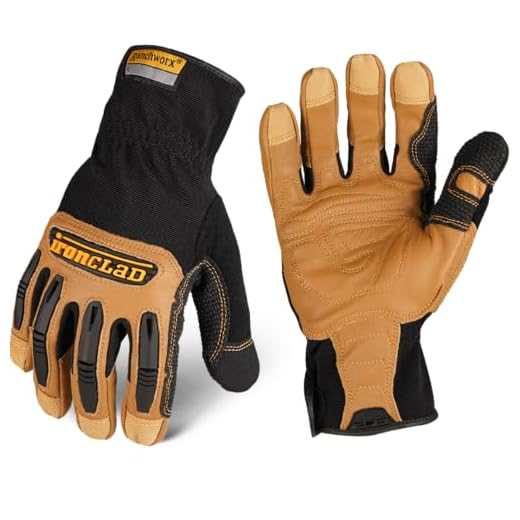
1. SHOWA Atlas 300 — Best Overall Gardening Gloves
Best for: Everyday planting, weeding, light pruning, tool use, yard cleanup, and general garden maintenance.
The SHOWA Atlas 300 is our strongest all-around choice because it balances grip and flexibility without feeling like a heavy work glove.
The glove uses a cotton/polyester seamless liner with a rough-textured natural-rubber latex coating across the palm and fingers. SHOWA’s open-back construction leaves the rear of the hand more breathable.
The Rough Palm Provides Excellent Grip
The textured coating is the main reason the Atlas 300 works well for routine gardening.
It gives the hand traction around trowels, pruners, rake handles, pots, and other tools while still allowing enough finger movement for planting tasks.
Bob Vila’s current testing gave this glove its highest grip-and-dexterity score among the gardening gloves it compared.
The Open Back Improves Comfort
The breathable knit back reduces the closed-in feeling of a fully coated glove.
However, that also means the entire glove is not waterproof. The rubber-coated palm can handle damp contact better than the fabric back.
Be Aware of Natural Rubber Latex
The palm coating contains natural rubber latex.
Gardeners who avoid latex should choose a nitrile-coated or other non-latex alternative instead.
Pros
✅ Strong rough-textured grip
✅ Good dexterity for everyday garden work
✅ Breathable open-back design
✅ Sizes S through XXL
✅ Simple, proven general-purpose design
Cons
❌ Fabric back is not waterproof
❌ Contains natural rubber latex
❌ Short cuff gives little forearm protection
Skip it if: You need long gauntlet protection for roses or want to avoid natural latex.
Alternative: HANDLANDY is better for thorny plants, while a nitrile-coated glove may suit latex-sensitive users.
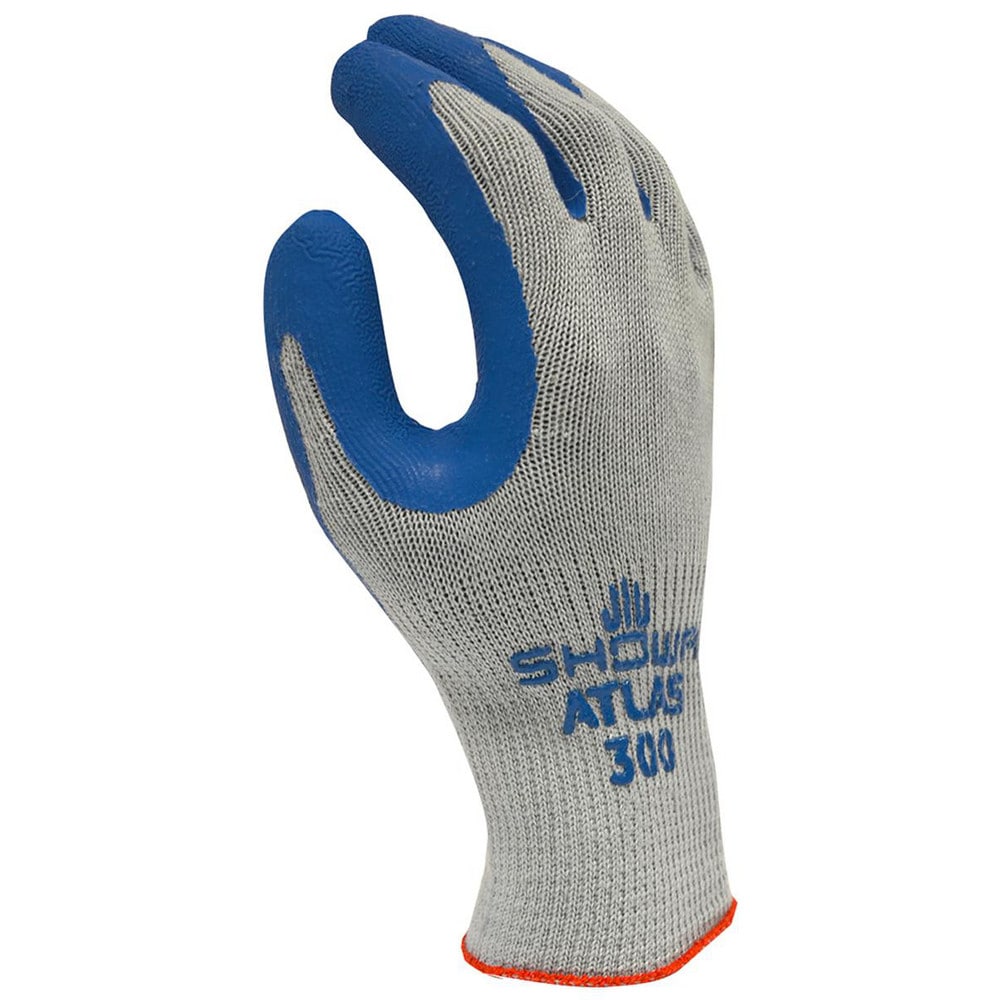
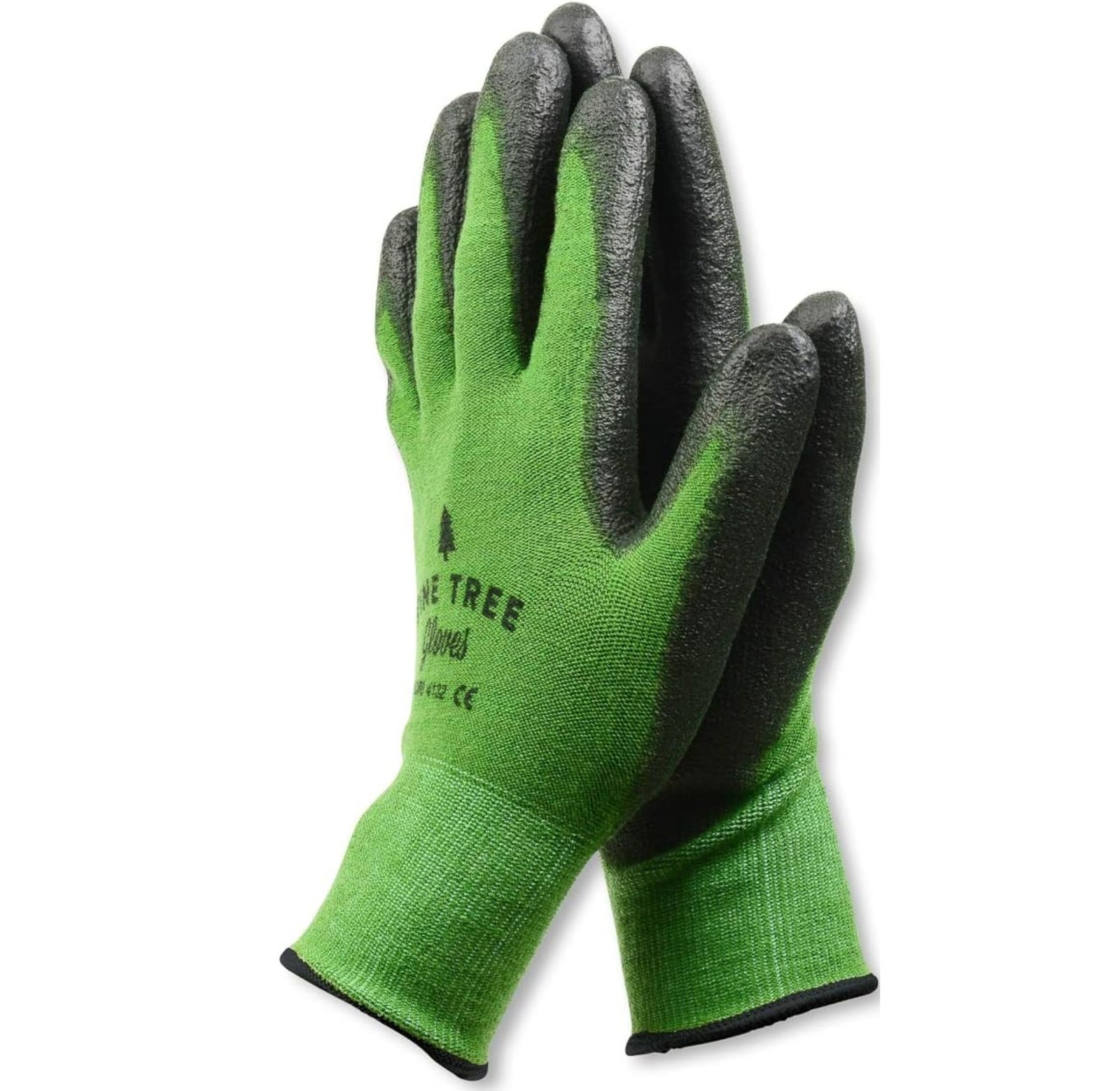
2. Pine Tree Tools Bamboo Gardening Gloves — Best for Dexterity
Best for: Planting seedlings, pulling small weeds, container gardening, and other detailed hand work.
Pine Tree Tools Bamboo Gardening Gloves are a good choice for gardeners who dislike thick or stiff gloves.
The lightweight knit construction sits close to the hand, while the coated palm provides grip for soil, pots, and small tools.
Independent 2026 testing from HGTV praised these gloves for flexibility while planting and weeding. Their snug fit also makes them easier to use for fine tasks than a thick leather glove.
A Close Fit Helps With Small Plants
Extra fabric at the fingertips can make it harder to separate seedlings, handle small stems, or pick out young weeds.
The Pine Tree Tools design minimizes that loose material when the correct size is chosen.
However, the close fit is not comfortable for everyone. If you prefer more room inside a glove, sizing carefully is important.
These Are Light-Duty Gloves
The thin construction is part of their appeal, but it limits protection.
Use them for soil work and light garden maintenance rather than large thorns, rough branches, or heavy landscaping.
Also, do not assume that bamboo content alone makes a glove environmentally sustainable. Overall impact depends on manufacturing, coating, durability, transport, and end-of-life factors as well.
Pros
✅ Excellent finger dexterity
✅ Lightweight and breathable
✅ Useful for planting and weeding
✅ Close-fitting design reduces loose fingertip material
Cons
❌ Limited thorn protection
❌ Snug fit may feel restrictive
❌ Less suitable for heavy digging or rough branches
Skip it if: You regularly handle roses, brambles, lumber, or heavy garden debris.
Alternative: SHOWA Atlas 300 gives you more general-purpose protection while retaining good dexterity.
3. HANDLANDY Rose Pruning Gloves — Best for Thorns
Best for: Roses, brambles, berry bushes, holly, thorny shrubs, and other pruning jobs where forearm protection matters.
HANDLANDY’s long pruning glove uses goatskin leather across the hand and extends protection well beyond the wrist.
The long gauntlet is the important feature. A conventional gardening glove may protect the palm but leave the forearm exposed when you reach into a rose bush.
The Leather Balances Protection and Flexibility
HANDLANDY uses soft goatskin leather rather than a rigid synthetic shell.
The company also adds an adjustable wrist area to help keep debris out and improve fit.
Bob Vila’s 2026 testing awarded these gloves top scores for protection and durability in its thorn-focused category.
Thorn-Resistant Does Not Mean Impossible to Puncture
No gardening glove should be treated as a guarantee against every thorn or sharp plant part.
Use controlled hand placement and avoid deliberately squeezing or grabbing sharp stems just because the glove feels substantial.
Extra protection also reduces some sensitivity compared with a thin planting glove.
Pros
✅ Long gauntlet protects more of the forearm
✅ Flexible goatskin leather
✅ Adjustable wrist area
✅ Strong choice for roses and brambles
Cons
❌ Bulkier than planting gloves
❌ Less tactile for seedlings
❌ No glove can eliminate every puncture risk
Skip it if: Your gardening is limited to containers, vegetables, seedlings, and other low-risk plants.
Alternative: SHOWA Atlas 300 is much lighter for normal garden maintenance.
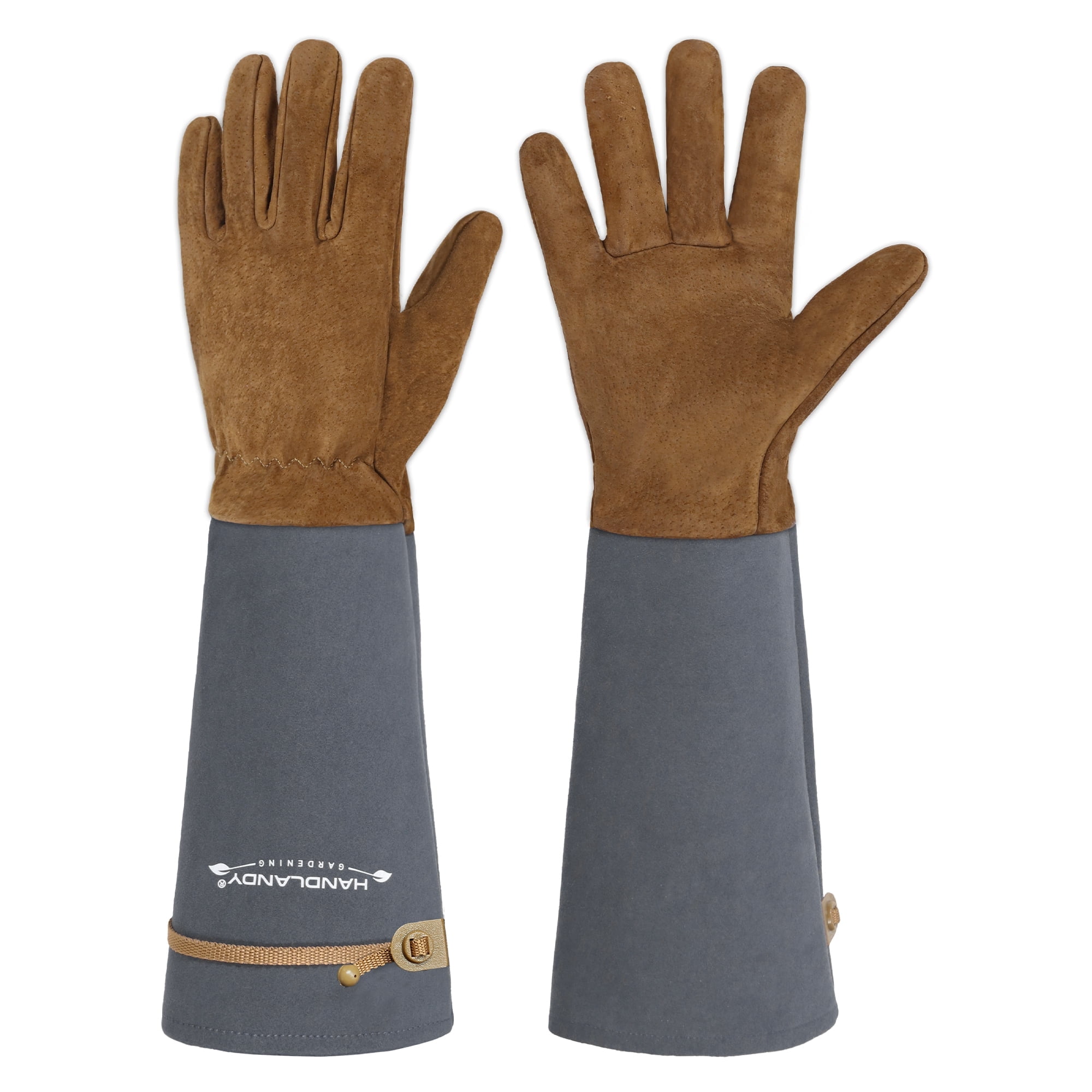
4. Wells Lamont HydraHyde — Best Leather Gardening Gloves
Best for: Digging, landscaping, handling rough materials, damp soil, and gardeners who prefer leather protection.
Wells Lamont’s HydraHyde hybrid design combines specially treated cowhide with a flexible spandex back.
The company describes the leather as water-resistant and breathable. Reinforced fingertips and light knuckle padding add protection without turning the glove into a very heavy work model.
The Adjustable Wrist Improves Fit
A hook-and-loop wrist closure lets you tighten the cuff around the hand.
This can reduce soil and loose debris entering the glove compared with a loose open cuff.
Wells Lamont offers current men’s and women’s HydraHyde hybrid versions, so check the exact sizing chart rather than assuming one universal fit.
Water-Resistant Is Not the Same as Waterproof
HydraHyde leather is designed to resist water better than untreated leather.
However, the glove also has a fabric back. It should not be treated as a fully waterproof glove for prolonged immersion or saturated work.
Pros
✅ Water-resistant cowhide palm
✅ Reinforced fingertips
✅ Flexible spandex back
✅ Adjustable wrist closure
Cons
❌ Warmer than lightweight knit gloves
❌ Not fully waterproof
❌ More glove than needed for delicate planting
Skip it if: Most of your gardening involves seed trays, containers, or detailed hand work.
Alternative: Pine Tree Tools gives you much greater fingertip sensitivity.
5. COOLJOB Gardening Gloves — Best Value
Best for: Everyday weeding, planting, garden cleanup, and households that want several inexpensive pairs.
COOLJOB’s breathable gardening gloves use a flexible knitted base with a rubber-coated palm and fingers.
HGTV’s 2026 testing selected them as its best-value pair. Testers found them flexible enough for planting while still offering useful fingertip protection and wet-condition grip.
Multipacks Make Sense for Messy Garden Work
Gardening gloves get muddy, wet, and misplaced.
An affordable multipack lets you rotate pairs instead of waiting for one glove to dry after every job.
This is especially useful during planting season when several short garden sessions may happen throughout the week.
They Are Better for Everyday Tasks Than Thorns
The rubber coating adds grip and basic hand protection, but the short knit design does not protect the forearm.
Use a proper gauntlet when working deep inside thorny shrubs.
HGTV lists these gloves as machine washable, although you should still follow the instructions supplied with the exact pair you buy.
Pros
✅ Affordable multi-pair option
✅ Flexible for everyday gardening
✅ Rubber-coated grip
✅ Easy to rinse after muddy jobs
Cons
❌ Limited forearm coverage
❌ Not intended for serious thorns
❌ Less durable than a premium leather work glove for heavy tasks
Skip it if: You need maximum abrasion protection or long gauntlet coverage.
Alternative: Ironclad Ranchworx is better for rougher landscaping work.
6. Ironclad Ranchworx — Best Heavy-Duty Gardening Gloves
Best for: Hauling branches, rough landscaping, moving heavy garden materials, repetitive tool use, and demanding yard jobs.
Ironclad Ranchworx is heavier than a conventional gardening glove, but its extra construction is useful when gardening begins to overlap with landscaping and property maintenance.
The glove uses a goatskin leather palm with a breathable nylon back.
Ironclad also adds Rolltop fingertips, TPR finger and knuckle impact protection, and reinforcement around the thumb saddle.
Published Work-Glove Ratings Add Useful Context
Ironclad lists ANSI Cut A1, Abrasion 3, and Puncture 3 ratings for the Ranchworx.
These ratings help explain why the glove feels more substantial than a thin garden glove.
However, the ratings should not be read as proof that the glove is cut-proof or puncture-proof.
Machine Washing Is Unusual for a Leather Work Glove
Ironclad states that the Ranchworx is machine washable and should be hang dried.
Always follow the current care instructions for the exact model rather than assuming all leather gloves can be washed the same way.
Pros
✅ Premium goatskin leather palm
✅ Reinforced fingertips and thumb area
✅ Finger and knuckle impact protection
✅ Published ANSI abrasion and puncture ratings
✅ Machine washable according to Ironclad
Cons
❌ Too bulky for seedling work
❌ Higher price than basic gardening gloves
❌ Short cuff does not replace a rose gauntlet
Skip it if: You mainly plant flowers, weed containers, or work with small seedlings.
Alternative: Wells Lamont HydraHyde provides leather protection with less heavy-duty reinforcement.
What Type of Gardening Glove Do You Need?
The right glove depends on what your hands will actually touch.
Planting and Weeding
Choose a lightweight coated knit glove.
Dexterity is more useful than thick protection when you are handling seedlings, separating roots, removing small weeds, or working in containers.
Pine Tree Tools and SHOWA Atlas 300 fit this role well.
Rose Pruning and Thorny Plants
Use a long gauntlet with leather or another suitable protective material.
Forearm coverage matters because many scratches happen above the wrist when reaching into a plant.
HANDLANDY is the specialized option in this guide.
Digging and Landscaping
A leather or hybrid work glove provides more abrasion resistance when handling shovels, rocks, lumber, mulch bags, and rough materials.
Wells Lamont HydraHyde is a good middle ground.
Heavy Yard Work
For branches, repeated tool use, construction-like garden jobs, and property cleanup, a reinforced work glove makes more sense.
Ironclad Ranchworx is our heavy-duty choice.
Leather vs. Rubber-Coated Gardening Gloves
Choose Coated Knit Gloves for Flexibility
Rubber- or nitrile-coated knit gloves usually provide strong grip while allowing more finger movement.
They work well for planting, weeding, repotting, and everyday tool use.
The main limitation is coverage. Short cuffs and breathable knit backs expose more of the hand and wrist than heavy leather designs.
Choose Leather for Abrasion and Rough Materials
Leather is useful for branches, wood, digging tools, and thorny plants when the glove is designed for that task.
It is generally thicker and warmer than a lightweight knit glove.
Leather also varies widely. A thin goatskin pruning glove and a reinforced ranch glove are not interchangeable.
What Are the Best Gloves for Planting and Weeding?
Look for a snug glove with good fingertip control.
A heavy gauntlet makes it harder to separate seedlings or work around closely spaced plants.
Pine Tree Tools is the most dexterity-focused choice here. SHOWA Atlas 300 is better when you want a little more general-purpose protection and stronger tool grip.
What Are the Best Gloves for Roses and Thorny Plants?
Forearm coverage matters as much as palm material.
A long gauntlet reduces exposed skin when reaching through roses, blackberries, holly, and similar plants.
HANDLANDY is our specialized rose-pruning choice.
Even with protective gloves, work slowly and avoid deliberately gripping sharp stems. Thorn-resistant equipment lowers risk; it does not eliminate it.
How Should Gardening Gloves Fit?
A gardening glove should fit close enough that you can control tools without fighting loose fabric.
Check the Fingertips
Large empty spaces beyond your fingertips reduce dexterity.
You should be able to pinch a small object or grip a pruner without the glove folding over itself.
Check the Palm
The palm should not bunch excessively when you close your hand.
Too much material can reduce grip on smooth handles.
Check the Wrist
A secure cuff helps keep loose soil and debris out.
If you frequently reach into shrubs, a longer cuff or gauntlet can provide additional coverage.
Use the Brand’s Size Chart
Do not assume one brand’s medium matches another.
Measure your hand and check the current size chart whenever possible.
Are Waterproof Gardening Gloves Better?
Not necessarily.
Fully waterproof gloves can be useful for very wet tasks, but they often trap more heat and moisture around the hand.
For normal gardening, a water-resistant or coated palm combined with a breathable back can be more comfortable.
Also, check how the manufacturer uses the terms “waterproof” and “water-resistant.” They are not interchangeable.
Can You Wash Gardening Gloves?
It depends on the glove.
Some synthetic or coated gloves can be machine washed. Others should be rinsed or hand washed, while many leather gloves need more specific care.
For example, Ironclad states that Ranchworx can be machine washed and hang dried. HGTV lists COOLJOB as machine washable.
For every other pair, follow the instructions supplied with the exact product. Aggressive washing can damage coatings, leather, seams, or shape.
Gardening Gloves and Pesticide Safety
Ordinary gardening gloves should not automatically be used when applying pesticides.
The U.S. Environmental Protection Agency requires pesticide users to follow the personal-protective-equipment instructions on the product label.
If the label requires chemical-resistant gloves, use the specified material or approved category.
Using pesticides? Read the pesticide label before choosing gloves. General gardening gloves, leather gloves, cotton gloves, and fabric-backed gloves are not substitutes for chemical-resistant PPE when the label requires it.
EPA guidance specifically warns that absorbent materials such as cotton, leather, and canvas are not chemical-resistant unless the pesticide labeling allows them.
A glove can be excellent for roses or landscaping and still be completely inappropriate for chemical handling.
When Should You Replace Gardening Gloves?
Gloves are protective equipment, so visible damage matters.
Replace or retire a pair when you notice:
- holes in the palm or fingertips;
- split rubber or latex coating;
- torn seams;
- worn-through leather;
- damaged cuffs;
- loss of grip;
- permanent contamination that cannot be cleaned safely.
A glove that no longer covers the hand properly should not be kept for risky tasks simply because it still feels comfortable.
Gardening Gloves vs. Garden Tools
Gloves protect the hands, but they do not replace the right tool.
Do not use your hands to pull or break material that should be handled with pruners, a saw, a fork, or another suitable tool.
If you are preparing for the growing season, our best garden tools for early spring guide covers pruning, planting, soil preparation, cleanup, and watering equipment.
Frequently Asked Questions
What are the best gardening gloves?
SHOWA Atlas 300 is our all-around choice because it combines strong grip, breathable construction, good dexterity, and useful everyday protection. Specialized tasks such as rose pruning or heavy landscaping need different gloves.
What gloves are best for pulling weeds?
Use a flexible close-fitting glove with good palm grip. Pine Tree Tools Bamboo Gloves and SHOWA Atlas 300 both suit routine weeding better than bulky leather gauntlets.
What gloves are best for rose pruning?
Choose a long leather gauntlet that protects both the hand and forearm. HANDLANDY Rose Pruning Gloves are our selected option for roses and other thorny shrubs.
Are leather gardening gloves better?
Leather is better for some jobs, especially rough materials, digging, and thorny plants. Lightweight coated knit gloves usually provide better dexterity for planting, weeding, and fine work.
Are gardening gloves waterproof?
Some are waterproof or water-resistant, but many are not. Coated palms may resist wet soil while breathable fabric backs still allow water through. Check the exact manufacturer’s claim.
How tight should gardening gloves fit?
They should fit closely without restricting movement. Avoid large gaps at the fingertips or excess palm material that interferes with tool grip.
Can gardening gloves go in a washing machine?
Some can, but washing instructions vary by material and brand. Always follow the care directions for the exact pair. Ironclad Ranchworx, for example, is currently listed as machine washable and hang dry.
Can I use normal gardening gloves when applying pesticides?
Not unless the pesticide label permits them. If chemical-resistant gloves are required, use the specific approved material or glove category listed on the label.
Final Verdict: Which Gardening Gloves Should You Buy?
SHOWA Atlas 300 is the best starting point for most gardeners because it combines grip, flexibility, breathability, and enough protection for everyday work.
Pine Tree Tools Bamboo Gloves are better when fingertip control is the priority. HANDLANDY is the specialized option for roses and thorny shrubs.
Wells Lamont HydraHyde provides a useful leather middle ground for digging and landscaping. COOLJOB makes sense when you want several affordable everyday pairs, while Ironclad Ranchworx is better for heavy-duty yard jobs.
Quick decision: Choose SHOWA for everyday gardening, Pine Tree Tools for dexterity, HANDLANDY for thorns, Wells Lamont for leather protection, COOLJOB for value, and Ironclad for heavy-duty work.
Sources
- SHOWA — Atlas 300 Product Specifications
- HANDLANDY — Rose Pruning Gloves Product Information
- Wells Lamont — HydraHyde Leather Hybrid Product Specifications
- Ironclad — Ranchworx Ratings and Specifications
- Bob Vila — Best Gardening Gloves Tested for Comfort, Grip, and Protection
- HGTV — Best Gardening Gloves of 2026, Tested and Reviewed
- U.S. Environmental Protection Agency — Chemical-Resistant PPE and Pesticide Label Guidance
How we research: Discompare reviews current manufacturer specifications, independent hands-on testing, retailer availability, and relevant safety guidance. We do not conduct original hands-on testing unless explicitly stated. Gardening-glove performance depends on fit, material condition, task, moisture, and exposure to sharp objects or chemicals. No general-purpose gardening glove should be treated as completely puncture-proof or automatically suitable for pesticide handling. Prices and availability can change. Discompare may earn a commission from eligible retailer or price-comparison links.
Product Groups: SHOWA Atlas 300 Gardening Gloves, Pine Tree Tools Bamboo Gardening Gloves, HANDLANDY Rose Pruning Gloves, Wells Lamont HydraHyde Leather Gardening Gloves, COOLJOB Gardening Gloves, Ironclad Ranchworx Work Gloves