Best Convertible Car Seats for Summer Travel 2026
The best convertible car seats for summer travel combine a proper child fit, reliable installation, and practical features that make family trips easier. For most traveling families, the Graco Contender Slim is our best overall choice. It weighs 16 pounds, supports rear-facing and forward-facing use, and is certified for aircraft travel. However, the lighter Cosco Scenera Extend is more convenient when carrying a car seat through airports.
Road trips introduce different priorities. The Graco Extend2Fit 3-in-1 provides additional rear-facing legroom, while the narrow Graco SlimFit3 LX helps families manage limited back-seat space. Meanwhile, the Chicco Fit360 ClearTex makes repeated loading and unloading more convenient with its rotating design.
In this guide, we compare five convertible car seats for summer travel, including their child-size limits, weight, dimensions, installation features, cleaning requirements, and regular prices. We also explain how to plan for flights, rental cars, long journeys, and hot-weather conditions.
Safety comes first: Every car seat must fit your child and vehicle and be used according to its instructions. No cooling feature, premium fabric, or expensive seat can make leaving a child unattended in a parked vehicle safe. Always check the manufacturer’s limits, installation guidance, and recall information before traveling.
Quick Answer: Best Convertible Car Seats for Summer Travel
Our Top Five Convertible Car Seats
Best Overall Travel Seat: Graco Contender Slim — A practical 16-pound seat with aircraft certification, adjustable harness, and a $189.99 reference price.
Best Lightweight Seat for Flying: Cosco Scenera Extend — An approximately 8-pound convertible seat with aircraft certification and a $69.99 regular listed price.
Best for Extended Rear-Facing: Graco Extend2Fit 3-in-1 — Supports rear-facing use up to 50 pounds and provides up to five additional inches of legroom.
Best for Compact Vehicles: Graco SlimFit3 LX — A 16.7-inch-wide, three-stage seat designed to make multiple car-seat installations more practical.
Best Rotating Convenience: Chicco Fit360 ClearTex — A 360-degree rotating seat with convenient loading features, washable fabrics, and built-in ventilation.
How We Selected These Convertible Car Seats
We compared current U.S. manufacturer specifications, child weight and height limits, restraint weight, installation methods, vehicle fit, cleaning instructions, and regular prices. We also reviewed independent car-seat research and guidance from the National Highway Traffic Safety Administration, Federal Aviation Administration, and American Academy of Pediatrics.
Our recommendations address different travel situations rather than ranking child restraints by an unsupported safety score. A lightweight seat can be easier to carry through an airport, while a larger seat may offer better adjustability for everyday road trips.
All five seats are designed to meet applicable federal child-restraint requirements. However, compliance does not guarantee correct installation or an appropriate fit for every child and vehicle.
Discompare did not conduct original crash testing or hands-on installation testing. These recommendations are based on published evidence and specifications. Reference prices are in U.S. dollars and may differ from current retailer offers. Discompare may earn commissions through participating shopping and price-comparison partners.
Best Convertible Car Seats Compared
The table below summarizes the main differences. Weight and width refer to the car seat itself, not its shipping package. Always confirm the exact model and child-size limits before purchasing.
| Car Seat | Best For | Seat Weight | Rear-Facing | Forward-Facing | Reference Price |
|---|---|---|---|---|---|
| Graco Contender Slim | Overall travel | 16 lb | 5–40 lb | 26.5–65 lb | $189.99 |
| Cosco Scenera Extend | Flying and portability | Approx. 8 lb | 5–40 lb | 30–50 lb | $69.99 |
| Graco Extend2Fit 3-in-1 | Long road trips | 20.6 lb | 4–50 lb | 26.5–65 lb | $269.99 |
| Graco SlimFit3 LX | Limited back-seat space | 19.2 lb | 5–40 lb | 26.5–65 lb | $299.99 |
| Chicco Fit360 ClearTex | Easy loading and unloading | 33.8 lb | 4–40 lb | 26.5–65 lb | $439.99 |
Graco Extend2Fit 3-in-1 and SlimFit3 LX also convert into highback booster seats. Their manufacturer-listed booster weight ranges are 40–100 pounds, subject to additional height, age, and fit requirements.
Remember that the numbers in the table are only part of the fit requirements. Manufacturer height limits, harness positioning, permitted configurations, and vehicle compatibility are equally important.
Compare Current Convertible Car Seat Prices
Car-seat prices can vary by retailer, fabric color, promotion, and exact model. Some brands also sell similarly named versions with different features or child-size limits.
Compare current offers only after confirming that the seat matches your child’s measurements and your travel needs. Check the model number, included accessories, manufacturing information, return terms, and product instructions.
For example, the standard Graco Extend2Fit 3-in-1 differs from certain anti-rebound-bar versions. Similarly, the Chicco Fit360 ClearTex is not identical to the Fit360 SE or Fit360 Zip.
The reference prices in this guide help explain the value of each model. Use the retailer price-comparison sections to check current offers for the exact seat.
The Five Best Convertible Car Seats for Summer Travel
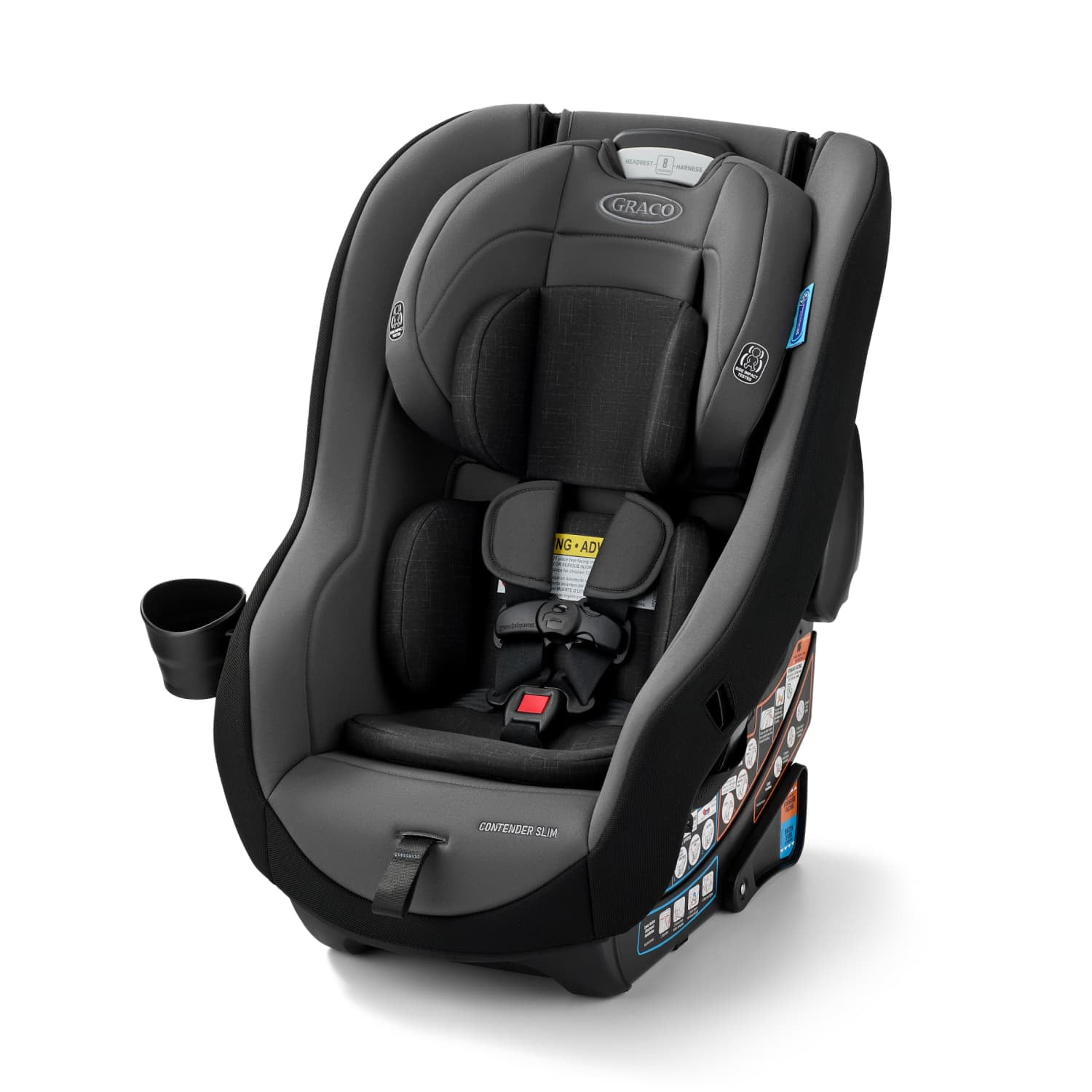
1. Graco Contender Slim — Best Overall Convertible Car Seat for Travel
Best for: Families who frequently move a convertible car seat between vehicles and want a balance of portability, child adjustability, and longer harness use.
Reference price: $189.99.
The Graco Contender Slim is our best overall travel recommendation because it balances a manageable 16-pound weight with convenient harness adjustments and a 65-pound forward-facing maximum.
It is not the lightest seat on our list. However, its practical features may justify the additional weight for families who want more than a basic occasional-use restraint.
The seat supports children from 5–40 pounds rear-facing and 26.5–65 pounds forward-facing, subject to the manufacturer’s height and fit limits.
A Useful Balance of Weight and Features
The Contender Slim weighs 16 pounds and measures approximately 18.9 inches wide. That makes it lighter than several full-featured convertible seats, although its width does not guarantee a fit in narrow vehicle seating positions.
Graco includes an adjustable headrest and Simply Safe Adjust harness system. The headrest and harness height can be changed together, reducing the need to manually rethread the shoulder straps as a child grows.
This convenience becomes particularly useful when the seat is used frequently or shared between vehicles.
Practical for Aircraft and Rental Cars
Graco identifies the Contender Slim as certified for aircraft use. Its removable cup holder and machine-washable pad also help make travel maintenance easier.
For rental cars, the included LATCH equipment and level indicator assist with installation. However, you still need to follow both the seat’s manual and the specific vehicle’s instructions.
Compared with the Cosco Scenera Extend, the Contender Slim offers a higher forward-facing weight limit and a more convenient harness-adjustment system. The tradeoff is carrying twice as much weight through the airport.
Pros
✅ Manageable 16-pound weight.
✅ Certified for aircraft use.
✅ Adjustable headrest and no-rethread harness.
✅ Forward-facing harness limit of 65 pounds.
✅ Machine-washable seat pad.
Cons
❌ Heavier than an ultralight travel seat.
❌ Rear-facing weight limit stops at 40 pounds.
❌ Basic LATCH connectors may require more effort during repeated transfers.
Who should skip it? Parents who need the lightest possible seat for frequent flights or those prioritizing a 50-pound rear-facing weight limit.
Alternative: Cosco Scenera Extend is considerably lighter. Graco Extend2Fit 3-in-1 is better suited to families prioritizing extended rear-facing use.
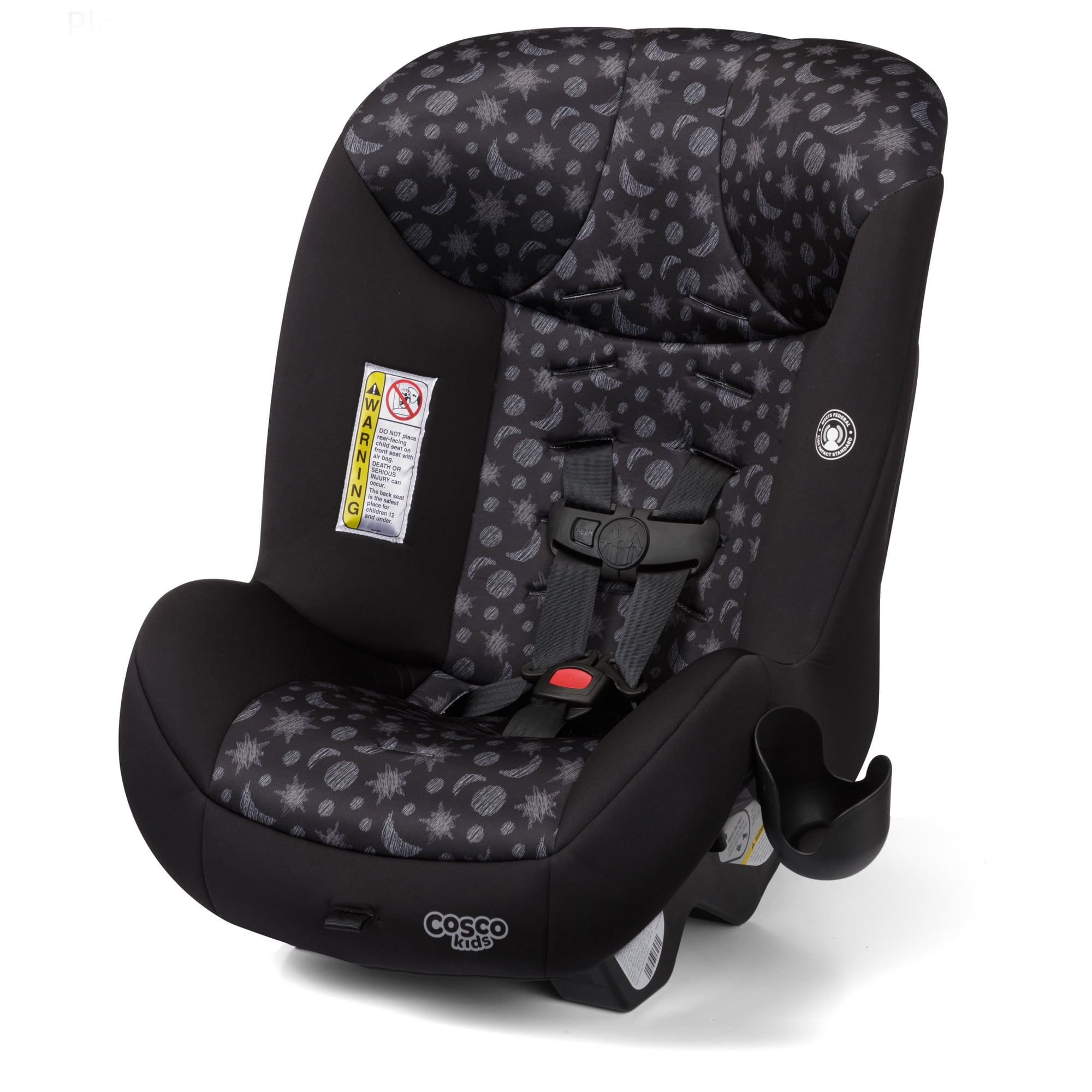
2. Cosco Scenera Extend — Best Lightweight Convertible Car Seat for Flying
Best for: Frequent flyers, occasional travel, and families who need an affordable, lightweight seat for airplanes and rental vehicles.
Regular reference price: $69.99.
The Cosco Scenera Extend is our preferred lightweight option for air travel. Consumer Reports identifies its weight at approximately eight pounds, making it substantially easier to carry than the other seats in this roundup.
Cosco confirms aircraft certification and a compact design. These features make it appealing for families who move between airport terminals, airplanes, and rental cars.
The Scenera Extend supports rear-facing use from 5–40 pounds and 19–40 inches. Its forward-facing limits are 30–50 pounds and 34.4–44 inches. Additional harness-fit requirements also apply.
Lightweight Without Unnecessary Extras
The seat uses a five-point harness with manually adjustable height positions and buckle locations. It also includes a removable cup holder.
Its seat pad is machine-washable and dryer-safe, while the cup holder is dishwasher-safe. These features are useful when snacks, drinks, and travel-related messes become unavoidable.
However, its lightweight construction comes with compromises. There is less convenience hardware than on more expensive seats, and adjusting the harness height requires additional manual steps.
Important Installation Tradeoffs
Consumer Reports describes the Scenera Extend as a basic but straightforward restraint. Its testing also notes that the seat uses hook-on LATCH connectors and a printed level line rather than a bubble-style recline indicator.
The relatively tall shell can complicate rear-facing installation in some smaller vehicles. Therefore, low seat weight does not automatically mean easier installation.
Its shorter forward-facing height and weight limits also mean some children will outgrow it earlier than a larger convertible seat.
This makes the Cosco particularly attractive as a portable travel restraint rather than necessarily the only seat a growing child will need.
Pros
✅ Approximately eight-pound seat weight.
✅ Certified for aircraft travel.
✅ Affordable regular price.
✅ Machine-washable and dryer-safe pad.
✅ Compact design for travel.
Cons
❌ Forward-facing limit is only 50 pounds and 44 inches.
❌ Harness height requires manual rethreading.
❌ Basic installation aids and less padding than premium alternatives.
Who should skip it? Families with a child nearing the forward-facing height or weight limits, or those who want a more adjustable everyday car seat.
Alternative: Graco Contender Slim offers a higher forward-facing limit, a no-rethread harness, and additional adjustment convenience.
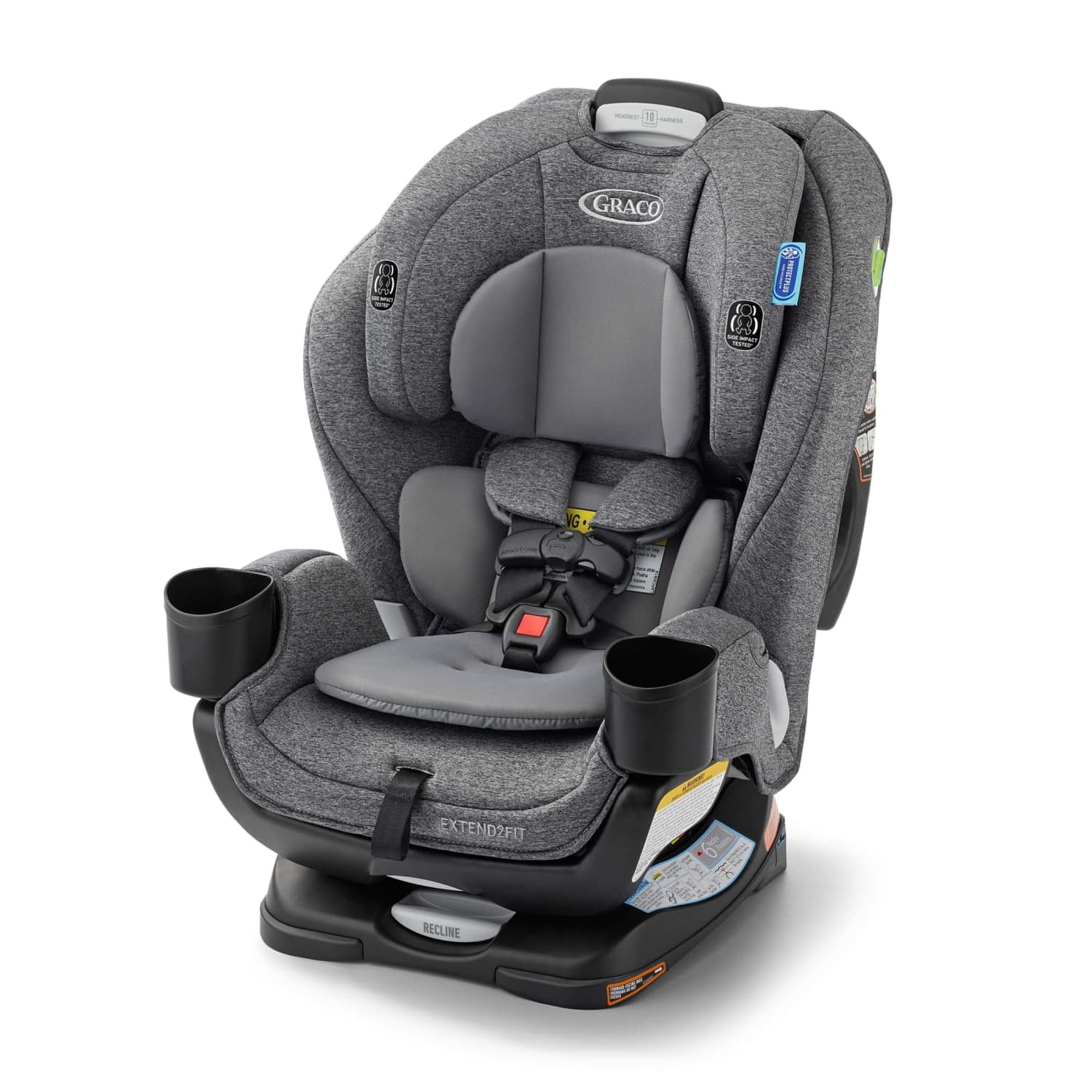
3. Graco Extend2Fit 3-in-1 — Best for Long Road Trips and Extended Rear-Facing
Best for: Families traveling primarily by car who want extended rear-facing capacity, adjustable legroom, and a restraint that can eventually become a highback booster.
Reference price: $269.99.
The Graco Extend2Fit 3-in-1 is our preferred road-trip option for families prioritizing extended rear-facing use. Its 50-pound rear-facing maximum is higher than the 40-pound limit on several other models in this guide.
It also provides a four-position extension panel that adds up to five inches of rear-facing legroom.
This feature may improve comfort for growing children. However, parents should understand that bent legs are not, by themselves, a reason to turn a child forward-facing.
Designed for Extended Use
The Extend2Fit 3-in-1 supports three stages:
- Rear-facing harness: 4–50 pounds.
- Forward-facing harness: 26.5–65 pounds.
- Highback booster: 40–100 pounds, subject to height, age, and other requirements.
The adjustable headrest and no-rethread harness simplify changes as the child grows. Graco also includes multiple recline positions and a level indicator to assist with correct installation.
Its push-button InRight LATCH connectors are more convenient than basic hook-style connectors. However, lower-anchor weight limits still apply, even when the child remains within the car seat’s harness limits.
Why It Works for Family Road Trips
Long drives make repeatable adjustments and practical cleaning valuable. Extend2Fit includes removable, washable padding and two cup holders.
The extension panel provides an additional comfort consideration for rear-facing passengers. Families should still follow the allowed recline positions and required clearance around the restraint.
At approximately 20.6 pounds and 19 inches wide, the seat is less convenient to carry through airports than the Cosco or Contender Slim.
It is best treated as a more substantial everyday seat that also works well for vacations using the family’s own vehicle.
Pros
✅ Rear-facing harness limit of 50 pounds.
✅ Adjustable panel with up to five additional inches of legroom.
✅ Three stages of use, including highback booster mode.
✅ No-rethread harness and multiple recline positions.
✅ Washable seat pad and convenient cup holders.
Cons
❌ More difficult to carry than lightweight travel seats.
❌ Wider than the SlimFit3 LX.
❌ Requires enough vehicle space for the approved rear-facing configuration.
Who should skip it? Families who frequently fly and need to carry the seat over long distances, or those whose vehicles cannot accommodate its rear-facing footprint.
Alternative: Graco SlimFit3 LX is narrower for compact back-seat arrangements, although its rear-facing weight limit is lower.
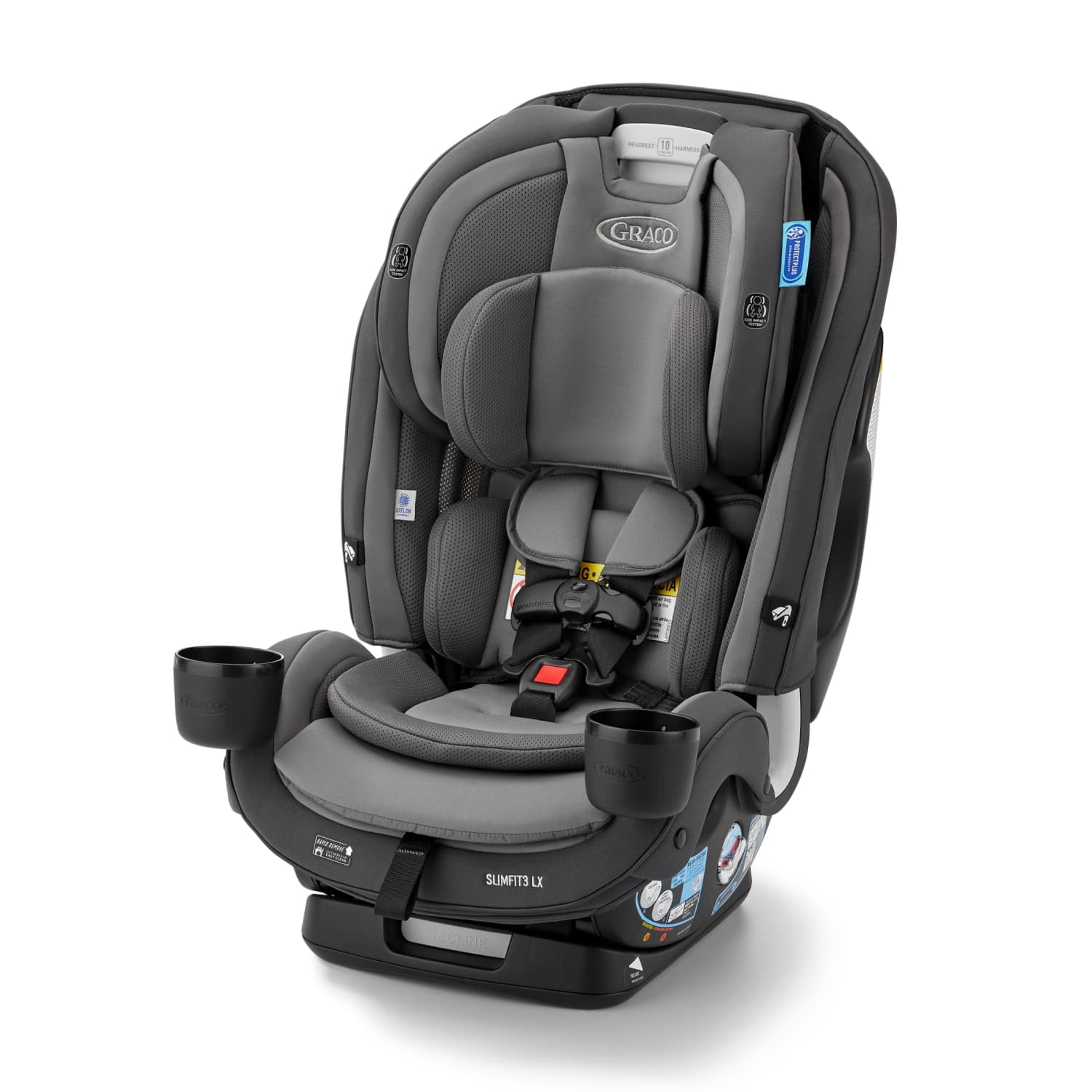
4. Graco SlimFit3 LX 3-in-1 — Best for Compact Cars and Three-Across Planning
Best for: Families with limited rear-seat width, multiple child restraints, or a need for a narrow all-in-one car seat.
Reference price: $299.99.
The Graco SlimFit3 LX stands out because it measures only 16.7 inches wide. That makes it one of the more useful choices for families attempting to install multiple child restraints across a vehicle’s rear seat.
However, three-across fit is not guaranteed simply because a car seat is narrow. Vehicle seating contours, belt buckle placement, lower anchors, and the shape of neighboring restraints all affect compatibility.
A Narrow Design With Three Stages
The SlimFit3 LX supports rear-facing use from 5–40 pounds and forward-facing harness use from 26.5–65 pounds. It also converts into a highback booster for children who meet its additional requirements.
Graco designed the seat for three-across configurations and tested multiple arrangements. Even so, parents should confirm that each restraint can be installed independently and correctly in their specific vehicle.
Its narrow dimensions are particularly helpful when a family needs room for another child restraint or passenger.
Travel-Friendly Adjustments and Cleaning
The SlimFit3 LX includes Graco’s no-rethread harness adjustment, push-button InRight LATCH connectors, and an integrated belt lock-off for supported forward-facing seat-belt installations.
The RapidRemove cover can be removed for washing without uninstalling the entire seat. This is useful when spills happen during a road trip.
Graco also lists breathable mesh AirFlow channels in the seat design. These may support airflow, but they do not replace vehicle air conditioning or prevent heat-related emergencies.
At approximately 19.2 pounds, the SlimFit3 LX is heavier than a dedicated lightweight travel seat. Its main benefit is better use of limited vehicle space rather than easy airport carrying.
Pros
✅ Narrow 16.7-inch design.
✅ Designed for multiple child-restraint arrangements.
✅ Converts into a highback booster.
✅ No-rethread harness and belt-installation features.
✅ Removable washable cover.
Cons
❌ Three-across compatibility still depends on the vehicle.
❌ Rear-facing weight limit stops at 40 pounds.
❌ Heavier and more expensive than simpler travel seats.
Who should skip it? Families who do not need a narrow seat or those who prioritize maximum rear-facing weight capacity above three-across compatibility.
Alternative: Graco Extend2Fit 3-in-1 offers a higher rear-facing weight limit. The Contender Slim is lighter when frequent vehicle transfers matter more.
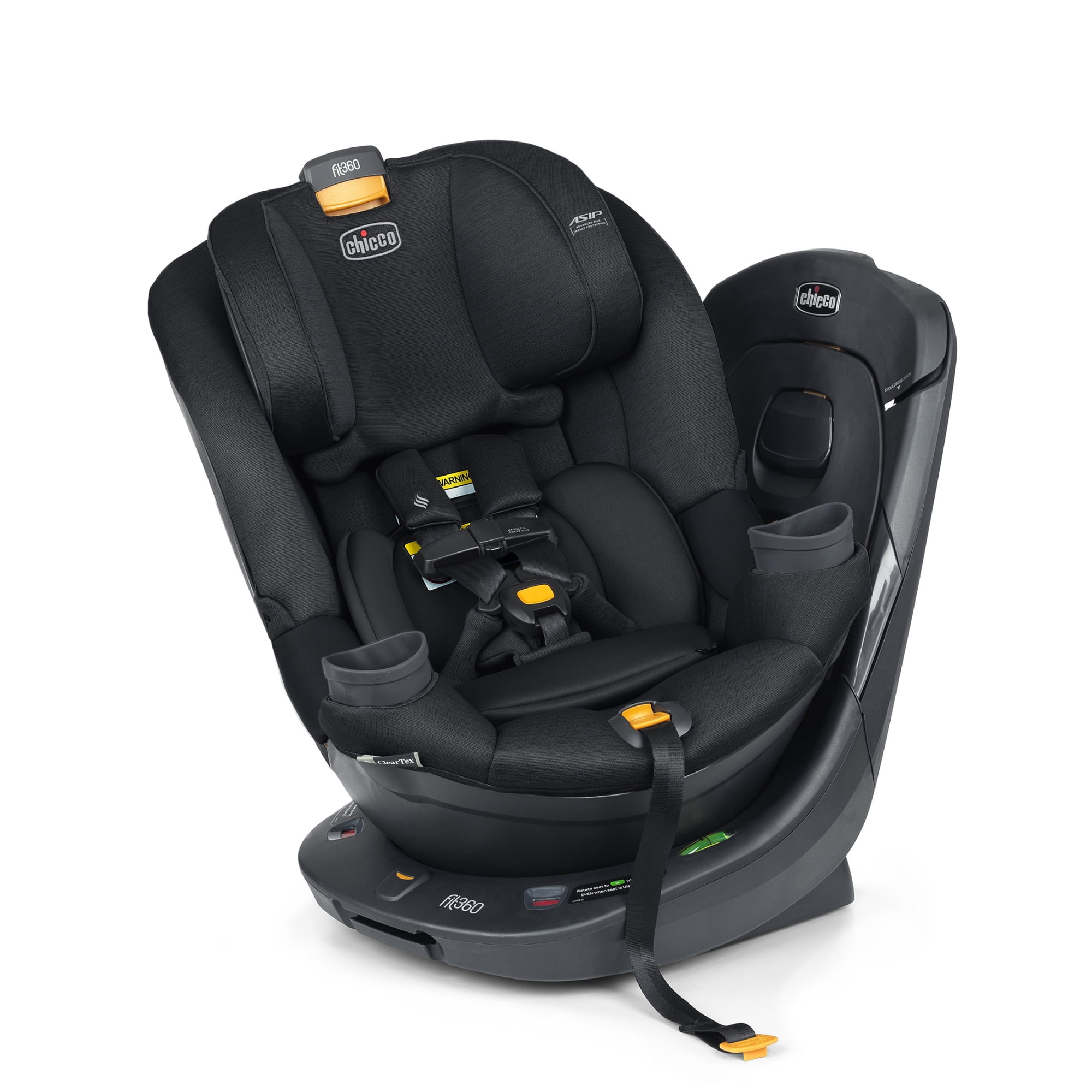
5. Chicco Fit360 ClearTex — Best Rotating Car Seat for Road-Trip Convenience
Best for: Families using the same vehicle for long drives and frequent stops who want easier access when securing or removing a child.
Reference price: $439.99.
The Chicco Fit360 ClearTex is the most convenience-focused model in our selection. Its rotating design allows caregivers to turn the seat toward the vehicle door for loading and unloading.
That feature can be valuable during road trips with frequent stops. Instead of reaching across a fixed rear-facing seat, caregivers can face the seat toward themselves while securing the harness.
However, the Fit360 weighs approximately 33.8 pounds. It is significantly heavier than the other selections and better suited to remaining installed in a vehicle.
Rotation, Harness Adjustments, and Installation
Chicco’s Fit360 uses a 360-degree rotating system with a dedicated base. Once properly installed, the seat can rotate between its permitted loading and travel positions.
The Quick-Secure Harness System includes a magnetic chest clip, flex-forward buckle, harness storage pockets, and adjustable headrest.
Chicco also provides LeverLock seat-belt installation, designed to help achieve appropriate belt tension during installation. Visual indicators assist with confirming the seat is properly positioned for travel.
The seat must be rotated into a manufacturer-approved locked travel position before the vehicle moves.
Comfort and Maintenance Features
The Fit360 ClearTex includes ventilation openings in the seat shell, removable cup holders, and machine-washable fabrics.
Its ClearTex materials are designed without added flame-retardant chemicals and are GREENGUARD Gold certified for low chemical emissions.
These features may appeal to families looking for a premium everyday restraint. However, neither ventilation nor material certification proves that the seat prevents overheating during summer conditions.
The Fit360 supports rear-facing harness use from 4–40 pounds and forward-facing harness use from 26.5–65 pounds. It does not convert into a booster.
Chicco lists aircraft certification for this model. Nevertheless, its substantial weight and rotating construction make it less convenient for frequent airport travel than a lighter convertible seat.
Pros
✅ 360-degree rotation for easier child loading.
✅ Convenient harness and buckle features.
✅ LeverLock seat-belt installation system.
✅ Built-in ventilation and washable fabrics.
✅ GREENGUARD Gold certified materials.
Cons
❌ Heavy 33.8-pound construction.
❌ Highest reference price in this roundup.
❌ Rear-facing weight limit stops at 40 pounds.
❌ Does not include a booster mode.
Who should skip it? Parents who regularly carry their car seat through airports or move it between several rental vehicles.
Alternative: Graco Extend2Fit 3-in-1 offers extended rear-facing capacity at a lower price. Graco Contender Slim is significantly lighter for repeated transfers.
Other Convertible Car Seats We Considered
Several alternatives are worth considering, but they overlap with the travel roles already covered by our five main recommendations.
Britax Poplar S
The Britax Poplar S offers ClickTight installation, a narrow 17-inch design, and a rear-facing harness limit of 50 pounds. It is a strong alternative for families prioritizing installation convenience and extended rear-facing capacity.
However, its weight makes it less attractive as a frequently carried airport seat.
Chicco Fit3X ClearTex
The Chicco Fit3X ClearTex is another option for families seeking a narrower car seat with practical adjustments. It may be worth comparing with the SlimFit3 LX when retailer availability or pricing favors Chicco.
Cosco Scenera NEXT
The older Scenera NEXT remains familiar to many traveling families. However, the Scenera Extend provides a current alternative with revised child-size limits.
Check the exact version and instruction manual rather than assuming the two models share identical specifications.
Premium and Specialty Seats
Premium seats such as the Nuna RAVA may work well for everyday use, but their greater cost and weight can reduce their appeal when portability is the main goal.
Similarly, lightweight forward-facing-only travel restraints and booster seats are not direct substitutes for a convertible seat when a child still needs rear-facing use.
How to Choose a Convertible Car Seat for Summer Travel
The best convertible car seat for travel is not necessarily the lightest, most expensive, or most heavily padded. Start with the child’s measurements and the vehicles in which the seat will be used.
1. Check Child Height, Weight, and Rear-Facing Limits
Every convertible seat has specific weight and height limits for its rear-facing and forward-facing modes. These limits must be considered together with harness position and other manufacturer requirements.
The National Highway Traffic Safety Administration recommends keeping children rear-facing until they reach the highest rear-facing height or weight limit permitted by their car seat.
Do not turn a child forward-facing simply because they reach their first or second birthday. Also, a child who outgrows a particular rear-facing seat may be able to continue rear-facing in another suitable restraint with higher limits.
The Graco Extend2Fit 3-in-1 supports rear-facing use up to 50 pounds, while the other four models in this selection have 40-pound rear-facing maximums.
However, weight is not the only deciding factor. A child may reach the permitted height or harness-fit limit before reaching the listed maximum weight.
2. Consider Seat Weight and Portability
Seat weight becomes particularly important when flying, using airport transport, or collecting rental vehicles.
At approximately eight pounds, the Cosco Scenera Extend is the easiest to carry among our selections based on published product weights.
The Graco Contender Slim provides more adjustment features at 16 pounds. Meanwhile, seats weighing 20 pounds or more may be more practical for longer stays in a single vehicle.
Think about the full journey. You may need to carry the restraint through security, down aircraft aisles, and from the airport to ground transportation.
A compatible car-seat travel cart may help with transportation. However, any cart must be used according to its manufacturer’s instructions, and a car seat attached to a luggage cart is not automatically approved for transporting a child.
3. Measure Your Vehicle and Check Rental-Car Compatibility
Car-seat width matters, but it is only one part of vehicle compatibility.
For example, the Graco SlimFit3 LX is 16.7 inches wide. This makes it a strong candidate for narrow seating arrangements, but vehicle seat contours and buckle placement still affect installation.
Before buying, check the vehicle owner’s manual and car-seat installation instructions. Confirm whether the intended seating position supports the permitted installation method.
If renting a car, try to confirm the vehicle category and seating arrangement in advance. Rental companies may substitute a different vehicle within the same class.
When installing several seats, each restraint must achieve an acceptable independent installation. Do not rely on the neighboring car seat to hold another restraint in place.
4. Learn the Installation System Before Departure
Repeated installations can make travel stressful, particularly when parents are unfamiliar with the seat or rental vehicle.
Some seats use hook-style LATCH connectors. Others feature push-button attachments, integrated belt lock-offs, or specialized seat-belt tensioning systems.
These mechanisms can make specific installation steps more convenient, but none guarantees an appropriate installation in every vehicle.
Read the manufacturer’s instructions for both rear-facing and forward-facing installations. Follow the vehicle manual for seat-belt locking, lower-anchor positions, and tether use.
Use either an approved seat-belt installation or lower-anchor installation as directed. Do not combine both methods unless the manufacturer explicitly permits that configuration.
Lower anchors also have weight limits. When the permitted lower-anchor limit is reached, the car seat must be installed using an approved alternative method.
For forward-facing harness use, follow the manufacturer and vehicle instructions for the top tether.
5. Prioritize Washable Fabrics and Practical Comfort
Summer travel often means drinks, snacks, sunscreen, and longer periods sitting in a car.
Removable washable covers are useful, especially during extended vacations. However, check the cleaning instructions carefully because not every component can be washed in the same way.
For example, some seat pads are machine washable, while harness straps must only be surface cleaned.
Never place a harness in a washing machine or soak it unless the manufacturer explicitly permits that cleaning method.
Ventilation features may help airflow around the seat, but overall comfort still depends on cabin temperature, the child’s clothing, fit, and duration of travel.
Summer Car Seat Safety: Heat, Breaks, and Installation
Summer conditions create risks that no car-seat feature can eliminate. Careful travel planning and correct restraint use matter more than decorative cooling features.
Preventing Hot-Car Heatstroke
Never leave a child unattended in a parked vehicle, even briefly. This rule applies when the vehicle is parked in shade, windows are partially open, or air conditioning is running.
NHTSA warns that the inside of a vehicle can quickly reach deadly temperatures even when the outdoor temperature seems relatively mild.
Build a consistent routine for checking the back seat every time you park. Keep the vehicle locked when unattended and store keys where children cannot access them.
Critical summer safety reminder: Ventilated car seats, cooling fabrics, tinted windows, and open windows do not prevent parked-vehicle heatstroke. Never leave a child alone inside or around a vehicle.
Check Seat Temperature Before Buckling In
Car-seat components can become hot when a vehicle has been parked in the sun.
Before securing your child, check the harness buckle, chest clip, and surfaces that may contact exposed skin.
Cool the vehicle using its air conditioning and allow hot surfaces to reach a comfortable temperature before placing the child in the seat.
Dress children appropriately for the weather and avoid unnecessary bulky layers that interfere with harness fit.
Avoid Unapproved Cooling Accessories
Aftermarket cooling cushions, harness covers, head supports, and additional padding may seem useful during summer travel.
However, adding unapproved products can change how the child fits within the harness or how the restraint performs during a crash.
Do not place extra padding behind or beneath the child unless it is specifically permitted by the car-seat manufacturer.
Use only accessories approved for the exact restraint model and follow their instructions. Never compromise the required harness position or tightness for comfort.
Plan Regular Breaks on Long Road Trips
Long journeys are easier to manage when families schedule regular stops instead of driving continuously.
The American Academy of Pediatrics recommends taking breaks approximately every two to three hours during daytime road trips with babies, adjusting the schedule according to individual needs.
During stops, remove the child from the car seat when appropriate, change diapers, feed the child, and allow supervised movement or rest.
Do not feed or breastfeed a baby while the vehicle is moving in a way that interferes with proper restraint use.
Car seats are designed for safe transportation when used correctly. They should not replace a suitable sleep space once you arrive at your destination.
Check Recalls and Installation Before Traveling
Before a major trip, record your car seat’s model number and date of manufacture. Use this information to check current safety recalls.
NHTSA provides recall information for child restraints. Manufacturers also offer registration systems that help notify owners about safety-related updates.
Inspect the harness, buckle, shell, and other components before departure. Do not use a damaged, expired, recalled-without-remedy, or otherwise unsafe restraint.
If you are unsure about installation, contact a certified child passenger safety technician. NHTSA maintains information about car-seat inspection stations where trained technicians can help families check installation and use.
Flying vs. Road Trips: Which Convertible Car Seat Makes Sense?
The best car seat for flying may not be the same model you would choose for daily driving.
Families who fly frequently usually benefit from a lighter restraint. Parents traveling in their own vehicle can prioritize fit, adjustability, and installation convenience instead.
| Travel Situation | Recommended Seat | Main Reason |
|---|---|---|
| Frequent airplane travel | Cosco Scenera Extend | Very low weight and aircraft certification |
| Flights plus rental cars | Graco Contender Slim | Balance of portability and harness features |
| Long family road trips | Graco Extend2Fit 3-in-1 | Extended rear-facing limits and additional legroom |
| Multiple children in one vehicle | Graco SlimFit3 LX | Narrow design for constrained back-seat space |
| Frequent stops in the family car | Chicco Fit360 ClearTex | Rotating access for loading and unloading |
What Makes a Car Seat Suitable for Air Travel?
The FAA strongly recommends using an approved child restraint system for children traveling by airplane, particularly children under two years old.
Before flying, check that the exact restraint carries the required aircraft-use certification label. A manufacturer’s general product description is not a substitute for checking the seat itself.
Confirm the airline’s seating arrangements, the aircraft seat dimensions, and the permitted installation orientation. Follow both the restraint instructions and crew directions.
Aircraft seats do not provide vehicle-style LATCH lower anchors. Approved child restraints are typically installed using the aircraft seat belt according to the manufacturer’s instructions.
Remember that a highback booster or backless booster configuration is not appropriate as a child restraint on an airplane. Convertible seats with aircraft certification must be used in an approved harness configuration.
Travel Gear Beyond the Car Seat
A convertible car seat does not normally function as a detachable infant carrier for a stroller. Families using an infant travel system should check compatibility before replacing an infant-only car seat.
Our guide to the best baby strollers explains several stroller styles and their different newborn configurations.
For airport transfers and shorter outings after parking, a properly fitted baby carrier may also be useful. Our best baby carriers for parents guide compares suitable designs and child-size requirements.
When packing, keep essentials accessible without placing loose or heavy objects where they could strike passengers during sudden braking or a crash.
Frequently Asked Questions
What is the best convertible car seat for summer travel?
The Graco Contender Slim is our best overall travel recommendation because it combines a manageable 16-pound weight, adjustable harness, and aircraft certification. However, the Cosco Scenera Extend is better for parents who need the lightest possible option, while Graco Extend2Fit 3-in-1 is a stronger fit for extended rear-facing use during road trips.
Can you use a convertible car seat on an airplane?
Yes, when the exact model is certified for aircraft use and installed according to its instructions. Check the aircraft certification label, your child’s size, the airline’s requirements, and the available seat dimensions before departure. Booster mode is not approved for use as an aircraft child restraint.
Which convertible car seat is easiest to carry while traveling?
The Cosco Scenera Extend is the lightest model in this roundup at approximately eight pounds. Its aircraft certification and compact design make it practical for flights, although parents must still allow time for correct installation and harness adjustment.
Are convertible car seats safe for newborns?
Some convertible seats are designed for newborn use, but eligibility depends on the exact model’s minimum weight, height, harness fit, and recline requirements. Always use an appropriate rear-facing configuration and follow the manufacturer instructions. Premature or medically vulnerable infants may need individualized professional guidance.
Do ventilated car seats prevent babies from overheating?
No. Ventilation may help airflow around the seat, but it does not prevent dangerous heat buildup inside a vehicle. Maintain a suitable cabin temperature, check hot surfaces before buckling your child, and never leave a child unattended in a parked vehicle.
How often should you stop during a road trip with a baby?
The American Academy of Pediatrics recommends planning breaks about every two to three hours during daytime travel with babies. Adjust the schedule for feeding, diaper changes, comfort, and individual needs. Remove the baby from the car seat during appropriate stops and use a suitable sleep space at your destination.
Is a more expensive convertible car seat safer?
Not necessarily. Price often reflects convenience features, materials, adjustments, or additional modes. The appropriate car seat must meet applicable safety requirements, fit the child and vehicle, and be installed and used correctly. A properly used lower-priced seat may be a better choice than an expensive seat that does not fit correctly.
Final Verdict: Which Convertible Car Seat Should You Choose?
The Graco Contender Slim is our best overall convertible car seat for summer travel because it offers a practical balance of portability, adjustment features, and longer forward-facing harness use.
For frequent flights, the Cosco Scenera Extend is difficult to overlook. Its approximately eight-pound construction and low price make it a sensible dedicated travel option for children who fit within its limits.
For road trips, the Graco Extend2Fit 3-in-1 provides useful extended rear-facing capacity and adjustable legroom. Meanwhile, the SlimFit3 LX is better suited to narrow back-seat arrangements, and the Chicco Fit360 ClearTex offers convenient rotation for families using one vehicle for frequent stops.
None of these models is universally safest for every child or vehicle. The best purchase is the restraint that matches your child’s current measurements, installs correctly in your vehicle, and can be used consistently according to the manufacturer’s instructions.
Before departure, confirm the model’s recall status, practice installation, check the harness fit, and prepare for hot-weather conditions.
Our Recommendation: Choose Graco Contender Slim for balanced travel use, Cosco Scenera Extend for lightweight flying, Extend2Fit 3-in-1 for extended rear-facing road trips, SlimFit3 LX for compact vehicle arrangements, or Chicco Fit360 ClearTex for rotating convenience. Prioritize correct fit and installation over price or extra features.
Sources
- National Highway Traffic Safety Administration — Car Seats and Booster Seats: Safety, Installation, and Child Restraint Guidance.
- Federal Aviation Administration — Kids’ Corner: Child Restraint Systems and Aircraft Travel.
- American Academy of Pediatrics / HealthyChildren — Is It Safe for My Baby to Travel in a Car Seat for Hours at a Time?
- Graco — Convertible Car Seat Comparison and Official Product Specifications.
- Cosco Kids — Scenera Extend Convertible Car Seat: Specifications and Aircraft Certification.
Product Groups: Graco Contender Slim Convertible Car Seat; Cosco Kids Scenera Extend Convertible Car Seat; Graco Extend2Fit 3-in-1 Car Seat; Graco SlimFit3 LX 3-in-1 Car Seat; Chicco Fit360 ClearTex Rotating Convertible Car Seat