Best Kids’ Bikes 2026
The best kids bikes make summer riding enjoyable while helping children develop balance, braking, and cycling confidence. Whether your child is learning on a balance bike or preparing for longer family rides, choosing the correct size matters more than buying the biggest bicycle they can reach.
Our favorite first balance bike is the Strider 12 Sport. Its lightweight frame, adjustable fit, and flat-free tires make it a practical starting point. For children ready to pedal, the woom GO 2 offers a lightweight 14-inch design with child-specific components.
However, different riders need different bicycles. The Guardian 16-Inch stands out for its simplified SureStop braking system. Meanwhile, the Retrospec Dart 20 adds affordable seven-speed gearing for children developing their cycling skills.
For more adventurous riders, the Specialized Riprock 20 provides mountain-bike features suited to appropriate trails. Older children may prefer the low-maintenance Priority Start 24 or the lightweight woom EXPLORE 5.
In this guide, we compare seven kids’ bikes for summer 2026, covering 12-inch balance bikes through 24-inch pedal models. We also explain sizing, brakes, gears, essential accessories, and bicycle safety so you can choose a bike that fits your child’s current abilities.
Quick Answer: Best Kids’ Bikes
Best Balance Bike: Strider 12 Sport — a lightweight 12-inch balance bike with adjustable sizing and flat-free tires for children learning steering and balance.
Best First Pedal Bike: woom GO 2 — a 12.2-pound, 14-inch bicycle with child-specific geometry, small-hand brake controls, and beginner-friendly handling.
Best Beginner Braking: Guardian 16-Inch — a single-speed bicycle with Guardian’s SureStop linked braking system and a child-specific frame.
Best Budget Geared Bike: Retrospec Dart 20 — a 20-inch bicycle with seven Shimano gears, adjustable-reach hand brakes, and a relatively accessible price.
Best Premium All-Rounder: woom EXPLORE 5 — a lightweight 24-inch bicycle with eight gears, disc brakes, and versatile tires for confident older riders.
The Specialized Riprock 20 is our trail-oriented recommendation for children progressing into mountain biking. Meanwhile, Priority Start 24 is an appealing choice for families who prefer a clean belt drive and simplified maintenance.
How We Chose the Best Kids’ Bikes
We selected seven bicycles covering different sizes, learning stages, and riding activities. Our evaluation focused on fit, weight, braking controls, gearing, handling, construction, and value.
We reviewed current manufacturer specifications and U.S. product listings. We also considered independent children’s bicycle testing from Two Wheeling Tots and cycling publications.
Our selections range from a simple balance bike to more specialized 20-inch and 24-inch models. We avoided recommending several nearly identical bicycles that serve the same purpose.
Safety and appropriate sizing were central to our research. The American Academy of Pediatrics advises parents to select a bicycle that fits the child now rather than an oversized model intended for future growth.
Discompare did not conduct hands-on bicycle or laboratory testing for this article. Recommendations are based on published specifications, independent editorial assessments, and practical purchasing considerations.
Best Kids’ Bikes Compared
| Bicycle | Wheel Size | Weight | Best For | Reference Price |
|---|---|---|---|---|
| Strider 12 Sport | 12″ | 6.7 lb | Learning balance | $169.99 |
| woom GO 2 | 14″ | 12.2 lb | First pedal bike | From $459 |
| Guardian 16-Inch | 16″ | 17.5 lb | Beginner braking | $249 |
| Retrospec Dart 20 | 20″ | Under 26 lb | Affordable geared riding | $239.99 regular |
| Specialized Riprock 20 | 20″ | 21.1 lb | Trail riding | $699.99 |
| Priority Start 24 | 24″ | 23.3 lb | Low-maintenance riding | $469 |
| woom EXPLORE 5 | 24″ | 20.8 lb | Premium all-round riding | $819 |
Prices are U.S. manufacturer reference prices rather than guaranteed current offers. Bicycle weights can also vary with accessories and product configurations.
Important: Wheel size and age are only starting points. Measure your child’s inseam and compare the actual frame dimensions before buying.
Compare Current Kids’ Bicycle Prices
Kids’ bicycles can vary substantially in price, even when they have the same wheel size.
Higher-priced models may use lighter frames, smaller-hand brake controls, more sophisticated drivetrains, or components designed for specific riding activities.
However, a premium bicycle is not automatically the best choice for an occasional neighborhood rider.
Compare exact model generations, included accessories, assembly requirements, and retailer support before purchasing.



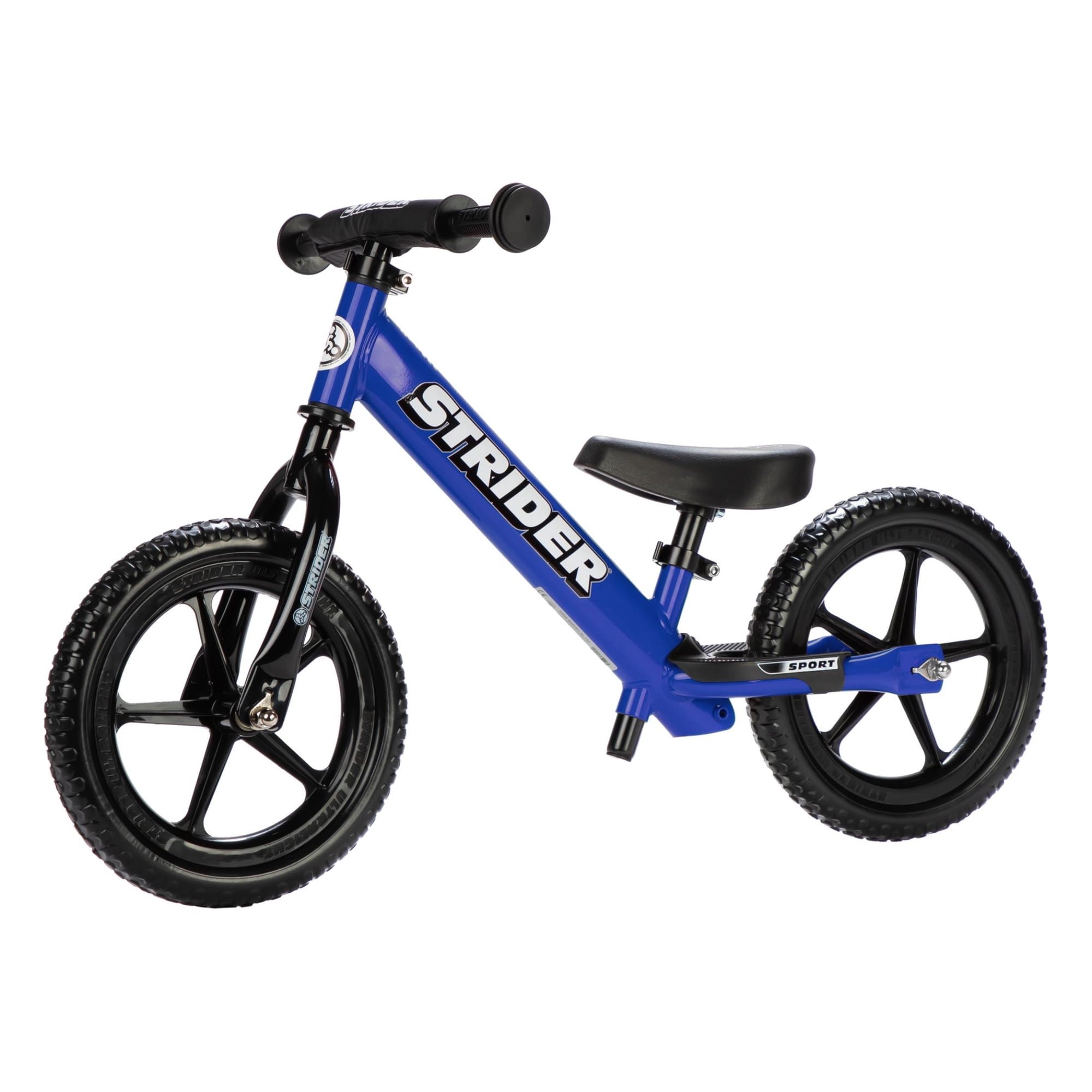
1. Strider 12 Sport — Best Balance Bike for Beginners
Best For: Young children developing balance, steering, and basic bicycle-handling skills before learning to pedal.
The Strider 12 Sport is our favorite first balance bike because it combines a lightweight frame with simple, adjustable construction.
Unlike a conventional bicycle, it has no pedals. Children move forward using their feet while gradually learning to balance and steer.
This allows them to concentrate on fundamental movement without coordinating pedaling at the same time.
Lightweight Construction
The Strider 12 Sport weighs approximately 6.7 pounds.
It uses a steel frame, child-sized grips, and 12-inch flat-free foam tires.
The foam tires do not require inflation, making routine maintenance relatively simple.
However, foam tires provide a different riding feel and traction characteristics compared with pneumatic bicycle tires.
Adjustable Sizing
Strider recommends the 12 Sport for children with inseams approximately 12–18 inches.
The saddle adjusts from about 11 to 17 inches, while the handlebars also offer height adjustment.
This allows the bicycle to accommodate some growth while maintaining a suitable fit.
However, the maximum rider weight is 60 pounds.
Parents should check both fit and weight limits before using the bike.
Learning and Control
Children can begin by walking while seated, then progress toward longer balancing glides.
The Strider includes footrests for use as confidence develops.
However, it has no dedicated hand or coaster brake.
Children slow down using their feet, so supervision and suitable riding surfaces are particularly important.
Start on a level area away from traffic, steep slopes, and other hazards.
Pros
✅ Lightweight 6.7-pound design
✅ Adjustable saddle and handlebars
✅ Flat-free tires
✅ Simple balance-focused learning
Cons
❌ No pedals or dedicated brake
❌ Foam tires have limited terrain versatility
❌ Child eventually needs a pedal bike
Who should skip it: Children who already pedal confidently and fit a suitable pedal bicycle.
Alternative: woom GO 2 is a logical next option for a child ready to learn pedaling.
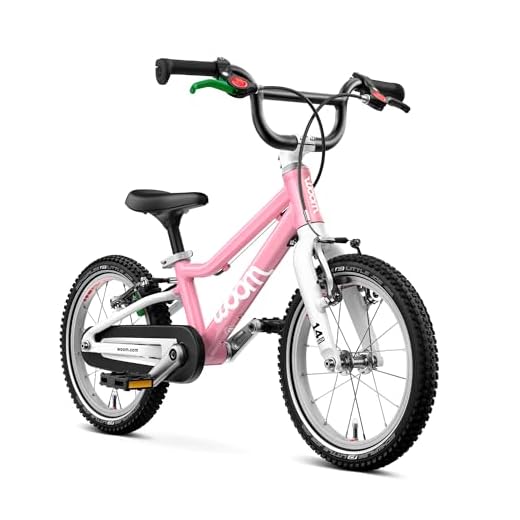
2. woom GO 2 — Best First Pedal Bike
Best For: Children transitioning from balance bikes to pedals who fit a lightweight 14-inch bicycle.
The woom GO 2 is our preferred first pedal bike because its components and geometry are designed around smaller riders.
At approximately 12.2 pounds, it is considerably lighter than many inexpensive children’s bicycles.
That can make it easier for a child to handle when starting, stopping, or correcting balance.
Child-Specific Frame and Controls
woom uses an aluminum frame with a low entry, child-sized crank arms, and appropriately proportioned handlebars.
The manufacturer recommends GO 2 for riders approximately 37–43 inches tall.
Its sizing guide also specifies an inseam range of approximately 16–19.1 inches.
However, these measurements should be checked against the child’s current abilities and proportions.
Brakes and Steering
The GO 2 includes small-hand brake levers, a distinctive green rear-brake lever, and a steering limiter.
The steering limiter is designed to reduce excessive handlebar turning while the child learns control.
However, brake configurations can differ between U.S. versions and product bundles.
Some U.S. GO 2 listings specify a coaster brake alongside hand brakes.
Therefore, confirm the exact model’s braking system before purchasing, particularly if you want to avoid back-pedal braking.
Is the Premium Price Worth It?
The main appeal is lightweight construction and child-focused ergonomics.
However, children can grow quickly at this stage.
If your child is already near the upper end of the recommended measurements, compare the next suitable wheel size before spending more on a premium first pedal bike.
Do not choose the larger model unless it fits comfortably today.
Pros
✅ Lightweight aluminum frame
✅ Child-specific geometry
✅ Small-hand braking controls
✅ Steering limiter and compact chain guard
Cons
❌ Expensive for a first pedal bicycle
❌ Relatively short size range
❌ Exact U.S. brake configuration requires checking
Who should skip it: Children who already ride confidently and fit a correctly sized 16-inch bicycle.
Alternative: Guardian 16-Inch offers a larger beginner model with a linked braking system.

3. Guardian 16-Inch — Best Kids’ Bike for Beginner Braking
Best For: New pedal-bike riders who are ready for 16-inch wheels and can comfortably operate a hand-brake lever.
The Guardian 16-Inch Bike stands out for its SureStop braking system.
Instead of requiring the child to operate two separate brake levers, the design uses one lever to coordinate braking.
This reduces the number of controls a beginner must manage.
SureStop Braking System
Guardian’s linked braking mechanism is designed to coordinate front and rear braking.
The bike does not use a coaster brake, so children can reposition their pedals without accidentally activating a back-pedal brake.
However, this does not make falls or braking mistakes impossible.
Children still need to practice stopping, turning, and controlling speed in a suitable environment.
Frame, Fit, and Handling
The Guardian 16-Inch uses a steel frame and weighs approximately 17.5 pounds.
The manufacturer recommends it for children around 40–46 inches tall.
Its minimum listed leg length is approximately 16.25 inches.
The bike also includes a quick-release adjustable saddle, hybrid tires, and a single-speed drivetrain.
These features support straightforward neighborhood riding without the complexity of gear shifting.
Value and Trade-Offs
Guardian offers a more accessible price than some premium lightweight competitors.
However, the steel frame makes it heavier than many premium aluminum kids’ bikes.
That difference may be noticeable for a smaller or less confident rider.
Before buying, confirm that the child can comfortably reach and squeeze the brake lever while maintaining control of the handlebars.
Pros
✅ Single-lever SureStop braking
✅ No coaster brake
✅ Adjustable saddle
✅ Simple single-speed drivetrain
Cons
❌ Heavier than premium lightweight alternatives
❌ No gears for steeper routes
❌ Linked braking still requires correct use and maintenance
Who should skip it: Children who are too small for its frame or already need a larger geared bicycle.
Alternative: woom GO 2 offers a lighter, smaller first pedal bike.
4. Retrospec Dart 20 — Best Budget Geared Kids’ Bike
Best For: Confident young riders who are ready to learn basic gear shifting during neighborhood rides and suitable recreational cycling.
The Retrospec Dart 20 adds a seven-speed drivetrain without the high price of a premium children’s mountain bike.
It is a useful step up from a single-speed bicycle when a child begins riding longer routes or encountering moderate hills.
Seven-Speed Drivetrain
The Dart 20 uses Shimano gearing with a Revoshift twist shifter.
Children can change gears by rotating the shifter while keeping their hands on the handlebars.
Lower gears can make climbing easier, while higher gears help riders maintain speed on suitable flatter sections.
However, children should already be comfortable balancing, steering, and braking before learning to shift.
Frame and Fit
Retrospec lists the Dart 20 at under 26 pounds.
Its saddle adjusts from approximately 21.5 to 28 inches.
The bicycle also uses 20 × 2.1-inch tires and a child-oriented frame design.
The manufacturer generally markets the bike toward children around six to eight years old.
However, actual fit matters more than that age range.
Brake Controls and Maintenance
The Dart 20 includes front and rear V-brakes with adjustable-reach levers.
Those adjustments help accommodate smaller hands.
However, the derailleur and chain require periodic cleaning, lubrication, and adjustment.
The bike is also heavier than several premium lightweight models.
For families who mainly ride paved paths, that may be an acceptable compromise at this price.
Pros
✅ Affordable seven-speed bicycle
✅ Shimano drivetrain
✅ Twist-grip shifting
✅ Adjustable-reach hand brakes
Cons
❌ Heavier than premium models
❌ Gears add maintenance
❌ Not designed for demanding mountain-bike trails
Who should skip it: Children who are still learning basic pedaling and braking, or who need a specialized trail bicycle.
Alternative: Specialized Riprock 20 provides mountain-bike-oriented geometry and hydraulic disc brakes for appropriately experienced riders.

5. Specialized Riprock 20 — Best Kids’ Mountain Bike for Trails
Best For: Confident young cyclists progressing into suitable dirt trails and supervised mountain-bike riding.
The Specialized Riprock 20 is designed for more demanding cycling than ordinary neighborhood bicycles.
It includes features commonly found on modern mountain bikes, but with proportions intended for younger riders.
Trail-Focused Frame and Geometry
Specialized uses an aluminum frame with geometry designed for stability and handling on uneven terrain.
The bike includes an alloy fork, Ground Control tires, and a trail-oriented riding position.
The manufacturer also uses shorter cranks, narrow grips, and child-specific saddle dimensions.
These features are intended to help smaller riders maintain an appropriate position while pedaling and steering.
Hydraulic Disc Brakes
The Riprock 20 includes front and rear hydraulic disc brakes.
Its adjustable-reach levers allow the braking controls to be positioned for smaller hands.
Hydraulic disc brakes can provide strong, consistent stopping performance when properly adjusted.
However, they are not necessary for every child’s neighborhood bicycle.
They also require appropriate maintenance and service.
Eight-Speed Gearing
The bike uses a microSHIFT eight-speed drivetrain.
Its gearing allows riders to select easier gears for climbing and harder gears when conditions permit.
The current model weighs approximately 21.1 pounds, according to Specialized.
However, weight and individual components may vary between configurations.
Is It Worth the Premium?
The Riprock 20 makes sense for a child who genuinely enjoys trails and is developing off-road cycling skills.
However, technical mountain biking requires instruction, protective equipment, and appropriate supervision.
A bicycle’s trail-focused components do not automatically make difficult terrain safe.
For families exploring advanced cycling equipment, our Vitus bicycles and mountain biking
Pros
✅ Trail-focused geometry
✅ Hydraulic disc brakes
✅ Eight-speed drivetrain
✅ Child-specific controls and proportions
Cons
❌ Expensive for casual cycling
❌ More complex braking and drivetrain maintenance
❌ Specialized features may be unnecessary for paved paths
Who should skip it: Beginners learning to pedal or children who ride mainly on flat neighborhood routes.
Alternative: Retrospec Dart 20 offers affordable gearing for less demanding recreational riding.
6. Priority Start 24 — Best Low-Maintenance Kids’ Bicycle
Best For: Confident older children and families who want a bicycle with simple gearing and reduced routine drivetrain maintenance.
The Priority Start 24 is different from many conventional children’s bicycles because it uses a belt drive instead of a metal chain.
It also features an internally geared rear hub.
Together, these components offer a cleaner and relatively low-maintenance approach to everyday cycling.
Gates Belt Drive
The Start 24 uses a carbon-fiber-reinforced Gates belt.
Unlike a conventional chain, the belt does not require routine chain lubrication.
That means there is less oily residue to transfer onto clothing during ordinary use.
The system also avoids some of the exposed derailleur components found on conventional geared bicycles.
However, a belt drive is not maintenance-free.
Correct tension, alignment, and periodic inspection remain important.
Three-Speed Internal Hub
The Priority Start 24 uses a Shimano Nexus three-speed internal hub.
Its small number of gears makes shifting easier to understand than a bicycle with numerous closely spaced ratios.
However, the overall gear range is less extensive than some eight-speed mountain-oriented bicycles.
The bike also includes dual hand V-brakes and puncture-resistant multi-terrain tires.
Fit and Weight
Priority lists a weight of approximately 23.3 pounds.
The manufacturer recommends a rider inseam of 25.5–29 inches and a height range of approximately 4 feet 1 inch to 4 feet 11 inches.
Its adjustable stem and saddle provide some room for fit adjustments.
However, parents should confirm the child’s actual riding position rather than relying only on the stated age range.
Who Benefits Most?
Priority Start 24 is particularly appealing for regular neighborhood riding, family bike paths, and suitable moderate terrain.
Its biggest advantage is simplified drivetrain ownership rather than advanced mountain-bike performance.
Pros
✅ Clean Gates belt drive
✅ Three-speed internal hub
✅ Dual hand brakes
✅ Reduced routine chain-related maintenance
Cons
❌ Limited gear range compared with some alternatives
❌ More expensive than basic 24-inch bikes
❌ Specialized belt or hub service may require suitable parts
Who should skip it: Riders seeking advanced off-road performance or a wider range of gears.
Alternative: woom EXPLORE 5 offers eight gears, disc brakes, and a lighter all-round design.
7. woom EXPLORE 5 — Best Premium All-Round Kids’ Bike
Best For: Confident older children who regularly cycle on neighborhood roads, recreational paths, and suitable unpaved routes.
The woom EXPLORE 5 is our premium all-round recommendation because it combines lightweight construction with a versatile drivetrain and child-specific geometry.
It uses 24-inch wheels and weighs approximately 20.8 pounds.
That is relatively light for a geared bicycle of this size.
Eight-Speed Drivetrain
EXPLORE 5 offers eight gears.
This gives young riders flexibility when moving between flatter roads and moderate hills.
However, gears only become useful when the child understands how and when to shift.
For a rider still learning basic control, a simpler bicycle may be a better option.
Brakes and All-Terrain Features
The bicycle includes disc brakes with child-specific controls.
It also uses all-terrain tires intended for riding across different suitable surfaces.
The adjustable stem, ergonomic grips, and saddle help accommodate growing riders.
However, these features do not turn EXPLORE 5 into a dedicated technical mountain bike.
Children should ride routes that match their experience and the bicycle’s intended use.
Size and Riding Position
woom recommends EXPLORE 5 for riders approximately 49–57 inches tall.
Its geometry is designed around children’s body proportions rather than simply shrinking an adult bicycle.
However, children within the same height range may have different leg lengths and riding confidence.
Check standover clearance, saddle position, handlebar reach, and braking control before ordering.
Is It Worth the Price?
EXPLORE 5 is a premium purchase.
Its combination of low weight, versatile gearing, and child-specific components can make sense for families who cycle frequently.
However, occasional riders may be equally satisfied with a correctly fitted, more affordable 24-inch bicycle.
Pros
✅ Lightweight 20.8-pound construction
✅ Eight-speed drivetrain
✅ Disc brakes
✅ Child-specific fit and all-terrain tires
Cons
❌ High purchase price
❌ More drivetrain maintenance than an internal-hub belt bike
❌ May be unnecessary for occasional short rides
Who should skip it: Children who do not yet fit 24-inch wheels or families who need only an inexpensive neighborhood bicycle.
Alternative: Priority Start 24 provides simpler three-speed gearing and a lower-maintenance belt drivetrain.

Other Kids’ Bicycles We Considered
REI Co-op REV 20
REI offers a 20-inch recreational bicycle suitable for many developing riders.
However, older and newer REV 20 models have different specifications and availability.
We selected Retrospec Dart 20 for its clear seven-speed value proposition.
Priority Start 16
Priority Start 16 offers a low-maintenance belt drive in a smaller children’s bicycle.
However, Priority Start 24 gives this roundup a more useful option for older riders.
Prevelo Alpha Two
Prevelo Alpha Two is a strong lightweight 16-inch bicycle with child-focused geometry.
We selected Guardian instead because its linked braking system provides a distinct comparison for families prioritizing simplified controls.
Retrospec Koda 16
The Koda 16 is another accessible beginner bicycle.
However, its braking configuration and construction differ from Guardian’s system.
Families should evaluate the exact model rather than assuming all 16-inch bikes are equivalent.
How to Choose the Right Kids’ Bike Size
Correct sizing should be the first step when buying a children’s bicycle.
A bike that is too large can make starting, stopping, turning, and balancing more difficult.
The American Academy of Pediatrics advises parents to buy a bicycle that fits the child now instead of one they must grow into.
Start With Your Child’s Inseam
Inseam is the distance from the crotch to the ground.
To measure it, have the child stand against a wall without shoes.
Place a book between their legs to simulate a bicycle saddle, then measure from the top of the book to the floor.
Compare the measurement with the manufacturer’s minimum saddle height and recommended fit range.
Use Wheel Size as a Starting Point
| Wheel Size | Typical Riding Stage | Main Consideration |
|---|---|---|
| 12″ balance | Learning balance and steering | Feet should reach the ground comfortably |
| 14″ pedal | First pedaling attempts | Easy starting, stopping, and brake control |
| 16″ pedal | Developing independent riding | Appropriate reach and braking confidence |
| 20″ | Confident riding and first gears | Fit, bike weight, and intended terrain |
| 24″ | Longer riding and advanced control | Frame fit, gearing, and handling ability |
These are general riding stages, not rigid age requirements.
Two bicycles with the same wheel diameter can have different saddle heights, frame lengths, and handlebar positions.
Check Standover Clearance
The child should be able to stand over the bicycle without uncomfortable contact with the top tube.
They should also be able to start and stop without losing control.
Check Handlebar and Brake Reach
Ask the child to hold the handlebars and operate the brakes.
They should not need to stretch excessively or release their grip to reach the controls.
Avoid Buying an Oversized Bike
A larger bicycle may last longer as the child grows, but it can be harder to control today.
Choose an appropriate current fit instead of trying to maximize future use at the expense of comfort and safety.
Balance Bikes vs. Training Wheels: Which Is Better?
Balance bikes and training wheels teach different aspects of riding.
How Balance Bikes Work
A balance bike allows children to practice balancing, steering, and controlling speed with their feet.
Pedaling is introduced later.
This can simplify the learning process because the child does not need to manage every skill simultaneously.
How Training Wheels Work
Training wheels support a pedal bicycle while children practice pedaling and steering.
However, they do not teach leaning and two-wheel balancing in the same way.
Some children find training wheels helpful, while others transition more comfortably from a balance bike.
Our Recommendation
For a young child beginning from scratch, a correctly fitted balance bike is a practical starting point.
Once the child can glide, steer, and stop with confidence, introduce a suitable pedal bicycle.
However, learning speed differs between children.
Do not rush a child who is not ready to move to the next stage.
Understanding Kids’ Bicycle Brakes
A child’s ability to stop confidently matters as much as their ability to pedal.
Different bicycles use different braking systems.
Coaster Brakes
A coaster brake activates when the rider pedals backward.
It avoids the need for a hand lever, but it can interfere with pedal repositioning during learning.
Some first pedal bicycles include coaster brakes because of their configuration and applicable requirements.
Hand Brakes
Hand brakes use handlebar-mounted levers.
They allow the child to keep pedaling and braking functions separate.
However, the child must be able to reach and squeeze the lever comfortably.
Guardian SureStop
Guardian uses one lever to coordinate its linked braking mechanism.
This can simplify the controls for some beginners.
However, it does not eliminate the need for practice or correct maintenance.
Hydraulic Disc Brakes
Hydraulic disc brakes are common on higher-performance mountain bikes.
They can provide strong, controlled braking under appropriate conditions.
However, they add cost and specialized maintenance requirements.
For basic neighborhood cycling, well-adjusted conventional hand brakes are often sufficient.
Does Bicycle Weight Matter for Kids?
Bike weight can have a noticeable effect on how easily a child controls their bicycle.
A lighter bike is generally easier to lift, steer at low speed, and handle after a stop.
This can be especially important for smaller beginners.
For example, the 12.2-pound woom GO 2 is substantially lighter than the 17.5-pound Guardian 16-Inch, although the bicycles serve different size ranges.
However, weight is not the only important factor.
A slightly heavier bicycle with suitable geometry and functioning brakes can be a better choice than a lighter bicycle with poor fit or unsuitable components.
Consider weight alongside frame dimensions, rider strength, braking ability, and intended terrain.
Single-Speed vs. Geared Kids’ Bikes
Not every child needs gears.
A simple single-speed bicycle can be easier to manage when a child is still mastering balance, steering, and stopping.
When Single-Speed Makes Sense
Single-speed bicycles have fewer drivetrain components to maintain.
They are useful for younger riders on relatively flat routes.
Guardian 16-Inch is an example of this straightforward approach.
When Gears Become Useful
Gears allow a cyclist to adapt pedaling effort to changes in terrain.
They become more useful as children tackle longer rides or moderate hills.
Retrospec Dart 20 offers seven speeds, while woom EXPLORE 5 provides eight.
However, children should already understand braking and steering before introducing complicated shifting decisions.
Internal Gears vs. Derailleurs
Priority Start 24 uses a three-speed internal hub.
Its enclosed mechanism and belt drivetrain can reduce some routine maintenance.
However, a conventional derailleur may offer a wider range of gear ratios and different service options.
Choose the drivetrain that matches the child’s terrain and the family’s maintenance preferences.
Essential Summer Cycling Safety for Kids
Children should use appropriate safety equipment and ride in environments that match their abilities.
The U.S. Consumer Product Safety Commission maintains a federal safety standard for bicycle helmets.
Parents should choose an appropriately sized, compliant helmet and confirm that it fits correctly.
Important: A properly fitted bicycle and helmet can reduce certain risks, but no bike, brake system, or helmet makes riding injury-proof. Supervision, suitable routes, and practiced braking remain essential.
Wear a Properly Fitted Helmet
The helmet should sit level on the head and cover the forehead appropriately.
It should not slide excessively when the child moves their head.
Follow the manufacturer’s adjustment instructions and replace helmets when required after an impact or visible damage.
Choose an Appropriate Riding Area
Beginners should practice away from motor traffic, steep slopes, and other hazards.
Choose smooth, predictable surfaces while children develop basic control.
As confidence improves, introduce new environments gradually.
Practice Stopping and Turning
Before a longer ride, ask the child to demonstrate controlled stopping.
They should also practice turning, looking ahead, and responding to simple instructions.
Plan for Summer Heat
Bring drinking water and schedule breaks during warm weather.
Consider shade, suitable clothing, and the forecast.
Avoid demanding rides during extreme heat.
Check Visibility
Use appropriate reflectors and lights where required.
Bright clothing can improve visibility, but it does not replace correct lighting equipment.
Children should also learn to stop before entering roads, crossings, or other traffic areas.
Essential Accessories for Summer Bike Rides
The right accessories can make cycling more comfortable and organized.
Bicycle Helmet
A properly fitted helmet should be part of every child’s cycling setup.
Choose a model that complies with applicable U.S. requirements.
Water Bottle
Hydration matters during summer activities.
Select a bottle that the child can open and use comfortably during breaks.
Bell and Visibility Equipment
A bell can help communicate with other path users where appropriate.
Use suitable lights and reflectors according to the riding environment and local requirements.
Bike Lock
For older children, a practical lock can help secure a bicycle during appropriate supervised stops.
However, a basic cable lock may not provide sufficient protection in higher-theft areas.
Basic Maintenance Kit
A compatible pump, spare tube or repair equipment, and simple tools can be useful for family rides.
Parents should understand how to handle minor problems before leaving home.
Kids’ Bicycle Maintenance Checklist
Regular checks can prevent avoidable mechanical problems.
Before a summer ride, examine the bicycle’s main components.
- Check tire pressure according to the tire manufacturer’s guidance.
- Look for damaged tires, loose spokes, or wheel problems.
- Test the front and rear brakes where applicable.
- Confirm that the handlebars and saddle are secure.
- Inspect the chain or belt for damage and correct adjustment.
- Make sure pedals and crank arms are secure.
- Check reflectors and lights when required.
- Inspect the helmet for damage and correct fit.
More advanced maintenance depends on the bicycle.
Derailleur-equipped bikes may require gear adjustments and chain lubrication.
Priority’s belt drivetrain avoids routine chain lubrication, but it still requires appropriate inspection and servicing.
Hydraulic disc brakes may need professional attention when braking performance changes.
When assembly or adjustment is uncertain, consult a qualified bicycle mechanic before allowing the child to ride.
Best Kids’ Bikes by Age and Riding Stage
Age can help narrow your search, but it should never replace actual measurements and a fit check.
| Riding Stage | Suggested Bicycle | Main Reason |
|---|---|---|
| First balance experiences | Strider 12 Sport | Lightweight, pedal-free learning |
| Transitioning to pedaling | woom GO 2 | Small and lightweight 14-inch design |
| Developing braking skills | Guardian 16-Inch | Simplified linked braking |
| Learning to use gears | Retrospec Dart 20 | Affordable seven-speed drivetrain |
| Developing trail skills | Specialized Riprock 20 | Trail geometry and hydraulic brakes |
| Older everyday riders | Priority Start 24 | Simple internal gearing and belt drive |
| Confident all-round riders | woom EXPLORE 5 | Lightweight eight-speed versatility |
Check the exact bicycle’s height and inseam range before selecting a model. A child may be ready for a different wheel size than another child of the same age.
Frequently Asked Questions
What are the best kids’ bikes for summer?
Strider 12 Sport is a useful balance-bike choice, while woom GO 2 suits children ready to pedal. Guardian 16-Inch offers simplified braking, and Retrospec Dart 20 adds affordable gearing. The best bike depends on the child’s size, skills, and riding environment.
What size bicycle should I buy for my child?
Measure your child’s inseam, then compare it with the manufacturer’s fit range and minimum saddle height. Confirm comfortable standover clearance, handlebar reach, and braking control. Do not choose an oversized bike just for future growth.
Is a balance bike better than training wheels?
Balance bikes let children practice steering and two-wheel balance before adding pedaling. Training wheels support a pedal bicycle upright but do not teach balance in the same way. Both approaches can work, depending on the child.
Are lightweight kids’ bikes worth the extra money?
A lighter bicycle may be easier for a child to control, especially while learning. However, frame fit, braking ability, durability, and suitable components are equally important. Premium pricing alone does not guarantee a better experience.
Should a child’s first pedal bike have hand brakes?
Hand brakes can help children learn independent braking, provided the levers fit their hands and they can operate them comfortably. Some beginner bikes also include coaster brakes. Verify the exact configuration before purchasing.
When should a child move to a 20-inch bicycle?
A child should move to a 20-inch bicycle when their height, inseam, and riding ability match the selected frame. They should also be able to start, stop, steer, and reach the brakes confidently. Age alone is not enough.
Does a seven-year-old need a geared bike?
Not necessarily. Gears are useful for moderate hills and longer rides, but a single-speed bicycle can be simpler on flat routes. Choose according to the child’s ability, terrain, and bicycle fit.
What safety equipment does a child need for cycling?
A properly fitted bicycle helmet is essential. Appropriate reflectors, lights, suitable footwear, drinking water, and adult supervision are also important. Additional equipment depends on local rules and riding conditions.
Final Verdict: Which Kids’ Bicycle Should You Buy?
The best kids’ bike is the one that fits the child’s current size, confidence, and riding needs.
Strider 12 Sport is our preferred first balance bike because it is lightweight, adjustable, and simple to maintain.
For children learning to pedal, woom GO 2 offers a lightweight 14-inch design. Guardian 16-Inch provides a larger beginner option with simplified linked braking.
Retrospec Dart 20 is our budget geared choice for developing riders, while Specialized Riprock 20 suits appropriately skilled children progressing into trail riding.
For older cyclists, Priority Start 24 offers a low-maintenance belt drivetrain. Meanwhile, woom EXPLORE 5 combines lightweight construction, eight gears, and versatile all-round capability.
However, do not select a bicycle based solely on price, appearance, or wheel size.
Measure the child, confirm that the frame fits, and check whether they can brake and steer comfortably.
Our recommendation: Start with fit and riding ability. Then choose the lightest, most suitable bicycle your budget comfortably supports without paying for features your child does not need.
Best Balance Bike: Strider 12 Sport
Best First Pedal Bike: woom GO 2
Best Beginner Braking: Guardian 16-Inch
Best Budget Geared Bike: Retrospec Dart 20
Best Trail Bike: Specialized Riprock 20
Best Low-Maintenance Bike: Priority Start 24
Best Premium All-Rounder: woom EXPLORE 5
Bottom Line: Choose correct sizing, manageable weight, suitable brakes, and age-appropriate riding conditions.
Sources
- American Academy of Pediatrics — How to Choose the Right Size Bike & Helmet: Tips for Parents
- Two Wheeling Tots — Best 16-Inch Kids’ Bikes: Independent Testing and Sizing
- U.S. Consumer Product Safety Commission — Bicycle Helmet Requirements and Safety Standards
- woom — GO 2 and EXPLORE 5 Official Product Specifications
- Priority Bicycles — Start 24 Official Sizing and Technical Specifications
How we research: Discompare compares current manufacturer specifications, U.S. product listings, independent children’s bicycle reviews, sizing recommendations, and safety guidance from authoritative organizations. We did not conduct original bicycle performance, braking, or safety testing for this article. Bicycle fit varies by child, while model specifications, prices, colors, and availability can change. Discompare may earn a commission from eligible retailer or price-comparison links.
Product Groups: Strider 12 Sport Balance Bike, woom GO 2 14 Inch Kids Bike, Guardian 16 Inch Kids Bike, Retrospec Dart 20 7 Speed Kids Bike, Specialized Riprock 20 Kids Mountain Bike, Priority Start 24 Kids Bike, woom EXPLORE 5 24 Inch Kids Bike