Fitness Trackers for Kids 2026
The best fitness tracker for kids depends on one decision before anything else: do you want a simple activity tracker, or a connected smartwatch with GPS and calling?
For most younger children, our top pick is the Garmin vívofit jr. 3. It tracks steps, activity and sleep, adds parent-managed chores and rewards, and uses a replaceable battery rated for up to a year. There is no cellular plan and no nightly charging routine.
Fitbit Ace LTE is the better choice when movement games, GPS, calls and messages all matter. Garmin Bounce 2 goes further toward a sports-focused kids smartwatch. At the budget end, BIGGERFIVE Vigor 3 provides steps, heart-rate trends, sleep and sports modes without requiring a phone for its basic functions.
More features are not automatically better for a child. A tracker should make movement easier to notice and more enjoyable. It should not turn playtime into an adult-style obsession with calories, body weight, or perfect health scores.
Quick Answer: Best Fitness Trackers for Kids
Best Overall: Garmin vívofit jr. 3 — simple activity tracking, family challenges, chores and rewards, swim-friendly construction, and up to one year of battery life.
Best for Movement Games + GPS: Fitbit Ace LTE — combines activity goals and games with GPS, approved calls and messages, and parent controls.
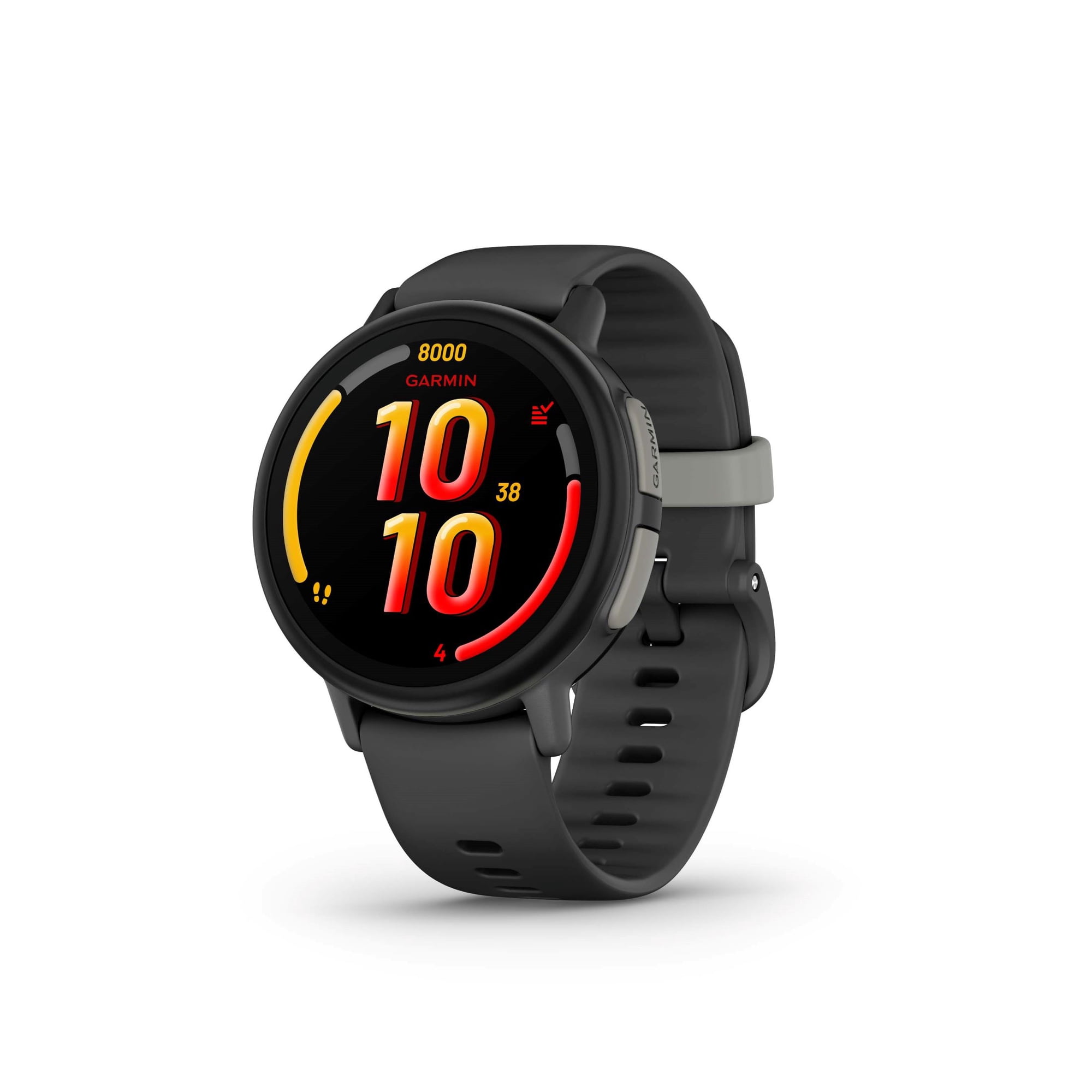
Best for Sports + Communication: Garmin Bounce 2 — built-in sports apps, GPS, two-way calling, messaging, and location tools without giving a child a smartphone.
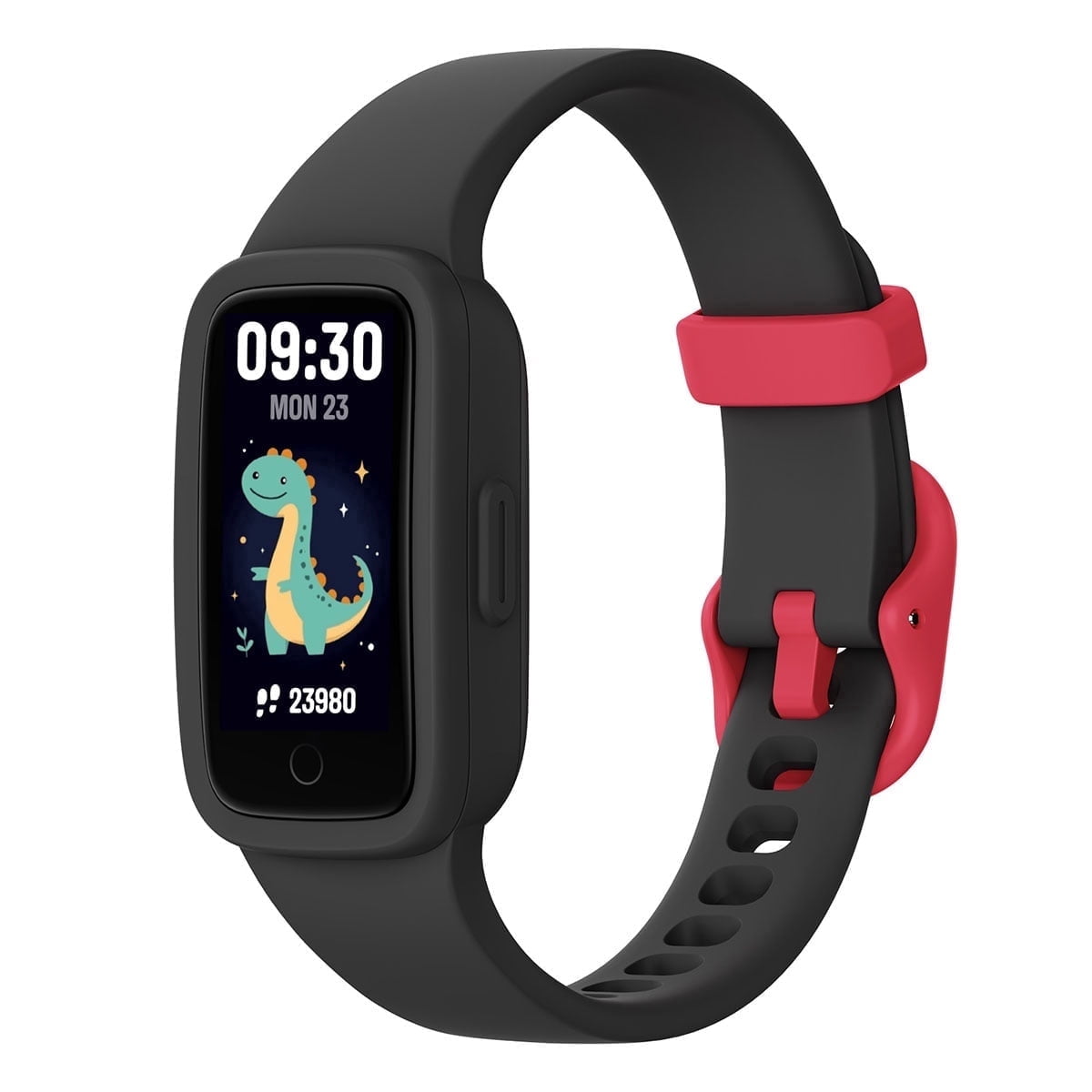
Best Budget: BIGGERFIVE Vigor 3 — low-cost steps, sports modes, heart-rate estimates, sleep tracking, and up to 10 days of battery life.
Best for Older Kids in Apple Families: Apple Watch SE 3 GPS + Cellular — a more advanced option with Activity, workouts, approved contacts, location, Schooltime, and cellular communication.
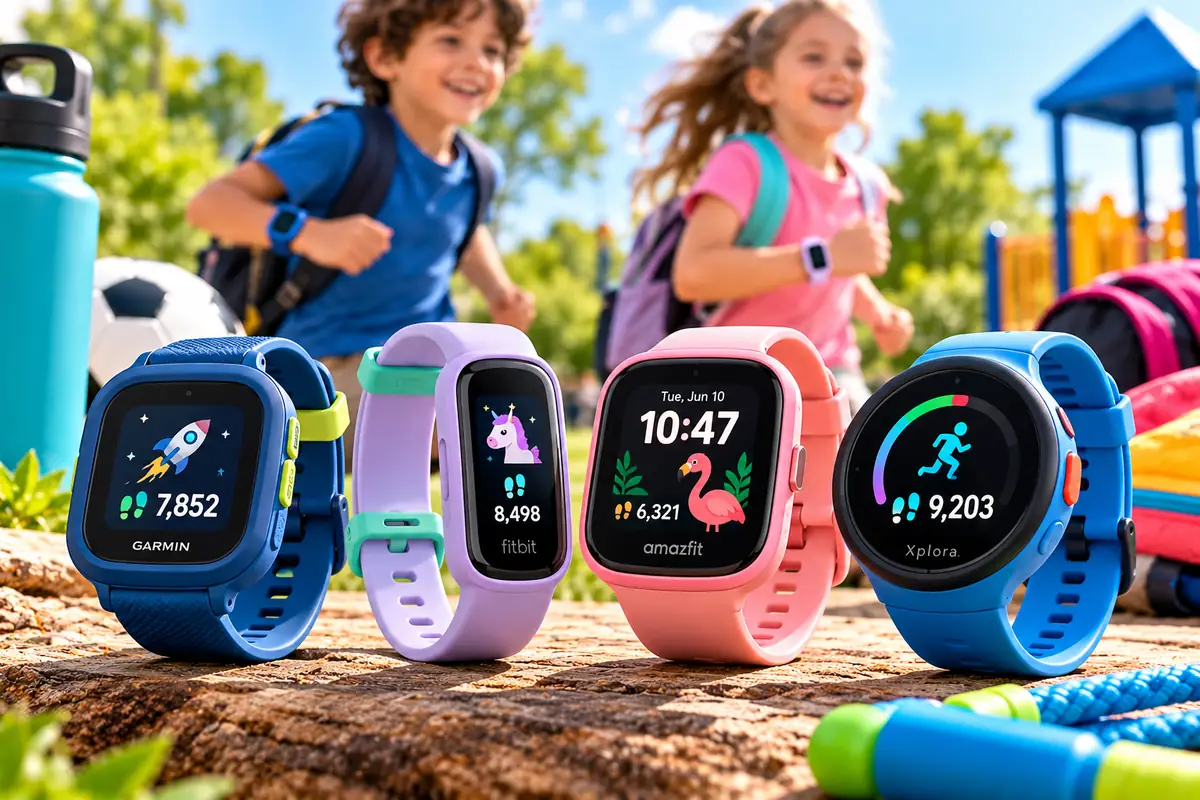
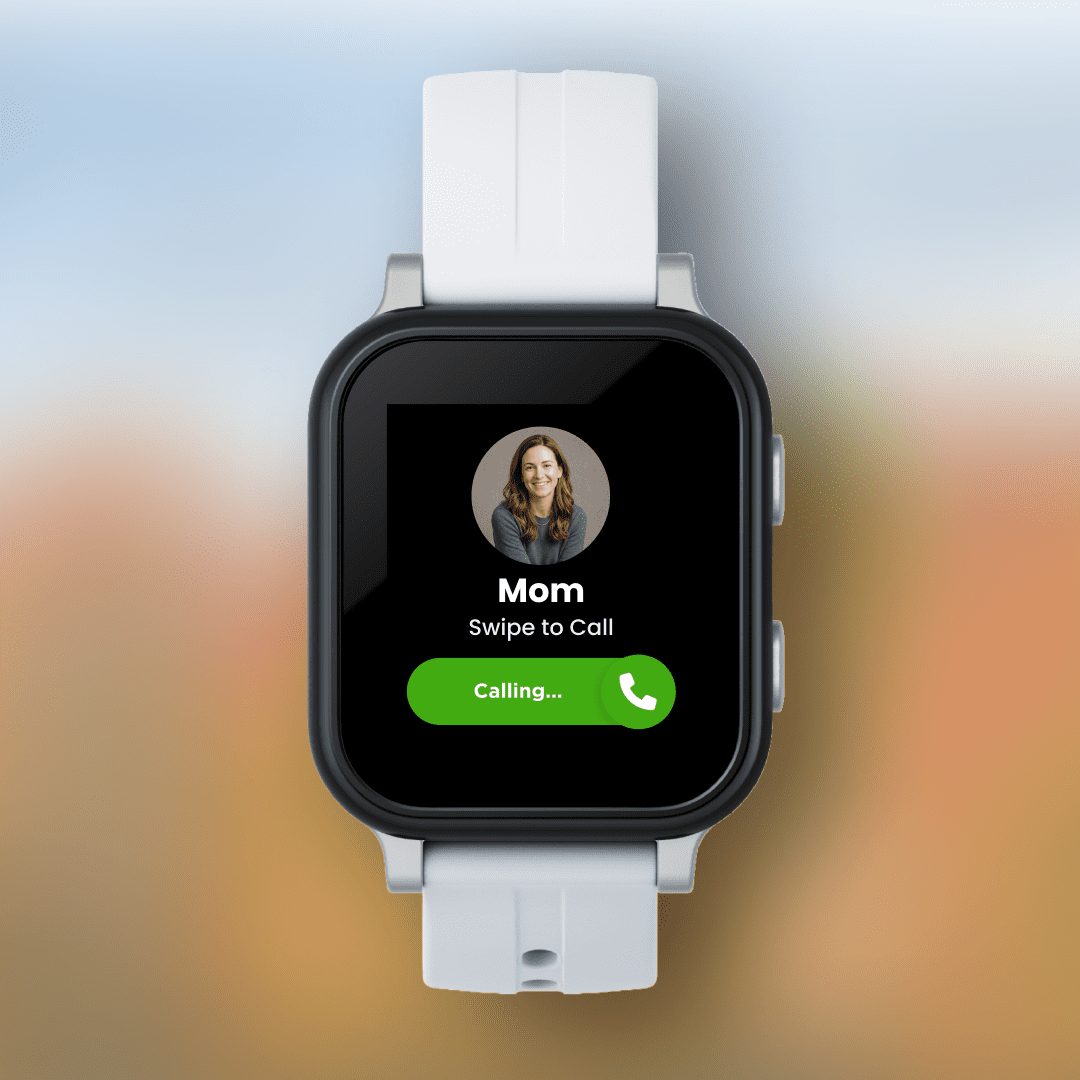
Gabb Watch 3e is our low-distraction connected option for families that mainly want steps plus controlled communication. Xplora X6Play is the better fit when rewards, GPS, approved contacts, and step-based motivation are the priority.
Should You Buy a Fitness Tracker or a GPS Smartwatch?
This distinction matters more than the brand.
A simple fitness tracker focuses on activity. It may count steps, record sleep, log sports, and run challenges. It usually costs less, lasts much longer between charges, and does not need cellular service.
A connected kids smartwatch adds features such as GPS location, calls, messaging, safe zones, and school modes. Those features can be useful, but they also introduce recurring service fees, shorter battery life, and more data collection.
| Choose a Simple Tracker When… | Choose a Connected Watch When… |
|---|---|
| Movement is the main goal | Calling home matters |
| You do not need GPS | Parent-managed location is useful |
| You want no monthly fee | You accept a service subscription |
| Long battery life matters | Daily or frequent charging is acceptable |
| You want fewer distractions | You want contacts, messages, and school controls |
Garmin vívofit jr. 3 and BIGGERFIVE Vigor 3 are the strongest examples of the first category. Fitbit Ace LTE, Garmin Bounce 2, Gabb Watch 3e, and Xplora X6Play belong to the second.
How Much Activity Do Kids Need?
A fitness tracker should support healthy movement habits rather than create a competition with a number on a screen.
Current U.S. physical-activity guidance recommends that children ages 3 to 5 stay active throughout the day. Children and teenagers ages 6 to 17 should get at least 60 minutes of moderate-to-vigorous physical activity each day.
That activity does not need to look like an adult gym workout. Walking, running, biking, swimming, playground activity, active games, sports, climbing, and other enjoyable movement all count.
The best kids tracker therefore encourages activity without making the child feel that every step is a test.
How We Chose the Best Fitness Trackers for Kids
We prioritized products designed specifically for children or products with strong child-management features.
Our criteria included activity motivation, battery life, comfort, durability, water resistance, parent controls, school-use features, communication, GPS, recurring service costs, privacy considerations, and current U.S. availability.
We also gave extra weight to simplicity. A younger child does not automatically benefit from adult health features such as recovery scores, HRV trends, ECG functions, or advanced sleep analytics.
Health readings from consumer wearables should be treated as general wellness estimates unless a specific feature has appropriate validation for a defined medical purpose.
Discompare did not conduct hands-on testing for this article.
Fitness Trackers for Kids Compared
| Tracker | Best For | GPS / Calls | Battery | Subscription | Price Reference | Main Trade-Off |
|---|---|---|---|---|---|---|
| Garmin vívofit jr. 3 | Best overall | No / No | Up to 1 year | No | $89.99 | No GPS, calling, or heart-rate sensor |
| Fitbit Ace LTE | Movement games + GPS | Yes / Yes | 16+ hours | Required | $179.95 | Daily charging + Ace Pass |
| Garmin Bounce 2 | Sports + communication | Yes / Yes | Up to 2 days | Required for LTE | $299.99 | High price and no heart-rate sensor |
| BIGGERFIVE Vigor 3 | Budget tracking | No / No | Up to 10 days | No | $43.99 | Less independent validation |
| Apple Watch SE 3 GPS + Cellular | Older kids in Apple families | Yes / Yes | Frequent charging | Carrier plan required for phone-independent use | From $299 | More complex and expensive |
| Gabb Watch 3e | Low-distraction connected watch | Yes / Yes | 14–18 hours typical | Required | Hardware promotions vary | Basic fitness features |
| Xplora X6Play | Step rewards + GPS | Yes / Yes | 1–2 days | Required | $169.99 | More smartwatch than fitness tracker |
Compare Current Kids Fitness Tracker Prices
Prices for kids watches can be misleading because some connected models are heavily discounted only when you activate a service plan. Compare the hardware price and the recurring subscription before deciding which model is cheaper.


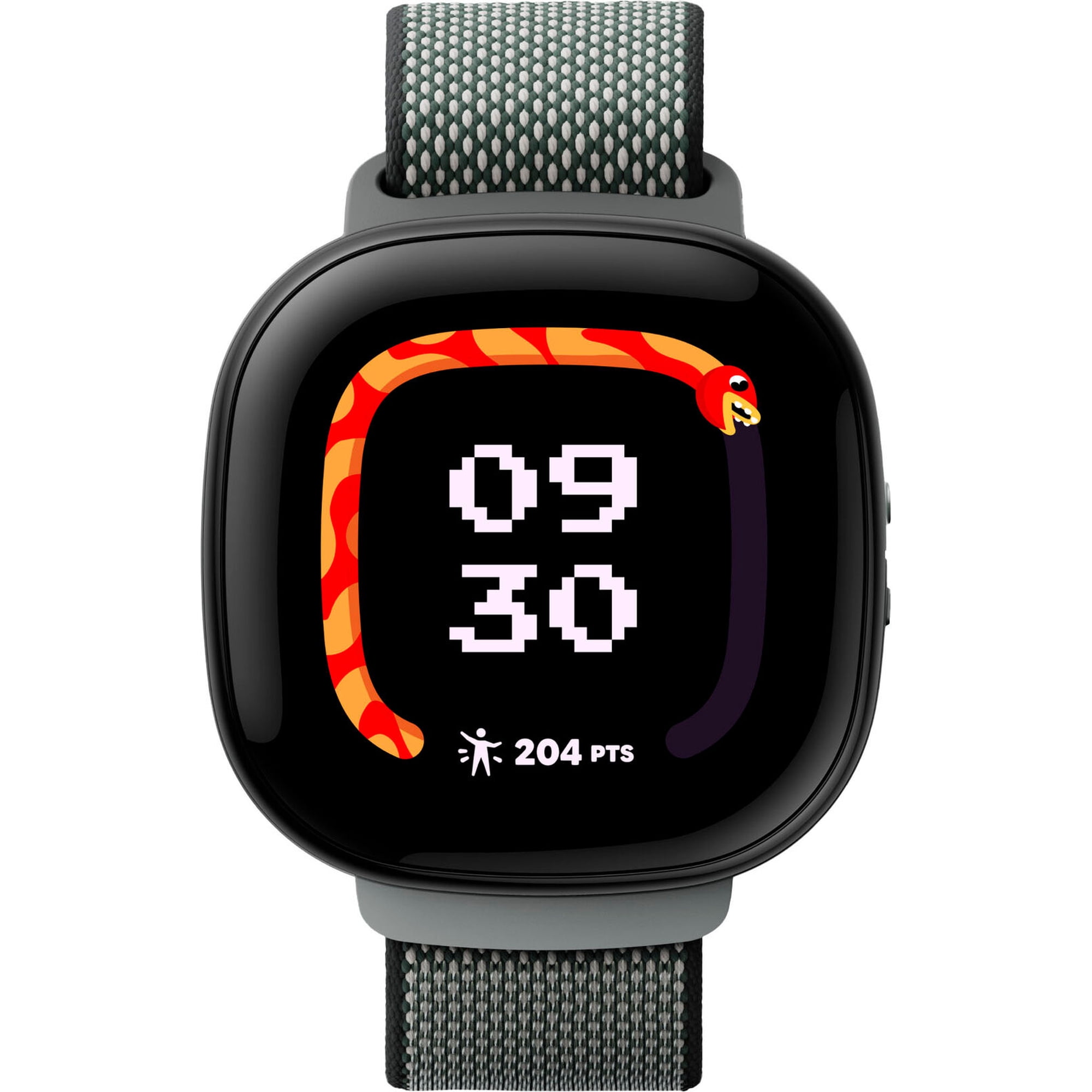
1. Garmin vívofit jr. 3 — Best Overall Fitness Tracker for Kids
Best For: Younger children, families who want activity motivation without GPS, and parents who do not want another device that needs nightly charging.
Garmin vívofit jr. 3 is our best overall pick because it behaves like a kids fitness tracker rather than a miniature smartphone.
It tracks steps, sleep, daily activity, and timed activities. Movement also unlocks themed adventures inside the Garmin Jr. app, depending on the version and licensed design you buy.
Parents can use the companion app to create chores, assign rewards, and view activity. Children can also join family step challenges.
The standout feature is battery life. Garmin uses a replaceable coin-cell battery rated for up to one year. There is no charger to lose and no daily charging routine to remember.
The tracker is also swim-friendly, which makes it more practical for everyday kid use than a device that must come off before the pool.
What it does not offer is just as important. There is no GPS, calling, LTE service, or heart-rate sensor. That simplicity is a strength if your only goal is encouraging movement.
Pros
✅ Up to one year of battery life
✅ No subscription
✅ Parent-managed chores and rewards
✅ Activity-based app adventures
✅ Swim-friendly design
Cons
❌ No GPS or calling
❌ No heart-rate sensor or advanced sports data
Who should skip it: If the child needs independent calling or parent-managed location, move up to Fitbit Ace LTE or Garmin Bounce 2.
Alternative: BIGGERFIVE Vigor 3 costs less and adds heart-rate and sleep estimates, but Garmin has the stronger established kids ecosystem.
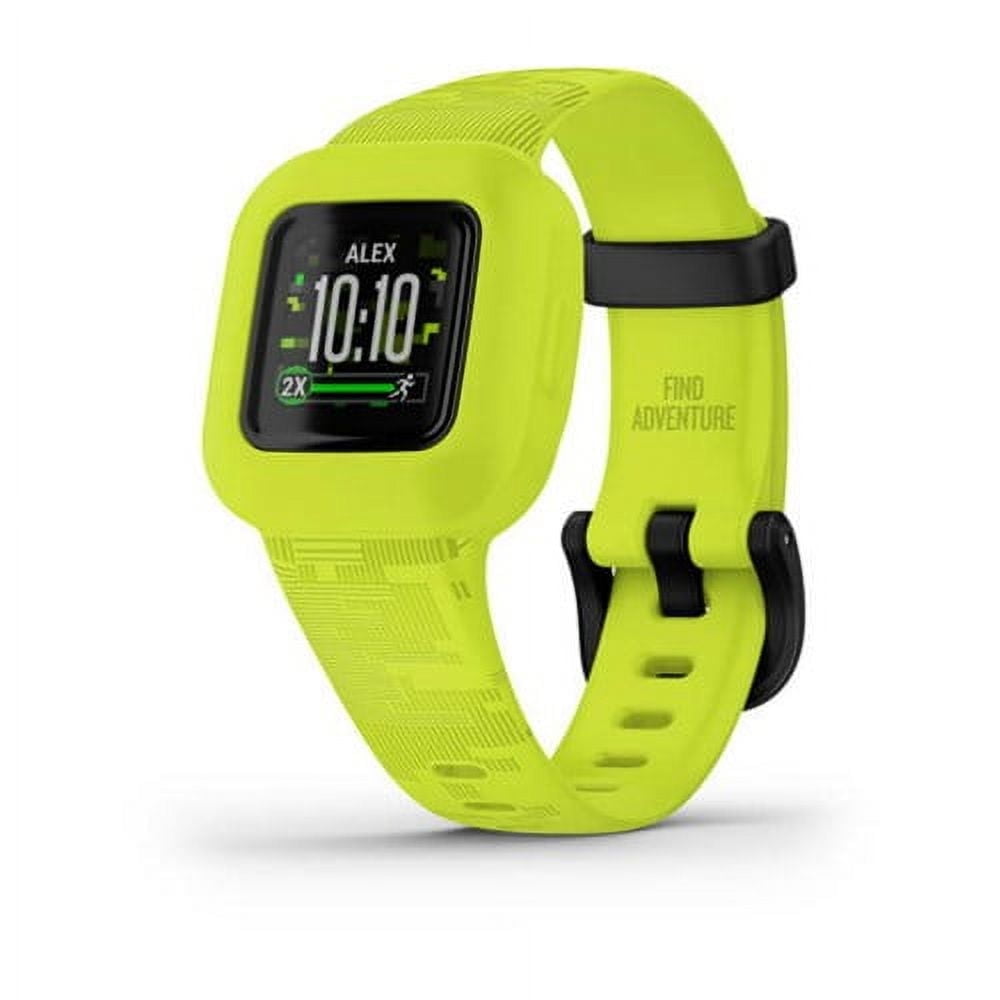
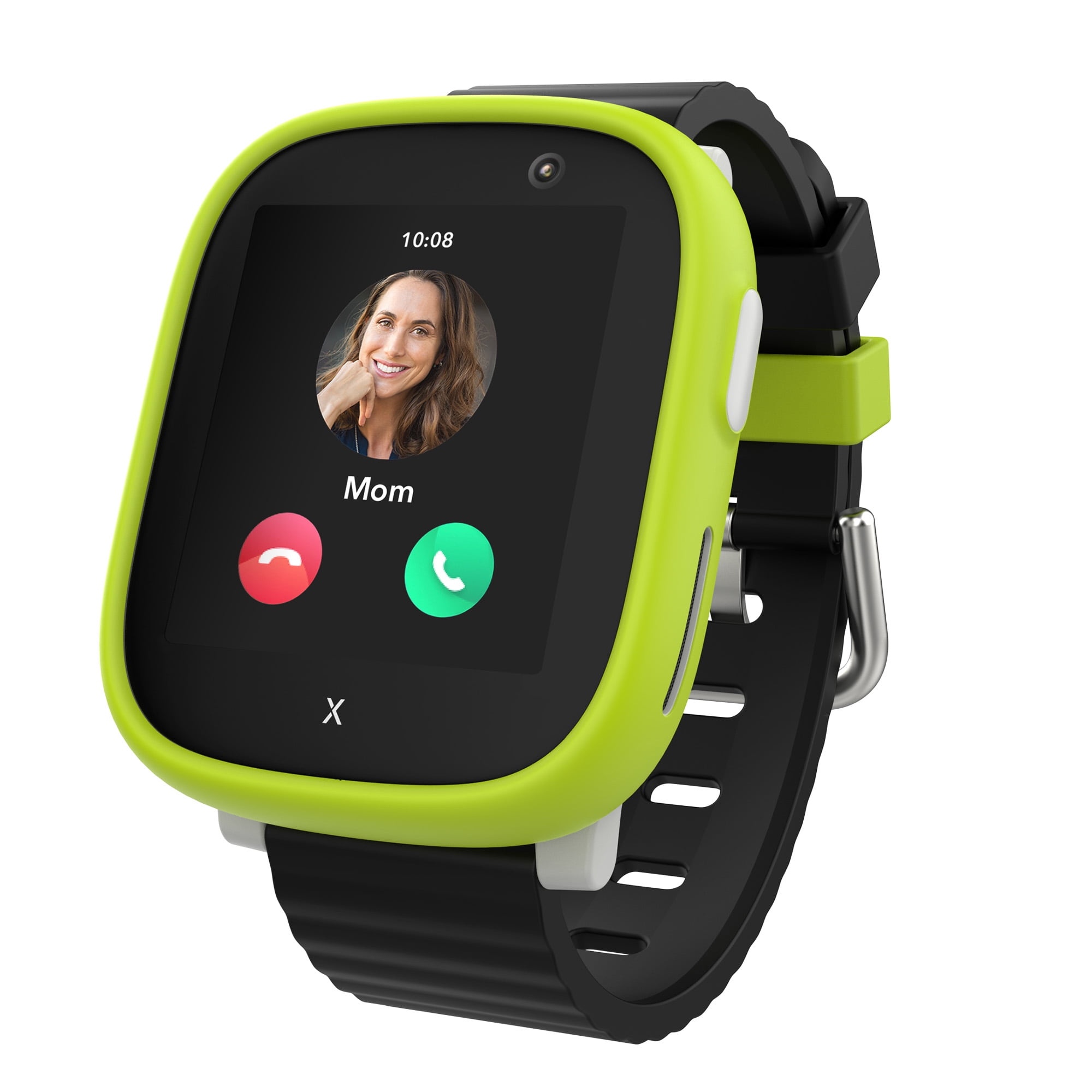
2. Fitbit Ace LTE — Best for Movement Games + GPS
Best For: School-age kids who enjoy games and parents who also want GPS, approved calling, and messaging.
Fitbit Ace LTE is the most interesting product in this guide if motivation is the problem.
Google connects movement directly to games. Ace LTE tracks steps, lighter movement, active minutes, floors, and current heart rate. The child’s Move Goal earns points as activity increases.
The watch also connects those movement goals with Fitbit Arcade and its broader game system. That gives the child a reason to move beyond simply filling a progress ring.
For parents, Ace LTE adds 4G LTE, GPS location, calling, messaging, and approved contacts through the Fitbit Ace app.
School Time can restrict games and silence incoming notifications during scheduled hours while still allowing the child to contact a parent when necessary.
The trade-offs are significant. Google rates the battery for 16+ hours, so charging is effectively a daily routine. The connected experience also requires Ace Pass, currently priced at $9.99 per month or $119 annually.
Privacy deserves attention too. Google states that the watch can collect child account information, activity and health data, location, and contact information. Parents can manage much of the experience through the Fitbit Ace app and Family Link.
Pros
✅ Movement-based games are genuinely kid-focused
✅ GPS, calls, and messaging
✅ Tracks steps, activity minutes, floors, and heart rate
✅ School Time reduces classroom distractions
✅ 50 m water resistance
Cons
❌ Ace Pass is required
❌ 16+ hour battery means frequent charging
❌ Much more expensive over time than a simple activity band
Who should skip it: If you do not need GPS or calling, vívofit jr. 3 is simpler and dramatically cheaper to own.
Alternative: Garmin Bounce 2 costs more but provides a more sports-focused connected-watch experience.

3. Garmin Bounce 2 — Best for Sports + Communication
Best For: Active kids who want a real smartwatch experience with sports tracking, calls, messages, GPS, and location tools.
Garmin Bounce 2 sits much closer to a full smartwatch than vívofit jr. 3.
Built-in sports apps cover running, walking, bicycling, jump rope, team sports, pickleball, and other activities. That makes it one of the stronger choices for a child who regularly participates in organized sports.
LTE connectivity adds two-way calling, text and voice messaging, location tracking, check-ins, and boundary alerts through Garmin’s family system.
The hardware also feels more current than a basic tracker. Bounce 2 uses a 1.2-inch AMOLED touchscreen, physical buttons, voice commands, and support for downloaded music through compatible services.
Garmin rates battery life at up to two days, although LTE use and network conditions can reduce that figure. Connected features require Garmin’s kids smartwatch plan, currently $9.99 per month.
One surprising limitation is heart-rate tracking. Despite the $299.99 price, Bounce 2 does not include the heart-rate sensor you might expect from an adult Garmin sports watch.
Pros
✅ Strong selection of built-in sports apps
✅ Two-way calling and messaging
✅ GPS location and boundary alerts
✅ Swim-friendly construction
Cons
❌ $299.99 is expensive
❌ LTE requires a monthly Garmin plan
❌ No heart-rate sensor
Who should skip it: If the child’s main goal is steps and everyday movement, this is far more watch than necessary.
Alternative: Fitbit Ace LTE costs less upfront and uses game-based movement goals more aggressively.
4. BIGGERFIVE Vigor 3 — Best Budget Fitness Tracker for Kids
Best For: Families who want steps, sports, sleep, and basic health trends without paying for GPS or cellular service.
BIGGERFIVE Vigor 3 is the budget choice because it provides a surprisingly broad set of tracking features for $43.99.
It counts steps, offers more than 10 sports modes, records heart-rate trends, and provides sleep estimates. It also includes three built-in games that parents can lock during school or homework time.
The Vigor 3 can handle its core tracking without a connected smartphone. Children can check steps, record workouts, and use the watch directly.
Battery life is rated for up to 10 days. The watch also carries a 3ATM water-resistance rating and is marketed for swimming and everyday water exposure.
There is an important trade-off. BIGGERFIVE does not have the same independent testing history or software ecosystem as Garmin, Apple, or Google.
Heart-rate, SpO2, and sleep data should therefore be treated as general consumer wellness estimates rather than medical information.
Pros
✅ Very affordable
✅ Up to 10 days of battery life
✅ Core functions work without a phone
✅ 10+ sports modes
✅ Parent-lockable games
Cons
❌ No GPS or communication
❌ Less independent validation than major wearable brands
Who should skip it: Parents who want a mature family ecosystem, strong app support, or location features should spend more.
Alternative: Garmin vívofit jr. 3 has fewer sensors but a more developed kids-focused platform.

5. Apple Watch SE 3 GPS + Cellular — Best for Older Kids in Apple Families
Best For: Older children and tweens in an iPhone household who are ready for a more capable smartwatch.
Apple Watch SE 3 is much more advanced than the dedicated kids trackers above. That is both its advantage and its weakness.
With Apple Watch For Your Kids, a parent can set up a GPS + Cellular Apple Watch from their own iPhone even when the child does not have an iPhone.
The child can call and message approved contacts, share location through Apple’s family tools, use Schooltime, and record Activity and workouts.
Apple also adapts some of the fitness experience for children. Users under 13 can use movement minutes rather than active calories for their Move goal. That is a better child-focused approach than encouraging calorie-burn targets.
Several adult health functions are deliberately unavailable in Apple Watch For Your Kids. These include ECG, sleep tracking, wrist temperature, blood oxygen, irregular rhythm notifications, and several other health features.
The SE 3 GPS + Cellular currently starts at $299 in the U.S. A cellular service plan is also required for the child to use the watch independently away from the parent’s iPhone.
For teens who have moved beyond kid-specific devices, our broader guide to the best smartwatches covers more adult-oriented options.
Pros
✅ Excellent workout and activity platform
✅ Approved calls and messaging
✅ Location and Schooltime controls
✅ Can grow with an older child longer than many kids watches
Cons
❌ Expensive compared with simple trackers
❌ Requires a parent’s iPhone for setup
❌ Cellular service adds ongoing cost
Who should skip it: Younger children who only need a step tracker do not need the complexity or cost of an Apple Watch.
Alternative: Garmin Bounce 2 is designed from the start around child communication and sports rather than adapting an adult smartwatch.
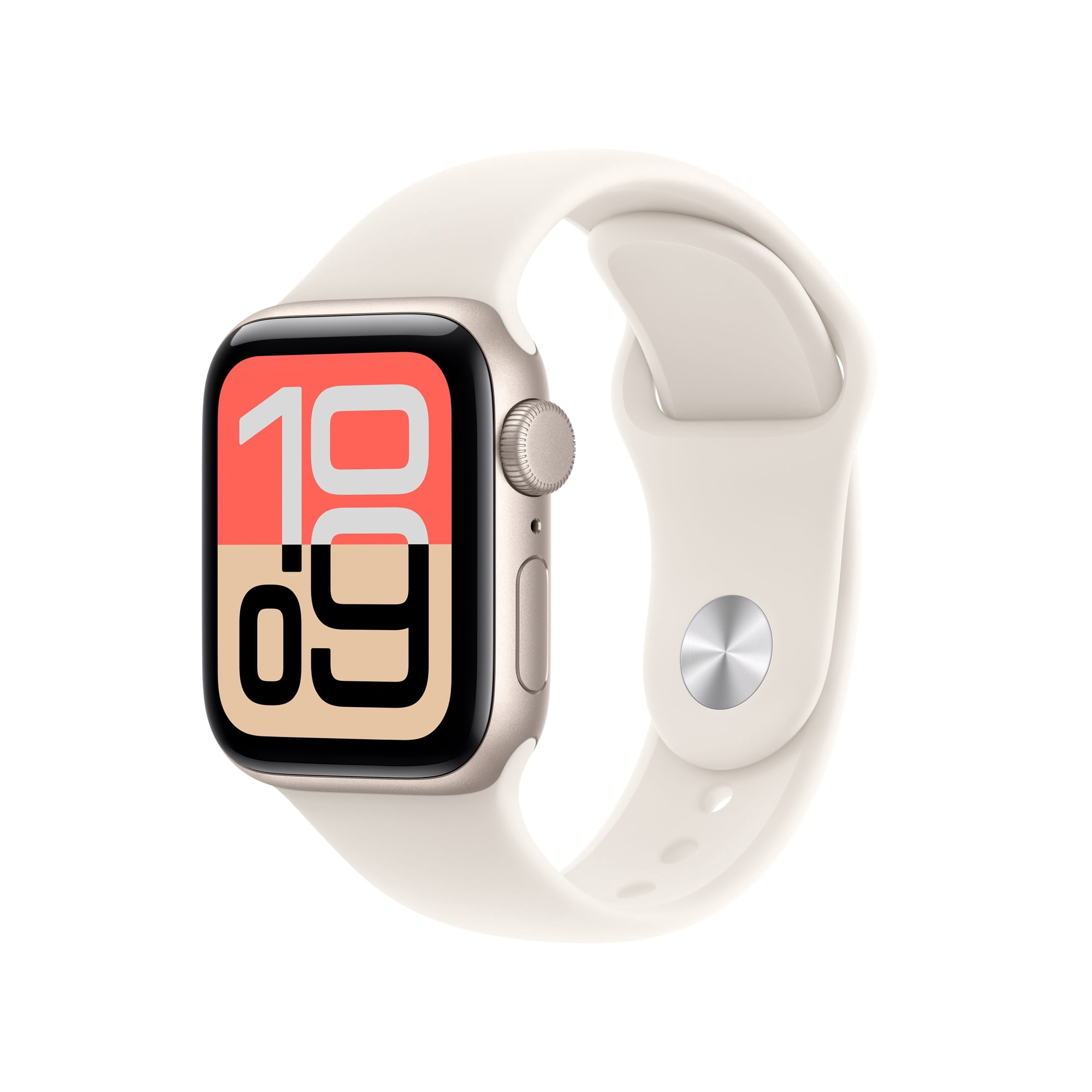
6. Gabb Watch 3e — Best Low-Distraction Connected Watch
Best For: Families that want step goals, calls, messages, and GPS while keeping the watch intentionally limited.
Gabb Watch 3e is not the strongest fitness tracker in this list. Its appeal is combining simple activity motivation with a controlled communication environment.
Gabb Go tracks daily steps and lets parents create a step goal. Reaching activity and task goals earns virtual coins that children can use for virtual pets.
The watch also includes GPS location, parent-approved contacts, calls, preset messages, and other communication tools without an open internet browser or unrestricted social apps.
Service is required. Gabb’s current watch plan starts at $12.99 per month with a two-year contract, while shorter commitments cost more.
Battery life is another limitation. Gabb lists roughly 14–18 hours under normal use, and frequent GPS activity or poor signal can reduce that further.
Although the watch has an IP68 water-resistance rating, Gabb explicitly recommends against submerging it. Do not treat this as a swimming tracker.
Pros
✅ Simple step goals and rewards
✅ GPS and approved communication
✅ No open internet or unrestricted social apps
✅ Parent-controlled contacts
Cons
❌ Fitness tracking is basic
❌ Service plan required
❌ 14–18 hour battery means frequent charging
Who should skip it: If detailed activity tracking matters more than communication controls, Garmin or Fitbit is a better choice.
Alternative: Xplora X6Play offers a similar connected-watch concept with a stronger step-reward angle.
7. Xplora X6Play — Best GPS Watch for Step Rewards
Best For: Kids motivated by rewards and parents who want calling, GPS, safe zones, and a smartwatch without open social-media access.
Xplora X6Play uses steps as part of a broader rewards system rather than treating activity as a passive metric.
The watch includes GPS, Wi-Fi-based location assistance, safe zones, SOS, parent-managed communication, calling, messaging, and a 5 MP camera.
Xplora’s activity system gives children rewards tied to movement and step-based challenges. That makes the watch more engaging than a plain pedometer for some personalities.
The X6Play currently costs $169.99 in the U.S. and requires the Xplora Connect plan at $12 per month for GPS and calling.
Battery life is rated around one to two days depending on use. The watch has an IP68 rating, but parents should still follow Xplora’s care guidance rather than assuming every type of water exposure is appropriate.
The biggest limitation is fitness depth. X6Play is best understood as a GPS communication watch with activity rewards—not a training watch.
Pros
✅ Step-based rewards can motivate movement
✅ GPS and safe zones
✅ Approved calls and messaging
✅ No open social-media experience
Cons
❌ $12 monthly connectivity plan
❌ Battery is measured in days, not weeks
❌ Fitness features are less detailed than Garmin or Fitbit
Who should skip it: If the child does not need GPS or calling, a simple tracker will cost much less over several years.
Alternative: Fitbit Ace LTE offers a deeper movement-and-games platform but also requires a subscription.
How Much Do Kids Fitness Tracker Subscriptions Really Cost?
The hardware price does not tell you the full cost of a connected kids watch.
| Device | Required Service | Approx. Service Cost Over 3 Years |
|---|---|---|
| Garmin vívofit jr. 3 | None | $0 |
| BIGGERFIVE Vigor 3 | None | $0 |
| Fitbit Ace LTE | $119/year annual Ace Pass | About $357 |
| Garmin Bounce 2 | $9.99/month | About $360 |
| Gabb Watch 3e | From $12.99/month | About $468 minimum |
| Xplora X6Play | $12/month | About $432 |
| Apple Watch SE 3 Cellular | Carrier-dependent | Varies by carrier |
These numbers explain why a $90 activity band can be much cheaper to own than a $170 connected watch.
If GPS and communication genuinely solve a family problem, the subscription may be worth it. If the goal is only movement, paying hundreds of dollars in service fees adds little value.
Battery Life Matters More for Kids Than It Looks
A dead fitness tracker cannot count activity. A dead GPS watch also cannot provide location or communication.
The gap between devices is enormous.
Garmin vívofit jr. 3 uses a replaceable battery rated for up to a year. BIGGERFIVE Vigor 3 lasts up to 10 days. Connected watches such as Ace LTE, Gabb, Bounce 2, Xplora, and Apple Watch need far more frequent charging.
Think about whether charging another device every night or two will realistically happen in your household.
Do Kids Need Heart-Rate and Sleep Tracking?
No. These features can be interesting, but they are not requirements for a good kids activity tracker.
Garmin vívofit jr. 3 does not have a heart-rate sensor and is still our top overall pick because its core job is movement motivation.
BIGGERFIVE and Fitbit provide more health metrics, but parents should avoid treating consumer wearable estimates as diagnostic information.
Apple takes an especially cautious approach with child-managed watches. Several adult health features are intentionally unavailable with Apple Watch For Your Kids.
If you are shopping for an older teenager who wants more advanced training data rather than a child-specific wearable, our best fitness trackers guide covers mainstream fitness devices in more detail.
Kids Fitness Trackers and Privacy
Privacy becomes more important when a wearable collects a child’s data.
Connected watches may process information such as location, account details, contacts, messages, device identifiers, activity, heart rate, and other wellness data.
U.S. children’s privacy law gives parents specific controls over certain online collection of personal information from children under 13 by covered services. That is still not a reason to skip reading each company’s privacy settings.
Before activation, check what information the company collects, who can contact the child, whether location data is stored, how account deletion works, and which controls remain available to the parent.
Google, for example, tells parents that Ace LTE can collect activity and health information, location, contacts, and account data. Parents can manage contacts, School Time, activity visibility, and other settings.
GPS Is Helpful, but It Is Not a Safety Guarantee
A GPS watch can make location information easier to access. It cannot guarantee that you always know exactly where a child is.
Location depends on factors such as:
- battery level;
- cellular service;
- GPS and Wi-Fi availability;
- network conditions;
- device settings;
- whether the watch is being worn.
Garmin explicitly notes that LTE coverage depends on carrier coverage and network conditions. Treat GPS as a useful family tool rather than a substitute for ordinary safety planning.
What About School?
Several connected watches include school-focused restrictions.
Fitbit offers School Time. Apple offers Schooltime. Gabb uses parent-managed modes and communication restrictions. Garmin also provides parent controls through its family ecosystem.
These tools can reduce distractions, but they do not decide whether a watch is allowed at school.
Check the school’s current device policy before buying a smartwatch specifically for classroom use.
Best Kids Fitness Tracker by Family Priority
| Your Priority | Our Pick | Why |
|---|---|---|
| Simple activity motivation | Garmin vívofit jr. 3 | Long battery, no subscription, kids-focused rewards |
| Movement games + location | Fitbit Ace LTE | Strong game/activity integration plus GPS |
| Sports + calling | Garmin Bounce 2 | Multiple sports apps plus LTE communication |
| Lowest upfront cost | BIGGERFIVE Vigor 3 | Steps, sports, sleep and HR around $44 |
| Older child in Apple ecosystem | Apple Watch SE 3 Cellular | Strong fitness platform and family controls |
| Low-distraction communication | Gabb Watch 3e | Basic steps plus tightly controlled communication |
| Step rewards + GPS | Xplora X6Play | Rewards system combined with location and calls |
Frequently Asked Questions
What is the best fitness tracker for kids?
Garmin vívofit jr. 3 is our best overall choice because it focuses on steps, activity, sleep, family challenges, chores and rewards without requiring GPS, cellular service, or frequent charging.
What age should a child get a fitness tracker?
There is no universal age. A simple tracker can work when a child is interested in steps or movement challenges and understands how to wear it responsibly. Connected watches require more consideration because they add messaging, location, charging, and privacy decisions.
Does a kids fitness tracker need GPS?
No. GPS is only necessary if location or route tracking matters. A child who only needs movement motivation may be better served by a simpler tracker with longer battery life and no subscription.
Which kids fitness tracker does not need a phone?
BIGGERFIVE Vigor 3 can perform its basic step, sports and health-trend functions directly on the watch without a connected phone. Garmin vívofit jr. 3 also works as a simple wearable, although its parent features use the Garmin Jr. app.
Which kids fitness tracker has the longest battery life?
Garmin vívofit jr. 3 has the strongest battery advantage in this guide. Its replaceable battery is rated for up to one year, compared with days or hours for rechargeable smartwatches.
Is Fitbit Ace LTE worth the subscription?
It can be if you actively want GPS, calls, messaging, and movement-based games. If your only goal is steps and activity, the subscription adds a large long-term cost with little benefit.
Is Garmin vívofit jr. 3 better than a smartwatch for younger kids?
Often, yes. Its simple interface, long battery life, activity rewards, and lack of messaging or internet-style features make it easier to manage when location and calling are unnecessary.
Should kids track heart rate and sleep?
Those metrics can be interesting but are not essential for a child activity tracker. Consumer wearable data should be viewed as general wellness information rather than a substitute for professional medical assessment.
Are kids fitness trackers allowed at school?
Policies vary by school. Features such as Fitbit School Time and Apple Schooltime can reduce distractions, but parents should still check the school’s current smartwatch and wearable rules.
Do kids fitness trackers collect location data?
Simple trackers without GPS may not need precise location for their core activity features. Connected GPS watches can process location data, so parents should review the manufacturer’s privacy policy and account controls before activation.
Final Verdict: Which Fitness Tracker Should You Buy for Your Child?
Garmin vívofit jr. 3 is our best overall fitness tracker for kids because it keeps the focus where it belongs: movement, routines, and simple family motivation.
Fitbit Ace LTE is the stronger choice when movement games need to coexist with GPS, calls, and messages. Garmin Bounce 2 is better for children who participate in more sports and need a connected watch rather than a basic band.
BIGGERFIVE Vigor 3 provides the most features for the lowest upfront price. Apple Watch SE 3 makes the most sense for an older child in an established Apple household, while Gabb and Xplora are primarily communication watches with fitness motivation layered on top.
Do not buy GPS, heart-rate tracking, or a cellular plan simply because those features exist. Decide first what problem the wearable needs to solve.
If the goal is simply helping a child move more and enjoy activity, the simplest tracker may be the best one.
Best Overall: Garmin vívofit jr. 3
Best Movement Games + GPS: Fitbit Ace LTE
Best Sports + Communication: Garmin Bounce 2
Best Budget: BIGGERFIVE Vigor 3
Best for Older Kids: Apple Watch SE 3 GPS + Cellular
Best Low-Distraction Connected Watch: Gabb Watch 3e
Best Step-Rewards GPS Watch: Xplora X6Play
Sources
- CDC — Child physical-activity guidance and age-based activity recommendations.
- Garmin — vívofit jr. 3 and Bounce 2 current specifications and connectivity information.
- Google — Fitbit Ace LTE current specifications, Ace Pass pricing, movement features, School Time, and privacy guidance.
- Apple — Apple Watch SE 3 and Apple Watch For Your Kids current setup and feature guidance.
- FTC — Children’s Online Privacy Protection guidance.
How we research: Discompare compares current manufacturer specifications, U.S. pricing, subscription requirements, product availability, child-focused controls, privacy information, battery life, and practical family use. We do not claim hands-on testing unless explicitly stated. Consumer wearable readings are general wellness information unless a specific feature has appropriate medical authorization. Prices, plans, compatibility, features, and availability can change after publication. Discompare may earn a commission from eligible retailer or price-comparison links.
Product Groups: Garmin vívofit jr. 3 Kids Fitness Tracker, Fitbit Ace LTE Kids Smartwatch, Garmin Bounce 2 Kids Smartwatch, BIGGERFIVE Vigor 3 Kids Fitness Tracker, Apple Watch SE 3 GPS + Cellular 40mm, Gabb Watch 3e, Xplora X6Play Kids Smartwatch