The most popular sunglasses for summer are not always the newest runway styles. The best pairs combine reliable UV protection, comfortable fit, useful lens technology, and a design that still looks good after the season ends.
Our best overall pick is the Ray-Ban Original Wayfarer Classic Polarized. It has one of the most recognizable sunglass shapes, broad retailer availability, and a polarized option that works well for everyday summer wear. Oakley Holbrook is better for more active use, while Maui Jim Hema focuses on lightweight comfort.
Whatever style you choose, check the lens label first. Look for UV400 or 100% UV protection. A darker lens does not automatically block more ultraviolet radiation, and polarization is mainly about reducing reflected glare rather than proving UV protection.
Quick Answer: Popular Sunglasses for Summer
Best overall: Ray-Ban Original Wayfarer Classic Polarized combines an iconic square frame with reliable everyday styling and glare-reducing polarized lenses.
Best aviator: Ray-Ban Aviator Classic Polarized remains a strong summer choice for buyers who prefer thin metal frames and adjustable nose pads.
Best active pick: Oakley Holbrook Prizm Polarized blends a familiar lifestyle shape with lightweight O Matter construction and performance-focused lenses.
Best lightweight premium pick: Maui Jim Hema weighs about 10 grams and uses polarized lenses with 100% UV protection.
Best budget pick: Knockaround Fort Knocks provides polarized UV-protective lenses in a medium-to-large square frame at a more accessible price.
How We Chose These Summer Sunglasses
We looked for sunglasses that balance eye protection, comfort, current availability, useful lens options, broad summer appeal, and long-term styling value.
We also prioritized pairs with clearly documented UV protection or well-defined polarized variants. Fit matters too, so we considered frame width, bridge design, nose pads, weight, and alternative fits where available.
“Popular” does not mean these are verified as the six highest-selling sunglasses in the United States. Instead, the list combines recognizable classics, brand bestsellers, current summer relevance, and products that remain widely useful beyond one fashion cycle.
Popular Summer Sunglasses Compared
| Sunglasses | Best For | Shape | Polarized Pick | UV Protection | Price Position |
|---|---|---|---|---|---|
| Ray-Ban Original Wayfarer Classic | Overall everyday wear | Square | Yes | 100% UVA/UVB on selected current variants | Premium |
| Ray-Ban Aviator Classic | Classic aviator style | Pilot | Yes | Check exact lens variant | Premium |
| Oakley Holbrook | Active everyday use | Square | Yes | UV protection up to 400nm on current sun lenses | Premium |
| Maui Jim Hema | Lightweight comfort | Rimless | Yes | 100% UV protection | Premium |
| Sunski Dipsea | Everyday value | Rounded classic | Yes | 100% UVA/UVB | Mid-range |
| Knockaround Fort Knocks | Budget summer use | Square | Yes | 100% UVA/UVB / UV400 | Budget |
1. Ray-Ban Original Wayfarer Classic Polarized — Best Overall
Best for: Everyday summer wear, driving, vacations, casual outfits, and buyers who want a recognizable style that is unlikely to disappear after one season.
The Original Wayfarer has been around for decades, yet it continues to work because the shape is simple and distinctive without depending on a short-lived trend.
For summer, we prefer one of the polarized RB2140 variants. Current versions combine a square acetate frame with polarized lenses designed to reduce glare.
Why It Works for Summer
The full acetate frame gives the Wayfarer more visual presence than a thin metal aviator or rimless design.
It works well with casual outfits, travel clothing, beachwear, and everyday city use. The green polarized lens option also keeps the look relatively traditional.
Fit Matters More Than the Name
The classic Wayfarer shape can feel substantial on smaller faces, and many variants use a high-bridge fit.
Check the actual frame measurements rather than assuming an iconic model automatically fits everyone.
Pros
✅ Iconic design with long-term style relevance
✅ Polarized versions available
✅ Durable acetate frame
✅ Broad retailer and prescription availability
Cons
❌ Heavier than rimless or sport-oriented designs
❌ High-bridge fit is not ideal for every wearer
❌ Premium price compared with budget polarized sunglasses
Skip it if: You want an ultra-light frame or prefer sportier wraparound coverage.
Alternative: Sunski Dipsea offers a more affordable everyday polarized option.

2. Ray-Ban Aviator Classic Polarized — Best Aviator
Best for: Buyers who want a traditional metal-frame summer style with adjustable nose pads.
The Ray-Ban Aviator Classic remains one of the most recognizable pilot-style sunglasses available.
The current RB3025 range includes polarized G-15 lens variants and several sizes, so buyers have more flexibility than with a one-size fashion frame.
Adjustable Nose Pads Help With Fit
Unlike a molded acetate bridge, the Aviator uses adjustable nose pads.
That gives an optician or careful wearer some ability to fine-tune how the frame sits on the nose.
Aviators Still Work With Current Trends
Retro metal frames and ’70s-influenced styling continue to appear in current summer eyewear coverage.
However, the Aviator is less dependent on that trend than many fashion-first frames because it has remained in circulation for decades.
Pros
✅ Classic pilot shape
✅ Polarized G-15 variants available
✅ Adjustable nose pads
✅ Multiple size and prescription options
Cons
❌ Thin metal frames are less rugged than sport frames
❌ Large aviator lenses can overwhelm smaller faces
❌ Exact UV and polarization details depend on the selected lens variant
Skip it if: You want a thicker frame that feels more secure during active use.
Alternative: Oakley Holbrook gives you a more substantial frame with performance-oriented lens options.

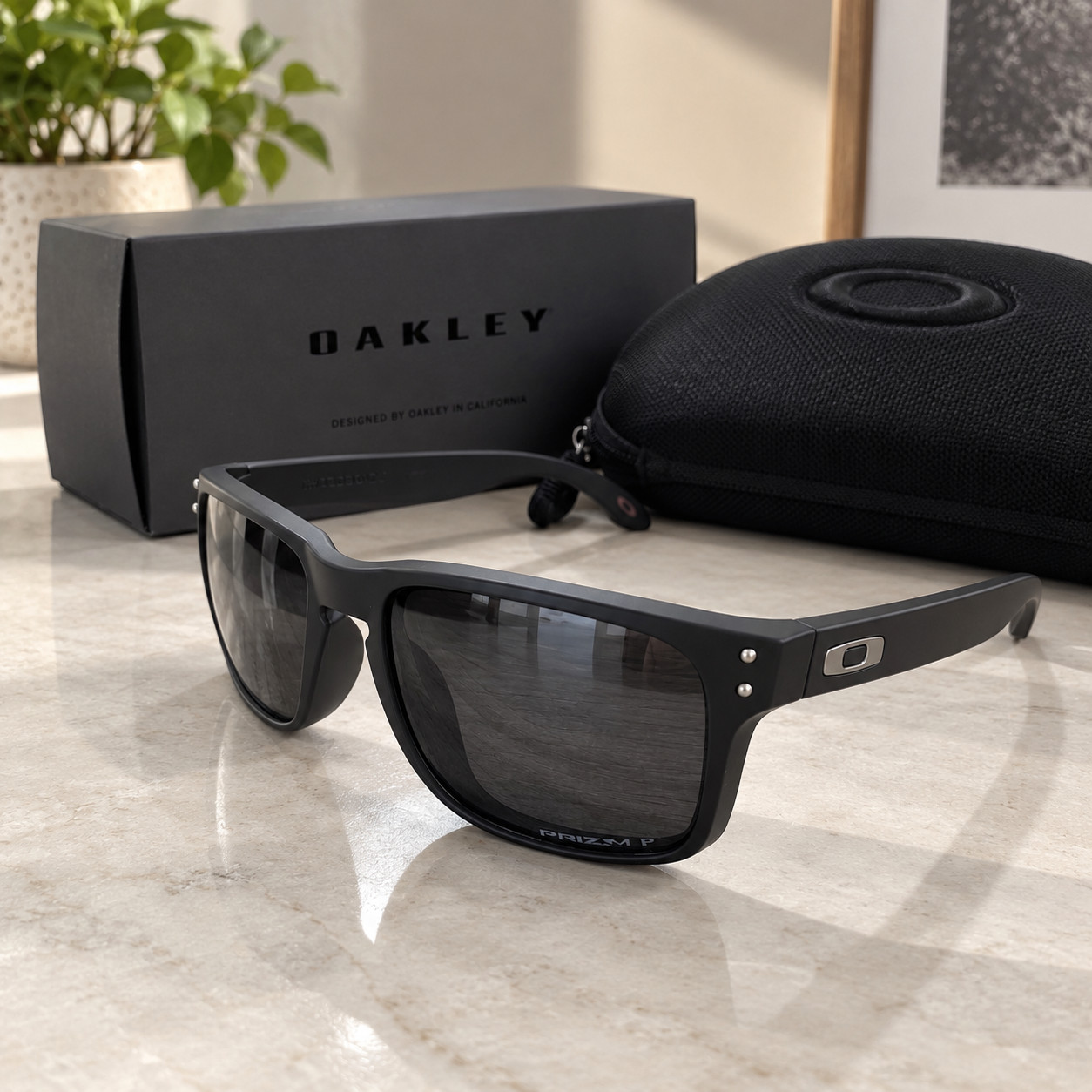
3. Oakley Holbrook Prizm Polarized — Best for Active Summer Use
Best for: Driving, beach days, outdoor trips, casual sport, and buyers who want performance lens technology without a full wraparound sport look.
Oakley Holbrook combines a classic square shape with materials and lenses designed around active use.
The current frame uses lightweight O Matter construction. Prizm Polarized versions add glare reduction while Oakley’s Prizm technology is designed to improve color and contrast perception.
More Performance-Oriented Than the Ray-Bans
Holbrook looks casual enough for daily wear, yet it borrows more from performance eyewear.
That makes it a good middle ground for someone who does not want cycling-style shields but still spends much of summer outdoors.
Check the Frame Size
Many current Holbrook variants use an XL fit. That can provide useful coverage, but it may feel broad on a narrow face.
Oakley also offers Low Bridge Fit versions, which are worth considering if standard frames tend to slide, sit too low, or touch your cheeks.
Pros
✅ Lightweight O Matter frame
✅ Prizm Polarized options
✅ Strong balance of sport and everyday styling
✅ Low Bridge Fit alternatives available
Cons
❌ Regular XL versions can feel wide on smaller faces
❌ Numerous lens variants make comparison more complicated
❌ Premium price for higher-spec polarized versions
Skip it if: Your main priority is ultra-light comfort rather than a more substantial frame.
Alternative: Maui Jim Hema is dramatically lighter and still provides polarized lenses.
4. Maui Jim Hema — Best Lightweight Premium Sunglasses
Best for: Long sightseeing days, travel, warm-weather walking, and anyone who dislikes feeling a heavy frame on the nose.
Maui Jim Hema stands out because the complete rimless design weighs about 10 grams.
It uses MauiPure LT lenses with PolarizedPlus2 technology and 100% UV protection. Performance nose pads are designed to help the frame stay in position.
Weight Is the Main Advantage
Many premium sunglasses improve comfort through softer temples or adjusted frame geometry.
Hema takes a more direct approach by removing much of the frame mass. That can make a noticeable difference during long days outdoors.
Rimless Styling Is Not for Everyone
The look is much more minimal than a Wayfarer or Holbrook.
It also provides less visual frame presence, which may be a benefit or drawback depending on your style.
Pros
✅ Ultra-light 10g construction
✅ PolarizedPlus2 lenses
✅ 100% UV protection
✅ Performance nose pads for secure fit
Cons
❌ Rimless styling is less traditional
❌ Premium price
❌ Less frame coverage than larger full-rim sunglasses
Skip it if: You want a bold acetate frame or substantial wraparound coverage.
Alternative: Oakley Holbrook provides a more protective-feeling full frame for active summer wear.

5. Sunski Dipsea — Best Mid-Priced Everyday Pick
Best for: Walking, vacations, festivals, casual outdoor use, and buyers who want polarized sunglasses without premium-brand pricing.
Sunski describes Dipsea as one of its classic bestselling styles.
The frame uses polarized lenses with 100% UVA/UVB protection, and its medium sizing makes it a practical everyday option for many wearers.
A Useful Middle Ground
Dipsea sits between low-cost spare sunglasses and premium heritage brands.
That makes it attractive if you want a pair good enough to wear every day but do not want to worry constantly about damaging expensive eyewear during a vacation.
Simple Styling Helps Longevity
The shape is less trend-specific than micro frames, brightly tinted fashion lenses, or oversized runway designs.
That gives it a better chance of staying useful after summer ends.
Pros
✅ Polarized lenses
✅ 100% UVA/UVB protection
✅ Lightweight everyday design
✅ Lower price than many premium brands
Cons
❌ Fewer premium lens choices than larger eyewear brands
❌ Fit range is less extensive than brands with multiple bridge and size systems
Skip it if: You want extensive prescription, size, or specialized lens choices.
Alternative: Knockaround Fort Knocks lowers the price further while retaining polarized UV-protective lenses.

6. Knockaround Fort Knocks Polarized — Best Budget Pick
Best for: Beach bags, festivals, vacations, spare sunglasses, and anyone who does not want to worry about losing a premium pair.
Fort Knocks shows that proper summer eye protection does not automatically require a luxury budget.
The current polarized model uses a lightweight polycarbonate frame, spring hinges, impact-resistant lenses, and 100% UVA/UVB protection.
A Good Pair to Travel With
Expensive sunglasses can become one more thing to worry about around pools, beaches, theme parks, and crowded events.
A lower-cost pair makes sense when you still want polarization and UV protection but would prefer less financial pain if the sunglasses disappear during the trip.
Designed for Medium to Larger Fits
The frame is relatively broad, so smaller faces should check the measurements carefully.
Spring hinges add some flexibility, but they cannot compensate for a frame that is fundamentally too wide.
Pros
✅ Polarized lenses
✅ 100% UVA/UVB protection
✅ Spring hinges
✅ Much more affordable than premium picks
Cons
❌ Medium-to-large frame may be too wide for smaller faces
❌ Materials and optics are positioned below premium models
❌ Fewer specialist fit choices
Skip it if: Premium optics, extensive prescription choices, or a smaller frame are more important than price.
Alternative: Sunski Dipsea offers a step up in everyday positioning without jumping to Ray-Ban or Maui Jim pricing.

Other Sunglasses We Considered
Persol 714
The folding Persol 714 is a distinctive premium option with Italian acetate construction and polarized variants.
We left it out because this list already includes two premium heritage designs, and adding another luxury pair would reduce variety.
Ray-Ban Meta
Smart sunglasses deserve a separate buying decision.
Cameras, audio, battery life, software features, privacy, and AI functions matter as much as the lenses, so they do not fit cleanly into a conventional summer sunglasses roundup.
Sport Shield Sunglasses
Large shield designs remain relevant for running, cycling, and current fashion trends.
However, they are more specialized than the six everyday picks above and belong in a dedicated sports-sunglasses guide.
Summer Sunglasses Trends for 2026
Current summer eyewear trends cover several very different styles.
Aviators and ’70s-Inspired Frames
Thin metal pilot frames remain visible because they work with both retro and minimalist outfits.
A classic Aviator is a safer long-term purchase than buying an exaggerated fashion version solely because it is trending this year.
Slim and Oval Frames
Narrow ’90s-inspired sunglasses continue to influence fashion collections.
They can look distinctive, but smaller lenses may provide less physical coverage around the eyes than larger frames.
Oversized Sunglasses
Oversized frames remain useful when you want more visual coverage as well as a strong fashion statement.
However, bigger is not automatically better if the bridge slides or the lower frame rests against your cheeks.
Sport and Shield Shapes
Performance-inspired eyewear continues to move into casual styling.
These designs can provide excellent coverage, especially for cycling, running, and high-glare environments, but they are less versatile with everyday clothing.
Colored Lenses
Blue, amber, rose, and other colored lenses can change both appearance and perceived contrast.
Do not use lens color as a shortcut for judging UV protection. Check the actual UV specification.
UV400 vs Polarized: Which Matters More?
For eye protection from ultraviolet radiation, UV protection matters first.
The FDA recommends choosing sunglasses labeled UV400 or 100% UV protection. That indicates the lenses are designed to block more than 99% of UVA and UVB radiation.
Polarization solves a different problem.
Polarized lenses reduce reflected glare, which can be especially noticeable from roads, water, wet surfaces, and other horizontal reflections.
A sunglass lens can therefore be polarized without that term alone proving how much UV radiation it blocks.
What to check: Look for a clear UV400 or 100% UV-protection statement on the exact sunglasses you buy. Then consider polarization if glare reduction is useful for driving, beaches, boating, or frequent outdoor wear.
Are Expensive Sunglasses Better for UV Protection?
Not necessarily.
The FDA specifically notes that paying more does not guarantee stronger UV protection.
Premium prices can instead reflect frame materials, lens coatings, optical quality, prescription options, manufacturing, design, branding, or warranty service.
A lower-cost pair that clearly provides UV400 or 100% UV protection can protect against ultraviolet radiation even if it lacks premium materials.
Are Darker Sunglasses Safer?
No.
Lens darkness and UV protection are different characteristics.
A dark lens may feel more comfortable in bright sunlight, but darkness alone does not prove that the lens blocks UV radiation.
This is why buying purely by tint color or how dark the sunglasses look is a poor strategy.
What Does Polarized Mean?
Polarization uses a filter designed to reduce certain reflected light.
It is especially useful where glare comes from flat surfaces such as roads, water, snow, or wet pavement.
Polarized Lenses Can Help With:
- bright daytime driving;
- beach and water use;
- boating;
- fishing;
- general outdoor comfort in reflective environments.
Polarized lenses can sometimes make certain LCD screens look darker or behave differently at particular viewing angles.
Best Sunglasses for Driving
Polarization can be useful for daytime driving because it reduces reflected glare from roads and vehicle surfaces.
The Ray-Ban Wayfarer, Ray-Ban Aviator, Oakley Holbrook, and Maui Jim Hema all have polarized options in this guide.
Fit matters as well. Frames should stay stable when you turn your head and should not create uncomfortable pressure behind the ears.
Best Sunglasses for the Beach and Water
The beach combines direct sunlight with extra reflected glare from sand and water.
Polarized lenses are useful in this environment, while verified UV protection remains the priority.
Coverage also matters. Larger frames or more curved designs can reduce some light entering around the sides compared with very small fashion lenses.
Sunglasses are only one part of summer sun protection. Hats, shade, and skin protection still matter, so compare our guide to the best sunscreens when preparing for longer outdoor days.
How to Choose Sunglasses That Actually Fit
Face-shape rules are often oversimplified.
A more useful approach is to look at measurements and contact points.
Check Frame Width
The temples should not be pushed outward strongly by your head, and the frame should not slide sideways during normal movement.
Check the Bridge
The bridge should support the glasses without excessive pressure or constant slipping.
If standard sunglasses frequently slide down or touch your cheeks, consider a Low Bridge Fit design where available.
Check the Temples
The arms should remain secure without creating painful pressure behind the ears.
Check Cheek Contact
A frame that rests heavily on the cheeks may move whenever you smile or talk.
Trying on several bridge and frame widths is usually more useful than following a rigid rule about which style matches a round, square, or oval face.
How to Care for Sunglasses in Summer
Use the Case
Loose sunglasses are easily scratched by keys, sand, and other items inside a bag.
A proper case is especially useful during travel.
Rinse Off Sand and Salt
Do not aggressively wipe sandy lenses with a dry shirt.
Loose particles can scratch coatings. Rinse debris away where appropriate, then clean the lenses with suitable materials.
Do Not Leave Them in Extreme Heat
A closed vehicle can become extremely hot during summer.
Excessive heat may damage some frames, coatings, adhesives, or lens treatments over time.
Frequently Asked Questions
What are the best popular sunglasses for summer?
Ray-Ban Original Wayfarer Classic Polarized is our best overall pick because it combines a versatile design, polarized lens options, broad availability, and long-term style relevance.
What does UV400 mean on sunglasses?
UV400 indicates protection from ultraviolet wavelengths up to 400 nanometers. The FDA recommends looking for UV400 or a label stating 100% UV protection when choosing sunglasses.
Are polarized sunglasses better?
They can be better for glare-heavy situations such as driving, beaches, boating, and fishing. However, polarization does not replace the need to verify UV protection.
Are expensive sunglasses safer?
Not automatically. A higher price does not guarantee stronger UV protection. Check the lens label rather than using price as a safety indicator.
Do dark lenses block more UV rays?
No. Lens darkness does not tell you how much ultraviolet radiation the sunglasses block. Light-colored lenses can still provide strong UV protection if properly designed and labeled.
Which sunglasses are best for driving?
A secure, comfortable frame with verified UV protection and polarized lenses is a good daytime-driving combination. The Wayfarer, Aviator, Holbrook, and Hema all offer relevant polarized options.
Should I choose sunglasses by face shape?
Face shape can influence personal style, but fit is more important. Check frame width, bridge position, temple pressure, lens coverage, and whether the frame touches your cheeks.
What sunglasses styles are popular for summer?
Current trends include aviators, oversized frames, narrow oval styles, colored lenses, and sporty shield shapes. Classic Wayfarer-style frames remain a more evergreen option.
Final Verdict: Which Summer Sunglasses Should You Buy?
Ray-Ban Original Wayfarer Classic Polarized is our best overall choice among these popular sunglasses for summer. Its styling has lasted for decades, while polarized versions add useful glare reduction for driving and outdoor use.
Choose the Ray-Ban Aviator Classic if you prefer lightweight metal styling and adjustable nose pads. Oakley Holbrook is the stronger choice for active days, while Maui Jim Hema is ideal when low weight and premium polarized lenses matter most.
Sunski Dipsea offers a useful middle ground between budget and premium eyewear. Knockaround Fort Knocks is the better choice if you want polarized UV protection without worrying as much about losing an expensive pair on vacation.
Whatever you choose, start with the lens specification rather than the logo. Look for UV400 or 100% UV protection, then decide whether polarization, frame style, fit, and premium lens technology are worth paying more for.
Bottom line: Choose Ray-Ban Wayfarer for the best all-around classic, Aviator for metal-frame style, Oakley Holbrook for active use, Maui Jim Hema for lightweight premium comfort, Sunski Dipsea for mid-range value, or Knockaround Fort Knocks for a budget-friendly polarized pair.
Sources
- U.S. Food and Drug Administration — Sunglasses and UV Protection Guidance
- Ray-Ban — Original Wayfarer Classic and Aviator Classic Product Specifications
- Oakley — Holbrook Prizm Polarized Product Specifications
- Maui Jim — Hema Polarized Sunglasses Product Specifications
- Sunski and Knockaround — Current Dipsea and Fort Knocks Product Specifications
How we research: Discompare reviews current manufacturer specifications, UV-protection claims, polarization, fit information, product availability, price positioning, and seasonal style relevance. We do not conduct original hands-on testing unless explicitly stated. Exact lens specifications can vary between colors and variants, so verify UV protection, polarization, fit, and prescription compatibility for the exact pair before buying. Prices and availability can change. Discompare may earn a commission from eligible retailer or price-comparison links.
Product Groups: Ray-Ban Original Wayfarer Classic RB2140 Polarized Sunglasses, Ray-Ban Aviator Classic RB3025 Polarized Sunglasses, Oakley Holbrook Prizm Polarized Sunglasses, Maui Jim Hema Polarized Sunglasses, Sunski Dipsea Polarized Sunglasses, Knockaround Fort Knocks Polarized Sunglasses