
Chirp Wheel Review 2026
The Chirp Wheel+ 3-Pack is a useful specialist tool for upper- and mid-back self-massage, stretching, and mobility. It feels different from a normal foam roller because its narrow profile fits between the shoulder blades and its recessed center channel is designed to reduce direct pressure along the middle of the back.
Our verdict is positive, with an important limitation: we would buy the Chirp Wheel for targeted back rolling, not because we expect it to dramatically speed muscle recovery or treat a back condition.
The current 3-Pack includes 10-inch, 6-inch, and 4-inch wheels. Start with the 10-inch wheel. The 6-inch model provides much stronger pressure and may become the most useful option once you are comfortable with the movement. The 4-inch wheel is highly concentrated and is better treated as a specialty tool than a beginner wheel.
At a regular price of $89.99, the 3-Pack makes the most sense for someone who already knows that back tightness is the main reason they want a recovery tool. If you need one roller for your back, legs, glutes, and other large muscle groups, a conventional foam roller is cheaper and more versatile.
Quick Verdict: Is the Chirp Wheel Worth It?
Best For: Targeted upper- and mid-back self-massage, stretching, and mobility work.
Best Wheel to Start With: 10″ Deep Stretch — the largest wheel in the current 3-Pack produces the gentlest pressure and is easier to learn on.
Most Useful Once Adapted: 6″ Deep Tissue — stronger, more targeted pressure without becoming as concentrated as the 4-inch wheel.
Main Limitation: The Chirp Wheel is much less versatile than a standard foam roller and should not be treated as a proven shortcut to faster muscle repair.
Chirp Wheel+ 3-Pack: Key Specs
| Feature | Chirp Wheel+ 3-Pack |
|---|---|
| Regular Price | $89.99 |
| Included Sizes | 10″, 6″, and 4″ |
| Primary Use | Back-focused self-massage and mobility |
| Contact Width | Approximately 5 inches |
| Center Channel | Yes — Chirp calls it the Spinal Canal |
| Electronics | None |
| Direct Return Window | 30 days, subject to return terms |
| Warranty | 1-year limited warranty |
What Is the Chirp Wheel?
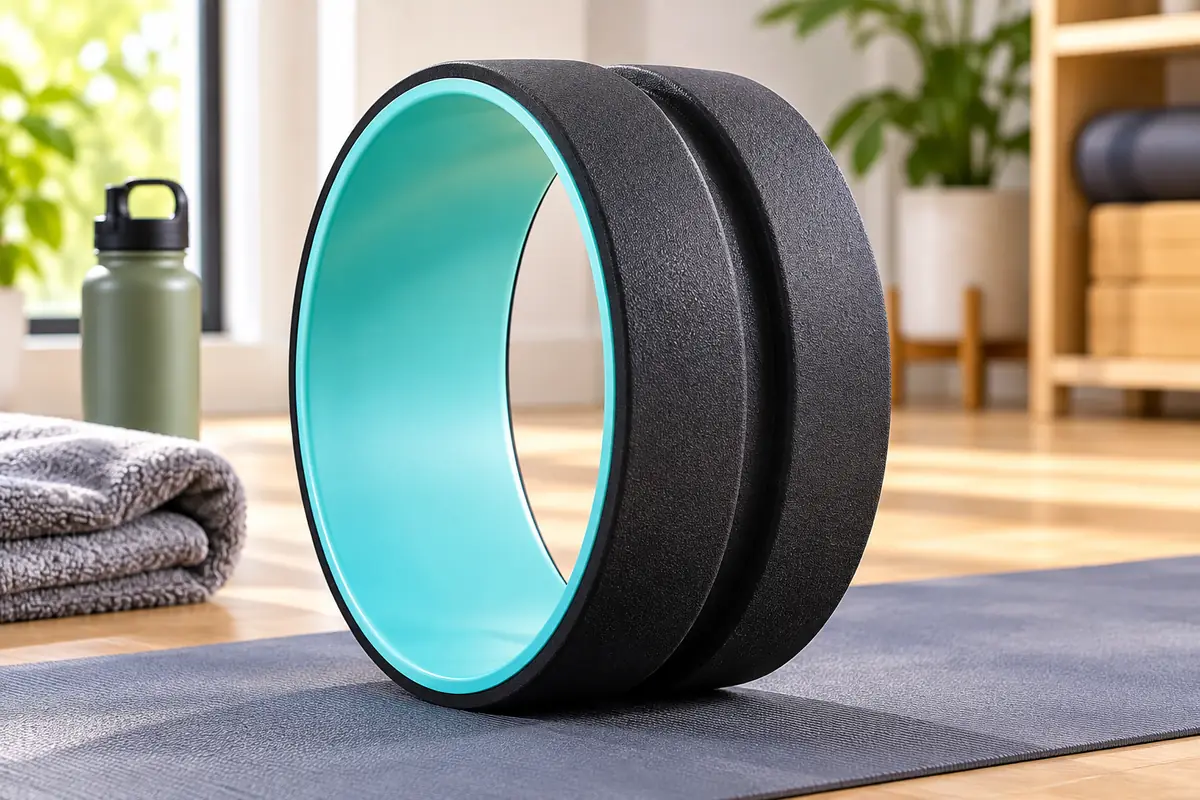
The Chirp Wheel is a rigid circular roller designed primarily for use along the back. Instead of lying across a long cylinder, you align the narrow wheel with the center of your back and move your body over it.
The Wheel+ is roughly five inches wide. That narrow shape is the main functional difference from a conventional foam roller. It fits between the shoulder blades more easily and concentrates pressure on a smaller area.
A recessed channel runs through the center of the wheel. Chirp calls this its Spinal Canal. The idea is to create space over the centerline while the raised sides contact muscles on either side.
That design should not be interpreted as proof that rolling is safe for every back problem. It is simply a meaningful mechanical difference between Chirp and a broad foam cylinder.
The wheels do not vibrate, heat, connect to an app, or need charging. Pressure comes from your body weight and the curvature of the wheel.
Why Does Chirp Sell Different Wheel Sizes?
Wheel diameter changes how sharply your back curves around the roller and how concentrated the pressure feels.
A larger wheel creates a gentler arc. A smaller wheel contacts a more focused area and feels considerably stronger.
That means smaller is not automatically better.
| Wheel | Pressure | Best For | Our Take |
|---|---|---|---|
| 10″ Deep Stretch | Firm | Beginners, general back rolling | Start here |
| 6″ Deep Tissue | Deep | More targeted upper/mid-back pressure | Likely the most useful after adaptation |
| 4″ Focus | Very concentrated | Small areas and experienced users | Not our beginner recommendation |
10″ Deep Stretch — Best Chirp Wheel for Beginners
The 10-inch wheel is the correct place to start with the current 3-Pack.
Its larger diameter distributes pressure over a gentler curve, which makes the sensation easier to control. That matters because using a Chirp Wheel also requires some balance.
Independent hands-on testing from Innerbody found that Chirp Wheels become easier to use with practice but have a noticeable learning curve. Its testers recommend starting with the largest wheel available and using a wall first if balancing on the floor feels difficult.
We agree with that approach.
Start slowly. Keep your hands available for support. You can also place the wheel between your upper back and a wall before committing your full body weight on the floor.
The 10-inch model may eventually feel mild for users who prefer deep pressure. That is when the 6-inch wheel becomes useful.
6″ Deep Tissue — Best Balance of Pressure and Usability
The 6-inch wheel is where the Chirp system becomes much more targeted.
Chirp classifies it as its Deep Tissue wheel and describes the pressure as deeper than the 10-inch version. The smaller radius produces a more concentrated sensation around the upper- and mid-back muscles.
For many users, this is likely to become the most useful size once the movement feels natural.
It is still aggressive enough that we would not start with it if you have never used a Chirp Wheel or similar back roller.
Use less body weight at first. If an area feels excessively tender, back off instead of treating pain as evidence that the wheel is “working.”
4″ Focus — Powerful but Easy to Overdo
The 4-inch Focus wheel creates the most concentrated pressure in the current 3-Pack.
Chirp describes it as rigid pressure for small muscles and focused areas. That is a better way to think about it than treating it as a more advanced version of the 10-inch wheel.
The curve is much tighter. The sensation can become intense quickly.
This size makes the most sense for someone who already knows they enjoy localized pressure and can control how much weight they place on the wheel.
For a first-time buyer, the 4-inch model is the least important reason to buy the bundle. Some owners may use it frequently. Others may discover that the 10- and 6-inch wheels cover almost everything they want.
Does the Chirp Wheel Actually Work?
It depends on what you mean by “work.”
If the goal is to create a strong stretching sensation through the upper and mid-back, place pressure on tight muscles, or perform a short self-massage routine, the Chirp Wheel has a sensible mechanical design.
Independent hands-on reviewers also report that the product feels meaningfully different from a traditional foam roller because of its narrow width and center channel.
What we would not do is translate that immediate feeling into claims that the product fixes posture, treats spinal conditions, repairs injuries, or permanently eliminates back pain.
There is another important distinction: most scientific research is about foam rolling in general, not the Chirp Wheel specifically.
Discompare did not find high-quality clinical evidence showing that the Chirp Wheel+ 3-Pack itself produces superior recovery outcomes versus other rolling or mobility methods.
Chirp Wheel for Muscle Recovery: What Does the Evidence Say?
Foam rolling has been studied much more extensively than the Chirp Wheel itself.
A systematic review and meta-analysis of randomized trials found that foam rolling can modestly reduce perceived exercise-induced muscle soreness, with the effect becoming more noticeable during the days after exercise rather than immediately afterward.
Another meta-analysis found that foam rolling can temporarily increase range of motion compared with doing nothing. However, it did not outperform stretching in that analysis.
Broader reviews of performance and recovery describe the benefits as useful but generally modest. That is very different from saying that a roller dramatically accelerates tissue repair.
Our evidence-based take: The Chirp Wheel may be useful for temporary muscle comfort, mobility, and soreness management. There is not strong evidence that this specific product dramatically speeds muscle healing or should replace sleep, sensible training load, nutrition, walking, mobility work, or appropriate rehabilitation.
This matches how we treat recovery tools elsewhere on Discompare. In our winter health and fitness products guide, devices such as Theragun Mini are optional recovery accessories after the training fundamentals are already covered.
Chirp Wheel vs. Traditional Foam Roller
The Chirp Wheel is not simply a smaller foam roller. The two tools overlap, but they are better at different jobs.
| Feature | Chirp Wheel+ | Standard Foam Roller |
|---|---|---|
| Primary Strength | Back-focused rolling | Whole-body versatility |
| Width | Narrow | Usually much wider |
| Center Groove | Yes | Usually no |
| Upper/Mid-Back Targeting | Excellent | Good, but broader |
| Quads / Hamstrings / Calves | Possible but awkward | Much better |
| Learning Curve | Higher | Lower |
| Typical Cost | Higher | Lower |
| Best Choice If… | Your back is the main target | You want one roller for the whole body |
Hospital for Special Surgery demonstrates conventional foam-roller use for the upper back, calves, hamstrings, and quadriceps. That illustrates why a long cylinder remains the better all-purpose recovery tool.
The Chirp Wheel wins when the problem you are trying to solve is specifically reaching the muscles around the upper and mid-back with more targeted pressure.
Chirp Wheel vs. Theragun Mini
The Chirp Wheel and Theragun Mini are often grouped together as recovery products, but they do very different things.
| Priority | Chirp Wheel+ | Theragun Mini |
|---|---|---|
| Upper/Mid-Back Stretch | Better | Limited by self-reach |
| Whole-Body Targeting | Limited | Better |
| Mobility / Extension Sensation | Better | Different use |
| Floor Required | Usually | No |
| Power | Body weight | Battery-powered percussion |
| Best For | Back-focused self-rolling | Portable targeted massage |
Choose Chirp if you want to lie back over a roller and combine massage pressure with a stretching sensation.
Choose Theragun if you want to manually target calves, quads, shoulders, glutes, and other areas without getting onto the floor.
Neither device is essential to recovery.
What We Like About the Chirp Wheel+
Pros
✅ Narrow shape is genuinely useful between the shoulder blades
✅ Center groove differentiates it from standard cylinders
✅ Three diameters provide clearly different pressure levels
✅ No charging, app, motor, or subscription
✅ Quiet enough to use anywhere
✅ Direct purchase includes a 30-day return window and 1-year limited warranty
Cons
❌ Less versatile than a conventional foam roller
❌ Requires balance and usually floor access
❌ 4-inch wheel may be too intense for many buyers
❌ You may discover that only one or two sizes get regular use
❌ Costs substantially more than many basic foam rollers
❌ Chirp-specific evidence for faster muscle recovery is limited
Is the Chirp Wheel Easy to Use?
Eventually, yes. Immediately, not always.
The narrow wheel requires more balance than a broad foam roller. Independent hands-on testing from Innerbody describes this as one of the biggest learning-curve issues.
The easiest approach is to reduce the challenge in stages.
Start with the 10-inch wheel. Use it against a wall first if needed. When you move to the floor, keep both hands available to support your body.
Lift only enough weight onto the wheel to feel controlled pressure. Do not immediately try to roll your full back without using your arms.
Once the 10-inch movement feels stable, repeat the learning process before moving to the 6-inch wheel.
Innerbody’s testers also found that clothing can bunch or catch against the wheel. Close-fitting workout clothing can make the movement smoother.
Is the Chirp Wheel Safe?
Self-massage tools are not appropriate for every injury or pain condition.
Cleveland Clinic recommends starting foam rolling with light pressure rather than immediately applying full body weight. That advice is especially relevant to the smaller Chirp Wheels because they concentrate force more strongly.
The upper and mid-back should remain the main use case. General foam-rolling guidance from Cleveland Clinic and Hospital for Special Surgery demonstrates rolling from the upper back toward the middle back rather than aggressively rolling the unsupported lumbar spine.
You should also avoid rolling over an acute injury. Cleveland Clinic specifically advises speaking with a healthcare professional before foam rolling in situations such as a broken bone or torn muscle.
Stop and get appropriate medical advice if pain is severe, suddenly worsening, associated with significant swelling, or accompanied by tingling, numbness, or weakness. A recovery tool should not be used to repeatedly self-treat unexplained neurological symptoms.
A strong pressure sensation is not the same as a useful result. Reduce pressure if the wheel creates sharp or worsening pain.
Chirp Wheel+ vs. Wheel XR vs. Relief Wheel Pro
Chirp now sells several wheel families. Wheel+ remains our preferred starting point because its surface is simpler and less aggressive.
| Product | Best For | Design | Regular Price | Our Take |
|---|---|---|---|---|
| Wheel+ 3-Pack | Most first-time buyers | Smooth 10″, 6″, 4″ wheels | $89.99 | Best starting point |
| Wheel XR 3-Pack | Experienced users | Textured Acupressure / Knot Kneader / Focus surfaces | $89.99 | More aggressive |
| Relief Wheel Pro | Customization | Interchangeable treads including thermal options | $49.99–$199.99 | Interesting premium upgrade |
| Wheel XL | Extra stability | Wider platform | $69.99 | Best alternative if balance is the problem |
Wheel XR
The Wheel XR line uses more pronounced textured surfaces. Chirp positions the 10-inch XR as Acupressure, the 6-inch as Knot Kneader, and the 4-inch as Neck & Headache.
We would not choose XR as the default first purchase. If the smooth 6-inch Wheel+ already feels intense, adding harder ridges is unlikely to improve the experience.
Relief Wheel Pro
Relief Wheel Pro is Chirp’s modular premium system. Its QuickTread design allows the surface to be swapped, including a comfort surface, targeted pressure surface, and a thermal option that can be heated or cooled.
The complete three-wheel collection currently lists for $199.99.
This adds customization, not stronger evidence that it improves recovery outcomes.
Wheel XL
Wheel XL is the most interesting alternative for someone who likes the idea of Chirp but finds the standard five-inch width unstable.
Chirp sells it for $69.99 and gives it a wider contact platform. Independent testers also identify the greater width as easier for users who struggle with balance.
Compare Current Chirp Wheel Prices
Chirp frequently runs direct promotions, so the live price may be below the $89.99 regular price used in this review. Compare the exact Wheel+ version rather than accidentally substituting Wheel XR or a single-wheel listing.

Who Should Buy the Chirp Wheel?
Buy it if your main target is your upper or mid-back. This is where the narrow shape gives Chirp its clearest advantage over a normal roller.
Buy it if broad foam rollers feel awkward between your shoulder blades. The Wheel+ follows a much narrower track.
Buy it if you like self-directed mobility work. Chirp requires you to control your position and pressure. It is not a passive massage device.
Buy it if you want different pressure levels without electronics. Moving from 10 inches to 6 inches changes the experience substantially without batteries or motors.
Who Should Skip the Chirp Wheel?
Skip it if you mainly want to roll your legs and glutes. A conventional foam roller is cheaper and easier to use across large muscle groups.
Skip it if you already own a foam roller that meets your needs. Chirp is different, but not automatically necessary.
Skip it if you expect it to treat a medical back condition. Persistent or unexplained symptoms need appropriate assessment rather than another recovery gadget.
Skip it if floor work or balancing is difficult. Wheel XL may help with stability, but the fundamental movement still requires body control.
Skip it if you dislike intense pressure. You may use only the 10-inch wheel and leave much of the bundle untouched.
Frequently Asked Questions
Does the Chirp Wheel really work?
It can work well as a back-focused self-massage and mobility tool. The narrow shape creates a different pressure pattern from a standard foam roller. However, there is limited evidence that the Chirp Wheel itself produces unique clinical recovery benefits.
Is the Chirp Wheel good for muscle recovery?
Foam-rolling research suggests rolling may modestly reduce post-exercise soreness and temporarily improve range of motion. That supports using Chirp as an optional recovery tool, but not claims that it dramatically speeds muscle repair.
Which Chirp Wheel should beginners use?
Start with the 10-inch Deep Stretch wheel from the current 3-Pack. It creates the gentlest curve of the three included wheels and is easier to learn on than the 6- or 4-inch models.
Is the Chirp Wheel better than a foam roller?
It is better for targeted back rolling, while a conventional foam roller is more versatile for calves, hamstrings, quadriceps, glutes, lats, and other large muscle groups.
Is the Chirp Wheel supposed to hurt?
Strong pressure or tenderness can occur, especially with smaller wheels, but sharp or worsening pain is not a goal. Reduce body weight and pressure, and stop if symptoms become concerning.
Can you use the Chirp Wheel every day?
General foam-rolling guidance allows frequent or even daily use when it is comfortable and brief. Start conservatively, monitor how you feel afterward, and avoid repeatedly rolling an injured or painful area simply because more pressure feels more effective.
What is the difference between Chirp Wheel+ and Wheel XR?
Wheel+ uses smoother surfaces and is our better starting choice. Wheel XR uses more aggressive textured surfaces intended to concentrate pressure further.
Is the Chirp Wheel+ 3-Pack worth $89.99?
Yes if back-focused rolling is the main reason you are shopping. The value is weaker if you need a full-body roller or discover that only one of the three wheel sizes suits you.
Final Verdict: Is the Chirp Wheel Worth Buying?
The Chirp Wheel+ 3-Pack is worth considering if you specifically want a better way to roll and stretch your upper and mid-back.
Its narrow design is the real advantage. A standard foam roller works across many parts of the body but spreads pressure over a wide cylinder. Chirp follows the center of the back more closely and uses a recessed channel to change where that pressure lands.
Start with the 10-inch wheel. Move to the 6-inch model only after the basic movement feels comfortable. Treat the 4-inch wheel as an optional high-pressure tool rather than assuming you need to progress to it.
We would not buy the Chirp Wheel because of broad claims about posture, sleep, spinal correction, or accelerated healing. The strongest evidence around rolling supports much more modest benefits such as temporary mobility improvements and some reduction in perceived soreness.
If those expectations match what you want, Chirp is a well-designed specialist product. If you simply need one inexpensive recovery tool for your entire body, buy a conventional foam roller first.
Our Rating: Recommended for the right use case
Best For: Targeted upper- and mid-back rolling
Start With: 10″ Deep Stretch
Best Pressure/Usability Balance: 6″ Deep Tissue
Main Limitation: Limited full-body versatility
Bottom Line: Buy it for targeted self-massage and mobility—not for a recovery miracle.
Sources
- Chirp — Wheel+ 3-Pack, Wheel XR, Wheel XL, and Relief Wheel Pro current product specifications.
- PubMed — Preventive Effect of Foam Rolling on Muscle Soreness After Exercise: A Systematic Review and Meta-Analysis.
- PubMed — Acute Effects of Foam Rolling on Range of Motion in Healthy Adults: A Systematic Review With Multilevel Meta-Analysis.
- Cleveland Clinic — Should You Try Foam Rolling?
- Hospital for Special Surgery — Foam Roller Exercises for the Whole Body.
- Innerbody Research — Chirp Wheel hands-on review and usability testing.
How we research: Discompare compares current manufacturer specifications, pricing, independent hands-on reviews, systematic reviews, and clinical guidance where relevant. We did not conduct hands-on or clinical testing of the Chirp Wheel for this article. Manufacturer wellness claims are not treated as proven unless supported by appropriate independent evidence. Prices and availability can change after publication. Discompare may earn a commission from eligible retailer or price-comparison links.
Product Groups: Chirp Wheel+ 3-Pack