The best eco-friendly kitchen gadgets are not necessarily high-tech appliances or products covered in vague “green” marketing. The most useful affordable options usually do something simpler: replace an item you repeatedly throw away, make food-waste separation easier, or provide a durable alternative to a frequently replaced kitchen tool.
Our best overall pick is the Stasher Stand-Up Mid Bag because one reusable silicone bag can handle food storage, freezing, reheating, and meal prep without relying on disposable zipper bags for every use. The OXO Easy-Clean Compost Bin is a practical choice if you already have access to composting, while the Epicurean All-in-One Cutting Board offers a durable paper-composite alternative to conventional plastic prep boards. Bee’s Wrap replaces some cling-film tasks, and Full Circle’s Bubble Up system combines a reusable ceramic base with a separately replaceable dish brush.
In this guide, “eco-friendly” is shorthand for products with a specific reusable, waste-reducing, recycled-material, or compost-supporting attribute. It does not mean that any product has zero environmental impact.
Quick Answer: Affordable Eco-Friendly Kitchen Gadgets
Best Overall: Stasher Stand-Up Mid Bag — a reusable silicone storage bag that can replace disposable zipper bags across food storage, freezing, meal prep, and reheating.
Best for Food-Scrap Collection: OXO Good Grips Easy-Clean Compost Bin — a compact countertop container that makes separating food scraps easier before they go to an actual composting system.
Best Durable Prep Tool: Epicurean All-in-One Cutting Board — a dishwasher-safe paper-composite board designed for repeated kitchen use.
Best Plastic-Wrap Alternative: Bee’s Wrap Assorted 3 Pack — reusable beeswax-coated cotton wraps for produce, cheese, sandwiches, bread, bowls, and leftovers.
Best Sink-Side Swap: Full Circle Bubble Up Foaming Set — a ceramic soap base paired with a replaceable bamboo and recycled-plastic dish brush.
What “Eco-Friendly” Means in This Guide
Environmental claims need more precision than simply calling a product “green.” A reusable silicone bag, for example, is still a manufactured product. Its practical advantage comes from being used repeatedly in situations where you might otherwise consume and discard many single-use bags.
The same principle applies throughout this guide. We looked for a specific attribute that shoppers can understand: repeated reuse, replaceable components, recycled material, food-scrap collection, or a durable alternative to a frequently discarded product.
We also avoided treating terms such as “biodegradable,” “compostable,” and “reusable” as guarantees of lower impact in every household. Disposal infrastructure, product lifespan, how often you use an item, and whether you are replacing something that still works all matter.
Practical rule: The most useful eco kitchen swap is usually one that replaces a habit you repeat every week—not a new gadget you buy because its packaging uses sustainability language.
How We Chose These Affordable Kitchen Swaps
We prioritized products that are currently available in the U.S., cost roughly $40 or less at normal or current manufacturer pricing, and address a repeated kitchen task. We also looked for clear manufacturer documentation about materials, care requirements, capacity, and intended use.
Each selection needed a distinct role. We did not fill the list with five versions of reusable storage bags or bamboo utensils. Instead, the picks cover food storage, compost collection, food prep, food wrapping, and dishwashing.
We also considered the product’s limitations. A compost bin is only useful when you have somewhere to send the scraps. Beeswax wrap cannot replace every form of food storage. A paper-composite cutting board is still a manufactured composite rather than a raw piece of wood. Those trade-offs are part of the buying decision.
Affordable Eco-Friendly Kitchen Gadgets Compared
| Product | Best For | Specific Sustainability Attribute | Main Material | Reusable | Care | Typical Price Position | Main Trade-Off |
|---|---|---|---|---|---|---|---|
| Stasher Stand-Up Mid | Best Overall | Can replace repeated use of disposable storage bags | Platinum silicone | Yes | Dishwasher safe | Under $30 | Deep seals can take effort to clean and dry |
| OXO Easy-Clean Compost Bin | Food-Scrap Collection | Supports separating organic kitchen waste | Durable kitchen container | Yes | Hand wash | Under $30 | Does not actually compost food |
| Epicurean All-in-One | Durable Food Prep | Long-life paper-composite alternative to plastic boards | Paper composite | Yes | Dishwasher safe | From about $25 | Will show knife marks over time |
| Bee’s Wrap Assorted 3 Pack | Replacing Some Plastic Wrap | Washable reusable food covering | Organic cotton + beeswax blend | Yes | Cool-water hand wash | About $20 | Cannot tolerate heat |
| Full Circle Bubble Up | Sink-Side Cleaning | Replaceable brush + recycled material | Ceramic, bamboo, recycled plastic | Base is reusable | Base dishwasher safe; brush hand wash | Under $20 | Brush still requires periodic replacement |
Prices can change by retailer, color, size, and promotion. Use the live product overview below to compare current offers rather than treating a temporary discount as the normal price.




1. Stasher Stand-Up Mid Bag — Best Overall
The Stasher Stand-Up Mid Bag is the most broadly useful product in this guide because it can replace disposable zipper bags in several common kitchen routines instead of solving one niche problem.
Best For: Leftovers, freezer storage, meal prep, produce, snacks, marinades, and households that regularly buy disposable food-storage bags.
The Stand-Up Mid holds 56 fluid ounces and is made from food-grade platinum silicone. Its gusseted bottom lets it stand upright while being filled, and Stasher’s Pinch-Loc seal closes the top without a separate zipper component.
The bag can move between the freezer, microwave, dishwasher, and oven at temperatures up to 425°F under the manufacturer’s stated use conditions. That range makes it more versatile than many rigid reusable containers when storage space is limited.
The sustainability case is straightforward but should not be overstated. The advantage comes from repeated use. Buying a reusable silicone bag and rarely using it does not accomplish the same thing as repeatedly choosing it instead of disposable bags.
Cleaning also requires attention. Food can collect around the seal, and silicone can retain temporary stains or odors from strongly colored or aromatic ingredients. Stasher advises washing the bag without turning it inside out, which protects the seal but means the corners require deliberate cleaning.
Pros
✅ Reusable alternative to many disposable zipper-bag tasks
✅ 56 fl oz capacity suits leftovers and meal prep
✅ Dishwasher, freezer, microwave, and oven compatible
✅ Stand-up shape is easier to fill than a flat reusable bag
Cons
❌ Costs much more upfront than a box of disposable bags
❌ Seal grooves require careful cleaning
❌ Silicone can retain temporary stains or odors
Who should skip it: If you rarely use disposable storage bags and already own durable food containers that meet your needs, there is little reason to replace a working system.
Alternative: Bee’s Wrap is better for covering bowls, cheese, produce, bread, and sandwiches when you do not need a leak-resistant pouch.

Make lunches, snacks, and meal prep cleaner, greener, and more convenient with this roomy, food-grade silicone stand-up bag. Ditch single-use plastic—add a stylish, reusable essential to your routine today. Click “Add to Cart” now and start saving waste with every meal.
2. OXO Good Grips Easy-Clean Compost Bin — Best for Food-Scrap Collection
The 0.75-gallon OXO Easy-Clean Compost Bin is a practical starting point for households that want to separate fruit peels, vegetable scraps, coffee grounds, and other compostable food waste without dedicating a large container to the countertop.
Best For: Small kitchens, couples, apartment kitchens with municipal food-scrap collection, and households that regularly carry scraps to an outdoor compost pile.
The bin has a flip-up lid for filling, a rotating handle for transport, and smooth interior walls intended to make emptying and cleaning easier. The lid can flip down between uses, while the compact footprint keeps it manageable on crowded countertops.
Important: This is a compost collection bin. It does not turn food scraps into finished compost. You still need a backyard compost pile, municipal collection program, community drop-off point, or another actual composting system.
That distinction determines whether it is worth buying. A countertop bin can make food-scrap separation much easier, but collecting scraps without an appropriate destination simply creates another container of waste.
OXO lists the small model as hand-wash only. The removable lid and smooth interior help, but shoppers who want a completely dishwasher-safe container should factor that into the decision.
Pros
✅ Compact 0.75-gallon size fits small countertops
✅ Flip-up lid makes adding scraps easy
✅ Carry handle simplifies trips to an outdoor or municipal bin
✅ Smooth interior helps reduce food buildup
Cons
❌ Does not compost scraps by itself
❌ Hand wash only
❌ Small households without compost access gain little from it
Who should skip it: If your area has no practical composting destination and you do not maintain a backyard pile, buying a collection bin alone will not solve the disposal problem.
Alternative: The larger OXO Easy-Clean Compost Bin is more suitable for households that produce enough scraps to fill the 0.75-gallon version too quickly.
Ready to compost in style? This compact, modern white bin sits neatly on your countertop and makes it easy to reduce kitchen waste and create nutrient-rich soil for your garden. Add the OXO Good Grips 1.75 Gal Compost Bin to your cart today and start turning scraps into something beautiful.
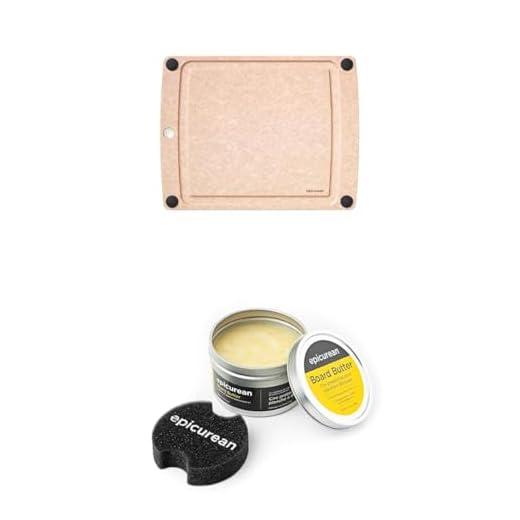
3. Epicurean All-in-One Series Cutting Board — Best Durable Prep Tool
The Epicurean All-in-One Series is a strong choice for shoppers who want a lightweight reusable cutting board made from paper composite rather than another conventional plastic board.
Best For: Everyday vegetable prep, cooked foods, general chopping, small kitchens, and people who value dishwasher-safe cleanup.
The series starts with a compact 10 × 7-inch version and extends into larger prep sizes. Each board is dual-sided, with a juice groove on one side and a flatter work surface on the other. Silicone feet help keep the board stable in either orientation.
Epicurean describes the board as dishwasher safe, NSF certified, knife safe, and heat resistant. Its thin construction also makes it easier to store vertically than many thick wood boards.
The important material distinction is that “paper composite” does not mean a sheet of untreated paper. The board is an engineered composite designed for durability. It should not be described as biodegradable or compostable simply because paper is part of its construction.
Expect cosmetic wear as well. Knife marks are normal on a cutting surface, and a dark or heavily used board can show scratching even when it remains fully functional.
Pros
✅ Durable paper-composite construction
✅ Dishwasher safe
✅ Dual-sided design with juice groove
✅ Thin, lightweight, and easy to store
Cons
❌ Surface can show knife scratches over time
❌ Composite material is not the same as solid wood
❌ Larger sizes can move above the lowest-budget price tier
Who should skip it: Choose a traditional hardwood or bamboo board if solid natural material matters more to you than dishwasher compatibility and a thin profile.
Alternative: A well-maintained wood cutting board can provide many years of use if you are comfortable with hand washing and occasional conditioning.

Keep your boards looking and performing their best — Epicurean Cutting Board + Board Butter Bundle.
This durable, knife-friendly 11.5" x 9" cutting board with non-slip feet and a generous juice groove pairs perfectly with a 4.5 oz retro tin of board butter (with sponge applicator) to restore and protect wood surfaces. Add to cart now to upgrade your prep routine and keep your boards fresh, conditioned, and ready for every meal.
4. Bee’s Wrap Assorted 3 Pack — Best Plastic-Wrap Alternative
Bee’s Wrap is designed for the kitchen jobs where you might otherwise reach for a sheet of disposable plastic wrap: covering half-used produce, wrapping cheese or bread, packing a sandwich, or covering a bowl of leftovers.
Best For: Produce, bread, cheese, sandwiches, herbs, and covering dishes that do not require a rigid or leakproof container.
The Assorted 3 Pack includes small, medium, and large wraps. The beeswax version uses organic cotton, beeswax, organic plant oil, and tree resin. Warmth from your hands softens the material enough to shape it around food or a container.
Bee’s Wrap says its wraps can last up to about a year with proper care and regular use. Care is also the product’s biggest limitation. The wax coating cannot tolerate high heat, so the wraps need to be washed with cool water and mild dish soap and kept away from microwaves, ovens, hot water, and hot vehicles.
This also means Bee’s Wrap is not a universal replacement for plastic film. Stasher bags or rigid containers make more sense for liquids, reheating, freezer meals, or anything that needs a stronger seal.
Pros
✅ Reusable alternative for many plastic-wrap tasks
✅ Three sizes cover different foods and bowls
✅ Flexible material stores flat when not in use
✅ Up to about one year of use with proper care
Cons
❌ Must be washed in cool water
❌ Cannot go in a microwave or oven
❌ Does not provide the same leakproof seal as a storage bag or container
Who should skip it: If almost all of your food storage involves liquids, freezer meals, or reheating, silicone bags and rigid containers will be more practical.
Alternative: Stasher Stand-Up Mid for freezer-safe, heat-tolerant food storage.

Protect your food—and the planet—with Bee's Wrap 3-Pack Beeswax Food Wraps: natural, reusable, and plastic-free in assorted sizes for every kitchen need. Gentle care keeps them lasting longer—avoid hot water, microwaves, ovens, and other high-heat uses to preserve the beeswax coating. Ready to ditch single-use plastic?
Buy your 3-pack today and start wrapping smarter.
5. Full Circle The Bubble Up Foaming Set — Best Sink-Side Swap
The Full Circle Bubble Up takes a different approach to affordable sustainable kitchen gear. Instead of replacing food packaging, it turns the dishwashing brush into a small reusable system with a durable ceramic base and a replaceable brush.
Best For: Everyday dishwashing, kitchens where sponges are frequently discarded, and shoppers who prefer a palm brush to a long-handled dish brush.
The ceramic base holds dish soap and uses a spring-loaded platform to create suds when the brush is pressed into it. The brush combines bamboo and recycled plastic, while replacement brushes are sold separately so the ceramic base does not need to be discarded when the bristles wear down.
The base is top-rack dishwasher safe, while the brush should be hand washed and allowed to dry thoroughly. Full Circle also recommends avoiding prolonged soaking of bamboo components.
This is not a plastic-free product. Recycled plastic remains part of the brush construction, and replacement heads eventually become waste. Its practical advantage is that the long-lived ceramic component remains in service while only the worn brush is replaced.
Pros
✅ Reusable ceramic soap-dispensing base
✅ Replaceable brush extends the life of the overall system
✅ Brush uses bamboo and recycled plastic
✅ Compact enough for small sink areas
Cons
❌ Not plastic free
❌ Replacement brushes remain a recurring consumable
❌ Palm-brush design will not suit everyone
Who should skip it: If you strongly prefer a long handle or already own a durable replaceable-head dish brush, there is little reason to switch systems.
Alternative: A natural-fiber dish brush with a replaceable head can provide a similar long-life approach in a more conventional handle format.

- Full Circle Bubble Up Replacement Dish Brush, Green, 2 Count (Pack of 1)
Eco Kitchen Products We Considered but Didn’t Select
Electric countertop composters: Products that dry or process food scraps can be convenient, but their purchase prices often sit far above the affordable range used here. They also introduce electricity use, filters, and other consumables that deserve a more detailed comparison than a simple “eco gadget” label.
Single-use biodegradable utensils: A biodegradable or compostable claim does not mean the item will break down under every disposal condition. Local composting infrastructure and the exact certification or disposal requirement matter. For an everyday home kitchen, a durable reusable utensil is normally a more straightforward purchase than routinely buying another single-use format.
Generic bamboo utensil kits: Bamboo can be useful, but material alone does not establish sourcing quality, coating safety, durability, or repairability. We preferred products with clearer current documentation.
Swedish dishcloths: Reusable cellulose cloths can replace some paper-towel use, but they overlap with the cleaning role already covered by Full Circle. They deserve a dedicated comparison with reusable cloths, sponges, and paper-towel alternatives.
“Eco” small appliances: Energy-efficient kettles, air fryers, mixers, and coffee makers can be worthwhile, but appliance sustainability involves power consumption, lifespan, repairability, cooking efficiency, and how often the appliance is actually used. That is too complex to reduce to a material label.
How to Make an Eco Kitchen Swap That Actually Helps
Replace Something You Already Throw Away
Start with your trash can rather than a shopping list. If your household regularly goes through zipper bags, cling film, disposable scrubbers, paper towels, or takeout storage containers, that repeated purchase is the most obvious place to look for a reusable alternative.
A product that replaces a real disposable habit has a clearer role than a new gadget that adds another object to the kitchen.
Reuse Matters More Than the Label
A reusable product only becomes useful as a waste-reduction tool when it is actually reused. That means ease of cleaning, storage, and convenience are sustainability features in practice even when they are not marketed that way.
If a reusable bag is difficult enough to clean that you stop using it after a month, or a specialty utensil sits untouched in a drawer, the product has failed to change the habit it was supposed to replace.
Check Material Claims, Not Marketing Language
Words such as “natural,” “green,” “eco,” and “sustainable” are too broad to tell you whether a product is right for your kitchen. Look for the actual claim instead: recycled plastic content, FSC-certified material, a replaceable component, reusable silicone, or a product designed to support compost collection.
This also makes comparisons easier. Two products can both call themselves sustainable while using completely different materials and solving different problems.
Compostable Does Not Mean “Composts Anywhere”
Composting conditions matter. Some products are designed for industrial or municipal composting systems rather than a backyard pile, and access to those facilities varies by location.
The same distinction applies to food scraps. An OXO compost bin can help collect them, but the environmental outcome depends on where those scraps go after leaving your kitchen.
Buy Durable Appliances Only When You Need Them
Replacing a working appliance simply because a new model has a sustainability feature can create unnecessary consumption. If your current mixer, coffee maker, toaster, or blender works well, continuing to use and maintain it can be more practical than upgrading solely for a “green” label.
When you genuinely need a replacement, focus on capacity, build quality, serviceability, and whether the appliance matches the job. For example, our guide to KitchenAid stand mixers for home bakers compares mixer sizes and designs by actual baking use, while our coffee makers for busy mornings guide separates programmable, pod-based, and podless workflows.
Avoid Replacing Working Products Just to Buy a “Greener” Version
The easiest way to turn sustainability into overconsumption is to discard functional kitchenware in order to replace everything at once. Use what you already own until it stops meeting your needs, then make a more deliberate replacement.
If you are planning a broader seasonal refresh, our upcoming eco-friendly spring cleaning products guide will cover reusable cleaning tools and household supplies beyond the kitchen. For low-cost cooking tools regardless of sustainability angle, see kitchen gadgets under $50.
Final checklist: Before buying, ask whether the product replaces something disposable, whether you will actually wash and reuse it, whether the environmental claim is specific, whether replacement parts are available, and whether you already own something that performs the same job.
Frequently Asked Questions
What are the easiest eco-friendly kitchen swaps?
Start with products that replace disposable items you already use frequently. Reusable food-storage bags, washable food wraps, durable cleaning tools, and food-scrap collection bins are practical examples because each one changes a repeated kitchen habit.
Are reusable silicone bags worth buying?
They can be worth buying if you regularly use disposable zipper bags and are willing to clean and reuse the silicone alternative. Their value decreases if you already rely almost entirely on durable containers.
Are beeswax wraps better than plastic wrap?
Beeswax wraps can replace plastic film for some jobs, including wrapping produce, cheese, bread, and covering bowls. They are not a direct substitute for every use because they cannot tolerate high heat and do not provide the same leak-resistant seal as a closed bag or container.
Does a countertop compost bin actually compost food?
A basic countertop compost bin usually stores food scraps temporarily; it does not create finished compost. The scraps still need to go to a backyard compost system, municipal collection program, community drop-off, or another appropriate composting destination.
Are bamboo kitchen products automatically sustainable?
No. Bamboo is only one part of the product. Durability, coatings, adhesives, manufacturing, sourcing, replacement frequency, and how long you use the item also matter.
What should I look for in reusable kitchenware?
Look for a product you can realistically clean, store, and reuse often. Material safety information, replacement parts, dishwasher compatibility, heat limits, warranty coverage, and a clear use case are more useful than a broad environmental label.
Is it better to replace plastic kitchen tools immediately?
Not necessarily. If an existing kitchen tool is safe, functional, and still meeting your needs, replacing everything at once can create additional waste. A practical approach is to make better-informed replacements as current products wear out.
What does compostable or biodegradable really mean?
The terms depend on specific breakdown conditions and disposal environments. A product marketed as compostable may require commercial composting rather than a backyard pile, while items sent to landfill may not experience the conditions required for rapid breakdown. Check the specific disposal instructions instead of relying on the label alone.
Final Verdict: Which Affordable Eco Kitchen Gadgets Are Worth It?
The Stasher Stand-Up Mid Bag is our best overall choice because it can replace disposable food-storage bags across more everyday situations than the other products in this guide. It works for leftovers, freezer storage, meal prep, reheating, and ingredients, making repeated reuse relatively easy to build into an existing routine.
Choose the OXO Easy-Clean Compost Bin if food-scrap separation is the habit you want to improve and you already have access to composting. The Epicurean All-in-One board is the more durable prep-focused purchase, while Bee’s Wrap is the natural choice if disposable cling film is what you most want to reduce.
Full Circle’s Bubble Up is the smallest investment in the group and makes sense when dish brushes or sponges are a recurring source of waste in your kitchen.
The most important rule is not to replace products that still work simply to create an “eco” kitchen. Use what you own, identify the disposable habits you actually want to change, and choose reusable products you will keep using long after the first week.
Best Overall: Stasher Stand-Up Mid Bag
Best for Food-Scrap Collection: OXO Easy-Clean Compost Bin
Best Durable Prep Tool: Epicurean All-in-One Cutting Board
Best Plastic-Wrap Alternative: Bee’s Wrap Assorted 3 Pack
Best Sink-Side Swap: Full Circle Bubble Up Foaming Set
Sources
- Federal Trade Commission — Environmental Claims: Summary of the Green Guides
- Stasher — Stand-Up Mid Bag product specifications
- OXO — Good Grips Easy-Clean Compost Bin product specifications
- Epicurean — All-in-One Series Cutting Board product specifications
- Bee’s Wrap and Full Circle Home — Current product specifications and care guidance
Product Groups: Stasher Stand-Up Mid Bag, OXO Good Grips Easy-Clean Compost Bin 0.75 Gal, Epicurean All-in-One Series Cutting Board, Bee’s Wrap Assorted 3 Pack, Full Circle The Bubble Up Foaming Set