Best Ryobi Electric Pressure Washers 2026
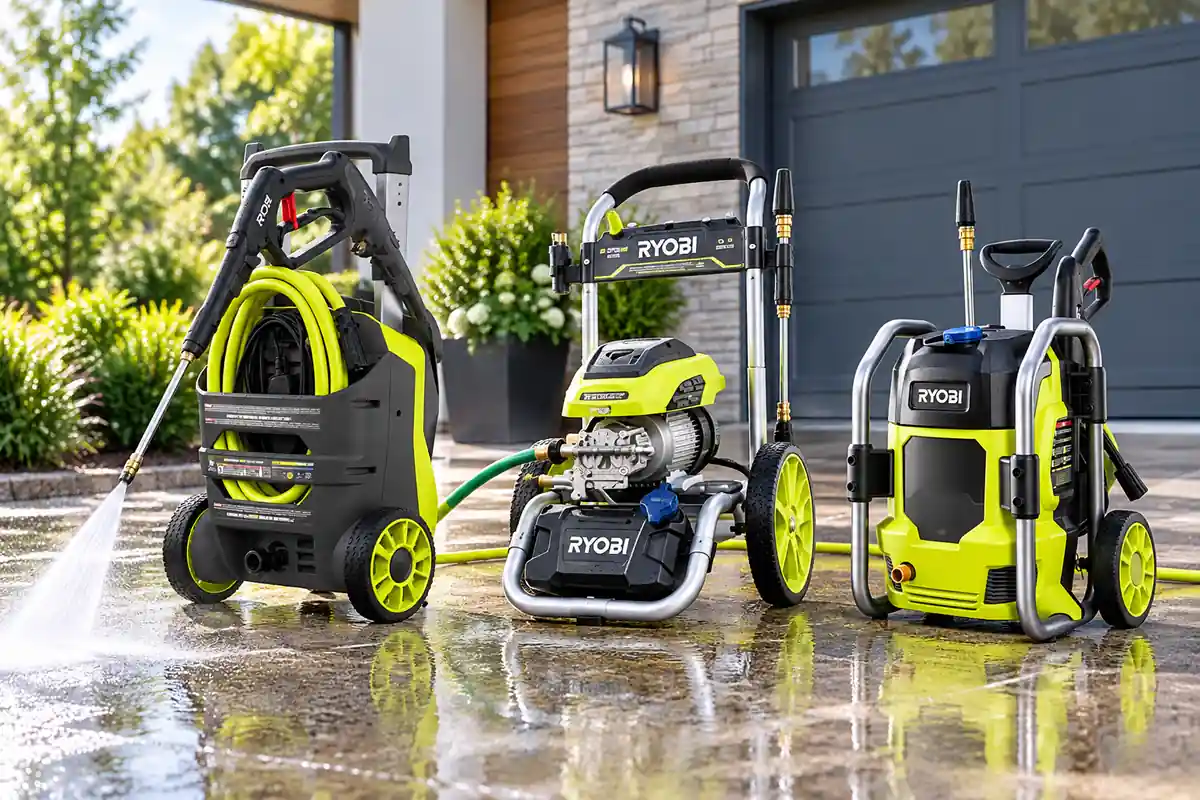
The Ryobi RY142012 is the best Ryobi electric pressure washer for most homeowners. Its 2,100 PSI and 1.2 GPM output is a sensible match for patios, walkways, decks, siding, outdoor furniture, and other routine residential cleaning without the size or cost of Ryobi’s heavier brushless machines.
If you only need light cleaning, the compact RY141803 saves money and storage space. The RY142500 adds a brushless motor, larger wheels, an onboard detergent tank, and 2,500 PSI for buyers who want a more substantial machine. At the top of Ryobi’s current corded range, the RY143011 reaches 3,000 PSI, but its 1.1 GPM flow rate means the larger number does not automatically translate into dramatically faster driveway cleaning.
That distinction is important when comparing Ryobi electric pressure washers. PSI measures pressure, while GPM measures water flow. You need enough pressure to loosen grime and enough flow to move it away. Buying the model with the largest PSI number is not always the best value.
Quick Answer: Which Ryobi Electric Pressure Washer Should You Buy?
Best Overall: Ryobi RY142012 — the best balance of 2,100 PSI, 1.2 GPM, compact storage, included foamer, and price for most homeowners.
Best Budget: Ryobi RY141803 — a small 1,800 PSI, 1.2 GPM machine for lighter cleaning and buyers who value portability.
Best Brushless Midrange: Ryobi RY142500 — 2,500 PSI, a brushless motor, large wheels, and an onboard detergent tank for more frequent medium-duty work.
Best for Heavy Residential Cleaning: Ryobi RY143011 — the 3,000 PSI option for tougher concrete and larger jobs, although its 1.1 GPM flow limits cleaning speed.
How We Evaluated Ryobi Electric Pressure Washers
We compared the current Ryobi electric lineup using official model specifications, current U.S. availability, manufacturer pricing, hose reach, motor type, nozzle configuration, detergent application, storage, electrical protection, warranty coverage, and reputable independent testing.
Discompare did not conduct its own hands-on pressure-washer testing for this guide. Performance observations from independent reviewers are treated as third-party evidence rather than presented as our own experience.
We also avoided ranking the models by PSI alone. Water flow has a major effect on how quickly loosened dirt can be carried away, which is why a high-pressure electric washer can still take longer than a higher-flow gas machine on a large driveway.
Ryobi Electric Pressure Washers Compared
| Model | Best For | Pressure | Flow | Motor | Hose | Price Reference | Main Trade-Off |
|---|---|---|---|---|---|---|---|
| RY142012 | Most homeowners | 2,100 PSI | 1.2 GPM | Electric | 25 ft | $199 | Flow is modest for large driveways |
| RY141803 | Light cleaning and budget buyers | 1,800 PSI | 1.2 GPM | Electric | 20 ft | $109 regular reference | Limited pressure for tougher jobs |
| RY142500 | Brushless midrange cleaning | 2,500 PSI | 1.2 GPM | Brushless | 25 ft | $329 | Costs much more without increasing GPM |
| RY143011 | Tougher concrete and larger residential jobs | 3,000 PSI | 1.1 GPM | Brushless | 35 ft | $429 | High PSI but comparatively low flow |
Current Ryobi Electric Pressure Washer Prices
Ryobi prices can change during Home Depot promotions and seasonal sales, so use the live offers below rather than relying on temporary discounts quoted in the article.


1. Ryobi RY142012 — Best Overall
Best for: homeowners who want one electric pressure washer for normal decks, patios, sidewalks, siding, outdoor furniture, and other medium-duty cleaning.
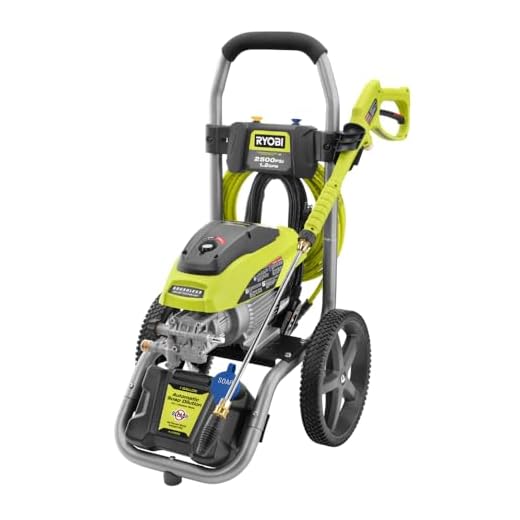
The RY142012 is the model we would recommend first because its specification and price make sense together. Ryobi rates it at 2,100 PSI and 1.2 GPM, currently lists it at $199, and positions it for medium-duty cleaning including decks, siding, and sidewalks.
The machine includes a 25-foot pressure hose, 15-degree nozzle, turbo nozzle, and foamer. Onboard storage gives the hose, wand, nozzles, foamer, and electrical cord dedicated places when the machine is not in use.
Independent testing reinforces the specification-based case for the RY142012. Bob Vila’s 2026 Ryobi comparison selected it as the best overall model, highlighting its compact size and suitability for vehicles, walkways, patios, and smaller sections of siding. That same testing also exposes its main limitation: 1.2 GPM is adequate for routine home maintenance but relatively slow for covering an entire driveway.
That is why the RY142012 makes more sense than automatically buying Ryobi’s 3,000 PSI model. Most homeowners will benefit more from a machine that is inexpensive, compact, and easy to use regularly than from paying twice as much for pressure they may rarely need.
Pros
✅ Balanced 2,100 PSI and 1.2 GPM output
✅ $199 manufacturer price reference
✅ Included foamer, turbo nozzle, and 15-degree nozzle
✅ Compact design with extensive onboard storage
Cons
❌ 1.2 GPM is modest for large areas
❌ Not brushless
❌ Only two high-pressure nozzle patterns are included
Who should skip it: homeowners who frequently clean large areas of heavily stained concrete and prioritize cleaning speed.
Alternative: choose the RY143011 if you specifically need more pressure, or the RY141803 if most of your work is light duty.
A compact, easy-to-move electric pressure washer that delivers strong cleaning power for home exterior jobs.
- Power: 2100 PSI, 1.2 GPM cold water
- Nozzles: 15° for precise cleaning; turbo nozzle for up to 50% faster removal of tough grime
- Foamer: Detergent foamer for deep cleaning embedded dirt
- Hose: 25 ft. non-marring high-pressure hose for extended reach without scratching
- Storage & portability: On-board accessory storage, telescoping handle, and wheels for easy transport
Ideal for decks, sidewalks, fences, siding, windows and similar outdoor surfaces.
2. Ryobi RY141803 — Best Budget and Compact Pick
Best for: patio furniture, windows, small decks, grills, walkways, and buyers who want an inexpensive pressure washer that takes up very little storage space.
The RY141803 is the simplest machine in this comparison. Ryobi rates it at 1,800 PSI and 1.2 GPM, and its regular manufacturer price reference is $109 before temporary promotions.
The important number is not just the lower 1,800 PSI rating. It still provides the same 1.2 GPM flow rating as the RY142012 and RY142500. That makes it a reasonable choice for rinsing and lighter cleaning when extreme pressure is unnecessary.
The package includes a 20-foot Ultra Flex hose, 15-degree nozzle, turbo nozzle, and soap applicator. Current product data also lists a GFCI-equipped plug and a three-year limited warranty.
Portability is the bigger advantage. Independent testing measured the RY141803 at about 14.4 pounds, substantially lighter than the larger brushless models. Its compact body is also compatible with Ryobi’s LINK storage system.
The compromise appears when dirt becomes difficult or the area becomes large. Its 1,800 PSI output can handle routine maintenance, but a driveway that has accumulated years of grime will expose the limits of a light-duty machine.
Pros
✅ Low regular purchase price
✅ Very lightweight and compact
✅ 1.2 GPM flow matches several more expensive Ryobi models
✅ GFCI-equipped configuration and three-year warranty
Cons
❌ Lowest pressure in this comparison
❌ Short 20-foot pressure hose
❌ Not designed for frequent heavy concrete cleaning
Who should skip it: buyers who expect one machine to handle large driveways and tougher restoration work.
Alternative: RY142012 provides a meaningful jump in pressure while remaining reasonably priced and compact.
A compact, lightweight electric pressure washer designed for light-duty cleaning around the home. Delivers 1800 PSI with a 1.2 GPM flow rate and a high power-to-size ratio for efficient cleaning.
- Type: Electric pressure washer
- Pressure: 1800 PSI
- Flow rate: 1.2 GPM
- Design: Compact and lightweight
- Strength: Best power-to-size ratio
- Ideal for: Windows, decks, and other light-duty home cleaning tasks
3. Ryobi RY142500 — Best Brushless Midrange Model
Best for: homeowners who want a more substantial brushless pressure washer for decks, fences, siding, sidewalks, patio furniture, and smaller driveways.
The RY142500 is where Ryobi’s electric range changes from compact household equipment to a larger cart-style machine. It produces 2,500 PSI at 1.2 GPM and currently carries a $329 manufacturer price.
Its brushless motor is one reason to move up from the RY142012. The machine also uses an aluminum axial-cam pump, has a built-in detergent tank, rolls on 12-inch flat-free wheels, and includes a 25-foot pressure hose. Ryobi supplies 15-degree, turbo, and soap nozzles, while the metal wand uses a standard quarter-inch quick-connect coupler.
The RY142500’s biggest problem is value. It costs roughly $130 more than the RY142012 at current manufacturer pricing, but water flow remains exactly 1.2 GPM. You are buying additional pressure, a brushless motor, a stronger cart-style chassis, large wheels, and detergent storage—not a faster stream of water.
That can be worthwhile if you regularly clean harder surfaces or prefer a more substantial pressure washer. For occasional deck and sidewalk work, the RY142012 remains the easier recommendation.
Pros
✅ 2,500 PSI with a brushless motor
✅ Onboard detergent tank
✅ 12-inch flat-free wheels
✅ 35-foot electrical cord with GFCI protection
Cons
❌ $329 price is substantially higher than RY142012
❌ Flow remains only 1.2 GPM
❌ Much heavier and larger than the compact Ryobi models
Who should skip it: light-duty users who do not need the extra pressure or brushless construction.
Alternative: choose RY142012 for better value or RY143011 if you are already willing to pay for Ryobi’s larger cart design and want maximum corded-electric pressure.
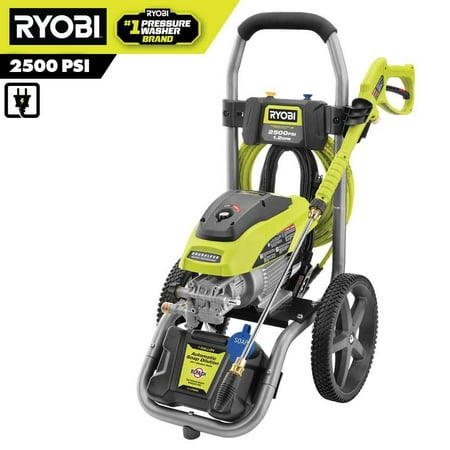
A compact, gas-free electric pressure washer delivering 2500 PSI and 1.2 GPM, designed for efficient, long-lasting outdoor cleaning.
- Power: 2500 PSI, 1.2 GPM
- Motor: Brushless electric motor — maximizes efficiency and extends the unit’s life
- No gas: Electric operation eliminates gas-related hassle and maintenance
- Durability: Built to last thanks to the brushless design
- Use: Ideal for cleaning outdoor surfaces
- Efficient performance with longer motor life
- Lower maintenance compared with gas models
- Effective for a variety of outdoor cleaning tasks
4. Ryobi RY143011 — Best for Heavy Residential Cleaning
Best for: tougher residential concrete cleaning and buyers who want the highest-pressure corded electric pressure washer in Ryobi’s current lineup.
The RY143011 is rated at 3,000 PSI and 1.1 GPM and currently carries a $429 manufacturer price. It uses a brushless motor and combines a larger cart-style frame with 12-inch flat-free wheels, an onboard detergent tank, and a 35-foot high-pressure hose.
Its nozzle setup is particularly convenient. A multi-pattern nozzle allows you to change spray configuration without repeatedly storing and swapping individual tips, while a separate turbo nozzle is included for more aggressive cleaning.
The 3,000 PSI figure makes the RY143011 sound close to a gas pressure washer, but the comparison breaks down when water flow is considered. At only 1.1 GPM, it moves substantially less water than many gas machines designed for large concrete areas.
That limitation appeared in independent 2026 testing. Bob Vila found the RY143011 capable of cleaning concrete effectively but noticeably slower than the gas-powered Ryobi tested alongside it. The review specifically identified low flow as the factor holding back large-area cleaning speed.
This makes the RY143011 useful for someone who wants high electric pressure without fuel and engine maintenance, but not the automatic choice for everyone with a driveway.
Pros
✅ 3,000 PSI maximum pressure
✅ Brushless motor
✅ Long 35-foot pressure hose
✅ Large wheels and onboard detergent tank
✅ GFCI-equipped configuration
Cons
❌ Only 1.1 GPM despite the high PSI rating
❌ $429 manufacturer price
❌ Large-area concrete cleaning can still be slower than with a higher-flow gas washer
Who should skip it: buyers primarily cleaning outdoor furniture, small patios, windows, or other light-duty surfaces.
Alternative: RY142012 for routine residential work, or a higher-flow gas pressure washer if frequent large-area concrete cleaning is the real priority.
Other Ryobi Pressure Washers We Considered
Ryobi RY1419MT 1,900 PSI: this established model remains available and is still a reasonable light-duty choice, but the newer RY141803 and RY142012 create clearer budget and general-purpose recommendations in the current lineup.
Ryobi RY142022 2,000 PSI: another capable corded model, but it is difficult to justify over the newer 2,100 PSI RY142012 when the newer machine fits the same broad homeowner use case.
Ryobi 40V cordless pressure washers: battery-powered models solve a different problem. They are worth considering when freedom from a wall outlet is essential, but battery cost, runtime, and weight make them less direct substitutes for these corded machines.
Ryobi automotive pressure washers: specialized higher-flow, lower-pressure models can make sense for dedicated vehicle care, but they should not replace a general-purpose home pressure washer unless automotive cleaning is the primary job.
Which Ryobi Pressure Washer Should You Buy by Job?
| Cleaning Job | Recommended Ryobi | Why |
|---|---|---|
| Patio furniture and light maintenance | RY141803 | Low cost, compact size, and sufficient light-duty output |
| Decks and small patios | RY142012 | Balanced pressure without unnecessary bulk |
| Siding and fences | RY142012 | Versatile medium-duty output and compact handling |
| Small driveways | RY142500 | More pressure, brushless motor, large wheels, and detergent tank |
| Tougher concrete | RY143011 | Highest pressure in the current Ryobi corded lineup |
| Frequent large-area heavy cleaning | Consider gas instead | Higher GPM can matter more than another few hundred PSI |
PSI vs GPM: Why 3,000 PSI Is Not Automatically Better
PSI and GPM describe different parts of pressure-washer performance. PSI measures how much pressure the water applies to a surface. GPM measures the volume of water flowing through the machine each minute.
Higher pressure can help loosen stubborn contamination. Higher flow can rinse that material away faster and cover more area. A pressure washer therefore needs enough of both for the task rather than simply the largest pressure number.
The Ryobi lineup makes this particularly easy to see. RY142012 produces 2,100 PSI at 1.2 GPM. RY142500 increases pressure to 2,500 PSI but remains at 1.2 GPM. RY143011 reaches 3,000 PSI while flow actually falls slightly to 1.1 GPM.
The RY143011 can therefore apply more concentrated cleaning force without necessarily clearing a large driveway dramatically faster. Independent testing found exactly that: it cleaned concrete successfully but needed substantially more time than a higher-flow gas machine.
Buying rule: Choose higher PSI when you genuinely need more cleaning force. If your main goal is covering a very large area quickly, pay equal attention to GPM.
Ryobi Electric vs Gas Pressure Washers
Electric pressure washers are the better ownership experience for most households. They start without fuel, do not produce engine exhaust, require less routine maintenance, and are easier to store between occasional cleaning jobs.
Gas pressure washers become attractive when the amount of work increases. A machine producing 2.5 GPM can move more than twice as much water as the 1.1 GPM RY143011, which can materially reduce cleaning time across a large driveway or other expansive hard surface.
| Factor | Ryobi Electric | Gas Pressure Washer |
|---|---|---|
| Starting | Plug in and switch on | Engine starting procedure |
| Maintenance | Relatively low | Fuel and engine maintenance |
| Noise and exhaust | Lower noise; no engine exhaust | Louder and produces exhaust |
| Typical advantage | Convenience and home maintenance | Large-area cleaning speed |
| Best buyer | Typical homeowner | Frequent heavy-duty user |
Ryobi Pressure Washer Accessories Worth Considering
Surface Cleaner
A compatible surface cleaner can make patios and driveways easier to clean evenly than repeatedly sweeping a narrow wand back and forth. Match the accessory’s rated pressure and flow requirements to your exact pressure-washer model.
High-Pressure Hose Extension
If reach is the problem, extending the high-pressure side can be preferable to improvising with an unsuitable electrical extension cord. Follow Ryobi’s manual for your exact model and use accessories that stay within the washer’s pressure rating.
Foamer or Soap Applicator
RY142012 already includes a foamer, while other models use soap applicators or onboard detergent tanks. Use only cleaning products compatible with the pressure washer and appropriate for the surface being cleaned.
Pump Protector
Pump-protection products can be useful before long-term or cold-weather storage when specified by the manufacturer. Follow Ryobi’s storage instructions rather than assuming every machine requires the same winterization procedure.
Electrical and Pressure-Washer Safety
Electric pressure washers combine water, mains electricity, and a high-pressure jet. Use the GFCI protection provided with the machine as directed, keep electrical connections away from water, and never point the spray at people, animals, or electrical equipment.
GFCI protection deserves particular attention. The U.S. Consumer Product Safety Commission issued multiple electric-pressure-washer recalls in 2026 involving products that lacked integral GFCI protection, creating serious shock and electrocution hazards.
The Ryobi models recommended here are sold in GFCI-equipped configurations. Follow the operating manual for your exact model, including any instructions for testing or resetting the GFCI before use.
Use the Least Aggressive Setup That Cleans the Surface
Higher pressure is not automatically safer or more effective. Begin with an appropriate wider spray pattern and sensible working distance, test a small inconspicuous area, and increase cleaning intensity only when the surface can tolerate it.
Do Not Aim the Spray at People or Animals
High-pressure water can cause serious injury even when the wound initially appears small. Never use a pressure washer to clean clothing, footwear, skin, or pets.
Be Careful Around Painted and Delicate Surfaces
Wood, paint, siding, seals, screens, and vehicle finishes can be damaged by excessive pressure or an overly narrow nozzle. Follow the surface manufacturer’s cleaning instructions where available.
Keep Electrical Connections Dry
Do not place plugs or electrical connections in standing water. Inspect cords and the GFCI before use, and do not operate a machine with damaged electrical components.
Frequently Asked Questions
What is the best Ryobi electric pressure washer?
The Ryobi RY142012 is the best choice for most homeowners. Its 2,100 PSI and 1.2 GPM output provides enough capability for typical decks, patios, walkways, siding, and other household cleaning while keeping the price and size well below Ryobi’s brushless models.
Is 2,100 PSI enough for a driveway?
It can clean smaller or moderately dirty concrete areas, but the RY142012’s 1.2 GPM flow means a large or heavily stained driveway may take considerable time. For frequent concrete cleaning, consider RY142500, RY143011, or a higher-flow gas washer depending on workload.
Is the Ryobi 3,000 PSI electric pressure washer worth it?
The RY143011 is worth considering when you regularly need more pressure for concrete and other hard surfaces but still want electric operation. Its 1.1 GPM flow means it should not be expected to clean large areas as quickly as a high-flow gas machine.
What is the difference between the RY142012 and RY142500?
RY142012 produces 2,100 PSI at 1.2 GPM and emphasizes compact value. RY142500 raises pressure to 2,500 PSI, adds a brushless motor, larger cart, detergent tank, and 12-inch wheels, but flow remains 1.2 GPM. Most light-to-medium users can save money with RY142012.
Are Ryobi electric pressure washers GFCI protected?
The four current models recommended in this guide are sold in GFCI-equipped configurations. Follow the operating instructions for the exact model, including testing and resetting the GFCI when directed.
Can you use a surface cleaner with a Ryobi electric pressure washer?
Yes, when the surface cleaner is compatible with the pressure and flow specifications of the exact pressure washer. Check the accessory’s rated PSI, GPM requirements, fitting type, and Ryobi’s compatibility guidance before use.
Should I buy a Ryobi electric or gas pressure washer?
Choose electric for routine household cleaning, easier starting, lower maintenance, and no engine exhaust. Choose gas when you frequently clean large or heavily stained areas and higher water flow can save enough time to justify fuel, noise, and additional maintenance.
Final Verdict: Which Ryobi Electric Pressure Washer Is Best?
Ryobi RY142012 is the model most homeowners should buy. Its 2,100 PSI and 1.2 GPM output is strong enough for the jobs that justify owning a pressure washer without forcing you into the size and price of Ryobi’s premium brushless machines.
RY141803 is the smarter choice if your workload consists mainly of patio furniture, windows, walkways, and other lighter maintenance. Its 1,800 PSI rating keeps it compact and inexpensive while retaining a 1.2 GPM flow rating.
RY142500 makes sense when you want a brushless motor, larger wheels, an onboard detergent tank, and more pressure for medium-duty work. RY143011 is the specialist choice for buyers who want Ryobi’s maximum corded-electric pressure, but its 1.1 GPM flow means that 3,000 PSI should not be mistaken for gas-like cleaning speed on large surfaces.
Best Overall: Ryobi RY142012
Best Budget: Ryobi RY141803
Best Brushless Midrange: Ryobi RY142500
Best for Heavy Residential Cleaning: Ryobi RY143011
Sources
- RYOBI — RY142012, RY141803, RY142500, and RY143011 product specifications and current pricing
- Bob Vila — The Best Ryobi Pressure Washers of 2026, Tested and Reviewed — 2026
- Pro Tool Reviews — Ryobi 2100 PSI Electric Pressure Washer Review and current Ryobi electric lineup coverage
- The Home Depot — current RYOBI model specifications, GFCI information, and warranty data
- U.S. Consumer Product Safety Commission — 2026 electric pressure washer recall and GFCI safety notices
Product Groups: Ryobi RY142012 Electric Pressure Washer, Ryobi RY141803 Electric Pressure Washer, Ryobi RY142500 Electric Pressure Washer, Ryobi RY143011 Electric Pressure Washer