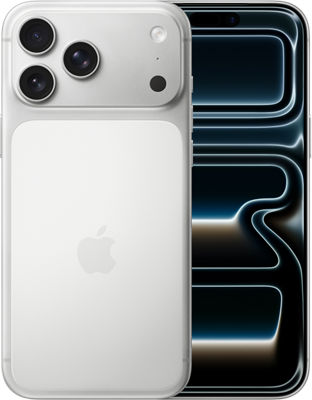
The iPhone 17 Pro Max sits at the top of Apple’s current smartphone lineup, combining the company’s largest Pro display with the A19 Pro chip, a redesigned thermal system, three 48MP rear cameras and the longest manufacturer-rated battery life in the iPhone 17 family. It is an extremely capable flagship, but capability alone does not make it the right iPhone for every buyer.
In this iPhone 17 Pro Max review, we focus on the questions that matter once the launch excitement fades. How much better is the new camera system? Does the vapor chamber make a meaningful difference? How strong is the battery life in independent testing? Is the 17 Pro Max worth buying over the smaller iPhone 17 Pro, and does it offer enough improvement to justify upgrading from an iPhone 16 Pro Max?
Price matters just as much. Apple starts the iPhone 17 Pro Max at $1,199 for 256GB and takes the range all the way to $1,999 for 2TB. Retail pricing, carrier offers and discounts can change the value equation considerably, so this review combines specifications and independent testing with a live iPhone price comparison rather than judging the phone only by its launch MSRP.
Our overall view is straightforward: iPhone 17 Pro Max is an excellent premium flagship for creators, heavy users and buyers upgrading after several generations, but many iPhone 16 Pro Max owners and mainstream users can comfortably skip it or choose a less expensive iPhone 17 model instead.
Quick Answer: Is the iPhone 17 Pro Max Worth It?
Overall Verdict: Excellent premium flagship — performance, camera/video capabilities, battery endurance and the large ProMotion display are all major strengths, but the $1,199 starting price makes value an important part of the decision.
Best For: Creators and power users — particularly people who regularly shoot video, use demanding apps, want the longest-lasting Pro iPhone or prefer Apple’s largest premium display.
Biggest Upgrades: The redesigned thermal system, 48MP telephoto camera, 18MP Center Stage front camera and improved battery endurance are more meaningful than a simple annual processor bump.
Best Storage for Most: 256GB — enough for most buyers unless you routinely shoot large ProRes/ProRAW files, keep extensive offline media or use the phone for professional production work.
Upgrade Advice: It is a strong upgrade from iPhone 14 Pro Max or older. iPhone 15 Pro Max owners should compare priorities carefully, while most iPhone 16 Pro Max owners can reasonably wait another generation.
iPhone 17 Pro Max Specs at a Glance
| Feature | iPhone 17 Pro Max |
|---|---|
| Display | 6.9-inch Super Retina XDR OLED |
| Resolution | 2868 × 1320, 460 ppi |
| Refresh Rate | ProMotion up to 120Hz |
| Chip | Apple A19 Pro |
| Rear Cameras | 48MP Main + 48MP Ultra Wide + 48MP Telephoto |
| Native Telephoto | 4x optical, plus 8x optical-quality crop |
| Front Camera | 18MP Center Stage |
| Apple Battery Rating | Up to 39 hours video playback |
| Storage | 256GB / 512GB / 1TB / 2TB |
| Connectivity | 5G, Wi-Fi 7, Bluetooth 6, USB-C |
| USB Transfer | USB 3 up to 10Gb/s |
| Water Resistance | IP68 |
| Weight | 233g |
| Starting MSRP | $1,199 |
iPhone 17 Pro Max Price Comparison
The iPhone 17 Pro Max starts at $1,199 for 256GB. Apple charges $1,399 for 512GB, $1,599 for 1TB and $1,999 for the new 2TB configuration.
Those prices establish the baseline, but they should not be treated as permanent measures of value. Retailer discounts, trade-in promotions and carrier offers can substantially change the effective cost. A discounted 512GB model, for example, may occasionally make more sense than paying full price for 256GB.
| Storage | Apple MSRP | Best For |
|---|---|---|
| 256GB | $1,199 | Most buyers |
| 512GB | $1,399 | Creators, large apps and offline media |
| 1TB | $1,599 | Heavy professional media workflows |
| 2TB | $1,999 | Specialist local-storage users |
Our storage recommendation: start with 256GB unless you can clearly explain why you need more. Paying an extra $800 to move from 256GB to 2TB only makes sense for unusually storage-heavy workflows.
Buy now and secure yours today while stocks last.
Design & Build Quality
One of the most visible changes to the iPhone 17 Pro generation is Apple’s move away from the titanium construction used on recent Pro models. The iPhone 17 Pro Max instead uses an aluminum unibody architecture designed to work with a new vapor-chamber cooling system.
The switch is functional as well as cosmetic. Aluminum transfers heat efficiently, allowing the chassis to participate in moving heat away from the A19 Pro during sustained workloads. Apple also redesigned the rear camera area into a larger plateau that provides more internal room for components and battery packaging.
The result is not an especially small phone. At approximately 233g and 8.75mm thick, the Pro Max remains a large, heavy flagship. Buyers who already find previous Pro Max phones difficult to use one-handed should not expect this generation to solve that problem.
Apple uses Ceramic Shield 2 on the front and Ceramic Shield on the rear. The company claims improved scratch resistance for the front surface and greater crack resistance for the rear compared with previous materials. Those are Apple durability claims rather than independent guarantees, so a protective case still makes sense for a phone costing well over $1,000.
IP68 water and dust resistance remains part of the specification. The available finishes include Silver, Deep Blue and Cosmic Orange.
Display Review
The 6.9-inch Super Retina XDR OLED remains one of the strongest reasons to choose the Pro Max instead of the smaller Pro. Resolution is 2868 × 1320 at 460 pixels per inch, and ProMotion allows the refresh rate to scale up to 120Hz.
Scrolling, animations, games and interface transitions feel smoother on a high-refresh-rate display than on conventional 60Hz panels, while adaptive refresh behavior allows the phone to reduce refresh rate when higher speed is unnecessary. Always-On Display also remains available.
Apple rates peak outdoor brightness at up to 3,000 nits, while HDR peak brightness is rated at 1,600 nits. That 3,000-nit figure is a manufacturer maximum under specific conditions rather than a guarantee that every test will measure the same number. Independent testing can produce lower readings depending on methodology, display area and environmental conditions.
The anti-reflective treatment is arguably just as useful as chasing a higher peak number. Reduced reflections can improve outdoor visibility even when raw brightness is not operating at its theoretical maximum.
The main downside is physical size. The screen is excellent for video, gaming, editing and reading, but anyone prioritizing pocketability should compare the 6.3-inch iPhone 17 Pro before buying.
Performance & Cooling
A19 Pro Performance
The A19 Pro uses a six-core CPU with two performance cores and four efficiency cores, a six-core GPU with Neural Accelerators and a 16-core Neural Engine. Hardware-accelerated ray tracing is also supported.
For everyday tasks, the practical reality is that modern flagship phones are already extremely fast. Messages, web browsing, social media and ordinary apps will not reveal the full difference between A19 Pro and a recent A18 Pro.
The extra performance becomes more relevant in demanding workloads: high-end games, video processing, large creative projects and workloads that sustain CPU or GPU activity rather than producing short bursts.
Independent benchmarks confirm a meaningful generational improvement. Tom’s Guide measured stronger CPU and graphics results than the previous Pro Max, but benchmark leadership is less important than whether that performance remains available after the phone has been under load for an extended period.
Vapor Chamber & Sustained Performance
The vapor chamber is one of the most important hardware changes in this generation. Instead of treating cooling as a secondary engineering detail, Apple redesigned the internal thermal path around the A19 Pro and aluminum body.
That matters because modern processors can deliver impressive peak benchmark scores and then reduce performance as heat builds. Better cooling helps maintain a larger percentage of peak performance during long gaming sessions, video exports and other sustained workloads.
Independent stress testing has shown stronger sustained behavior from the iPhone 17 Pro Max than several previous-generation flagships. That makes the new cooling system more than a marketing talking point, although casual users may rarely push the phone hard enough to notice the difference.
If your typical use is messaging, browsing, photography and streaming, thermal improvements are welcome but not a reason by themselves to upgrade. If you regularly game, edit video or perform computationally intensive work, they become much more relevant.
iPhone 17 Pro Max Camera Review
The rear camera system is one of the clearest reasons to buy a Pro iPhone. All three primary rear cameras now use 48MP sensors, creating a more consistent hardware foundation across main, ultrawide and telephoto shooting.
Main Camera
The 48MP main camera uses a 24mm-equivalent focal length with an f/1.78 aperture and sensor-shift optical stabilization. It remains the camera most buyers will use for everyday photography, portraits, travel and low-light scenes.
Apple’s strength is not simply resolution. Color consistency, autofocus, processing and the transition between still photography and video all contribute to the user experience. The main camera can also provide a 2x optical-quality crop without requiring a separate 2x lens.
Ultra Wide Camera
The 48MP Ultra Wide uses a 13mm-equivalent field of view and supports 48MP high-resolution capture. It is useful for landscapes, architecture, group photos and situations where stepping backward is not possible.
The higher-resolution sensor also supports macro photography. For photographers who regularly use the ultrawide rather than treating it as an occasional secondary camera, this is more important than adding another software filter or shooting mode.
Telephoto Camera
The telephoto camera is where the specification requires careful explanation. Apple uses a 48MP 4x optical telephoto with a 100mm-equivalent focal length and tetraprism design.
The phone also offers an 8x optical-quality option at approximately 200mm equivalent. That does not mean there is a native 8x optical lens. The 8x mode uses sensor cropping from the 48MP telephoto to produce a 12MP image.
This distinction matters because smartphone marketing can make optical-quality crop modes sound identical to physical optical focal lengths. The 4x setting is the native optical telephoto position; 8x is a high-quality crop made possible by the higher-resolution sensor.
Compared with the previous 12MP 5x telephoto, the new approach trades a longer native focal length for much more sensor resolution and greater flexibility. Whether that is better depends partly on how you shoot.
18MP Center Stage Front Camera
The front camera moves to an 18MP Center Stage design with autofocus. Beyond the resolution increase, Center Stage can help adapt framing for selfies and video calls.
This is a practical upgrade for people who frequently use FaceTime, record front-facing video or create social content. It is less dramatic than the rear-camera changes, but it affects everyday use more often than many specialist Pro features.
Video Quality
Video remains one of the clearest competitive advantages of the iPhone 17 Pro Max. Apple supports 4K Dolby Vision capture and professional features including ProRes, ProRes RAW, Apple Log 2 and Genlock.
Those tools are overkill for someone recording occasional family clips, but genuinely valuable for filmmakers, creators and production workflows that need more control over color grading and post-production.
ProRes RAW is particularly noteworthy because it gives professional users substantially more flexibility over image data during editing. At the same time, those files consume significant storage, which is one reason 512GB, 1TB or even 2TB can make sense for a narrow group of users.
If camera performance is your main reason for buying a smartphone, compare the iPhone with other current leaders in our Best Smartphones for Photography: 2026 Top Picks.
iPhone 17 Pro Max Battery Life
Battery life is one of the strongest parts of the iPhone 17 Pro Max experience.
Apple rates the phone for up to 39 hours of local video playback and up to 35 hours of streamed video playback. Those numbers are useful for comparing models within Apple’s own lineup, but they are controlled manufacturer ratings rather than universal real-world runtimes.
Independent testing adds useful context. Tom’s Guide recorded 17 hours and 54 minutes in its standardized web-browsing battery test, placing the iPhone 17 Pro Max among the strongest premium phones it tested.
The Pro Max battery advantage is especially relevant when comparing it with the smaller iPhone 17 Pro. Both share the same core Pro platform and camera system, so battery life and display size become two of the most important reasons to spend more on the Max.
Actual runtime still depends on brightness, cellular signal, camera use, gaming, navigation, Always-On Display and background activity. No single benchmark predicts exactly how long every user’s phone will last.
Charging & USB-C
Apple says the iPhone 17 Pro Max can reach approximately 50% charge in 20 minutes when used with a compatible 40W-or-higher USB-C power adapter.
MagSafe and Qi2 wireless charging are supported at up to 25W with compatible equipment. Apple’s fastest charging configuration requires appropriate accessories, and the high-wattage power adapter is not included with the phone.
OnePlus and several other Android manufacturers still offer substantially higher advertised charging wattages, so charging speed is not an area where Apple leads the industry.
USB-C is more interesting for professional users because the Pro models support USB 3 transfer rates up to 10Gb/s. That can make a large difference when moving video footage, ProRAW files or other large data sets compared with slower USB implementations.
iOS & Apple Intelligence
The iPhone 17 Pro Max benefits from the mature parts of Apple’s ecosystem: polished app support, tight integration with Macs and iPads, AirDrop, FaceTime, iCloud, AirPods, Apple Watch and a large accessory market.
That ecosystem is an important buying factor because changing smartphone platforms often involves more than replacing one device. Someone using a Mac, Apple Watch and AirPods may gain more practical value from ecosystem continuity than from a benchmark advantage offered by an Android rival.
Apple Intelligence is a more complicated part of the story. The A19 Pro and Neural Engine provide substantial hardware capability for machine-learning workloads, but independent reviewers continue to find Google’s and Samsung’s consumer-facing AI experiences more differentiated in several areas.
That does not make the iPhone weak as a smartphone, but buyers choosing primarily for the latest generative-AI features should compare the current Pixel and Galaxy experiences instead of assuming the most expensive iPhone automatically leads in AI software.
Everyday iPhone User Experience
The iPhone user experience is largely familiar if you already own a recent Pro Max. Face ID remains fast and convenient, the Action Button provides customizable shortcuts, and Apple’s combination of strong haptics, speakers and tightly integrated software keeps basic interactions polished.
The 6.9-inch display makes media and typing comfortable, but one-handed use is a compromise. At 233g, the phone also has enough weight that buyers coming from a smaller iPhone should try the size in person before assuming bigger is automatically better.
Camera Control remains one of the more divisive interface additions. It can provide direct access to camera settings such as zoom and exposure, but independent hands-on iPhone reviews do not universally consider it essential. Some users integrate it into their photography workflow, while others find the conventional touchscreen controls faster.
The same applies to several Pro features throughout the phone: their value rises dramatically when your workflow actually uses them. A creator may appreciate ProRes RAW, USB 3 transfers and the large display every week. A casual user may barely interact with those features after the first few days.
iPhone 17 Pro Max Pros and Cons
Pros
✅ Excellent A19 Pro performance
✅ Vapor-chamber cooling improves sustained workloads
✅ Three 48MP rear cameras
✅ Excellent professional video capabilities
✅ Strong battery endurance
✅ 18MP Center Stage front camera
Cons
❌ Starts at $1,199
❌ Large and heavy
❌ Fastest charging setup requires a separate adapter
❌ AI experience is less differentiated than some Android rivals
❌ Limited upgrade case for many iPhone 16 Pro Max owners
❌ Camera Control remains divisive
iPhone 17 Pro Max vs iPhone 17 Pro
One of the most important conclusions in this iPhone buying guide is that you should not buy the Pro Max because you assume it has a better rear camera system than the smaller iPhone 17 Pro.
The two Pro models share the core A19 Pro platform and Pro camera system. The Max primarily gives you a larger display, longer battery rating and a higher 2TB maximum storage tier.
| Feature | iPhone 17 Pro | iPhone 17 Pro Max |
|---|---|---|
| Display | 6.3-inch | 6.9-inch |
| Chip | A19 Pro | A19 Pro |
| Rear Camera System | 48MP Pro Fusion system | 48MP Pro Fusion system |
| Apple Video Playback Rating | Up to 33 hours | Up to 39 hours |
| Maximum Storage | 1TB | 2TB |
| Weight | About 206g | 233g |
| Best For | Compact Pro experience | Battery, large display and maximum storage |
Verdict: choose iPhone 17 Pro Max if the larger display and battery advantage are genuinely useful. Choose iPhone 17 Pro if you want essentially the same Pro camera and performance platform in a smaller, lighter device.
iPhone 17 Pro Max vs Galaxy S26 Ultra
The Galaxy S26 Ultra is the most obvious Android alternative because it targets the same premium buyer but approaches the flagship experience differently.
| Category | iPhone 17 Pro Max | Galaxy S26 Ultra |
|---|---|---|
| Platform | iOS | Android |
| Camera Approach | Three 48MP cameras, strong photo/video consistency | 200MP main + multiple telephoto cameras |
| Zoom | 4x native + 8x optical-quality | Greater dedicated telephoto flexibility |
| Video | Major strength, including ProRes RAW | Strong, but different professional ecosystem |
| AI | Apple Intelligence | Broader current Galaxy AI feature emphasis |
| Stylus | No | Integrated S Pen |
| Best For | Apple ecosystem, video and all-round use | Android flexibility, zoom and productivity |
Choose the iPhone 17 Pro Max if you prefer iOS, already use Apple’s ecosystem or place high importance on video production.
Choose the Galaxy S26 Ultra if Android flexibility, dedicated telephoto options, S Pen functionality and Samsung’s productivity features matter more.
For a deeper category-by-category comparison, see our Apple iPhone 17 Pro Max vs Samsung Galaxy S26 Ultra.
Should You Upgrade to iPhone 17 Pro Max?
The answer depends heavily on which iPhone you already own. Upgrading to iPhone every year rarely provides the same improvement as waiting several generations.
From iPhone 16 Pro Max — Usually Skip
Most iPhone 16 Pro Max owners do not need to upgrade. The 17 Pro Max improves cooling, telephoto hardware, front camera, battery and display visibility, but the 16 Pro Max remains a highly capable flagship.
Upgrade only if one of those improvements solves a specific problem for you—for example, sustained performance during long gaming sessions, greater telephoto flexibility or heavy dependence on the improved battery.
From iPhone 15 Pro Max — Consider
After two generations, the changes become more meaningful. You gain the newer thermal architecture, upgraded telephoto and front cameras, better battery performance and other refinements.
This is a reasonable upgrade for heavy users, but buyers happy with their 15 Pro Max can still wait without missing a fundamental smartphone capability.
From iPhone 14 Pro Max — Strong Upgrade Case
Three generations create a much clearer difference. Performance, camera flexibility, USB-C, battery behavior, connectivity and the broader hardware package have accumulated enough changes to make the 17 Pro Max feel meaningfully newer.
From iPhone 13 Pro Max or Older — Very Strong Upgrade Case
Users coming from an iPhone 13 Pro Max or older model will see a much larger collection of improvements across camera hardware, performance, charging connector, display, connectivity, safety features and overall software capability.
If your older phone still works well, there is no requirement to replace it. But this is the group for whom the upgrade is easiest to justify.
Who Should Buy the iPhone 17 Pro Max?
Creators: ProRes RAW, Apple Log 2, USB 3 transfers and the large display are genuinely useful when the phone participates in a professional video workflow.
Mobile photographers: the three-camera 48MP system, improved telephoto and high-resolution ultrawide provide more flexibility than mainstream iPhones.
Heavy users: battery endurance and the improved thermal system become more valuable when the phone is used intensively throughout the day.
Long-term owners: buyers replacing an iPhone that is three or more generations old are more likely to notice enough cumulative improvements to justify the price.
Apple ecosystem users: if your workflow already revolves around Mac, Apple Watch, AirPods, iCloud and other Apple products, ecosystem continuity can make the Pro Max more valuable than an equally capable Android flagship.
Who Should Skip the iPhone 17 Pro Max?
Most iPhone 16 Pro Max owners: the improvements are real, but not necessarily $1,199-or-more real if your current phone already performs well.
Compact-phone buyers: 233g and a 6.9-inch screen are not subtle. Consider iPhone 17 Pro instead.
Budget-conscious buyers: the standard iPhone 17 covers mainstream smartphone use for substantially less money.
People who do not use Pro camera features: if ProRes, telephoto photography, professional video controls and large local storage are irrelevant to you, much of the Pro Max premium goes unused.
AI-first buyers: users specifically looking for the most aggressive consumer-facing generative AI feature set should compare current Galaxy and Pixel alternatives.
Which iPhone 17 Pro Max Storage Size Should You Buy?
256GB — Best for Most People
256GB is our default recommendation. It offers substantial space for apps, photos and ordinary video without immediately adding another $200 to an already expensive phone.
Cloud-based photo libraries also reduce the amount of local storage many users need.
512GB — Best for Creators
Move to 512GB if you frequently record 4K video, keep large games or offline media, work with ProRAW or expect to keep the phone for many years without aggressively managing storage.
1TB — Best for Heavy Professional Workflows
One terabyte makes sense when the iPhone regularly functions as a production device rather than simply a smartphone. Large video files can consume storage quickly, especially when using professional formats.
2TB — Specialist Choice
The $1,999 2TB configuration is difficult to justify for normal users. It is primarily for buyers who know they need enormous local storage and would otherwise rely heavily on external drives or continuous file offloading.
If you have to ask whether you need 2TB, you probably do not.
How iPhone 17 Pro Max Compares With Other Top Smartphones
iPhone 17 Pro Max is our strongest all-round Apple flagship, but it is not automatically the right smartphone for every priority.
Samsung’s Galaxy S26 Ultra offers stronger dedicated telephoto variety and S Pen productivity. Google’s Pixel line emphasizes computational photography and AI-assisted experiences, while OnePlus competes aggressively on battery capacity and charging speed.
That is why price matters. A major discount on a competing flagship can change the recommendation even when the iPhone remains technically excellent.
For the broader market context, see our Top 10 Smartphones for 2026: Best Sellers & Price Comparison.
iPhone 17 Pro Max FAQ
Is the iPhone 17 Pro Max worth buying?
Yes, if you want Apple’s largest Pro display, strongest battery performance, three-camera Pro system and professional video features. It is less compelling for mainstream buyers who do not need those capabilities or for most iPhone 16 Pro Max owners.
How much does the iPhone 17 Pro Max cost?
Apple’s U.S. pricing starts at $1,199 for 256GB, followed by $1,399 for 512GB, $1,599 for 1TB and $1,999 for 2TB. Retailer and carrier pricing can differ, so check the live comparison before buying.
Is the iPhone 17 Pro Max camera good?
Yes. It uses 48MP main, ultrawide and telephoto cameras and is particularly strong when still photography and video both matter. Professional video support including ProRes RAW and Apple Log 2 further distinguishes it from mainstream iPhones.
How long does the iPhone 17 Pro Max battery last?
Apple rates the phone for up to 39 hours of local video playback and up to 35 hours of streamed video. In Tom’s Guide’s standardized web-browsing battery test, the iPhone 17 Pro Max lasted 17 hours and 54 minutes. Real-world runtime varies with usage.
Is iPhone 17 Pro Max better than iPhone 17 Pro?
Not in every way. Both use A19 Pro and share the core Pro camera system. Pro Max mainly provides a larger 6.9-inch display, longer battery rating and an optional 2TB storage tier. The smaller Pro is easier to carry.
Should I upgrade from iPhone 16 Pro Max?
Most iPhone 16 Pro Max owners can skip this generation. Upgrade if the improved telephoto, front camera, battery or sustained thermal performance directly benefits your use. Otherwise, waiting another generation is reasonable.
Does iPhone 17 Pro Max have 8x optical zoom?
Not as a native optical lens. The physical telephoto provides 4x optical zoom. Apple’s 8x option is described as optical-quality and uses a crop from the 48MP telephoto sensor to produce a 12MP image.
Is 256GB enough for iPhone 17 Pro Max?
Yes for most buyers. Consider 512GB or more if you regularly record large professional video files, shoot substantial amounts of ProRAW, keep extensive offline media or use the phone as part of a professional production workflow.
Final Verdict: Is the iPhone 17 Pro Max Worth It?
The iPhone 17 Pro Max succeeds because its biggest improvements affect areas that matter during ownership rather than only looking impressive on a launch-day specification sheet.
The A19 Pro is extremely fast, but the redesigned vapor-chamber cooling system makes sustained performance more interesting than peak benchmark numbers alone. The camera system now uses 48MP sensors across all three rear positions, while the new telephoto provides greater resolution and a useful 8x optical-quality crop. The 18MP Center Stage front camera improves another part of the camera experience that people use every day.
Battery life is one of the strongest reasons to choose the Max, and professional video remains a major reason creators may be willing to pay the premium.
But excellent does not automatically mean best value. The phone starts at $1,199, reaches $1,999 with 2TB of storage and is physically large and heavy. The smaller iPhone 17 Pro provides the same core Pro performance and rear-camera platform, while the standard iPhone 17 is enough phone for many buyers.
For iPhone 16 Pro Max owners, our recommendation is generally to wait unless a specific new capability matters. For iPhone 14 Pro Max owners or anyone coming from an older generation, the accumulated camera, performance, battery, connectivity and usability improvements make the upgrade much easier to justify.
Overall Verdict: Excellent premium flagship
Best For: Creators, power users and long-term iPhone owners
Best Storage for Most: 256GB
Biggest Strength: Camera/video capability plus battery life
Biggest Weakness: High price and a limited upgrade case from iPhone 16 Pro Max
Before buying, compare the live retailer prices above rather than treating Apple’s MSRP as the only price that matters. A strong discount or storage promotion can materially change which iPhone 17 Pro Max configuration offers the best value.
Sources
- Apple — iPhone 17 Pro and iPhone 17 Pro Max technical specifications, pricing and product information.
- Tom’s Guide — iPhone 17 Pro Max review, battery testing and performance benchmarks.
- TechRadar — iPhone 17 Pro Max camera, video and current flagship testing.
- Thurrott — long-term iPhone 17 Pro Max review and everyday-use observations.
- CNET — iPhone 17 Pro and Pro Max editorial review coverage.
- PCMag — iPhone 17 Pro Max review and comparative analysis.
- AppleVis — iPhone 17 Pro Max accessibility and user-experience observations.
Product Groups: Apple iPhone 17 Pro Max