Choosing one of the best espresso grinders for home is less about finding the grinder with the biggest burrs and more about finding a grinder that makes espresso easier to dial in consistently. Espresso reacts to very small grind changes, so adjustment precision, dose repeatability and workflow matter much more here than they do for a basic drip-coffee setup.
That also means there is no single grinder design that is right for everyone. A hopper-fed grinder with timed dosing can be faster for someone who uses the same beans every day. A single-dose grinder makes more sense if you regularly change coffees and want to minimize retained grounds. Grind-by-weight systems can remove the need to manually weigh every output dose, while a good manual grinder can deliver very fine espresso adjustments without taking up permanent counter space.
This guide compares seven home espresso grinders across those different workflows. We considered adjustment design, burr platform, dosing method, retention-oriented features, maintenance, noise, size and value rather than treating burr diameter or price as shortcuts for quality.
Quick Answer: Best Espresso Grinders for Home
Best Overall: Eureka Mignon Specialità combines stepless espresso adjustment, 55mm flat burrs, programmable timed dosing, quiet operation and a compact everyday workflow.
Best for Beginners: Baratza Encore ESP uses a dedicated high-resolution espresso adjustment range while remaining straightforward enough for a first serious grinder.
Best Value Single-Dose: DF54 combines 54mm flat burrs, stepless adjustment and a low-retention-oriented single-dose workflow at a relatively accessible level.
Best Grind-by-Weight: Eureka Mignon Libra weighs the ground coffee during grinding instead of relying only on a timer to estimate dose output.
Best Premium: Mazzer Philos offers a premium 64mm single-dose platform with stepped or stepless adjustment and unusually easy front access for maintenance.
Best Home Espresso Grinders at a Glance
| Grinder | Best For | Burrs | Adjustment | Workflow | Dosing |
|---|---|---|---|---|---|
| Eureka Mignon Specialità | Best overall | 55mm flat steel | Stepless | Hopper | Timed |
| Baratza Encore ESP | Beginners | 40mm conical M2 | High-resolution stepped | Hopper | Manual |
| DF54 | Value single-dose | 54mm flat steel | Stepless | Single dose | Manual |
| Eureka Mignon Libra | Grind-by-weight | 55mm flat steel | Stepless | Hopper | Weight-based |
| DF64 Gen 2 | Upgradeability | 64mm flat | Stepless | Single dose | Manual |
| Mazzer Philos | Premium enthusiast | 64mm flat | Stepped or stepless | Single dose | Manual |
| 1Zpresso J-Ultra | Manual espresso | 48mm espresso-focused burr | 8µm stepped | Manual single dose | Manual |
Which Espresso Grinder Workflow Fits You?
Fast Everyday Espresso
Eureka Mignon Specialità is the strongest fit if you keep your everyday beans in the hopper and want a programmed dose delivered directly for espresso preparation.
First Serious Espresso Grinder
Baratza Encore ESP gives beginners numbered settings and a dedicated high-resolution espresso range without requiring a stepless dial.
Frequent Bean Switching
DF54, DF64 Gen 2 or Mazzer Philos make more sense if you weigh beans dose by dose and regularly switch coffees.
Automatic Dose Weighing
Eureka Mignon Libra is designed to stop based on the weight of ground coffee instead of relying only on grinding time.
Upgrade and Experiment
DF64 Gen 2 gives enthusiasts access to the broad 64mm aftermarket burr ecosystem.
Manual and Compact
1Zpresso J-Ultra trades motorized convenience for fine espresso adjustment, portability and almost no permanent counter footprint.
Hopper vs Single-Dose vs Grind-by-Weight Espresso Grinders
Before comparing individual grinders, it helps to choose the workflow you actually want to use every day.
Hopper and Timed Dosing
A hopper grinder such as the Eureka Mignon Specialità stores a larger quantity of beans and uses programmed grinding time to approximate the amount of coffee dispensed. This is fast and convenient when you use the same beans for several days at a time.
The trade-off is that switching coffees is less convenient and some coffee remains in the grind path between doses. For many households, however, the faster workflow is more valuable than minimizing every fraction of a gram of carryover.
Single-Dose Grinding
A single-dose grinder starts with individually weighed beans. You add one dose, grind it and then prepare the next dose separately. DF54, DF64 Gen 2 and Mazzer Philos all follow this general philosophy.
This approach is particularly attractive when you change coffees frequently or want to keep the hopper empty between shots. The downside is that weighing every dose and occasionally using bellows or chute-clearing features adds steps.
Grind-by-Weight
Eureka Mignon Libra takes a different approach. Beans remain in the hopper, but the grinder measures the amount of ground coffee being delivered and stops when the target weight is reached.
Portafilter → Select dose → Grinder weighs output → Stops automatically
For a household that uses the same beans regularly and wants dose automation without manually weighing each grind output, this can be a particularly efficient workflow.



Eureka Mignon Specialità — Best Overall Home Espresso Grinder
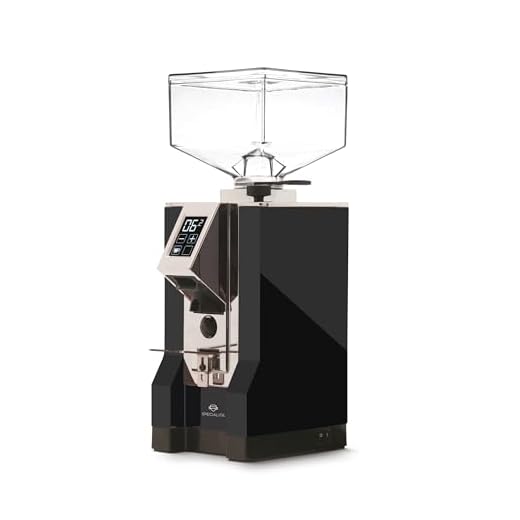
The Eureka Mignon Specialità earns our best-overall position because it combines the features that matter most for everyday home espresso without forcing the user into an enthusiast-heavy single-dose workflow. Its 55mm flat hardened-steel burrs are paired with Eureka’s stepless micrometric adjustment system, giving you continuous control over grind size while dialing in shots.
The workflow is straightforward. Keep your everyday beans in the hopper, program one or two timed doses on the touchscreen and grind directly toward the portafilter. Eureka’s adjustable hands-free fork is designed to support this direct workflow, while its ACE system is intended to reduce clumping and electrostatic effects.
Noise is another reason the Specialità remains attractive for home use. Eureka’s Silent Technology is specifically designed to reduce grinder noise compared with more conventional layouts. That matters in a kitchen where espresso may be prepared early in the morning while other people are still asleep.
The compromise is flexibility when changing beans. A hopper-fed grinder is not as convenient as DF54, DF64 or Philos if you routinely alternate between different coffees. The small stepless adjustment dial also gives excellent fine control but is not as easy to return to a previous distant setting as a clearly numbered high-resolution stepped system.
Best For
Choose the Specialità if you use one primary espresso bean most of the time and want a quiet, compact grinder with fine adjustment and a fast portafilter-oriented workflow.
Pros
✅ Stepless micrometric adjustment
✅ 55mm flat hardened-steel burrs
✅ Two programmable timed doses
✅ Quiet-focused design
✅ Compact 120mm-wide body
Cons
❌ Hopper workflow is less convenient for frequent bean switching
❌ Timed dosing is not the same as weighing the output
❌ Returning between distant grind settings is less convenient than on a numbered stepped dial
Alternative: Choose Eureka Mignon Libra if you like the Mignon hopper workflow but want the grinder to stop according to output weight rather than elapsed grinding time.
Baratza Encore ESP — Best Espresso Grinder for Beginners
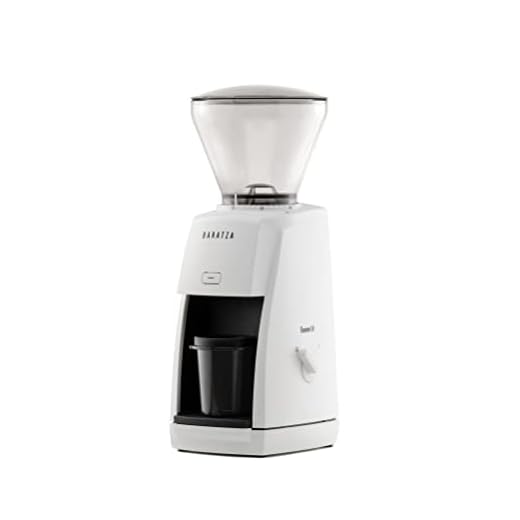
Baratza Encore ESP is one of the easiest ways to move from a general-purpose coffee grinder into serious home espresso grinding without immediately adopting stepless adjustment or a single-dose routine.
Its 40-setting adjustment system is deliberately split into two ranges. Settings 1–20 provide smaller changes intended for espresso dialing, while settings 21–40 make larger changes for filter coffee, French press and cold brew. This gives new espresso users a clearly defined range while keeping the grinder useful outside espresso.
The grinder uses Baratza’s 40mm M2 conical steel burrs and includes a dosing cup. Maintenance is also relatively approachable because the upper burr can be released without turning routine cleaning into a major disassembly project.
The main limitation is the stepped adjustment system. Espresso can occasionally land between two available settings, especially when using a conventional non-pressurized basket and trying to hit a narrow recipe target. In that situation, changing dose or another recipe variable may be necessary instead of making a still-smaller grind adjustment.
Important: The Baratza Encore ESP is not the same grinder as the standard Baratza Encore. The ESP version adds a higher-resolution adjustment range specifically intended to make espresso dialing more practical.
Best For
Choose the Encore ESP if you are buying your first dedicated espresso-capable grinder and want simple numbered settings, broad brewing versatility and accessible maintenance.
Pros
✅ Dedicated high-resolution espresso range
✅ Easy-to-understand numbered adjustment
✅ Useful for espresso and filter coffee
✅ Quick-release burr simplifies maintenance
✅ Accessible entry into serious espresso grinding
Cons
❌ Stepped adjustment offers less continuous freedom than stepless designs
❌ Manual dosing rather than timed or weight-based output
❌ Enthusiasts may eventually want finer workflow control
If you are still choosing the espresso machine itself, see our Easiest Espresso Machines for Beginners guide for approachable machine options.
Alternative: DF54 is the stronger choice if you are comfortable weighing each dose and want stepless adjustment with a single-dose flat-burr workflow.
DF54 — Best Value Single-Dose Espresso Grinder
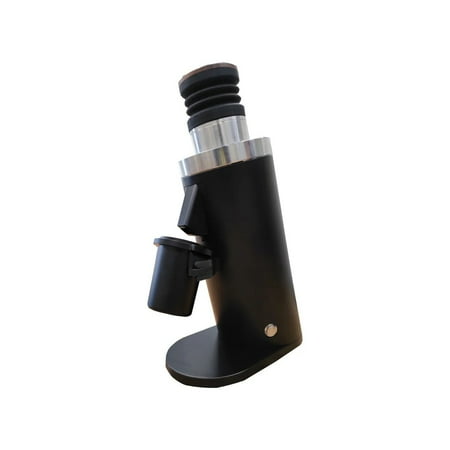
DF54 brings several enthusiast-oriented ideas into a relatively compact and value-focused grinder. It uses 54mm flat stainless-steel burrs, stepless adjustment and a single-dose design instead of a large bean hopper.
The ideal workflow starts by weighing the beans you want for a shot, adding that exact dose to the grinder and grinding it into the supplied cup or portafilter workflow. This makes bean switching easier because there is no large hopper full of one coffee that needs to be emptied first.
The exit chute includes a plasma generator intended to reduce static, while the design is focused on reducing retained grounds. The manufacturer claims retention below 0.1g under its specified setup, but that should be treated as a manufacturer performance claim rather than an independently verified Discompare measurement.
DF54 is especially attractive for buyers who want to experiment with single dosing without immediately moving into a much more expensive premium grinder. The compromise is that the workflow involves more manual preparation than a hopper grinder: you generally weigh every dose yourself and may use the bellows or other chute-clearing actions depending on your routine.
Best For
Choose DF54 if you want stepless espresso adjustment, flat burrs and easy bean switching without paying for a larger premium single-dose platform.
Pros
✅ 54mm flat burrs
✅ Stepless espresso adjustment
✅ Single-dose workflow makes bean switching easier
✅ Ionizer helps manage static
✅ Compact body for an electric flat-burr grinder
Cons
❌ Best workflow requires weighing each dose
❌ Bellows add another interaction to the routine
❌ Smaller aftermarket burr ecosystem than 64mm platforms
Alternative: Baratza Encore ESP is easier for beginners who prefer hopper storage and numbered settings, while DF64 Gen 2 gives enthusiasts a larger upgrade ecosystem.
Eureka Mignon Libra — Best Grind-by-Weight Espresso Grinder
Eureka Mignon Libra keeps the basic convenience of a hopper-fed home grinder but changes the way the dose is controlled. Instead of estimating output from grinding time, its Instant Grind Weighing system measures the coffee delivered into the portafilter and stops when the programmed target is reached.
The espresso version uses 55mm flat hardened-steel burrs and the same stepless micrometric adjustment philosophy that makes Eureka’s Mignon line well suited to dialing in espresso. It also includes Silent Technology and the ACE system for a quieter, cleaner home workflow.
Eureka specifies grind-by-weight consistency of approximately ±0.2g for the system. That figure is a manufacturer specification rather than a Discompare measurement, but the larger point is practical: output weight is being monitored directly instead of being inferred from grinding time.
The Libra makes the most sense for a household that uses the same beans regularly and wants more automation around dosing. If you already pre-weigh every individual bean dose and regularly change coffee, a single-dose grinder such as DF54 or Philos may fit your habits better.
Portafilter → Select target weight → Grind → Automatic stop
Best For
Choose Mignon Libra if you want the speed of a hopper grinder while reducing the need to check every ground-coffee dose on a separate scale.
Pros
✅ Grind-by-weight dosing
✅ 55mm flat hardened-steel burrs
✅ Stepless micrometric adjustment
✅ Quiet-focused design
✅ Fast direct-to-portafilter workflow
Cons
❌ More expensive than conventional timed-dose grinders
❌ Hopper design is less convenient for frequent bean switching
❌ Grind-by-weight adds less value if you already single-dose every shot
Alternative: Eureka Mignon Specialità is the simpler and typically less expensive option if timed dosing is accurate enough for your routine.
DF64 Gen 2 — Best Upgradeable Espresso Grinder
DF64 Gen 2 is compelling not simply because it has 64mm flat burrs, but because 64mm has become a broad enthusiast burr platform. The grinder can be used with its stock burr configuration and later paired with compatible aftermarket options as preferences evolve.
This matters because burr diameter alone does not determine the final espresso. Different burr geometries can emphasize different grinding characteristics, and the ability to change burr sets lets the same grinder platform evolve instead of requiring a complete grinder replacement.
DF64 Gen 2 follows a single-dose workflow: weigh the beans, load the grinder, grind the dose and use the chute-clearing/bellows system as needed. The grinder uses stepless adjustment and is intended to cover espresso through coarser brewing methods.
The trade-off is complexity. Someone who simply wants two similar espresso shots every morning may be better served by a hopper grinder such as the Specialità. DF64 becomes more attractive when experimentation, burr upgrades and bean switching are part of the hobby.
Best For
Choose DF64 Gen 2 if you want an enthusiast single-dose grinder with room to experiment with different 64mm burr configurations over time.
Pros
✅ 64mm flat-burr platform
✅ Large aftermarket burr ecosystem
✅ Stepless adjustment
✅ Single-dose workflow
✅ Strong long-term upgrade flexibility
Cons
❌ Requires more manual dose preparation than a hopper grinder
❌ Burr upgrades can substantially increase total cost
❌ Enthusiast flexibility may be unnecessary for casual espresso drinkers

Alternative: DF54 is the better value choice if you want a single-dose flat-burr workflow without prioritizing the larger 64mm upgrade ecosystem.
Mazzer Philos — Best Premium Single-Dose Espresso Grinder
Mazzer Philos is the premium choice in this guide because its design addresses several small frustrations that enthusiast single-dose users encounter repeatedly: adjustment repeatability, burr access, grind retention and changing between different coffee styles.
The grinder uses 64mm flat stainless-steel burrs and is available with two Mazzer burr profiles, I200D and I189D. Mazzer positions the I200D toward greater clarity and the I189D toward fuller-bodied, more traditional espresso-style extraction. Those are manufacturer characterizations rather than universal flavor guarantees, since coffee, roast level and recipe also matter.
The adjustment system is unusually flexible. Philos can operate in stepped mode, where individual increments correspond to approximately 6 microns of burr movement, or be converted to stepless operation for continuous adjustment. That lets the owner choose between repeatable numbered changes and maximum dialing freedom.
Maintenance is another significant advantage. The grinding chamber can be accessed from the front without conventional tools, and the adjustment system is designed so routine chamber access does not automatically destroy the previous grind setting. For someone who regularly cleans a premium grinder or experiments with burrs, that is more valuable than another headline specification.
The disadvantages are obvious: Philos is expensive, weighs about 12.5kg and is considerably more grinder than a casual beginner needs. Its premium build and flexible design only make sense if espresso preparation is already a serious part of your routine.
Best For
Choose Mazzer Philos if you want a premium single-dose platform with exceptional adjustment flexibility, heavy construction and unusually thoughtful maintenance access.
Pros
✅ 64mm flat stainless-steel burrs
✅ Choice of two Mazzer burr profiles
✅ Convertible stepped or stepless adjustment
✅ 6-micron stepped increments
✅ Tool-free front chamber access while retaining grind setting
Cons
❌ Premium price
❌ Very heavy at roughly 12.5kg
❌ Overkill for a casual beginner or occasional espresso drinker
Alternative: DF64 Gen 2 offers a more accessible entry into a 64mm enthusiast single-dose platform with a particularly broad aftermarket burr ecosystem.
1Zpresso J-Ultra — Best Manual Espresso Grinder
1Zpresso J-Ultra shows why a manual grinder should not automatically be treated as a compromise option. It is designed specifically around espresso-level adjustment and provides approximately 8 microns of movement per click through its external adjustment mechanism.
The grinder uses a 48mm espresso-focused burr and a magnetic catch cup, while its 35–40g capacity is more than sufficient for ordinary single-dose espresso preparation. At roughly 670g, it is dramatically easier to store or travel with than any electric grinder in this guide.
The benefit of manual grinding is simplicity. There is no motor, no electronics and no electric chute system to maintain. You weigh the beans, grind them manually and transfer the grounds for brewing.
The obvious cost is physical effort. Fine espresso grinding requires considerably more work than coarse manual grinding, particularly with dense light-roasted coffee. One or two shots can be perfectly reasonable; preparing several milk drinks back to back is where an electric grinder quickly becomes more practical.
Best For
Choose J-Ultra if you make a small number of espresso shots per day and value compactness, fine adjustment and mechanical simplicity more than motorized speed.
Pros
✅ 8-micron adjustment per click
✅ 48mm espresso-focused burr
✅ Compact and portable
✅ No motor noise
✅ Simple mechanical ownership
Cons
❌ Manual effort is significant at espresso-fine settings
❌ Slow for several consecutive drinks
❌ No automatic dosing or direct motorized portafilter workflow

Alternative: Baratza Encore ESP is the better electric beginner option if you want to remove manual grinding from your daily routine.
Stepped vs Stepless Espresso Grinders
Stepless grinders allow the adjustment mechanism to move continuously instead of forcing the user into fixed numbered positions. For espresso, this can be useful because a very small grind change may noticeably alter shot flow.
Specialità, Libra, DF54 and DF64 Gen 2 use stepless adjustment. Mazzer Philos can be configured in either stepped or stepless mode.
Stepped adjustment has a different advantage: repeatability. A numbered setting is easier to record and return to later. Encore ESP addresses the usual limitation of stepped grinders by dedicating settings 1–20 to smaller espresso-focused increments, while J-Ultra uses very small 8-micron external adjustment clicks.
Key takeaway: Espresso needs sufficiently small grind adjustments. Whether those adjustments come from a stepless system or a well-designed high-resolution stepped system matters more than the label itself.
Flat vs Conical Burr Grinders for Espresso
Most grinders in this guide use flat burrs, while Baratza Encore ESP uses conical burrs and J-Ultra uses an espresso-oriented manual burr design.
Flat and conical burrs can differ in geometry, feeding behavior, speed and particle distribution, but the simple label does not tell you whether the finished grinder will make better espresso. Burr geometry, alignment, motor behavior, adjustment mechanism and the rest of the grinding chamber all influence performance.
That is why buying an espresso grinder solely because it says “flat burr” is not a reliable strategy. A well-designed conical grinder with suitably fine adjustment can be much easier to dial in than a poorly implemented flat-burr grinder.
Do Bigger Burrs Make Better Espresso?
No—not automatically.
Larger burrs can increase grinding throughput and may give manufacturers more room for different burr geometries. They can also matter when many doses need to be ground back to back.
But the 64mm burr diameter of a DF64 or Mazzer Philos does not automatically make it superior to the 55mm Specialità, 54mm DF54 or 40mm Encore ESP for every home user.
For home espresso, the grinder’s adjustment precision, alignment, burr geometry, dosing workflow and repeatability often matter more than comparing diameter alone.
Important: Do not shop for an espresso grinder by burr diameter alone. A larger number is a specification, not a guaranteed ranking of cup quality.
What Grind Setting Should You Use for Espresso?
There is no universal grinder setting for espresso. Setting 10 on one grinder does not correspond to setting 10 on another, and even two units of the same grinder can require slightly different settings depending on calibration.
Beans also change the answer. Roast level, coffee age, dose, basket geometry and your target recipe can all affect the grind setting required for a shot.
A practical starting workflow is:
- Start within the grinder’s espresso range.
- Prepare a consistent dose.
- Pull the shot using your normal recipe.
- Observe how quickly the espresso flows.
- Adjust the grinder in small increments.
- Repeat while keeping other variables as stable as possible.
Shot runs too fast → Grind finer | Shot runs too slow → Grind coarser
Baratza suggests a starting point within Encore ESP’s espresso range in its manual, but even manufacturer recommendations should be treated as starting points rather than universal settings.
What Does Consistent Grind Quality Mean for Espresso?
The phrase consistent grind quality is often used too loosely. No grinder produces particles that are all literally identical in size.
For a home espresso user, consistency is more useful to think about in terms of repeatability:
- Does the grinder respond predictably when you make a small adjustment?
- Can you reproduce a similar dose from one shot to the next?
- Does the workflow minimize random retained coffee from an earlier grind?
- Can you return to a previous recipe with reasonable confidence?
The easier those variables are to control, the easier espresso becomes to troubleshoot.
Does Low Retention Matter for Home Espresso?
Retention describes coffee that remains inside the grinder instead of exiting with the intended dose. Some of that coffee may then appear in a later dose.
Low retention is especially useful if you:
- weigh each dose individually;
- switch between coffees often;
- change between espresso and filter settings;
- want less stale coffee carried into the next shot.
This is why DF54, DF64 and Philos put so much emphasis on single-dose and retention-oriented design.
However, “zero retention” should not be treated as a literal universal guarantee. Real retention can vary with bean type, static, grinder cleanliness and whether bellows, knockers or other clearing techniques are used.
Best Compact Espresso Grinders for Small Kitchens
Counter space matters because an espresso setup already includes the machine, tamper, scale, accessories and often milk equipment.
Eureka Mignon Specialità is particularly narrow at roughly 120mm wide, making it one of the strongest compact electric options for a hopper-based workflow.
DF54 is similarly narrow at roughly 114mm and is a compelling compact single-dose choice.
1Zpresso J-Ultra takes compactness further because it does not need a permanent place on the counter at all. It can be stored in a drawer or cabinet when not in use.
Mazzer Philos is relatively narrow for its capability but is deep and weighs about 12.5kg, so it should be considered a permanent piece of equipment rather than something you routinely move around.
Which Espresso Grinders Are Easiest to Clean?
Cleaning ease depends on how easily you can access the burrs and grind chamber without disrupting calibration.
Mazzer Philos has the most interesting premium maintenance design in this group. Its front grinding chamber can be accessed without conventional tools, and routine access can preserve the previous grind setting.
Baratza Encore ESP is approachable for beginners because its upper burr is designed for quick removal during cleaning and maintenance.
DF54 is also designed for accessible single-dose maintenance, while 1Zpresso J-Ultra avoids the complexity of motors and electronic chute systems altogether.
Manual simplicity does not mean washing the grinder with water. Grinder burrs and internal mechanisms should be cleaned according to the manufacturer’s instructions, normally using dry brushes or appropriate tools unless a specific removable component is explicitly washable.
What New Espresso Grinder Technology Actually Matters?
Not every new grinder feature improves espresso preparation. The useful innovations are generally the ones that reduce a repeatable source of friction.
Grind-by-Weight
Eureka Libra measures ground-coffee output directly instead of estimating dose from grinding time. For repeated daily espresso, that can remove one manual weighing step from the workflow.
Anti-Static Ionization
Grinders such as DF54 and newer single-dose platforms use ionization or similar anti-static systems near the chute to reduce the mess and grounds cling that can occur during grinding.
Low-Retention Architecture
Modern single-dose designs increasingly shape the burr chamber, chute and bean path around getting more of the original dose back out of the grinder.
Convertible Adjustment Systems
Mazzer Philos can move between stepped and stepless operation. This is useful because different users prioritize repeatability and continuous control differently.
More Capable Affordable Grinders
The lower end of the market is also improving. Products such as DF54 and newer all-purpose platforms increasingly bring features such as stepless adjustment or anti-static systems into price ranges where they were previously uncommon.
For a broader look at changing coffee-appliance features, see Coffee Maker Tech: Trending 2026.
Standalone Espresso Grinder vs Built-In Grinder
An espresso machine with an integrated grinder can be convenient because one purchase handles both grinding and brewing. It also uses less counter space than two completely separate appliances.
A standalone grinder, however, gives you more freedom. You can upgrade the grinder independently, choose a more precise adjustment system, switch between single-dose and hopper workflows and keep the espresso machine even if your grinder preferences change.
| Factor | Standalone Grinder | Built-In Grinder |
|---|---|---|
| Upgrade flexibility | Excellent | Limited |
| Counter space | More equipment | More integrated |
| Grinder choice | Very broad | Fixed by machine |
| Maintenance | Separate systems | One integrated appliance, but grinder access varies |
| Best for | Enthusiasts and upgrade flexibility | Convenience and compact setup |
Our Jura ENA 8 vs Breville Barista Pro: Espresso Showdown explores two very different integrated approaches, while our Easiest Espresso Machines for Beginners guide can help if you have not yet chosen the machine itself.
If you already use a Breville machine with an integrated grinder, our How to Clean a Breville Espresso Machine guide also covers grinder-related maintenance alongside the rest of the espresso system.
Do You Need an Espresso-Only Grinder?
Not everyone does.
If espresso is your primary brewing method and you use a conventional single-wall or non-pressurized basket, fine adjustment becomes particularly important. Small grind changes are one of the main tools you use to control shot flow.
If you make filter coffee most of the week and only occasionally prepare espresso, an all-purpose grinder with a sufficiently capable espresso range may be more practical. Encore ESP is a good example because it deliberately separates higher-resolution espresso settings from its broader filter range.
A pressurized basket can also be more forgiving than a conventional espresso basket, reducing the need for extremely fine dialing control.
If dialing espresso sounds like more process than you want every morning, a conventional coffee brewer may be a better fit. Our Best Coffee Makers for Busy Mornings guide focuses instead on speed, programmability and low-effort brewing.
How Much Should You Spend on a Home Espresso Grinder?
A useful rule is to pay first for adjustment precision and workflow, not simply for the largest burr diameter you can afford.
Entry Level
Baratza Encore ESP is a logical starting point if you want an electric grinder with espresso-specific adjustment and straightforward controls.
1Zpresso J-Ultra can deliver fine adjustment at a relatively accessible equipment level if you are willing to supply the motor yourself.
Value Enthusiast
DF54 is particularly attractive if you want to move into stepless flat-burr single dosing without buying a large premium grinder.
Eureka Specialità costs more than beginner grinders but delivers a faster timed-dose household workflow and much finer continuous adjustment.
Premium
Eureka Libra adds grind-by-weight automation, DF64 can become more expensive as aftermarket burrs are added, and Mazzer Philos is a premium machine built for users who already know why they want its adjustment, burr and maintenance features.
Spending more makes sense when it solves a specific workflow problem. Paying for features you do not use rarely makes espresso easier.
How We Chose the Best Home Espresso Grinders
We evaluated these grinders around the requirements that make espresso different from ordinary coffee grinding:
- Adjustment precision: Can the grinder make sufficiently small changes for espresso dialing?
- Repeatability: Can a user reproduce settings and doses with reasonable consistency?
- Dosing workflow: Timed, manual, single-dose or grind-by-weight?
- Retention-oriented design: How does the grinder address coffee remaining in the grind path?
- Burr platform: Burr size, type and upgrade flexibility without assuming bigger automatically means better.
- Bean switching: Is the grinder convenient if you change coffees regularly?
- Cleaning: How easily can routine burr and chamber maintenance be performed?
- Counter space: Does the grinder make sense in a typical home kitchen?
- Noise: Is the design suitable for everyday household use?
- Value: Do the features solve meaningful espresso workflow problems at the product’s market position?
We did not conduct laboratory particle-size analysis, independent retention measurement or blind sensory testing for every grinder in this guide. Where a manufacturer publishes a specific retention, dosing or burr-performance claim, we treat it as a manufacturer claim rather than presenting it as our own measured result.
Best Home Espresso Grinders FAQ
What is the best espresso grinder for home use?
Eureka Mignon Specialità is our best overall choice because it combines stepless adjustment, 55mm flat burrs, programmable timed dosing, quiet-focused operation and a compact everyday espresso workflow. Single-dose users may prefer DF54, DF64 Gen 2 or Mazzer Philos instead.
Do you need a special grinder for espresso?
A grinder designed for fine, repeatable adjustment is strongly recommended for conventional espresso. Espresso reacts to small grind changes, so a grinder that works well for drip coffee may still have adjustment steps that are too large for comfortable dialing.
Is a burr grinder better for espresso?
Yes. Burr grinders provide controlled grind-size adjustment and much more repeatable grinding than blade grinders, making them the appropriate type for dialing in espresso.
Is stepless better than stepped for espresso?
Not automatically. Stepless grinders provide continuous adjustment freedom, while high-resolution stepped grinders make settings easier to record and repeat. The important question is whether the adjustment increments are small enough for espresso.
Are flat burrs better than conical burrs for espresso?
Not inherently. Burr shape, geometry, alignment, motor design and the grinder’s adjustment system all matter. A good conical-burr espresso grinder can be a better choice than a poorly implemented flat-burr grinder.
What grind setting should I use for espresso?
There is no universal espresso setting. Start within your grinder’s recommended espresso range, pull a shot and adjust in small increments. If the shot runs too fast, grind finer; if it runs too slowly, grind coarser while keeping other recipe variables as consistent as possible.
Is a single-dose grinder better for home espresso?
Single dosing is particularly useful if you weigh beans individually, change coffees frequently or want to minimize carryover between doses. A hopper grinder can be faster and simpler if you use the same coffee every day.
How much should I spend on an espresso grinder?
Spend enough to get sufficiently fine adjustment and a workflow you will actually use. Beginners can start with products such as Encore ESP or a capable manual grinder, while higher budgets can buy stepless control, single-dose platforms, grind-by-weight automation or premium maintenance design.
Final Verdict
Eureka Mignon Specialità is our best overall choice for most home espresso users because it balances precise stepless adjustment with a fast hopper-and-timed-dose workflow. It is particularly well suited to households that use the same primary espresso beans every day.
Baratza Encore ESP is the more approachable starting point for beginners because its espresso adjustment range is easy to understand. DF54 is the stronger value choice for someone ready to weigh each dose and adopt single dosing.
Eureka Mignon Libra is the standout if automatic dose weighing matters, while DF64 Gen 2 is more compelling for enthusiasts who expect to experiment with burr upgrades. Mazzer Philos is the premium single-dose choice, particularly for users who value adjustment flexibility and easy chamber access. 1Zpresso J-Ultra remains a serious espresso option for anyone willing to trade electric convenience for compact manual precision.
✓ Best Overall: Eureka Mignon Specialità
✓ Best for Beginners: Baratza Encore ESP
✓ Best Value Single-Dose: DF54
✓ Best Grind-by-Weight: Eureka Mignon Libra
✓ Best Premium: Mazzer Philos
The most useful way to choose is to start with workflow. Use a hopper grinder when speed and repetition matter, choose single dosing when bean switching and retention matter, and consider grind-by-weight when you want to automate dose control. Burr size and technology matter, but only after the grinder fits the way you actually prepare espresso.
Sources
- Eureka — Mignon Specialità official product specifications and support documentation.
- Eureka — Mignon Libra official grind-by-weight product specifications.
- Baratza — Encore ESP official product specifications and operating manual.
- DF64 Coffee — DF54 and DF64 Gen 2 current product specifications and maintenance documentation.
- Mazzer — Philos official product specifications, FAQ and maintenance documentation.
- 1Zpresso — J-Ultra official product specifications and maintenance guidance.
- Whole Latte Love — current espresso-grinder buying and workflow guidance used for competitive context.
- Coffee Chronicler — current grinder reviews and espresso-grinder comparisons used for competitive context.
- CoffeeGeek — current budget coffee-grinder coverage used for market context.
- Serious Eats — current coffee-grinder testing and espresso-grinder guidance used for competitive context.
- Clive Coffee — home espresso grinder buying guidance used for competitive context.
Product Groups: Eureka Mignon Specialità, Baratza Encore ESP, DF54, Eureka Mignon Libra, DF64 Gen 2, Mazzer Philos, 1Zpresso J-Ultra