The best Samsung 55-inch smart TV for most premium buyers is the Samsung S95H OLED. It combines QD-OLED picture quality, strong brightness, excellent reflection handling, wide viewing angles, and a complete gaming feature set with four HDMI 2.1 ports and support for up to 4K at 165Hz. If you want most of Samsung’s OLED gaming experience for less, the S90H OLED is the better value. Buyers who prefer Mini LED over OLED should look at the QN80H Neo QLED.
Choosing a Samsung TV by series name alone is risky. A QLED model is not automatically better than a Crystal UHD TV by the same margin that a Neo QLED is better than a basic QLED, and even Samsung TVs carrying Mini LED branding can perform very differently. Current independent testing shows that Samsung’s premium TVs are among the strongest on the market, while several entry-level models are much harder to recommend at their asking prices.
This guide compares the Samsung 55-inch TVs that make the most sense for different buyers, including movie fans, gamers, bright-room viewers, design-focused homes, and shoppers who simply want the cheapest reasonable Samsung option.
Quick Answer: Which Samsung 55-Inch TV Should You Buy?
Best Overall: Samsung S95H OLED — Samsung’s strongest 55-inch choice for movies, sports, bright rooms, and high-end gaming.
Best Premium Value: Samsung S90H OLED — excellent OLED blacks and 165Hz gaming for less than the S95H.
Best Neo QLED: Samsung QN80H — the better choice if you want Mini LED brightness and local dimming instead of OLED.
Best for Design: Samsung The Frame Pro — buy it for Art Mode, the matte display, wall-friendly styling, and Wireless One Connect.
Budget Samsung Pick: Samsung Q7F — acceptable if you specifically want an inexpensive Samsung, but there are stronger TVs from competing brands at similar prices.
How We Chose the Best Samsung 55-Inch TVs
We compared current Samsung 55-inch TVs using official U.S. specifications, current availability, launch or regular pricing, and independent testing. The main criteria were black levels and contrast, HDR brightness, color performance, reflection handling, viewing angles, motion, gaming capability, HDMI 2.1 support, refresh rate, smart-TV features, and overall value.
Discompare did not conduct its own television laboratory testing for this guide. Manufacturer claims are treated as product specifications rather than independent performance results, while picture-quality judgments are based on reputable third-party testing where available.
We also did not automatically reward a newer or more expensive model. Samsung’s current lineup contains several TVs with attractive technology labels that do not perform well enough to justify a recommendation.
Best Samsung 55-Inch TVs at a Glance
| Model | Display Type | Best For | Launch/List Price | Refresh Rate | Gaming | Main Drawback |
|---|---|---|---|---|---|---|
| Samsung S95H | QD-OLED | Best overall | $2,499.99 launch | Up to 165Hz | 4 HDMI 2.1, VRR, 4K/165Hz | High price; no Dolby Vision |
| Samsung S90H | WOLED at 55 inches in North America | Premium value and gaming | $1,999.99 launch | Up to 165Hz | 4 HDMI 2.1, VRR, 4K/165Hz | Less bright and colorful than S95H |
| Samsung QN80H | Neo QLED / Mini LED | Best non-OLED | $1,299.99 launch | Up to 144Hz at 4K | 4 HDMI 2.1, VRR | Blooming and narrow viewing angle |
| The Frame Pro 2026 | Neo QLED lifestyle TV | Interior design and Art Mode | $1,499.99 launch | High-refresh gaming support varies by mode | Gaming support included | Picture quality trails similarly priced conventional TVs |
| Samsung Q7F | QLED | Budget Samsung buyers | $529.99 list price | 60Hz | No HDMI 2.1 or VRR | Weak HDR, brightness, and gaming value |
Current Prices for Samsung 55-Inch TVs
TV prices change frequently throughout the year, so the live offers below are more useful than temporary sale prices quoted in the article.
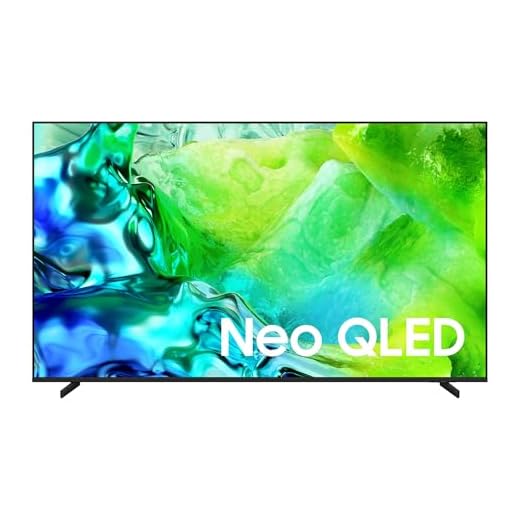

1. Samsung S95H OLED — Best Overall
Best for: buyers who want Samsung’s best 55-inch picture quality without compromising gaming capability.
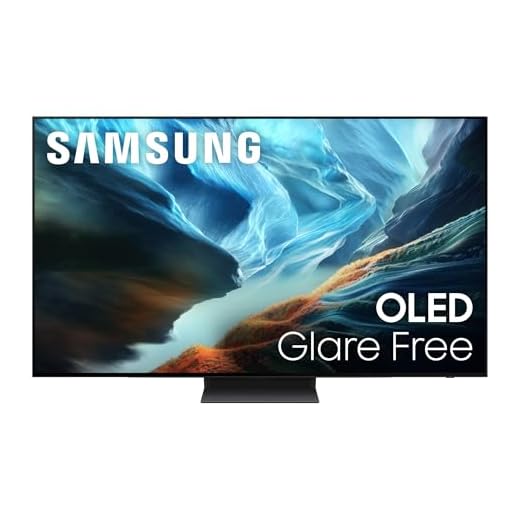
The Samsung S95H is the strongest 55-inch TV in Samsung’s current lineup. The 55-inch model uses a QD-OLED panel, combining self-emissive OLED pixels with strong color performance. That means true pixel-level blacks without the blooming around subtitles and bright objects that even good Mini LED TVs can produce.
The S95H also addresses one of OLED’s traditional weaknesses: bright-room usability. Samsung uses its Glare Free treatment on the panel, while independent testing finds the TV bright enough to perform unusually well in rooms with substantial ambient light. The trade-off is that the matte finish can make blacks appear somewhat raised when strong room lighting falls directly on the screen.
Gaming is another major strength. The TV has four HDMI 2.1 ports, VRR, and support for up to 4K at 165Hz. That gives console owners enough bandwidth for current-generation systems while also making the S95H appealing to PC gamers with high-end graphics hardware.
The main limitation for movie enthusiasts is Samsung’s continuing lack of Dolby Vision. The S95H supports Samsung’s HDR10+ ecosystem instead, so buyers with a large Dolby Vision-focused streaming or UHD Blu-ray library should factor that compatibility difference into the decision.
Pros
✅ Excellent QD-OLED black levels and color performance
✅ Strong brightness and reflection handling
✅ Four HDMI 2.1 ports
✅ Up to 4K at 165Hz with VRR
Cons
❌ $2,499.99 launch price
❌ No Dolby Vision
❌ Many buyers will not need enough of its premium capabilities to justify the price
Who should skip it: buyers who mainly stream ordinary TV shows and do not need flagship HDR or gaming performance.
Alternative: Samsung S90H if you want OLED and high-refresh gaming for less.
2. Samsung S90H OLED — Best Premium Value and Gaming Pick
Best for: gamers and movie watchers who want a premium Samsung OLED without paying S95H pricing.
The Samsung S90H sits directly below the S95H and is the more rational premium purchase for many buyers. Its 55-inch North American version uses a WOLED panel rather than the QD-OLED panel found in the S95H, but it still delivers the central advantage of OLED: each pixel can turn itself off independently for deep blacks without traditional backlight blooming.
The S90H also inherits Samsung’s Glare Free treatment and NQ4 AI Gen3 processor. It is not as bright or as capable of producing highly saturated bright colors as the S95H, but the difference becomes more difficult to justify when current retailer discounts widen the price gap.
Gaming capability is particularly strong. The S90H has four HDMI 2.1 ports, VRR, and support for up to 4K at 165Hz. That makes it one of the better Samsung options for someone connecting a PS5, Xbox Series X, gaming PC, soundbar, and additional HDMI devices without immediately running out of high-bandwidth connections.
Like every other current Samsung TV, it does not support Dolby Vision.
Pros
✅ OLED black levels
✅ Excellent gaming feature set
✅ Four HDMI 2.1 ports and VRR
✅ Lower launch price than S95H
Cons
❌ Lower brightness and color volume than S95H
❌ No Dolby Vision
❌ Still expensive compared with strong OLED competitors from other brands
Who should skip it: shoppers who primarily watch in bright rooms and are willing to pay more for the stronger S95H, or buyers who do not need OLED.
Alternative: QN80H if Mini LED brightness and LCD ownership characteristics are more appealing.
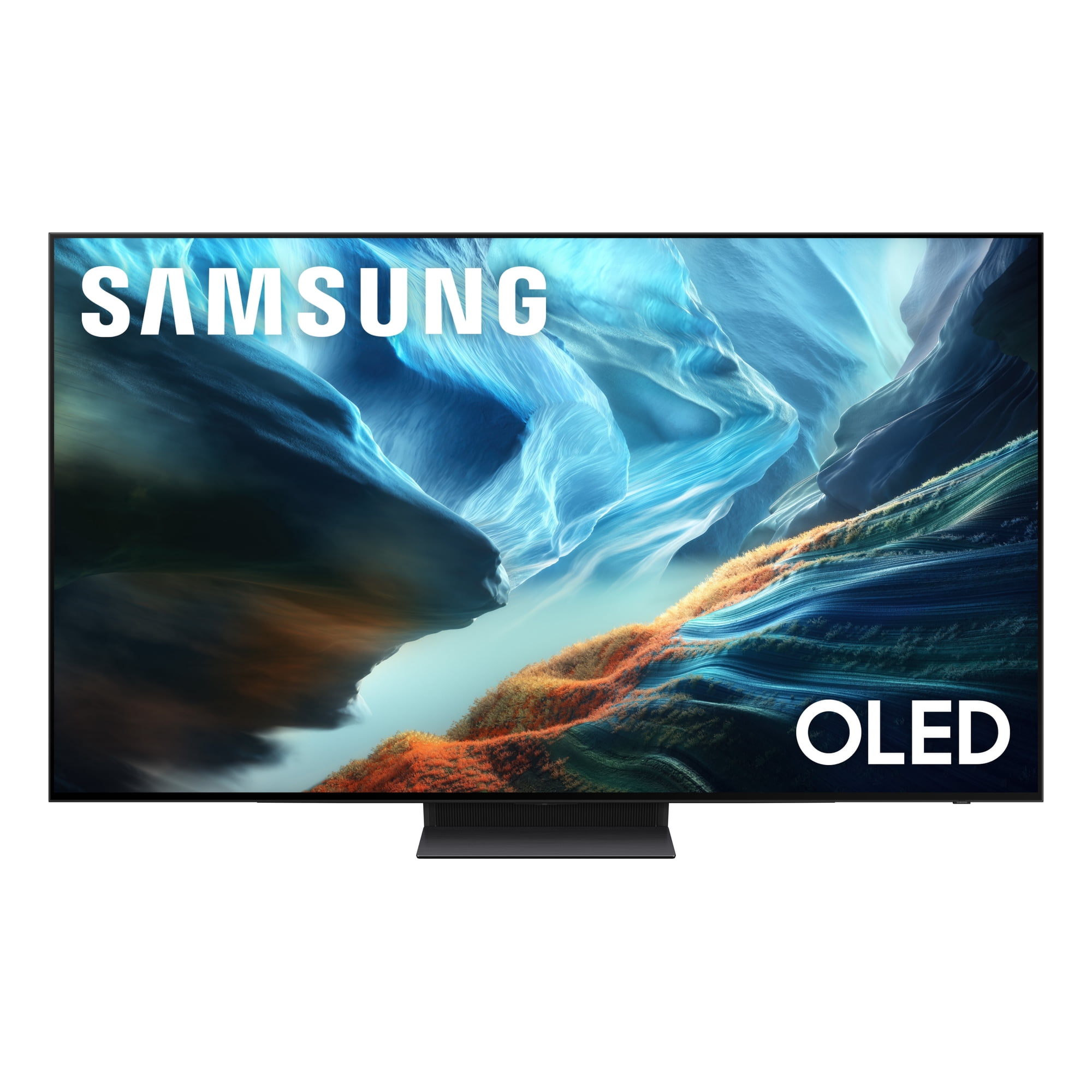
A 55" OLED 4K TV that combines glare-reducing optics with self-illuminating pixels for deep contrast and accurate color, plus high-refresh-rate gaming features.
3. Samsung QN80H Neo QLED — Best Non-OLED Samsung 55-Inch TV
Best for: buyers who want strong brightness, local dimming, and modern gaming features without moving to OLED.
The QN80H is the Samsung 55-inch Neo QLED that makes the most sense for buyers who specifically prefer an LCD-based television. It uses Quantum Mini LED Full Array backlighting and Samsung’s NQ4 AI Gen2 processor, with local dimming designed to improve black levels and contrast compared with basic edge-lit Samsung models.
Independent testing finds the QN80H capable of good contrast and high peak brightness, making it well suited to mixed-use living rooms. It will not produce the perfect black levels of an OLED because LCD backlighting can create halos around bright objects against dark backgrounds, but it avoids the need to choose OLED in the first place.
Gaming support is unusually complete for this price class. All four HDMI ports support HDMI 2.1 bandwidth, VRR is included, and the TV supports up to 4K at 144Hz. Samsung also offers a refresh-rate boost mode capable of reaching 240Hz when resolution is reduced to 1080p.
The QN80H’s biggest weaknesses are off-axis viewing and reflection handling. If your seating spreads far across a large room, the S95H or S90H is a better fit because OLED maintains image quality more consistently from the side.
Pros
✅ Good contrast and high brightness
✅ Four HDMI 2.1 ports
✅ 4K up to 144Hz with VRR
✅ Strong alternative for buyers who do not want OLED
Cons
❌ Blooming can appear around bright objects
❌ Narrower viewing angle than OLED
❌ No Dolby Vision
Who should skip it: movie-first buyers who can afford OLED and households with wide seating arrangements.
Alternative: S90H if you prefer OLED blacks and wider viewing angles.
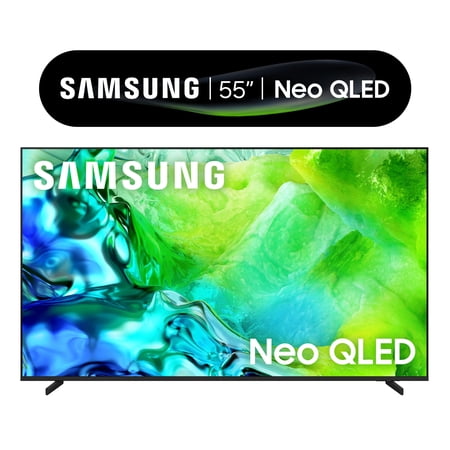
- Quantum Dot color that stays bold even in bright scenes
- Mini‑LED backlighting for precise brightness and improved contrast
- Brilliant 4K detail for sharper, more lifelike images
- AI‑powered processor that upscales low‑resolution content to look clearer and more vibrant
4. Samsung The Frame Pro 2026 — Best for Design and Art Mode
Best for: rooms where the television’s appearance while switched off matters almost as much as its picture quality.
The Frame Pro is not a conventional value recommendation. At a $1,499.99 launch price for the 55-inch model, there are better Samsung TVs if picture quality is the only priority. Its appeal is instead built around Art Mode, a matte Glare Free screen, a wall-friendly frame design, customizable appearance, and Samsung’s Wireless One Connect system.
That allows the TV to function more like a framed display when it is not showing movies or television. The Art Store provides access to digital artwork, although some content and services may require a subscription.
The 2026 Frame Pro moves further into Samsung’s Neo QLED family and uses the NQ4 AI Gen3 processor. Even so, independent testing finds that its local dimming does relatively little to improve black levels compared with stronger conventional televisions. The QN80H is therefore the better television for most people spending similar money.
The Frame Pro only makes sense when the design itself is part of what you are buying.
Pros
✅ Art Mode and Art Store ecosystem
✅ Matte Glare Free display
✅ Attractive wall-focused design
✅ Wireless One Connect reduces visible cabling around the TV
Cons
❌ High price for its picture performance
❌ Black levels trail Samsung’s OLED models
❌ Some Art Store content requires an additional subscription
Who should skip it: anyone prioritizing maximum picture quality per dollar.
Alternative: QN80H for a more performance-focused Samsung LCD TV.
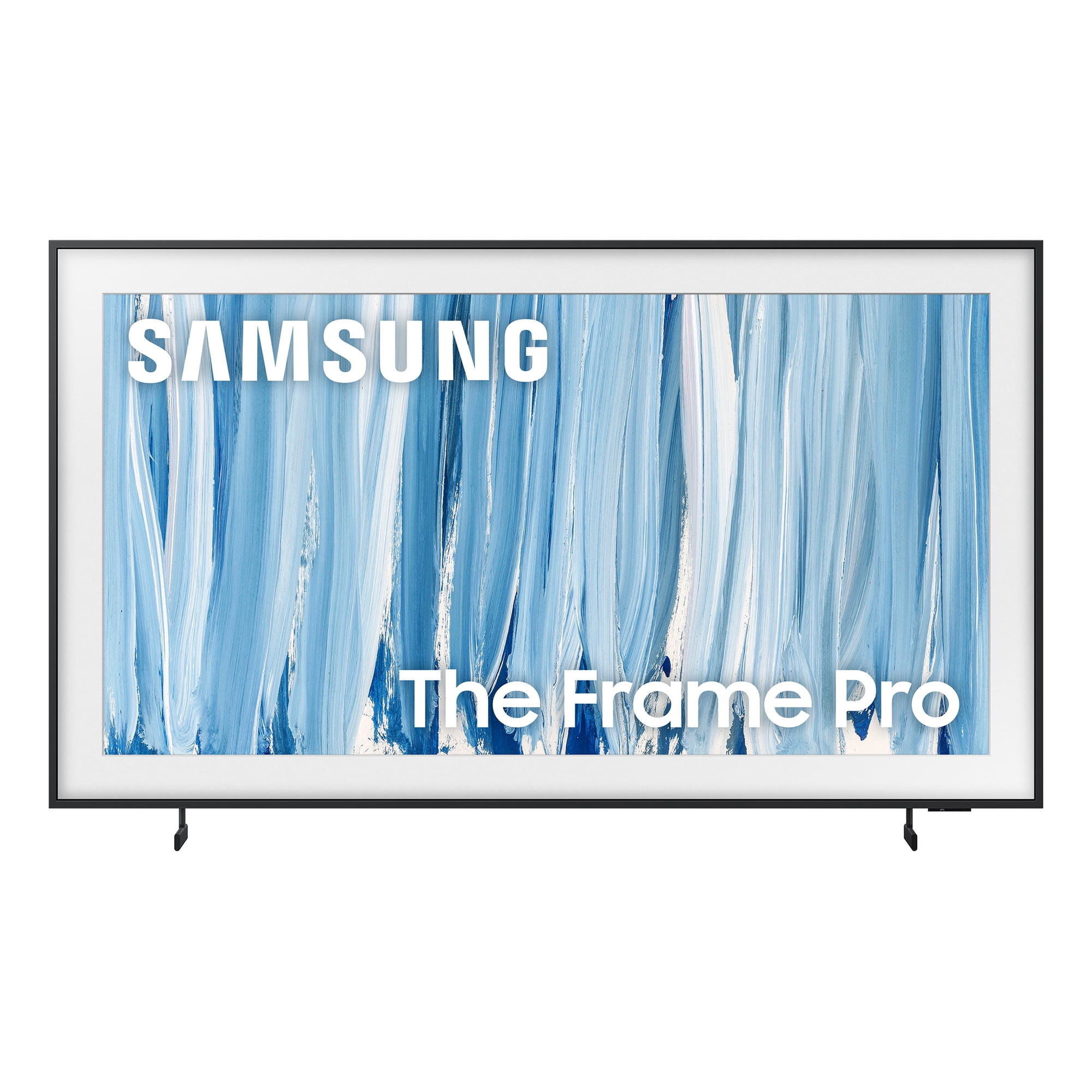
A premium Art TV that blends gallery-quality display and home entertainment — designed for art and movie lovers.
Key points
- Modern, slim-bezel frame with a matte screen for a true gallery look
- Wireless connectivity for a clutter-free setup
- Curated selection of world-renowned artwork to display when not watching TV
- Balances showpiece aesthetics with high-end entertainment performance
Use it as both a centerpiece art display and a high-quality TV for films and media.
5. Samsung Q7F — Budget Samsung Pick With Important Caveats
Best for: shoppers who specifically want a Samsung-branded 55-inch television at a lower price.
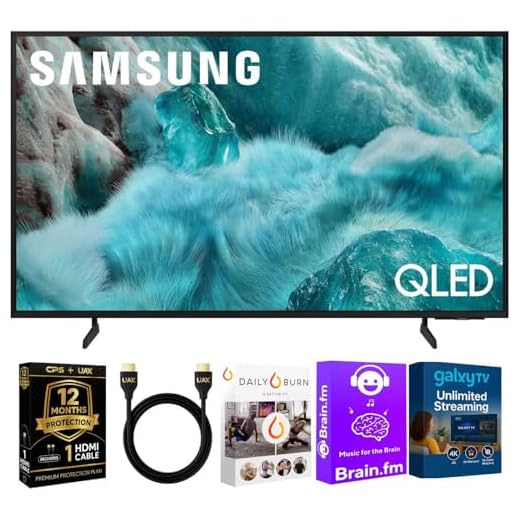
The Q7F is included because some buyers want the Samsung ecosystem and brand at the lowest reasonable cost. It should not be confused with Samsung’s premium QLED or Neo QLED models simply because the product name contains QLED.
The 55-inch Q7F is a 60Hz television with Samsung’s Q4 AI Processor and Quantum HDR. It does not have local dimming, HDMI 2.1, or VRR. That makes it unsuitable for buyers expecting premium HDR or modern high-refresh gaming.
Independent testing also finds the Q7F relatively dim in both SDR and HDR, with weak black levels and limited reflection handling. Those shortcomings are important because similarly priced competitors from brands such as TCL and Hisense can offer stronger Mini LED backlighting, higher refresh rates, or better HDR performance.
If you are determined to stay with Samsung, the Q7F is the budget model we would consider before dropping further into the lineup. If brand loyalty is not important, compare it against the wider television market before buying.
Pros
✅ Much lower price than premium Samsung models
✅ Familiar Samsung Tizen ecosystem
✅ Quantum-dot color technology
Cons
❌ Only 60Hz
❌ No HDMI 2.1 or VRR
❌ Weak HDR brightness and black levels
❌ Stronger value can often be found outside Samsung
Who should skip it: gamers, home-theater buyers, bright-room viewers, and anyone open to competing brands.
Alternative: spend more on QN80H or compare similarly priced non-Samsung TVs.

A 55‑inch QLED 4K smart TV featuring Samsung’s core image and motion technologies designed to deliver sharper upscaling, richer color and improved motion clarity.
- Q4 AI Processor — AI‑driven processing for optimized picture and upscaling to 4K.
- Motion Xcelerator — Reduces blur and judder for smoother fast‑moving scenes.
- Quantum HDR — Expands dynamic range and color detail for deeper contrast and more vivid highlights.
Samsung 55-Inch TVs We Would Skip
Samsung QN70H: the Neo QLED branding sounds promising, but current independent testing finds poor contrast, ineffective local dimming, and a weaker gaming feature set than the QN80H. Moving up to the QN80H is a much more meaningful upgrade than the model names suggest.
Samsung M80H: this 2026 Mini LED model also looks stronger on a specification sheet than in independent testing. The absence of effective local dimming substantially limits the reason to pay extra for Mini LED branding.
Samsung U8000H: this is Samsung’s inexpensive Crystal UHD option. It can work as a basic secondary-room television, but low brightness, limited HDR performance, and a basic gaming feature set make it difficult to recommend as the centerpiece of a living room.
Samsung R85H Micro RGB: Samsung’s new Micro RGB technology is interesting, particularly for color reproduction, but the 55-inch R85H is a first-generation premium product with a high price and independent-test weaknesses that make mature OLED alternatives easier to recommend today.
Samsung Q8F 2025: higher refresh-rate marketing makes it look more attractive than the Q7F, but current testing identifies enough contrast, brightness, and motion weaknesses that we would either spend more for QN80H or shop outside Samsung.
Samsung OLED vs Neo QLED vs QLED vs Crystal UHD
Samsung’s product names describe very different display technologies. Understanding those technologies is more useful than simply moving upward through model numbers.
| Technology | Best For | Main Strength | Main Weakness |
|---|---|---|---|
| OLED | Movies, gaming, wide seating | Pixel-level blacks, fast response, wide viewing angle | Higher price; OLED ownership considerations |
| Neo QLED | Bright mixed-use rooms | Mini LED brightness and local dimming | Blooming and viewing-angle limitations vary by model |
| QLED | Lower-cost Samsung buyers | Quantum-dot color | Backlight and panel quality vary widely |
| Crystal UHD | Basic TV viewing | Low purchase price | Limited HDR and gaming performance |
| Micro RGB | Early adopters seeking premium LCD color | Strong color-volume potential | High price and first-generation compromises |
What Samsung Doesn’t Tell You Clearly in the Model Name
A Samsung model name can tell you the series, but it does not tell you whether that television is good value.
QLED refers to quantum-dot technology, not a guaranteed performance tier. A basic Q7F and a much more expensive Samsung television can both use quantum dots while delivering dramatically different brightness, contrast, motion, and gaming performance.
Neo QLED generally indicates Samsung’s Mini LED-based premium LCD range, but even within that family local-dimming performance and gaming capabilities can differ significantly.
Mini LED describes the backlight technology. It does not guarantee excellent local dimming by itself. A TV still needs effective control algorithms, enough useful dimming capability, and a good LCD panel to convert small LEDs into better real-world contrast.
The exact U.S. model code also matters. Different sizes or regions can occasionally use different panel technologies. The 55-inch S90H sold in North America, for example, uses WOLED rather than assuming every S90H is identical to Samsung’s QD-OLED flagship.
Which Samsung 55-Inch TV Is Best for Gaming?
The S90H is the gaming sweet spot for most Samsung buyers. It combines OLED response times with four HDMI 2.1 ports, VRR, and support for up to 4K at 165Hz while costing less than S95H.
S95H is better if you also want Samsung’s highest-end picture performance, especially stronger brightness and color volume. For a high-end gaming PC connected alongside a PS5 or Xbox Series X, either model provides a much stronger platform than Samsung’s budget QLED range.
QN80H is the best gaming choice if you specifically prefer LCD/Mini LED. It supports HDMI 2.1 on all four ports, VRR, and up to 4K at 144Hz, with an additional mode that can trade resolution for a refresh rate up to 240Hz at 1080p.
Q7F is a different class entirely. It is limited to 60Hz and lacks HDMI 2.1 and VRR, so it should not be bought as a modern high-refresh gaming TV.
Gaming recommendation: Buy S90H for the best balance of OLED performance and price. Move to S95H for flagship picture quality, or choose QN80H if you prefer a Mini LED television.
What About Dolby Vision?
Current Samsung TVs do not support Dolby Vision. Samsung instead supports HDR10, HDR10+, and related versions of its HDR ecosystem.
This does not mean Samsung TVs cannot display high-quality HDR. S95H in particular has enough brightness, color performance, and contrast to produce excellent HDR images. The compatibility difference matters because many streaming services, discs, and competing television brands support Dolby Vision.
If Dolby Vision is an important requirement for your home-theater setup, Samsung should not be your default choice. If it is not, picture quality, price, HDR10+ support, gaming capability, and the rest of the television may matter more.
One UI Tizen, Apps and Software Support
Samsung’s current smart TVs run One UI Tizen. The platform provides access to major streaming apps, Samsung TV Plus, SmartThings integration, cloud-gaming features through Samsung Gaming Hub where available, AirPlay support on compatible models, and Samsung’s wider connected-device ecosystem.
Samsung says its 2026 television range supports up to seven years of Tizen OS updates. That is more concrete than simply describing a TV as “future-proof,” although it should not be interpreted as a promise that every future software feature will work on every model. Hardware requirements can limit later features.
A Samsung Account may also be required for network-based smart services and some connected features.
Is 55 Inches the Right TV Size?
A 55-inch television remains a good choice for many apartments, bedrooms, smaller living rooms, and moderate viewing distances, but screen size should be selected around the room rather than around what is cheapest.
Modern 4K resolution allows viewers to sit relatively close to a 55-inch screen without seeing individual pixels in normal content. That means a 55-inch television can feel smaller than expected if you sit far across a large room.
Before buying, check:
- the distance between the screen and main seating position;
- the width of your TV stand;
- the position of the TV’s feet or pedestal;
- wall-mount compatibility;
- speaker or soundbar clearance;
- whether moving to 65 inches would materially improve immersion.
If your room supports a larger screen, compare Samsung against other sizes and brands in the TV and home entertainment selection before committing to 55 inches.
What to Check Before Buying a Samsung 55-Inch Smart TV
Room Brightness
Bright rooms need strong screen brightness and effective reflection handling. S95H is unusually capable for an OLED because of its brightness and matte treatment. QN80H also produces strong brightness but has less impressive reflection handling than Samsung’s flagship OLED.
Viewing Angle
OLED is usually the safer choice for wide seating. S95H and S90H maintain their image better from the side, while QN80H loses more image quality as you move off-axis.
Movies vs Gaming
Movie viewers should prioritize black levels, HDR quality, color, and format support. Gamers should add refresh rate, HDMI 2.1 bandwidth, VRR, input lag, and motion response to that list.
HDMI Requirements
Count your devices before buying. A console, gaming PC, soundbar, streaming box, and disc player can quickly use several ports. Premium Samsung TVs are particularly attractive for gaming setups because multiple HDMI ports support high-bandwidth features rather than limiting them to one or two inputs.
Soundbar and eARC
If you plan to use a soundbar or AV receiver, confirm which HDMI input supports eARC and leave that port available when planning the rest of your connections.
Wall Mount and Stand Width
Do not assume every 55-inch television uses identical stand spacing or wall hardware. Verify the exact model’s dimensions, VESA pattern, weight, and stand configuration before ordering furniture or a mount.
HDR Format Support
Samsung does not support Dolby Vision. If that format is essential to your movie setup, compare Samsung with other manufacturers before buying.
Price Against Other Brands
This is particularly important below the QN80H level. Samsung’s premium TVs justify themselves through picture quality and features, but the company’s entry-level models often compete against aggressively priced Mini LED and high-refresh TVs from other brands.
Frequently Asked Questions
What is the best Samsung 55-inch smart TV?
Samsung S95H is our best overall 55-inch Samsung TV because it combines QD-OLED picture quality, high brightness, excellent reflection handling, wide viewing angles, four HDMI 2.1 ports, VRR, and support for up to 4K at 165Hz.
Is Samsung OLED better than Neo QLED?
OLED is generally better for perfect blacks, viewing angles, and pixel response, while Neo QLED can be attractive for buyers who prefer a high-brightness Mini LED LCD. The specific models still matter: S95H and S90H are stronger overall than QN80H, but QN80H remains a good non-OLED alternative.
Is the Samsung S95H worth more than the S90H?
S95H is worth paying more for if you want Samsung’s highest brightness, richer bright colors, and flagship picture performance. S90H is the better value for many buyers because it keeps OLED blacks, four HDMI 2.1 ports, VRR, and 165Hz gaming at a lower price.
Which Samsung 55-inch TV is best for gaming?
Samsung S90H is our gaming value pick because it supports up to 4K at 165Hz, VRR, and HDMI 2.1 on all four ports while costing less than S95H. S95H is better if you also want the strongest overall picture quality.
Do Samsung TVs support Dolby Vision?
No. Current Samsung TVs support HDR10 and HDR10+ rather than Dolby Vision. That compatibility difference is worth considering if Dolby Vision is important to your streaming or UHD Blu-ray setup.
How long does Samsung support its smart TVs?
Samsung says its 2026 TV lineup supports up to seven years of Tizen OS updates. Future features can still depend on the hardware capabilities of individual models.
Is a 55-inch TV big enough for a living room?
A 55-inch television is large enough for many small and medium living rooms, but viewing distance and room layout matter. If your main seating is far from the screen, a 65-inch model may provide a noticeably more immersive image.
Final Verdict: Which Samsung 55-Inch TV Should You Buy?
Samsung S95H is the best 55-inch Samsung TV if picture quality is the priority. Its combination of QD-OLED blacks, strong brightness, vibrant color, excellent reflection handling, wide viewing angles, and 165Hz gaming makes it the most complete model in the current range.
Samsung S90H is the smarter premium purchase for many buyers. You give up some brightness and color performance, but you keep OLED blacks, four HDMI 2.1 ports, VRR, and 165Hz support at a lower starting price.
QN80H is the best option if you specifically want Neo QLED/Mini LED rather than OLED. The Frame Pro is worth considering only when design and Art Mode are central to the purchase, while Q7F should be treated as a budget Samsung choice rather than a best-in-class budget television.
Best Overall: Samsung S95H OLED
Best Premium Value: Samsung S90H OLED
Best Neo QLED: Samsung QN80H
Best for Design: Samsung The Frame Pro 2026
Budget Samsung Pick: Samsung Q7F
Sources
- Samsung — 2026 OLED TV lineup, S95H and S90H specifications and pricing — 2026
- Samsung — 2026 Neo QLED lineup and QN80H specifications — 2026
- Samsung — 2026 The Frame Pro specifications and pricing — 2026
- RTINGS — Samsung S95H, S90H, QN80H and Q7F independent television testing — 2025–2026
- Samsung — One UI Tizen and seven-year OS update policy — 2026
Product Groups: Samsung S95H 55-Inch OLED TV, Samsung S90H 55-Inch OLED TV, Samsung QN80H 55-Inch Neo QLED TV, Samsung The Frame Pro 55-Inch 2026, Samsung Q7F 55-Inch QLED TV