The Hampton Bay 48,000 BTU Stainless Steel Patio Heater is our best patio heater for most homes because it combines strong propane heat, straightforward controls, wheels for repositioning and a much lower cost than premium outdoor-heating systems. It is a practical choice for patios and outdoor dining areas where you want substantial warmth without permanent electrical installation.
Different spaces need different solutions, though. The Solo Stove Tower produces far more heat for large winter gatherings, while the Bromic Tungsten Smart-Heat Electric 4000W is a cleaner permanent option for a professionally designed patio. The Dr Infrared Heater DR-238 brings plug-in infrared heating to smaller covered seating areas, and the compact Cuisinart COH-500P makes more sense when you only need to warm people around an outdoor table.
The most important decision is not simply which heater has the biggest number on the specification sheet. Wind, seating distance, patio exposure, fuel availability, mounting options and required safety clearances all affect how useful an outdoor heater will feel on a cold evening.
Quick Answer: Best Patio Heaters for Winter Evenings
Best Overall: Hampton Bay 48,000 BTU Stainless Steel Patio Heater — strong propane output, wheels and adjustable heat make it the most practical choice for many patios.
Best for Maximum Heat: Solo Stove Tower — a pellet-fired design rated at more than 72,000 BTU with a 10-foot heat radius for larger outdoor gatherings.
Best Premium Electric: Bromic Tungsten Smart-Heat Electric 4000W — directional infrared heat and permanent wall or ceiling mounting for polished outdoor living spaces.
Best Affordable Electric: Dr Infrared Heater DR-238 — a 120V plug-in heater with three power levels, remote control and wall or ceiling mounting.
Best Tabletop Heater: Cuisinart COH-500P — an 11,000 BTU propane heater designed to warm people seated around a small outdoor table.
How We Chose the Best Patio Heaters
We compared current U.S. patio heaters by heating performance, fuel type, usable coverage, portability, installation requirements, controls, safety features, weather resistance and value. We deliberately selected different heater types instead of filling the list with several nearly identical mushroom-style propane models.
Independent outdoor-heater testing was also important because claimed heating areas do not tell the full story. Wind, ambient temperature and seating position can dramatically affect how warm a heater feels. Popular Mechanics tested several leading patio heaters outdoors and evaluated heat performance, setup, portability and build quality, while manufacturer specifications were used for electrical requirements, output, mounting and safety features.
Discompare did not conduct hands-on testing for this guide. Outdoor heating also involves fire, fuel and electrical hazards, so the product manual and local installation requirements take priority over general buying advice.
Best Patio Heaters Compared
| Patio Heater | Best For | Fuel | Output | Coverage | Installation | Main Trade-Off |
|---|---|---|---|---|---|---|
| Hampton Bay NCZH-G-SS | Most patios | Propane | 48,000 BTU | Up to 200 sq. ft. claimed | Freestanding | Needs propane and open-air ventilation |
| Solo Stove Tower | Large winter gatherings | Wood pellets | 72,000+ BTU | 10-ft heat radius claimed | Freestanding | Heavy, expensive and requires pellet/ash management |
| Bromic Tungsten 4000W | Permanent premium patios | Electric | 4,000W | Up to about 130 sq. ft. | Wall / ceiling / recessed | 240V installation and higher upfront cost |
| Dr Infrared DR-238 | Small covered heating zones | Electric | 900 / 1200 / 1500W | Focused zone heating | 120V plug-in, wall / ceiling mount | Less powerful in exposed outdoor spaces |
| Cuisinart COH-500P | Outdoor dining tables | Propane | 11,000 BTU | Up to 30 sq. ft. claimed | Tabletop | Only heats a small area around the table |
Compare Current Patio Heater Prices
Patio heater prices change seasonally, particularly when retailers clear outdoor inventory. Compare live offers for the exact model rather than choosing by a temporary discount alone, and remember to include propane tanks, pellets, electrical installation or controllers when comparing total ownership cost.


1. Hampton Bay 48,000 BTU Stainless Steel Patio Heater — Best Overall
Best for: medium to large patios where you want substantial heat, easy repositioning and straightforward propane operation.
Hampton Bay’s NCZH-G-SS is the patio heater we would recommend to the broadest range of buyers. Its 48,000 BTU burner puts it in the familiar full-size commercial-style heater class used on restaurant patios, while a control valve lets you reduce output when maximum heat is unnecessary.
The reflector at the top directs warmth outward and downward toward people around the heater. Home Depot lists heating coverage up to 200 square feet, although real outdoor comfort will depend heavily on wind and how close seating is to the unit.
Portability is another advantage. The freestanding design includes wheels, so you can move the heater closer to a dining or seating area before use instead of committing to a permanent installation. A standard propane cylinder is stored inside the base, keeping the heater independent of electrical outlets.
The trade-off is the fuel itself. Propane must be replaced or refilled, and combustion heaters require proper outdoor ventilation and model-specific clearances. They are also more sensitive to wind than focused infrared heaters.
Pros
✅ Strong 48,000 BTU heat output
✅ Adjustable heat control
✅ Wheels make repositioning easier
✅ No permanent electrical installation
✅ Strong value compared with premium patio-heating systems
Cons
❌ Propane cylinder is a recurring cost
❌ Heat performance drops in strong wind
❌ Tall freestanding design occupies patio floor space
❌ Fuel-burning heater requires outdoor ventilation and clearance from combustibles
Who should skip it: buyers with a very small balcony, people who do not want to manage propane, or anyone seeking a permanently mounted heater.
Alternative: Dr Infrared DR-238 for a smaller plug-in electric zone, or Solo Stove Tower if maximum heat matters more than price and maintenance.
2. Solo Stove Tower Patio Heater — Best for Maximum Heat
Best for: larger open patios, backyard gatherings and buyers who want powerful radiant warmth plus visible flame ambience.
The Solo Stove Tower sits at the opposite end of the market from a small electric heater. Solo Stove rates the current pellet-fueled Tower at more than 72,000 BTU and a 10-foot heat radius, making it the most powerful heater in our main selection.
Instead of propane, it uses wood fuel pellets stored in a gravity-fed hopper. The hopper holds up to 25 pounds of pellets and can provide up to three hours of continuous heat. Two feed settings let you slow the burn in milder conditions or increase it when maximum warmth is the priority.
Another advantage is independence from utilities. The Tower does not need electricity or a gas line. Integrated wheels and handles improve mobility, although at roughly 104 pounds it is still much heavier than a conventional propane mushroom heater.
The price and maintenance prevent it from taking our overall spot. Pellets must be stored somewhere dry, and ash needs to be removed after use. It also uses an actual combustion chamber, so placement and combustible clearances are more important than with a small electric infrared unit.
Pros
✅ More than 72,000 BTU rated output
✅ Wide 10-foot heat radius
✅ 25-pound self-feeding pellet hopper
✅ No electricity or propane cylinder required
✅ Real-flame ambience suits winter gatherings
Cons
❌ Significantly more expensive than basic propane heaters
❌ Heavy at roughly 104 pounds
❌ Requires pellet storage and ash cleanup
❌ Combustion and exposed heat demand careful outdoor placement
Who should skip it: apartment or balcony users, buyers who want maintenance-free heat, or anyone with limited safe clearance around the patio.
Alternative: Hampton Bay provides substantial propane heat with less expense and simpler cleanup.
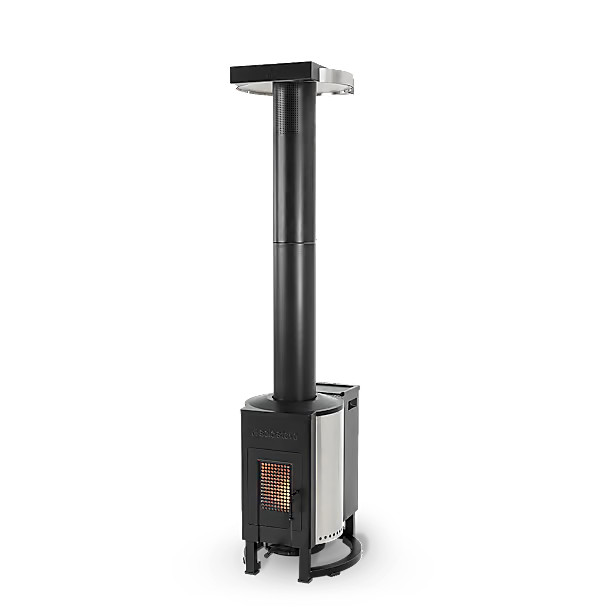
Upgrade your outdoor evenings with nearly double the heat output of standard propane heaters and a 10-foot-wide radiant heat range. The self-feeding wood-pellet fire delivers effortless, long-lasting warmth—new and ready for pickup in Brooklyn, NYC. Reserve yours today and bring reliable patio comfort home tonight.
3. Bromic Tungsten Smart-Heat Electric 4000W — Best Premium Electric Patio Heater
Best for: permanent covered patios, outdoor kitchens and professionally designed seating areas where floor space and appearance matter.
Bromic’s Tungsten Smart-Heat Electric is a very different proposition from portable patio heaters. The 4000W BH0420032 is designed to mount on a wall or ceiling, directing infrared energy toward a defined seating or dining zone without placing a tower heater in the middle of the floor plan.
The current 4000W model is rated for a heating area of roughly 130 square feet under Bromic’s published specifications. It uses two heating elements and can work with compatible switching, dimming or smart-control hardware sold separately.
Its biggest strength is integration. A properly positioned overhead heater can warm the area where people sit while keeping propane cylinders, power cords and tall floor-standing units out of sight. Electric infrared also avoids the open flame and combustion gases associated with propane and pellet heaters.
This is not a plug-in appliance. The selected model uses a 240V electrical supply and should be installed according to Bromic’s instructions, local electrical requirements and the specified mounting clearances. That makes the true project cost much higher than the heater price alone.
Pros
✅ Powerful 4,000W electric infrared output
✅ Directional heat for defined seating zones
✅ Wall, ceiling and recessed installation options
✅ Does not consume patio floor space
✅ Compatible with optional dimming and smart controls
Cons
❌ Requires a suitable 240V electrical installation
❌ Professional installation can add substantial cost
❌ Fixed position is less flexible than a wheeled heater
❌ Controllers and some mounting accessories may cost extra
Who should skip it: renters, temporary patio setups and buyers looking for a low-cost heater they can move around.
Alternative: Dr Infrared DR-238 provides a much less expensive 120V route into mounted infrared heating.

Ready to upgrade your patio? The Bromic Tungsten Smart Heat 4000W Patio Heater delivers instant, focused warmth across 130 sq ft with durable stainless-steel construction, smart control compatibility, and weatherproof reliability. Don’t wait—bring luxury, energy-efficient heat to your outdoor space today.
Buy the Bromic Tungsten Smart Heat 4000W | Request a quote / installation
4. Dr Infrared Heater DR-238 — Best Affordable Electric Patio Heater
Best for: smaller patios, balconies and covered seating zones where standard 120V plug-in operation is more practical than propane or hardwired 240V heating.
The DR-238 provides one of the simplest ways to add focused electric heat outdoors. It connects to a standard 120V outlet and offers three output levels: 900W, 1200W and 1500W. A remote lets you change power without reaching up to a wall- or ceiling-mounted unit.
Its carbon infrared element is designed to warm people and nearby surfaces rather than trying to raise the temperature of all the outdoor air. That makes it useful directly above or beside a compact seating area, but it should not be compared with a 48,000 BTU propane heater as if the two products serve the same job.
The weather-resistant aluminum housing is designed for outdoor applications, and mounting brackets are included for wall or ceiling installation. There is no fuel cylinder, flame or exhaust to manage.
The trade-off is scale. In an open, windy patio, a 1500W heater will feel much more localized than the full-size fuel-burning options above. Positioning is therefore critical.
Pros
✅ Standard 120V plug-in operation
✅ Three heat levels from 900W to 1500W
✅ Remote control included
✅ Wall or ceiling mounting hardware included
✅ No propane tank or combustion fuel
Cons
❌ Much less powerful than full-size propane or pellet heaters
❌ Best suited to a focused seating zone rather than a large open patio
❌ Mounting location determines how effectively the infrared heat reaches users
Who should skip it: buyers trying to heat a large exposed deck or several groups of people at once.
Alternative: Bromic Tungsten 4000W for a more powerful permanent electric installation.

Warm up your outdoor evenings with the Dr. Heater 1500W Infrared Patio Heater — three heat settings (900/1200/1500W), remote-controlled and easy plug-and-play on standard 120V. Durable, weatherproof anodized aluminum brackets let you mount it on the wall or ceiling for reliable year‑round comfort.
Order yours today and enjoy instant, efficient infrared warmth — click “Add to Cart” to get cozy tonight.
5. Cuisinart COH-500P — Best Tabletop Patio Heater
Best for: small outdoor dining tables, compact patios and occasional winter meals outside.
The Cuisinart COH-500P solves a different problem from a full-size heater. Instead of trying to warm an entire deck, its 11,000 BTU burner and reflector concentrate heat around people seated close to the table.
Cuisinart rates the heater for up to 30 square feet. It uses a 1-pound propane bottle for portability but can also connect to a conventional 20-pound tank using an optional regulator and hose when longer runtime matters more than portability.
The heater weighs only 8.5 pounds, so it is far easier to bring out only when needed than a full-height patio heater. A built-in anti-tilt switch automatically shuts the burner off if the unit begins to fall, and a guard surrounds the burner area.
Its limitation is also obvious: this is not a substitute for a standing heater on a large patio. People need to remain relatively close to the table to benefit.
Pros
✅ Compact tabletop design
✅ 11,000 BTU output
✅ Anti-tilt automatic shutoff
✅ Lightweight and easy to move
✅ Can use a 1-pound bottle or optional full-size propane connection
Cons
❌ Limited to roughly 30 square feet of claimed coverage
❌ Small propane bottles require more frequent replacement
❌ Cannot warm a full-size patio
Who should skip it: households trying to heat a lounge area, large deck or multiple tables.
Alternative: Hampton Bay if you want a portable propane heater with substantially broader reach.
Keep your outdoor gatherings cozy with the Cuisinart Portable Tabletop Patio Heater — 11,000 BTUs efficiently warms up to 100 sq. ft., and the reflector top plate distributes heat evenly across your patio. With a built-in anti-tilt automatic shut-off and burner screen guard, it delivers powerful warmth you can trust. Ready to extend your evenings outdoors? Order yours today and add instant, safe comfort to your outdoor space.
Patio Heaters We Considered but Didn’t Pick
EAST OAK TORCH 50,000 BTU: This is a competitive full-size propane alternative with strong output and wheeled portability. We left it out because its role overlaps heavily with Hampton Bay rather than adding a new use case.
Amazon Basics Propane Patio Heater: Independent testing has found it to be a strong value option. Hampton Bay takes our main propane slot because its current model number, U.S. retailer availability and 48,000 BTU specification are easy to verify consistently.
Bromic Tungsten Freestanding Gas Heater: It provides directional premium gas heating and a more polished design than basic mushroom heaters, but its price and weight make it a niche luxury alternative rather than the best recommendation for most homes.
Pyramid flame heaters: These can look impressive, but visible flame does not automatically mean better heating performance. We prioritized effective warmth over decorative flame presentation.
Propane vs Electric vs Pellet Patio Heaters
Propane heaters are usually the easiest way to get high heat output without installing electrical circuits. They can be moved around and do not depend on an outlet, but you must refill cylinders and use them only where the manufacturer allows adequate outdoor ventilation.
120V electric heaters are convenient for smaller zones. They avoid fuel storage and combustion, but their output is usually best suited to people sitting relatively close to the heater.
240V electric heaters can provide substantially more focused infrared output and integrate cleanly into permanent patios. The trade-off is installation cost and fixed placement.
Pellet heaters can produce substantial radiant heat and visible flame without propane. They require fuel storage and ash management, making them more involved to own.
How Many BTUs Do You Need for a Patio Heater?
BTU output is useful when comparing fuel-burning heaters, but it is not a reliable guarantee of comfort by itself.
A 48,000 BTU propane heater can provide strong warmth around an exposed patio, but wind may carry heat away quickly. A directional electric heater with a much smaller numerical output can feel effective when mounted close to a table because infrared energy is aimed directly at people and surrounding surfaces.
Before choosing by output, consider patio exposure, normal winter temperature, wind, seating distance, heater height and whether you need to warm one table or several people spread around a deck.
How Infrared Patio Heaters Work
Infrared heaters primarily transfer radiant energy toward people and objects instead of trying to heat the entire volume of outdoor air. That is useful because outdoor air is constantly moving and cannot be contained the way indoor heated air can.
This is why positioning matters so much. A wall-mounted infrared heater aimed directly at a seating area can feel effective despite having far less raw output than a freestanding propane heater.
Best Patio Heater for a Large Patio
The Solo Stove Tower is our choice when raw heating output and coverage matter most. Its pellet-burning system is rated above 72,000 BTU and directs heat through a broad radius around the unit.
The Hampton Bay 48,000 BTU is more practical for most large residential patios because it costs less, is easier to fuel and is significantly lighter.
Best Patio Heater for a Covered Patio
An appropriately installed electric infrared heater is often the cleanest solution for a covered patio because it avoids a propane cylinder and combustion flame. Bromic is our premium choice for permanent installation, while the DR-238 is more accessible for a small heating zone.
Do not assume that every heater is safe simply because a patio has open sides. Follow the exact manufacturer’s overhead, side and floor-clearance requirements for the model and mounting position.
Best Patio Heater for a Small Patio
The Dr Infrared DR-238 works well when you can mount a heater near a defined seating area and already have a suitable outlet.
For a small outdoor dining table, the Cuisinart COH-500P is easier to move and provides localized propane heat without installing anything.
Patio Heater vs Fire Pit
A patio heater is primarily a heating appliance. Its design directs warmth toward people and lets you position the heat source around a dining or seating area.
A fire pit adds more visual ambience and can become the focal point of a gathering, but open flame, smoke or sparks, furniture arrangement and larger combustible clearances may make it less convenient for some patios.
If ambience matters as much as direct heating, compare these heaters with our best outdoor fire pits guide before deciding which approach suits your backyard.
Patio Heater Safety Checklist
Important: Never use an outdoor propane, gas or pellet heater inside a home, garage or other enclosed space. Fuel-burning heaters can produce carbon monoxide, which can accumulate to dangerous levels. Follow the manufacturer’s ventilation and clearance requirements for the exact model. Keep combustible materials away from heating equipment, place portable heaters on stable surfaces and keep children and pets away from hot surfaces. For portable electric heaters, use an appropriate wall outlet rather than a power strip or extension cord unless the manufacturer specifically provides different instructions.
The U.S. Consumer Product Safety Commission specifically warns consumers not to use outdoor heaters indoors because carbon monoxide can build up rapidly. NFPA guidance also emphasizes maintaining clearances from combustible materials and following the listed heater’s installation and ventilation requirements.
If you need to heat an indoor room rather than a patio, use equipment approved for indoor use. Our winter home heating devices guide covers products intended for indoor comfort.
How Much Does a Patio Heater Cost to Run?
Running cost depends on your local energy or fuel price and how aggressively you operate the heater.
For a propane heater, divide the cost of a cylinder refill by the number of usable hours you typically get at your preferred heat setting.
For an electric heater, multiply the heater’s kilowatt draw by your local electricity rate and the number of hours you use it. A 240V system may cost more to install but does not require fuel cylinders.
For a pellet heater, compare the pounds of pellets consumed per session with the local cost of wood pellets.
Do not compare fuel cost without considering how much area each heater actually warms. A lower-powered unit running for several extra hours may not be the cheapest solution if it cannot comfortably heat the intended seating area.
Frequently Asked Questions
What is the best patio heater?
Hampton Bay’s 48,000 BTU stainless-steel propane heater is our best overall choice because it combines strong heat output, adjustable controls, wheeled portability and relatively straightforward ownership for a full-size patio heater.
Is propane or electric better for a patio heater?
Propane is usually better when you need high portable heat in an open patio. Electric infrared heaters are better for focused heating, covered spaces and permanent installations where a suitable electrical supply is available.
How many BTUs do I need for a patio heater?
There is no single BTU target for every patio. Full-size propane heaters commonly sit around the 40,000–50,000 BTU range, but wind, outdoor temperature, seating distance and heater design can matter as much as the rated output.
Can patio heaters be used under a covered patio?
Only when the exact heater’s manufacturer instructions permit that installation and all required overhead, side and ventilation clearances can be maintained. Electric infrared heaters are often easier to integrate into covered patios, but they also have specific mounting rules.
Can propane patio heaters be used indoors?
No. Outdoor propane patio heaters should not be used inside homes, garages or other enclosed spaces. Fuel-burning outdoor heaters can produce dangerous carbon monoxide concentrations.
Are electric patio heaters expensive to run?
Operating cost depends on heater wattage, usage time and your local electricity rate. Electric infrared models can be efficient for targeted zones because they direct radiant heat toward people rather than trying to warm all the surrounding air.
What is the best patio heater for a small patio?
Dr Infrared DR-238 is our preferred compact electric option when wall or ceiling mounting is practical. Cuisinart COH-500P is better when you only need portable heat around an outdoor dining table.
Do patio heaters work in freezing weather?
They can make people noticeably more comfortable, but an exposed patio heater cannot turn outdoor winter air into an indoor climate. Wind, temperature, seating position and heater output all affect how much warmth you feel.
Final Verdict: Which Patio Heater Should You Buy?
The Hampton Bay 48,000 BTU Stainless Steel Patio Heater is the best patio heater for most winter evenings. It produces enough heat for a typical outdoor seating area, moves easily on its wheels and avoids the cost and installation complexity of premium electric systems.
Choose the Solo Stove Tower when maximum heat and real-flame atmosphere justify a larger budget and more maintenance. The Bromic Tungsten 4000W is the better investment for a permanent high-end patio, while the Dr Infrared DR-238 covers smaller electric-heating zones without a 240V installation.
The Cuisinart COH-500P is the specialist choice for outdoor dining. It will not heat an entire deck, but its compact size and focused tabletop warmth make far more sense than a full-height heater when only a few people need heat around one table.
Best Overall: Hampton Bay 48,000 BTU Patio Heater
Best Maximum Heat: Solo Stove Tower
Best Premium Electric: Bromic Tungsten Smart-Heat 4000W
Best Affordable Electric: Dr Infrared Heater DR-238
Best Tabletop: Cuisinart COH-500P
Sources
- Popular Mechanics — The Best Patio Heaters to Help You Enjoy Your Time Outdoors This Winter
- U.S. Consumer Product Safety Commission — Indoor Heating Safety: Never Use Outdoor Heaters Inside Your Home
- National Fire Protection Association — Outdoor Heater Safety fact sheet
- Solo Stove — Tower Patio Heater specifications
- Bromic Heating — Tungsten Smart-Heat Electric specifications and installation guidance
Product Groups: Hampton Bay 48000 BTU Stainless Steel Propane Patio Heater NCZH-G-SS, Solo Stove Tower Pellet Patio Heater, Bromic Tungsten Smart-Heat Electric 4000W BH0420032, Dr Infrared Heater DR-238 1500W Outdoor Infrared Heater, Cuisinart Portable Tabletop Patio Heater COH-500P