Best Sony Mirrorless Cameras 2026
The Sony Alpha 7 V is the best Sony mirrorless camera for most photographers and hybrid creators because it combines a 33MP full-frame sensor, advanced subject-recognition autofocus, fast 30 fps electronic bursts and strong 4K video without moving into specialist-camera pricing. It is the model to start with if you want one Sony body for travel, portraits, events, family photography and serious video work.
Different photographers should stop elsewhere in Sony’s lineup. The new Sony Alpha 7R VI is the high-resolution choice for landscapes, studio work and photographers who crop heavily. The Alpha 9 III is the specialist sports camera, while the Alpha 6700 offers the best balance of size, price and hybrid performance in Sony’s APS-C range. The Alpha 7C II puts a full-frame sensor into a more travel-friendly body, and the ZV-E10 II is the most accessible recommendation here for video-first creators.
The right choice depends on more than megapixels. Sensor size, autofocus, burst speed, video crops, image stabilization, card slots, body size and lens cost can matter more than the headline resolution. A less expensive APS-C camera with the right lens can be a better purchase than an expensive full-frame body that leaves no budget for useful glass.
Quick Answer: Best Sony Mirrorless Cameras
Best Overall: Sony Alpha 7 V — a 33MP full-frame hybrid with fast shooting, advanced autofocus and strong 4K video.
Best High Resolution: Sony Alpha 7R VI — a 66.8MP stacked full-frame camera for landscapes, studio work, weddings and photographers who need extensive cropping flexibility.
Best for Sports & Action: Sony Alpha 9 III — a global-shutter professional body capable of shooting up to 120 fps.
Best APS-C Hybrid: Sony Alpha 6700 — compact, stabilized and capable of excellent stills plus 4K/60 video from 6K capture.
Best Compact Full-Frame: Sony Alpha 7C II — 33MP full-frame image quality in a smaller rangefinder-style body that suits travel and everyday photography.
How We Chose the Best Sony Cameras
We compared Sony’s current U.S. mirrorless lineup using sensor size, resolution, autofocus, burst rate, image stabilization, video modes, memory-card configuration, body size, intended audience, current model status and reference pricing. Lens-system cost also matters because choosing a camera body is only the beginning of an interchangeable-lens system.
Manufacturer specifications were checked against independent camera testing, particularly for image quality, autofocus, rolling shutter, handling and video limitations. We did not rank cameras by megapixels or price alone, and we did not assume that a professional sports body is automatically better for a normal photographer than a much less expensive hybrid.
Discompare did not conduct its own laboratory or hands-on camera testing for this guide. Performance assessments are based on manufacturer documentation and independent editorial testing.
Sony Mirrorless Cameras Compared
| Camera | Best For | Sensor | Resolution | Max Burst | Key Video Mode | IBIS | Reference Price |
|---|---|---|---|---|---|---|---|
| Sony Alpha 7 V | Best Overall | Full-frame, partially stacked | 33MP | 30 fps electronic | Full-width 4K/60; cropped 4K/120 | Yes | $2,899.99 |
| Sony Alpha 7R VI | High Resolution | Full-frame stacked | 66.8MP | 30 fps electronic | 8K/30; 4K/120 | Yes | $4,499.99 |
| Sony Alpha 9 III | Sports & Action | Full-frame global shutter | 24.6MP | 120 fps | 4K/120 | Yes | $6,799.99 |
| Sony Alpha 6700 | APS-C Hybrid | APS-C BSI CMOS | 26MP | 11 fps | 4K/60 from 6K; cropped 4K/120 | Yes | $1,499.99 |
| Sony Alpha 7C II | Compact Full-Frame | Full-frame | 33MP | 10 fps | 4K/60 in Super 35 mode | Yes | $2,499.99 |
| Sony Alpha ZV-E10 II | Beginner Video Creators | APS-C BSI CMOS | 26MP | Video-focused | 4K/60 10-bit | No | $1,199.99 |
Compare Current Sony Camera Prices
Sony camera pricing can change substantially after promotions and when previous-generation bodies remain in stock. Compare live offers for the exact body below, and check carefully whether a listing is body-only or includes a lens kit before comparing prices.
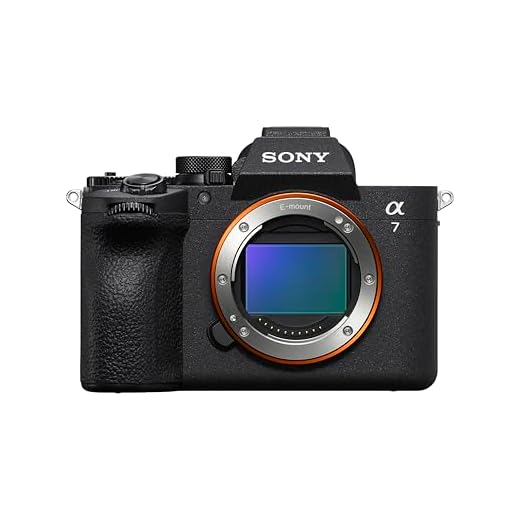
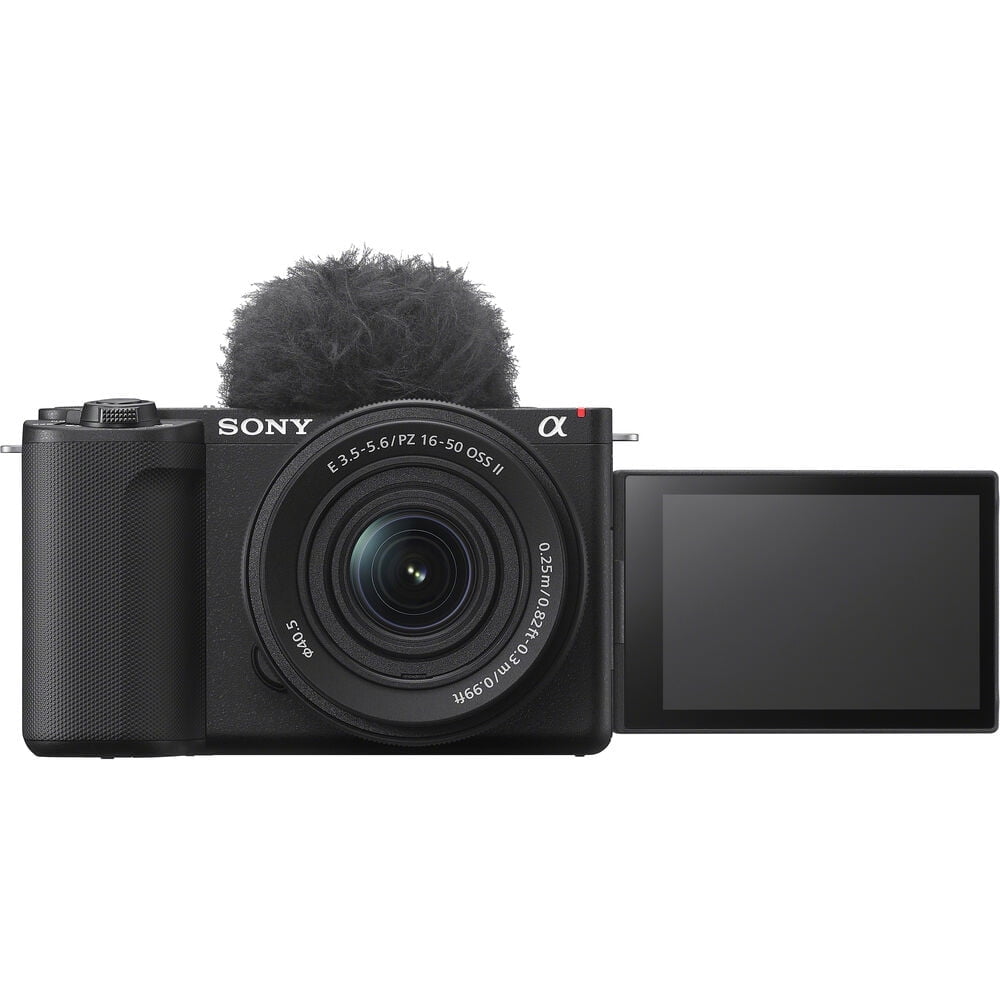
1. Sony Alpha 7 V — Best Overall Sony Mirrorless Camera
Best For: Enthusiasts and hybrid creators who want one full-frame Sony body for serious photography and video without moving into a specialist flagship.
The Sony Alpha 7 V is our best overall pick because it substantially expands what Sony’s general-purpose A7 line can do. Its 33MP partially stacked full-frame sensor balances enough resolution for large prints and meaningful cropping with much faster readout than the previous generation.
That speed translates directly into performance. The electronic shutter can shoot at up to 30 frames per second, giving the A7 V much more action capability than the 10 fps A7 IV. Pre-capture can also retain frames from before the shutter is fully pressed, which can help when photographing unpredictable movement.
Video is equally important to the A7 V’s appeal. It can record oversampled full-width 4K at up to 60p. A 4K/120 mode is also available, but it uses an APS-C-sized crop rather than the full width of the sensor. That distinction matters for creators because the crop narrows the angle of view and changes lens selection.
Autofocus uses Sony’s newer subject-recognition system for multiple subject types, while in-body stabilization helps with handheld stills and video. Independent testing from DPReview awarded the camera 91% and described it as a highly capable all-rounder across photography and video.
The A7 V is still expensive enough that beginners should think carefully before buying it. A body near $2,900 leaves a meaningful lens budget on top, and many casual photographers will never use its 30 fps bursts or deeper video tools.
Who should skip it: Beginners with a limited total budget should start with the A6700 or ZV-E10 II. High-resolution specialists should consider the A7R VI instead.
Alternative: The previous A7 IV remains attractive when its live price is far enough below the A7 V to leave room for a better lens.
Pros
✅ Excellent 33MP full-frame image quality
✅ Up to 30 fps electronic bursts
✅ Advanced subject-recognition autofocus
✅ Full-width oversampled 4K/60
✅ Strong balance of stills and video features
Cons
❌ Expensive for beginners
❌ 4K/120 uses a substantial crop
❌ Many casual users will not need its advanced speed
Sony Alpha 7 V Full-Frame Mirrorless (Renewed) puts pro-level 33 MP photos, blackout-free 30 fps bursts, and 4K/120p video in your hands — with up to 16 stops of dynamic range, AI-powered Real-time Tracking, and industry-leading stabilization.
Get the same cutting-edge performance at a renewed price: perfect for hybrid shooters who want speed, detail, and reliable autofocus without the new-unit cost.
Order yours now and start shooting studio-quality stills and cinema-grade video today — renewed stock is limited, so don’t wait!
2. Sony Alpha 7R VI — Best for High-Resolution Photography
Best For: Landscape, studio, architecture, commercial, wedding and wildlife photographers who want very high resolution without giving up modern autofocus and burst performance.
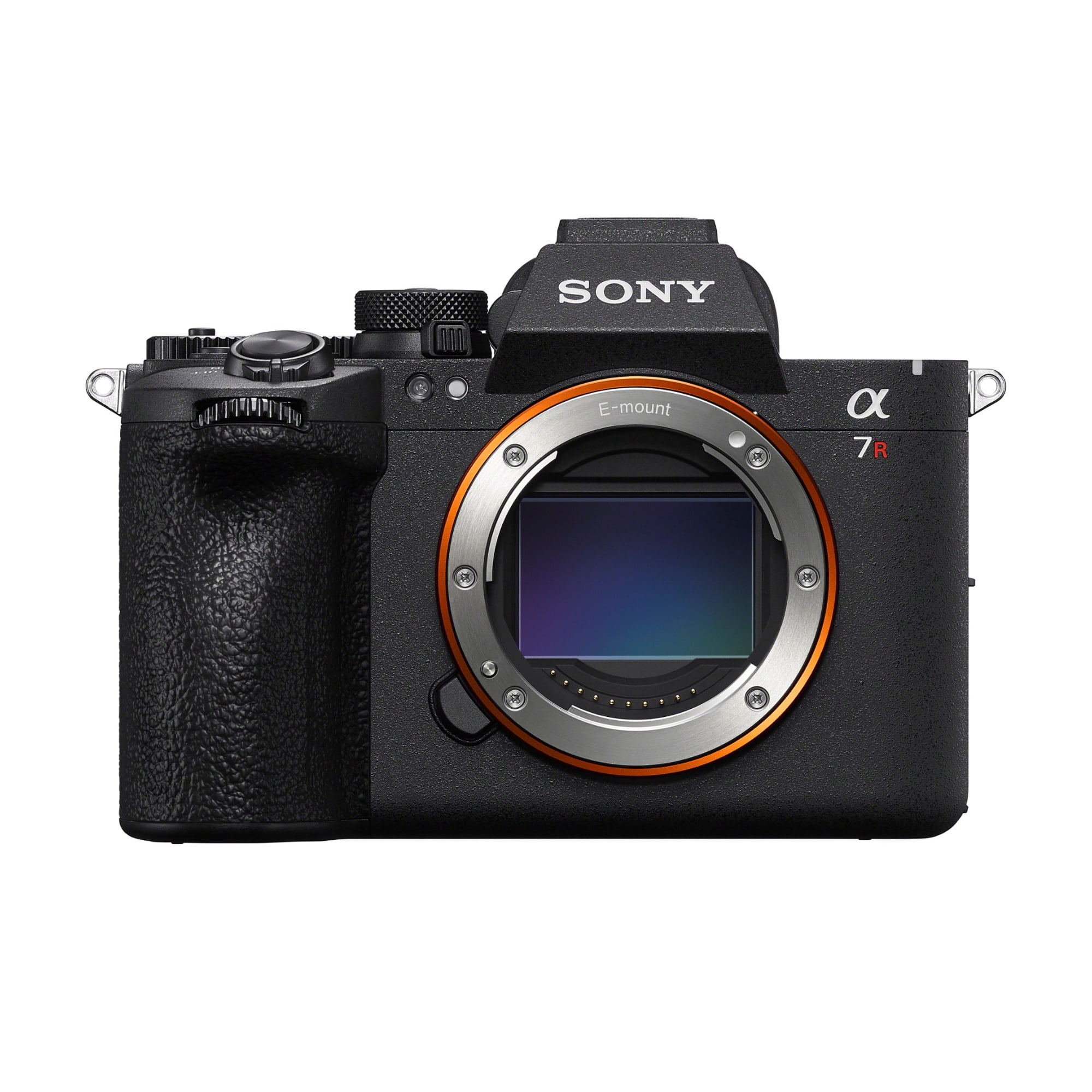
The Alpha 7R VI is Sony’s current high-resolution flagship, built around a 66.8MP fully stacked full-frame sensor. That resolution gives photographers exceptional room for detailed large prints and heavy cropping, but the stacked design also makes this generation dramatically faster than traditional high-resolution cameras.
The electronic shutter can reach 30 fps, while the mechanical shutter operates at up to 10 fps. That means the A7R VI is no longer limited to slow-moving studio and landscape work. It can credibly cover events and some wildlife assignments while retaining its enormous resolution advantage.
DPReview awarded the A7R VI 92% and found its image quality and dynamic range exceptional. It also praised the camera’s broader versatility compared with the previous A7R generation.
Video capability is substantial. The camera records 8K at up to 30p, although the 8K mode uses roughly a 1.2x crop. It can also capture 4K at up to 120p, including a full-frame angle-of-view option when the appropriate setting is enabled. Sony rates stabilization as high as 8.5 stops at the center under its test conditions.
The tradeoff begins with workflow. A 66.8MP raw file requires more card space, more storage and more computing power than a 26MP or 33MP file. Buying the A7R VI only to resize every image for social media wastes much of what you are paying for.
Who should skip it: General-purpose shooters who do not routinely print large, crop heavily or need extreme detail will get better value from the A7 V. Dedicated sports professionals should look at the A9 III.
Alternative: The previous A7R V can become a compelling value when discounted, particularly for slower high-resolution photography.
Pros
✅ Exceptional 66.8MP resolution
✅ Stacked sensor supports up to 30 fps electronic bursts
✅ Excellent autofocus and dynamic range
✅ 8K/30 and 4K/120 video capability
✅ Strong stabilization and high-resolution viewfinder
Cons
❌ $4,499.99 body-only reference price
❌ Very large files increase storage and editing demands
❌ More resolution than most photographers genuinely need
With a 66.8MP full-frame stacked sensor, next-generation processing, and advanced autofocus, the Alpha 7R VI delivers breathtaking stills and pro-grade video. Order your Sony Alpha 7R VI today — elevate your craft, shoot with confidence, and start creating work that stands out.
3. Sony Alpha 9 III — Best Sony Camera for Sports & Action
Best For: Professional sports, news and action photographers who need extreme speed and freedom from traditional rolling-shutter distortion.
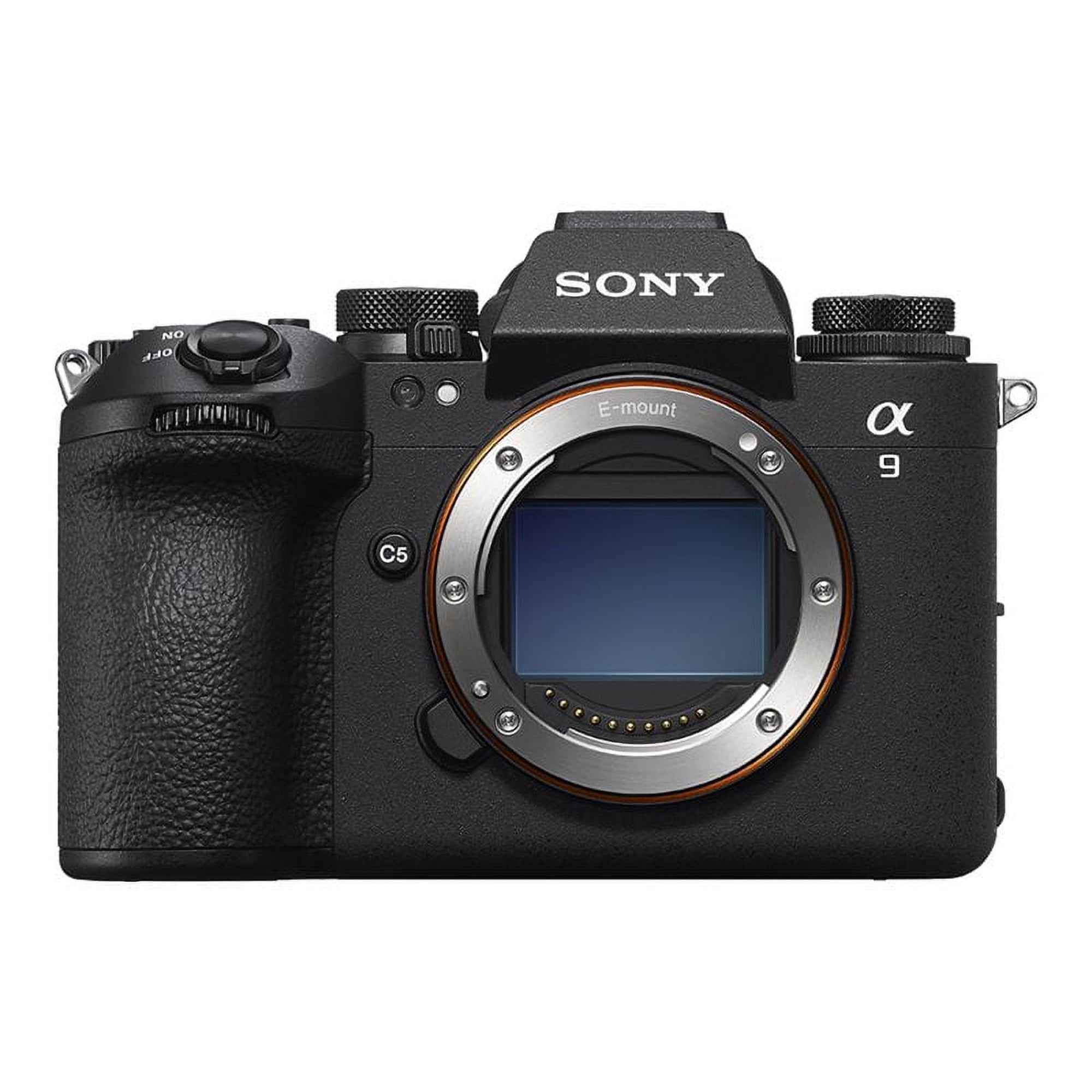
The Alpha 9 III is the specialist in this lineup. Its defining feature is a 24.6MP full-frame global-shutter sensor that captures the entire sensor simultaneously rather than scanning it line by line. That can eliminate the geometric rolling-shutter distortions that can appear when conventional electronic shutters capture very fast movement.
The camera can shoot full-resolution bursts at up to 120 frames per second. That is extraordinary compared with normal hybrid cameras and can give a professional photographer many more frames from which to select the exact moment a ball leaves a bat, a bird changes direction or an athlete crosses a finish line.
The global shutter also changes flash and high-speed action possibilities, while Sony’s autofocus system is built around tracking fast-moving subjects. Video reaches 4K/120, giving professional hybrid shooters another high-frame-rate option.
That capability should not be confused with general value. A photographer shooting family portraits, landscapes or vacations gains little from 120 fps and may actually prefer the greater resolution of the A7 V or A7R VI. The A9 III’s reference price is also firmly professional.
Its 24.6MP resolution is sufficient for professional editorial and sports use, but it provides much less cropping freedom than the A7R VI. That is one reason Sony keeps these two cameras in separate specialist roles rather than treating one as universally superior.
Who should skip it: Almost everyone who does not earn money from demanding sports or action photography can spend much less and still get an excellent camera.
Alternative: The A7 V delivers 30 fps and strong autofocus at a dramatically lower price; Alpha 1 II is the professional alternative when you want more resolution alongside flagship speed.
Pros
✅ Full-frame global-shutter sensor
✅ Up to 120 fps continuous shooting
✅ Excellent fit for fast professional action
✅ Avoids traditional rolling-shutter distortion
✅ Professional autofocus and connectivity
Cons
❌ Extremely expensive
❌ 24.6MP provides less cropping room than high-resolution models
❌ 120 fps is unnecessary for normal photography
Experience the next level of pro performance with the Sony Alpha a9 III’s full-frame stacked 24.6 MP CMOS sensor and global shutter — perfect for sports, wildlife, and fast-paced storytelling. Don’t miss your shot: pre-order now to secure the world’s most advanced mirrorless system. Ready to see it in action? Shop today or book a demo and start creating without limits.
4. Sony Alpha 6700 — Best APS-C Sony Camera
Best For: Enthusiasts, travelers and hybrid creators who want strong photography and video performance without the body and lens costs of full frame.
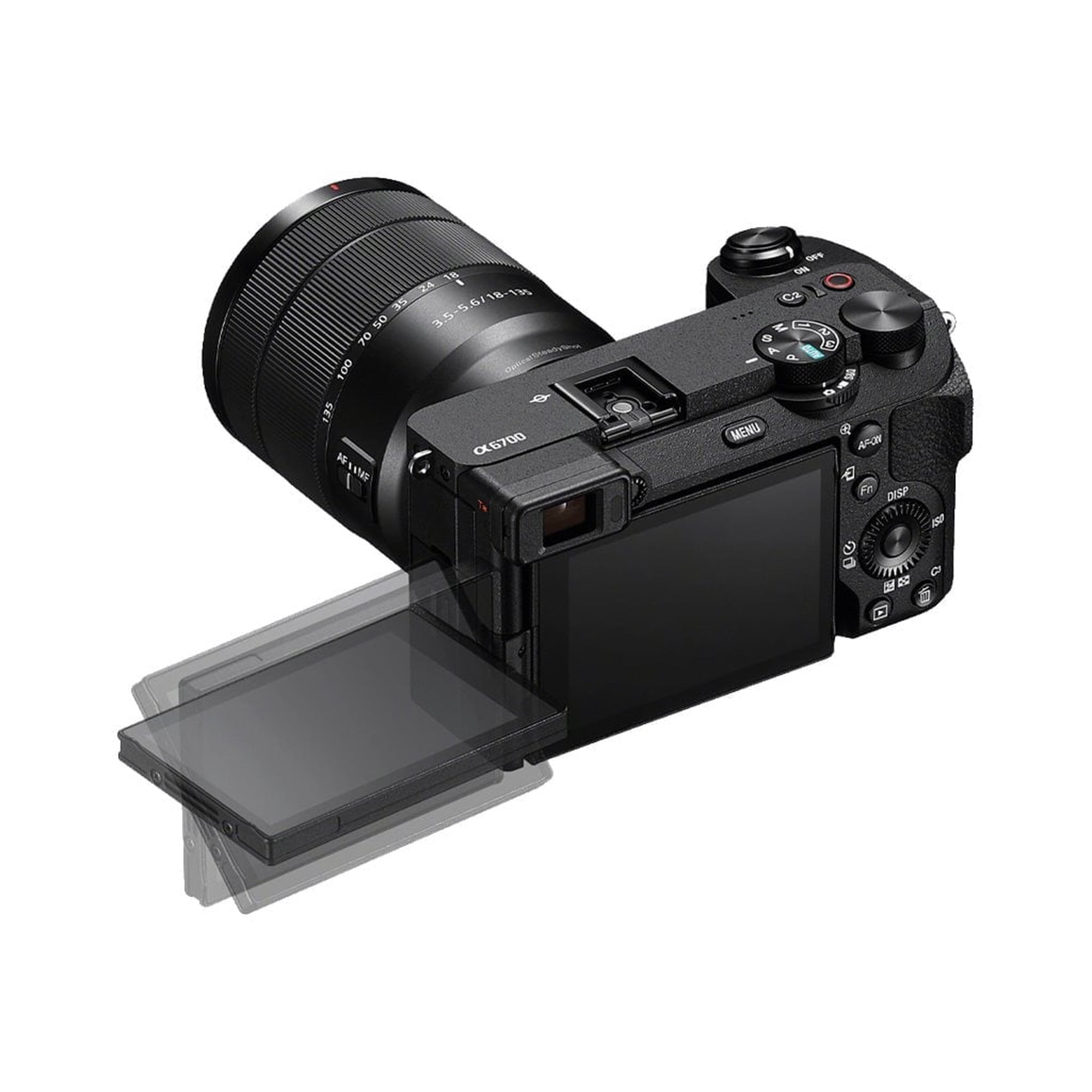
The Sony Alpha 6700 is the sweet spot in Sony’s APS-C lineup. Its 26MP back-illuminated sensor combines with in-body image stabilization, modern subject-recognition autofocus and up to 11 fps burst shooting in a body that is considerably smaller than most full-frame alternatives.
Video capability is unusually strong for its class. The camera can record 4K at up to 60p using footage derived from 6K capture, producing detailed output. A 4K/120 mode is also available, although it carries a substantial crop of roughly 1.58x beyond the normal APS-C field of view.
DPReview awarded the A6700 88% and described it as a well-rounded camera for photography, travel vlogging and filmmaking. That breadth is why it earns the APS-C slot rather than a cheaper Sony body focused primarily on beginners.
The smaller sensor also has practical system advantages. APS-C lenses can be smaller and cheaper than comparable full-frame optics, allowing photographers to build a useful multi-lens kit without spending as much or carrying as much weight.
The major professional limitation is the single memory-card slot. Photographers who need in-camera redundancy for weddings, paid events or other assignments where losing a card would be catastrophic should consider a dual-slot full-frame body.
If you are still learning photography and do not yet know which system features matter, our digital cameras for beginners guide can help narrow the broader camera categories before you commit to Sony E-mount.
Who should skip it: Buyers who need full-frame depth-of-field control, maximum low-light potential or dual-card redundancy should move up to an appropriate full-frame model.
Alternative: ZV-E10 II costs less for video-first creators, while A7C II is the compact step into full frame.
Pros
✅ Excellent 26MP APS-C image quality
✅ In-body image stabilization
✅ Advanced subject-recognition autofocus
✅ Detailed 4K/60 derived from 6K capture
✅ Smaller and less expensive system than full frame
Cons
❌ Single memory-card slot
❌ 4K/120 has a significant crop
❌ Full-frame models provide more sensor area for demanding low-light and shallow-depth-of-field work
Ready to take your photography to the next level?
Grab the Sony a6700 Mirrorless APS-C 26MP with 18–135mm kit — a versatile all‑in‑one package with OSS zoom, NP‑FZ100 battery and essential accessories to start shooting immediately.
Order now to capture stunning detail and flexible framing on every shoot — click Add to Cart or Learn More to get yours today.
5. Sony Alpha 7C II — Best Compact Full-Frame Sony Camera
Best For: Travel, street and everyday photographers who want full-frame image quality in a smaller Sony body.
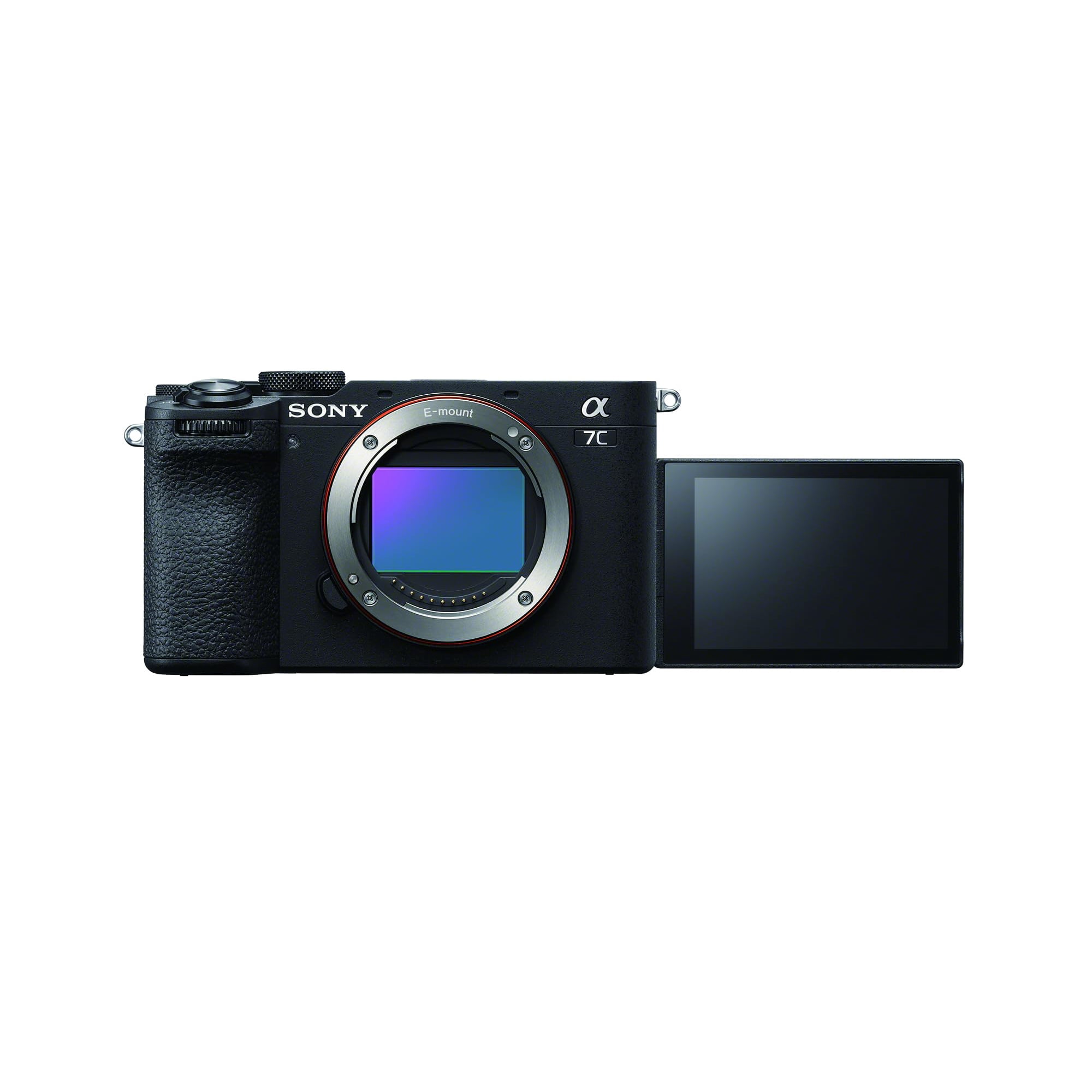
The Sony Alpha 7C II takes the 33MP full-frame sensor class used in Sony’s mainstream Alpha line and places it into a compact rangefinder-style body. That makes it especially attractive to photographers who want full-frame files without carrying one of Sony’s larger traditional camera bodies all day.
The camera includes in-body stabilization, subject-recognition autofocus and burst shooting up to 10 fps. Sony rates its stabilization system as offering up to seven stops of compensation under specified conditions.
The biggest advantage is not one headline specification but the combination of portability and full-frame image quality. Pair the body with a compact prime or small zoom and it becomes a strong travel setup for street scenes, portraits, landscapes and everyday family photography.
The compact body creates compromises. The electronic viewfinder is smaller than the units in larger Alpha cameras, and the control layout provides less space for direct-access controls. Video users should also know that 4K/60 is recorded from a Super 35-sized region rather than the entire full-frame sensor.
Independent testing also identifies rolling shutter as a limitation for fast camera movement and rapidly moving subjects. That makes the A7C II a better travel and lifestyle camera than a dedicated sports body.
Before buying a dedicated travel camera, it is worth asking how much interchangeable lenses matter to you. Our best smartphones for photography guide explains when a modern phone may be sufficient and when a mirrorless system provides meaningful advantages.
Who should skip it: Buyers who prioritize a large viewfinder, dual-card professional workflow, very fast action or full-width high-frame-rate video should choose a larger Alpha body.
Alternative: Alpha 7 V when capability and handling matter more than compactness.
Pros
✅ 33MP full-frame sensor
✅ Compact body for a full-frame system
✅ In-body image stabilization
✅ Strong subject-recognition autofocus
✅ Excellent fit for travel and everyday photography
Cons
❌ Smaller viewfinder than larger Alpha bodies
❌ 4K/60 requires a Super 35 crop
❌ Compact controls are less ideal for demanding professional use
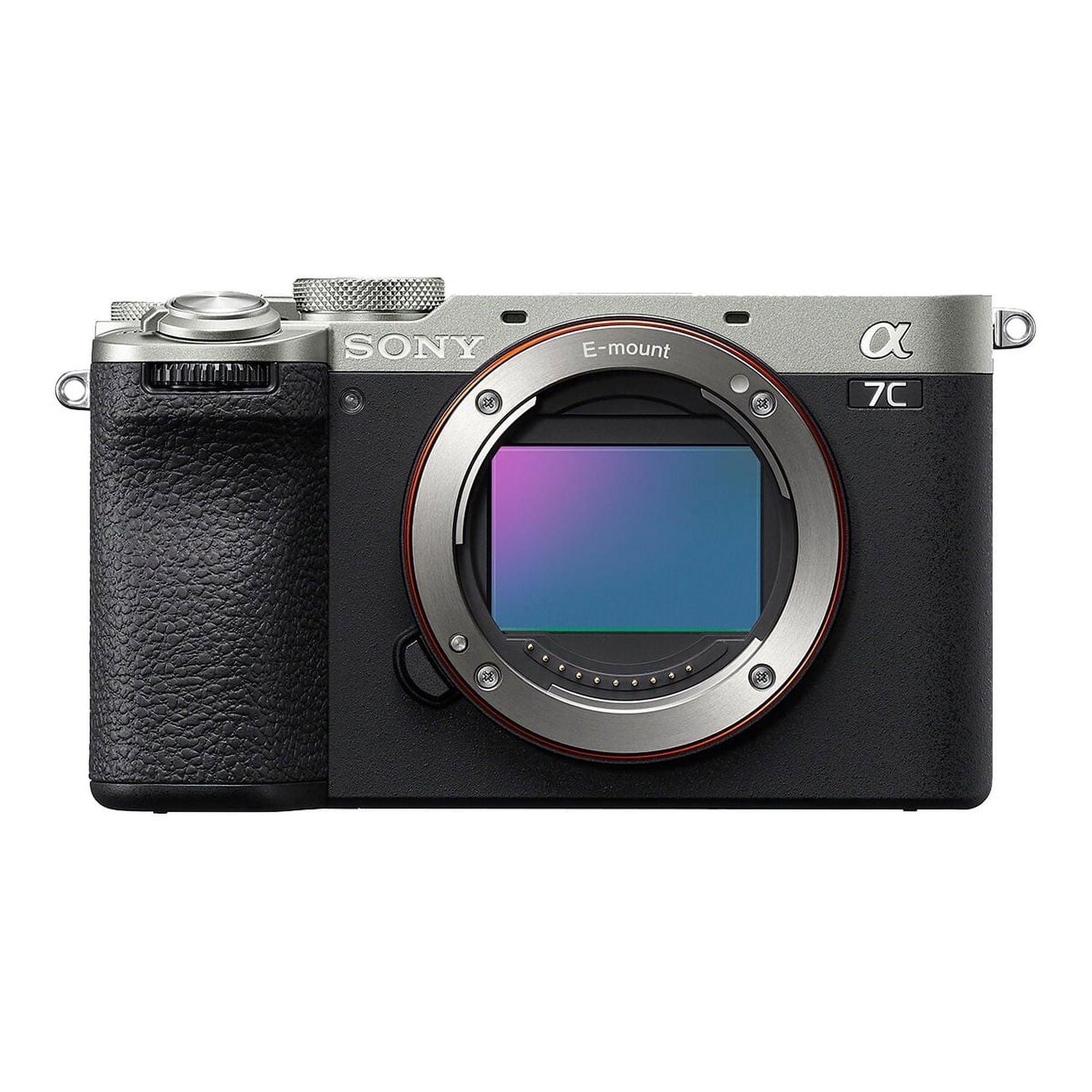
Sony Alpha 7C II Full-Frame Body — experience full-frame performance in a compact, travel-ready package. With class-leading autofocus and versatile photo/video capabilities, it’s perfect for photographers and content creators who want professional results without the bulk. Order the Sony a7C II body today — add it to your cart now and start creating at the next level.
6. Sony Alpha ZV-E10 II — Best for Beginner Video Creators
Best For: YouTube creators, streamers and beginner videographers who prioritize video over traditional still photography.
The Sony Alpha ZV-E10 II is the most creator-focused camera in this list. It uses a 26MP APS-C sensor and can record detailed 4K video at up to 60p with 10-bit color, giving users more room for color grading than simpler 8-bit beginner cameras.
Sony also includes creator-oriented tools such as S-Cinetone, S-Log3 support, importable LUTs, Product Showcase, Background Defocus controls and a three-capsule directional microphone. The fully articulating screen makes it much easier to frame yourself when filming alone.
The 4K/60 mode uses a small crop of roughly 1.1x. That is modest compared with some high-frame-rate modes on other cameras and still gives creators useful resolution for talking-head videos, product content and everyday vlogging.
The limitations are just as important as the strengths. The ZV-E10 II has no electronic viewfinder, no in-body image stabilization and no mechanical shutter. DPReview specifically cautions that these design decisions make it much less versatile as a primary stills camera than the A6700, despite the two cameras sharing a similar sensor foundation.
If you expect photography to become as important as video, the A6700 is worth the extra money because it adds a viewfinder, mechanical shutter and IBIS. If your priority is controlled indoor content, YouTube, product demonstrations or streaming, the ZV-E10 II makes much more sense.
Buyers considering the older generation can also compare the broader entry-level tradeoffs in our Canon EOS R10 vs Sony ZV-E10 comparison. Remember that the comparison covers the original ZV-E10 rather than the ZV-E10 II recommended here.
Who should skip it: Photographers looking for a primary stills camera, outdoor shooters who depend heavily on a viewfinder, and handheld video users who specifically require sensor-shift stabilization.
Alternative: Sony A6700 for a much more balanced stills-and-video hybrid.
Pros
✅ Detailed 4K/60 10-bit video
✅ Beginner-friendly creator controls
✅ Good autofocus for self-recording
✅ Fully articulating screen
✅ Access to Sony’s interchangeable E-mount lens system
Cons
❌ No electronic viewfinder
❌ No in-body image stabilization
❌ No mechanical shutter, limiting versatility for still photography
Capture crisp vlogs and photos with the Sony ZV-E10 II Mirrorless Camera Kit — a compact Alpha APS-C body paired with the versatile Sony E PZ 16–50mm OSS II zoom, long‑life NP‑FZ100 battery and pro accessories for reliable audio and stabilization. Engineered for creators who want fast autofocus, great low‑light performance and plug‑and‑play convenience.
Order your Sony ZV-E10 II Kit today and start creating — add to cart now!
Other Sony Cameras We Considered
Sony Alpha 1 II: Sony’s professional 50.1MP flagship remains one of the company’s most capable hybrids, but its very high price and overlap with both the A7R VI and A9 III make it too specialized for the main six-product shortlist. It becomes more interesting for professionals who genuinely need one high-resolution body to cover demanding action and video work.
Sony Alpha 7 IV: The A7 IV is no longer our primary all-round recommendation because the A7 V substantially improves speed, sensor readout and video capability. It remains one of the most important alternatives in the lineup because meaningful discounts can free enough budget for a better lens.
Sony Alpha 7R V: The previous high-resolution model is still extremely capable. The A7R VI is the better current recommendation because its stacked sensor dramatically increases burst performance and improves video flexibility, but the A7R V can become the value choice when the price gap is large.
Sony Alpha 7CR: Its high-resolution sensor and compact body make it an appealing travel camera, but it overlaps two clearer recommendations: A7C II for compact full frame and A7R VI for maximum resolution.
Sony ZV-E1 and FX-series bodies: These are better considered in dedicated video and cinema-camera comparisons. The broader mirrorless guide benefits from keeping photography and general hybrid use central.
Why six cameras? Sony’s range includes many overlapping generations and specialist bodies. Six picks are enough to cover general full frame, high resolution, professional sports, APS-C hybrid, compact full frame and beginner video without turning the guide into a list of near-duplicates.
How to Choose a Sony Mirrorless Camera
APS-C vs. Full Frame
Sensor size is one of the first major decisions. Sony’s APS-C sensors are smaller than its full-frame sensors, producing a 1.5x crop factor relative to full frame. A 20mm lens on APS-C therefore provides a field of view similar to roughly 30mm on full frame.
Full frame generally offers more potential for shallow depth of field and low-light image quality when compared at equivalent technology and output conditions. APS-C fights back with smaller bodies, smaller lenses and lower system costs.
That makes the A6700 particularly attractive for travel and wildlife enthusiasts. A compact APS-C telephoto setup can deliver substantial reach without the size and cost of an equivalent full-frame kit. Full frame becomes more compelling when portraits, demanding low light or maximum image quality are central priorities.
How Much Resolution Do You Actually Need?
More megapixels create more cropping freedom and can preserve detail in very large prints, but they also create larger files.
Twenty-six to 33 megapixels is already enough for most photographers, including substantial prints and normal post-processing crops. The 66.8MP A7R VI makes sense when fine detail is central to the job: landscapes, commercial work, architecture, studio photography or wildlife where aggressive cropping is common.
High resolution also raises storage costs. Memory cards fill sooner, raw archives grow faster and editing software has to process larger files. Buy the A7R VI because your output benefits from 66.8MP, not simply because 66.8 is a bigger number than 33.
Burst Rate Is Only Useful If Your Subject Requires It
The A6700’s 11 fps is already enough for many children, pets, casual sports and wildlife situations. The A7 V’s 30 fps dramatically expands action capability, while the A9 III’s 120 fps is a professional specialist feature.
More frames also mean more images to transfer, store and review. A five-second sequence at 120 fps can produce hundreds of files. For portraits or landscapes, that performance provides little practical benefit.
Autofocus Matters More Than Megapixels for Moving Subjects
Sony’s newer bodies use subject-recognition systems capable of identifying different subject categories. This helps the camera maintain focus on subjects such as people, animals, birds and vehicles rather than relying only on a generic focus area.
That capability can improve keeper rates dramatically for action, wildlife and events. A perfectly detailed 66MP sensor does little good if the intended subject is not in focus.
The practical lesson is to match autofocus and burst performance to your subject rather than ranking cameras by sensor resolution alone.
Understand 4K/60 and 4K/120 Crop Modes
Two cameras can both advertise 4K/120 and still produce very different fields of view.
The A7 V’s 4K/120 mode uses an APS-C-sized crop. The A6700 also crops significantly when moving to 4K/120. ZV-E10 II applies a much smaller crop at 4K/60, while the A7R VI can provide a full-frame-angle 4K/120 mode under the appropriate setting.
This matters because crop modes make lenses behave as though they are tighter. A wide lens chosen for full-frame vlogging may suddenly become too narrow when a high-frame-rate crop is enabled.
Always check the exact recording mode you intend to use before choosing lenses around a camera’s headline video resolution.
Why In-Body Image Stabilization Matters
IBIS physically moves the camera sensor to compensate for some camera movement. It can help photographers use slower shutter speeds when photographing static subjects and can improve handheld video stability.
A7 V, A7R VI, A9 III, A6700 and A7C II all include sensor-shift stabilization. ZV-E10 II does not, relying instead on lens stabilization where available and digital stabilization options for video.
IBIS does not freeze subject movement. Photographing a running athlete still requires an appropriately fast shutter speed even when the camera itself is stabilized.
Professional Shooters Should Consider Card Slots
Card configuration matters less to casual users than it does to someone photographing an irreplaceable paid event. Dual-card cameras can be configured to write duplicate files, creating in-camera redundancy if one card fails.
The A6700 uses a single card slot, one of the clearest reasons a wedding or event professional might choose a larger full-frame body instead. A single slot is perfectly reasonable for normal travel and hobby use; it is simply a different risk profile for paid work.
Budget for Lenses Before Choosing the Body
A mirrorless camera body is only part of the system. Lenses determine focal length, maximum aperture, much of the final image character and often how large the kit becomes.
Sony E-mount has one of the broadest mirrorless lens ecosystems, including Sony lenses and extensive third-party options. APS-C bodies can use full-frame FE lenses, and full-frame cameras can mount APS-C E lenses, although using an APS-C lens on a full-frame body normally forces or encourages a cropped image area and reduces effective output resolution.
A practical approach is to choose two or three lenses you expect to need first, estimate the complete system price, and only then decide how much remains sensible to spend on the body.
When a Smartphone or Action Camera Makes More Sense
A mirrorless system makes sense when interchangeable lenses, larger sensors, dedicated controls and photographic flexibility justify carrying separate equipment. It does not automatically make every trip easier.
For normal family photos, social media, quick editing and always-available photography, a strong camera phone may be more practical. Our best smartphones for photography guide compares current alternatives for that use case.
Likewise, mirrorless bodies are not designed to replace rugged cameras for underwater use, helmet mounting or high-impact sports. Our most popular action cameras for travelers covers waterproof and mountable cameras better suited to those situations.
Best Sony Mirrorless Camera by Use Case
| Use Case | Best Pick | Why |
|---|---|---|
| General photography & video | Sony Alpha 7 V | 33MP full frame, 30 fps, strong autofocus and capable 4K video |
| Landscape & studio | Sony Alpha 7R VI | 66.8MP resolution and exceptional detail |
| Professional sports & action | Sony Alpha 9 III | Global shutter and up to 120 fps |
| APS-C hybrid & travel value | Sony Alpha 6700 | Compact stabilized body with excellent photo and video features |
| Compact full-frame travel | Sony Alpha 7C II | 33MP full frame in a smaller rangefinder-style body |
| Beginner vlogging & content creation | Sony Alpha ZV-E10 II | 4K/60 10-bit video and creator-focused controls at a lower entry price |
Frequently Asked Questions
What is the best Sony mirrorless camera overall?
The Sony Alpha 7 V is our best overall Sony mirrorless camera because its 33MP full-frame sensor, 30 fps electronic burst capability, advanced autofocus and strong 4K video cover an unusually broad range of photography and video needs without moving into specialist flagship pricing.
Which Sony camera is best for beginners?
The ZV-E10 II is the best choice here for video-first beginners, while the A6700 is the stronger beginner-to-enthusiast choice if photography matters equally. The A6700 adds a viewfinder, mechanical shutter and in-body stabilization.
Is Sony APS-C or full frame better?
Neither is universally better. Full frame provides a larger sensor and greater potential for shallow depth of field and demanding low-light work, while APS-C systems can be smaller, lighter and less expensive. The right choice depends on subjects, lenses and total budget.
Is the Sony A7 V worth buying over the A7 IV?
The A7 V is the stronger current all-rounder because it adds a much faster partially stacked sensor, up to 30 fps electronic bursts and significantly expanded video capability. The A7 IV can still be the better value when its discounted price leaves enough budget for a better lens.
Which Sony camera is best for professional photography?
It depends on the profession. A7R VI is our high-resolution choice for landscape, studio and detailed commercial work. A9 III is the specialist sports and action camera. Many wedding and event photographers may find the A7 V or A7R VI more balanced than either extreme.
Which Sony mirrorless camera is best for video?
Among the hybrid cameras in this guide, A7 V provides the best overall photo-video balance. ZV-E10 II is the more affordable video-first creator option. Dedicated filmmakers should also consider Sony’s FX and video-focused ZV models outside this general photography roundup.
Is 66.8MP too much for most photographers?
For many users, yes. A 26MP or 33MP camera already provides ample resolution for normal prints and cropping. A7R VI’s 66.8MP sensor is most valuable when large prints, commercial detail or aggressive cropping are a routine part of the workflow.
Do Sony E-mount lenses work on both APS-C and full-frame cameras?
Sony’s APS-C and full-frame mirrorless cameras use the E-mount, so lenses can physically cross between the systems. Full-frame FE lenses work on APS-C bodies with the APS-C crop factor. APS-C lenses on full-frame cameras normally use a cropped sensor area, reducing the effective image resolution.
Final Verdict: Which Sony Mirrorless Camera Should You Buy?
The Sony Alpha 7 V is the best Sony mirrorless camera for most serious buyers because it is strong at almost everything without being defined by one specialist task. Its 33MP sensor, 30 fps capability, autofocus and full-width 4K/60 give photographers and creators enough performance to grow without immediately needing another body.
Buy the Alpha 7R VI if image resolution is genuinely central to your work. Choose the Alpha 9 III only when extreme sports and action speed justify a professional specialist camera. The Alpha 6700 is the smarter purchase for many enthusiasts because it delivers excellent photo and video capability while leaving more budget for lenses.
The Alpha 7C II is our choice when full-frame portability matters more than maximum controls or video flexibility. The ZV-E10 II makes the most sense for creators whose priority is video rather than traditional photography.
Bottom line: Buy A7 V for the best overall balance, A7R VI for maximum detail, A9 III for professional action, A6700 for APS-C value, A7C II for compact full frame or ZV-E10 II for beginner-focused video creation.
Sources
- Sony — Alpha 7 V, Alpha 7R VI, Alpha 9 III and current Alpha camera specifications — 2026
- DPReview — Sony a7 V Review — updated July 2026
- DPReview — Sony a7R VI Review — June 2026
- DPReview — Sony a6700 Review
- DPReview — Sony ZV-E10 II In-Depth Review
Product Groups: Sony Alpha 7 V, Sony Alpha 7R VI, Sony Alpha 9 III, Sony Alpha 6700, Sony Alpha 7C II, Sony Alpha ZV-E10 II