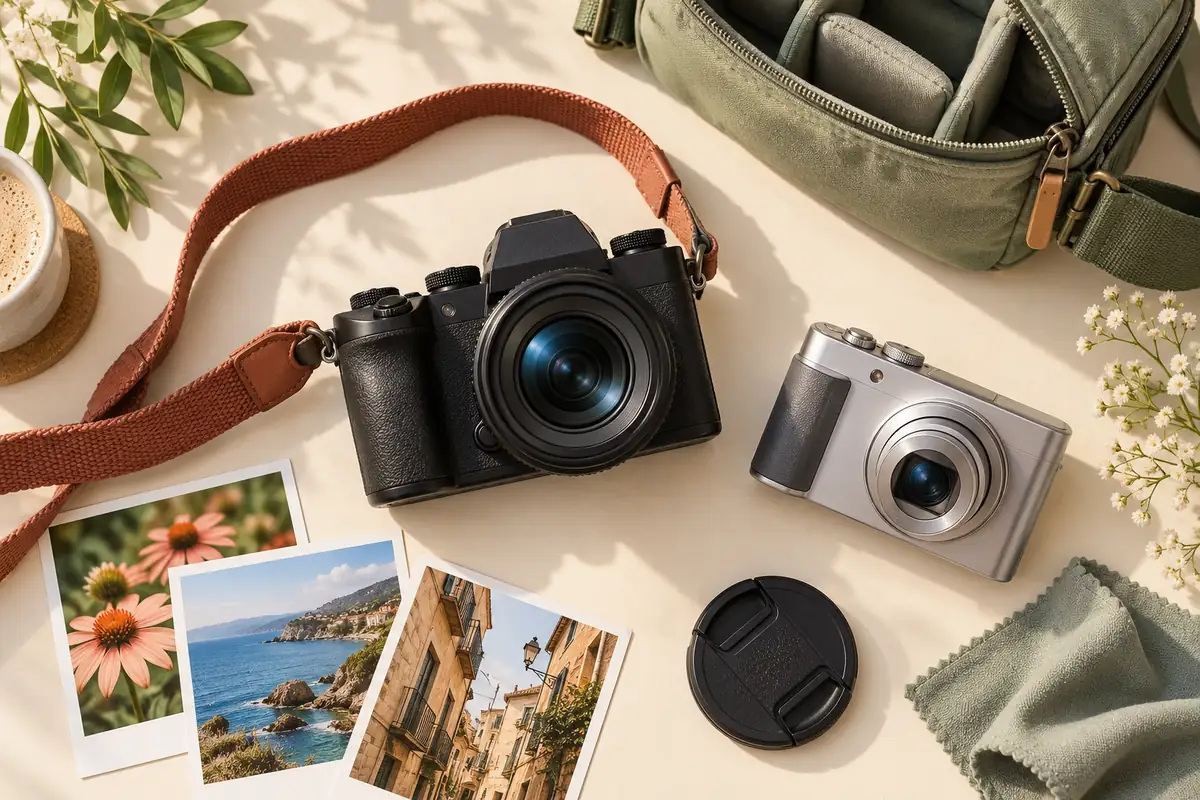
Digital Cameras for Beginners 2026
The Nikon Z50II is our best digital camera for beginners because it combines an easy Auto mode with strong autofocus, a comfortable electronic viewfinder, interchangeable lenses and enough manual control to remain useful as your photography skills improve. It is approachable on day one without becoming a camera you immediately outgrow.
Not every beginner needs the same type of camera. The Panasonic Lumix G97 is the value pick if built-in image stabilization matters, while the Fujifilm X-T30 III is especially appealing for learning photography and experimenting with color. Video-first creators should consider the Sony ZV-E10 II, and the Nikon Z5II is the premium choice for someone determined to start with full frame. If interchangeable lenses sound like unnecessary complexity, the Panasonic Lumix ZS99 offers a much simpler point-and-shoot experience with a huge 30x optical zoom.
The best first camera is not necessarily the cheapest camera or the one with the most megapixels. Beginners should pay more attention to autofocus, stabilization, viewfinder and screen design, lens costs, physical size and whether the camera makes it easy to learn rather than hiding every control behind automation.
Quick Answer: Best Digital Cameras for Beginners
Best Overall: Nikon Z50II — excellent autofocus, useful Auto features, an EVF and strong photo/video capabilities in an approachable APS-C body.
Best Value With Stabilization: Panasonic Lumix G97 — a stabilized Micro Four Thirds camera with an EVF, articulating screen and versatile 12–60mm kit lens.
Best for Learning Photography: Fujifilm X-T30 III — compact controls, a capable Auto mode and Fujifilm Film Simulations make it fun to experiment with photography.
Best for Beginner Video: Sony ZV-E10 II — 4K/60 10-bit recording, creator-focused autofocus and useful vlogging controls.
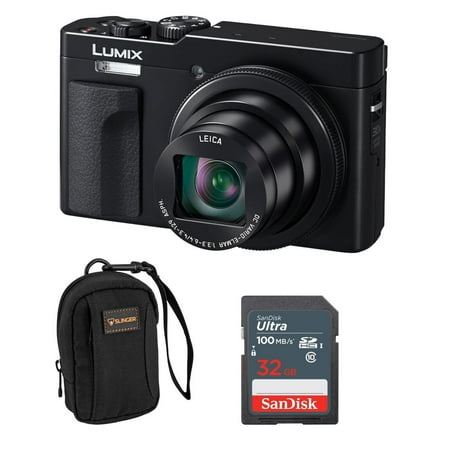
Best Simple Point-and-Shoot: Panasonic Lumix ZS99 — a pocketable fixed-lens camera with a 24–720mm-equivalent 30x optical zoom.
How We Chose These Beginner Cameras
We compared current digital cameras using the factors that matter most to a first-time dedicated-camera buyer: ease of use, autofocus, image quality, automatic modes, viewfinder and screen design, image stabilization, video capability, lens selection, portability, current U.S. availability and total system cost.
We also looked for cameras that offer room to grow. A beginner-friendly camera should help you take good pictures immediately while still providing access to shutter speed, aperture, RAW files, interchangeable lenses or other creative controls when you are ready to learn them.
Manufacturer specifications were cross-checked with independent camera testing. Discompare did not perform hands-on or laboratory testing for this guide, so observations about autofocus, handling and image quality are based on manufacturer documentation and independent editorial testing.
Best Digital Cameras for Beginners Compared
| Camera | Best For | Sensor | Lens Type | Resolution | IBIS | Key Video Mode | Reference Price |
|---|---|---|---|---|---|---|---|
| Nikon Z50II | Best Overall | APS-C | Interchangeable Nikon Z | 20.9MP | No | 4K/30 full width; cropped 4K/60 | $909.95 launch SRP, body |
| Panasonic Lumix G97 | Best Value With IBIS | Micro Four Thirds | Interchangeable MFT | 20.3MP | Yes | 4K/30 | $849.99 launch price with 12–60mm lens |
| Fujifilm X-T30 III | Learning Photography | APS-C | Interchangeable Fujifilm X | 26.1MP | No | 6.2K/30; cropped 4K/60 | $999 body |
| Sony ZV-E10 II | Video & Vlogging | APS-C | Interchangeable Sony E | 26MP | No | 4K/60 10-bit | $1,199.99 MSRP |
| Nikon Z5II | Full-Frame Step-Up | Full frame | Interchangeable Nikon Z | 24.5MP | Yes | 4K/30 full width; cropped 4K/60 | $1,699.95 launch SRP |
| Panasonic Lumix ZS99 | Point-and-Shoot Travel | 1/2.3-inch | Fixed 30x zoom | 20.3MP | Optical stabilization | 4K/30 | $499.99 launch price |
Compare Current Camera Prices
Camera prices change frequently, and interchangeable-lens models may be sold body-only or with several different kit lenses. Compare the exact configurations below before deciding which option offers the best value, and do not compare a body-only price with a lens-kit price as though they were equivalent.
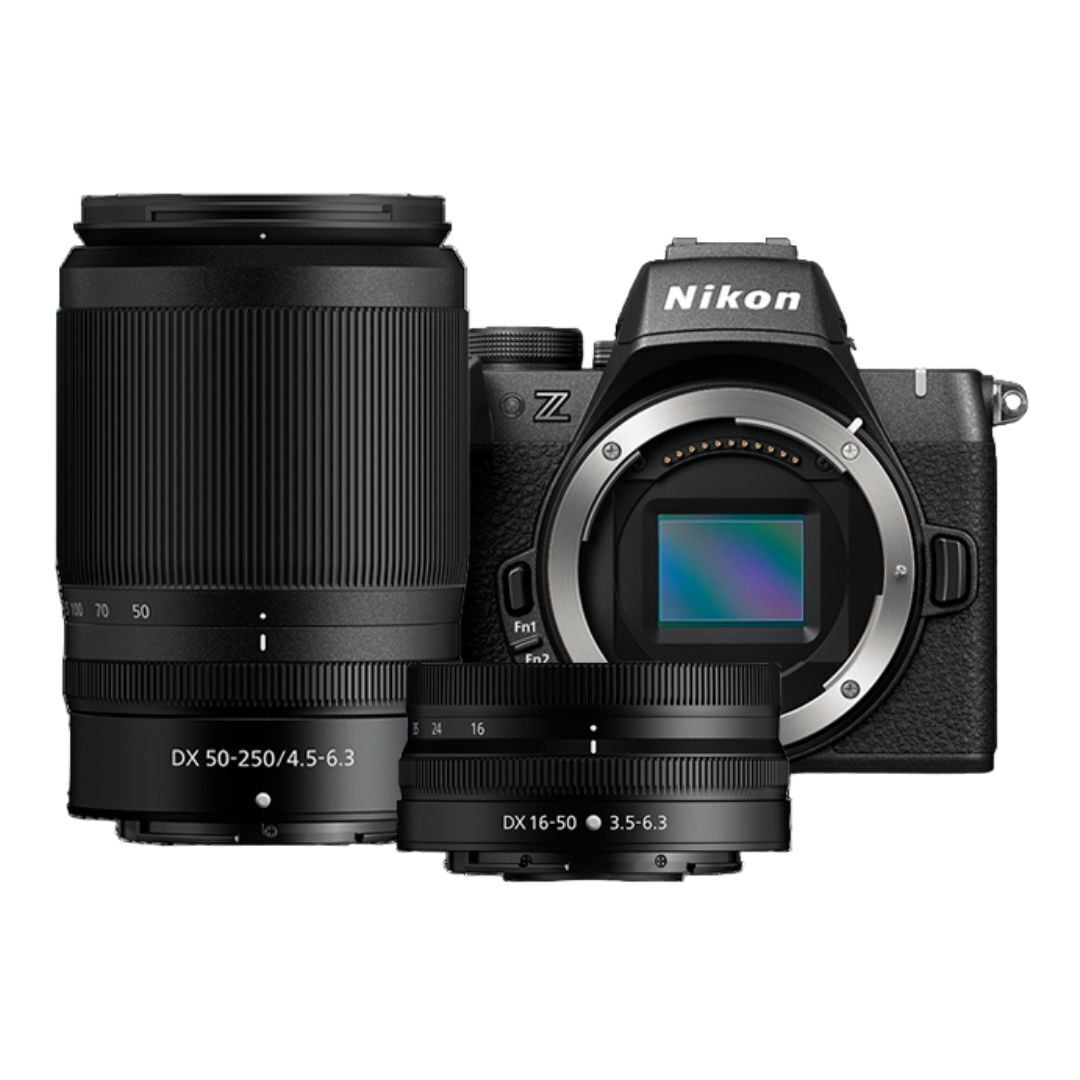
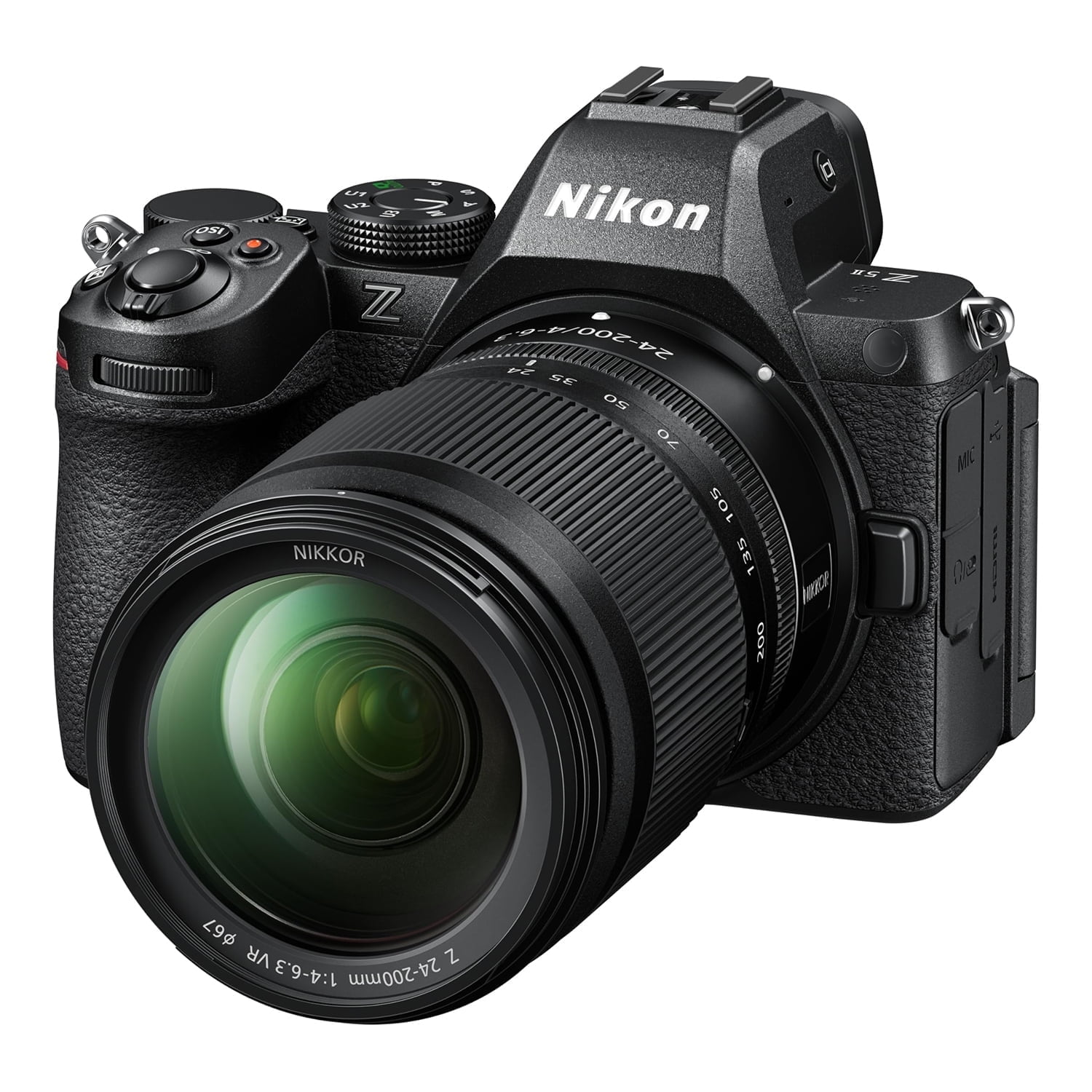
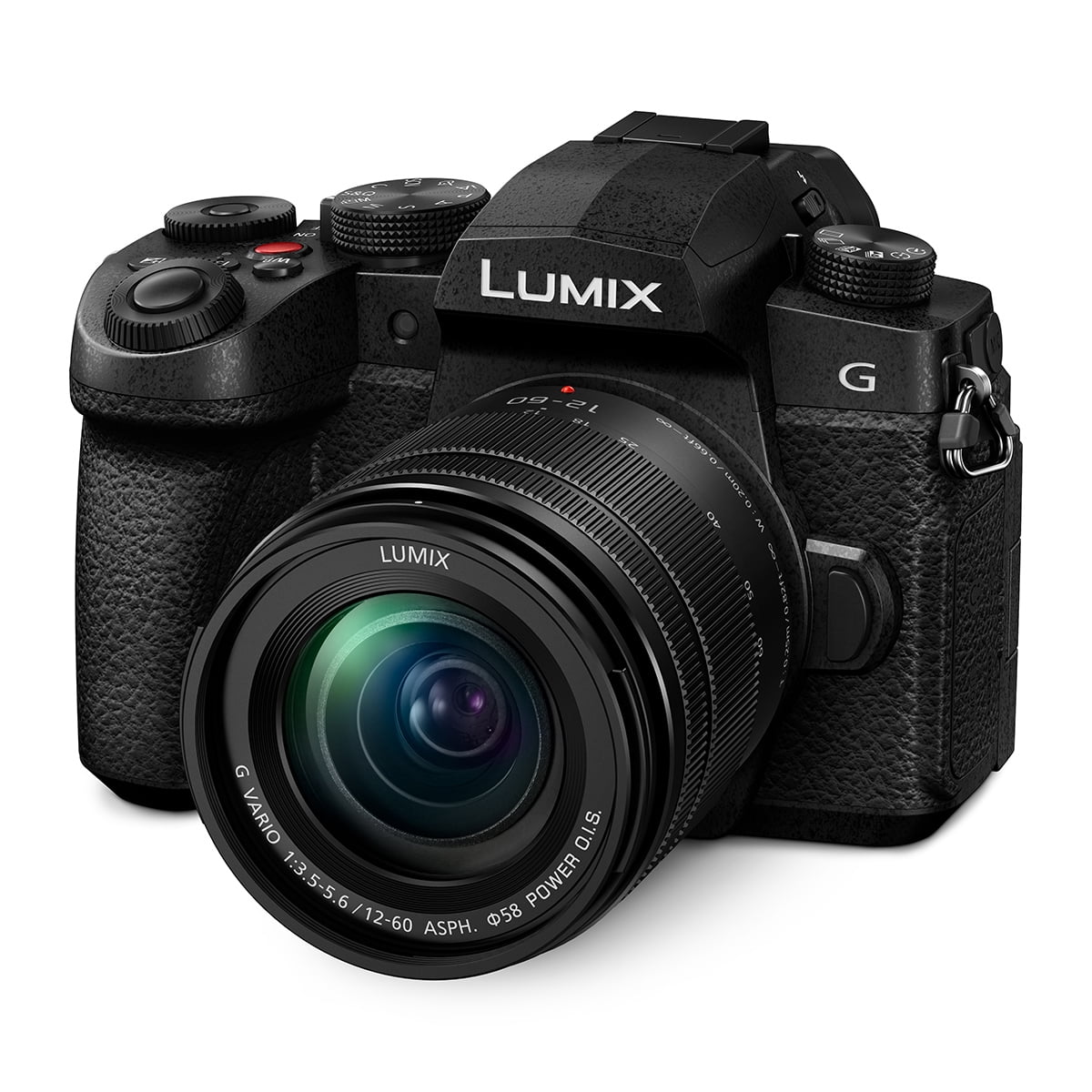
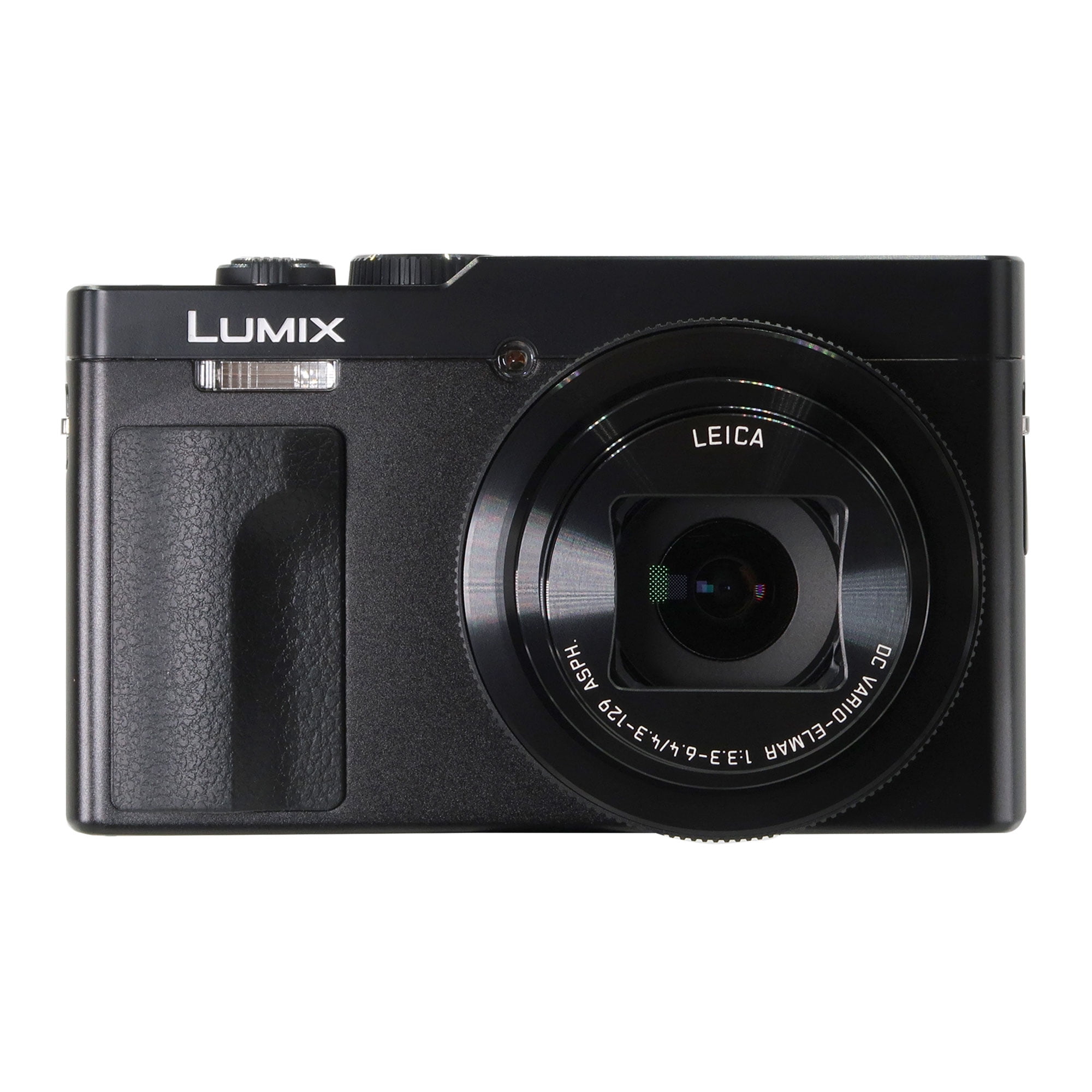
1. Nikon Z50II — Best Digital Camera for Beginners Overall
Best For: First-time mirrorless buyers who want a balanced camera for photography, travel, family events and video.
The Nikon Z50II is our top beginner pick because it combines an approachable shooting experience with many features inherited from Nikon’s more advanced cameras. Its 20.9MP APS-C sensor is paired with the EXPEED 7 processor, which gives the camera modern autofocus, subject recognition and more capable video features than the original Z50.
For beginners, Auto mode is particularly useful. Nikon’s scene-analysis technology can recognize the subject and shooting conditions and automatically adjust autofocus, exposure and other settings. That lets you start taking photographs immediately instead of learning the exposure triangle before your first family event or vacation.
The autofocus system can recognize nine subject categories, making it easier to photograph people, pets, birds and several other moving subjects. The camera also includes Nikon’s 3D Tracking interface, which gives you a useful path from automatic shooting toward more deliberate subject tracking as your experience grows.
Video capability is stronger than its entry-level positioning suggests. The Z50II can record full-width 4K at up to 30p, while 4K/60 is available with a crop. Ten-bit video options, a headphone jack and waveform display mean a beginner interested in video has room to learn more advanced techniques later.
The camera also includes an electronic viewfinder and a fully articulating touchscreen. The EVF is especially valuable for photography in bright outdoor conditions, where composing on a rear LCD alone can become difficult.
The main missing feature is in-body image stabilization. You will need to rely on appropriately stabilized lenses, faster shutter speeds or other support when camera shake becomes an issue. Nikon’s APS-C Z-mount lens lineup is also less extensive than some rival systems, although full-frame Z lenses can be mounted as well.
Who should skip it: Buyers who strongly prioritize stabilization should consider the Lumix G97. Video-first vloggers who do not need an EVF may prefer the Sony ZV-E10 II.
Alternative: Nikon Z5II if you already know you want a full-frame system and can afford more expensive lenses.
Pros
✅ Beginner-friendly Auto mode
✅ Strong subject-recognition autofocus
✅ Electronic viewfinder and articulating touchscreen
✅ Full-width 4K/30 and 10-bit video options
✅ Comfortable controls leave room to learn manual photography
Cons
❌ No in-body image stabilization
❌ 4K/60 uses a crop
❌ Nikon’s dedicated APS-C Z lens range is smaller than some rival ecosystems
2. Panasonic Lumix G97 — Best Value With Image Stabilization
Best For: Beginners who want a stabilized interchangeable-lens camera with good physical controls and a versatile kit lens at a relatively accessible price.
The Panasonic Lumix G97 earns the value position because it includes features that are often missing from entry-level cameras. Its 20.3MP Micro Four Thirds sensor sits behind a 5-axis stabilization system, helping reduce camera shake with compatible lenses and making handheld photography easier in lower light.
Panasonic originally launched the G97 in the U.S. as an $849.99 kit with a 12–60mm lens. That lens covers a 24–120mm-equivalent range, which is unusually versatile for a starter kit. One lens can cover wide travel scenes, ordinary family photography and moderate telephoto framing while you learn what focal lengths you actually enjoy using.
The body includes a 2.36-million-dot OLED electronic viewfinder and an articulating rear screen. Having both means you can use the EVF for traditional photography and rotate the screen for low angles, overhead shots or filming yourself.
Video reaches 4K at 30p, and Panasonic includes V-Log L for users who eventually want more control over color grading. The G97 is also designed with dust- and splash-resistant construction, although that should not be interpreted as making the camera waterproof.
The main weakness is autofocus. The G97 relies on Panasonic’s older contrast-detection approach rather than the phase-detection systems found in several newer cameras. It can work well for static subjects and conventional photography, but continuous focus during video and unpredictable action is not its strongest area.
Micro Four Thirds has an important beginner advantage: the lens ecosystem is mature. Panasonic and OM System bodies share the same mount standard, and many lenses are comparatively compact. That can make building a useful two- or three-lens system less expensive and easier to carry than an equivalent full-frame setup.
Who should skip it: Beginners primarily photographing fast sports or filming themselves while moving should prioritize a camera with stronger continuous autofocus.
Alternative: Nikon Z50II for better subject tracking and autofocus sophistication.
Pros
✅ 5-axis in-body image stabilization
✅ Versatile 12–60mm starter lens option
✅ Electronic viewfinder and articulating screen
✅ Large Micro Four Thirds lens ecosystem
✅ Useful physical controls for learning photography
Cons
❌ Continuous autofocus trails newer phase-detect rivals
❌ Video tops out at 4K/30
❌ Smaller sensor than APS-C and full-frame alternatives
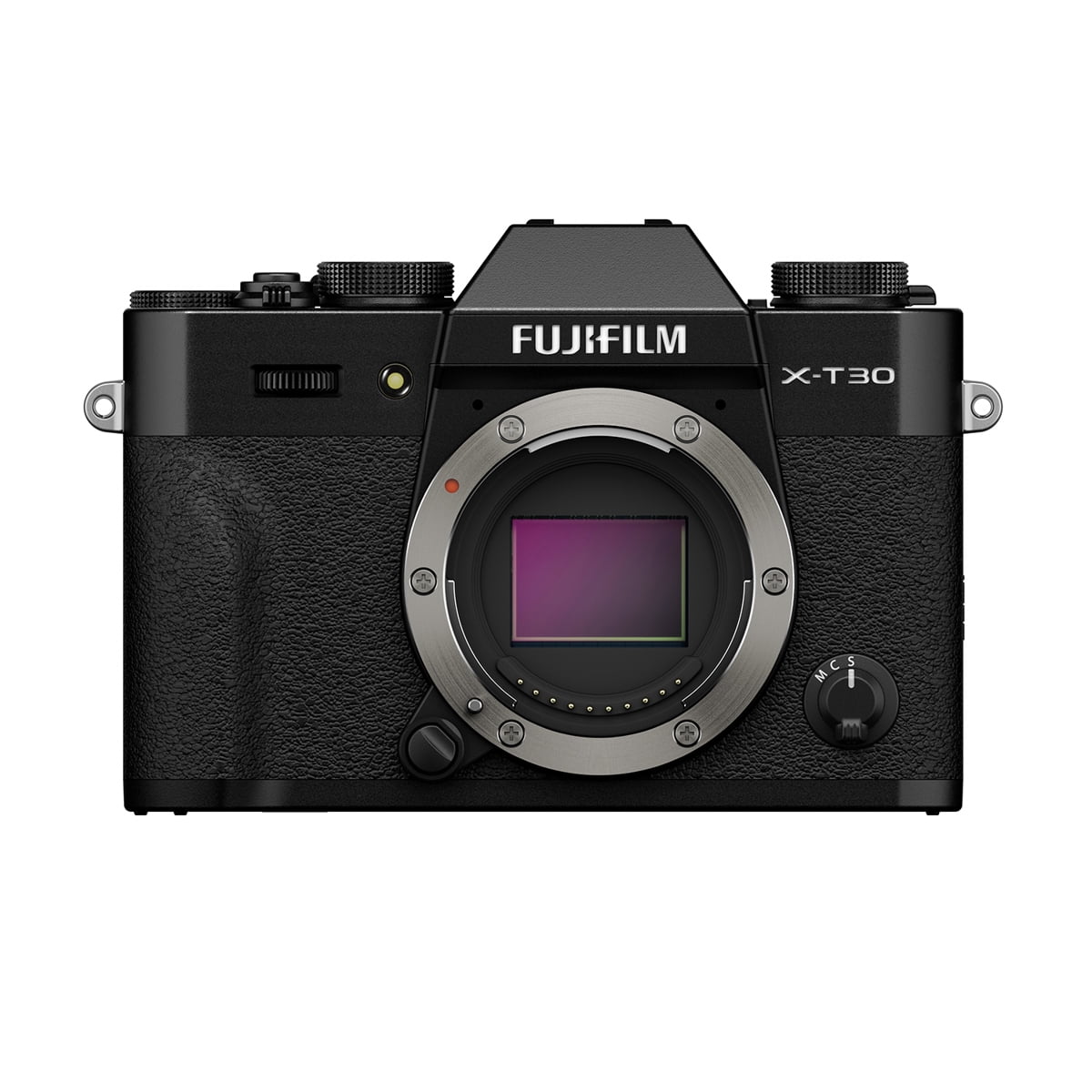
3. Fujifilm X-T30 III — Best Camera for Learning Photography
Best For: Beginners moving beyond smartphones who want to actively learn photography while experimenting with creative color and interchangeable lenses.
The Fujifilm X-T30 III is one of the most interesting beginner cameras because it encourages you to interact with photography rather than treating the camera as a black box. It pairs a 26.1MP APS-C X-Trans sensor with Fujifilm’s newer X-Processor 5 and updated subject-detection autofocus.
Its dedicated Film Simulation dial is a major part of the experience. Fujifilm’s Film Simulations change the camera’s JPEG rendering, letting beginners explore different approaches to color and contrast without immediately learning RAW-processing software. Custom positions can also store combinations of Film Simulation and processing settings often referred to as recipes.
The camera still provides a capable Auto mode when you do not want to think about settings. That makes it possible to begin with automatic shooting and gradually move toward aperture priority, shutter priority and manual exposure rather than confronting every technical decision on the first day.
Video specifications have improved as well. The X-T30 III can capture full-sensor 6.2K video at up to 30p and 4K/60 with a crop. That makes it more than a still-photo-only camera, although serious video creators have stronger choices elsewhere.
DPReview’s current evaluation finds the X-T30 III particularly appealing for beginners and phone photographers moving to a dedicated camera, while noting that its autofocus is not the easiest in the category. There is also no in-body stabilization.
The control layout can be either a strength or a weakness. Photographers who enjoy learning exposure settings may appreciate the traditional Fujifilm approach. Someone who wants a camera to behave as much like a smartphone as possible may find the physical controls initially busier than expected.
Who should skip it: Sports beginners who need highly dependable tracking or anyone who considers IBIS essential should choose another model.
Alternative: Nikon Z50II for easier subject tracking, or Lumix G97 for built-in stabilization.
Pros
✅ 26.1MP APS-C image quality
✅ Film Simulation dial encourages creative experimentation
✅ Useful Auto mode for first-time users
✅ Electronic viewfinder
✅ Broad Fujifilm X-mount lens ecosystem
Cons
❌ No in-body image stabilization
❌ Autofocus tracking requires more familiarity than the easiest rivals
❌ Traditional controls can initially feel busy to complete beginners
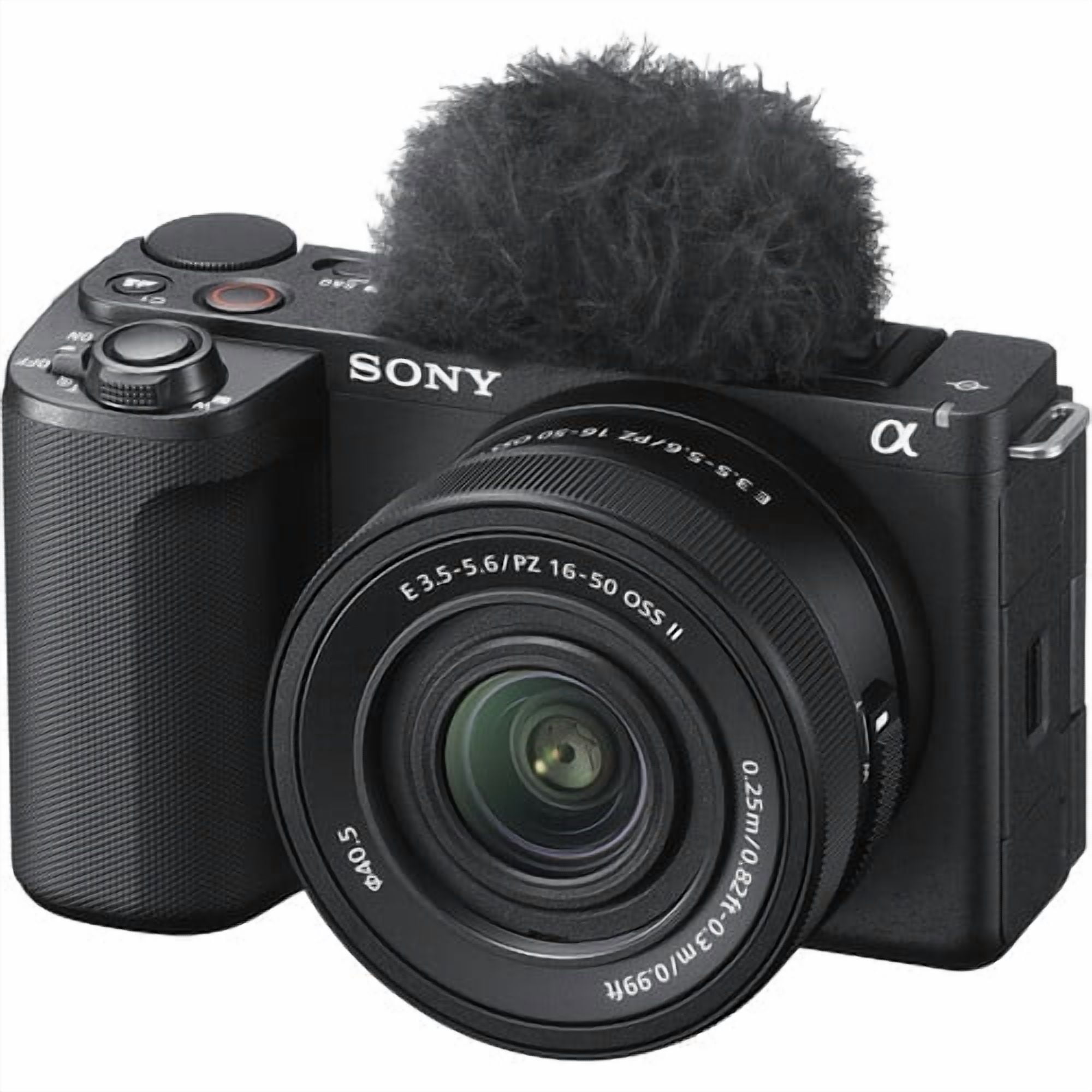
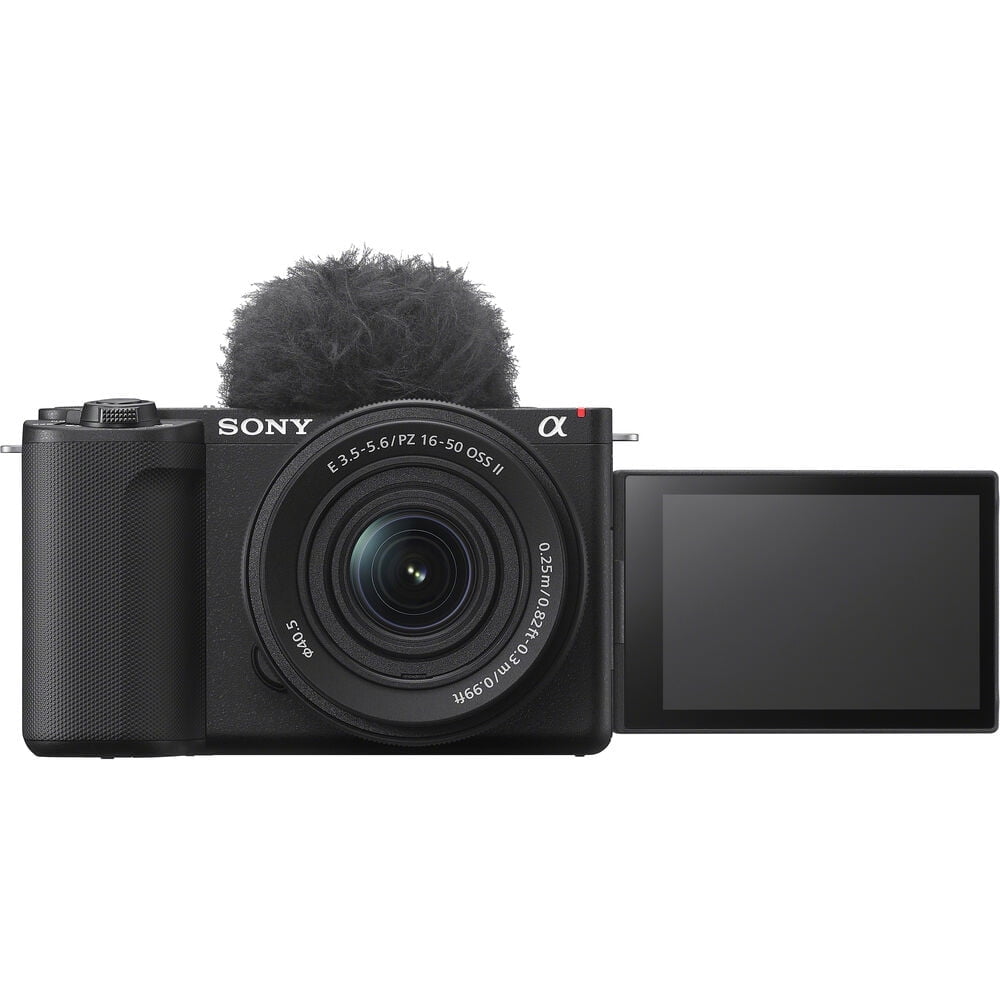
4. Sony ZV-E10 II — Best Digital Camera for Beginner Video & Vlogging
Best For: YouTube creators, streamers and beginners whose primary goal is recording video rather than learning traditional still photography.
The Sony ZV-E10 II is different from the other interchangeable-lens cameras in this list because its entire design prioritizes content creation. It uses a 26MP APS-C sensor with Sony E-mount lenses and records detailed 4K video at up to 60p with 10-bit color.
Up to 4K/30 uses the full sensor width, while 4K/60 is generated from a slightly cropped 5.6K capture. Ten-bit recording gives creators much more flexibility when adjusting color and exposure in post-production than a basic 8-bit beginner camera.
Sony also includes Product Showcase mode, Background Defocus controls, S-Cinetone, S-Log3 support and the ability to use LUTs. The built-in three-capsule microphone can change its pickup direction, and the camera provides both microphone and headphone connections.
The autofocus system is another major strength. Sony uses 759 phase-detection points along with eye and subject recognition for people, animals and birds, which is especially useful when a creator is recording alone and cannot constantly check focus.
However, the ZV-E10 II is not the camera we would choose for a beginner primarily interested in photography. There is no electronic viewfinder, no mechanical shutter and no sensor-shift in-body stabilization. DPReview specifically notes that those omissions reduce its versatility as a main stills camera.
If you expect to divide your time equally between photography and video, choose a more conventional hybrid camera. You can also compare Sony’s broader lineup in our best Sony mirrorless cameras guide once that destination is available.
Who should skip it: Beginners who mainly want to learn still photography, shoot with flash or compose through a viewfinder.
Alternative: Nikon Z50II for a balanced photo/video camera with an EVF, or Sony A6700 at a higher price if you want Sony autofocus plus IBIS and stronger still-photo ergonomics.
Pros
✅ Detailed 4K/60 10-bit video
✅ Strong subject and eye autofocus
✅ Creator-focused controls and microphone system
✅ Fully articulating screen
✅ Broad Sony E-mount lens ecosystem
Cons
❌ No electronic viewfinder
❌ No in-body image stabilization
❌ No mechanical shutter makes it less versatile for still photography
5. Nikon Z5II — Best Full-Frame Camera for Beginners to Grow Into
Best For: Serious beginners who know photography will become a long-term hobby and want to start directly with a full-frame system.
The Nikon Z5II is more expensive than a typical starter camera, but it is one of the easiest full-frame recommendations to defend for someone determined to skip APS-C. Its 24.5MP full-frame BSI sensor is paired with Nikon’s EXPEED 7 processor and modern subject-recognition autofocus.
The most important upgrade over the Z50II for many photographers is in-body image stabilization. Nikon rates the system for substantial stabilization under its test conditions, which can make handheld shooting easier with unstabilized lenses and slower shutter speeds when the subject itself is not moving.
The camera also includes two UHS-II SD card slots. Beginners may not need card redundancy immediately, but it becomes valuable if photography develops into paid events, weddings or other work where creating simultaneous copies can reduce the risk of losing an irreplaceable shoot.
The large 3.69-million-dot electronic viewfinder and conventional grip make the Z5II feel more like a serious enthusiast camera than a stripped-down entry model. DPReview gives it a 91% overall score and describes it as unusually complete for a camera in its price range.
Video includes full-width 4K at up to 30p. Moving to 4K/60 introduces a 1.5x crop, so video creators should account for the narrower field of view when selecting lenses.
The biggest concern is not the camera body itself but the system cost. Full-frame lenses tend to be larger and can cost substantially more than APS-C or Micro Four Thirds alternatives. A beginner with a fixed $2,000 total budget may get a much more useful kit by buying a Z50II or G97 and spending the remaining money on lenses, a spare battery and storage.
Who should skip it: Anyone who is still unsure whether they enjoy dedicated-camera photography should avoid paying for full-frame hardware before they know which lenses and subjects interest them.
Alternative: Nikon Z50II for a lower-cost route into the same Z-mount ecosystem.
Pros
✅ 24.5MP full-frame sensor
✅ In-body image stabilization
✅ Strong subject-recognition autofocus
✅ Dual UHS-II SD card slots
✅ Camera can remain useful well beyond the beginner stage
Cons
❌ High initial cost for a first camera
❌ Full-frame lenses can make the complete system expensive and bulky
❌ 4K/60 uses a 1.5x crop
6. Panasonic Lumix ZS99 — Best Simple Point-and-Shoot for Beginners
Best For: Travelers and casual photographers who want a dedicated camera with a huge zoom but do not want to learn interchangeable lenses.
The Panasonic Lumix ZS99 is the simplest camera in this roundup because the lens is permanently attached. Its 30x optical zoom covers a 24–720mm-equivalent range, moving from a useful wide angle for landscapes and architecture to a long telephoto reach for distant subjects.
That flexibility is the ZS99’s main reason to exist. A beginner can go on vacation with one small camera and photograph a city street, family portrait and distant landmark without changing lenses or carrying an additional camera bag.
The camera uses a 20.3MP 1/2.3-inch sensor and records 4K video at up to 30p. It also includes a tilting touchscreen, USB-C charging, Wi-Fi and Bluetooth. Panasonic’s stabilization helps control camera movement when using the long zoom range.
The tradeoff is image quality. A 1/2.3-inch sensor is much smaller than the Micro Four Thirds, APS-C and full-frame sensors in the other cameras here. Independent testing finds the ZS99 capable in good light but more prone to noise and weaker shadow quality in challenging or dim conditions.
The ZS99 is therefore not an interchangeable-lens system disguised as a beginner camera. It is a convenience-first travel tool. You cannot buy a portrait prime later or add a brighter telephoto lens. What you purchase is what the camera remains.
That may be exactly what some buyers want. If the idea of carrying lenses, cleaning a sensor and deciding which lens to buy next sounds exhausting, a point-and-shoot can be more enjoyable than a theoretically superior camera system you never carry.
Who should skip it: Anyone specifically interested in learning aperture control, shallow-depth-of-field portrait photography or building an interchangeable-lens system should start with one of the mirrorless options.
Alternative: Panasonic Lumix G97 if you like Panasonic’s controls and stabilization but want interchangeable lenses and a substantially larger sensor.
Pros
✅ Huge 24–720mm-equivalent 30x optical zoom
✅ No lenses to buy or change
✅ Compact travel-oriented body
✅ 4K/30 video
✅ USB-C charging and wireless image transfer
Cons
❌ Small sensor limits difficult-light image quality
❌ Fixed lens prevents future system expansion
❌ Less potential for shallow depth of field than larger-sensor cameras
Other Beginner Cameras We Considered
Canon EOS R50: The R50 remains one of the easiest beginner mirrorless cameras to recommend on pure usability, and it continues to appear prominently in expert buying guides. We did not make it a primary pick because Canon’s current U.S. direct-store status for the relevant body listing is unclear while authorized retailers continue to carry inventory. For a new evergreen article, we prefer models with clearer current manufacturer positioning.
Canon EOS R10: The R10 offers strong beginner-to-enthusiast performance and remains a useful comparison point. However, its current Canon U.S. direct availability is similarly uncertain. Readers comparing remaining inventory with Sony’s original ZV-E10 can use our Canon EOS R10 vs Sony ZV-E10 comparison once that article is published.
Fujifilm X-M5: This compact APS-C model is excellent for hybrid creators, but the X-T30 III provides an EVF and a more traditional photography experience, while the Sony ZV-E10 II already fills the dedicated video-first role in this guide.
OM System OM-D E-M10 IV: It remains a friendly stabilized Micro Four Thirds camera, but the newer Lumix G97 gives this list a fresher Micro Four Thirds recommendation with a stronger all-around feature set.
Nikon D7500: Nikon still lists the D7500, so the DSLR is not completely dead as a new-camera category. It makes the most sense for photographers who specifically want an optical viewfinder or already own compatible F-mount lenses. For someone starting an entirely new system, mirrorless offers the clearer long-term development path.
Why only six picks? A beginner guide becomes less helpful when it lists every camera that can take a good picture. These six choices cover the major first-camera decisions: balanced mirrorless, stabilized value, learning-focused photography, video creation, full-frame growth and simple point-and-shoot travel.
How to Choose Your First Digital Camera
Mirrorless vs. DSLR vs. Point-and-Shoot
Mirrorless is the default starting point for most new photographers in 2026. The category receives the majority of current camera development, and the major brands continue to release new mirrorless bodies and lenses.
A mirrorless camera lets you change lenses while using an electronic viewfinder or rear display to preview the scene. Cameras such as the Nikon Z50II, Fujifilm X-T30 III and Lumix G97 give beginners automatic shooting today and much more control later.
A DSLR uses a mirror and optical viewfinder. Cameras such as the Nikon D7500 still have advantages for photographers who specifically prefer an optical viewfinder or already have compatible lenses, but buying into an older DSLR mount from scratch is harder to justify when most new development is mirrorless.
A point-and-shoot such as the Lumix ZS99 removes the lens decision completely. That makes it simpler and more compact but also prevents you from upgrading the optics later.
APS-C vs. Micro Four Thirds vs. Full Frame
Beginners often hear that a larger sensor is automatically better, but sensor size is a tradeoff rather than a ranking system.
Full-frame cameras such as the Nikon Z5II provide a larger imaging area and greater potential for shallow depth of field and demanding low-light work. They also tend to be paired with larger and more expensive lenses.
APS-C cameras such as the Nikon Z50II, Fujifilm X-T30 III and Sony ZV-E10 II provide an excellent middle ground. Image quality is strong, lenses can be smaller and system cost can be substantially lower than full frame.
Micro Four Thirds uses a smaller sensor again, but the system can offer compact lenses and mature lens availability. The Lumix G97 demonstrates why sensor size should not be judged in isolation: it adds stabilization and a versatile starter lens at a price below many larger-sensor alternatives.
Autofocus Matters More Than Megapixels for Many Beginners
A 20MP photograph that is sharply focused on the subject is more useful than a 30MP photograph focused on the background.
Modern beginner cameras increasingly include face, eye and subject detection to reduce the technical burden of keeping moving subjects sharp. This is especially helpful when photographing children, pets, wildlife or people walking toward the camera.
Twenty to 26 megapixels is already enough resolution for large everyday prints, social media, websites and substantial cropping. Do not pay hundreds more simply because one specification sheet shows a larger number.
Do Beginners Need Image Stabilization?
In-body image stabilization is useful but not mandatory. It moves the sensor to compensate for some camera movement, which can help when photographing static scenes at slower shutter speeds or recording handheld video.
The Lumix G97 and Nikon Z5II include IBIS. The Nikon Z50II, Fujifilm X-T30 III and Sony ZV-E10 II do not.
A camera without IBIS can still produce excellent images. Many lenses include optical stabilization, and faster shutter speeds can prevent camera shake. Stabilization also cannot freeze a moving subject: a running child can still blur if the shutter speed is too slow.
Electronic Viewfinder vs. Rear Screen
An EVF lets you compose with the camera against your eye, which can improve stability and make the scene easier to see in bright sunlight. It also creates a more traditional photography experience that many beginners eventually prefer.
Nikon Z50II, Lumix G97, Fujifilm X-T30 III and Nikon Z5II include EVFs. Sony ZV-E10 II does not because it is built primarily around vlogging and rear-screen operation.
The ZS99 also emphasizes its rear screen rather than the traditional viewfinder experience. That is acceptable for casual travel photography but is worth knowing before purchase if you want to learn camera handling in a more conventional way.
4K/30 vs. 4K/60: What Does a Beginner Actually Need?
4K/30 is sufficient for ordinary family clips, travel videos, interviews and most YouTube content. Moving to 4K/60 gives smoother motion and more flexibility for slowing footage down in a 30 fps project.
Higher frame rates can introduce compromises. Nikon Z50II and Z5II crop their 4K/60 modes, while the Sony ZV-E10 II applies a much smaller crop. Fujifilm X-T30 III also crops when recording 4K/60.
The crop changes how wide your lens appears, which matters particularly for vlogging. A lens that feels wide enough at 4K/30 may become noticeably tighter when switching to a cropped 4K/60 mode.
If video is a secondary feature, do not choose your first camera primarily from one high-frame-rate specification.
Budget for the Lens, Memory Card and Battery
For an interchangeable-lens camera, the body price is not the real system price.
A practical beginner budget should include at least one useful lens, a sufficiently fast memory card and often a spare battery. You may eventually want a second lens such as a small prime for portraits or a telephoto zoom for sports and wildlife.
This is why a less expensive APS-C or Micro Four Thirds body can be a smarter first purchase than an entry-level full-frame camera. A $1,000 body with two useful lenses may teach you more and cover more situations than a $1,700 body with no money left for suitable optics.
Should Beginners Still Buy a DSLR?
A DSLR can still be an excellent photographic tool. The question is whether it is the best system to enter from scratch.
Mirrorless cameras now receive most of the new-body and new-lens development from major manufacturers. Their electronic viewfinders can preview exposure, autofocus systems increasingly recognize subjects across the frame and video integration is generally much stronger.
Buying a DSLR makes more sense when you already own compatible lenses, find an unusually good used deal or specifically prefer an optical viewfinder. For a completely new buyer planning to build a system over several years, mirrorless is the safer default.
When a Point-and-Shoot Is Enough
You do not need interchangeable lenses simply because you want better photographic reach than a phone provides.
A camera such as the Lumix ZS99 gives you a 30x optical zoom in one compact device. That can be ideal for vacations, sightseeing, distant landmarks and casual family photography where convenience matters more than ultimate low-light image quality.
The limitation is growth. You cannot add a brighter portrait lens later. If learning photography itself is part of the goal, an interchangeable-lens model provides far more room to experiment.
When an Action Camera Is the Better Choice
A normal digital camera is better for learning photography, portraits, landscapes and situations where interchangeable lenses or optical zoom matter. It is not the ideal tool for mounting to a helmet, swimming, skiing or capturing rough first-person footage.
If your idea of a first camera is primarily about sports, underwater travel or rugged video, compare the products in our most popular action cameras for travelers before buying a conventional mirrorless camera.
Mostly photography → Z50II or X-T30 III | Need IBIS/value → G97 | Mostly video → ZV-E10 II | Full-frame commitment → Z5II | Maximum simplicity → ZS99
Best Beginner Camera by Use Case
| Use Case | Best Pick | Why |
|---|---|---|
| Best overall beginner camera | Nikon Z50II | Easy Auto mode, good autofocus, EVF and room to learn |
| Best value with stabilization | Panasonic Lumix G97 | 5-axis IBIS and versatile Micro Four Thirds system |
| Learning photography & creative color | Fujifilm X-T30 III | Traditional controls, Film Simulations and capable Auto mode |
| Vlogging & video creation | Sony ZV-E10 II | 4K/60 10-bit video and creator-focused autofocus/tools |
| Full-frame from the start | Nikon Z5II | 24.5MP full frame, IBIS and dual card slots |
| Simple travel point-and-shoot | Panasonic Lumix ZS99 | Fixed 30x zoom eliminates lens shopping and swapping |
Frequently Asked Questions
What is the best digital camera for a beginner?
The Nikon Z50II is our best overall beginner camera because it combines an approachable Auto mode, strong autofocus, an electronic viewfinder, interchangeable lenses and enough manual and video capability to remain useful as your skills improve.
Is mirrorless or DSLR better for beginners?
Mirrorless is the better default for most new buyers because current development, autofocus technology, video features and new lens releases are concentrated there. A DSLR can still make sense if you already own compatible lenses, prefer an optical viewfinder or find an unusually strong used deal.
How many megapixels does a beginner need?
Around 20 to 26 megapixels is already plenty for most beginner photography, including large everyday prints, online publishing and normal cropping. Autofocus, lenses, technique and lighting usually have a larger effect on successful images than adding a few more megapixels.
Is APS-C good enough for professional-looking photos?
Yes. APS-C cameras can produce excellent professional-looking images. Lens quality, lighting, composition, focus and editing matter enormously. Full frame provides additional creative and low-light possibilities, but it is not required to produce high-quality photography.
Do beginner cameras need image stabilization?
No, but stabilization is useful. IBIS can reduce camera shake during handheld photography and video, especially at slower shutter speeds. Cameras without IBIS can still use stabilized lenses or faster shutter speeds, and stabilization cannot freeze a moving subject.
Should I buy a camera with interchangeable lenses?
Choose interchangeable lenses if you want to learn photography, experiment with portraits, wildlife, macro or low-light lenses, and build a system over time. Choose a fixed-lens point-and-shoot if convenience and avoiding additional lens purchases matter more.
Is a point-and-shoot better than a smartphone?
Not automatically. A camera such as the Lumix ZS99 offers a much longer optical zoom than most phones, while smartphones usually provide easier sharing, computational processing and low-effort everyday photography. Choose the point-and-shoot when its optical zoom and dedicated controls solve a real need.
How much should a beginner spend on a first camera?
Spend enough to buy a camera you will actually use plus at least one suitable lens, memory card and battery. For many beginners, a roughly $800–$1,200 APS-C or Micro Four Thirds kit is more useful than spending nearly the entire budget on a full-frame body and having little left for lenses.
Final Verdict: Which Beginner Camera Should You Buy?
The Nikon Z50II is the best digital camera for beginners in this group because it makes the transition from smartphone or basic automatic photography relatively easy while still offering the controls, EVF, autofocus and interchangeable lenses needed to learn more serious photography.
Choose the Panasonic Lumix G97 if in-body stabilization and value matter more than having the latest autofocus system. The Fujifilm X-T30 III is the most appealing choice for beginners who want photography itself to feel creative and tactile rather than purely technical.
The Sony ZV-E10 II should be your first choice only when video and vlogging are the priority. If you already know you want to invest seriously in full-frame lenses, the Nikon Z5II provides far more room to grow than a conventional starter body.
For travelers who want none of the complexity of a lens system, the Panasonic Lumix ZS99 remains the simplest option: one compact camera, one 30x zoom and no additional lens decisions.
Bottom line: Buy the Nikon Z50II for the best overall beginner experience, Lumix G97 for stabilized value, Fujifilm X-T30 III for learning photography, Sony ZV-E10 II for video, Nikon Z5II for a full-frame system you can grow into, or Lumix ZS99 for point-and-shoot simplicity.
Sources
- Nikon — Z50II official product specifications and support information
- DPReview — Nikon Z50II Review — updated July 2026
- Panasonic North America — LUMIX G97 and ZS99 product announcement and specifications
- Fujifilm — FUJIFILM X-T30 III official product announcement — 2025
- DPReview — Nikon Z5II and Sony ZV-E10 II independent reviews
Product Groups: Nikon Z50II, Panasonic Lumix G97, Fujifilm X-T30 III, Sony Alpha ZV-E10 II, Nikon Z5II, Panasonic Lumix ZS99